Last updated: July 22, 2026
If you have an attic, you have one of the most underused spaces in your entire home. These attic storage ideas will show you exactly how to transform that dusty, awkward space into a functional storage zone that works hard for your household.
You don’t need a major renovation to make it happen — just a smart plan and the right systems in place.

Start with What You Have: Assessing Your Attic
Before you dive into any attic storage ideas, take a good look at what you’re working with. Walk through the space and note the ceiling height, floor stability, insulation situation, and access points.
Many attics have sloped ceilings, exposed beams, and unfinished floors, which can all feel like obstacles — but they’re actually opportunities once you know how to use them. Understanding your attic’s quirks is the first step to making it genuinely useful.
Check whether your floor joists are strong enough to hold weight. If your attic only has joists without flooring, you’ll want to add plywood boards before stacking anything up there.
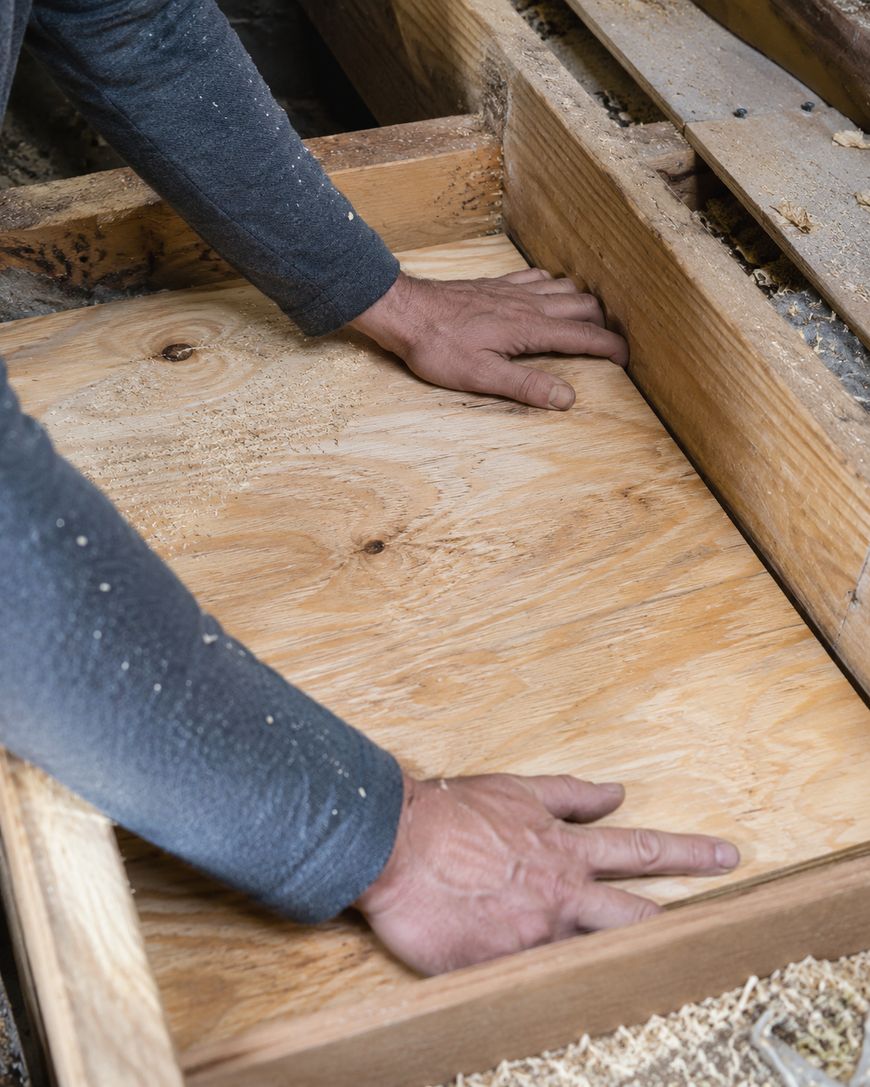
A floored attic can hold a significant amount of weight — typically 10 to 20 pounds per square foot in a well-built home — but always check with a professional if you’re unsure about your specific structure.
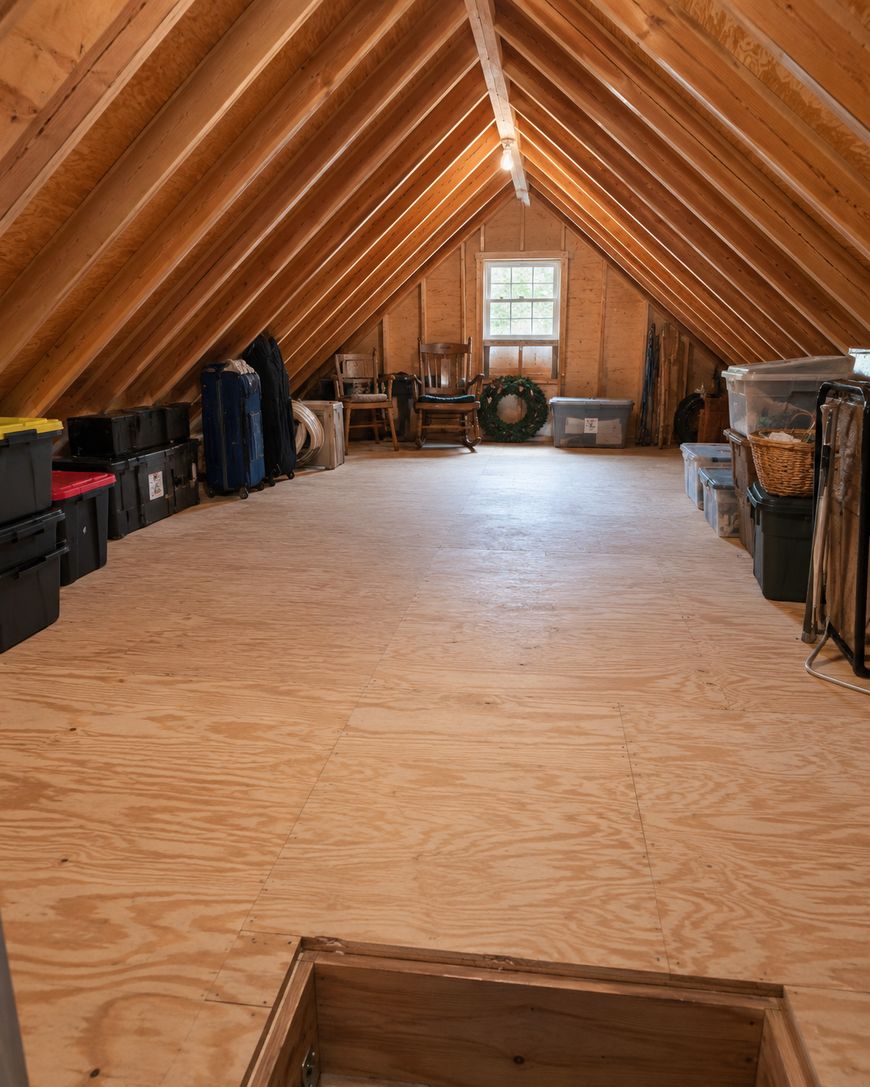
Install Proper Flooring to Unlock the Whole Space
One of the most impactful attic storage ideas you can implement is laying down proper flooring. Without it, you’re limited to balancing items on joists, which is both awkward and dangerous.
Plywood panels cut to fit between joists create a stable surface that instantly expands your usable square footage. You can buy pre-cut attic floor panels from home improvement stores, or have standard sheets cut to size.
Choose at least 3/4-inch thick plywood for a sturdy, load-bearing surface. If you want to be able to move around easily, consider laying panels in sections so you can also access insulation underneath for future repairs or upgrades.
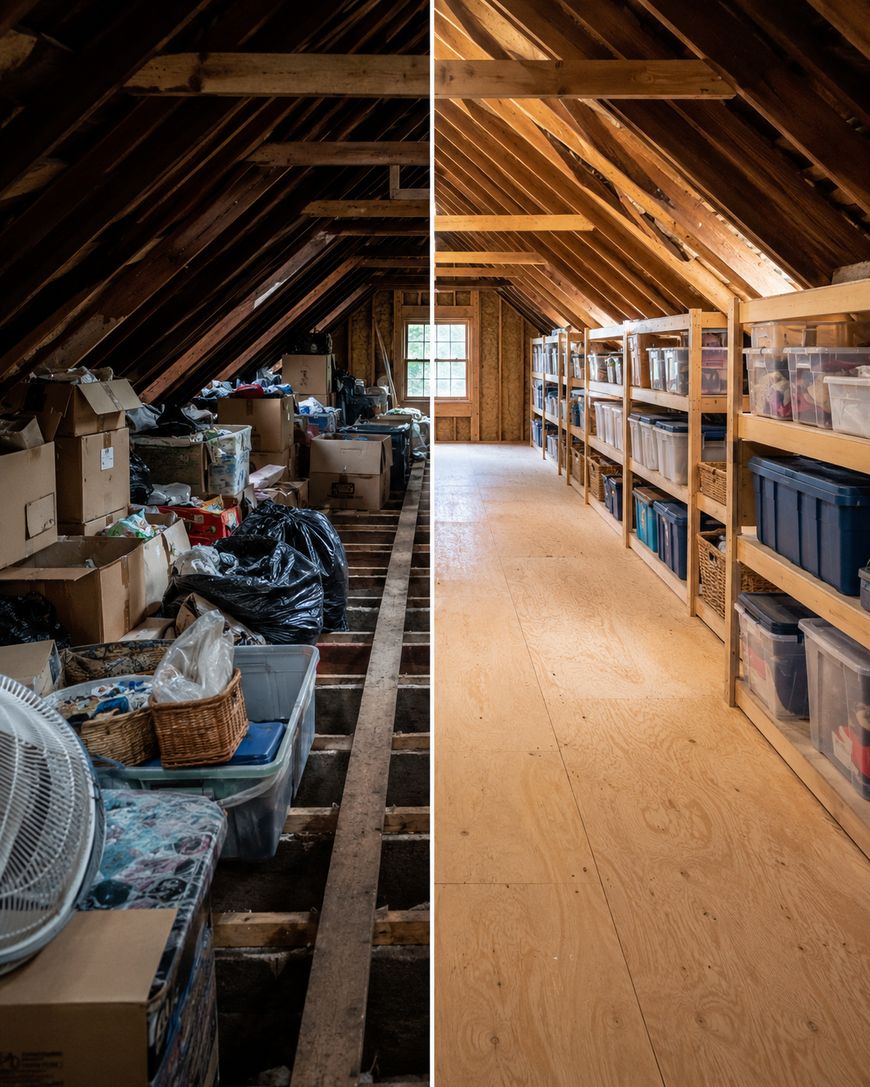
Once your floor is in place, you’ll be amazed at how much easier it is to think creatively about the rest of the space. Every other attic storage idea on this list becomes more achievable when you have a solid foundation underfoot.
Use Heavy-Duty Shelving Along the Walls and Eaves
Shelving is one of the most versatile attic storage ideas for homes of any size. Sturdy metal shelving units placed along the knee walls — those short vertical walls under the sloped ceiling — make brilliant use of space that would otherwise go completely unused.
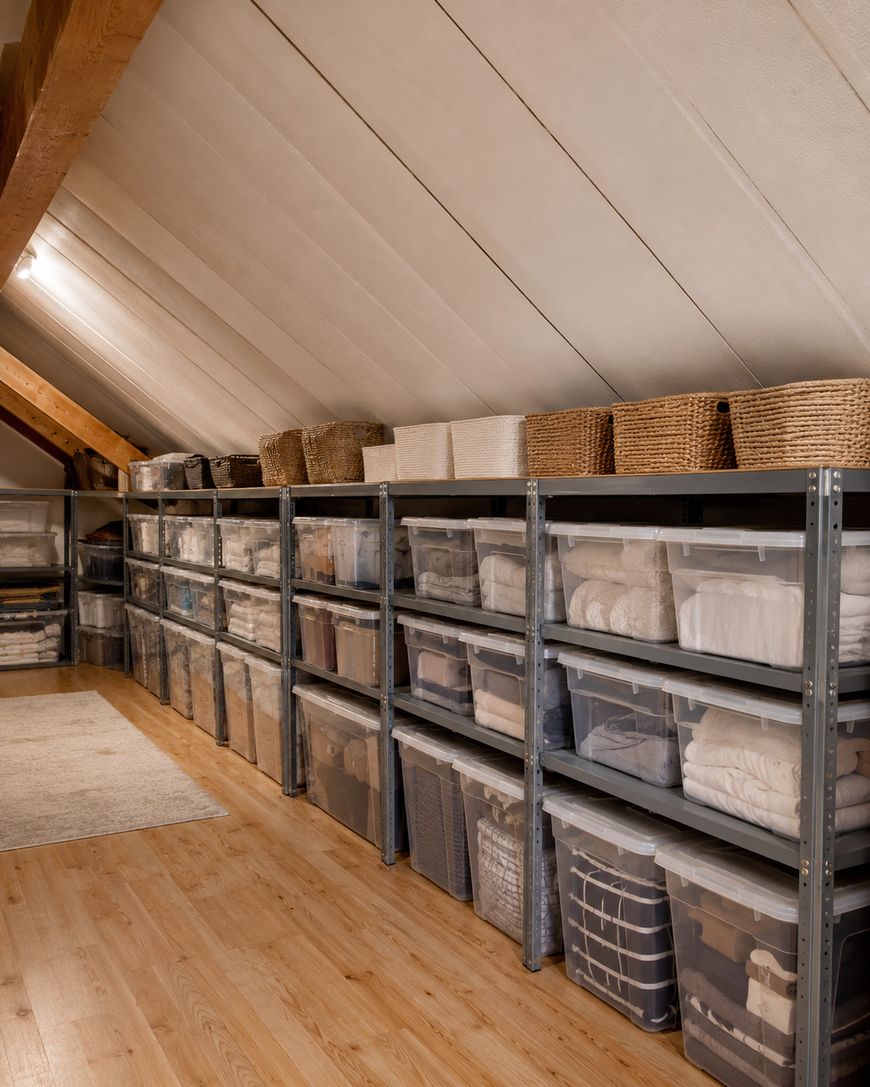
Look for adjustable wire shelving or heavy-duty steel racks that can hold bins, boxes, and seasonal items without bowing under the weight. Adjustability matters here because your storage needs will change over time.
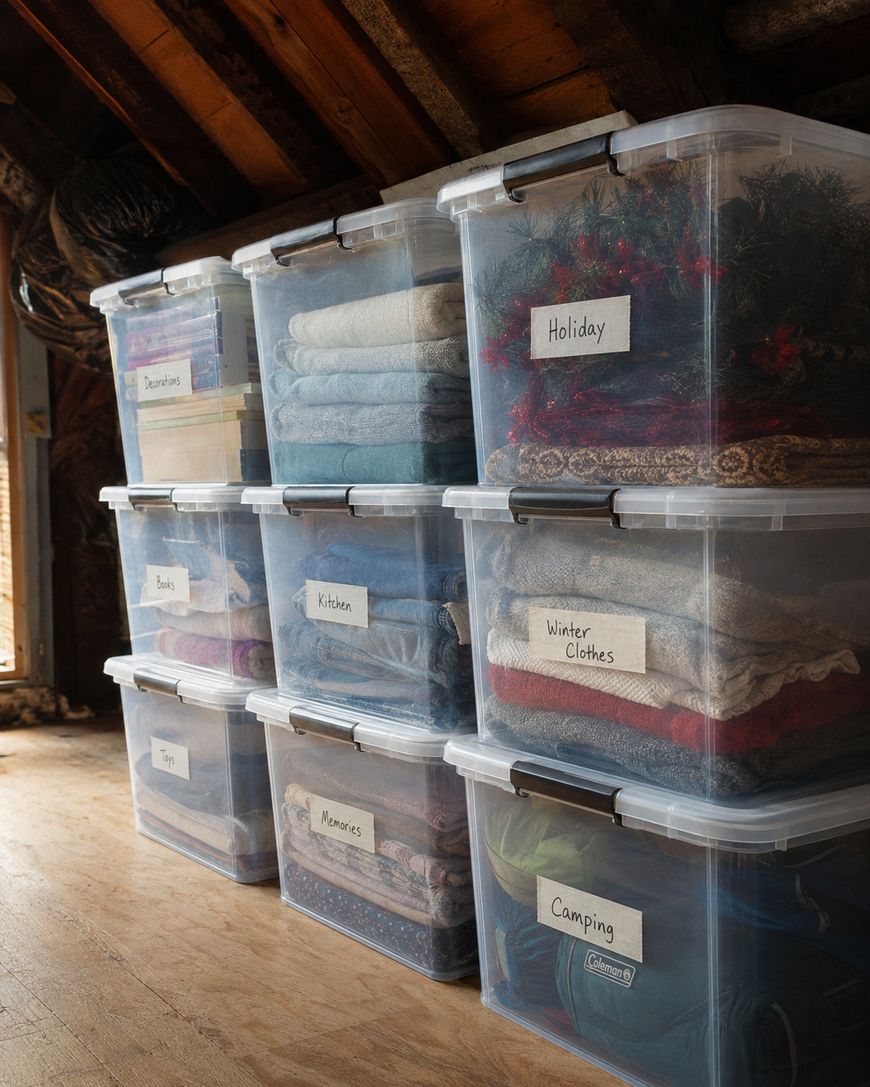
Group similar items together on your shelves so you can find things quickly. Holiday decorations, camping gear, off-season clothing, and sporting equipment all benefit from being organized by category rather than tossed in together.
Label every bin clearly from the outside, and face labels toward the walking path so you can read them without pulling everything off the shelf. This simple habit saves enormous amounts of time when you need to track something down months later.
Add Overhead Storage for Lightweight Items
If your attic has exposed rafters or a high enough ceiling, overhead storage is one of those attic storage ideas that frees up prime floor and wall space for heavier items. Rafter storage systems consist of hanging platforms or pulley-lifted platforms that suspend from the ceiling structure.
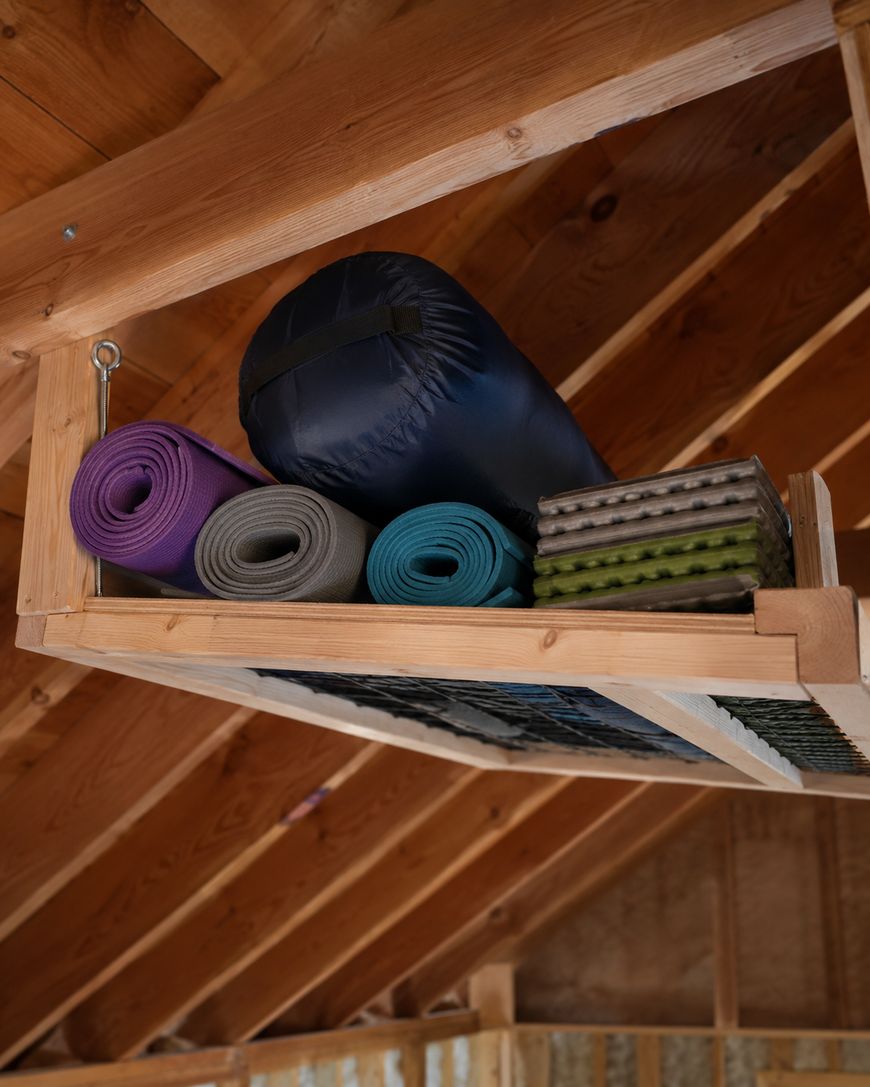
These work beautifully for lightweight, infrequently used items like sleeping bags, foam flooring mats, or holiday wrapping supplies. Just make sure whatever you hang is in waterproof bins in case of any roof moisture.
You can also install hooks directly into the rafters for items like extension cords, sleds, or holiday lights wound around reels. Hooks keep long items from tangling and make retrieval simple.
Be mindful about weight limits — overhead systems in attics are best for items under 20 pounds per hook or platform unless the system is specifically rated for more. Safety matters more than squeezing in a little extra storage.

Use Clear Bins and a Labeling System
No list of attic storage ideas is complete without talking about containers. The bin you choose makes a significant difference in how functional your attic storage actually becomes in day-to-day life.
Clear plastic bins with secure lids are ideal for attic storage because you can see the contents without opening anything. Choose bins that stack evenly and that have lids that click securely — attics can get humid or experience temperature swings that might warp cheaper containers.
Avoid cardboard boxes whenever possible. They attract pests, absorb moisture, and break down over time, leaving your belongings vulnerable to damage.
Once you’ve chosen your bins, create a simple labeling system. You can use a label maker, write directly on masking tape, or create color-coded categories — whatever method you’re most likely to maintain over time. Consistency is the key to a system that continues to work.
Build or Buy a Pull-Down Attic Stair System
Storage that you can’t easily access stops being used very quickly. One of the most practical attic storage ideas is investing in a good pull-down stair system if you don’t already have one.
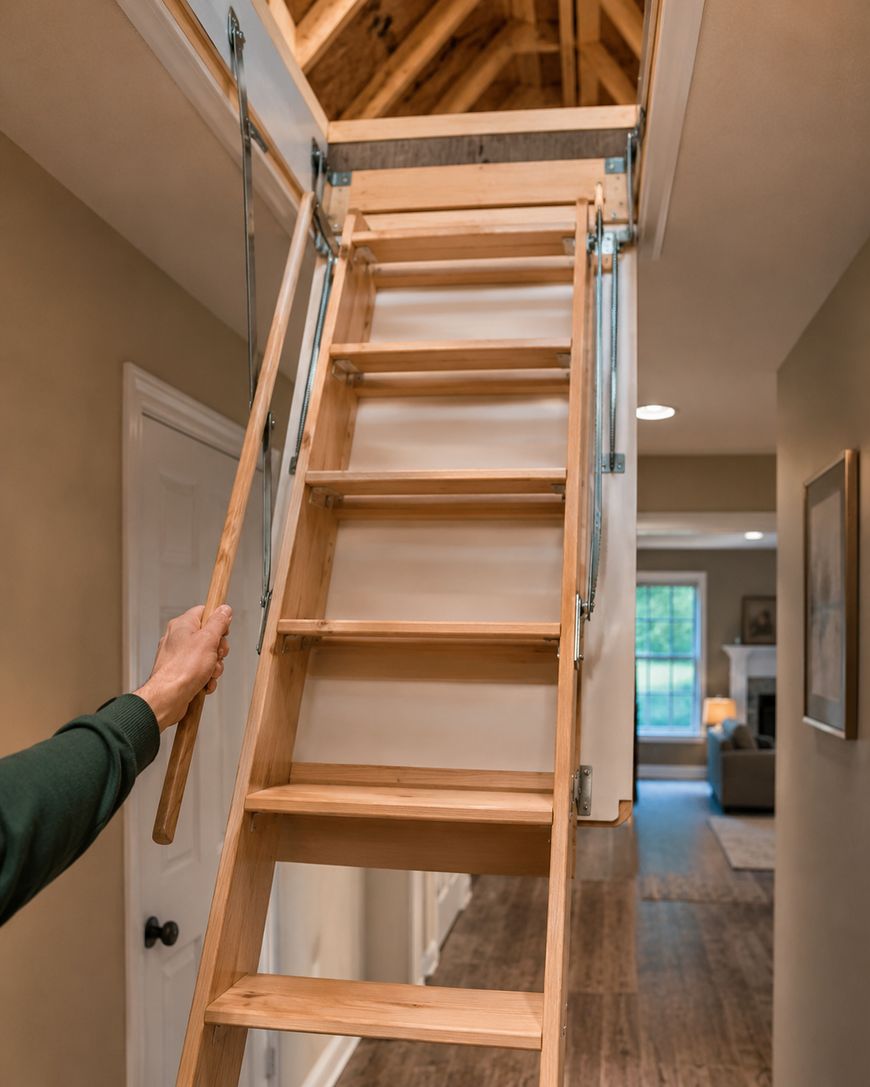
A sturdy folding stair makes it far easier to carry boxes up and down without the acrobatics required by a basic hatch and ladder setup. Look for a system rated to hold at least 250 pounds, with wide treads and a handrail for safety.
If you’re renting or can’t install a permanent staircase, a high-quality folding attic ladder is a worthy upgrade that most landlords will approve. It makes a genuine difference in how often you actually use the space.
Easy access also means you’re more likely to rotate items seasonally rather than letting everything pile up and go forgotten for years. That regular rotation keeps your attic organized and functional.
Create Zones for Seasonal Organization
Thinking of your attic in zones is one of the most practical attic storage ideas for staying organized long-term. Divide the space into dedicated areas — one for holiday items, one for seasonal clothing, one for sporting equipment, and one for sentimental keepsakes.
Place the things you access most frequently closest to the attic entrance. Items you only need once a year, like a Christmas tree or Halloween decorations, can live in the back or harder-to-reach corners.
Zoning prevents the common attic trap where everything gets piled in randomly and nothing can be found without a full excavation. It also makes it easier to onboard other family members into the system so they’re putting things back in the right spot.
Revisit your zones once a year — ideally in spring and fall when you’re already rotating seasonal items — to make sure the system is still working for your household’s current needs.
Protect Your Belongings from Temperature and Moisture
Attics are notorious for temperature extremes and humidity fluctuations, which can damage everything from electronics to fabrics to wooden furniture. Smart attic storage ideas always account for the environment.
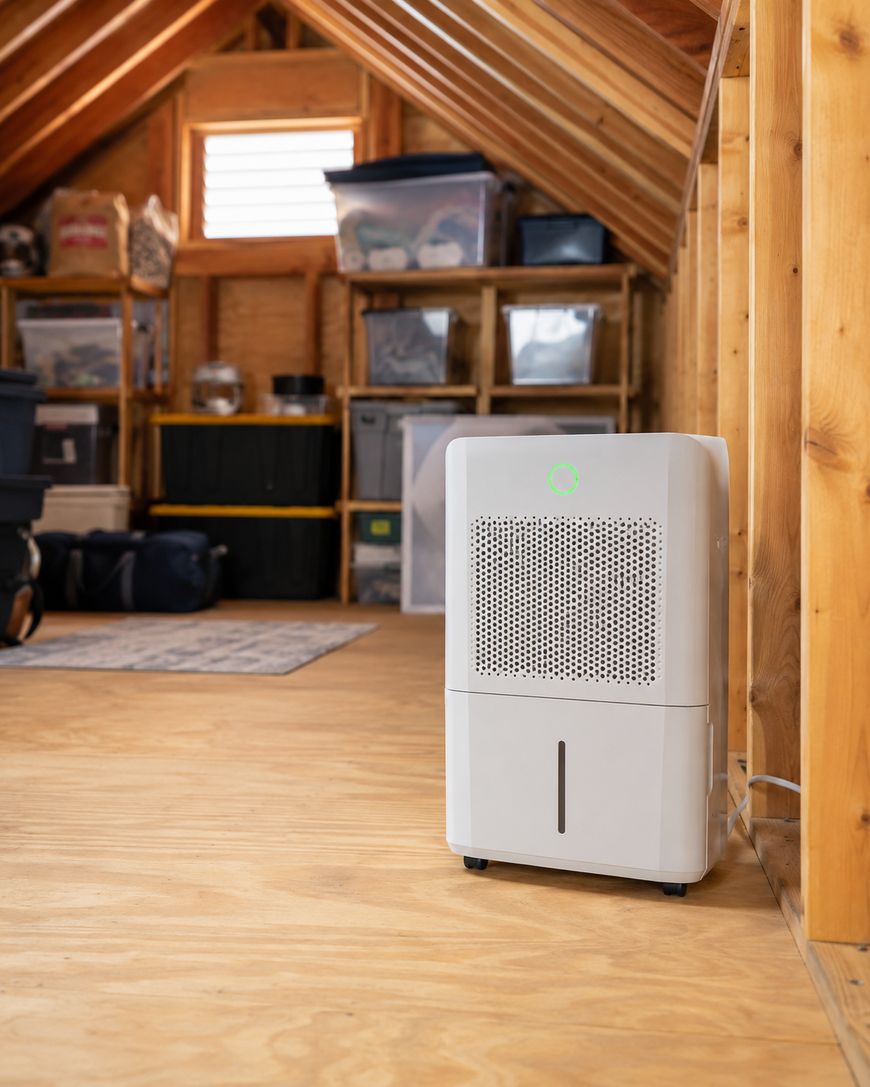
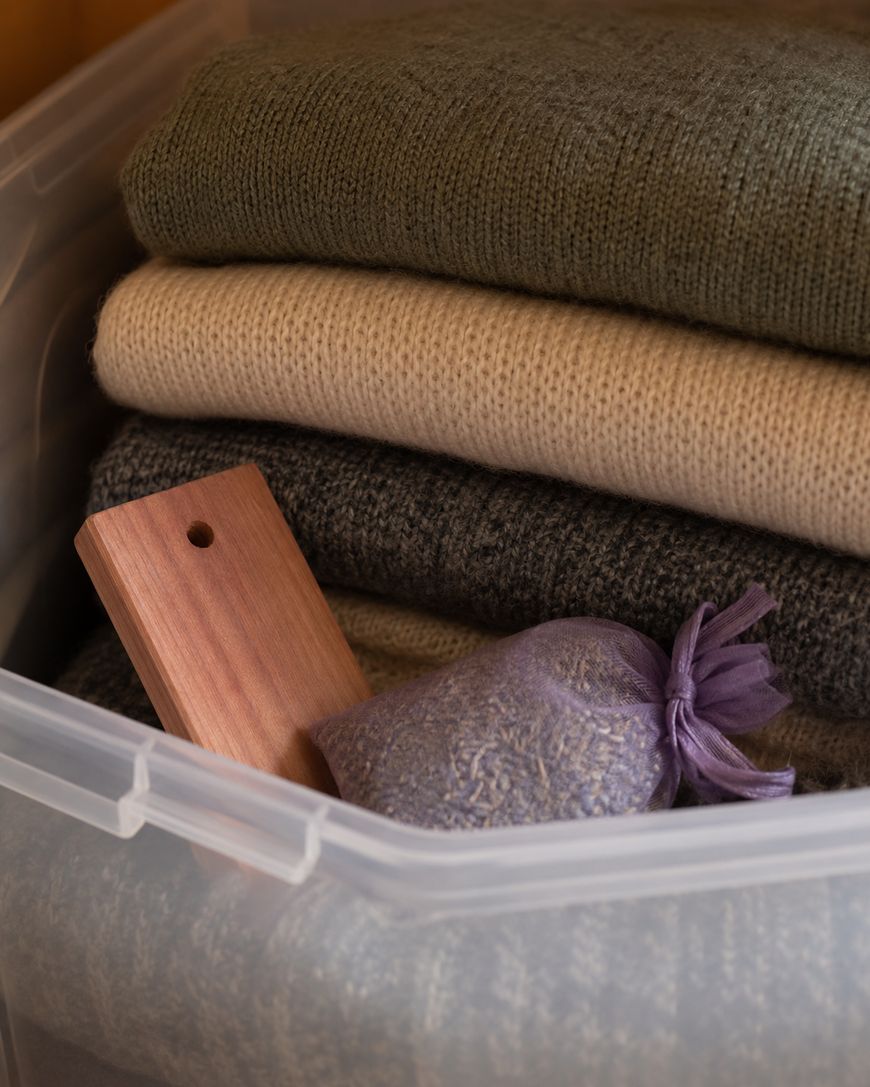
Invest in moisture-absorbing packets or a small electric dehumidifier if your attic tends to feel damp. Cedar blocks or lavender sachets can also help deter moths from damaging stored clothing and linens.
Avoid storing items that are particularly sensitive to heat or cold in the attic — this includes candles, vinyl records, photographs, electronics, and anything with rubber components that can crack in cold temperatures.
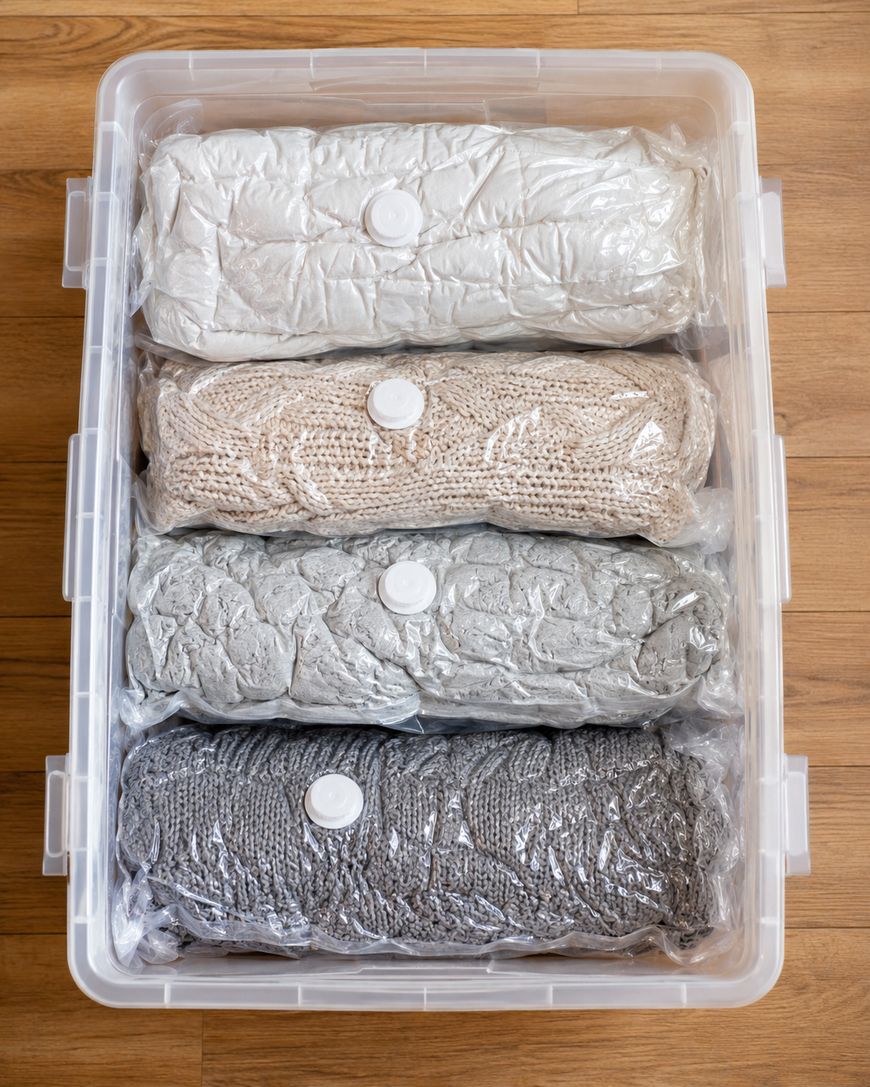
For clothing and linens you do store up there, vacuum-seal bags are a great solution. They compress fabric items dramatically, keep moisture out, and protect against pests all at once.
Q&A: Your Attic Storage Questions Answered
Can I store furniture in my attic?
Yes, but with some caveats. Solid wood furniture generally holds up well in attics if the humidity is controlled, but particleboard or furniture with glued joints can warp or delaminate with temperature changes.
Always check that your attic floor can support the weight before moving heavy pieces up there, and consider using furniture pads to protect both the piece and the floor.
What should you never store in an attic?
You should avoid storing anything highly sensitive to temperature swings or moisture, including food, paint, electronics, photographs, musical instruments, and wine. These items degrade quickly in the heat and humidity that attics often experience.
Perishables and flammable materials are also a hard no — attics can get extremely hot in summer, creating a genuine safety hazard.
How do I keep pests out of my attic storage?
Seal any gaps or cracks in the attic walls, eaves, and around pipes or wires where pests could enter. Use hard-sided plastic bins instead of cardboard boxes, and consider adding cedar blocks or lavender sachets to stored fabrics.
Inspect your attic a couple of times a year for signs of rodents or insects, and address any issues quickly before they spread to your stored belongings.
How much weight can an attic floor hold?
Most residential attic floors are designed to hold between 10 and 20 pounds per square foot, but this varies based on the age and construction of your home. When in doubt, consult a structural engineer before loading the space heavily.
Spreading weight across a large area is always safer than concentrating it in one spot, so distribute heavy bins evenly across the floor rather than stacking everything in a single pile.
Do I need to insulate my attic before using it for storage?
You don’t necessarily need to change your insulation before storing items, but you should be aware of what type of insulation is present. If you have blown-in insulation, you’ll need to create a flooring system above it rather than compressing it, since compressed insulation loses its effectiveness.
Maintaining good insulation actually helps moderate the temperature in the attic, which is better for both your home’s energy efficiency and your stored belongings.
Is it worth hiring a professional to organize my attic?
For a large, complicated attic or one that requires structural improvements, a professional organizer or contractor can absolutely be worth the investment. They can help you assess the space safely and design a system that maximizes every square foot.
For a straightforward space where you mainly need shelving and bins, a DIY approach is very manageable over a weekend or two. Start with the flooring and shelving, and build the system out from there.
Make Your Attic Work for You
The best attic storage ideas are the ones you’ll actually maintain over time. Start with a solid floor and good shelving, invest in quality bins and labels, and create a zone system that makes sense for your family’s lifestyle.
When your attic is properly organized, it stops being the place where things go to be forgotten and becomes a genuine extension of your home’s storage capacity. Take it one step at a time, and you’ll have a functional, organized attic that makes your whole home feel more manageable.
Put even one or two of these attic storage ideas into action this weekend, and you’ll see just how much potential that space has been hiding.