Last updated: October 10, 2026
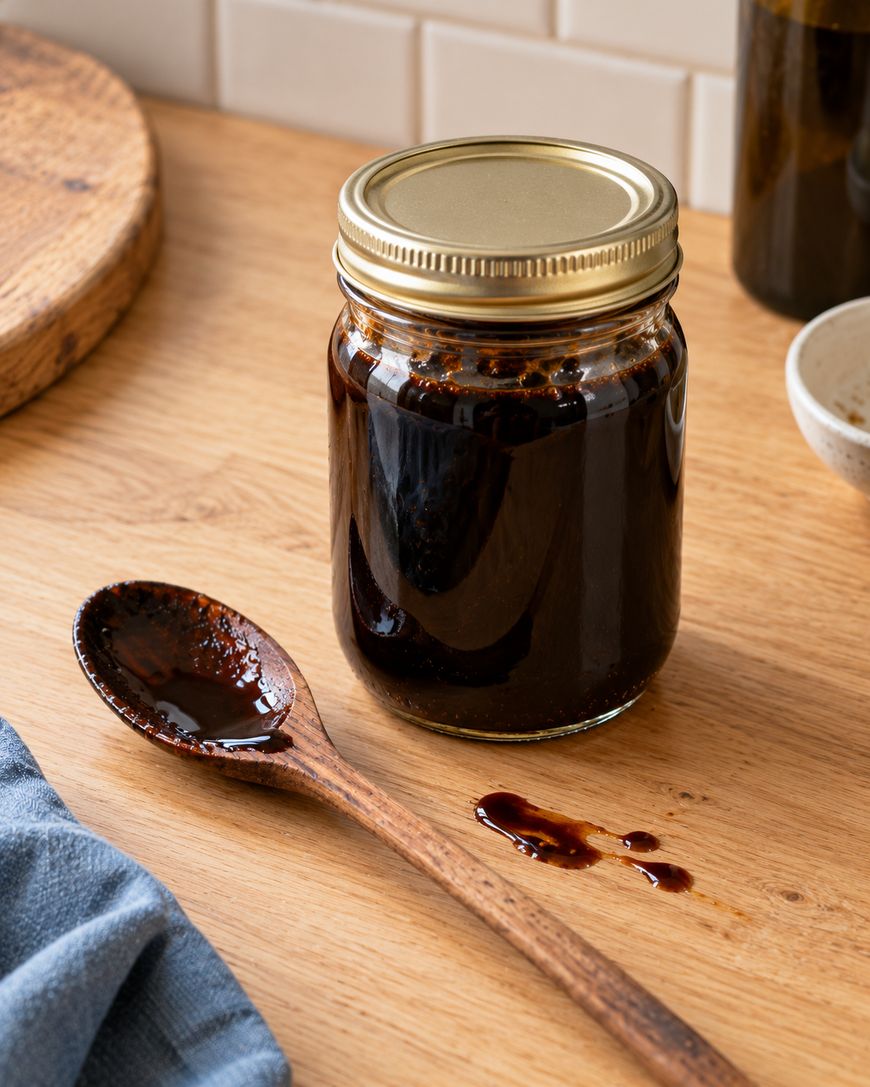
Balsamic glaze is simply balsamic vinegar simmered until it turns thick, glossy, and lightly sweet, and you can have it ready in about 20 minutes with a splash of vinegar and a spoonful of brown sugar.
Scroll down to the recipe card for the exact measurements, or keep reading and we will walk you through every stage so you can cook the whole thing from this page alone.
How to Make Balsamic Glaze at Home
The short answer is that you simmer 1 cup of balsamic vinegar with 2 tablespoons of brown sugar in a small saucepan for 15 to 20 minutes until it reduces by about half. That is the entire recipe, and it makes about 1/2 cup of glaze, which is eight generous tablespoon servings.
The method is gentle and forgiving, which is why it works so well for beginners.
What You Need
You need a small saucepan that holds about 2 quarts, a spoon for stirring, and a clean jar for storing the finished glaze. A wider pan helps because more surface area means faster evaporation, but a small saucepan keeps the liquid deep enough that you can watch it thicken without scorching the edges.

For ingredients, grab 1 cup of balsamic vinegar and 2 tablespoons of light or dark brown sugar. Dark brown sugar adds a slightly deeper molasses note, while light brown sugar keeps the flavor cleaner and brighter.
Simmer the Vinegar
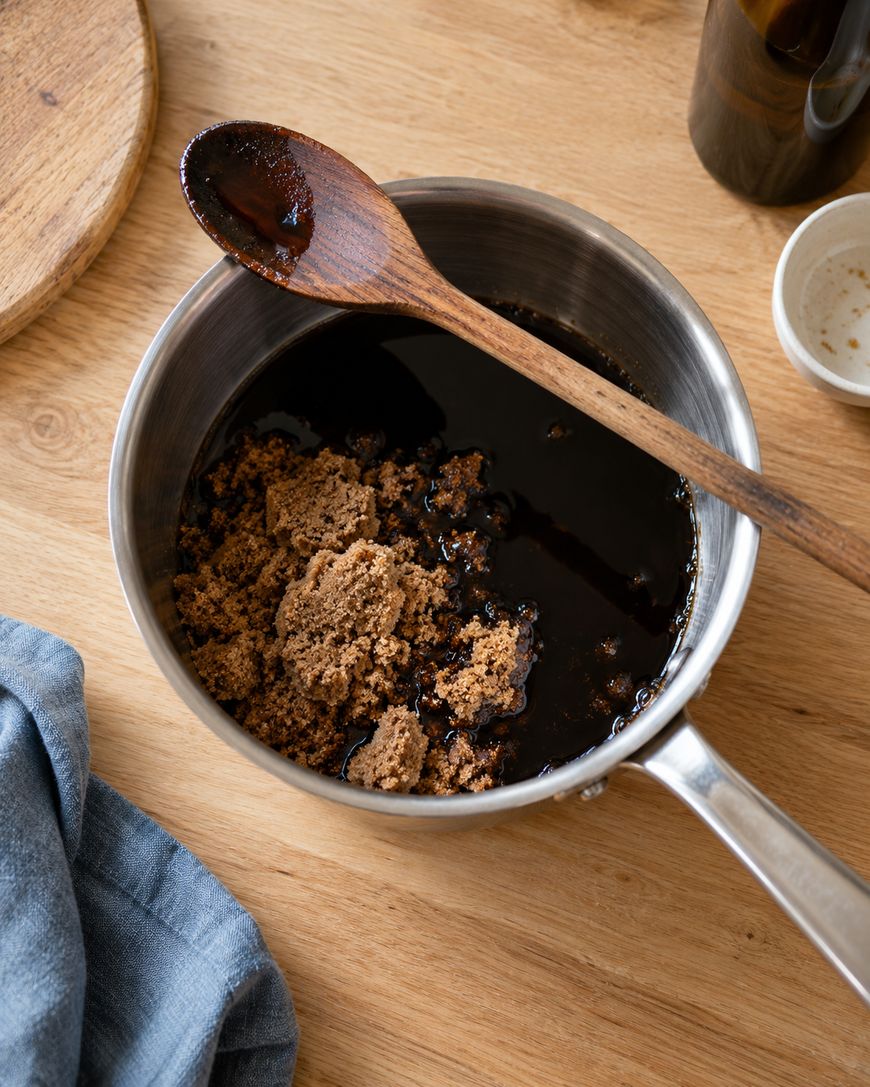
Pour the vinegar into the saucepan, add the brown sugar, and stir until most of the sugar dissolves. Set the pan over medium heat and bring it to a gentle bubble, then drop the heat to medium low so the surface just trembles with small bubbles.

Let it simmer for 15 to 20 minutes, stirring every few minutes. A hard boil is the enemy here because it can scorch the sugars and turn the glaze bitter before it ever thickens.

Check the Consistency
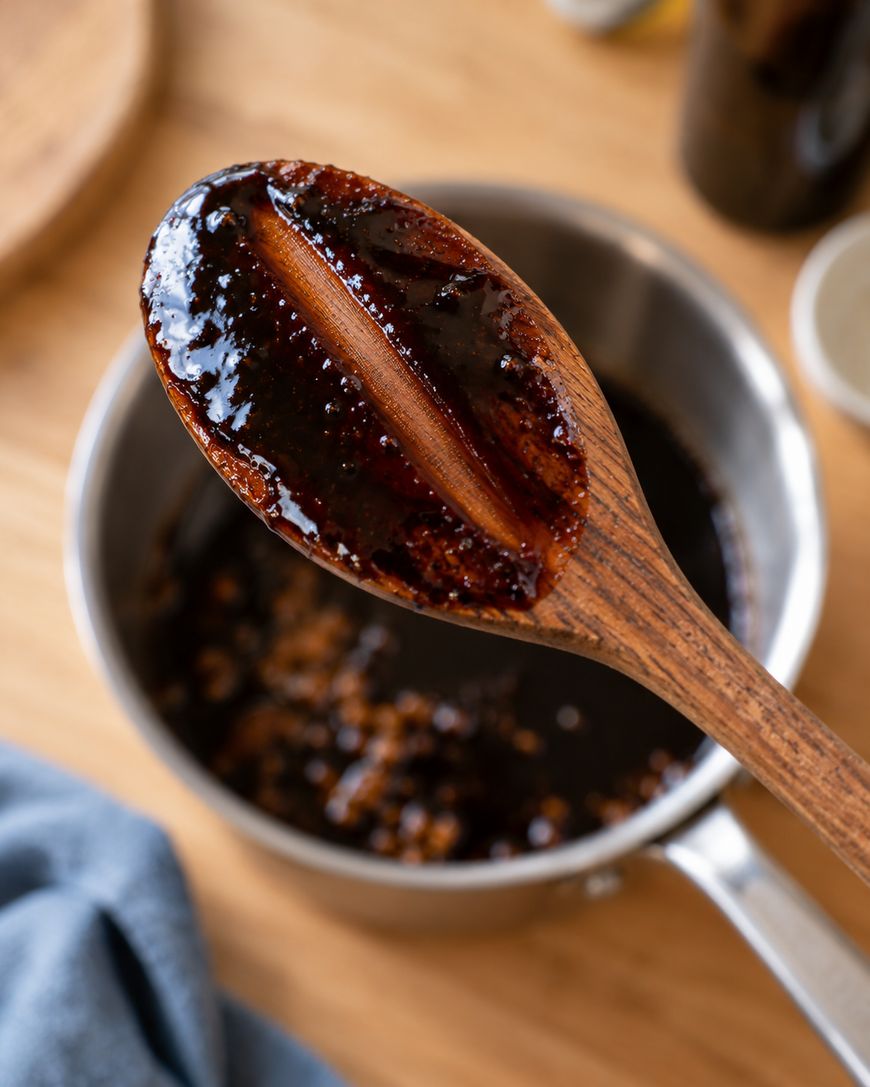
The glaze is ready when it has reduced by about half and coats the back of a spoon. Dip a spoon in, drag your finger across the back, and if the line holds without the glaze running back together, you are done.
Pull the pan off the heat right away, because the glaze looks thinner than you expect while it is hot. As it cools for about 10 minutes it thickens into that classic syrupy drizzle you see in restaurants.
Tips for Perfect Balsamic Glaze Every Time
The biggest tip for great balsamic glaze is to watch it closely during the last five minutes. The liquid goes from thin to thick surprisingly fast once most of the water has evaporated, and that is the window where a glaze can slip into sticky, burnt candy.
Open a window or turn on the range hood before you start, since simmering vinegar sends sharp fumes into the kitchen.
Choose the Right Vinegar
Look for a bottle labeled Balsamic Vinegar of Modena, which is made from grape must and wine vinegar and has enough natural sweetness to reduce nicely. Skip the pricey aged bottles for this job, because the heat flattens their delicate complexity and you would be wasting money.
Very cheap, harsh vinegars can taste sharp even after reducing. The brown sugar in this recipe rounds off that edge, so a mid-priced supermarket bottle is the sweet spot.

Fix a Glaze That Is Too Thin or Too Thick
If the glaze is still thin after it cools, pour it back into the pan and simmer another two to three minutes. Cool it again and test once more, since small adjustments make a big difference.
If it cools into something too thick or sticky, whisk in a teaspoon of warm water or plain balsamic vinegar until it loosens. Cold glaze from the refrigerator also firms up, and 10 seconds in the microwave brings it right back to pourable.
Ways to Use Balsamic Glaze
Balsamic glaze works best as a finishing drizzle, so think of it as a way to add a sweet and tangy punch to dishes that already taste good. A little goes a long way, and one tablespoon is usually plenty for a plate.

On Salads, Veggies, and Appetizers
A zigzag over a caprese salad or our caprese bites is the classic move, because the sweet tang plays beautifully against fresh mozzarella and tomatoes. It also transforms roasted Brussels sprouts, charred asparagus, and roasted beets.

Try it over bruschetta, whipped feta toast, or a bowl of sliced strawberries with soft goat cheese. Each bite gets a bright finish without needing a full dressing.

On Meats and Mains
Brush the glaze over chicken thighs, pork chops, or salmon during the last couple of minutes of cooking, or drizzle it on after plating. It also works wonders on a grilled steak, a flatbread pizza with prosciutto, or a simple burger topped with caramelized onions.
On Dessert
Balsamic glaze might sound unusual on dessert, but it is a time-honored pairing in Italy. Spoon it over vanilla ice cream, panna cotta, or fresh berries and you get a rich, almost cherry-like sweetness that surprises everyone at the table.

Variations and Substitutions
The base recipe stays the same, but there are a few easy ways to tweak the flavor. The card below uses brown sugar only, so treat every swap in this section as optional.
For a honey version, replace the brown sugar with 1 tablespoon of honey. The glaze comes out slightly floral and a touch thinner while hot, so lean on the spoon test rather than the clock.
To skip the added sugar completely, simply simmer the vinegar on its own. It takes a few extra minutes and the glaze will taste tangier and a bit less rounded, which some people prefer on savory dishes.
For a herby twist, add a sprig of fresh rosemary or thyme to the pan while it simmers and fish it out before jarring. A strip of orange peel also adds a lovely citrus note that suits pork and roasted carrots.
How to Store Balsamic Glaze
Store cooled balsamic glaze in a clean, airtight jar in the refrigerator for up to 2 weeks. The high acidity of the vinegar helps keep it stable, but cold storage keeps the texture and flavor at their best.
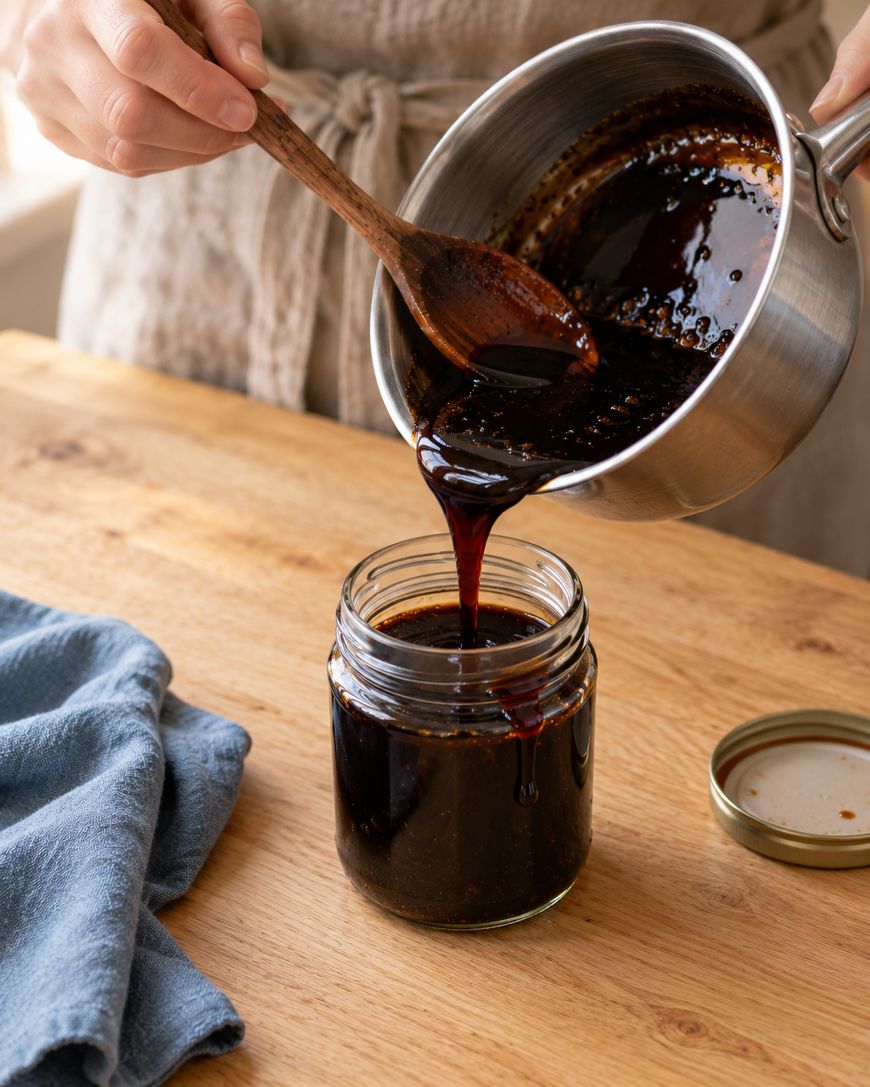
The glaze will firm up in the fridge, so let the jar sit at room temperature for a few minutes or warm it for 10 seconds in the microwave before drizzling. Always use a clean spoon to avoid introducing crumbs or moisture that can shorten its life.
What Is Balsamic Glaze and Where Does It Come From?
Balsamic glaze is a reduction of balsamic vinegar, which means the vinegar is cooked down until the water evaporates and the sugars concentrate. Balsamic vinegar itself comes from Modena and Reggio Emilia in northern Italy, where it has been made for centuries from cooked grape must.
True Traditional Balsamic Vinegar of Modena is aged for at least 12 years in a series of wooden barrels and is sold in tiny, expensive bottles. The affordable Balsamic Vinegar of Modena in most grocery stores is a younger blend, and it is perfect for making glaze at home.
Store-bought glazes often rely on thickeners, caramel color, and added sweeteners to get their texture. Making your own gives you a cleaner product with just two ingredients, and it usually costs less than a bottle at the store.
Ready to cook? Use the recipe card below for the exact measurements, times, and nutrition information.
Easy Balsamic Glaze
A thick, glossy balsamic glaze made with two ingredients and simmered on the stove in about 20 minutes. Drizzle it over salads, vegetables, chicken, caprese, and dessert.
Ingredients
- 1 cup balsamic vinegar
- 2 tablespoons light or dark brown sugar
Instructions
- Pour 1 cup balsamic vinegar and 2 tablespoons brown sugar into a small saucepan and stir until most of the sugar dissolves.
- Set the pan over medium heat and bring to a gentle bubble, then reduce the heat to medium low so the surface just trembles with small bubbles.
- Simmer for 15 to 20 minutes, stirring every few minutes, until the vinegar has reduced by about half and coats the back of a spoon.
- Remove the pan from the heat and let the glaze cool for about 10 minutes, during which it will thicken further.
- Pour the cooled glaze into a clean jar, seal, and refrigerate for up to 2 weeks.
Notes
Do not let the vinegar boil hard or it can scorch and turn bitter. The glaze thickens as it cools, so stop cooking while it still looks slightly loose. Cooling time is not included in the total time. For a honey version, replace the brown sugar with 1 tablespoon honey. Store in an airtight jar in the refrigerator for up to 2 weeks and warm for 10 seconds in the microwave if it firms up.
Nutrition Information:
Yield:
8Serving Size:
1 tablespoonAmount Per Serving: Calories: 38Total Fat: 0gSaturated Fat: 0gSodium: 5mgCarbohydrates: 9gFiber: 0gSugar: 8gProtein: 0g
Balsamic Glaze Questions Answered
How long does balsamic glaze take to thicken?
Simmering takes 15 to 20 minutes on medium low heat, until the vinegar has reduced by about half. The glaze keeps thickening as it cools, so judge it by how it coats a spoon rather than how thick it looks in the pan.
Do you need sugar to make balsamic glaze?
No, but a little brown sugar makes the glaze thicker, smoother, and less sharp. Without it, the vinegar still reduces into a glaze, just with a tangier finish and a little more simmering time.
What is the difference between balsamic vinegar and balsamic glaze?
Balsamic vinegar is thin, tangy, and pourable like a dressing. Balsamic glaze is the same vinegar cooked down to a thick, sweet, concentrated syrup that clings to food.
Why does my balsamic glaze taste bitter?
Bitterness usually means the heat was too high or the glaze simmered too long, which scorches the sugars. Keep the heat at medium low, pull the pan off as soon as it coats a spoon, and start over with fresh vinegar if it smells burnt.
How long does homemade balsamic glaze last?
Keep it in an airtight jar in the refrigerator for up to 2 weeks. It will thicken when cold, and a quick 10 seconds in the microwave loosens it again.
Why This Balsamic Glaze Recipe Works
This balsamic glaze works because it relies on slow, gentle evaporation instead of thickeners. Simmering the vinegar over medium low heat concentrates its natural grape sugars without scorching them, which is what gives the glaze its deep, balanced flavor.
The 2 tablespoons of brown sugar do two jobs at once. They add body so the glaze turns glossy and syrupy, and they soften the vinegar’s sharp edge so the finished flavor is tangy and sweet instead of harsh.
Pulling the pan off the heat when the glaze coats a spoon is the final key. Because the glaze thickens as it cools, you stop while it still looks slightly loose and let the last bit of thickening happen in the jar rather than in the pan.
Make Your Own Balsamic Glaze Tonight
Homemade balsamic glaze takes only two ingredients and about 20 minutes, and it upgrades salads, roasted vegetables, chicken, and even ice cream. Make a batch this week, keep the jar in the fridge, and you will find yourself drizzling it on everything.
Pin the recipe card, share it with a friend who loves caprese, and let us know in the comments how you used your balsamic glaze.