Last updated: September 28, 2026
The pairing of banana and matcha is more intentional than it might first appear. Matcha has a naturally bitter, grassy flavor that pairs best with something sweet and creamy to balance it, and frozen banana provides both in a single ingredient.
Unlike sugar or honey, banana also adds potassium, fiber, vitamin B6, and magnesium to the drink. The result is a latte that tastes indulgent but delivers genuine nutrition, which is why it has become one of the most popular matcha drinks across wellness communities and social media platforms.
The Basic Banana Matcha Latte Recipe
This is the foundational recipe to master before exploring variations. It takes about five minutes and yields one large serving.
Ingredients
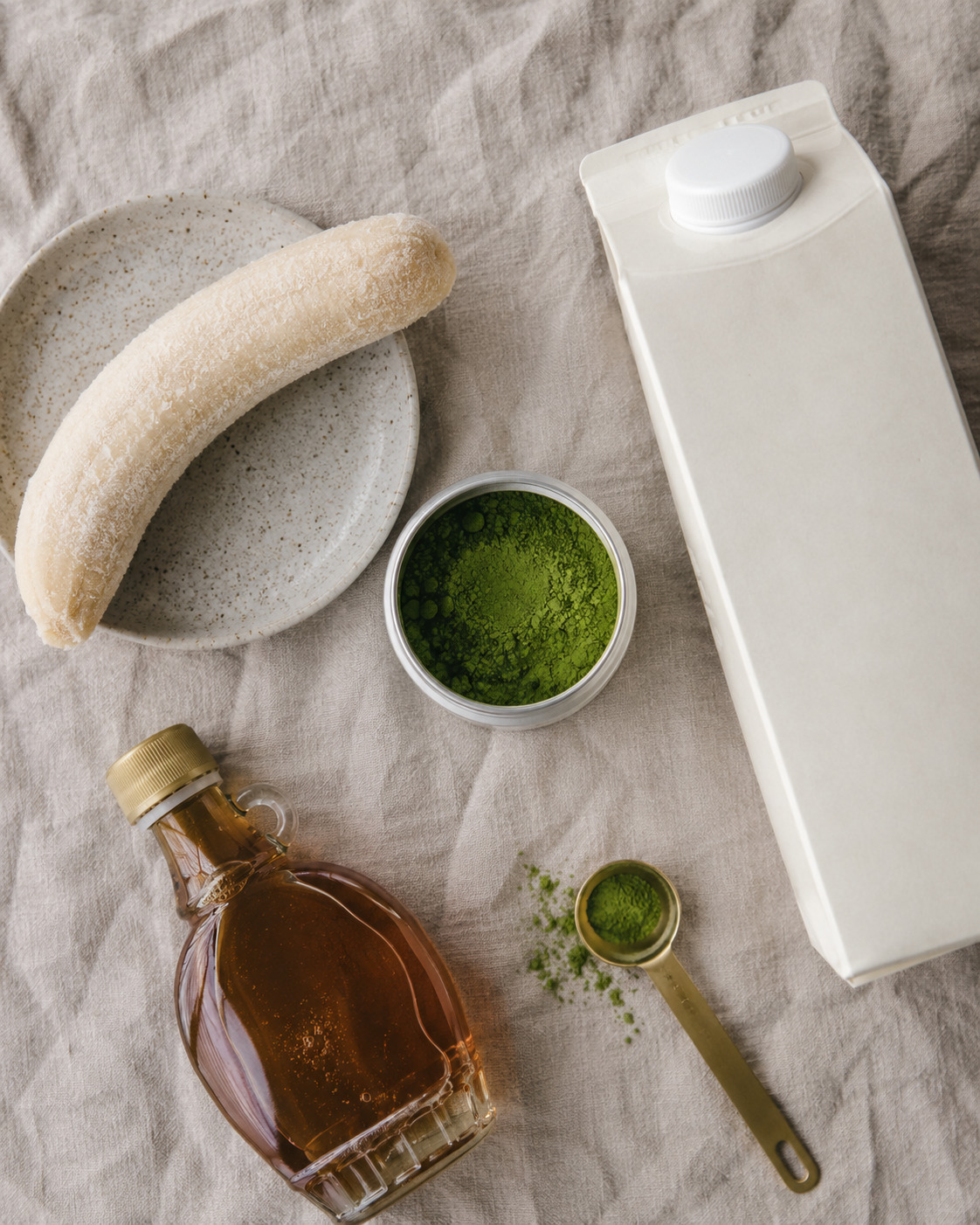
- 1 frozen banana (peeled before freezing, ideally very ripe with brown spots for maximum sweetness)
- 1 teaspoon ceremonial-grade matcha powder
- 1 cup oat milk or full-fat coconut milk (coconut milk produces the richest result)
- 1/2 cup ice
- 1 tablespoon maple syrup or honey (optional, to taste)
- 1/4 teaspoon vanilla extract
Method
- Combine the matcha powder with 2 tablespoons of hot (not boiling) water and whisk vigorously with a bamboo matcha whisk or a small regular whisk until completely smooth with no lumps.
- Add the frozen banana, milk, ice, vanilla, and optional sweetener to a blender.
- Pour the whisked matcha over the blended banana mixture.
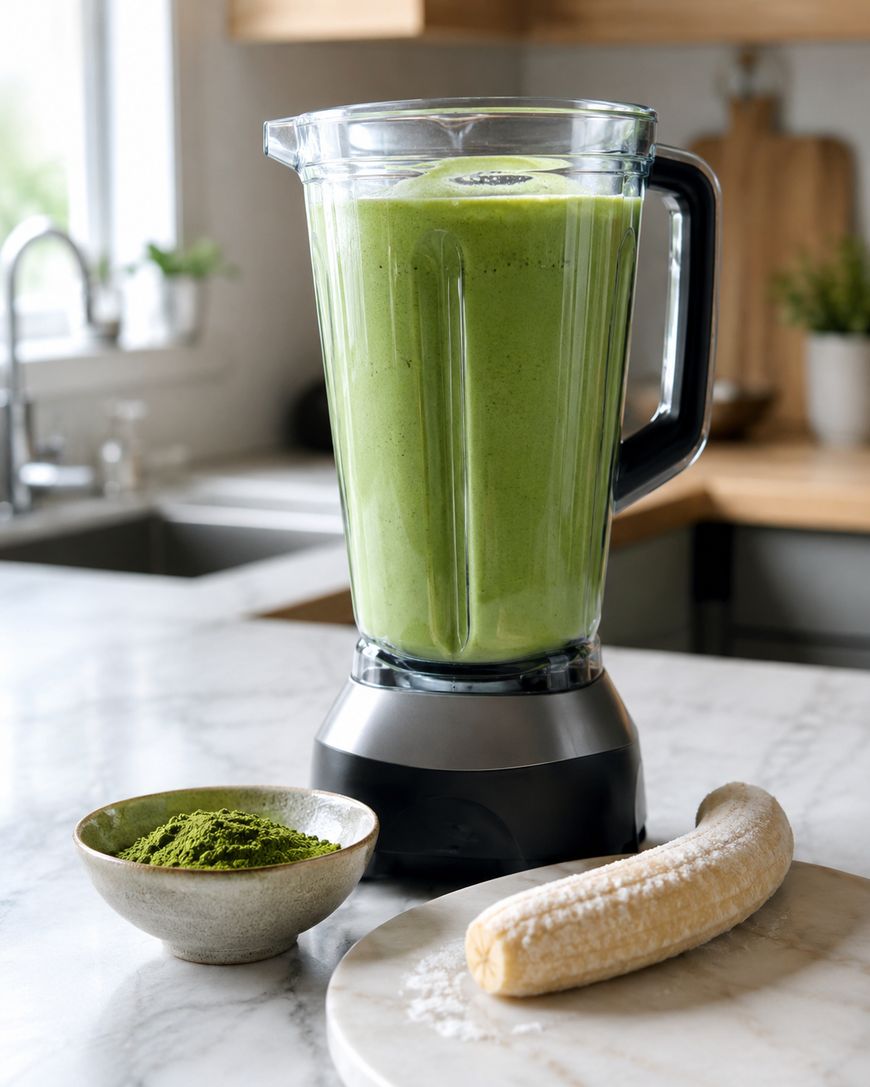
- Blend everything together on high for 30 to 45 seconds until completely smooth and creamy.
- Taste and adjust sweetness with additional maple syrup if needed.
- Pour into a tall glass and serve immediately.
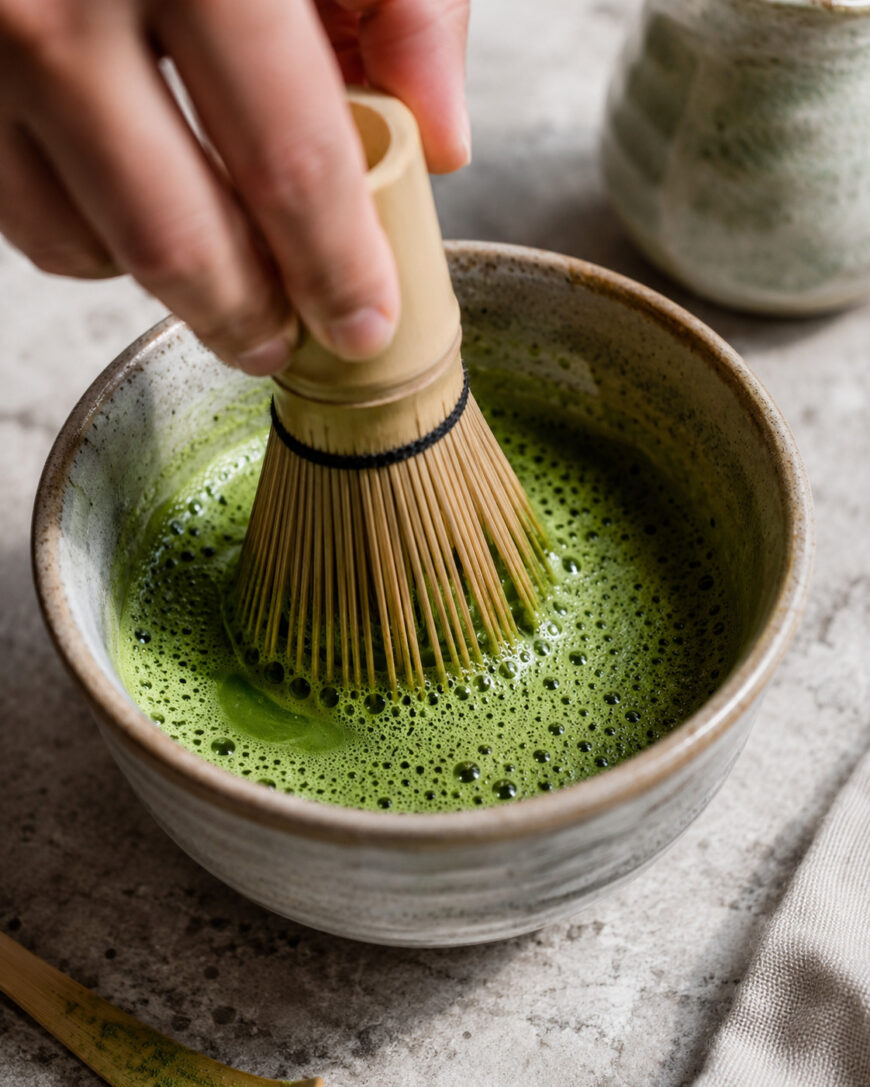
The most important step is pre-whisking the matcha into a small amount of hot water before adding it to the blender. Blending dry matcha powder directly with cold liquid results in clumps that never fully incorporate.

Get the exact measurements and step-by-step instructions in the recipe card below.
Choosing the Right Matcha for a Banana Matcha Latte
Matcha quality makes a significant difference in the final flavor of a banana matcha latte. Ceremonial-grade matcha is shade-grown, stone-ground, and produced from the youngest tea leaves, which results in a vivid green color, a smooth slightly sweet flavor, and significantly less bitterness than culinary-grade matcha.
Ippodo, Marukyu Koyamaen, and Encha are among the most consistently excellent Japanese matcha brands available in the United States. For a more affordable option, Jade Leaf Ceremonial Blend and Matcha Konomi Ceremonial Grade are both available on Amazon and produce excellent results in drinks. Culinary-grade matcha works in a banana matcha latte but produces a more bitter, less vibrant result and is better suited for baked goods.
The Best Milk for a Banana Matcha Latte
The choice of milk changes the character of the banana matcha latte significantly. Full-fat coconut milk from a can produces the richest, creamiest, and most luxurious result; the coconut flavor is subtle but present and pairs beautifully with the banana.
Oat milk is the most popular choice for its neutral flavor, natural creaminess, and the way it emulsifies with the frozen banana to create a smooth, almost foamy texture. Oatly Barista Edition is the best version for this drink. Almond milk produces a lighter, thinner result, while whole dairy milk produces a particularly rich and creamy banana matcha latte for those who are not dairy-free.
Banana Matcha Latte Variations
Iced Banana Matcha Latte
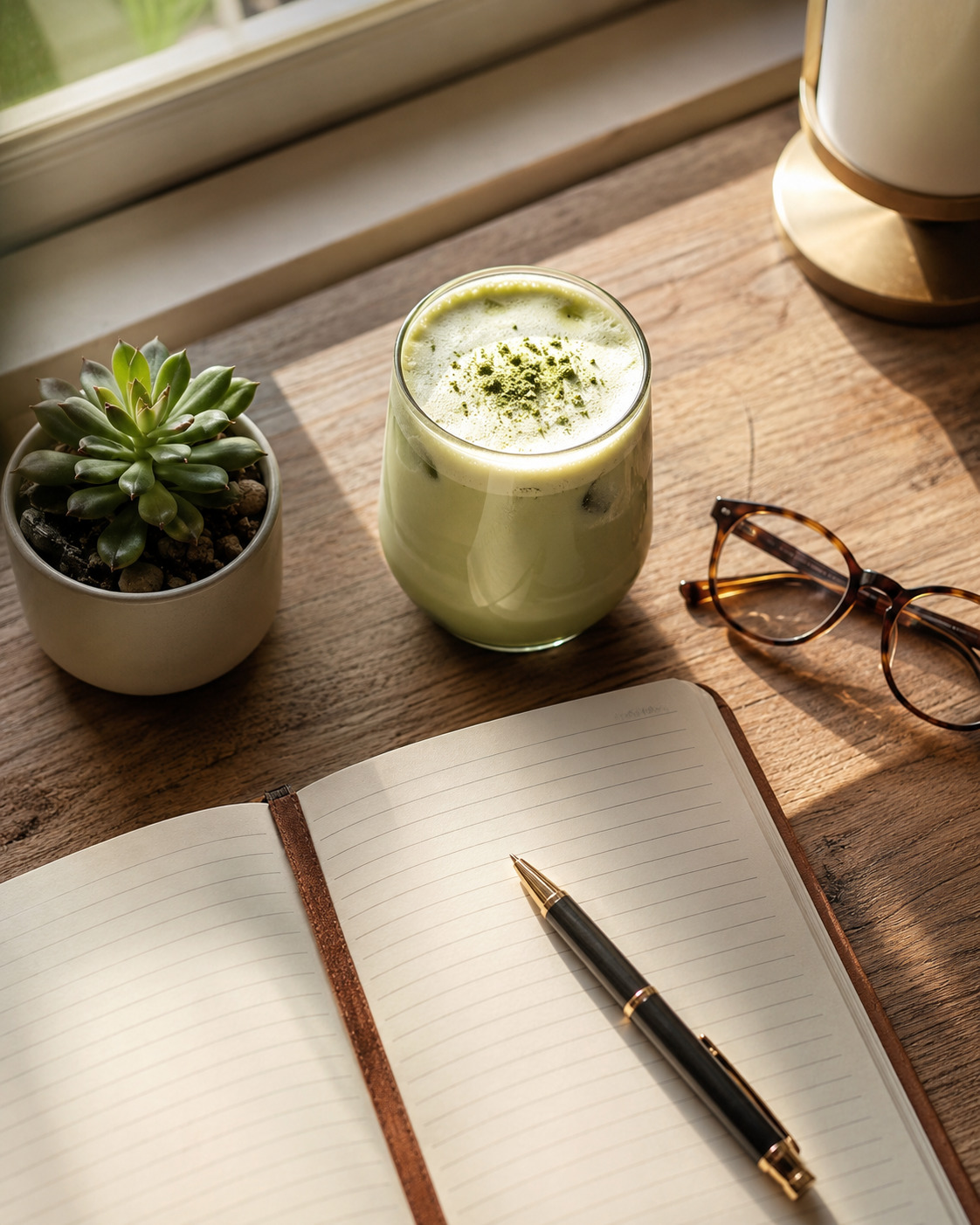
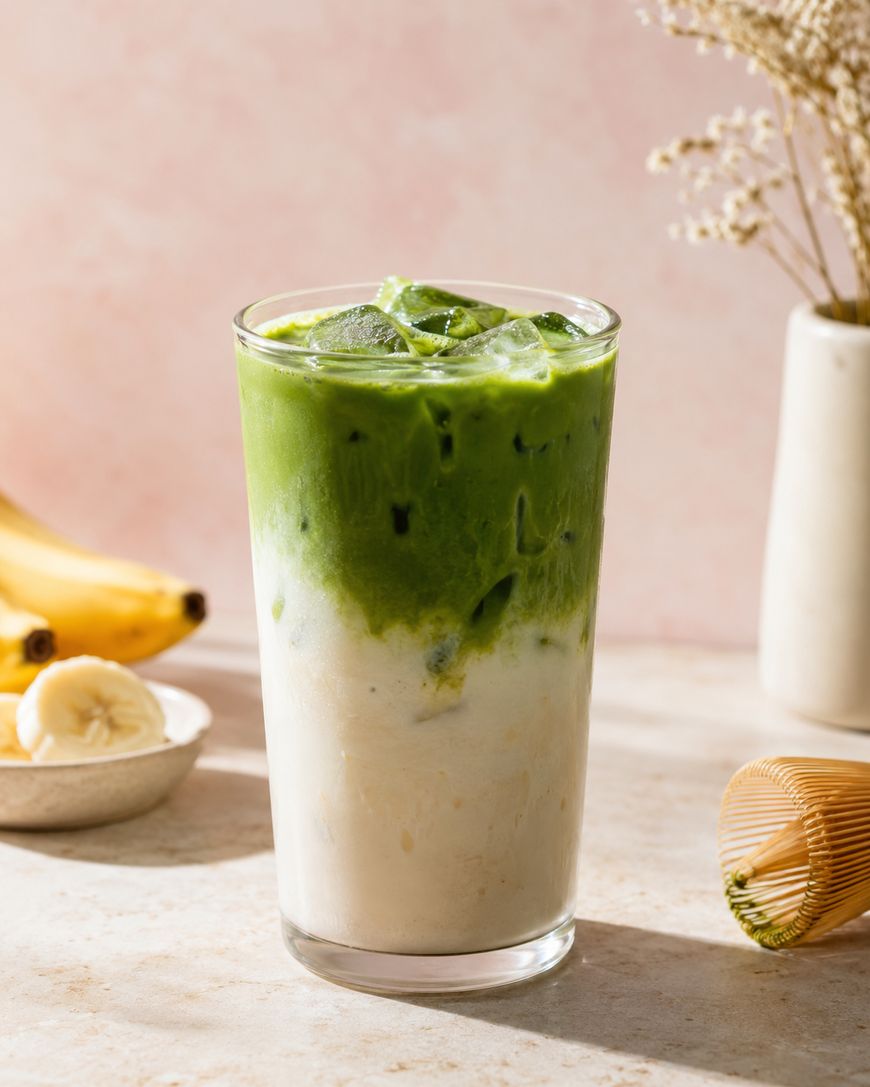
For the most coffee-shop-accurate iced version, blend the frozen banana with milk and ice until smooth, pour it into a tall glass, and pour the separately whisked matcha over the top without stirring immediately. The matcha will create a dramatic green layer over the creamy white banana base that looks stunning before the first stir.
Serve with a wide straw and let the drinker stir it together themselves for the most photogenic presentation. This is the version most commonly photographed on social media.

Banana Matcha Smoothie
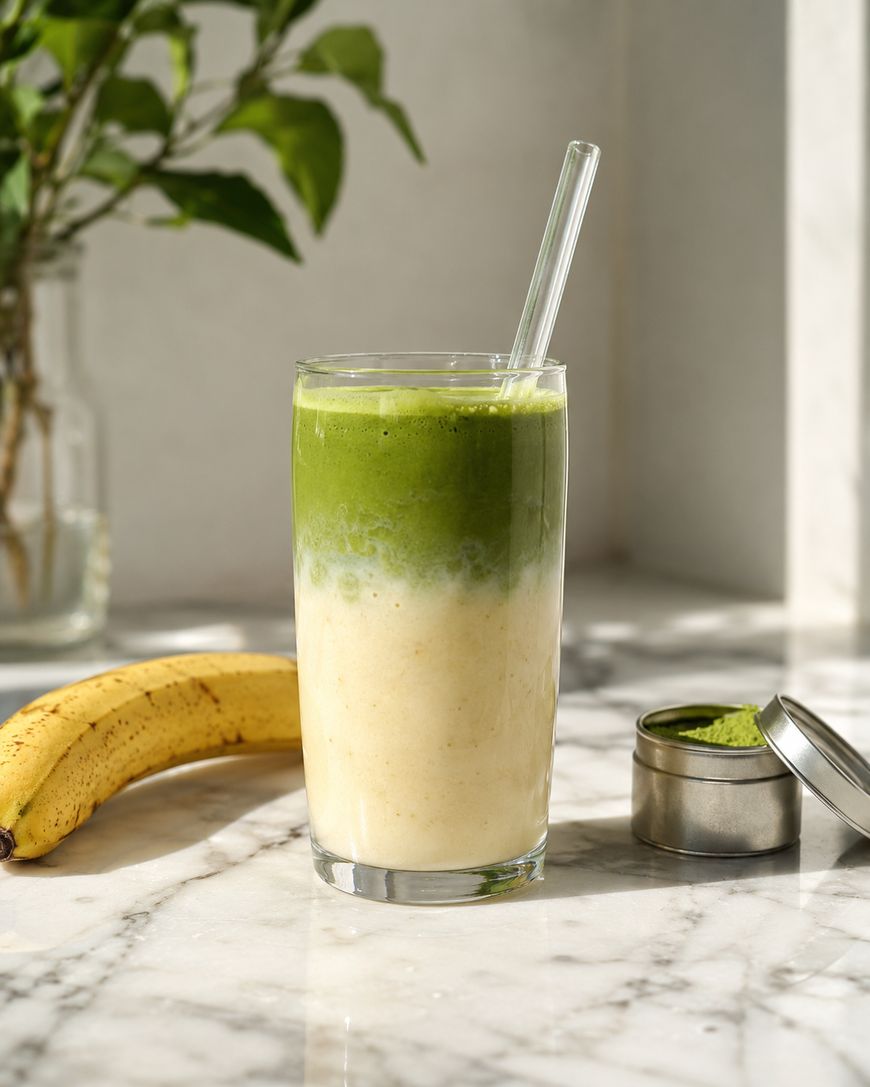
Adding a tablespoon of hemp seeds, a tablespoon of almond butter, and a handful of fresh spinach to the base recipe creates a banana matcha smoothie that qualifies as a complete meal replacement. The almond butter adds healthy fat and protein that extends satiety significantly.
The spinach adds virtually no flavor but contributes additional folate, iron, and vitamin K. Blend everything on high until completely smooth and serve immediately.
Warm Banana Matcha Latte
For a hot version, use a ripe but not frozen banana mashed smooth with a fork, heat the milk in a saucepan or microwave until steaming (not boiling), and froth it with a handheld milk frother. Whisk the matcha with a small amount of hot water, then combine with the warm frothed milk and mashed banana, blending or whisking until smooth.

This version is less thick than the cold blended version and tastes more like a traditional latte. A pinch of cinnamon and a grating of fresh nutmeg over the foam elevate the flavor considerably.
Banana Matcha Protein Latte
Adding a scoop of unflavored or vanilla protein powder to the base recipe creates a post-workout banana matcha latte with 20 to 30 additional grams of protein. Use a plant-based vanilla protein powder for the most neutral flavor that does not compete with the matcha.
Vital Proteins Collagen Peptides (unflavored) dissolves invisibly into the blended drink and adds protein and collagen without changing the flavor at all. This is one of the most nutritionally complete versions of the banana matcha latte.
Chocolate Banana Matcha
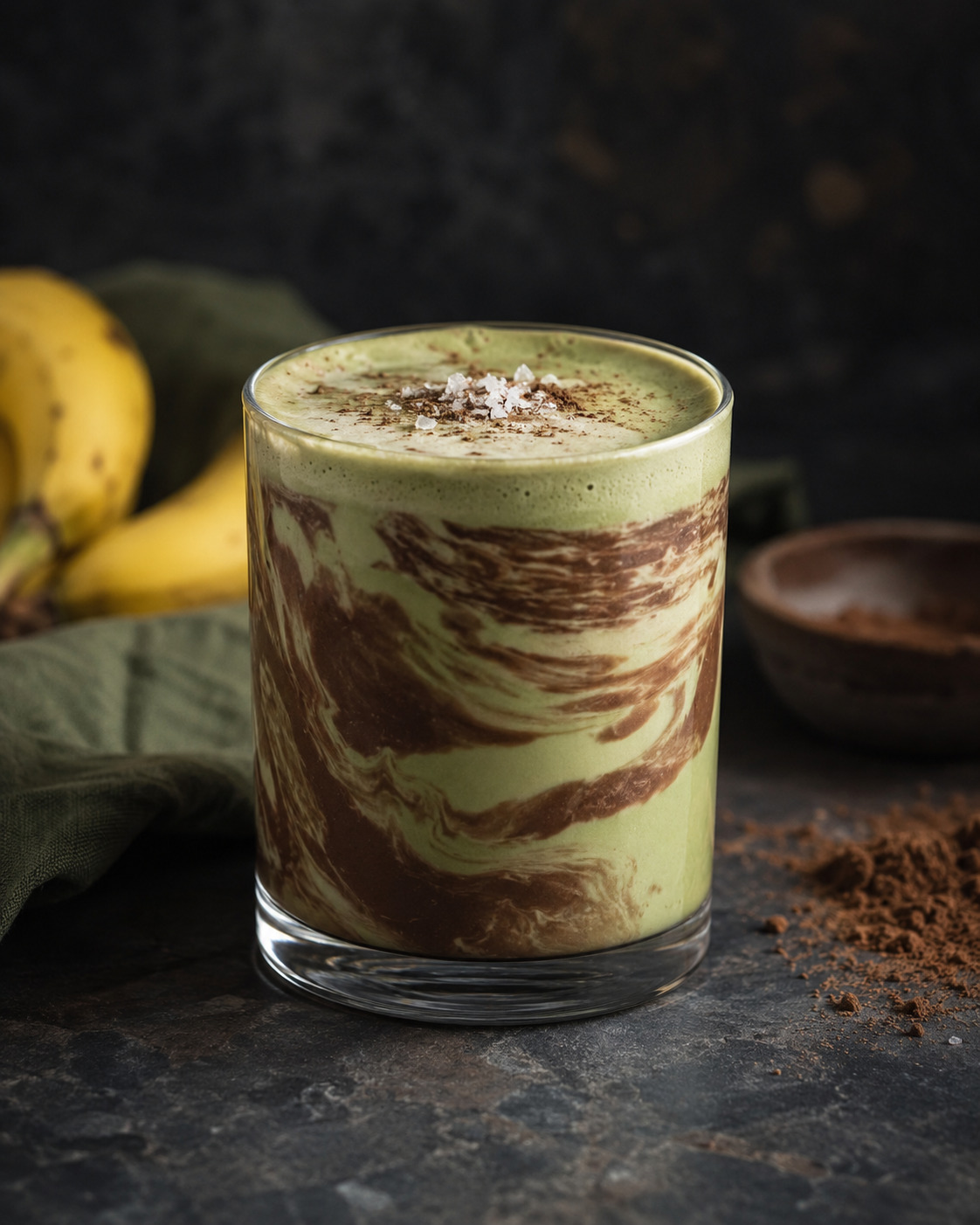
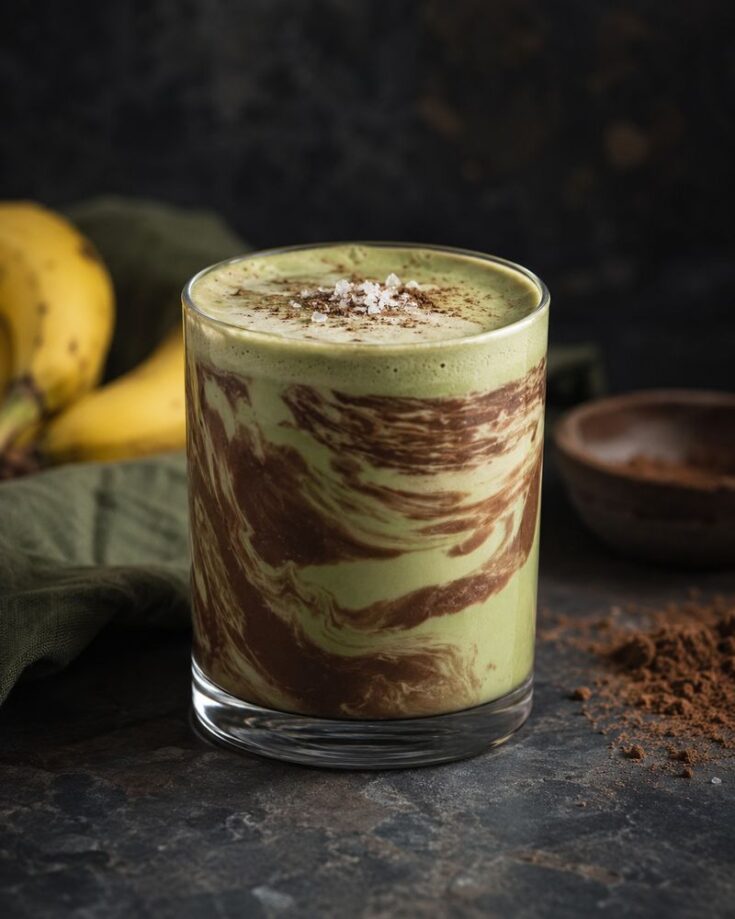
Adding a tablespoon of unsweetened cacao powder to the base recipe creates a mocha-adjacent version of the banana matcha latte that is surprisingly harmonious. Cacao, matcha, and banana share complementary earthy and sweet notes that make the combination work better than it sounds on paper.
Use ceremonial-grade matcha and raw cacao powder (not Dutch-process cocoa) for the freshest, most vibrant result. A pinch of sea salt brings all three flavors into sharper focus.
Banana Matcha Latte
A creamy, naturally sweetened green smoothie that blends frozen banana with ceremonial-grade matcha for an indulgent yet nutritious latte.
Ingredients
- 1 frozen banana, peeled before freezing
- 1 teaspoon ceremonial-grade matcha powder
- 1 cup oat milk or full-fat coconut milk
- 1/2 cup ice
- 1 tablespoon maple syrup or honey (optional, to taste)
- 1/4 teaspoon vanilla extract
- 2 tablespoons hot water (not boiling), for whisking matcha
Instructions
- Whisk the matcha powder with 2 tablespoons of hot (not boiling) water until completely smooth with no lumps.
- Add the frozen banana, milk, ice, vanilla, and optional sweetener to a blender.
- Pour the whisked matcha over the banana mixture.
- Blend on high for 30 to 45 seconds until completely smooth and creamy.
- Taste and adjust sweetness with additional maple syrup if needed.
- Pour into a tall glass and serve immediately.
Notes
The most important step is pre-whisking the matcha into hot water before adding it to the blender, since blending dry matcha directly with cold liquid causes clumps. Use a very ripe, spotty banana for maximum natural sweetness.
Nutrition Information:
Yield:
1Serving Size:
1 large glass (approx 16oz)Amount Per Serving: Calories: 210Total Fat: 5gSaturated Fat: 1gSodium: 90mgCarbohydrates: 36gFiber: 5gSugar: 20gProtein: 3g
This site provides estimated nutritional information. This information comes from online calculators. Although we try to provide accurate nutritional information, these figures are only estimates.
The Nutritional Benefits of a Banana Matcha Latte
A standard banana matcha latte made with oat milk contains approximately 180 to 220 calories, depending on the milk and sweetener used. The matcha contributes L-theanine, an amino acid that promotes calm, focused alertness, and approximately 30 to 70 milligrams of caffeine per teaspoon, significantly less than a shot of espresso but meaningfully more than green tea.
The banana contributes approximately 3 grams of fiber, 12 percent of the daily recommended potassium, and natural sugars that raise blood glucose more gradually than refined sugar due to the fiber content. The combination of L-theanine from the matcha and the magnesium in the banana is associated with a notably smooth energy lift without the crash commonly associated with coffee.
Tips for the Best Banana Matcha Latte Every Time
Freeze bananas when they are at peak ripeness, covered in brown spots, for the sweetest result. Peel them before freezing and store in a sealed bag; frozen bananas keep well for up to three months.
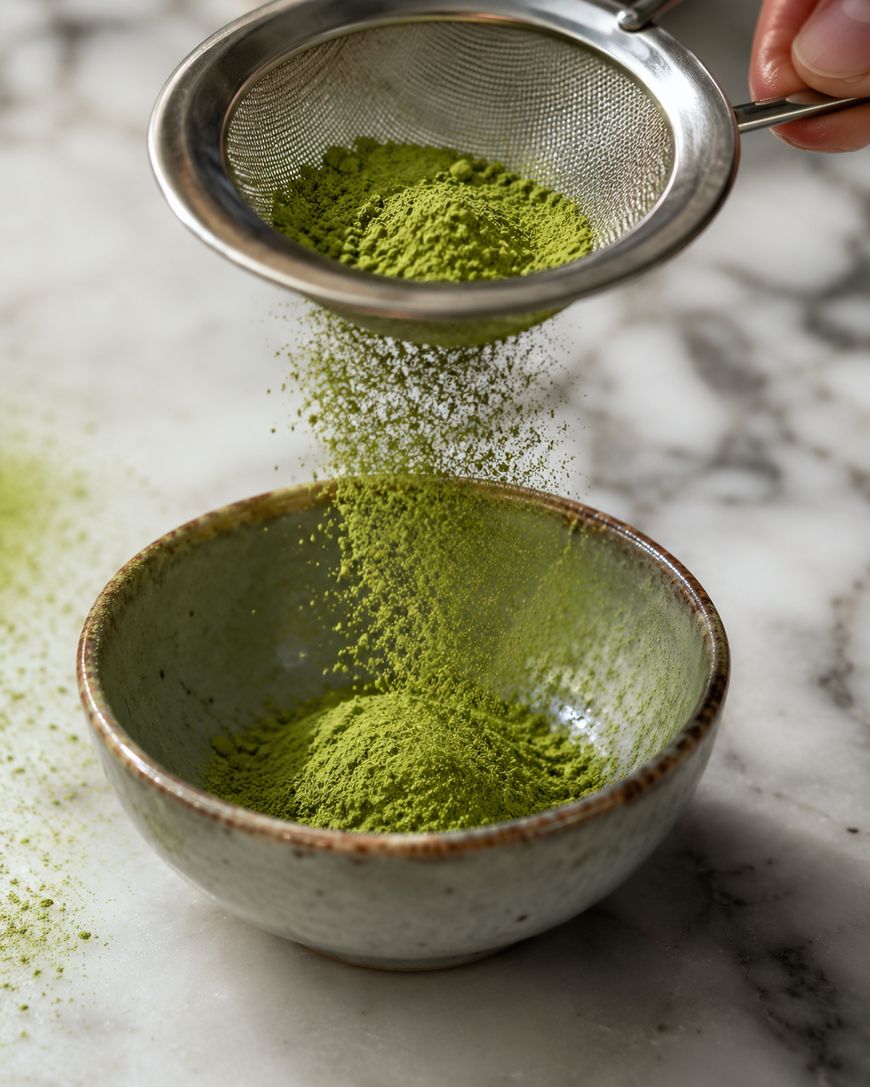
Always sift the matcha powder through a fine mesh strainer before whisking to break up any clumps and ensure smooth incorporation. Do not use boiling water to whisk the matcha; water above 175 degrees Fahrenheit degrades the chlorophyll and L-theanine and produces a more bitter, less vibrant result. Let boiling water sit for one minute before whisking.
Questions People Ask About the Banana Matcha Latte
Can you taste the banana in a banana matcha latte?
Yes, the banana flavor is present but subtle rather than dominant, particularly when the matcha is high-quality and the milk is creamy. The banana functions primarily as a sweetener and thickener, and its flavor recedes behind the matcha’s grassy notes in a well-made version. Using a fully ripe, very sweet banana maximizes the sweetening effect with the smallest amount of banana flavor in the final drink.
Does a banana matcha latte have caffeine?
Yes, a banana matcha latte contains caffeine from the matcha, approximately 25 to 70 milligrams per teaspoon depending on the grade and quantity used. This is roughly equivalent to half a cup of drip coffee. The L-theanine in matcha modulates how the caffeine is absorbed, producing a more gradual, sustained energy effect than coffee.
Can you make a banana matcha latte without a blender?
A banana matcha latte without a blender can be made by mashing the banana very thoroughly with a fork until it forms a smooth paste, whisking in the matcha pre-dissolved in hot water, and then whisking in the milk until as smooth as possible. The result will not be as silky as the blended version, but the flavor will be similar. A handheld immersion blender is the best low-tech alternative.
What can you substitute for banana in a banana matcha latte?
Ripe mango, avocado, or cashew butter can substitute for banana as the creamy, neutral base in a matcha latte. Mango produces a tropical and sweeter result. Avocado creates an ultra-creamy texture with a more neutral flavor. Cashew butter adds richness and a slightly nutty note. None of these substitutes will taste exactly like the banana version, but all produce a creamy, satisfying matcha latte in their own right.
Make It Your Morning Ritual
The banana matcha latte rewards consistency. Make it every morning for a week and notice how the ritual itself, the five minutes of preparation, the vivid green color, the clean energy it delivers, becomes one of the most pleasant parts of the day.
Start with the base recipe, find the milk and matcha brand that suits your palate, and then explore the variations. This is a drink you will come back to for years.