Last updated: November 18, 2026
This bechamel sauce needs just butter, flour, and milk, and it comes together in about 25 minutes with no lumps. The full recipe card is waiting below, and the walkthrough here shows you exactly how each stage should look.
How to Make Bechamel Sauce From Scratch
Bechamel sauce is a simple white sauce built on a roux, which is equal parts butter and flour cooked together and then loosened with warm milk. Once you understand the rhythm of melting, whisking, and simmering, you can make it from memory in under half an hour.
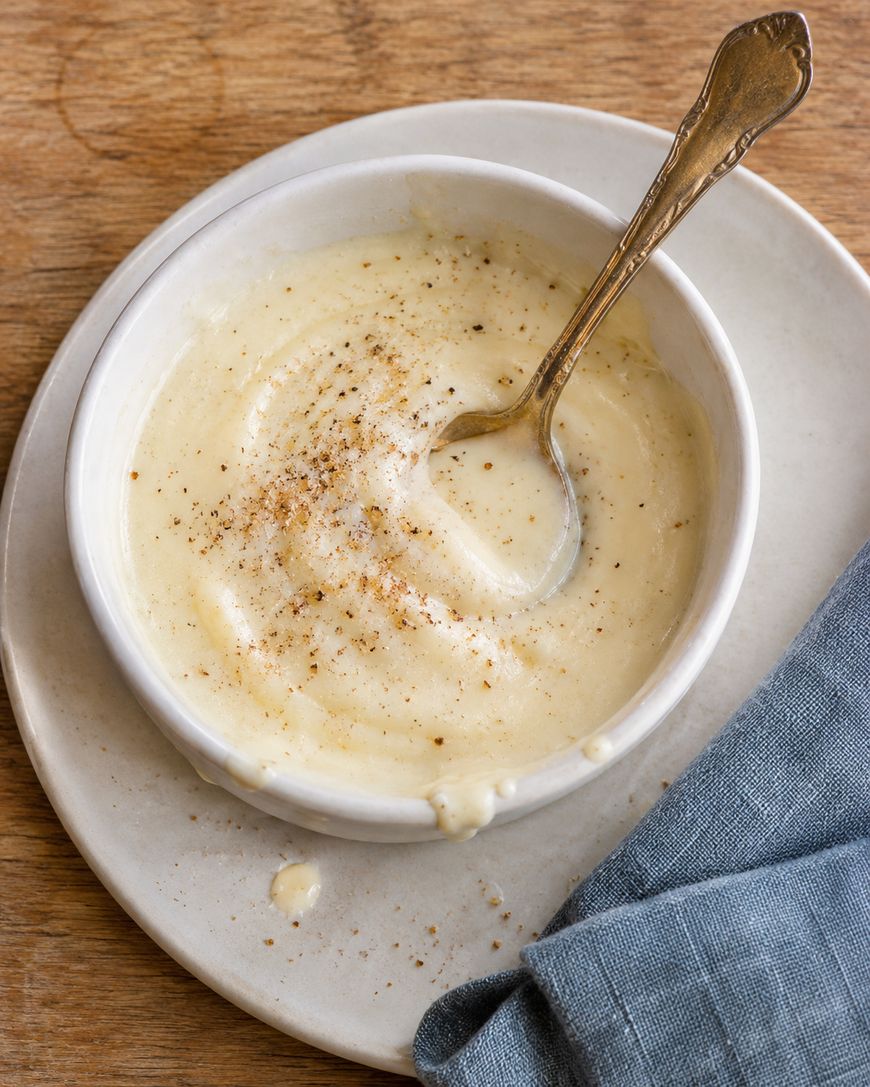
This batch makes about 2 cups, which is enough to cover a 9 by 13 inch lasagna layer or sauce a full pot of macaroni.
The Ingredients You Need
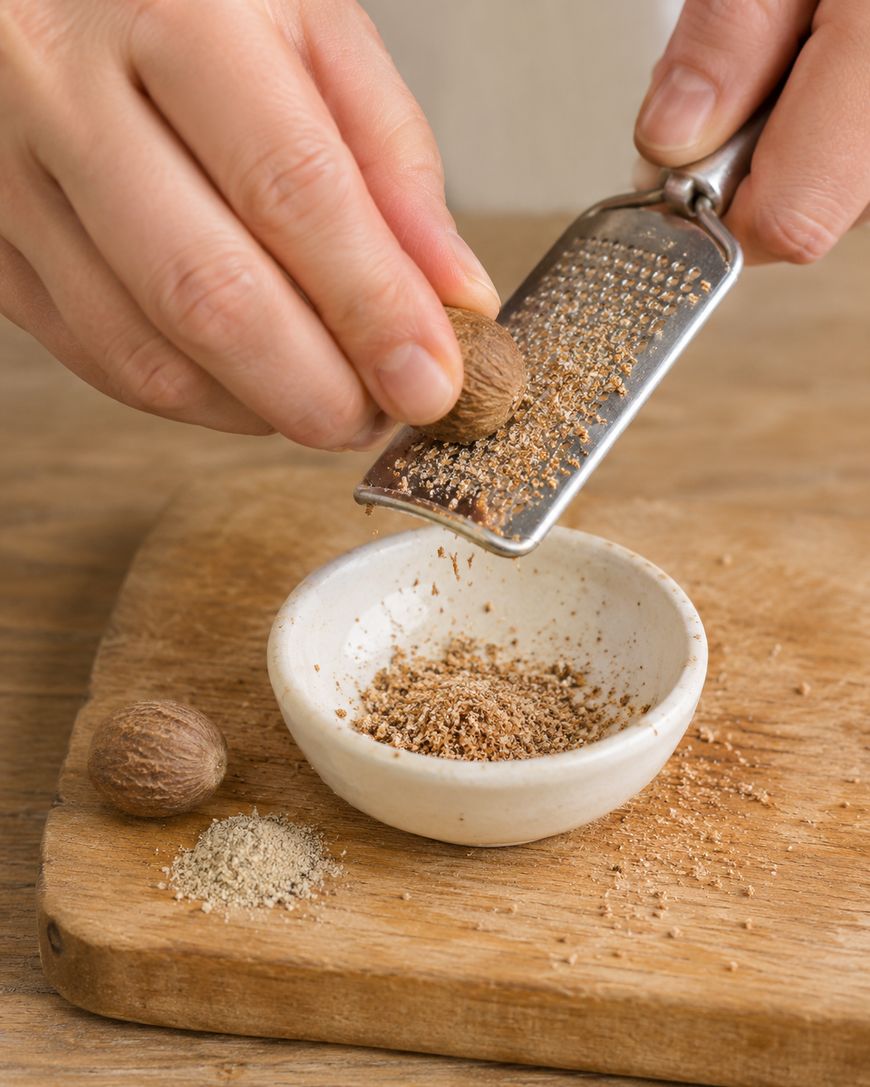
You need 4 tablespoons of unsalted butter, 4 tablespoons of all-purpose flour, and 2 cups of whole milk. For seasoning, you need 1/2 teaspoon of fine sea salt, 1/8 teaspoon of ground white pepper, and 1/8 teaspoon of freshly grated nutmeg.
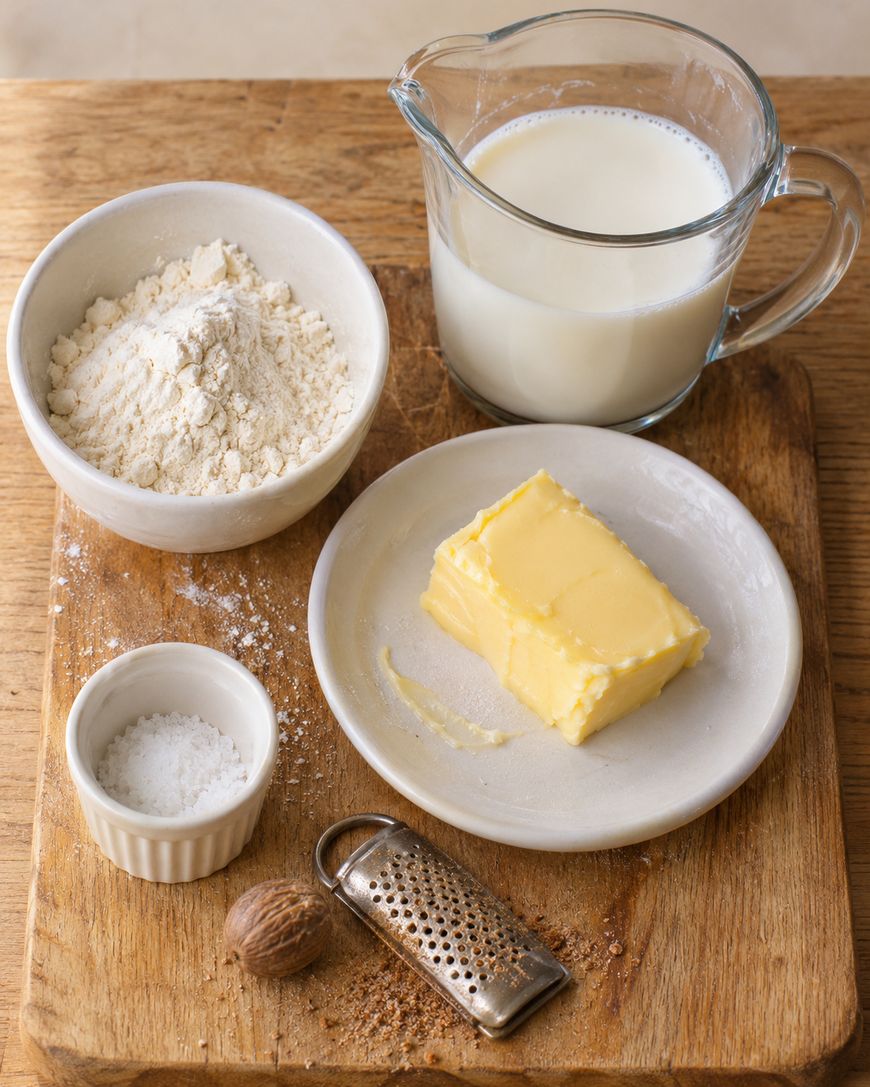
Whole milk gives the creamiest, most stable sauce because its fat keeps the texture smooth as it thickens. Unsalted butter lets you control the salt, and white pepper keeps the sauce looking pale and clean, although finely ground black pepper works if that is what you have.
Warm the Milk First
Pour the milk into a small saucepan and warm it over medium-low heat for about 3 minutes, until it is steaming but not boiling. Take it off the heat and set it beside the stove.
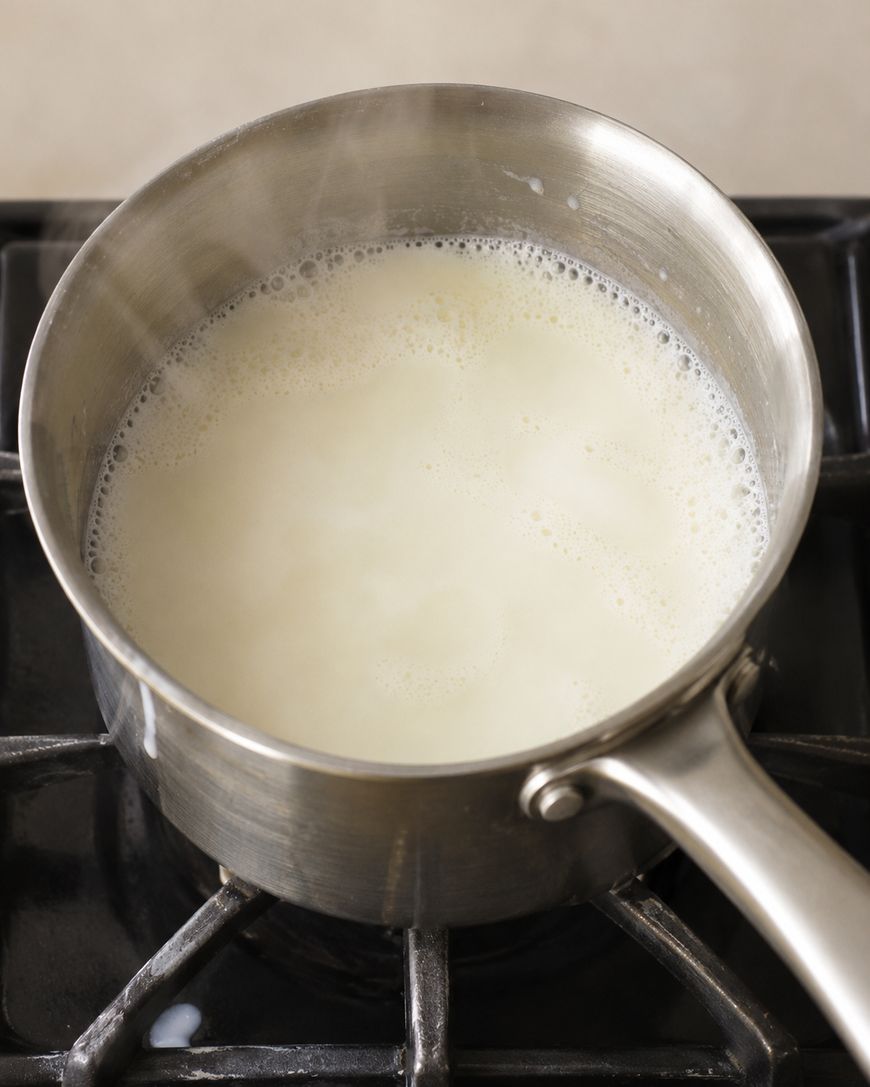
Warm milk blends into the roux far more smoothly than cold milk does. Cold milk shocks the hot roux and is the most common reason a bechamel sauce turns lumpy.

- Drip-free pouring rim
- Stay-cool stainless steel handle
- Dishwasher safe

Cook the Roux Until Pale and Bubbly
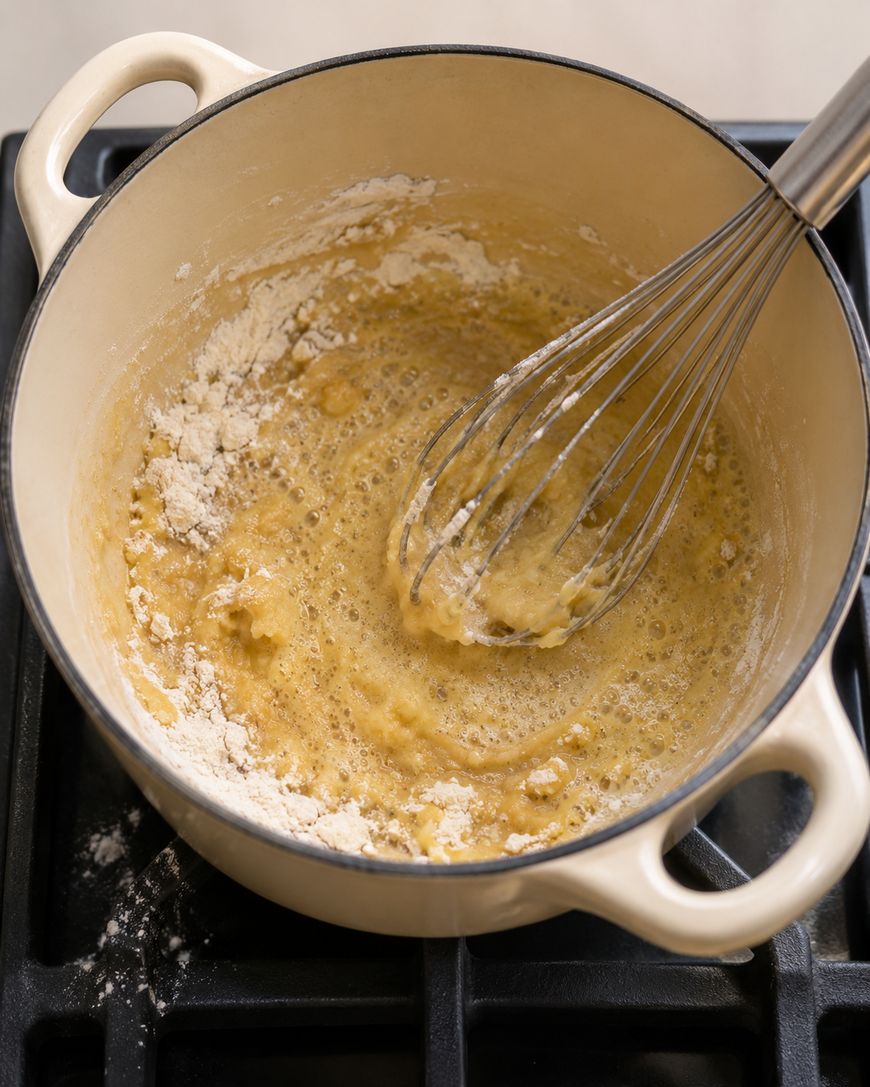
Melt the butter in a medium heavy-bottomed saucepan over medium-low heat until it is foamy. Whisk in the flour and cook for 2 minutes, whisking constantly, until the paste looks pale and bubbly and no longer smells like raw flour.
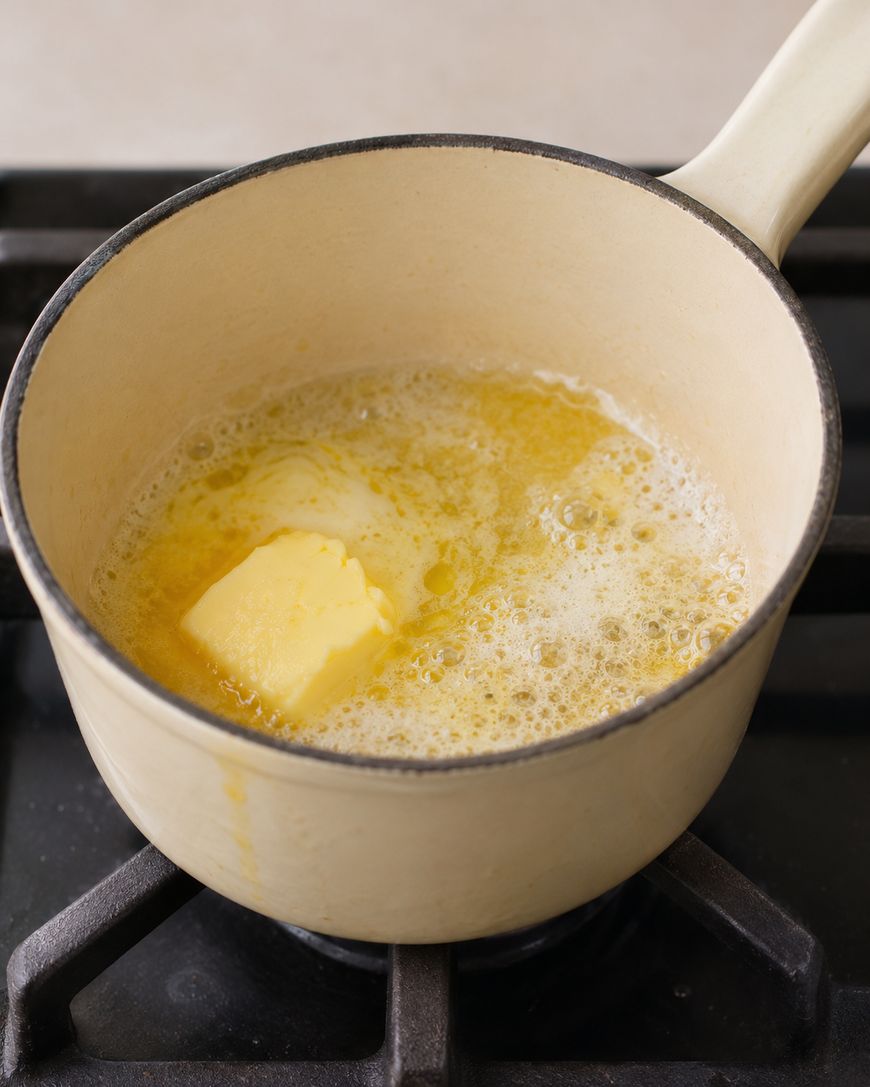
A bechamel roux is a white roux, so you want it to stay blond and never brown. Browning adds a toasty flavor that belongs in gravy and gumbo, but it darkens the sauce and mutes the clean, milky taste.
Add the Milk Slowly and Simmer
Pour in about 1/2 cup of the warm milk while whisking vigorously, and keep whisking until the mixture turns smooth and very thick. Add the rest of the milk 1/2 cup at a time, whisking until smooth after each addition.
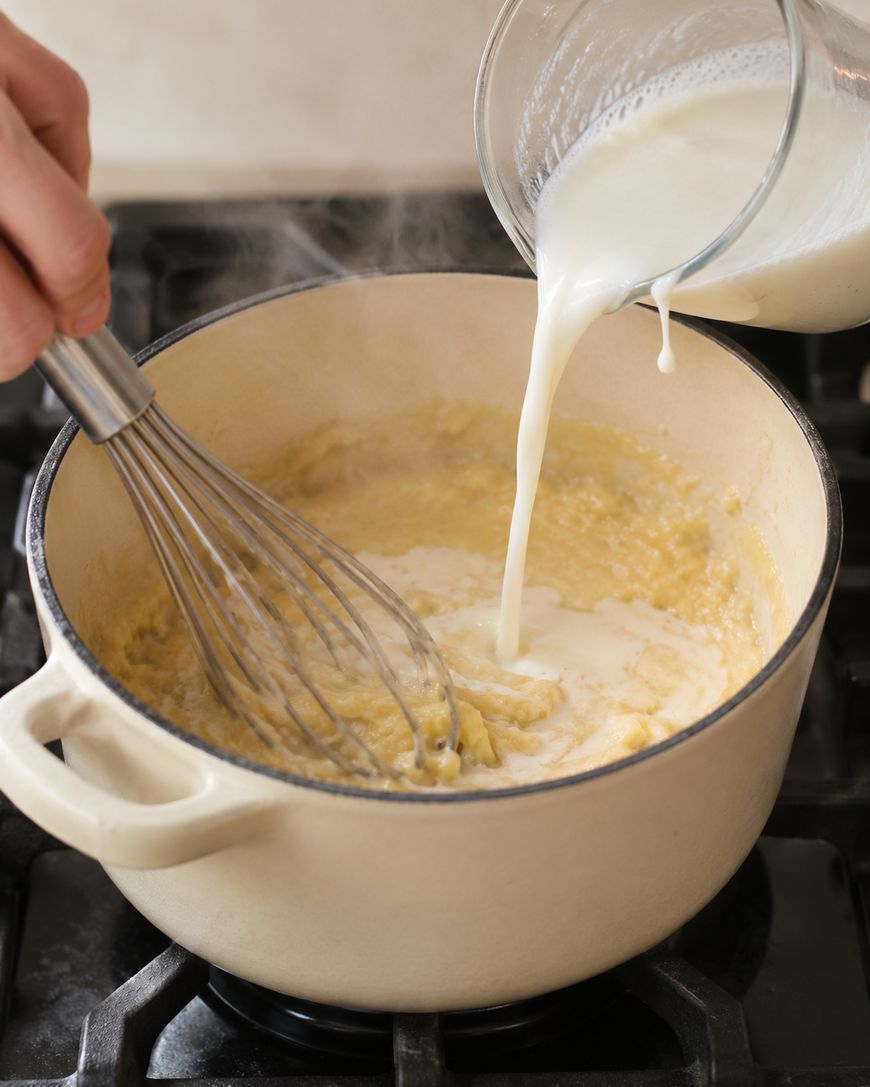
Raise the heat to medium and bring the sauce to a gentle simmer, stirring often with the whisk or a flat-edged wooden spoon. Simmer for 8 to 10 minutes, until the sauce coats the back of a spoon and holds a clean line when you drag a finger through it.
Season at the End
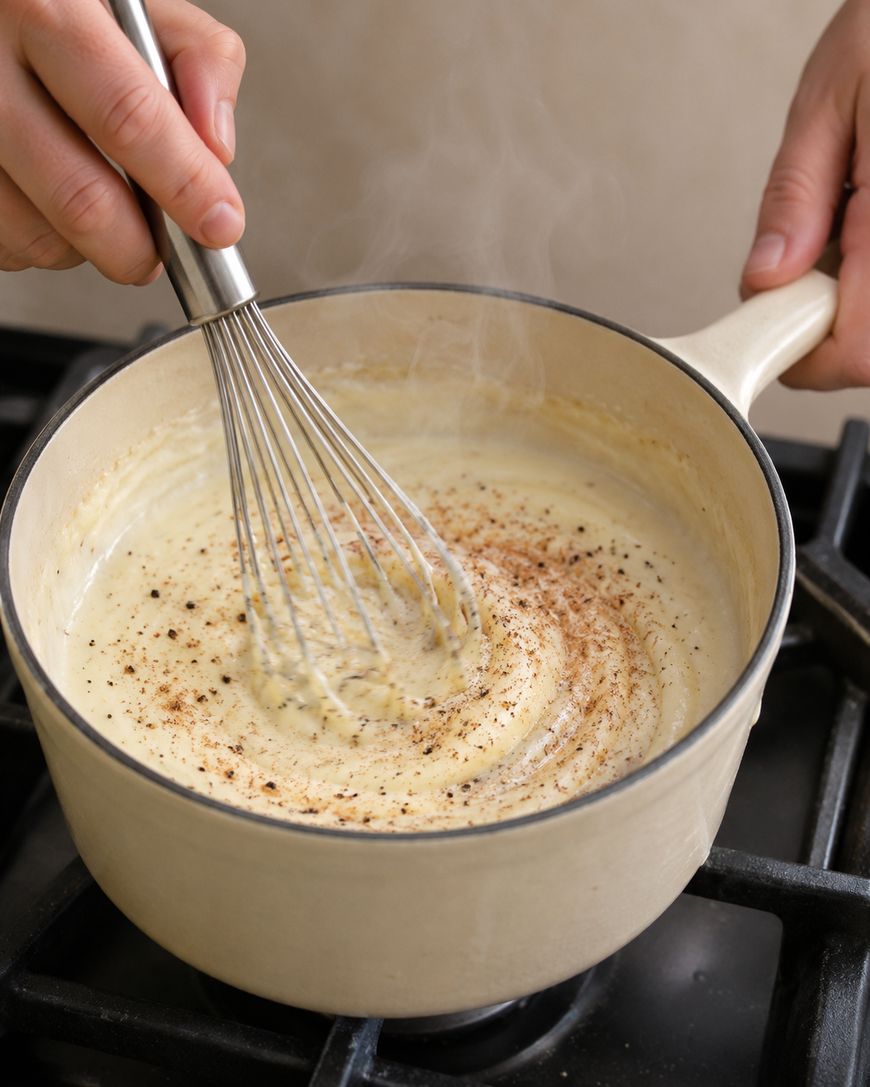
Remove the pan from the heat and whisk in the salt, white pepper, and nutmeg. Taste the sauce and adjust, remembering that cheese or a salty filling will add more salt later.
Nutmeg is the classic finishing touch for bechamel sauce, and a small pinch is all it takes. You should not be able to pick it out as nutmeg, only notice that the sauce tastes warmer and rounder.
How Thick Should Bechamel Sauce Be
The thickness of bechamel sauce depends entirely on how much roux you use per cup of milk. This recipe makes a medium sauce, with 2 tablespoons of butter and 2 tablespoons of flour for every cup of milk, which is the right consistency for most dishes.
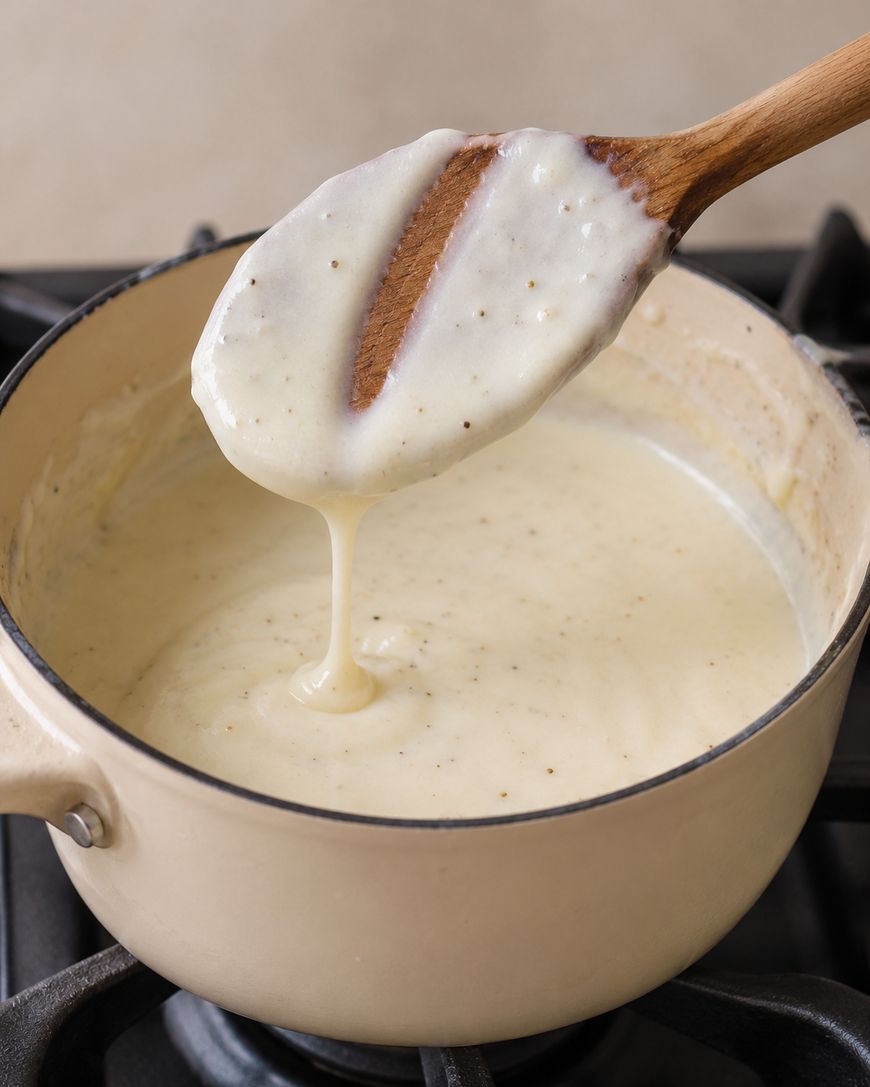
A thin sauce uses 1 tablespoon each of butter and flour per cup of milk, and it works well for creamy soups and lighter vegetable bakes. The card below is written for the medium version, so treat the thin and thick ratios as adjustments you can make once you are comfortable with the base recipe.
A thick sauce uses 3 tablespoons each of butter and flour per cup of milk, and it is the version to reach for when you need a sauce that holds its shape. Thick bechamel binds croquette filling, stabilizes a soufflé base, and keeps a stuffed pasta from turning watery in the oven.
If your sauce turns out thicker than you wanted, whisk in a splash of warm milk until it loosens. If it is thinner than you wanted, simmer it for a few more minutes, stirring often, since the sauce also thickens as it cools.

- Balloon shape for whipping and aerating
- Polished stainless steel wires
- Soft, non-slip handle
Easy Ways to Use Bechamel Sauce
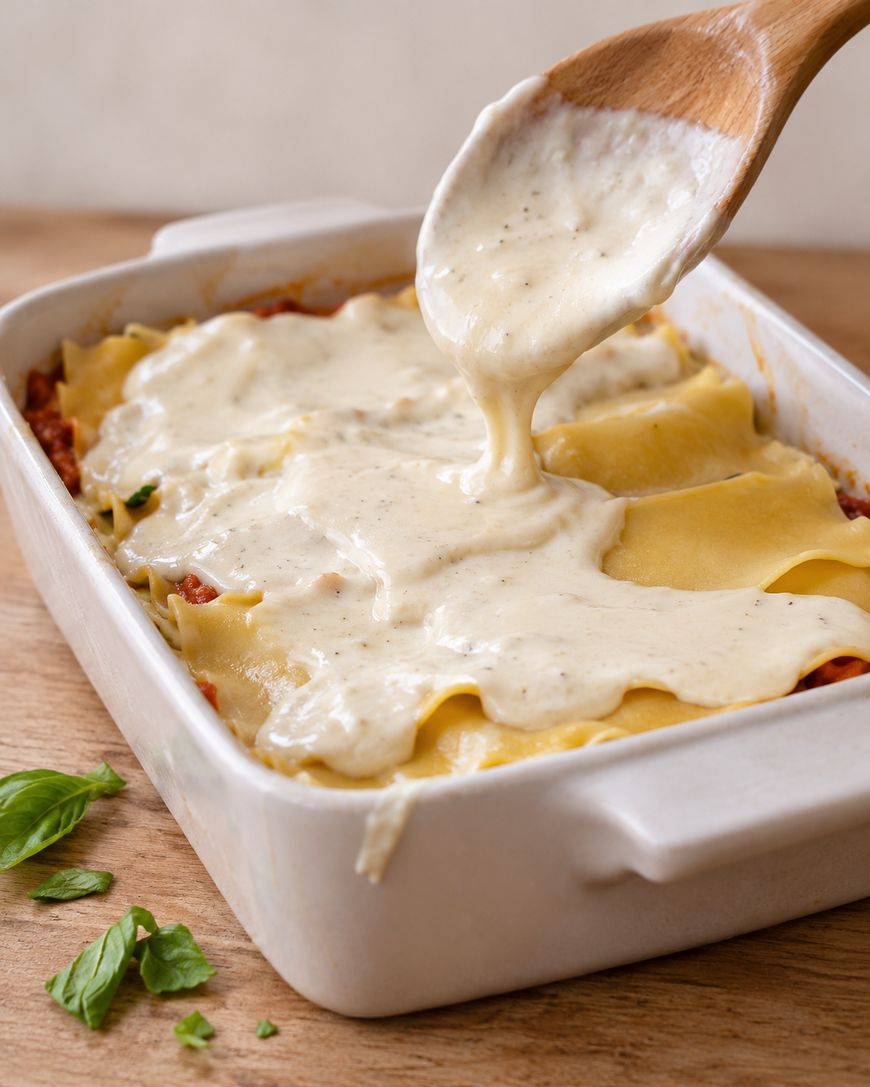
Bechamel sauce is one of the most useful sauces you can keep in your repertoire because it is the base for so many comfort foods. Layer it into lasagna in place of ricotta, pour it over baked pasta, or spoon it over roasted cauliflower, leeks, or potatoes for a quick gratin.
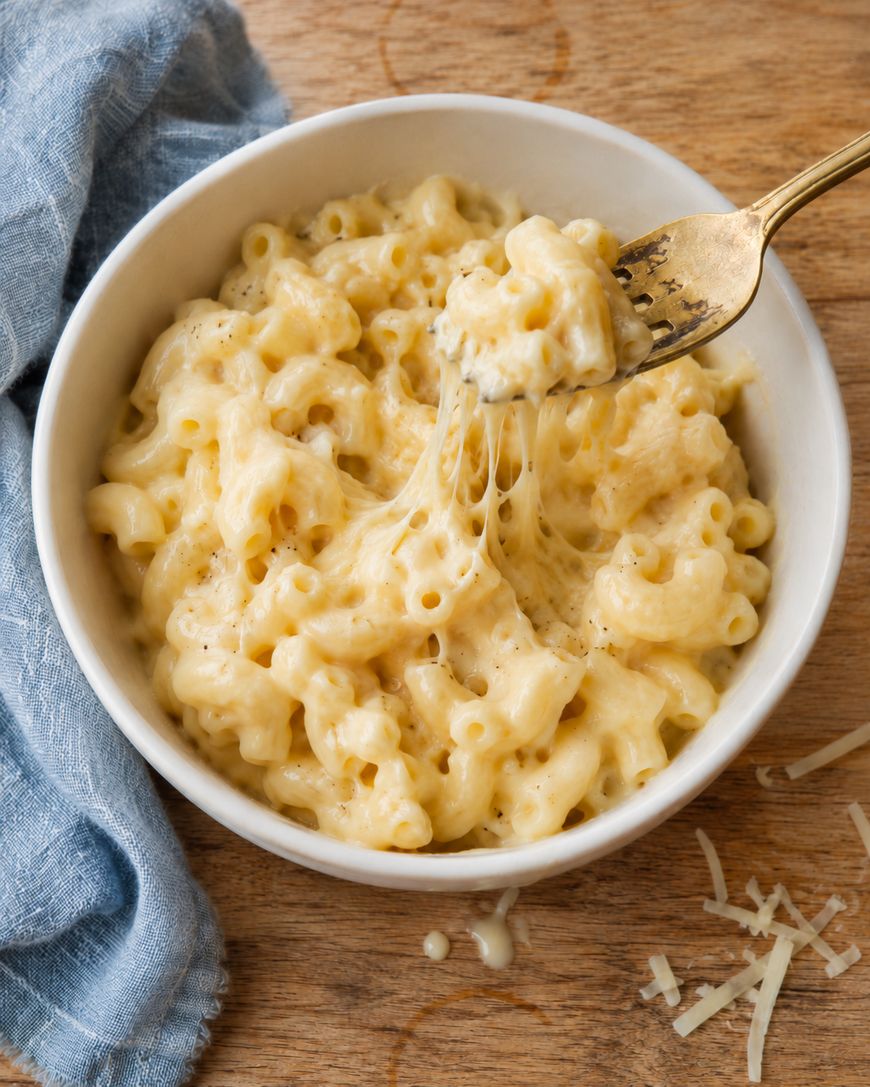
To turn it into a cheese sauce, take the pan off the heat and whisk in about 1 1/2 cups of shredded Gruyère or sharp cheddar until melted. This cheesy version is called Mornay sauce, and it is the foundation of a classic stovetop mac and cheese and a croque monsieur.
For a deeper flavor, you can warm the milk with a bay leaf and a few slices of onion, steep it for 10 minutes, and strain it before you start. The card below leaves this step out, so treat it as an optional upgrade.
Storing and Reheating Bechamel Sauce
Let the sauce cool slightly, then press a piece of plastic wrap directly onto the surface so a skin cannot form. Store it in an airtight container in the refrigerator for 3 to 4 days, which matches the USDA guidance for refrigerated leftovers.
To reheat, spoon the cold sauce into a saucepan with a splash of milk and warm it over low heat, whisking until it loosens and turns smooth again. Avoid the microwave unless you stop and stir every 20 seconds, since uneven heating can make the sauce separate.
You can also freeze bechamel sauce for up to 2 months for the best quality. The texture can look slightly grainy after thawing, but a vigorous whisk over low heat, with a little extra milk, brings it back together.
The Story Behind Bechamel Sauce
Bechamel is one of the five French mother sauces, the foundation recipes that chef Auguste Escoffier organized into a system in the early twentieth century. The other four are velouté, espagnole, hollandaise, and tomato sauce, and countless classic sauces are built from these five.
The name is traditionally linked to Louis de Béchameil, a steward in the court of King Louis XIV, though food historians disagree about whether he actually invented it. Italian cooks were making a similar white sauce called besciamella long before, and the two traditions probably influenced each other.
Whatever its true origin, the sauce has traveled well. It appears in Greek moussaka, Italian lasagna alla bolognese, French gratins, and the cream sauce on a Southern-style creamed vegetable casserole, which shows how adaptable a simple roux and milk can be.
Ready to make it? Scroll through the recipe card below for the full ingredient list, instructions, and nutrition details.
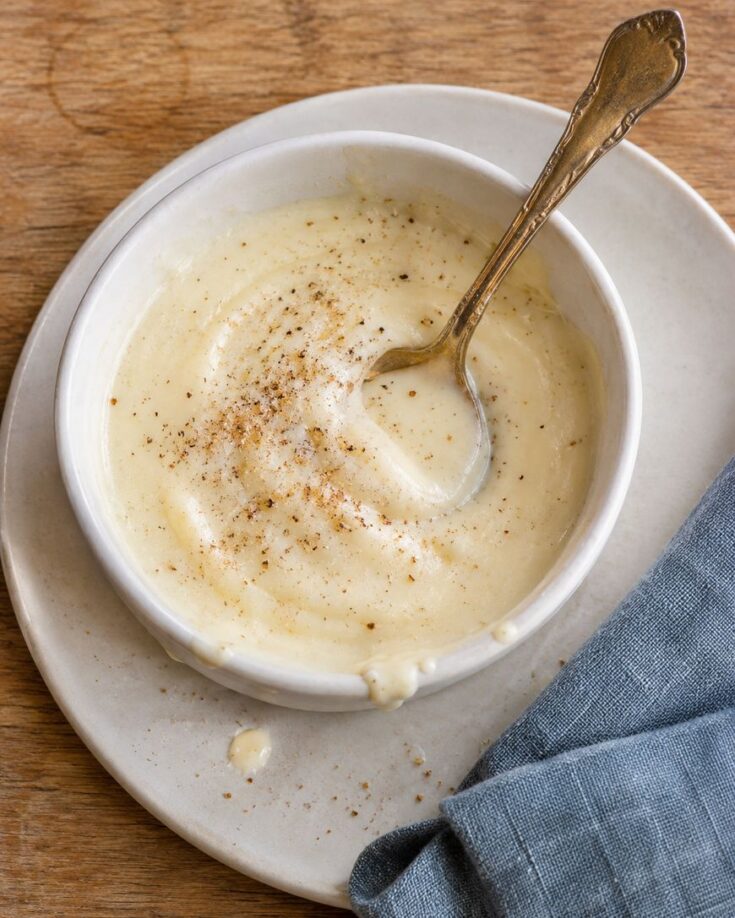
Classic Bechamel Sauce
A silky, lump-free white sauce made with a butter and flour roux and warm milk, ready in 25 minutes for lasagna, mac and cheese, and gratins.
Ingredients
- 4 tablespoons unsalted butter
- 4 tablespoons all-purpose flour
- 2 cups whole milk, warmed
- 1/2 teaspoon fine sea salt
- 1/8 teaspoon ground white pepper
- 1/8 teaspoon freshly grated nutmeg
Instructions
- Pour the milk into a small saucepan and warm it over medium-low heat for about 3 minutes, until steaming but not boiling. Remove from the heat.
- Melt the butter in a medium heavy-bottomed saucepan over medium-low heat until foamy.
- Whisk in the flour and cook for 2 minutes, whisking constantly, until pale and bubbly with no raw flour smell. Do not let it brown.
- Pour in about 1/2 cup of the warm milk while whisking vigorously until smooth and thick. Add the remaining milk 1/2 cup at a time, whisking until smooth after each addition.
- Raise the heat to medium and bring to a gentle simmer, stirring often. Cook for 8 to 10 minutes, until the sauce coats the back of a spoon.
- Remove from the heat and whisk in the salt, white pepper, and nutmeg. Taste and adjust the seasoning.
Notes
Press plastic wrap against the surface to prevent a skin and refrigerate in an airtight container for 3 to 4 days, or freeze for up to 2 months for best quality. Reheat gently over low heat with a splash of milk, whisking until smooth. For a thinner sauce use 1 tablespoon each of butter and flour per cup of milk, and for a thicker sauce use 3 tablespoons each.
Nutrition Information:
Yield:
8Serving Size:
1/4 cupAmount Per Serving: Calories: 100Total Fat: 8gSaturated Fat: 5gSodium: 170mgCarbohydrates: 6gFiber: 0gSugar: 3gProtein: 2g
Bechamel Sauce Questions Answered
Why is my bechamel sauce lumpy?
Lumps usually come from adding cold milk too fast or from not whisking enough as the milk goes in. Pour the warm milk in gradually and whisk after every addition, and if a few lumps still appear, strain the sauce through a fine-mesh sieve or give it a quick blend with an immersion blender.
Can I use low-fat milk or a plant-based milk?
You can use 2 percent milk, and the sauce will be slightly thinner and less rich. Unsweetened soy or oat milk also works with plant-based butter, though the flavor will taste a little different and the sauce may thicken more quickly.
Can I make bechamel sauce gluten-free?
Swap the all-purpose flour for a 1-to-1 gluten-free baking blend and follow the same method. The texture can turn slightly grainier than the original, so whisk well and let the sauce simmer the full 8 to 10 minutes.
Why does my sauce taste like flour?
A floury taste means the roux or the simmer was too short. Cook the roux for a full 2 minutes before adding any milk, and let the finished sauce simmer for at least 8 minutes so the starch cooks through.
How long does bechamel sauce keep?
Keep it in an airtight container in the refrigerator for 3 to 4 days, with plastic wrap pressed against the surface to prevent a skin. For the best quality, freeze it for up to 2 months and reheat it gently with a splash of milk.
What is the difference between bechamel and Alfredo sauce?
Bechamel is thickened with a flour and butter roux and is mild and milky. Alfredo sauce uses butter, cream, and Parmesan with no flour, so it is richer and more cheese-forward.
Why This Bechamel Sauce Recipe Works
This bechamel sauce works because it uses equal amounts of butter and flour by volume, which gives you a reliable medium-thick sauce every time. Cooking the roux for 2 minutes removes the raw flour taste without letting it brown, so the finished sauce stays pale and clean.
Adding warm milk gradually, one half cup at a time, lets the roux absorb the liquid evenly instead of seizing into lumps. A full 8 to 10 minutes at a gentle simmer then cooks the starch through, so the sauce turns silky and glossy instead of pasty.
Saving the salt, white pepper, and nutmeg for the end keeps the flavor balanced, since the sauce reduces slightly as it simmers. The result is a base sauce that is mild enough to carry cheese, vegetables, or pasta without competing with them.
Time to Make Your Bechamel Sauce
Now you have everything you need to make a smooth, creamy bechamel sauce at home, and it takes less than half an hour. Warm the milk, cook the roux, add the milk slowly, and keep it at a gentle simmer.
Make a batch tonight for lasagna, mac and cheese, or a simple vegetable gratin, and save any extra in the fridge for the next dinner. Once you have made this bechamel sauce a couple of times, you will never reach for a jar of white sauce again.
Foolproof Hollandaise Sauce That Turns Silky and Safe in 20 Minutes
This post contains affiliate links. A full disclosure is available from the main menu.