Last updated: September 13, 2026
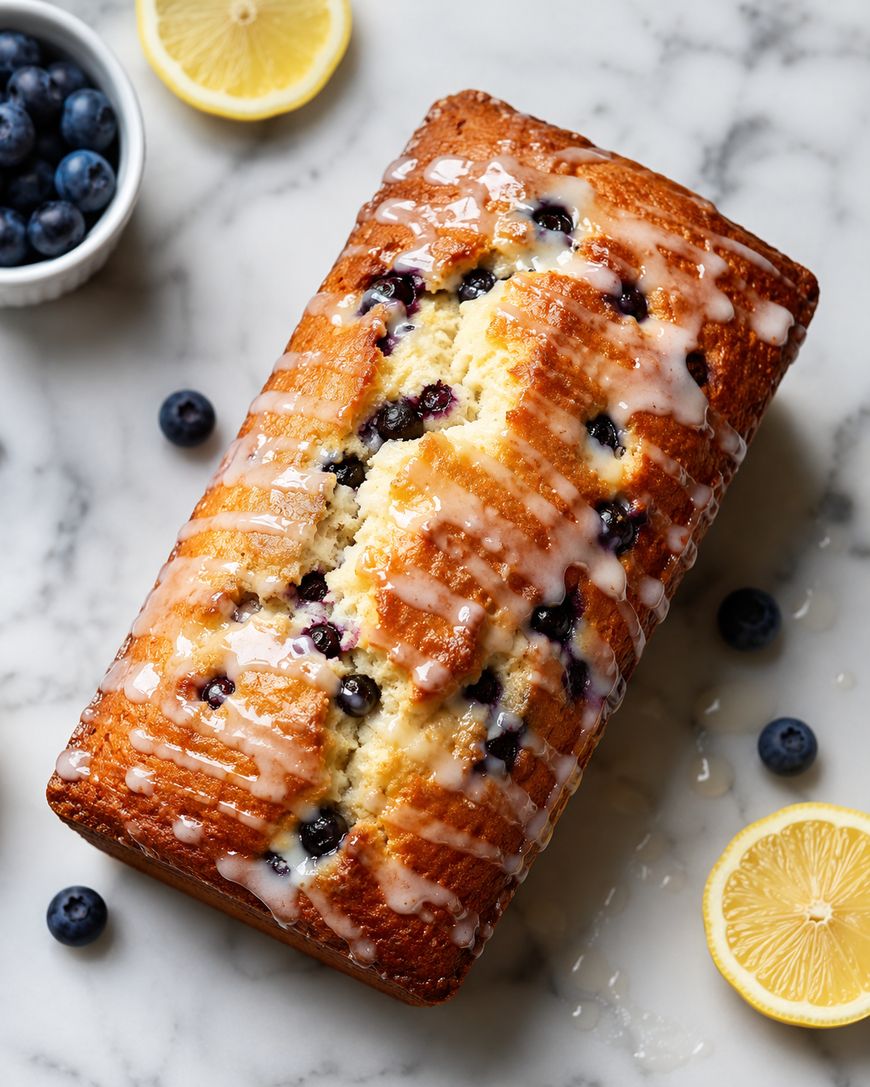
This blueberry lemon loaf delivers a tender, golden crumb packed with juicy berries and a sharp citrus punch that cuts through every bite. Follow the recipe card below for exact measurements and step-by-step instructions.
Why This Recipe Works
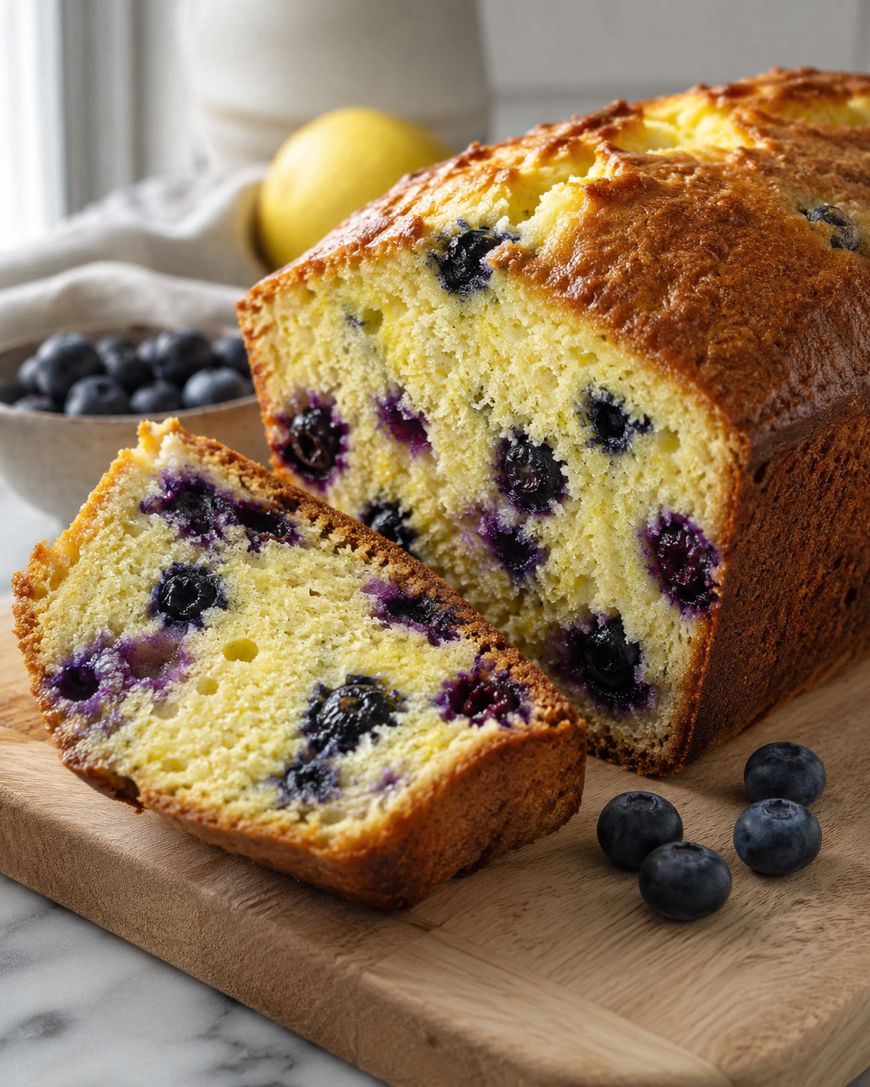
The combination of sour cream and fresh lemon zest is the foundation of a moist quick bread that holds together without being dense or gummy.
Sour cream adds fat and acidity simultaneously, which tenderizes gluten strands while keeping the interior soft for days after baking.
Fresh lemon zest, worked directly into the sugar before mixing, releases the essential oils that give this loaf its unmistakably bright flavor rather than a flat, artificial citrus taste.
The Role of Acidity
Baking soda reacts with the lemon juice and sour cream to produce carbon dioxide bubbles that lift the batter as it sets in the oven.
Using both baking powder and baking soda provides a double leavening action, which is critical in a thick loaf pan where heat penetrates slowly from the outside in.
Fresh vs. Frozen Blueberries
Fresh blueberries from farms like Driscoll’s or locally sourced varieties from a summer farmers market hold their shape better during baking and release less juice into the batter.
Frozen blueberries work well if fresh are unavailable — toss them in one tablespoon of flour directly from the freezer without thawing to prevent streaking and sinking.
Ingredients
For the Loaf
All-purpose flour forms the structure; measure by spooning into the cup and leveling rather than scooping to avoid a packed, dense result.
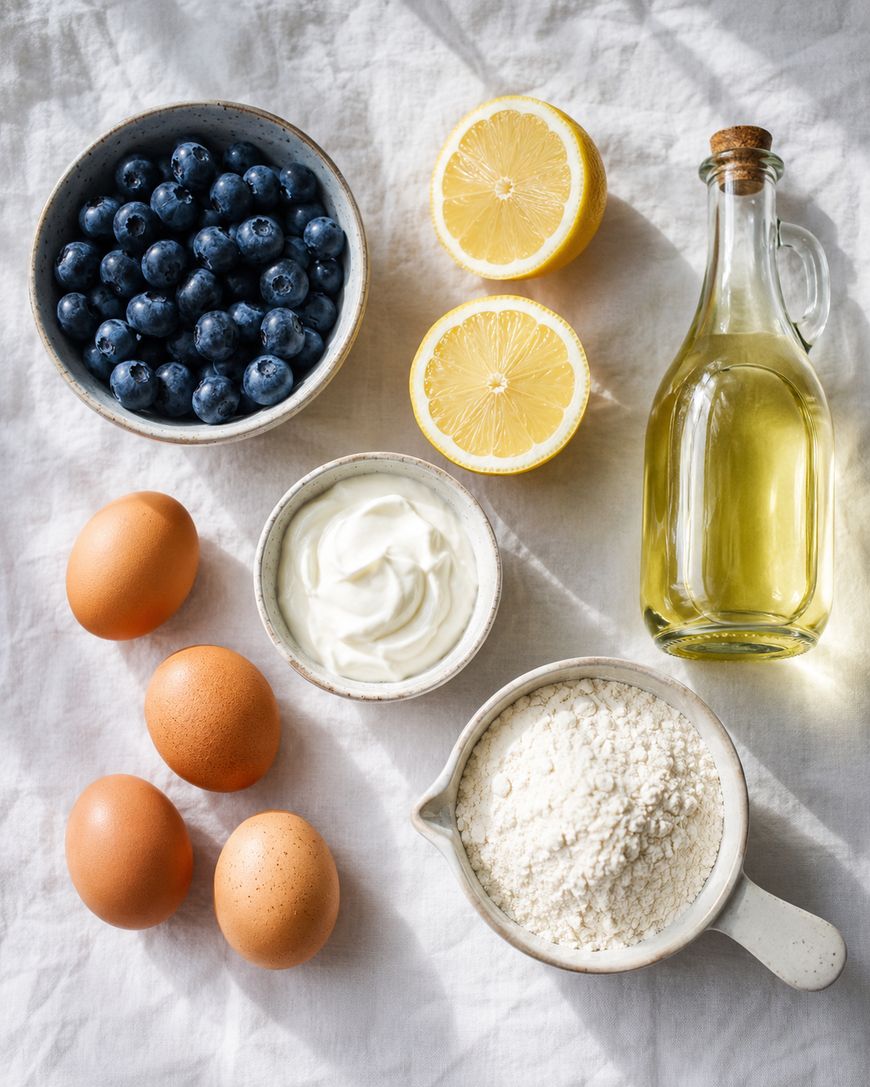
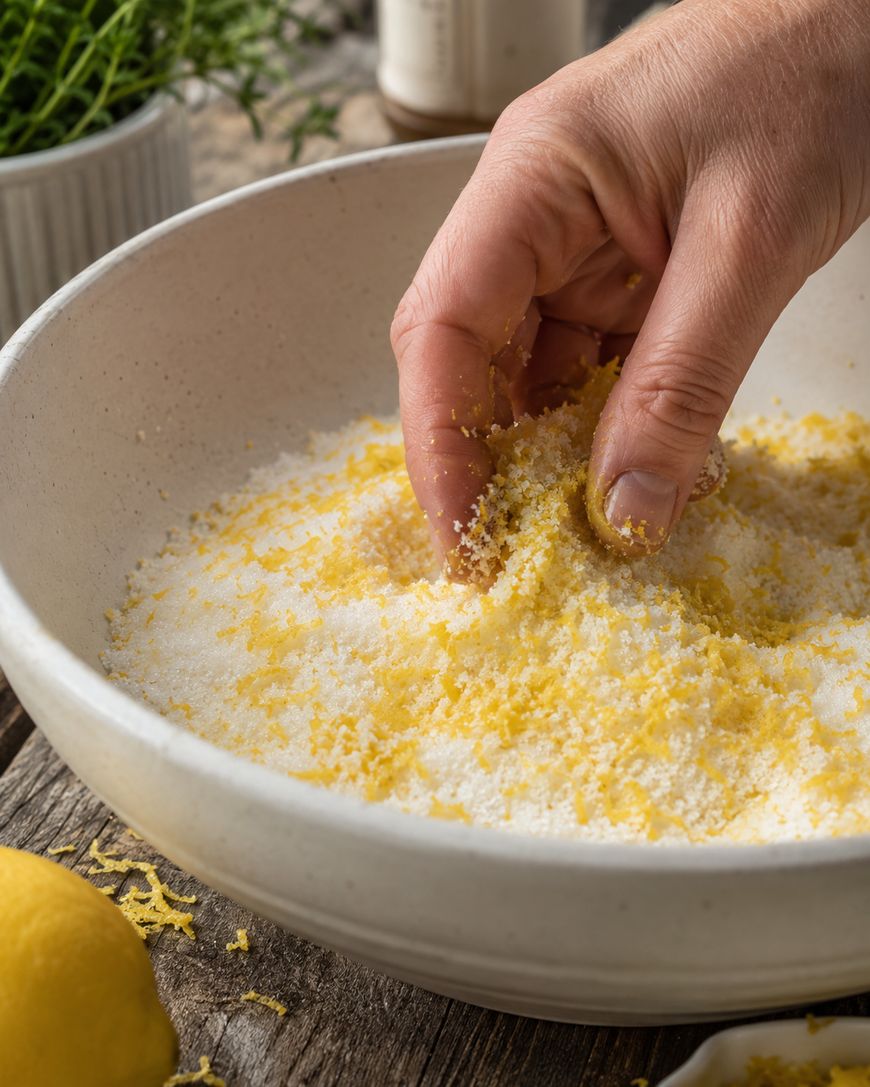
Granulated sugar is rubbed together with lemon zest before any wet ingredients are added, which extracts the citrus oils into the sugar and distributes flavor evenly.
Sour cream at full fat content provides the best texture; Greek yogurt at a 2% fat level or higher is a reliable substitute without sacrificing much moisture.
Two large eggs bind the batter and contribute to the golden color of the finished crust.
Neutral oil such as avocado or vegetable oil keeps the crumb moist longer than butter, which can cause the loaf to dry out faster when stored.
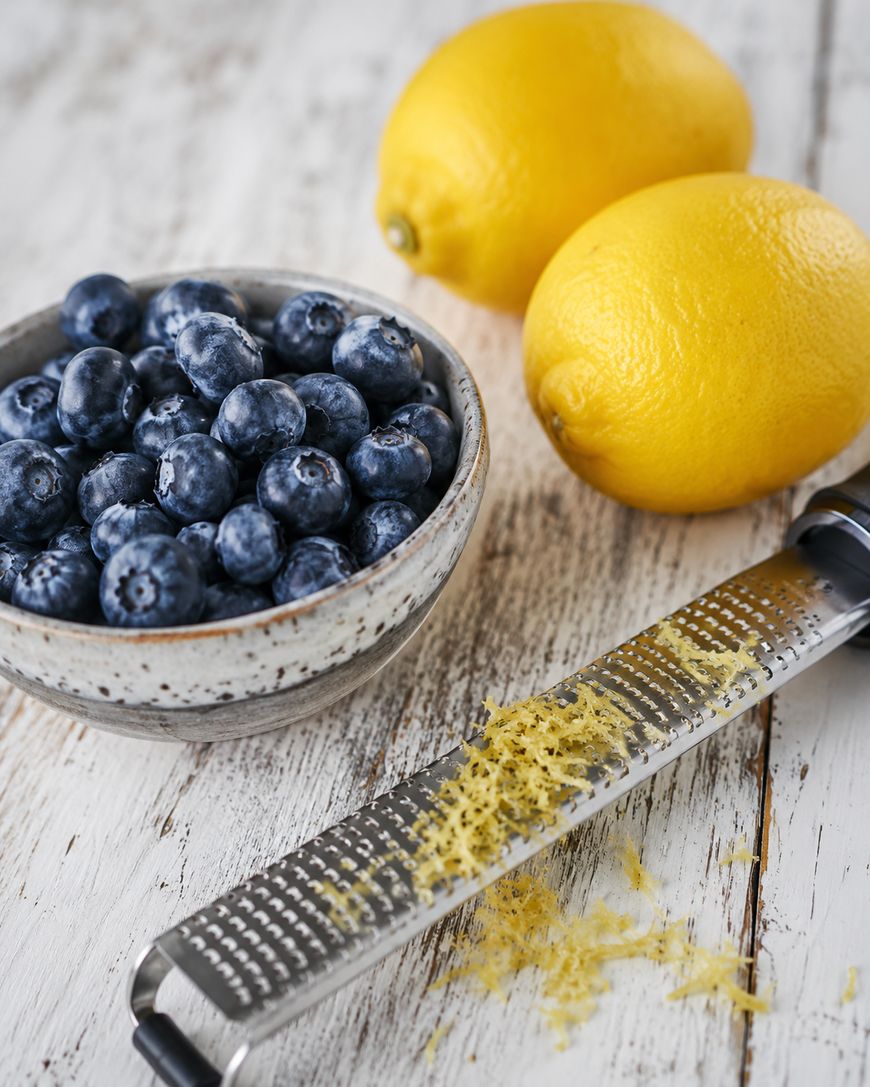
Fresh lemon juice and zest from two medium lemons gives the most pronounced flavor; Meyer lemons from California season (December through April) produce a slightly sweeter result.
Fresh or frozen blueberries, about one and a half cups, are the star — wild blueberries from Maine offer a more intense berry flavor in a smaller berry.
For the Lemon Glaze
Powdered sugar whisked with fresh lemon juice forms a pourable glaze that sets into a slightly crisp shell on top of the cooled loaf.
Adjust the juice quantity by half-teaspoon increments until the glaze runs slowly off a spoon rather than pouring like water, which would make it too thin to adhere.
How to Make Blueberry Lemon Loaf
Preparing the Pan and Oven
Preheat the oven to 350 degrees Fahrenheit and position a rack in the center of the oven, not the top third, to ensure even heat distribution throughout the loaf.
Grease a standard 9×5-inch loaf pan with butter or non-stick spray, then line it with a strip of parchment paper that overhangs the two long sides to create handles for easy removal.
Mixing the Batter
Rub the lemon zest into the granulated sugar in a large mixing bowl using fingertips until the mixture feels slightly damp and smells intensely citrusy — about 30 seconds is enough.
Add the eggs, sour cream, oil, and lemon juice to the sugar mixture and whisk until smooth and uniform; the batter will look slightly curdled at first, then come together as the fat emulsifies.
In a separate bowl, whisk together the flour, baking powder, baking soda, and salt, then fold the dry ingredients into the wet ingredients using a rubber spatula until just combined.
Stop mixing as soon as no dry streaks remain; overmixing develops gluten and produces a tough, tunneled loaf rather than the open, tender crumb this recipe is designed for.
Folding in the Blueberries
Toss the blueberries in one tablespoon of flour shaken from the measured dry ingredient portion, then fold them gently into the finished batter with four or five wide strokes of the spatula.
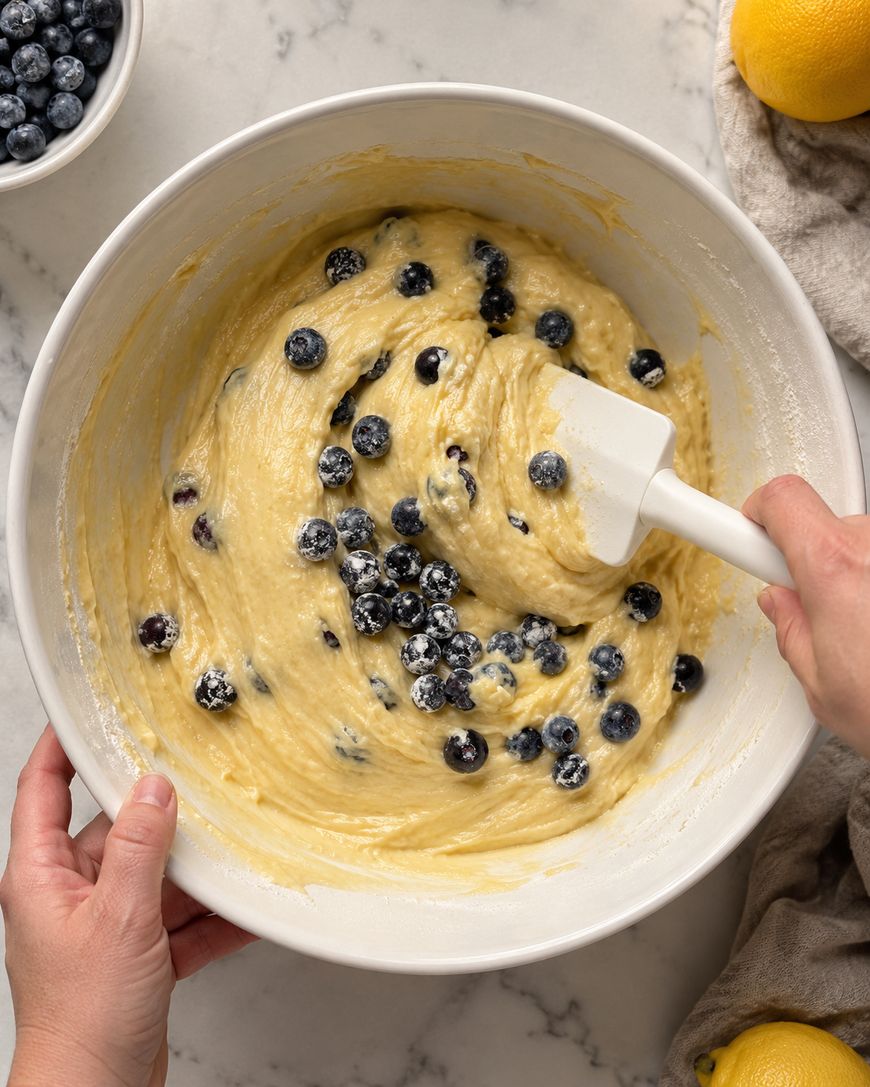
This flour coating helps suspend the berries in the batter rather than letting them sink to the bottom during the long bake time.
Baking
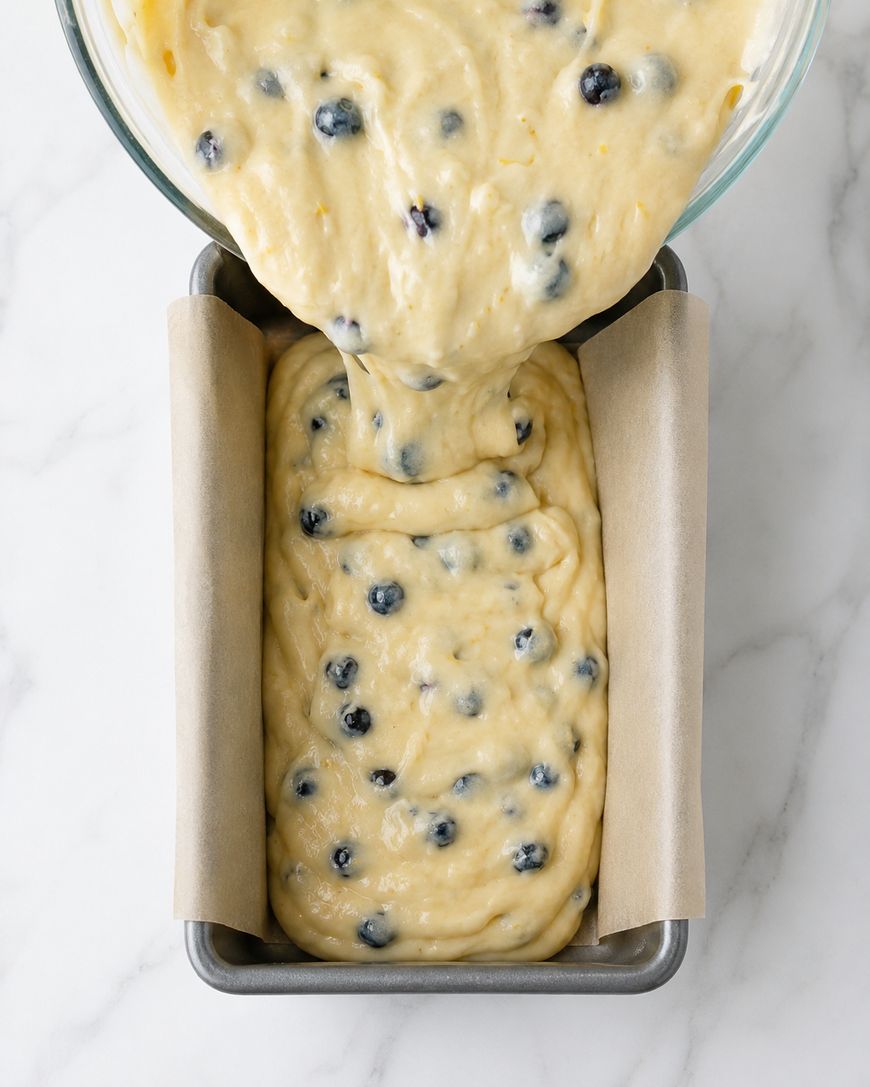
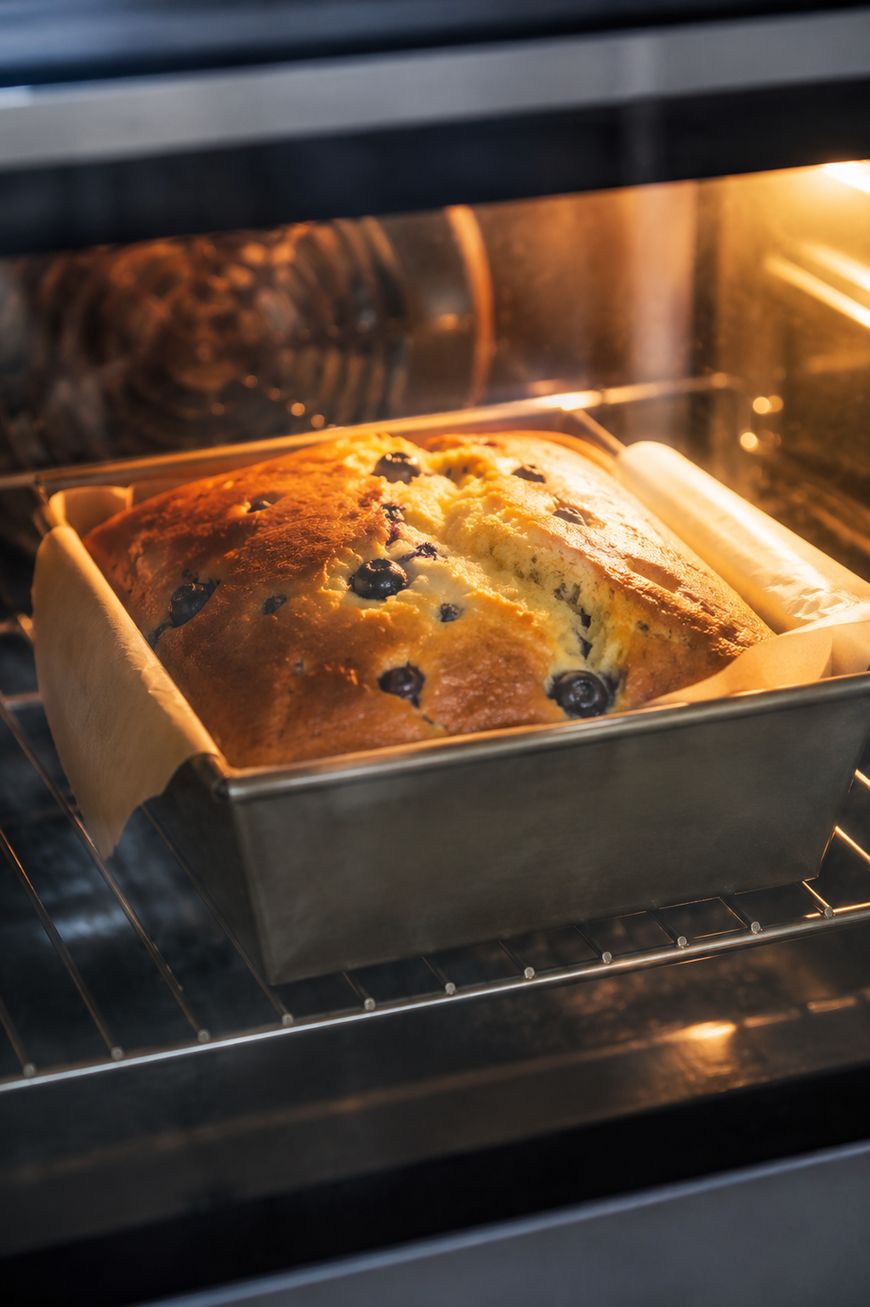
Pour the batter into the prepared loaf pan and smooth the top with the back of a spatula, then bake for 55 to 65 minutes until a toothpick inserted into the center comes out clean or with a few moist crumbs.
Tent the loaf loosely with aluminum foil at the 40-minute mark if the top is browning too quickly while the center is still wet — this prevents a burnt crust with an underdone interior.
The Lemon Glaze
Allow the loaf to cool in the pan for 15 minutes before lifting it out onto a wire rack; applying glaze while the loaf is still warm allows it to soak in slightly rather than sitting entirely on top.
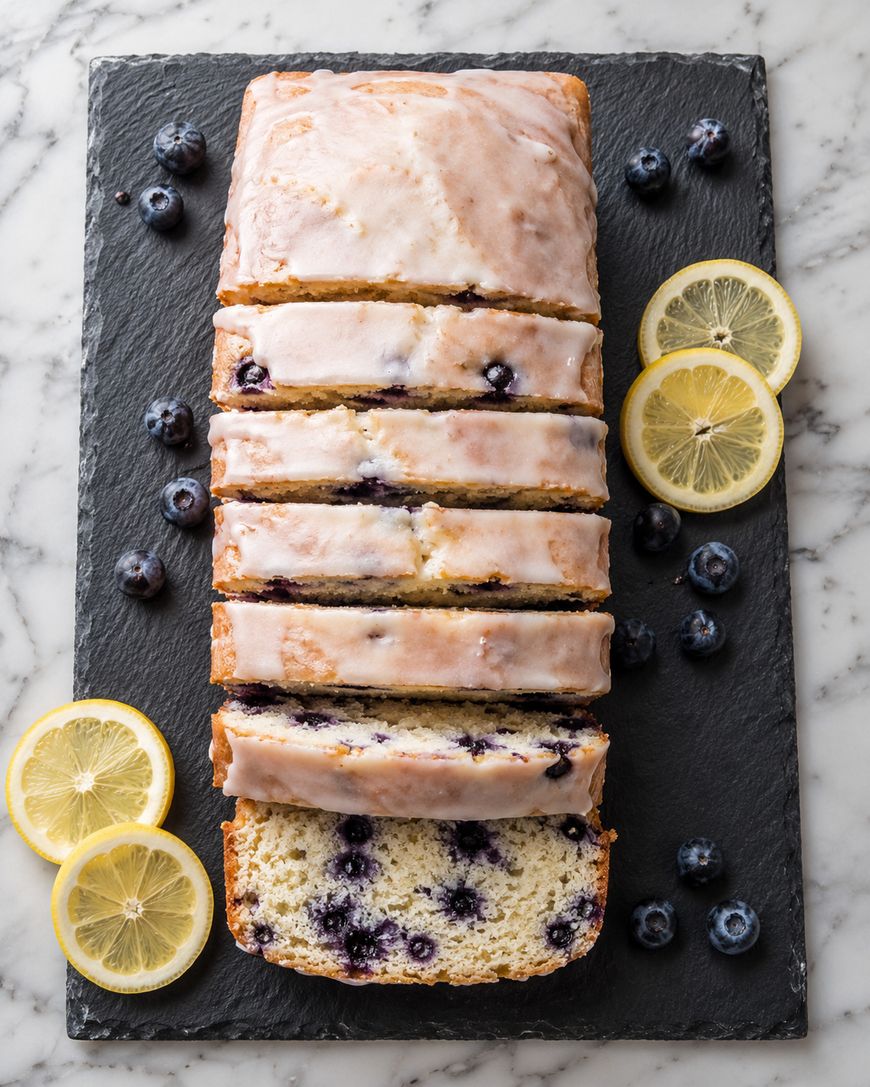
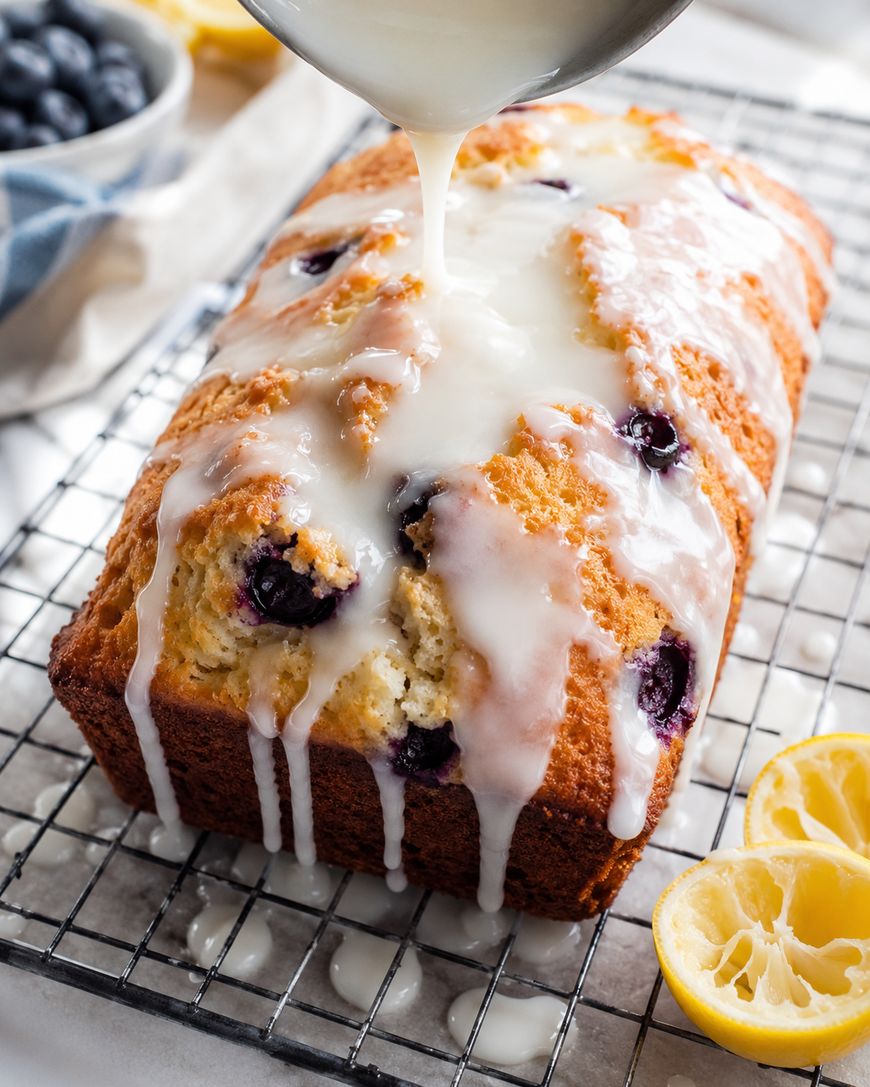
Whisk powdered sugar with fresh lemon juice until smooth, then pour it over the warm loaf and allow it to drip naturally down the sides for a bakery-style finish.
Variations and Substitutions
Dairy-Free Option
Replace the sour cream with full-fat coconut yogurt from brands such as Cocoyo or Kite Hill, which provide the same acidity and fat content needed for the recipe to work correctly.
A plant-based butter such as Miyoko’s or Earth Balance can substitute for any butter used in the pan without affecting the final texture.
Lemon Poppy Seed Variation
Add two tablespoons of poppy seeds to the dry ingredients and omit the blueberries for a classic lemon poppy seed loaf that works with the same glaze.
The poppy seeds add a subtle nuttiness and light crunch without altering the bake time or temperature.
Cream Cheese Swirl
Drop tablespoons of sweetened cream cheese (softened with two tablespoons of sugar and one egg yolk) across the top of the batter and swirl with a knife before baking for a richer, cheesecake-adjacent result.
This variation pairs particularly well with wild blueberries because their tartness balances the richness of the cream cheese.
Storage and Serving
Storing at Room Temperature
Wrapped tightly in plastic wrap or stored in an airtight container, this blueberry lemon loaf stays moist at room temperature for up to three days without any significant change in texture.
Avoid refrigerating the loaf unless the climate is very humid, as refrigeration tends to dry out quick breads faster than room temperature storage.
Freezing
Slice the cooled, unglazed loaf and freeze individual slices in a zip-lock bag with parchment between them; they thaw at room temperature in 30 minutes or in a toaster oven in about five minutes.
Glaze freshly thawed slices rather than freezing them already glazed to maintain the best texture and appearance.
Serving Suggestions
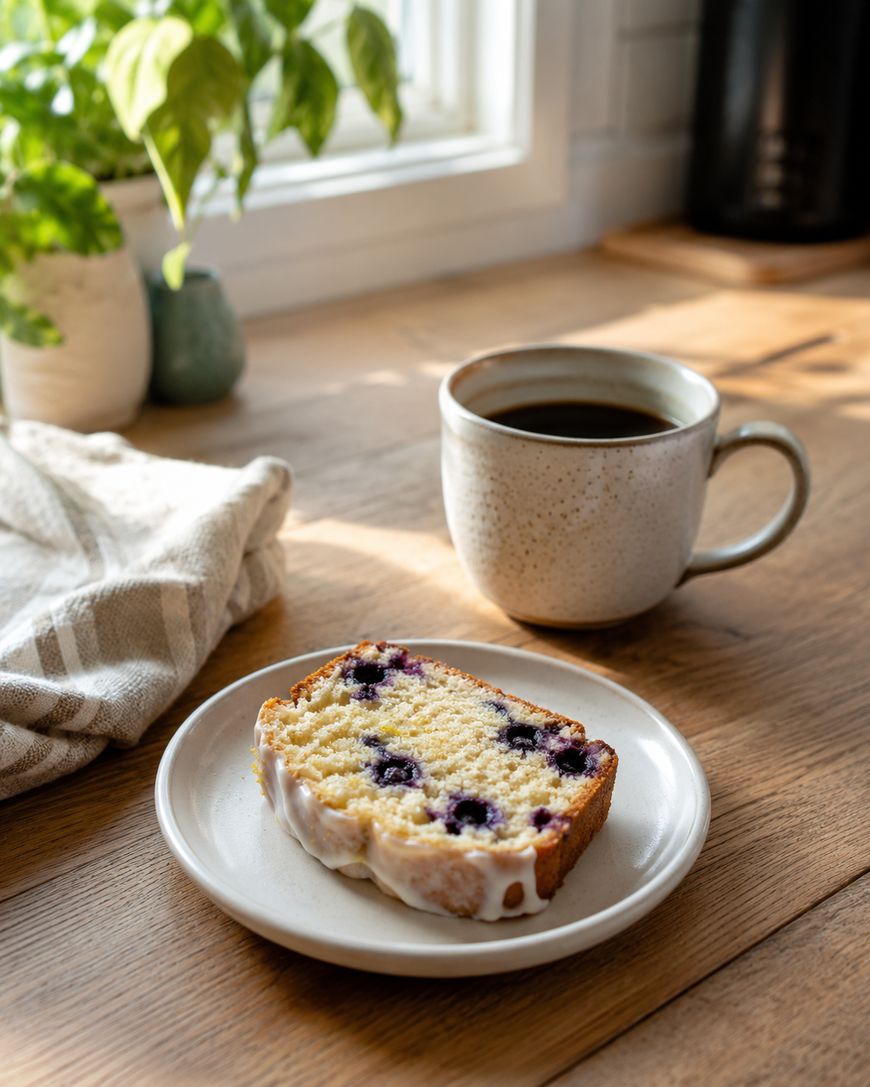
Serve slices alongside a cup of Earl Grey tea or a latte, where the bergamot in the tea echoes the citrus notes in the loaf.
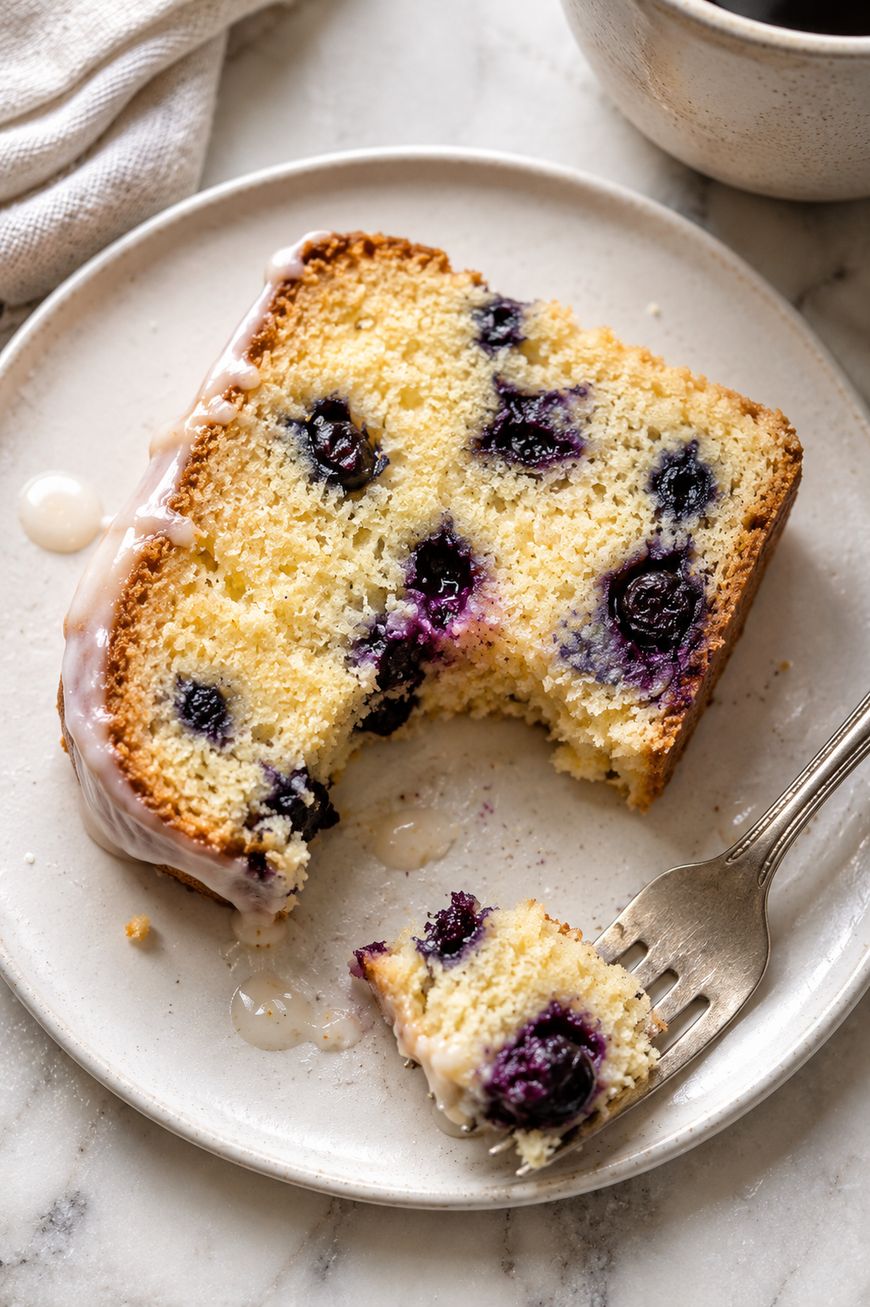
A thin spread of salted butter on a warm slice amplifies the lemon flavor by contrast and adds richness that balances the bright glaze.
Background and Origin
Quick breads made with chemical leaveners rather than yeast became popular in American home kitchens in the late 19th century after the widespread availability of commercially produced baking powder, particularly Rumford brand, which debuted in 1859.
The lemon-blueberry flavor combination is particularly associated with summer baking traditions in the northeastern United States, where wild blueberries have been harvested commercially in Maine since the 1840s.
Bakeries in cities like Portland, Maine and Burlington, Vermont built regional reputations around blueberry baked goods, and the pairing with lemon became a standard in American cafe culture by the 1990s as citrus-forward flavors gained broader appeal.
Use the recipe card below for a complete, printable version of this blueberry lemon loaf with exact quantities and timing.
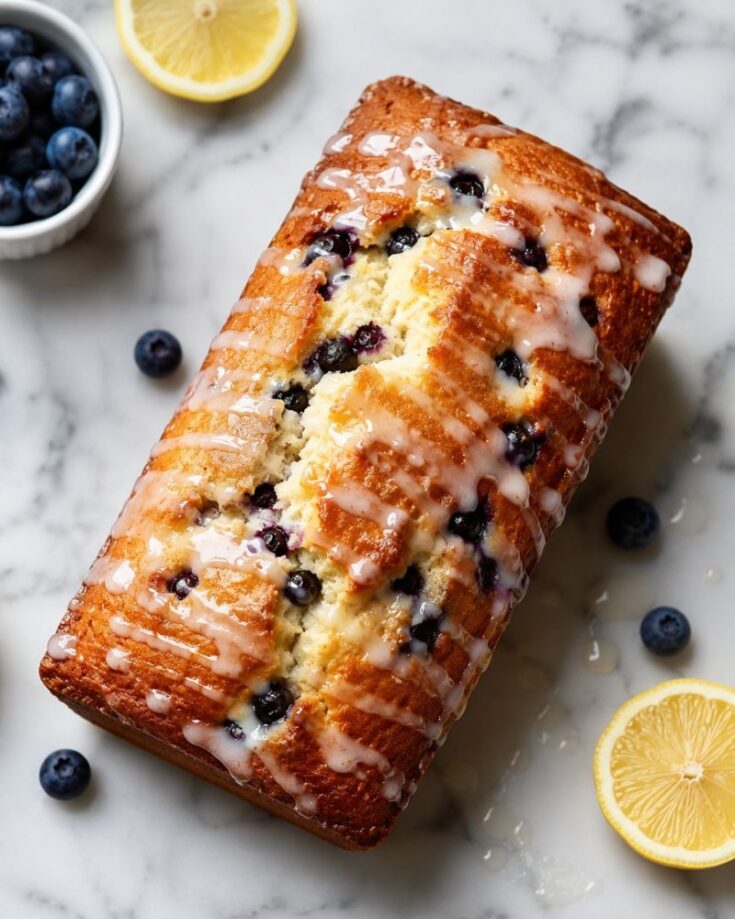
Blueberry Lemon Loaf
A moist, bakery-style blueberry lemon loaf made with sour cream, fresh lemon zest, and juicy blueberries, finished with a bright lemon glaze.
Ingredients
- 1 1/2 cups all-purpose flour
- 1 teaspoon baking powder
- 1/4 teaspoon baking soda
- 1/4 teaspoon salt
- 3/4 cup granulated sugar
- 2 tablespoons lemon zest (from about 2 medium lemons)
- 2 large eggs
- 1/2 cup full-fat sour cream
- 1/3 cup neutral oil (vegetable or avocado)
- 2 tablespoons fresh lemon juice
- 1 1/2 cups fresh or frozen blueberries
- 1 tablespoon all-purpose flour (for coating blueberries)
- 1 cup powdered sugar
- 2 to 3 tablespoons fresh lemon juice
Instructions
- Preheat oven to 350 degrees F. Grease a 9x5-inch loaf pan and line with parchment paper, leaving an overhang on the long sides.
- In a large bowl, rub the lemon zest into the granulated sugar with your fingertips for about 30 seconds until fragrant and slightly damp.
- Add eggs, sour cream, oil, and lemon juice to the sugar mixture. Whisk until smooth and well combined.
- In a separate bowl, whisk together 1 1/2 cups flour, baking powder, baking soda, and salt.
- Add the dry ingredients to the wet ingredients and fold with a rubber spatula until just combined. Do not overmix.
- Toss the blueberries with 1 tablespoon of flour, then gently fold them into the batter.
- Pour batter into the prepared pan and smooth the top. Bake for 55 to 65 minutes, tenting with foil at 40 minutes if browning too quickly, until a toothpick inserted in the center comes out clean.
- Cool in the pan for 15 minutes, then lift out onto a wire rack.
- Whisk powdered sugar with lemon juice until smooth and pourable. Drizzle over the warm loaf and allow to set before slicing.
Notes
For frozen blueberries, add directly from frozen without thawing and toss well in flour to prevent streaking. Store wrapped at room temperature for up to 3 days. Slices freeze well without glaze for up to 2 months.
Nutrition Information:
Yield:
10Serving Size:
1 sliceAmount Per Serving: Calories: 285Total Fat: 9gSaturated Fat: 2gSodium: 140mgCarbohydrates: 47gFiber: 1gSugar: 29gProtein: 4g
This site provides estimated nutritional information. This information comes from online calculators. Although we try to provide accurate nutritional information, these figures are only estimates.
Frequently Asked Questions
Can plain yogurt replace sour cream in this blueberry lemon loaf?
Full-fat plain yogurt is the closest substitute and produces nearly identical results in both texture and moisture level.
Low-fat or non-fat yogurt contains more water and less fat, which can make the loaf slightly more dense and cause it to stale faster; if those are the only options available, reduce the oil by one tablespoon to compensate for the extra water content.
Greek yogurt at any fat level works well because the straining process removes excess liquid, keeping the batter at the right consistency.
Why did my blueberries sink to the bottom?
Blueberries sink when the batter is too thin or the berries are too wet — both reduce the surface friction that keeps them suspended during baking.
Tossing them in flour before folding them in is the most reliable fix, and making sure frozen berries go in straight from the freezer without any thawing prevents excess juice from thinning the batter around each berry.
A slightly thicker batter achieved by measuring flour accurately and not over-whisking also helps keep berries distributed throughout the loaf.
How do you know when a quick bread loaf is fully baked?
A toothpick inserted into the thickest center point of the loaf should come out clean or with only a few moist crumbs attached — wet batter on the toothpick means more time is needed.
The internal temperature of a fully baked quick bread reaches 200 to 205 degrees Fahrenheit when measured with an instant-read thermometer like a Thermapen, which removes all guesswork when the exterior looks done but the interior is uncertain.
The top should feel set and springy when pressed lightly rather than soft or jiggly.
Can this loaf be made as muffins?
The batter translates directly into muffins with no changes to the ingredient quantities; divide it evenly into a 12-cup standard muffin tin lined with paper liners.
Bake at 375 degrees Fahrenheit for 20 to 24 minutes rather than the loaf temperature and time, since the smaller volume bakes much faster and benefits from slightly higher heat for domed tops.
How long does the lemon glaze keep?
The glaze can be made up to 24 hours ahead and stored in a covered bowl at room temperature; stir it again before using as it may thicken slightly as it sits.
If it becomes too thick, whisk in a few drops of lemon juice to loosen it back to a pourable consistency.
Can the loaf be made without a glaze?
The loaf is complete and flavorful without the glaze, and skipping it is a reasonable choice if a less sweet result is preferred.
Dusting the top with powdered sugar just before serving achieves a similar visual finish with much less sweetness, or a drizzle of honey over individual slices works as a lighter alternative.
Conclusion
This blueberry lemon loaf brings together two classically paired flavors in a forgiving, straightforward recipe that delivers consistent bakery-quality results at home.
The sour cream base, fresh zest, and flour-coated blueberries all play specific roles in keeping every slice moist, flavorful, and well-structured — make it once and it will become a permanent part of the baking rotation.