Last updated: September 18, 2026
You want a book journal that actually gets used, not one that sits blank on your shelf. Below you will find 15 book journal ideas you can start today, no fancy supplies required. We will walk through layouts, prompts, and tracking pages that make reading feel even more rewarding.
Track Your Reading Progress Page by Page
A simple progress tracker keeps you motivated when you are working through a longer book. Track by chapter or page number instead of just noting the date you started and finished.

You can draw a small grid with boxes for every ten chapters and color one in as you go. This gives you a visual sense of momentum, especially on those books that take a few weeks to get through.
Some readers prefer a percentage tracker instead. You mark down what percentage of the book you have completed each time you sit down to read, which works well for audiobooks and ebooks where page numbers do not always translate.
Create a Star Rating System
Every book journal idea benefits from a rating system you actually understand. Design your own five-star scale with half stars for books that fall in between.

Instead of just stars, you might rate books on separate categories like plot, characters, and pacing. This breaks your opinion into pieces you can look back on later when you forget why you loved or disliked a particular story.
You and your journal club members can compare ratings side by side if you keep the format consistent across every entry. That consistency is what makes a book journal genuinely useful months down the road.
Build a Quote Collection Page
Set aside a dedicated page for favorite quotes in every entry. You copy down lines that made you pause, laugh, or tear up, along with the page number so you can find them again.

Over time this page becomes one of the most rereadable parts of your whole journal. Many readers say the quote pages are what they flip back to most often.
You can decorate these pages with washi tape or small doodles around the border. It does not need to be elaborate to feel special.
Design a Character Map
For books with a large cast, a character map saves you from flipping back through chapters to remember who is who. Sketch a simple web with the main character in the center and supporting characters branching outward.

Add a line or two under each name describing their relationship to the protagonist. This is especially helpful for fantasy and mystery novels where names can start to blur together.
Some readers add small icons or symbols next to each character to represent their role, like a crown for royalty or a sword for a warrior. It makes the page fun to look at and easier to reference.
Track Books by Genre
Keep a running list sorted by genre so you can see your reading habits at a glance. This helps you notice if you are leaning heavily toward one type of book and want to branch out.

You might color code each genre with a different highlighter or pen. Romance could be pink, mystery could be purple, and so on.
At the end of the year, you can count up each genre and turn it into a simple pie chart or bar graph. It is a satisfying way to visualize your reading year.
Write a Personal Book Review Template
A repeatable review template speeds up your journaling and keeps entries consistent. List the same five or six questions for every book, such as what you loved, what surprised you, and who you would recommend it to.

Having a template also means you are less likely to skip journaling a book just because you are short on time. You can fill in a template in five minutes flat.
Leave space at the bottom for a longer freeform reaction if a book really moves you. Not every entry needs to follow the template exactly.
Add a Book Cover Sketch Page
Draw a small version of the book cover next to your entry, even if it is a rough sketch. This makes your journal visually distinct from a plain reading log and helps you recall books faster when flipping through.
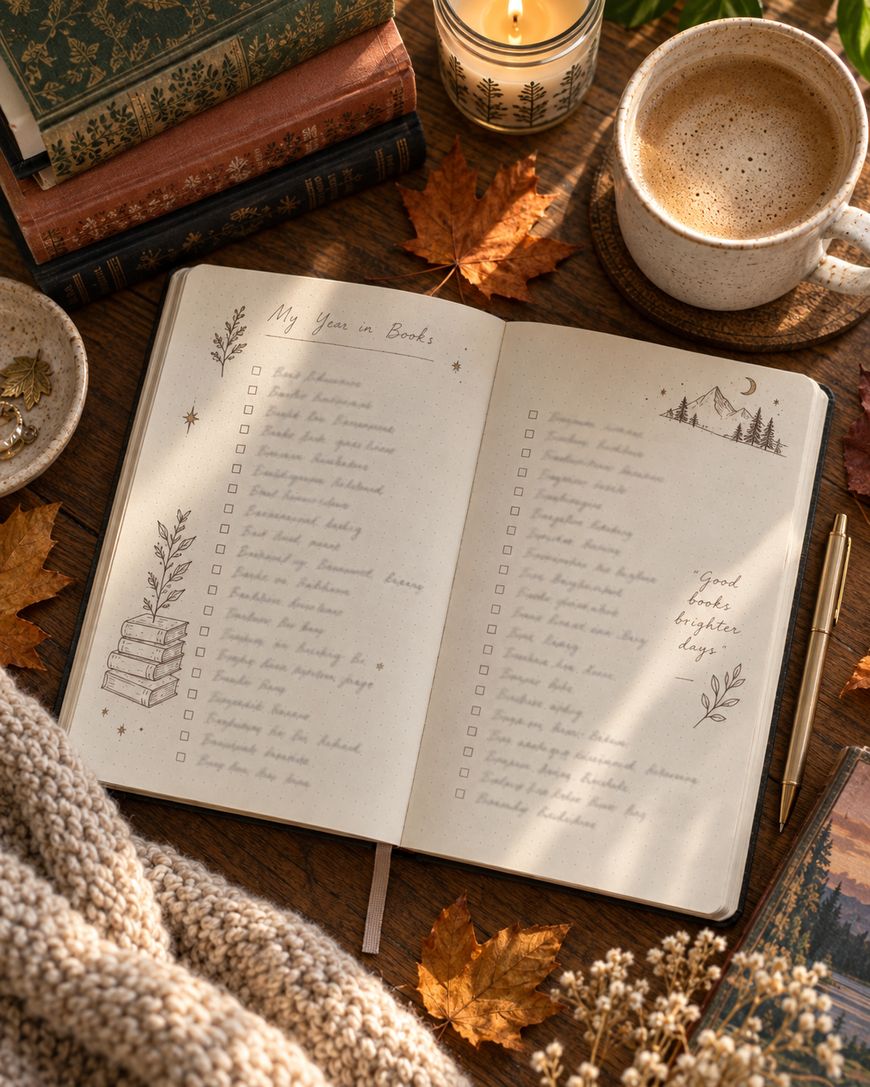
If drawing is not your strength, you can print a tiny thumbnail of the cover and glue it in instead. Either approach gives your journal a scrapbook feeling.
Some readers add the cover sketch first, before they even finish the book, so they have something to look forward to filling in around.
Create a To Be Read Wishlist
Dedicate a page to books you want to read next, organized however makes sense to you. You might sort by genre, by how soon you want to get to them, or by which friend recommended them.

Cross books off as you finish them and add new titles as you hear about them. This page tends to grow faster than you expect, which is part of the fun.
You can also note where you heard about each book, whether it was a friend, a bookstore display, or an online recommendation. That context is nice to have later.
Track Reading Goals and Challenges
Set a yearly reading goal and track your progress toward it on its own dedicated page. You might aim for a total number of books, or you might set themed challenges like reading one book from every continent.

Breaking a big goal into monthly checkpoints keeps it from feeling overwhelming. If you want to read 50 books, that is roughly four a month, which is much easier to picture.
Revisit this page throughout the year and adjust your goal if life gets busy or you find extra time to read.
Log Books by Format
Keep a separate tally for physical books, ebooks, and audiobooks. This helps you understand your own reading habits, especially if you commute or have a long drive where audiobooks fit naturally.

You might notice you finish audiobooks faster than physical copies, or the opposite. Either way, this page gives you useful data about your own preferences.
Some readers use this page to decide where to spend their book budget for the following year, leaning into whichever format works best for their schedule.
Create a Mood Tracker for Reading
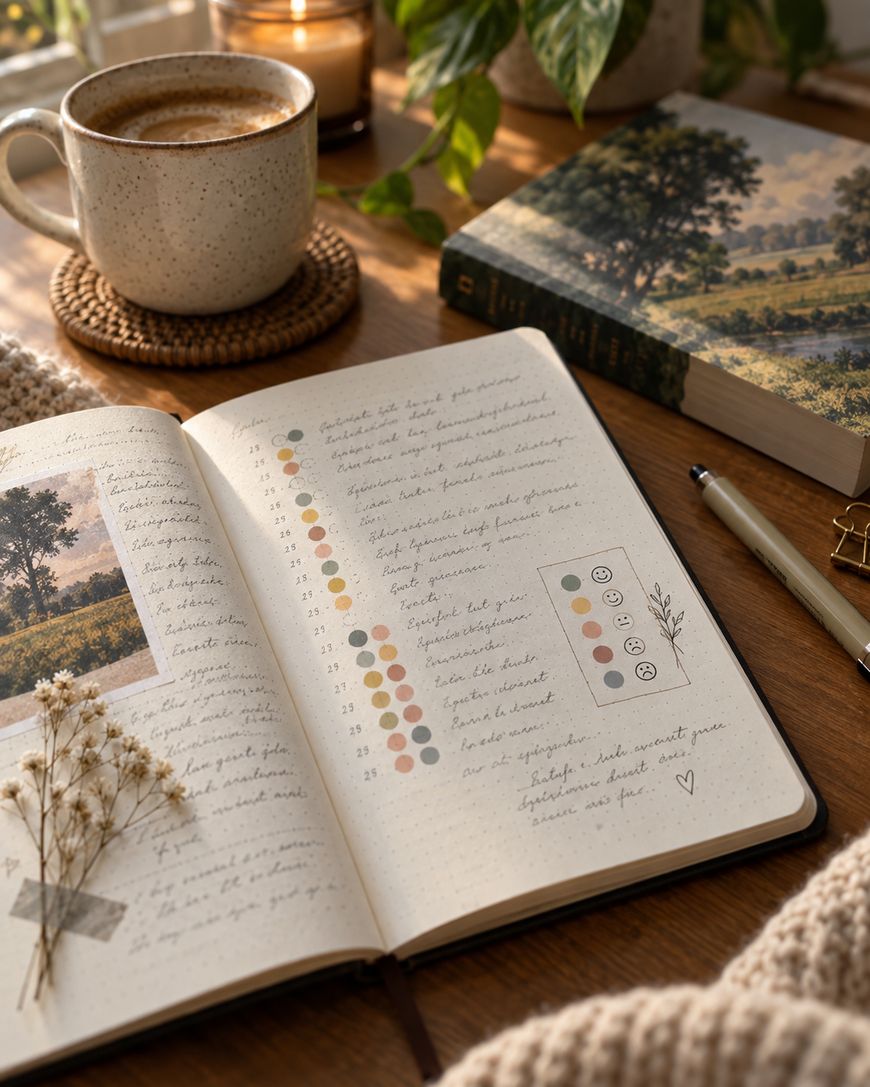
Note your emotional response to each book using a simple color or symbol key. A book that made you cry might get a blue teardrop, while a book that made you laugh gets a yellow star.

Looking back at a full year of mood tracking can reveal patterns you did not notice while reading. You might realize you gravitate toward heavier, more emotional stories in the winter months.
This page pairs well with the genre tracker, since certain genres tend to cluster around certain moods.
Add a Favorite Character Spotlight
Give your favorite character from each book their own small profile page. Include their name, a defining trait, and a memorable line or moment from the story.

This is a fun page for series readers, since you can track how a character grows or changes across multiple books. You start to notice arcs you might have missed reading one book at a time.
Kids and teens especially enjoy this format, since it turns journaling into something closer to a character collection.
Build a Book Club Discussion Log
Record discussion questions and your group’s answers if you read with a book club. Note who attended, what themes came up, and any disagreements that made for good conversation.
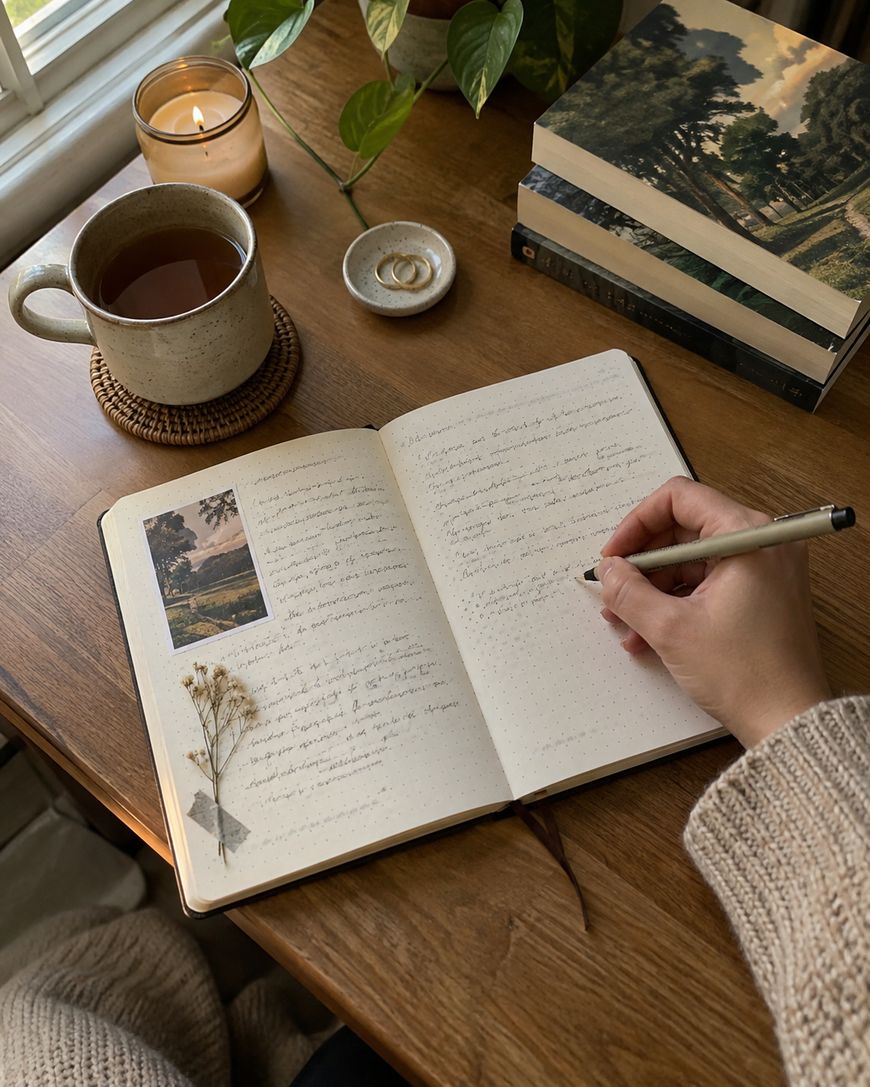
This page becomes a nice record of your book club’s history over time, not just the books you read together. You can look back and remember which meeting had the liveliest debate.
If your group votes on the next book, this is also a good place to jot down the runner up titles for future consideration.
Track Authors You Want to Explore Further
Keep a page dedicated to authors whose other work you want to read. After finishing a book you loved, jot down the author’s name and note which of their other titles caught your eye.
This page naturally grows your reading list in a more targeted way than a general wishlist. You are following authors whose voice you already know you enjoy.
Some readers use this page to plan an author deep dive, reading through someone’s whole backlist over a season.
Create a Yearly Reading Recap Page
Summarize your reading year in one place once December rolls around. List your top five books, your biggest surprise, and any reading goals you hit or missed.

This recap page becomes a nice tradition if you keep a book journal for more than one year. You can compare recap pages side by side and see how your taste has shifted over time.
Some readers like to rank every book from the year on a single page, which becomes a fun personal awards ceremony of sorts.
Why a Book Journal Is Worth Keeping
You might wonder if a book journal is worth the extra effort on top of just reading. A journal turns reading into something more active, giving you a place to process what you just experienced instead of moving straight to the next title.
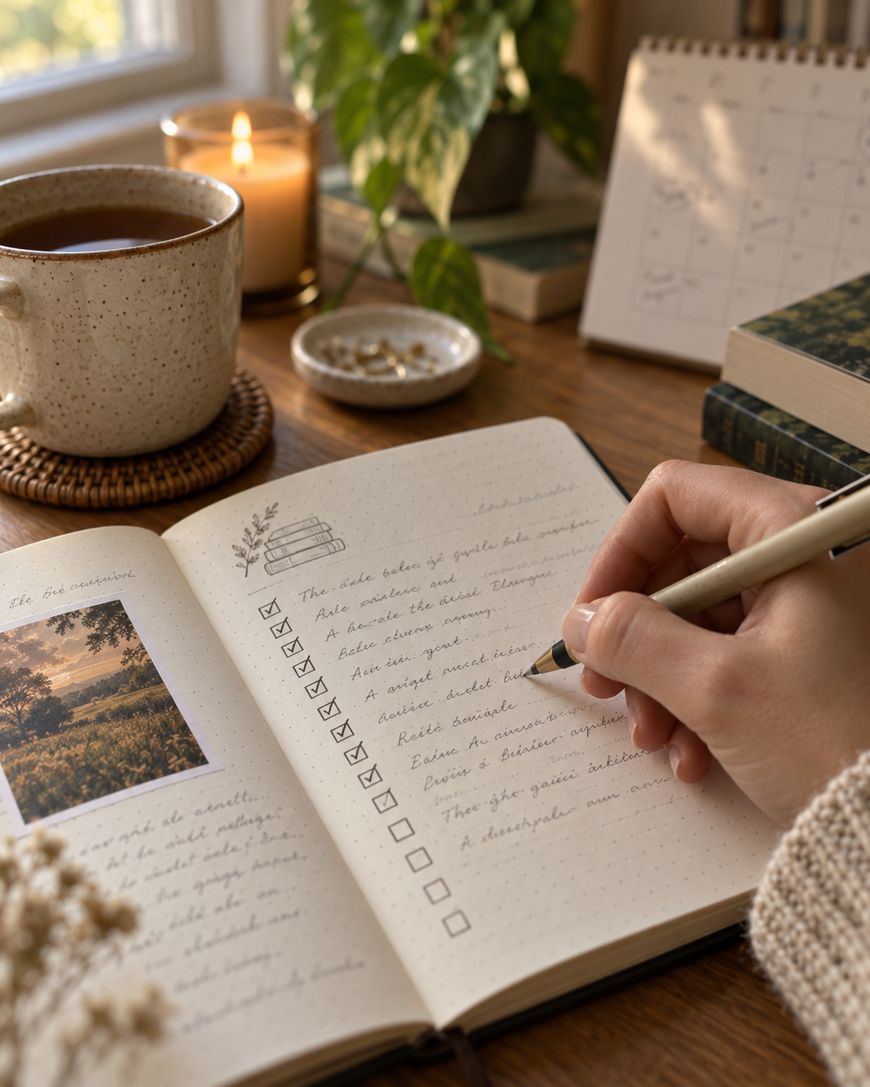
It also becomes a record you can hand to future you. Years from now, flipping through old entries will remind you not just which books you read, but who you were when you read them.
Frequently Asked Questions
What should I include in a book journal?
You should include whatever helps you remember and reflect on what you read, such as ratings, quotes, and a short summary. Many of the book journal ideas above can be mixed and matched depending on what feels useful to you.
Do I need a special notebook for a book journal?
No, any notebook works well as long as it has enough pages for your reading habits. Some readers prefer dot grid notebooks for flexibility, while others use a simple lined journal.
How often should I update my book journal?
Most readers update their journal right after finishing a book, while the details are still fresh. You can also jot down quotes or reactions mid read if something stands out to you.
Can I keep a book journal digitally instead of on paper?
Yes, many of these book journal ideas translate well to a notes app, spreadsheet, or dedicated reading app. The format matters less than actually keeping up with it consistently.
What if I fall behind on journaling?
You can always do a quick catch up entry summarizing several books at once if you get behind. A brief note is better than skipping the book entirely in your journal.
How do I stay motivated to keep journaling?
Choosing a few favorite pages from this list, rather than trying to do all fifteen at once, makes journaling feel manageable. You can always add more layouts later as your habit grows.
Start Your Book Journal Today
You do not need every idea on this list to start a book journal that works for you. Pick two or three book journal ideas that sound the most fun and build from there, adding new pages as your reading habits grow.