Last updated: November 6, 2026
Breakfast potatoes taste best when the cubes are parboiled for 5 minutes, dried well, and then browned in a hot skillet without stirring. That simple order of steps gives you crisp, golden edges and fluffy centers every time.
The full recipe card is below, and the sections that follow walk you through every ingredient, step, and swap so you can cook the whole thing from this page.
The Secret to Crispy Breakfast Potatoes
The secret to crispy breakfast potatoes is a two-stage cook. First you simmer the cubes in salted water for 5 minutes, then you brown them in a hot skillet with olive oil.
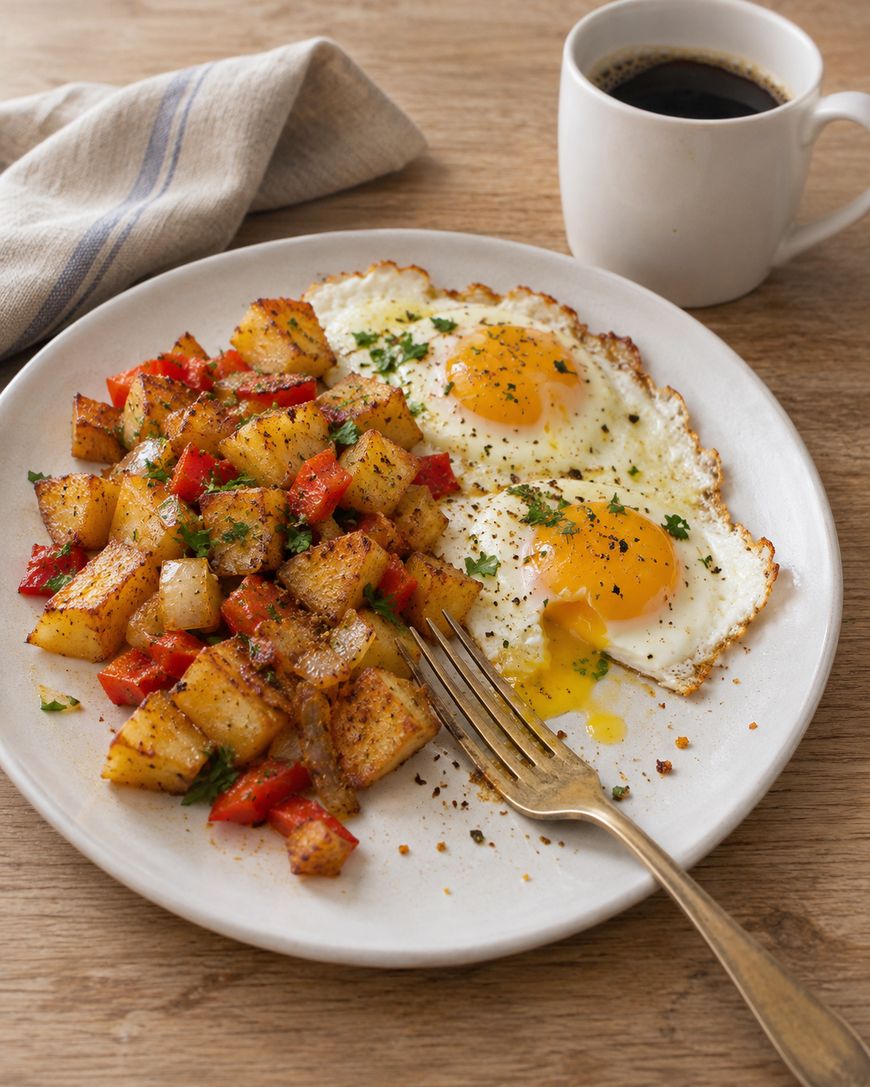
Parboiling cooks the centers until they are fluffy and softens the outside surface of each cube. When that softened surface hits hot oil, it fries into a thin, craggy crust that stays crisp long after the potatoes leave the pan.
Skipping the boil is the most common reason skillet potatoes turn out dark outside and hard in the middle. A raw cube needs so much time in the pan to cook through that the edges scorch before the center softens.
You also get a more even result, because every cube starts the browning stage already tender. All you are asking the skillet to do is build color and crunch.
The method here takes about 50 minutes from start to finish and makes 4 generous servings. Most of that time is hands-off, so you can start the coffee and set the table while the potatoes simmer and dry.
Ingredients for Breakfast Potatoes
These breakfast potatoes use pantry basics, and every ingredient has a job. Here is what goes into the skillet and why.
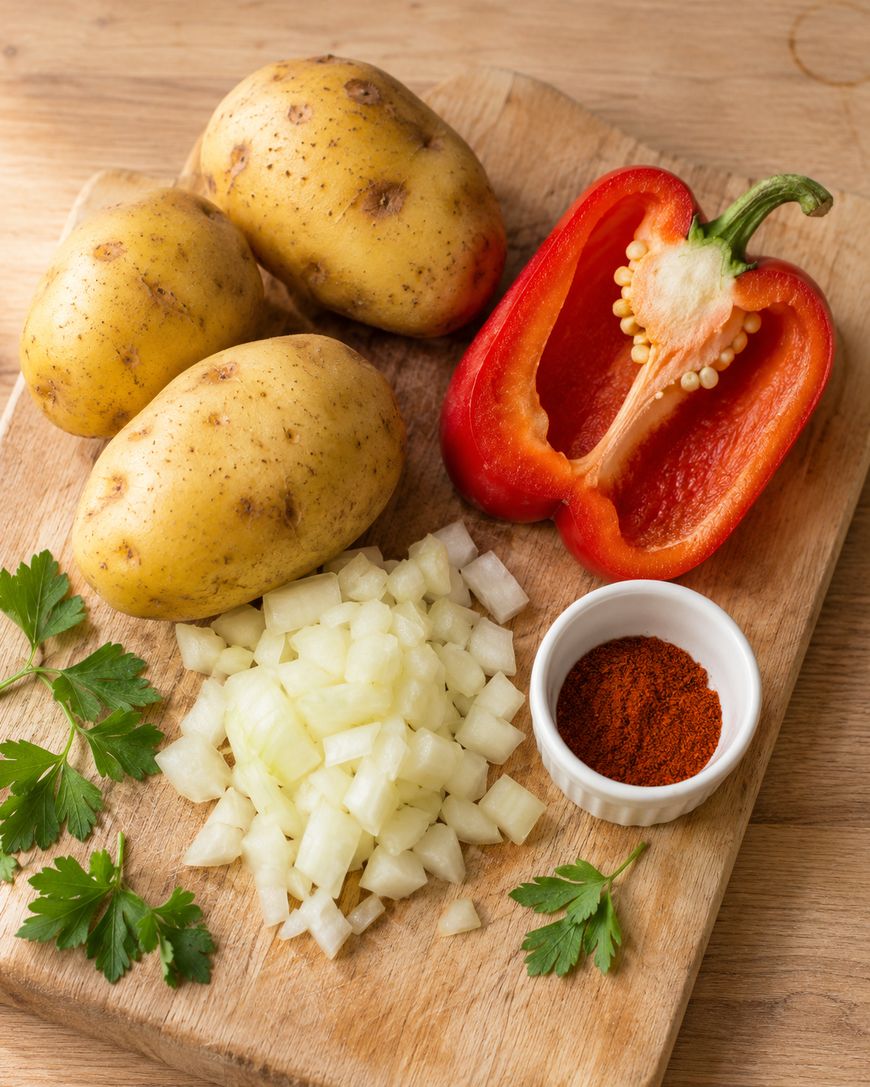
Yukon Gold Potatoes
We use 2 pounds of Yukon Gold potatoes, which is about 5 medium potatoes. Their medium starch level holds a cube shape through boiling and still turns creamy inside.
Russet potatoes also work and give a fluffier center, but they break apart more easily, so handle them gently after the boil. Red potatoes stay firm and a little waxy, which some cooks prefer.
Oil, Butter, and Seasonings
Three tablespoons of olive oil handle the high-heat browning, and 1 tablespoon of unsalted butter goes in later for flavor. Adding the butter at the end keeps its milk solids from burning during the long sear.
The seasoning is 1 teaspoon of smoked paprika, 1/2 teaspoon of garlic powder, 3/4 teaspoon of kosher salt, and 1/4 teaspoon of black pepper. You also need 1 tablespoon of kosher salt for the boiling water, most of which goes down the drain with the cooking liquid.
Onion, Bell Pepper, and Parsley
One small yellow onion and one medium red bell pepper, both diced, turn these into a classic diner-style skillet. They add sweetness and color without much extra work.
Finish the pan with 2 tablespoons of chopped fresh parsley or chives. The green herbs add a fresh bite that balances the rich, crisp potatoes.
How to Make Breakfast Potatoes in a Skillet
Making breakfast potatoes in a skillet comes down to four stages: parboil, dry, brown, and add the vegetables. Each stage is short, and the order matters.
Cut and Parboil the Potatoes
Scrub the potatoes and cut them into 1/2-inch cubes, keeping the pieces as even as you can. Even cubes cook at the same speed, so you never get mushy bits mixed in with hard ones.
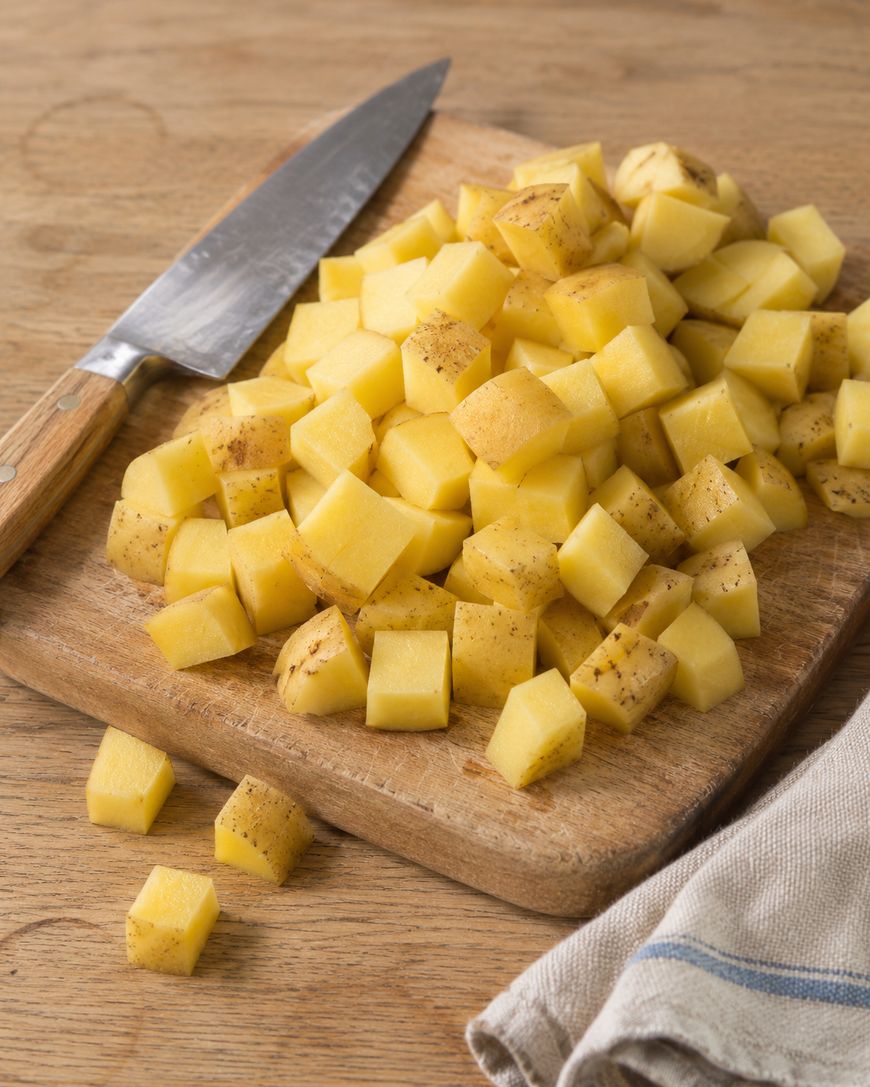
Put the cubes in a large pot, cover them with cold water by about an inch, and stir in the 1 tablespoon of kosher salt. Bring the pot to a boil over high heat, then reduce to medium and simmer for 5 minutes.
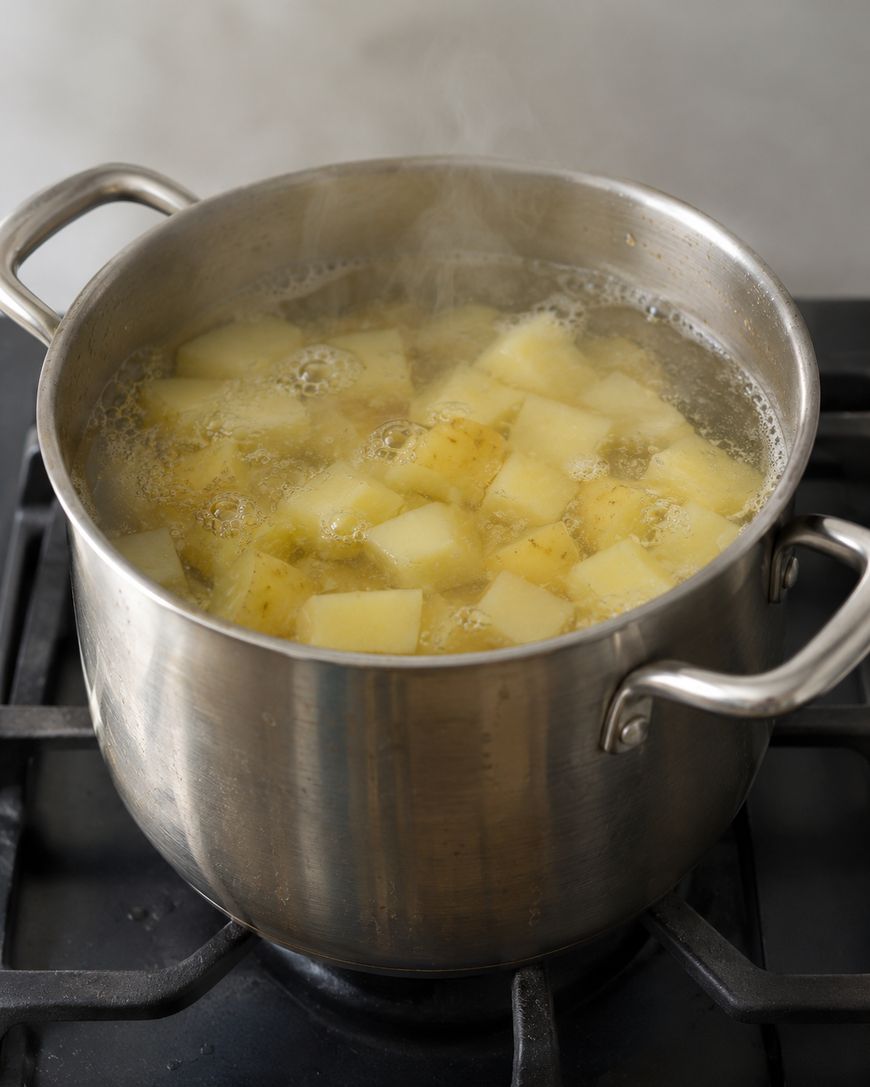
The potatoes are ready when a fork meets a little resistance at the center. If the tip slides in with no effort, they are overcooked and will crumble in the pan.
Dry the Potatoes Well
Drain the potatoes in a colander and let them sit for 5 minutes so the steam can escape. Shake the colander gently once or twice to rough up the edges.
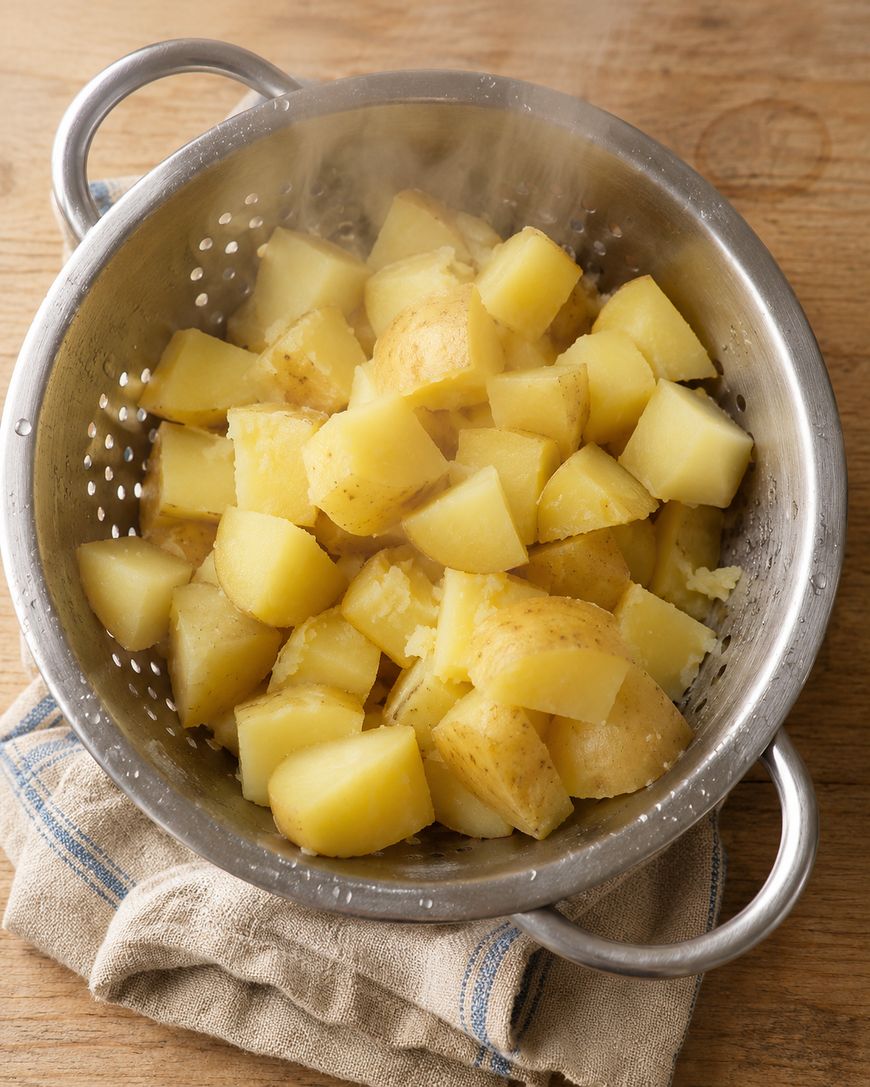
Those rough edges become the crunchiest bits, and the dry surface lets the oil do its job instead of fighting water.
Brown the Potatoes
Heat a 12-inch cast iron skillet over medium-high heat for 2 minutes, then add the olive oil. Add the potatoes in a single layer and leave them alone for 5 minutes.
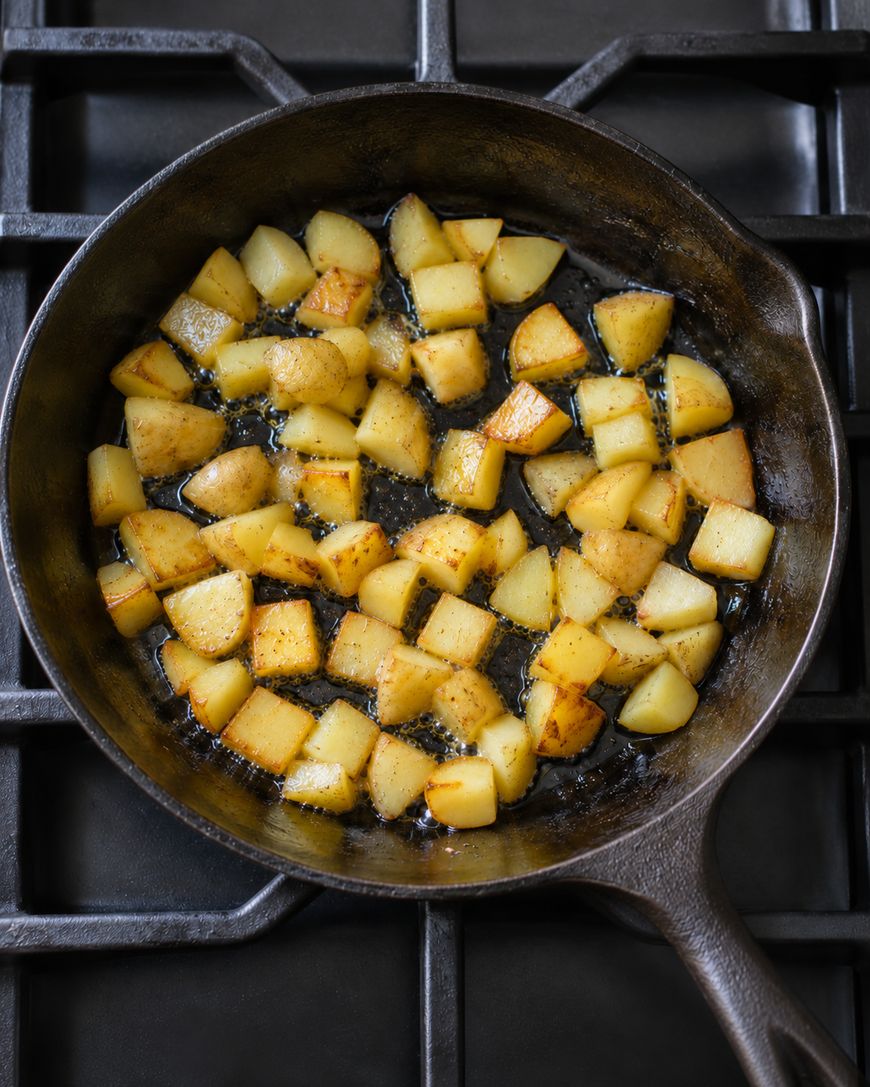
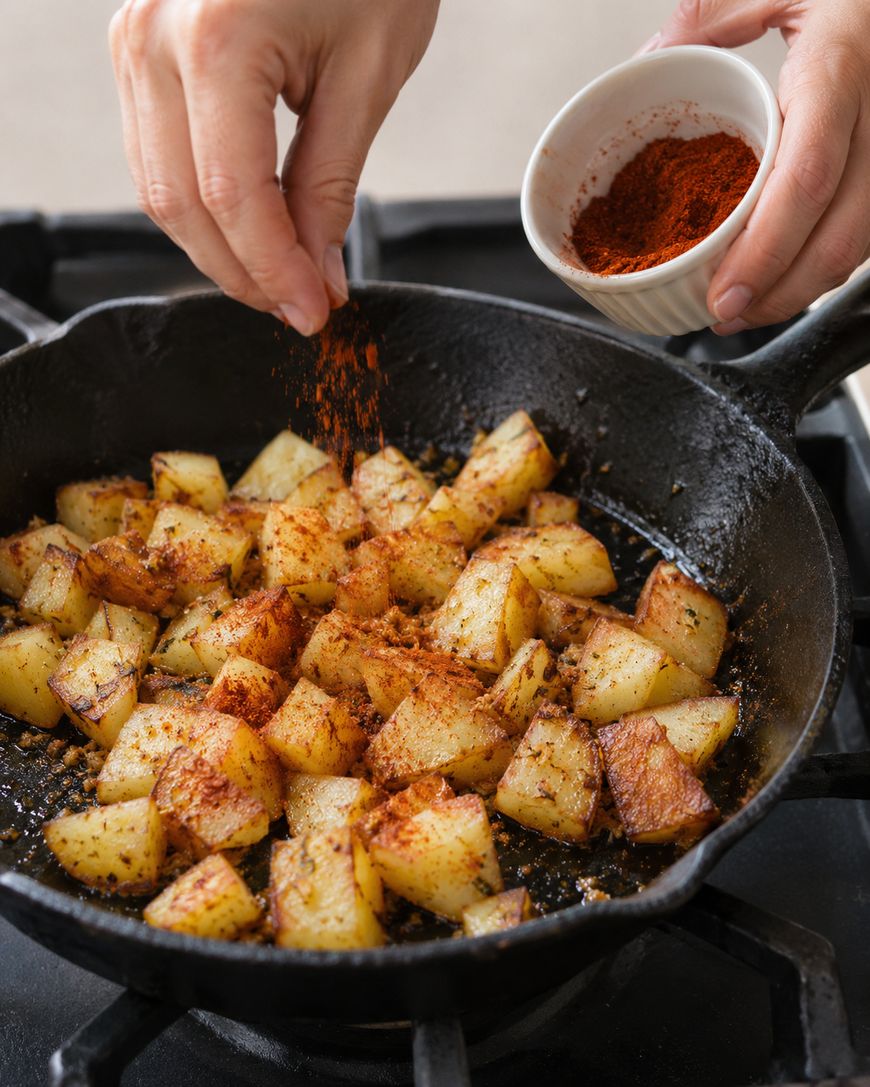
Stir or flip the potatoes, then sprinkle on the smoked paprika, garlic powder, 3/4 teaspoon of salt, and black pepper. Cook for another 5 minutes, stirring once or twice, until most sides look deeply golden.
Add the Peppers and Onions
Push the potatoes to one side of the skillet and add the butter, onion, and bell pepper to the empty space. Cook for 4 to 5 minutes, until the vegetables soften.
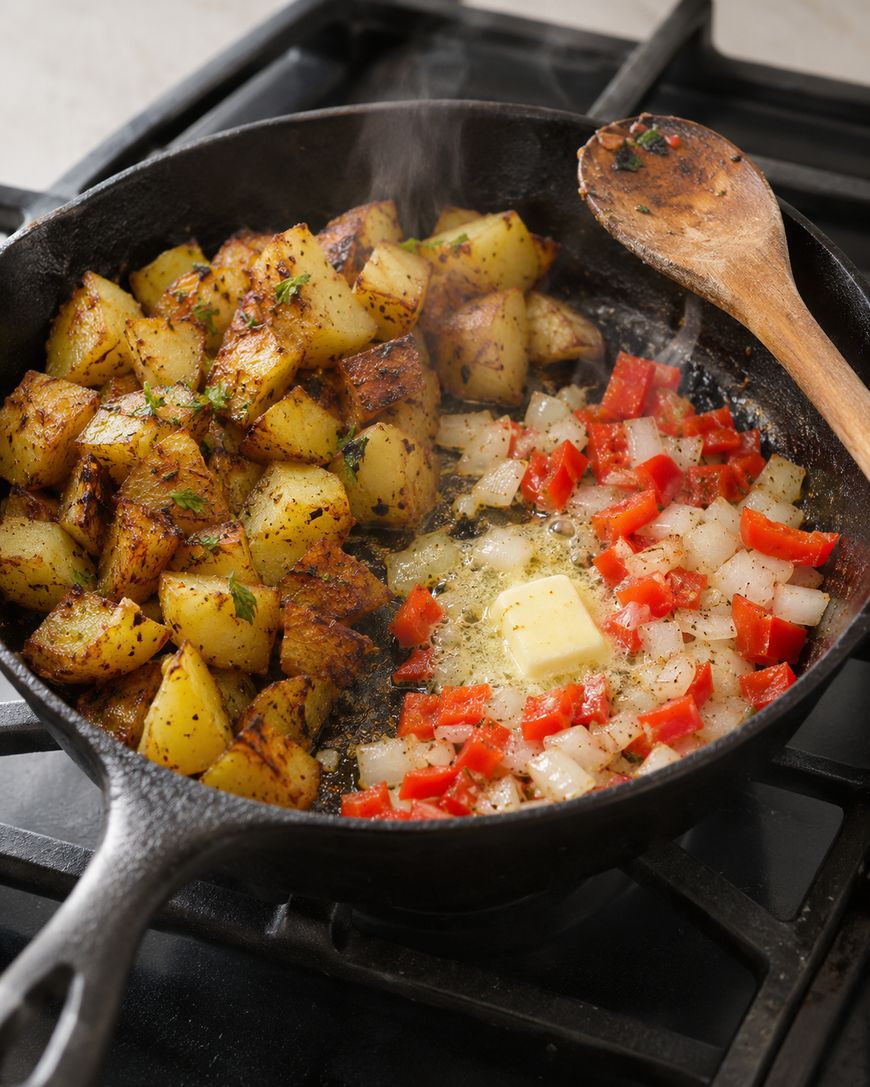
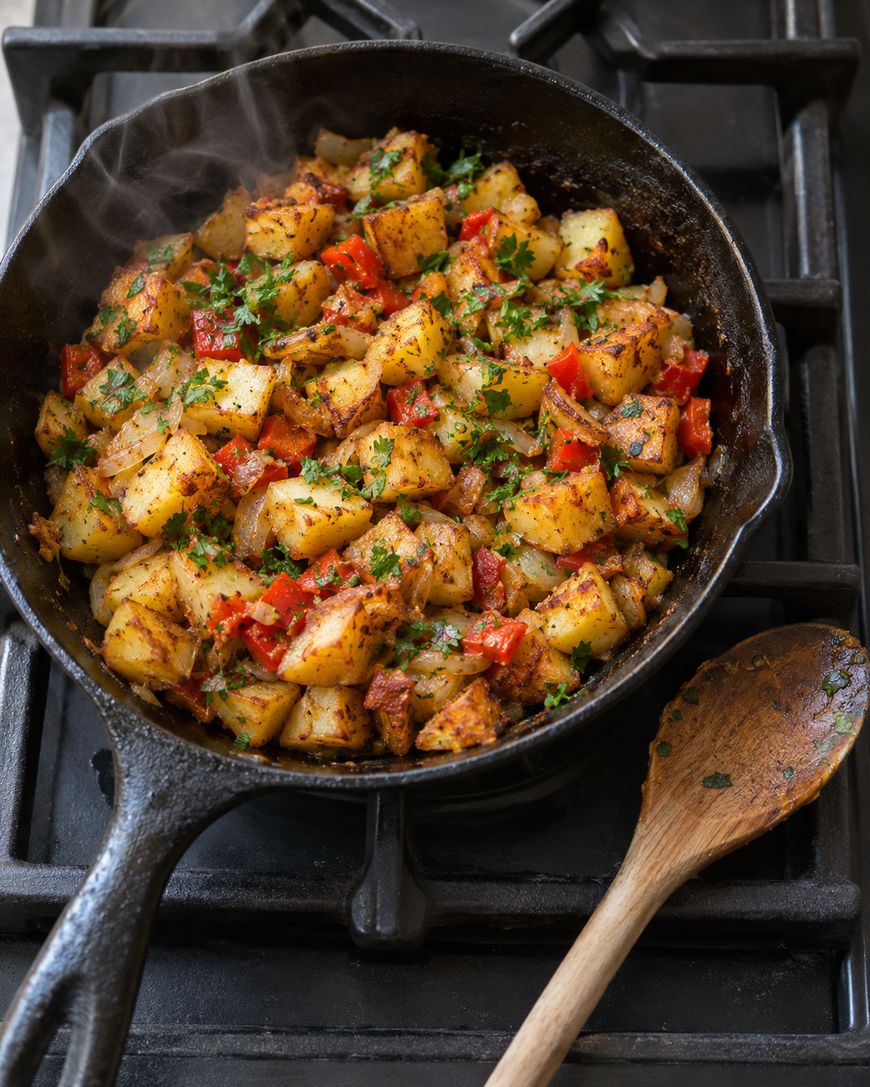
Stir everything together, cook for 2 more minutes, and finish with the parsley. Serve right away while the edges are at their crispiest.
Tips for Breakfast Potatoes That Stay Crisp
A few small habits separate crisp breakfast potatoes from soft, steamed ones. None of them take extra effort once you know them.
Use the Right Pan
A 12-inch cast iron skillet holds heat well and gives the potatoes room to brown in a single layer. A heavy stainless steel skillet works too, while a nonstick pan browns more slowly.
Crowding is the enemy of crispness. If your skillet is smaller than 12 inches, brown the potatoes in two batches.
Resist the Urge to Stir
Contact with the hot pan builds the crust, so every stir resets the clock. That is why the first 5 minutes in the skillet are completely hands-off.
When you do turn the potatoes, use a thin metal spatula to scrape under them so the browned crust stays attached.
Season at the Right Time
Smoked paprika and garlic powder scorch if they sit in a screaming hot pan for too long. Adding them after the first sear gives you color and flavor without any bitterness.
The salted boiling water already seasons the inside of each cube. The extra salt in the skillet seasons the crust.
Keep the Vegetables for Last
Onions and peppers release moisture as they cook. Adding them early would steam the potatoes, so they go in only after the potatoes have browned.
Breakfast Potato Variations and Substitutions
The recipe card keeps things simple, but breakfast potatoes are easy to customize. Every idea below is optional and is not part of the card, so treat them as add-ons.
Add Protein or Cheese
Crumbled cooked breakfast sausage or chopped crisp bacon stirs in during the final 2 minutes. Shredded sharp cheddar melts over the top in about a minute once the skillet comes off the heat.
A fried or poached egg set on top turns the skillet into a full meal. The runny yolk acts like a sauce for the crisp cubes.
Change the Spices
Swap the smoked paprika for Cajun seasoning, or add a pinch of cayenne pepper for heat. A dash of hot sauce at the table works just as well.
Fresh thyme or finely chopped rosemary pairs nicely with the potatoes if you want a more herbal flavor.
Switch the Vegetables
Green bell pepper, diced poblano, or sliced mushrooms can replace the red bell pepper. Mushrooms release a lot of water, so give them a few extra minutes in the pan.
Sweet potatoes work too. Cut them the same size and boil them for about 3 minutes, since they soften faster than Yukon Golds.
Make It Dairy Free
Skip the butter and use an extra tablespoon of olive oil to cook the onion and pepper. The flavor stays savory and the potatoes still brown beautifully.
Storing, Reheating, and Making Breakfast Potatoes Ahead
Leftover breakfast potatoes keep in an airtight container in the refrigerator for 3 to 4 days, according to the USDA Food Safety and Inspection Service. Refrigerate them within 2 hours of cooking.
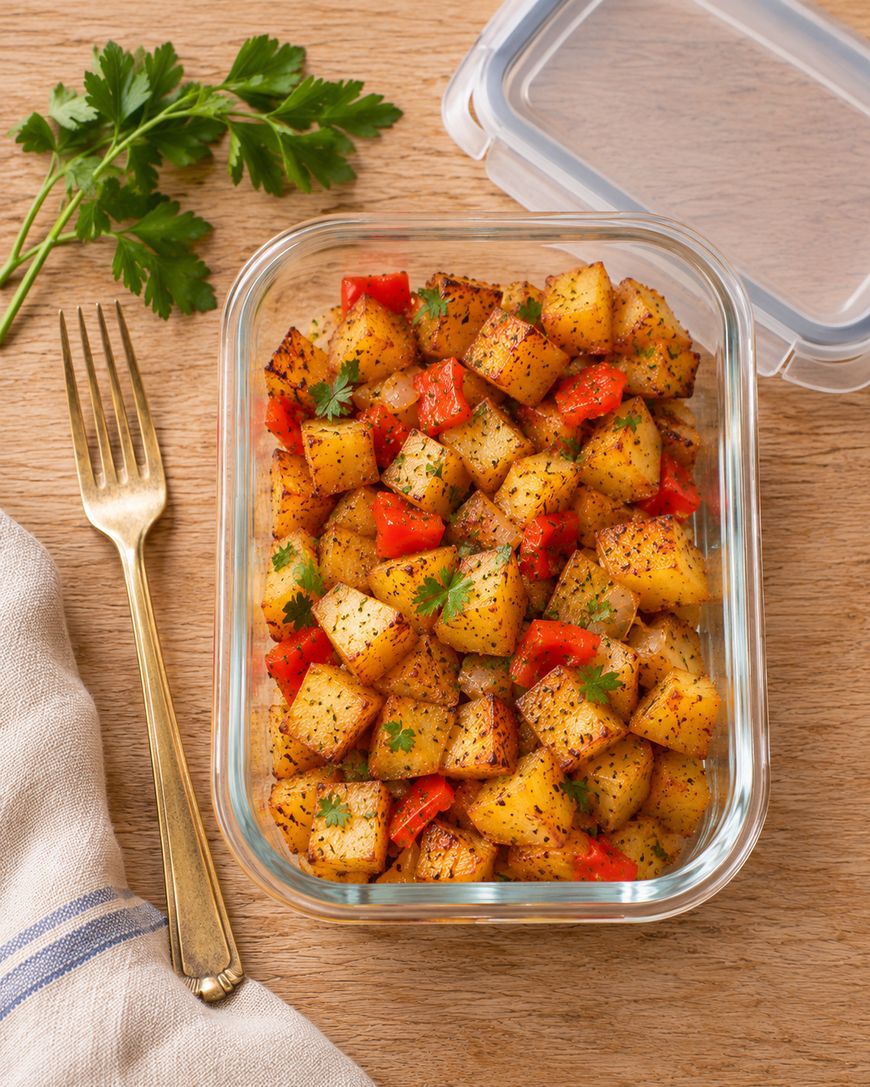
The USDA also advises reheating leftovers to 165°F. A skillet over medium-high heat does this best because it brings back the crisp edges, while a microwave leaves the potatoes soft.
We do not recommend freezing breakfast potatoes. Thawed potato cubes turn soft and watery, and they will not crisp the way fresh ones do.
If you want to cook for a crowd, double the recipe and use two skillets rather than one. Crowding a single pan is the fastest way to lose the crisp edges.
For a faster morning, parboil and dry the potatoes up to 1 day ahead. Let them cool completely, refrigerate them in an airtight container, and brown them in the skillet right before serving.
Serving Ideas for Breakfast Potatoes
Breakfast potatoes are a natural partner for eggs in any style, from sunny side up to a soft scramble. Add bacon or sausage on the side and you have a classic diner plate at home.
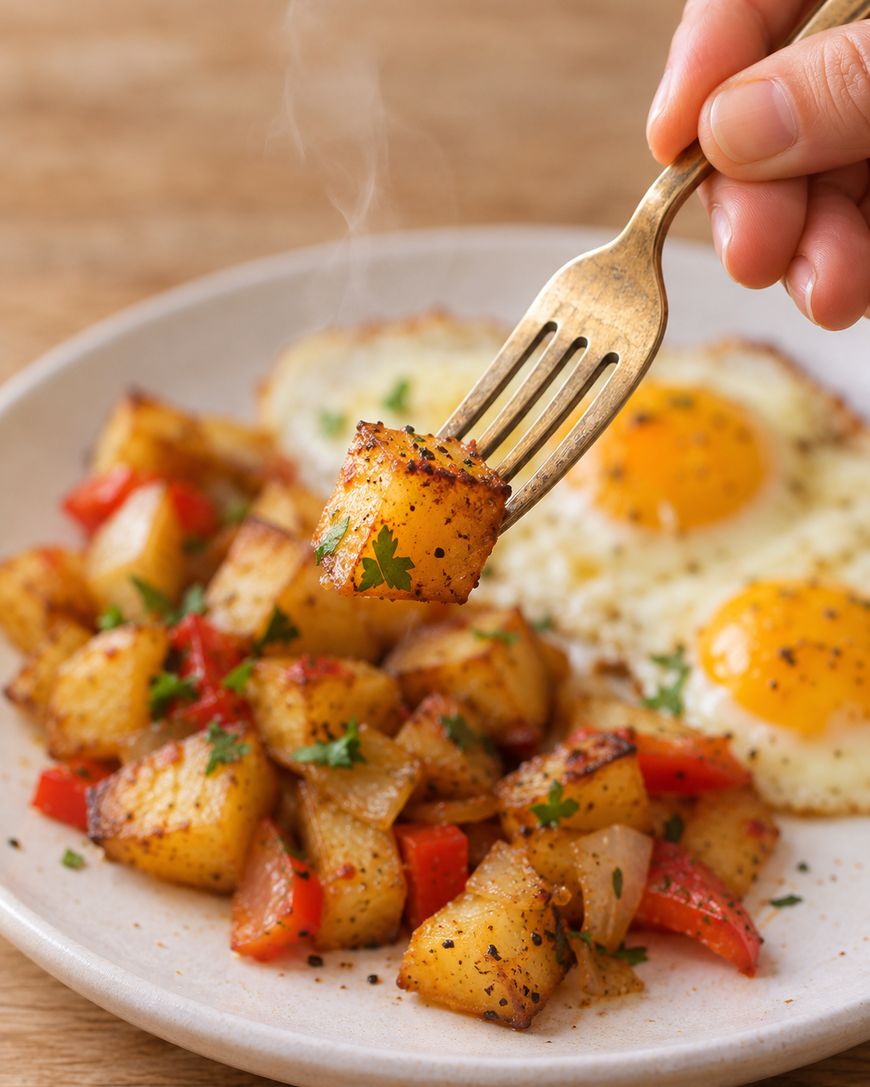
They also work as a filling for breakfast burritos or as a base for a loaded skillet topped with cheese, avocado, and salsa. For a brunch spread, set the skillet on the table next to a breakfast casserole or a pan of biscuits and gravy.
A bowl of fresh fruit balances the richness of the potatoes. A pot of strong coffee does the same job.
Leftovers also make a quick lunch when tucked into a warm tortilla with scrambled eggs.
If you are feeding a crowd, serve the potatoes straight from the skillet so they stay hot. Set out hot sauce, ketchup, and sour cream and let everyone top their own plate.
Where Breakfast Potatoes Come From
Pan-fried potatoes with onions have been a staple of American diners and home kitchens for generations. They go by many names, including home fries, skillet potatoes, and diner potatoes.
They differ from hash browns, which are made from shredded potatoes. Breakfast potatoes are cubed, which gives you more surface area for browning and a tender bite in the center.
That extra surface is where all the crunch comes from.
Home cooks have long used boiled potatoes as the starting point for a crisp skillet breakfast. Parboiling in this recipe follows the same idea, just on purpose and with a little more control.
That is why this version feels familiar but eats better than most diner plates. The edges are crisp, the centers are tender, and nothing sits under a heat lamp.
Ready to cook? Use the recipe card below to print or save the full breakfast potatoes recipe.
Crispy Skillet Breakfast Potatoes
Crispy skillet breakfast potatoes with golden edges and fluffy centers, tossed with onions and red bell pepper for an easy diner-style side.
Ingredients
- 2 pounds Yukon Gold potatoes, scrubbed and cut into 1/2-inch cubes
- 1 tablespoon kosher salt, for the boiling water
- 3 tablespoons olive oil
- 1 tablespoon unsalted butter
- 1 small yellow onion, diced
- 1 medium red bell pepper, diced
- 1 teaspoon smoked paprika
- 1/2 teaspoon garlic powder
- 3/4 teaspoon kosher salt
- 1/4 teaspoon black pepper
- 2 tablespoons chopped fresh parsley or chives, for serving
Instructions
- Place the potato cubes in a large pot, cover with cold water by about 1 inch, and stir in 1 tablespoon kosher salt. Bring to a boil over high heat, then reduce to medium and simmer for 5 minutes, until a fork meets a little resistance at the center.
- Drain well in a colander and let the potatoes steam dry for 5 minutes, shaking the colander once or twice to rough up the edges.
- Heat a 12-inch cast iron skillet over medium-high heat for 2 minutes. Add the olive oil, then the potatoes in a single layer. Cook for 5 minutes without stirring.
- Stir or flip the potatoes. Sprinkle with smoked paprika, garlic powder, 3/4 teaspoon salt, and black pepper. Cook for 5 more minutes, stirring once or twice, until deeply golden.
- Push the potatoes to one side of the skillet. Add the butter, onion, and bell pepper to the empty space and cook for 4 to 5 minutes, until softened.
- Stir everything together, cook for 2 more minutes, and sprinkle with parsley. Serve hot.
Notes
Let the drained potatoes steam dry for the full 5 minutes. Wet potatoes will not brown.
Use a 12-inch skillet. In a smaller pan, brown the potatoes in two batches.
Russet potatoes can replace Yukon Golds but are more fragile after boiling.
To make ahead, parboil and dry the potatoes up to 1 day ahead, cool completely, refrigerate in an airtight container, then brown in the skillet before serving.
Store leftovers in an airtight container in the refrigerator for 3 to 4 days. Reheat in a skillet until steaming hot (165°F). Freezing is not recommended.
Nutrition Information:
Yield:
4Serving Size:
1 1/2 cupsAmount Per Serving: Calories: 310Total Fat: 13gSaturated Fat: 3gSodium: 490mgCarbohydrates: 43gFiber: 5gSugar: 4gProtein: 5g
Breakfast Potatoes FAQ
Do you have to parboil breakfast potatoes?
You do not have to, but it makes a big difference. Parboiled cubes cook through and brown in the same amount of pan time, while raw cubes tend to scorch before the centers soften.
What are the best potatoes for breakfast potatoes?
Yukon Golds are our pick because they hold their shape and turn creamy inside. Russets give a fluffier center but are more fragile, and red potatoes stay firm.
Why are my breakfast potatoes soggy?
Soggy potatoes usually mean the cubes were wet, the pan was crowded, or the heat was too low. Let the drained cubes steam dry for 5 minutes, keep them in a single layer, and cook over medium-high heat.
Can you make breakfast potatoes ahead of time?
Yes. Parboil and dry the cubes, refrigerate them in an airtight container for up to 1 day, and brown them in the skillet right before serving.
How long do leftover breakfast potatoes last?
They keep for 3 to 4 days in the refrigerator in an airtight container. Reheat them in a skillet until steaming hot, which means 165°F according to the USDA.
Why This Recipe Works
Parboiling does the heavy lifting. It cooks the centers through and roughs up the surface of each cube, so the skillet only has to build a crust.
Drying the potatoes for 5 minutes removes surface water, which is the main thing that stops browning. A preheated 12-inch cast iron skillet and 5 untouched minutes then give the crust time to form.
Seasoning after the first sear protects the paprika and garlic powder from scorching. Adding the onion and bell pepper last keeps their moisture from steaming the potatoes.
The result is a skillet of breakfast potatoes with crisp edges, fluffy centers, and plenty of flavor, all from ingredients you probably already have.
The method is also forgiving. If the cubes brown a little unevenly, a few more minutes and a stir will even things out.
You can also lower the heat slightly if the pan starts to smoke.
Make Breakfast Potatoes Your New Weekend Habit
Great breakfast potatoes come down to three things: parboil the cubes, dry them well, and let them brown without stirring. Once you try this method, it is hard to go back to soft, pale skillet potatoes.
The recipe fits any morning, from a quiet weekday breakfast to a full holiday brunch. It also costs very little, since the whole skillet starts with a bag of potatoes and a few pantry staples.
Scroll up to the recipe card, save it, and make a batch this weekend. Serve the potatoes with your favorite eggs, and let us know how they turned out in the comments.
A star rating helps other home cooks find the recipe too. Pair the skillet with eggs and fruit, and breakfast is done.
If you love a crisp potato side, you will find more breakfast ideas below.
Loaded Hashbrowns That Stay Crispy Under All the Cheese and Bacon
Crispy Potato Waffles That Turn Leftover Mashed Potatoes Into Breakfast