Last updated: October 8, 2026
Butternut squash soup is the kind of dish that makes a whole house smell like fall, and this version leans into that with a quick roast before anything hits the pot. You will find the full printable recipe in the card below, but everything you need to make it is right here in the post too.
What You Need for This Butternut Squash Soup
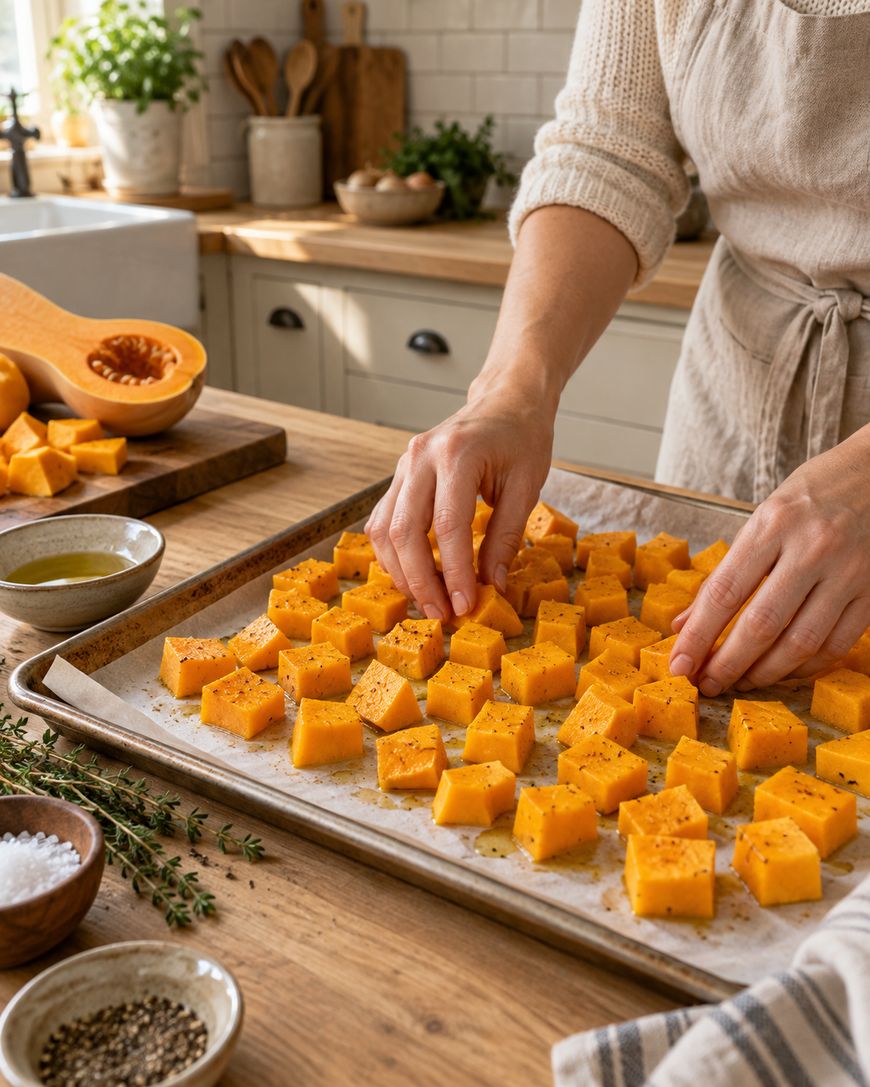
A good butternut squash soup starts with squash that actually tastes like something, and roasting is what gets you there. You want one medium butternut squash, peeled, seeded, and cut into rough one-inch cubes, along with a yellow onion, three cloves of garlic, and a couple of carrots for a little extra sweetness and body.
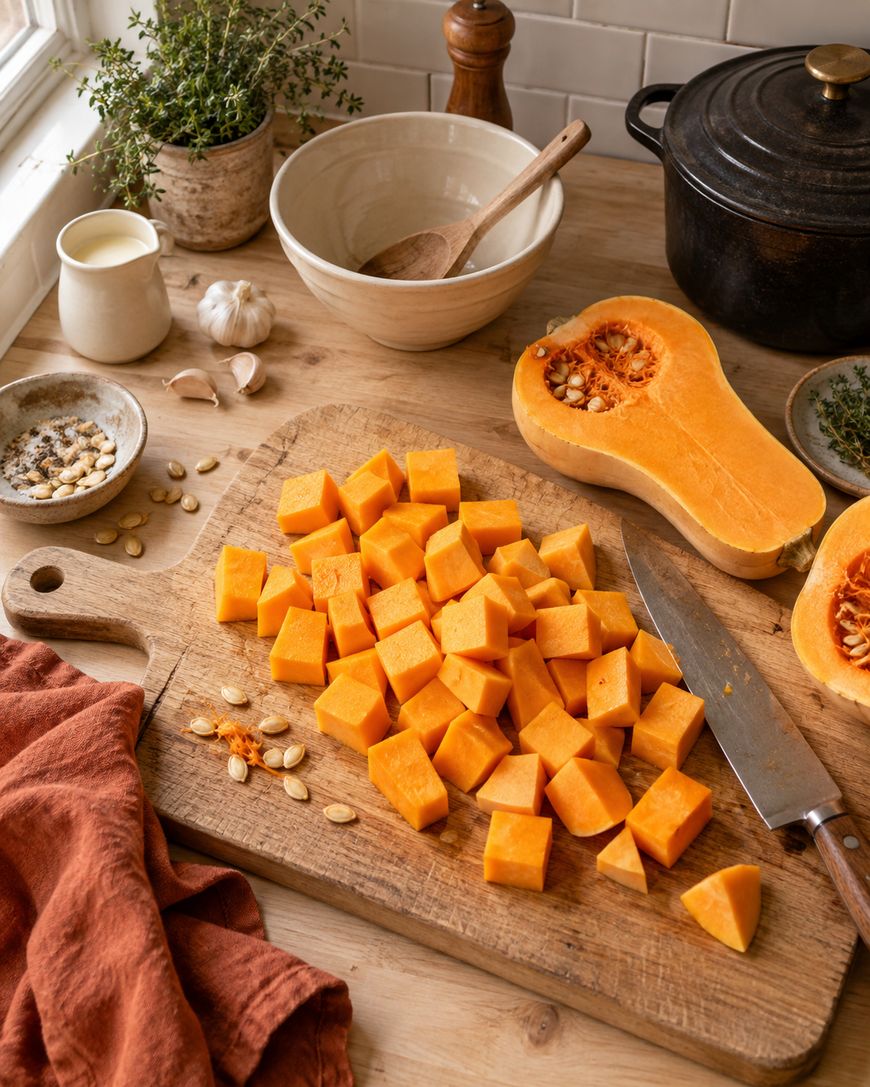
Olive oil coats the squash before roasting, and butter is what you will use to soften the aromatics in the pot. Vegetable broth or chicken broth forms the base, and a splash of heavy cream at the end is what makes this soup feel indulgent rather than just healthy. A pinch of nutmeg, a little cinnamon, salt, and black pepper round out the seasoning, and fresh sage brings a savory note that plays beautifully against the sweetness of the squash.
Ingredient Notes and Substitutions
Fresh squash gives you the best flavor and texture, but frozen pre-cubed butternut squash works in a pinch and skips the peeling entirely. If you want a dairy-free version, full-fat coconut milk stands in for the heavy cream and adds a subtle sweetness of its own. Vegetable broth keeps this soup vegetarian, while chicken broth adds a little more savoriness if that fits your table.
How to Make Butternut Squash Soup
Roast the Squash First
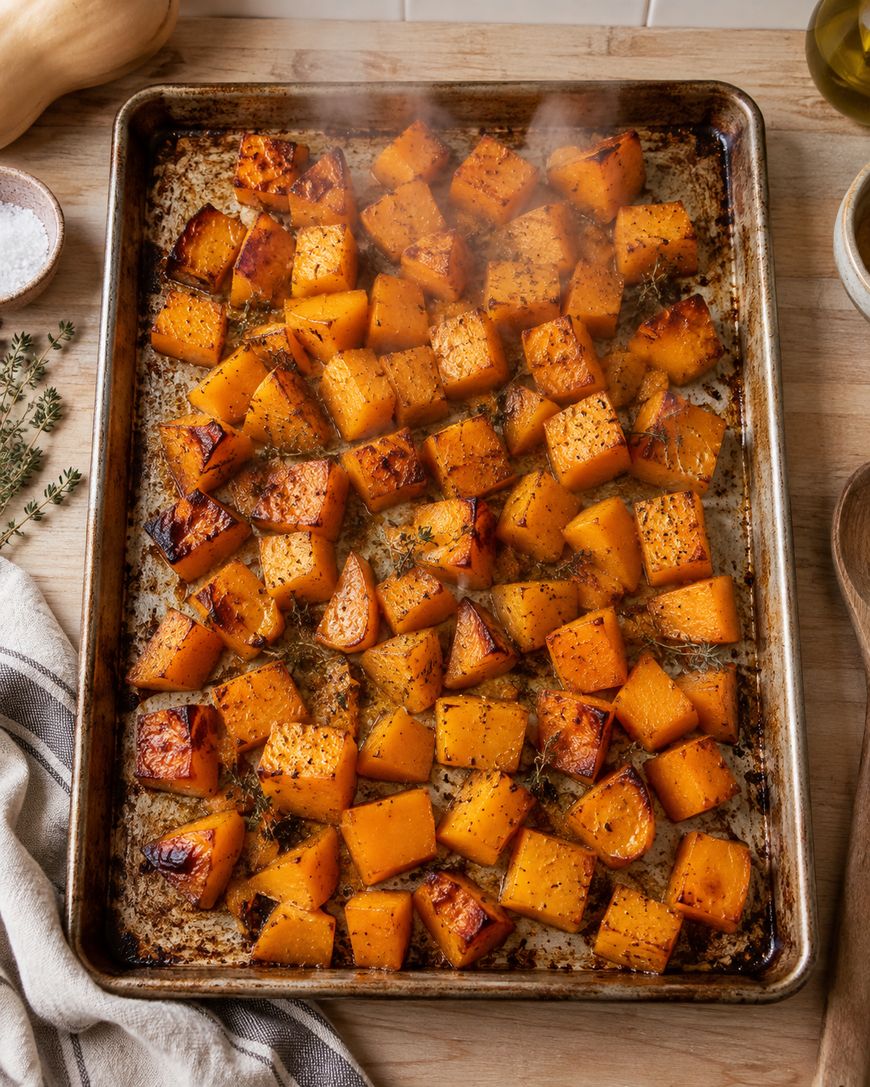
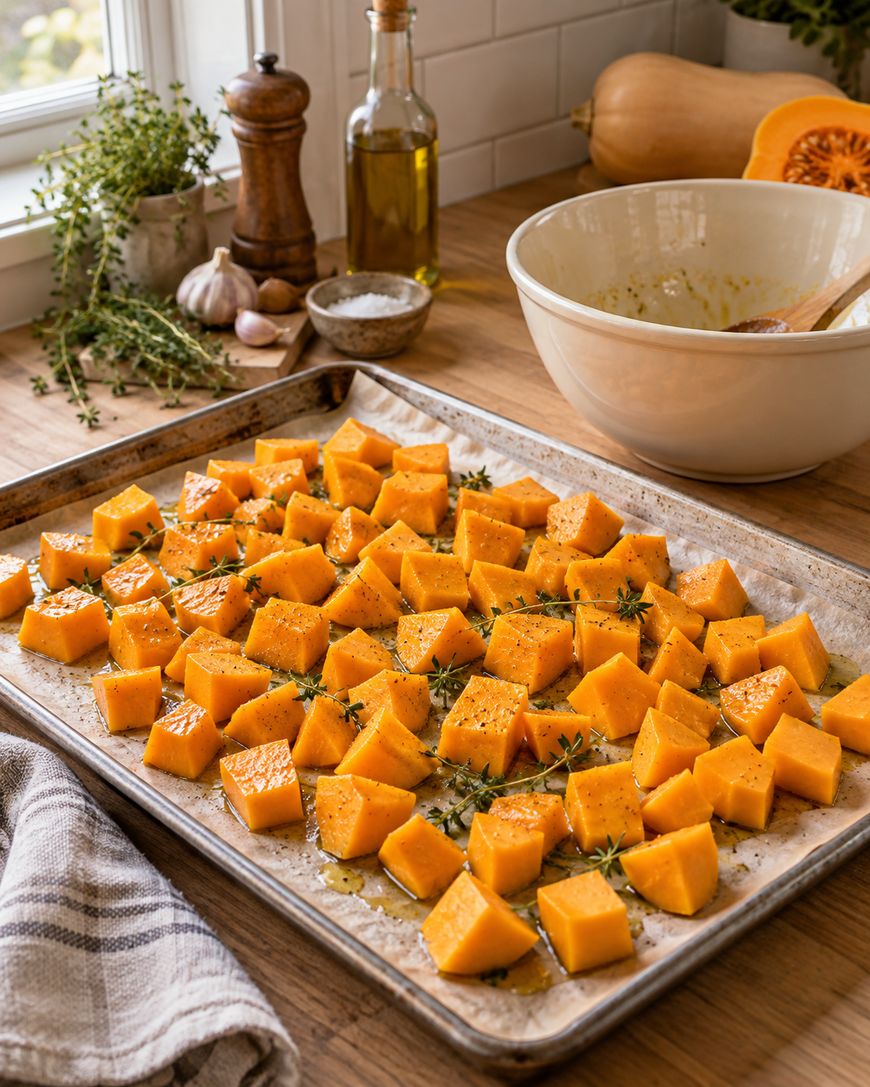
Roasting the squash before it goes into the soup is the single biggest difference between a flat-tasting soup and one with real depth. Toss the cubed squash with olive oil, salt, and pepper, then spread it in a single layer on a sheet pan and roast at 425°F for about 25 to 30 minutes, until the edges are caramelized and a fork slides in easily. That caramelization is where a lot of the soup’s flavor comes from, so resist the urge to skip this step even when you are short on time.
Build the Base
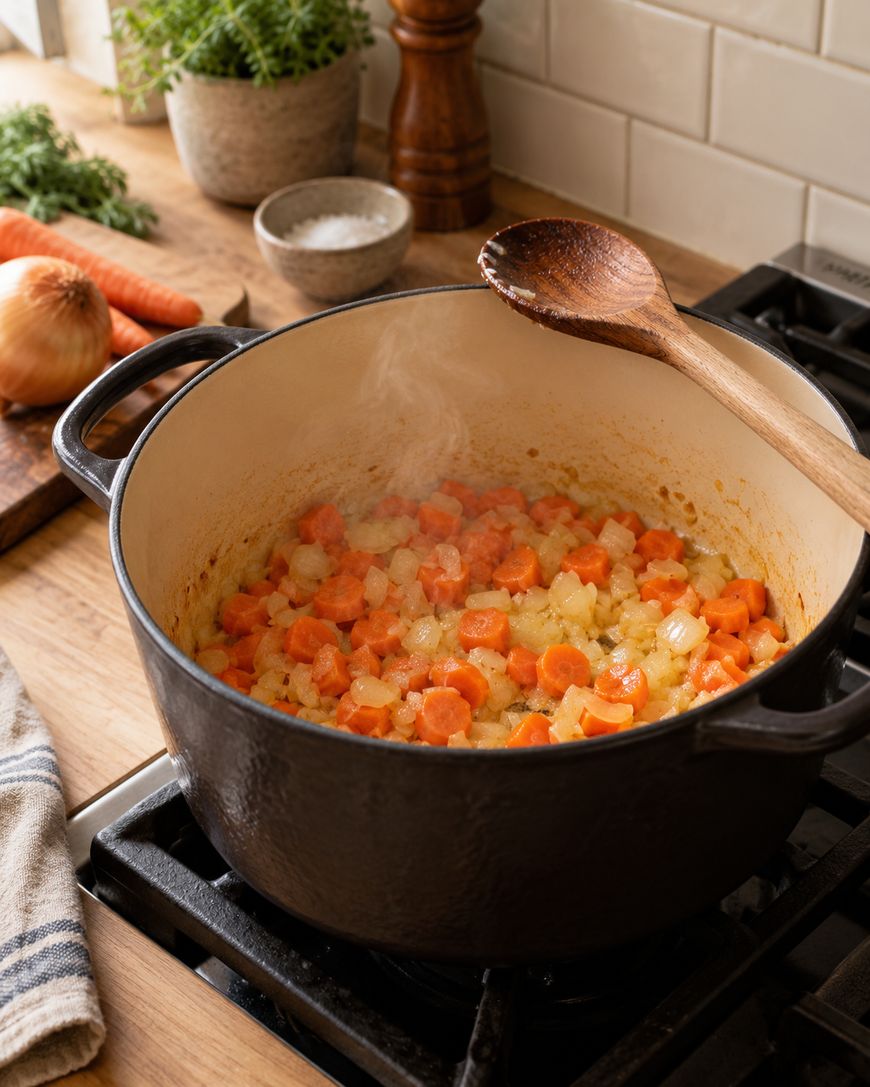
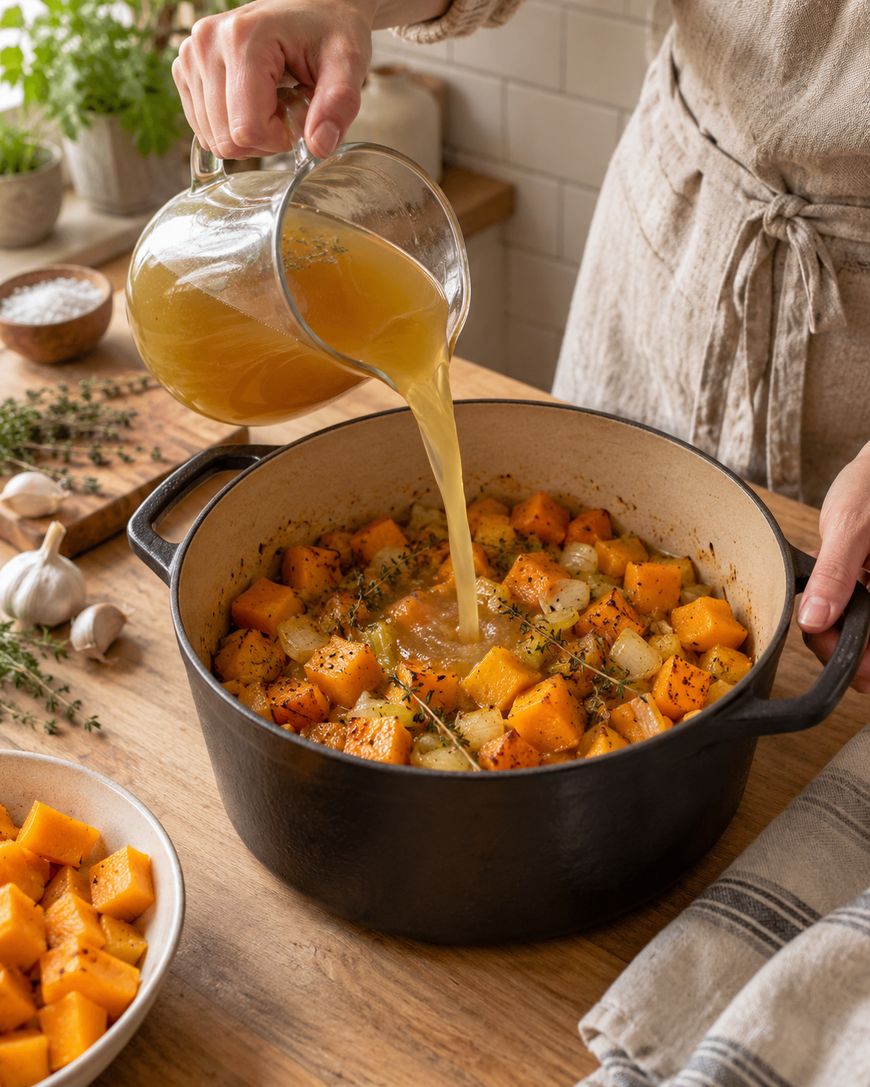
While the squash roasts, melt butter in a large pot or Dutch oven over medium heat and add the diced onion and carrots. Cook them for about 8 minutes, stirring occasionally, until the onion turns translucent and starts to soften. Stir in the minced garlic and cook for another minute, just until fragrant, then add the roasted squash to the pot along with the broth, nutmeg, and cinnamon.
Simmer and Blend
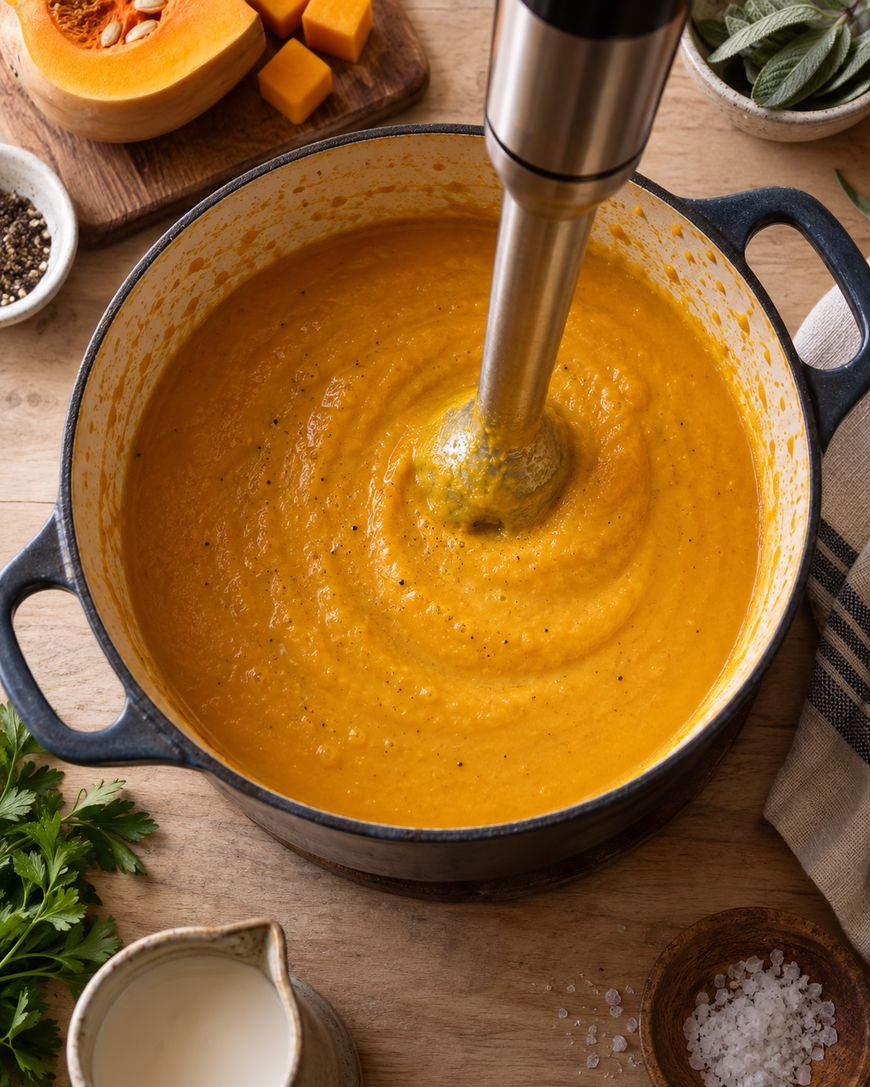
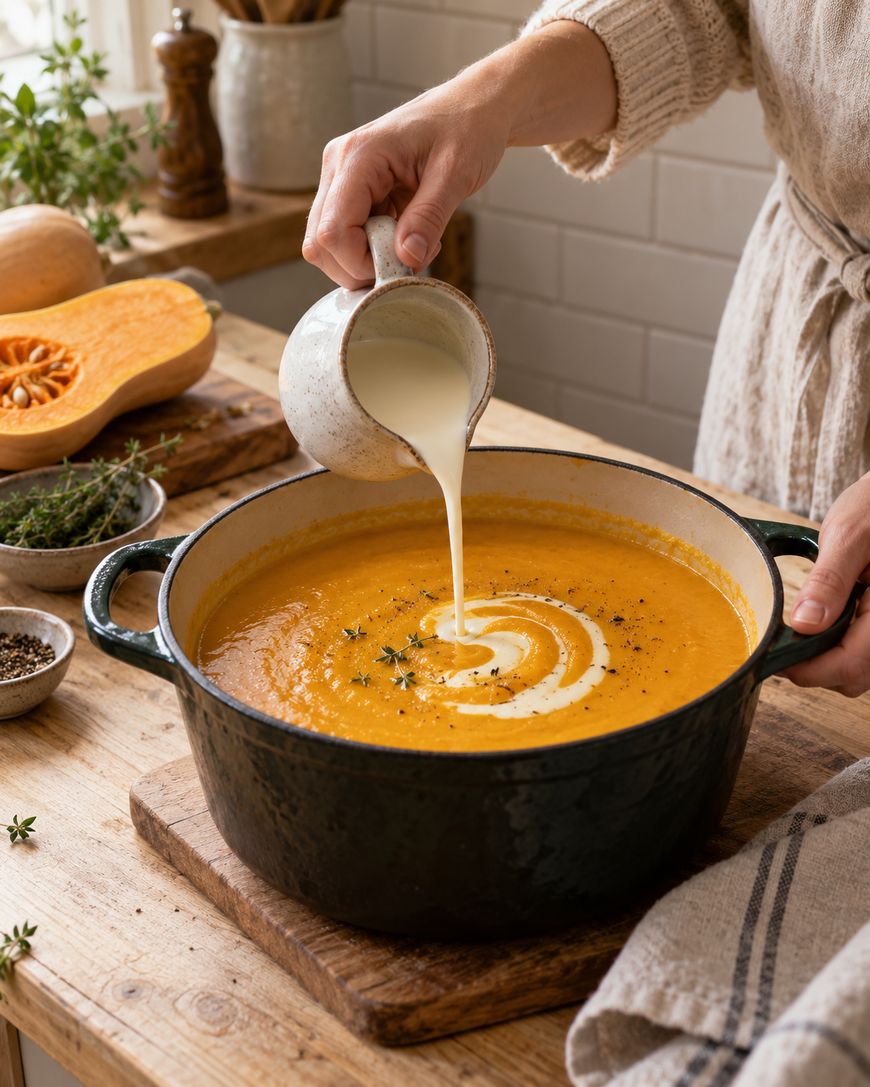
Bring the pot to a gentle boil, then reduce the heat and let everything simmer for 15 to 20 minutes so the flavors meld and the carrots turn fully tender. Once everything is soft, blend the soup until completely smooth, either with an immersion blender right in the pot or in batches in a standing blender. Stir in the heavy cream at the end, off the heat, and taste for salt and pepper before adjusting.
Variations to Try
A spoonful of maple syrup or a drizzle of honey brings out the squash’s natural sweetness if you like your soup on the cozier side. For a spicier bowl, a pinch of cayenne or a swirl of chili crisp on top adds a nice contrast to the creaminess. Curry powder is another favorite swap for the nutmeg and cinnamon if you want to take the soup in a completely different direction.
Storage and Make-Ahead Tips
This soup keeps well in an airtight container in the refrigerator for up to 4 days, and the flavor actually improves after a day or two as everything settles together. For longer storage, freeze it in a freezer-safe container for up to 3 months, and thaw it overnight in the refrigerator before reheating gently on the stove. If the soup separates slightly after freezing, a quick whisk while reheating brings it right back together.

Serving Suggestions
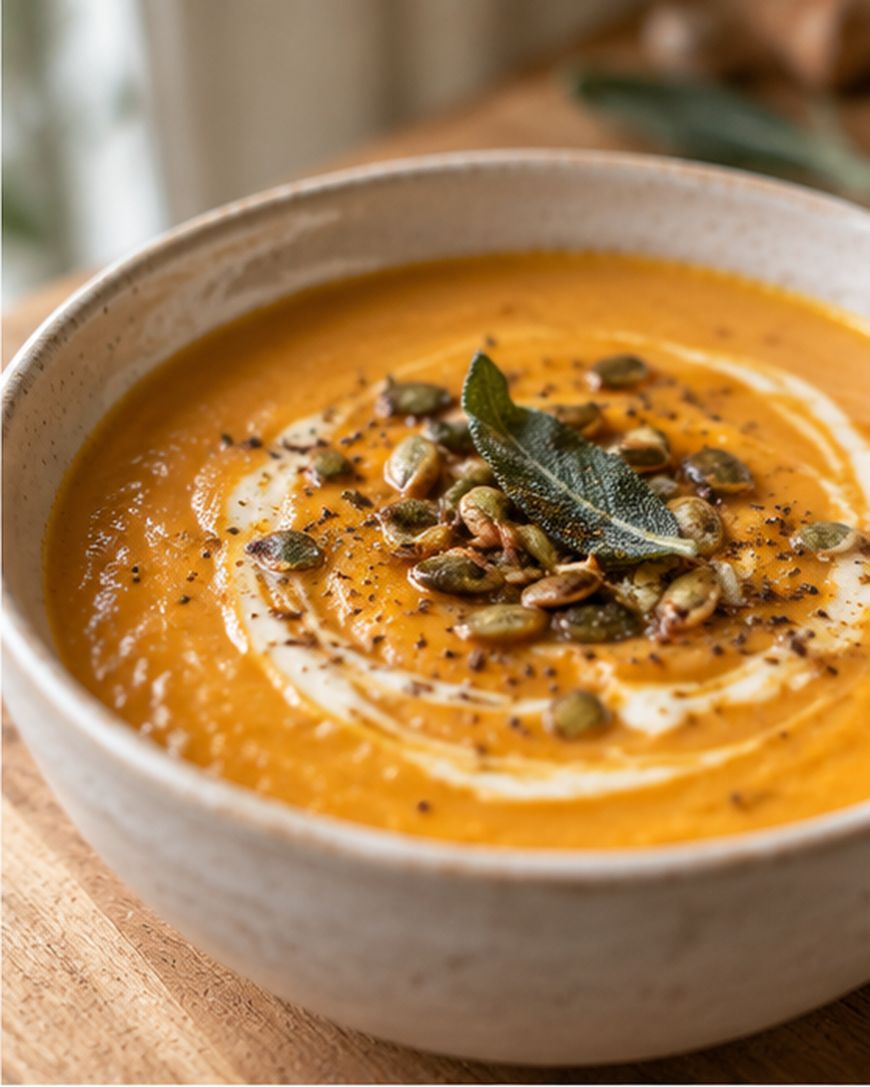
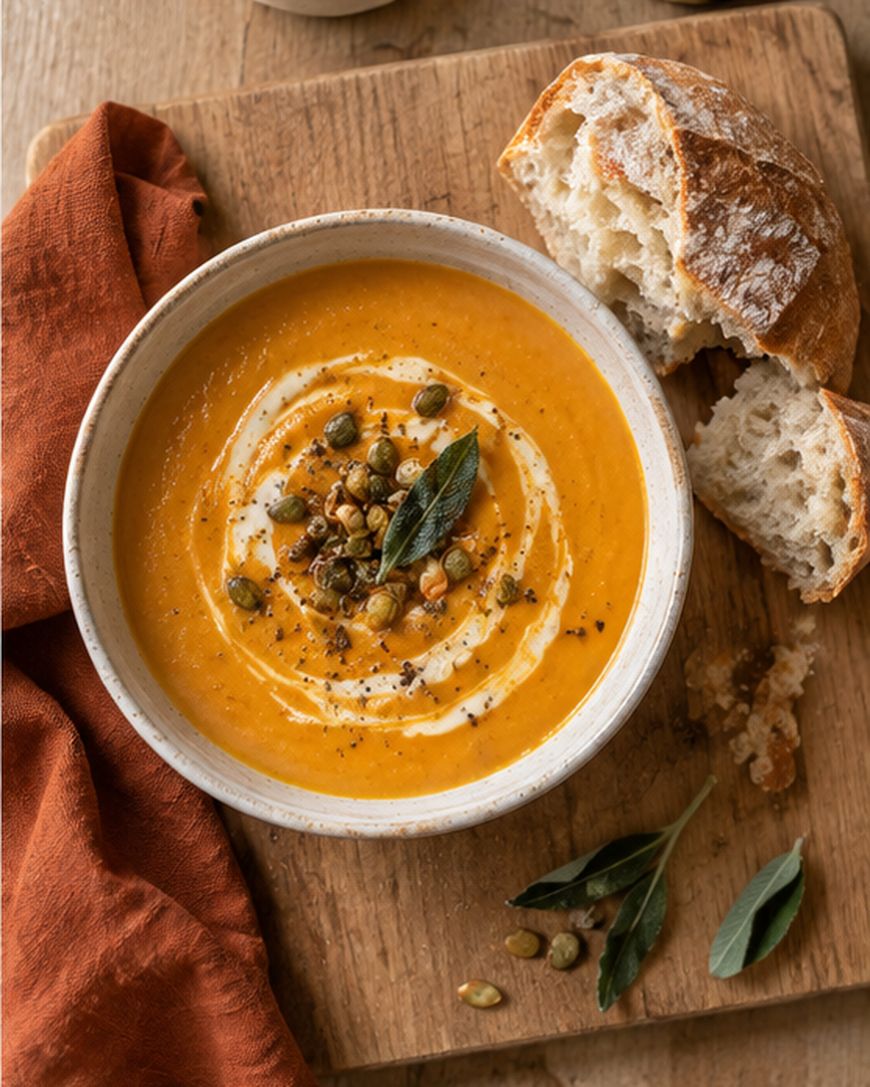
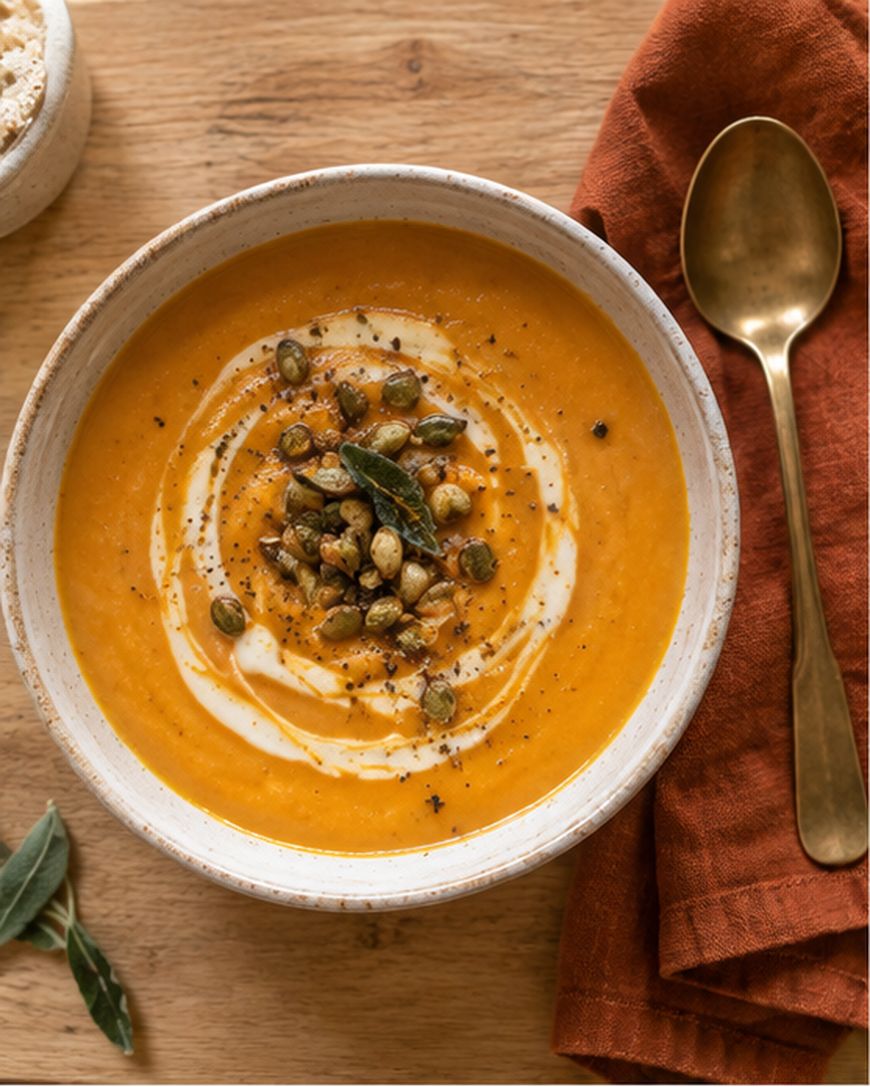
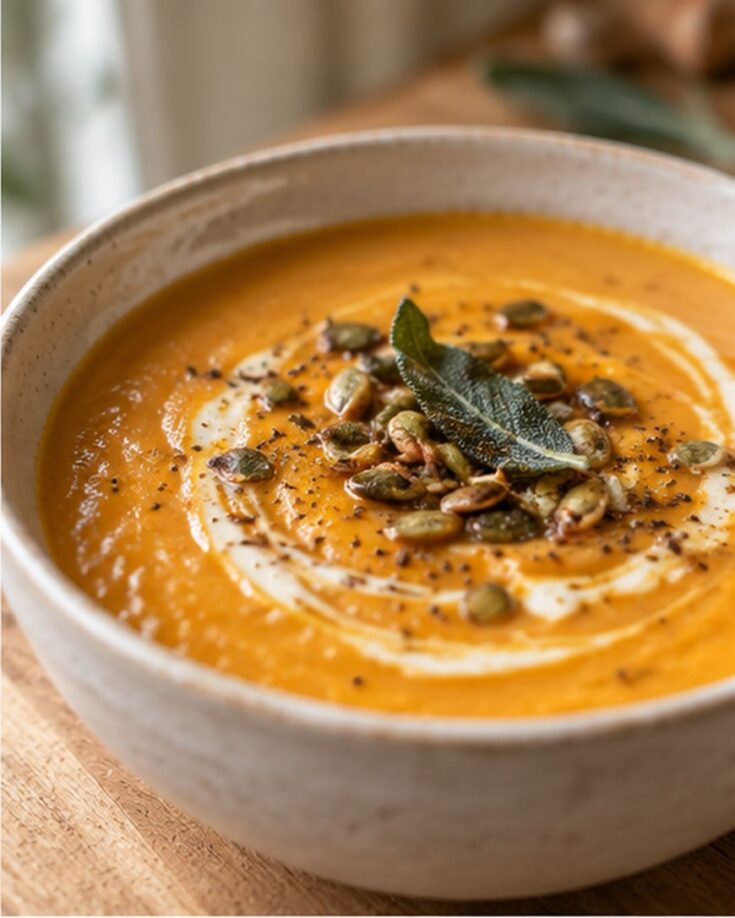
A crusty piece of bread or a grilled cheese sandwich turns this soup into a full meal, and a simple green salad on the side keeps things balanced. For toppings, try a swirl of extra cream, toasted pumpkin seeds, a few fried sage leaves, or a drizzle of good olive oil right before serving.
The Story Behind This Butternut Squash Soup
Squash soups have been a staple of autumn cooking for generations, built around whatever hard squash was stored through the cooler months. Butternut squash became the go-to choice for soup because of its naturally sweet, nutty flavor and smooth texture once cooked, and it holds up beautifully to both roasting and simmering. This version keeps things simple and lets that flavor lead, with just enough warm spice and cream to make it feel special without overcomplicating a genuinely classic combination.
Use the recipe card below to cook along step by step, with exact measurements and timing.
Butternut Squash Soup
A silky, deeply flavored butternut squash soup made rich with roasted squash, warm spices, and a touch of cream.
Ingredients
- 1 medium butternut squash (about 3 pounds), peeled, seeded, and cut into 1-inch cubes
- 2 tablespoons olive oil
- 2 tablespoons unsalted butter
- 1 yellow onion, diced
- 2 carrots, peeled and diced
- 3 cloves garlic, minced
- 4 cups vegetable broth
- 1/2 teaspoon ground nutmeg
- 1/4 teaspoon ground cinnamon
- 1/2 cup heavy cream
- 1 teaspoon salt, plus more to taste
- 1/4 teaspoon black pepper, plus more to taste
- Fresh sage leaves, for garnish (optional)
Instructions
- Preheat the oven to 425°F and line a sheet pan with parchment paper.
- Toss the cubed butternut squash with olive oil, 1/2 teaspoon salt, and a pinch of pepper, then spread in a single layer on the sheet pan.
- Roast for 25 to 30 minutes, until the squash is tender and caramelized at the edges.
- While the squash roasts, melt the butter in a large pot or Dutch oven over medium heat.
- Add the diced onion and carrots and cook for 8 minutes, stirring occasionally, until softened.
- Stir in the garlic and cook for 1 minute, until fragrant.
- Add the roasted squash, vegetable broth, nutmeg, and cinnamon to the pot and stir to combine.
- Bring to a gentle boil, then reduce heat and simmer for 15 to 20 minutes, until the carrots are fully tender.
- Blend the soup until completely smooth, using an immersion blender in the pot or a standing blender in batches.
- Stir in the heavy cream, remaining 1/2 teaspoon salt, and remaining 1/4 teaspoon pepper.
- Taste and adjust seasoning as needed, then ladle into bowls and garnish with fresh sage if using.
Notes
Store leftovers in an airtight container in the refrigerator for up to 4 days. Freeze in a freezer-safe container for up to 3 months; thaw overnight in the refrigerator and reheat gently on the stove, whisking if the soup separates.
Nutrition Information:
Yield:
6Serving Size:
about 1.5 cupsAmount Per Serving: Calories: 210Total Fat: 13gSaturated Fat: 7gSodium: 620mgCarbohydrates: 22gFiber: 4gSugar: 7gProtein: 3g
This site provides estimated nutritional information. This information comes from online calculators. Although we try to provide accurate nutritional information, these figures are only estimates.
Butternut Squash Soup Questions, Answered
Can I make this butternut squash soup ahead of time?
Yes, this soup is a great make-ahead dish and can be made up to 4 days in advance. Store it in the refrigerator in an airtight container and reheat gently on the stove before serving.
Can I freeze butternut squash soup?
Yes, this soup freezes well for up to 3 months in a freezer-safe container. Thaw it overnight in the refrigerator, then reheat slowly on the stove, whisking if it separates.
Do I have to roast the squash first?
Roasting is strongly recommended because it caramelizes the squash and deepens the flavor of the finished soup. You can simmer raw cubed squash directly in the broth instead, but the soup will taste noticeably flatter.
Can I make this soup without a blender?
An immersion blender is the easiest tool since you can blend right in the pot, but a standing blender works fine in batches. Let the soup cool slightly before blending in a standing blender and never fill it more than halfway to avoid pressure buildup from the hot liquid.
How do I make this soup vegan?
Swap the butter for olive oil or a plant-based butter, use vegetable broth, and replace the heavy cream with full-fat coconut milk. The texture stays just as silky and the coconut adds a nice subtle sweetness.
Why is my soup too thin or too thick?
If the soup is thicker than you like, stir in a little extra broth or water until it reaches the consistency you want. If it is thinner than you like, simmer it uncovered for a few extra minutes to let some liquid evaporate.
Why This Recipe Works
Roasting the squash before it ever touches the broth is what separates this soup from a boiled, watery version. The high heat caramelizes the natural sugars in the squash, concentrating its flavor in a way that simmering alone never achieves, and that roasted flavor carries through the entire pot once everything is blended together.
Building a real aromatic base of onion, carrot, and garlic before adding the squash gives the soup savory depth to balance its sweetness, while the warm spices add complexity without overpowering the vegetable itself. Finishing with cream off the heat, rather than simmering it in, keeps the texture silky and prevents any risk of the dairy breaking or curdling.
Blending the soup fully smooth is what gives it that restaurant-style texture, and it is a step that is easy to rush but worth taking slowly. A few extra minutes of blending time makes the difference between a soup that feels rustic and one that feels genuinely velvety.
Bring This Butternut Squash Soup to Your Table
This butternut squash soup delivers everything you want from a fall soup: deep roasted flavor, a silky texture, and warm spice in every spoonful. Make a batch this weekend, and you will understand why butternut squash soup earns a permanent spot in the autumn rotation.
Try our Acorn Squash Soup recipe next