Last updated: September 11, 2026
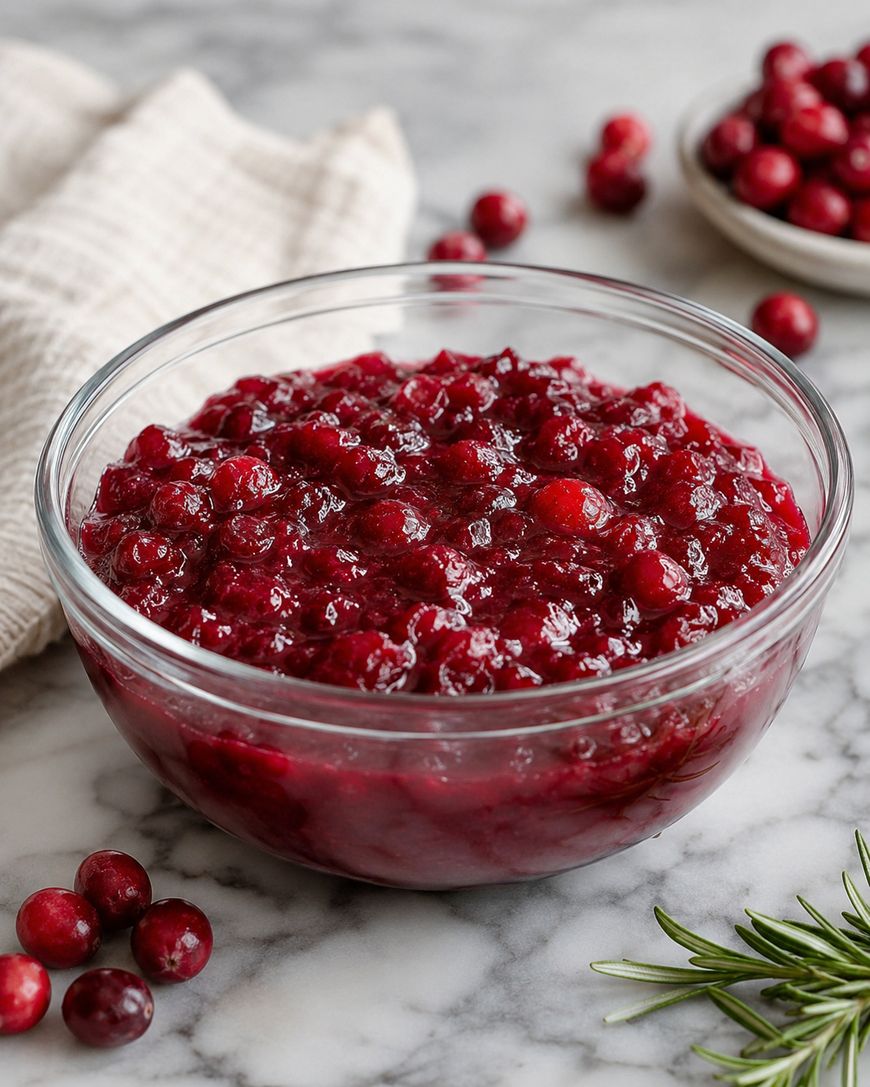
Cranberry sauce is the tart, jewel-toned condiment that turns a good holiday plate into a great one, and the recipe card below has the exact measurements you need.
You only need a saucepan, four ingredients, and about twenty minutes to get there.
Why This Cranberry Sauce Recipe Works
This cranberry sauce recipe works because it relies on pectin that fresh cranberries already contain, so you never need gelatin or cornstarch to get a proper set.
The berries burst as they cook, releasing their natural thickening power along with that bright red color you want on the table.
The Role of Fresh Cranberries
Fresh cranberries, sold in twelve-ounce bags each fall through early winter, are firm, glossy, and slightly bitter before cooking.
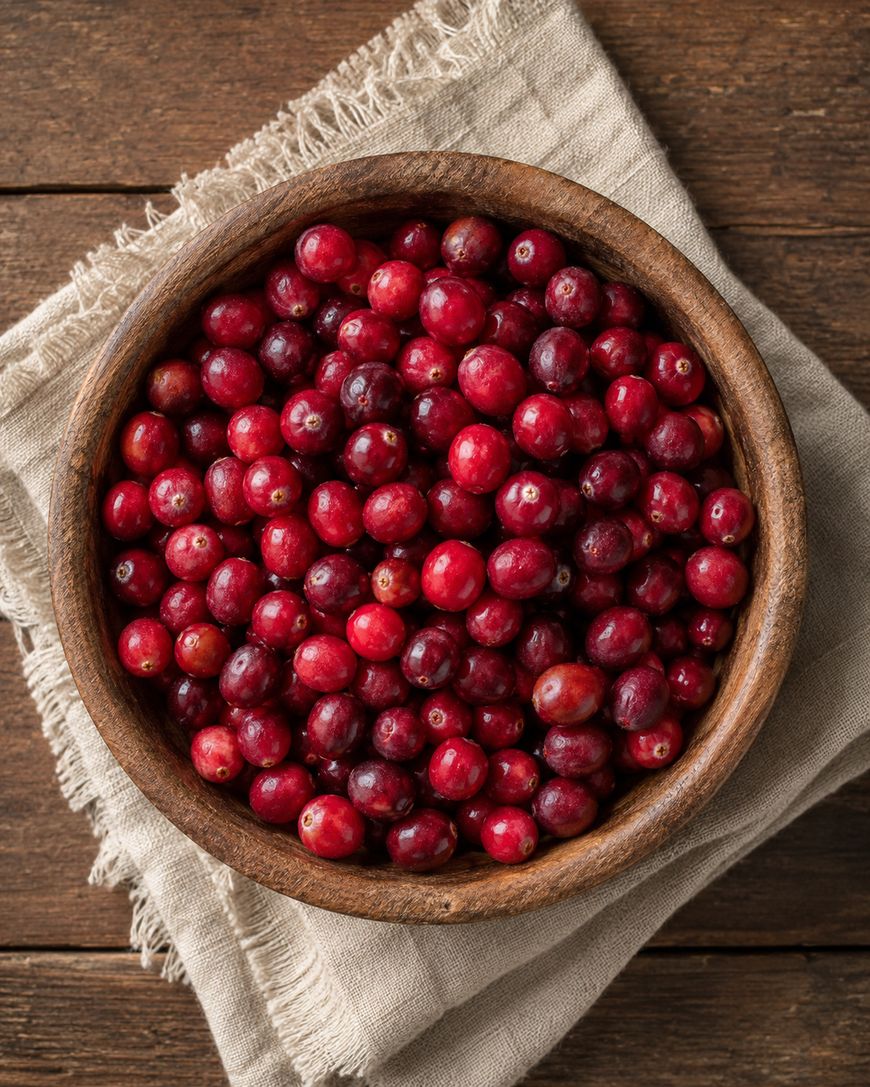
That bitterness is exactly why sugar and orange juice matter so much here, since they balance the tartness without masking the fruit’s natural character.
Frozen Cranberries Work Too
Frozen cranberries, like the Ocean Spray or Cape Cod Select bags found in most grocery freezer aisles, work just as well as fresh and do not need to be thawed first.
Add them straight from the freezer to the saucepan and expect the cooking time to run about two to three minutes longer.
Ingredients You’ll Need
The full ingredient list with exact quantities lives in the recipe card, but here is what each component contributes to the finished sauce.
Cranberries
Twelve ounces of fresh or frozen cranberries form the base of the sauce and provide nearly all of its tartness, color, and gentle thickening.

Rinse fresh berries and discard any that are soft, discolored, or shriveled before you start cooking.
Granulated Sugar
Granulated sugar balances the natural tartness of the berries, and most home cooks land somewhere between three quarters of a cup and one full cup depending on personal preference.
Reduce the sugar slightly if you plan to pair the sauce with something already sweet, like candied sweet potatoes or a glazed ham.
Orange Juice and Zest
Fresh orange juice adds brightness and a subtle citrus note that pairs naturally with cranberries, while a bit of zest intensifies that flavor without adding extra liquid.
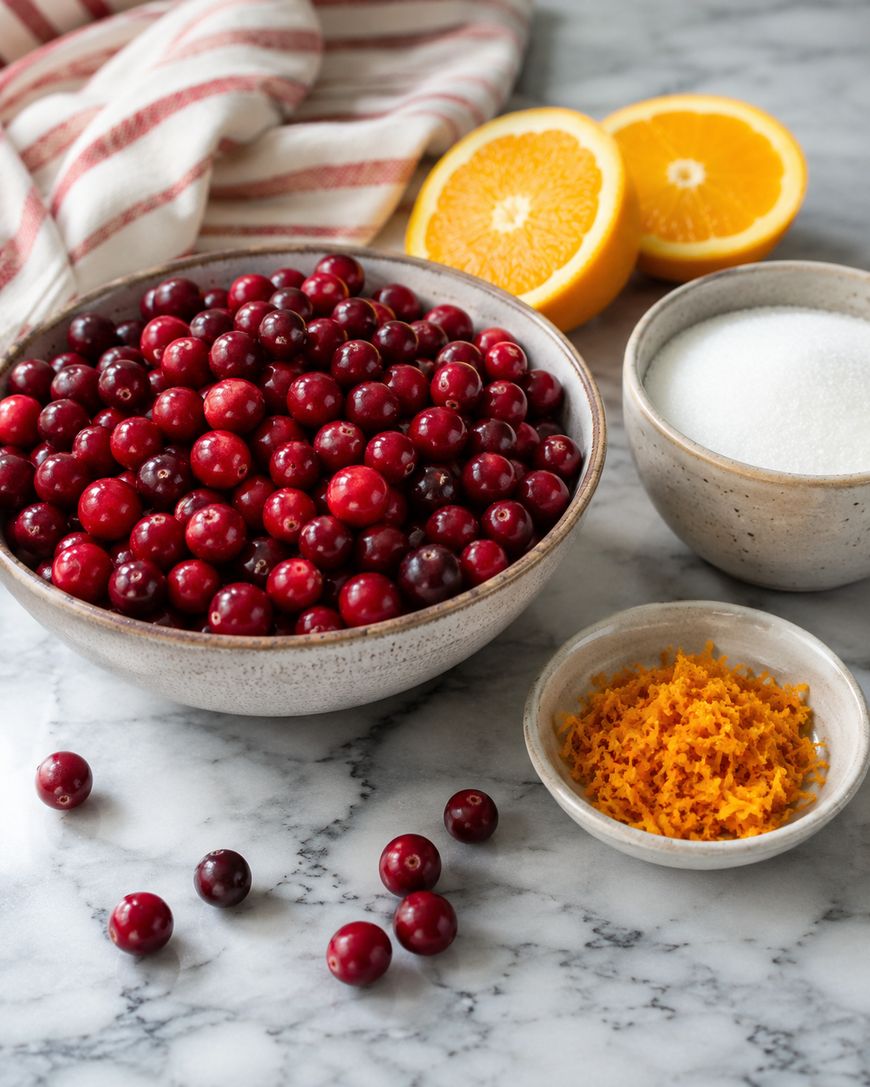
A Cara Cara or navel orange both work well here, though any variety on hand will do the job.
Water
A small amount of water gets the cooking process started before the berries release their own juices, preventing the sugar from scorching in the first few minutes.
How to Make Cranberry Sauce
Full step-by-step instructions are in the recipe card, but this walkthrough covers the technique and the small details that make the difference.
Step One: Combine and Bring to a Boil
Combine the cranberries, sugar, orange juice, zest, and water in a medium saucepan over medium-high heat.
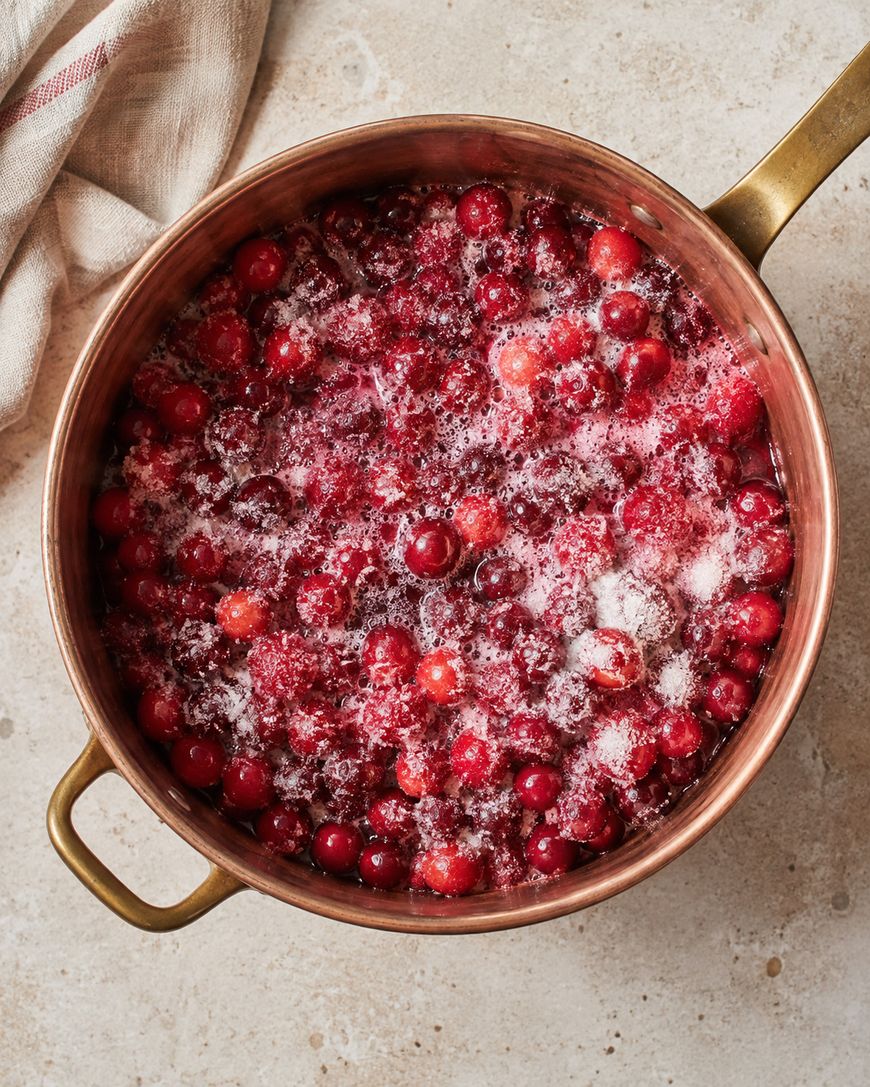
Stir occasionally until the mixture reaches a full boil, which usually takes about five minutes.
Step Two: Simmer Until the Berries Pop
Reduce the heat to medium-low and let the sauce simmer for ten to fifteen minutes, stirring every few minutes.
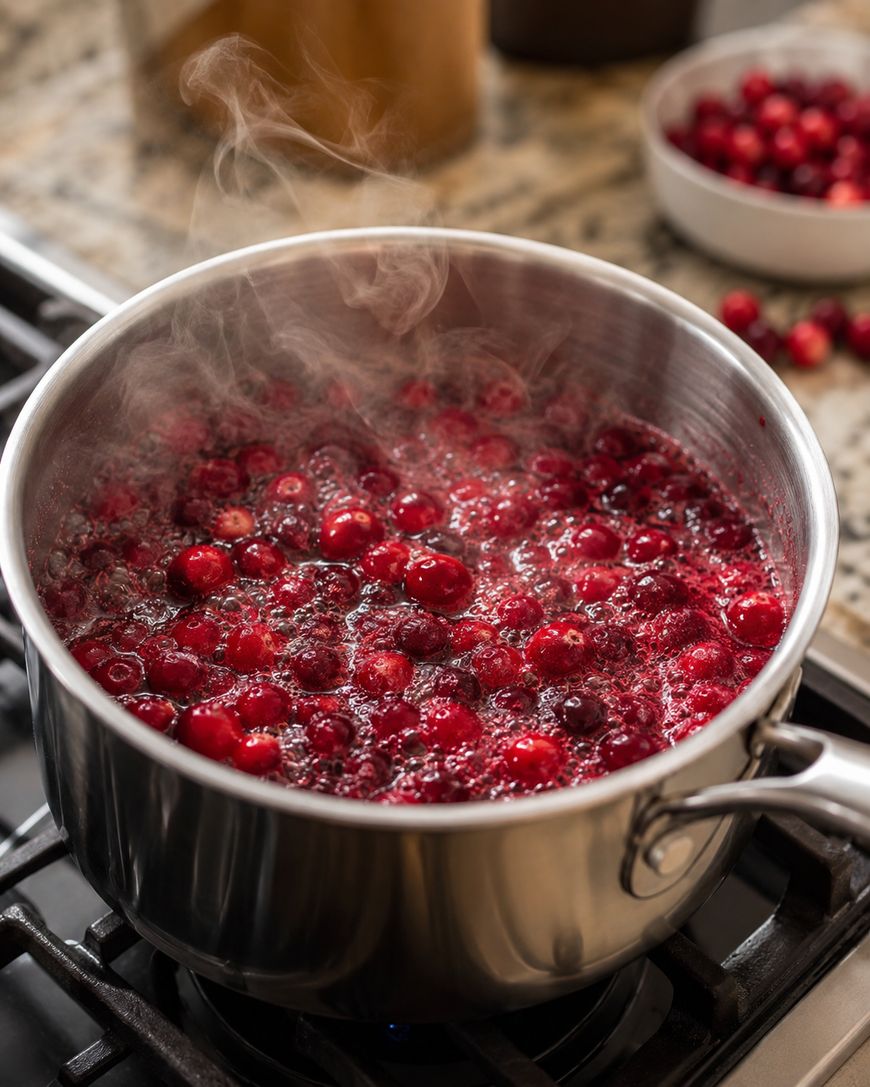
You will hear the cranberries popping as they cook, and the sauce will thicken noticeably as more berries burst and release pectin.
Step Three: Cool and Thicken Further
Remove the saucepan from the heat once the sauce coats the back of a spoon, then let it cool at room temperature for about thirty minutes.

Cranberry sauce continues to thicken significantly as it cools, so resist the urge to keep cooking it if it still looks a little loose on the stove.
Getting the Texture Right
For a smoother, more jellied texture, use an immersion blender for a few pulses after cooking, or press the finished sauce through a fine mesh sieve.
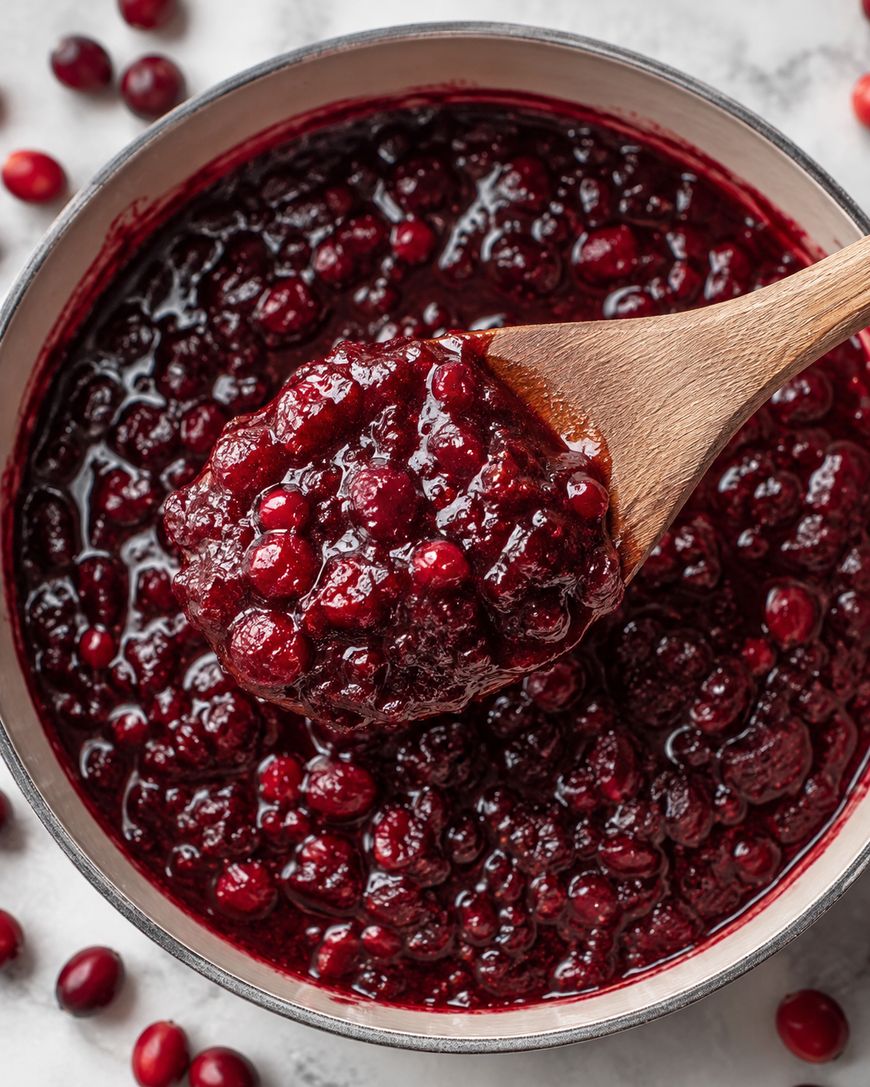
For a chunkier, more rustic texture, simply leave the sauce as it is once the berries have popped and softened.
Variations and Substitutions
This cranberry sauce recipe is easy to adapt once you understand the basic ratio of fruit, sugar, and liquid.
Maple Cranberry Sauce
Swap the granulated sugar for pure maple syrup, using about two thirds of a cup in place of one cup of sugar, for a deeper, more autumnal flavor.
Grade A dark maple syrup gives the most pronounced maple taste in the finished sauce.
Spiced Cranberry Sauce
Add a cinnamon stick and two whole cloves to the saucepan while the sauce simmers, then remove them before serving.
A small piece of fresh ginger, about the size of a thumb, also works beautifully alongside the citrus.
Cranberry Orange Relish
For a raw, uncooked version, pulse fresh cranberries, a whole peeled orange, and sugar in a food processor until finely chopped but not pureed.
This relish keeps its bright color and offers a firmer, more textured bite than the cooked sauce.
Storage and Make-Ahead Tips
Cranberry sauce is one of the most make-ahead friendly parts of a holiday spread, since it actually improves with a day or two of resting time.
Refrigerating Cranberry Sauce
Store cooled cranberry sauce in an airtight container in the refrigerator for up to ten days.
The flavor deepens and the citrus notes mellow slightly after the first twenty-four hours, so making it two or three days ahead is ideal.
Freezing Cranberry Sauce
Cranberry sauce freezes well for up to two months in a freezer-safe container, leaving about half an inch of headspace for expansion.

Thaw it overnight in the refrigerator and give it a good stir before serving, since some separation is normal.
Serving Suggestions
Cranberry sauce is best known as a Thanksgiving and Christmas side, but it has plenty of uses beyond the holiday table.
Classic Holiday Pairings
Serve it alongside roast turkey, honey-glazed ham, or a simple roasted chicken, where its acidity cuts through rich, savory flavors.

It also makes a natural partner for stuffing and mashed potatoes on a loaded holiday plate.
Beyond the Holidays
Spread leftover cranberry sauce on a turkey sandwich, swirl it into plain yogurt or oatmeal, or spoon it over a wedge of baked brie with crackers.
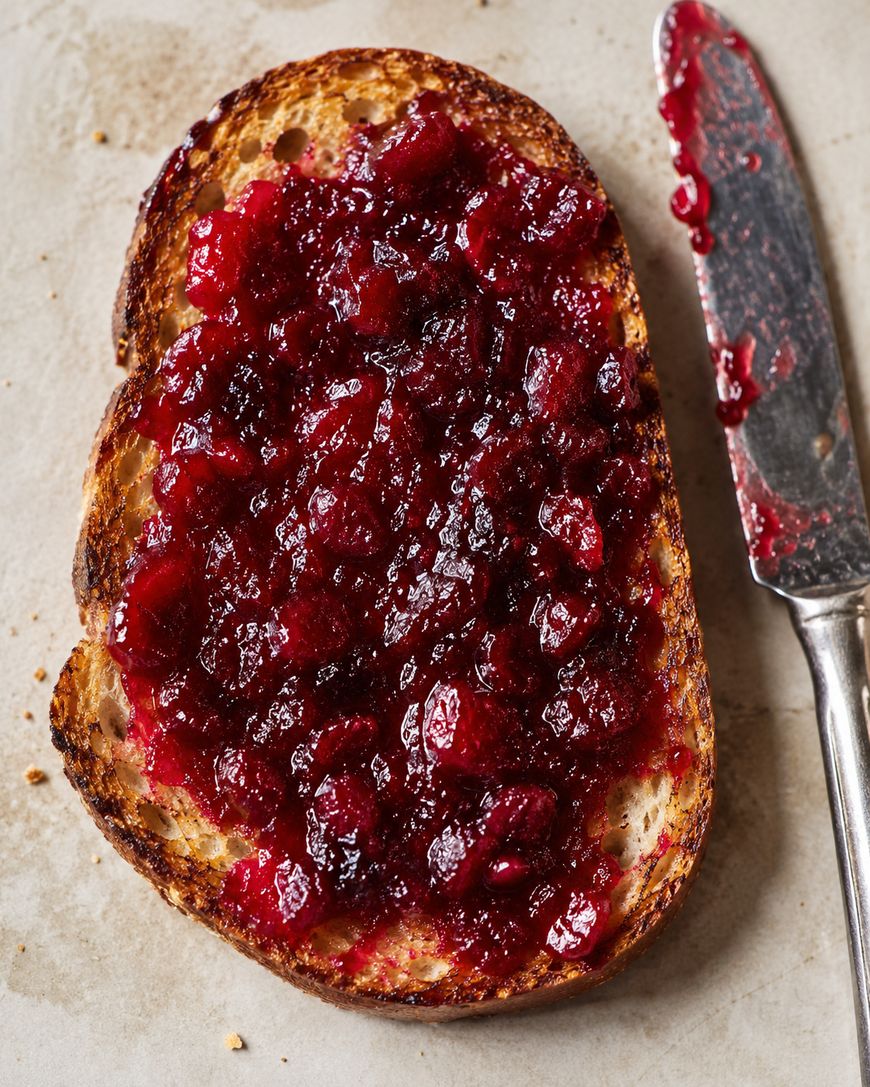
It also works well as a glaze base for roasted pork tenderloin when thinned with a splash of orange juice.
A Brief History of Cranberry Sauce
Cranberry sauce has roots in Indigenous foodways of the Northeastern United States, where Native peoples used cranberries for food, medicine, and dye long before European settlers arrived.

Early colonial cooks began sweetening the tart berries with sugar and honey, and canned cranberry sauce became a shelf-stable pantry staple in the early twentieth century.
Today, homemade versions have made a strong comeback at holiday tables, prized for their fresher flavor and more natural texture compared to the canned, jellied version.
Ready to put this together? Use the recipe card below for the exact ingredient amounts and step-by-step instructions.

Homemade Cranberry Sauce
A tangy-sweet, four-ingredient cranberry sauce made with fresh cranberries, orange juice, and a hint of zest. Ready in twenty minutes and perfect for the holiday table.
Ingredients
- 12 oz fresh or frozen cranberries
- 3/4 cup granulated sugar
- 1/2 cup orange juice
- 1 tsp orange zest
- 1/4 cup water
Instructions
- Combine the cranberries, sugar, orange juice, orange zest, and water in a medium saucepan over medium-high heat.
- Bring the mixture to a full boil, stirring occasionally, about 5 minutes.
- Reduce the heat to medium-low and simmer for 10 to 15 minutes, stirring occasionally, until the cranberries burst and the sauce thickens.
- Remove from the heat and let cool at room temperature for about 30 minutes; the sauce will continue to thicken as it cools.
- Transfer to a serving bowl or airtight container and refrigerate until ready to serve.
Notes
For a smoother texture, blend briefly with an immersion blender or press through a fine mesh sieve after cooking. For a spiced version, simmer with a cinnamon stick and two whole cloves, removing them before serving.
Nutrition Information:
Yield:
10Serving Size:
1/4 cupAmount Per Serving: Calories: 90Total Fat: 0gSaturated Fat: 0gSodium: 2mgCarbohydrates: 23gFiber: 2gSugar: 20gProtein: 0g
This site provides estimated nutritional information. This information comes from online calculators. Although we try to provide accurate nutritional information, these figures are only estimates.
Frequently Asked Questions
Can you make cranberry sauce ahead of time?
Yes, cranberry sauce can be made up to three days ahead and stored in the refrigerator, and many cooks find the flavor is actually better after a day or two of resting.
Simply bring it to room temperature or warm it gently before serving if you prefer it less cold.
Why is my cranberry sauce too runny?
Cranberry sauce often looks thin while it is still hot, since it thickens significantly as it cools due to the natural pectin in the berries.
If it is still too loose after a full thirty minutes of cooling, return it to the stove and simmer for another five minutes to reduce further.
Can I use frozen cranberries instead of fresh?
Frozen cranberries work just as well as fresh in this recipe and do not need to be thawed before cooking.
Simply add a couple of extra minutes to the simmer time to account for the lower starting temperature.
How long does homemade cranberry sauce last in the fridge?
Homemade cranberry sauce lasts up to ten days in an airtight container in the refrigerator thanks to its high sugar content, which acts as a natural preservative.
Always use a clean spoon each time you serve it to help it stay fresh for the full storage window.
Can I reduce the sugar in this recipe?
Yes, you can reduce the sugar to about half a cup for a more tart, less sweet sauce, especially if you are serving rich or already-sweet side dishes.
Taste the sauce near the end of cooking and adjust with an extra tablespoon of sugar if needed.
What can I substitute for orange juice?
Apple cider or apple juice both work well in place of orange juice if you prefer a slightly different flavor profile.
For a less sweet option, plain water works too, though you will lose some of the citrus brightness that balances the tart berries.
Final Thoughts
Homemade cranberry sauce comes together in under twenty minutes with ingredients you likely already have on hand, and it beats the canned version every time.
Once you try this cranberry sauce recipe, it is likely to become a permanent fixture on your holiday table.