Last updated: November 9, 2026
Cream of broccoli soup is the cozy, velvety bowl you can make from scratch in about 45 minutes with fresh broccoli, butter, flour, milk and a splash of cream.
Read on for the full walkthrough, or jump straight to the recipe card below.
What Makes Cream of Broccoli Soup Silky and Full of Flavor
Great cream of broccoli soup starts with a simple butter and flour base, fresh broccoli simmered until very tender, and a thorough blend. Milk and cream go in at the very end so the texture stays smooth instead of grainy.

That combination gives you a soup that tastes like broccoli first and cream second. Nothing here comes from a can, and nothing needs a special trip to the store.
Everything cooks in one pot, which keeps cleanup easy on a busy weeknight. A single batch makes six generous servings, with enough left over to pack up for lunch.
The finished soup is thick enough to coat a spoon but light enough that you can finish a full bowl. It also reheats beautifully, which makes it a smart make-ahead dinner for the colder months.
If you have only ever tried cream of broccoli soup from a can or a restaurant, this version will be a pleasant surprise. It tastes green and fresh, with a smooth finish and a hint of nutmeg.
Ingredients for Cream of Broccoli Soup
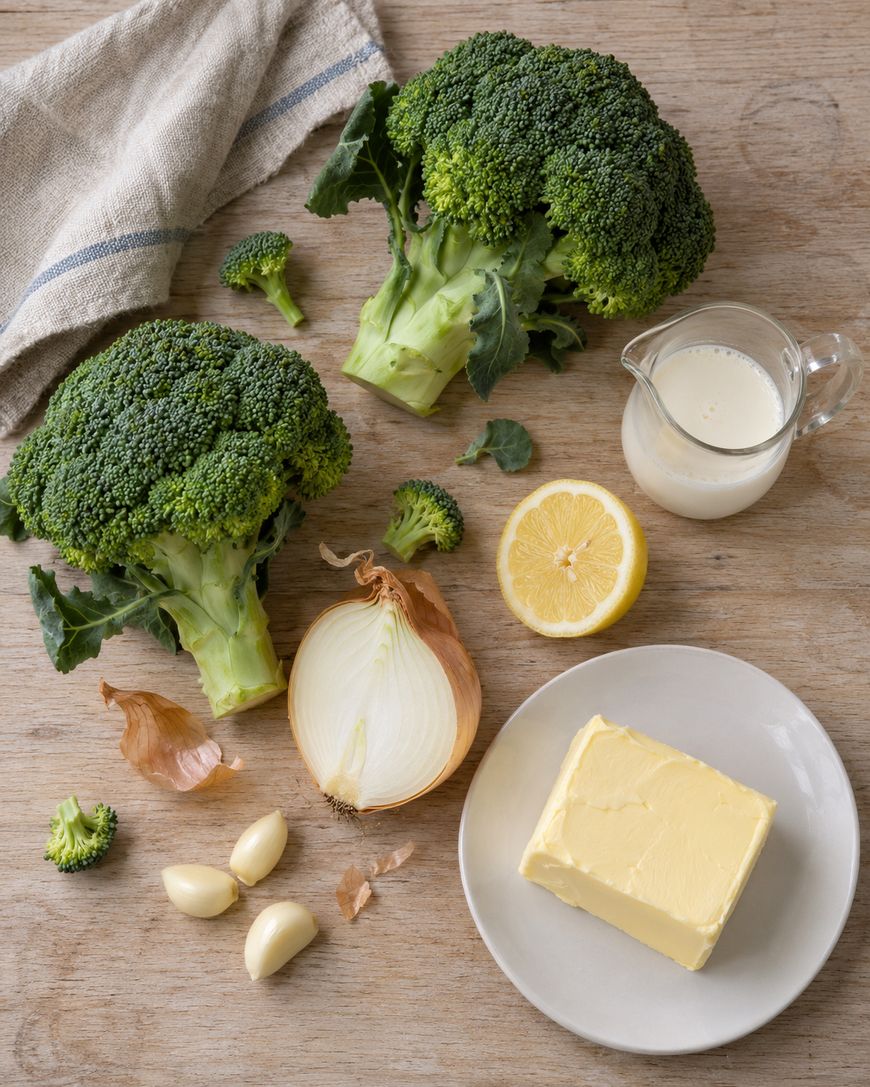
You need twelve ingredients, and most of them are probably already in your kitchen. The exact amounts are in the recipe card below, so this section explains what each one does.
Fresh Broccoli
About 1 1/2 pounds of broccoli, which is two large heads, gives you roughly 6 cups once the florets are chopped and the stems are peeled and sliced. Do not toss the stems, because they are sweet once peeled and they add body to the finished soup.
Choose heads with tight, dark green florets and firm stems. Yellowing buds or a dry, woody stem base are signs the broccoli has been sitting for a while.
Butter, Onion, Garlic and Flour
Unsalted butter lets you control the seasoning, and one medium yellow onion adds gentle sweetness. Three garlic cloves give the soup backbone without overpowering the broccoli.
Three tablespoons of all-purpose flour cooked in the butter form a roux that thickens the soup. This is what gives you body without simmering for hours.
Broth, Milk and Cream
Four cups of low sodium chicken or vegetable broth make up the cooking liquid. Low sodium matters here because you season the pot yourself and the flavor concentrates as it cooks.
One cup of whole milk and a half cup of heavy cream are stirred in at the end. Together they make the soup rich without making it heavy.
Salt, Pepper, Nutmeg and Lemon
Kosher salt, black pepper and a small pinch of ground nutmeg are the only seasonings. Nutmeg is a classic partner for cream soups, and just an eighth of a teaspoon adds warmth without tasting like nutmeg.

Two teaspoons of fresh lemon juice stirred in at the end make the whole pot taste brighter. Do not skip it, because it is the difference between a flat soup and a lively one.
How to Make Cream of Broccoli Soup
This method takes about 45 minutes from the first chop to the first spoonful. Plan on 15 minutes of prep and 30 minutes at the stove.
Prep the Broccoli
Trim the broccoli and cut the florets into small, even pieces. Peel the tough outer skin from the stems with a vegetable peeler, then slice the stems into half-inch pieces.

Small pieces cook at the same pace, which keeps any firm bits from surviving the blender. Peeling the stems is worth the extra minute because the inside is tender and sweet.
Cook the Onion and Garlic
Melt the butter in a 5.5-quart Dutch oven over medium heat. Add the diced onion and cook for 5 to 6 minutes, stirring often, until soft and translucent but not browned.

Stir in the garlic and cook for 30 seconds until fragrant. Sprinkle the flour over the top and stir constantly for 1 minute to cook out the raw flour taste.
Add the Broth and Broccoli
Slowly whisk in the broth, adding just a splash at first and stirring until smooth before pouring in the rest. Adding it gradually keeps the flour from forming lumps.

Add the broccoli, salt and pepper, then bring the pot to a boil over medium-high heat. Once it bubbles, you are ready for the simmer.
Simmer Until Very Tender
Reduce the heat to medium-low, partially cover the pot and simmer for 12 to 15 minutes. The broccoli is ready when a fork slides easily through the thickest piece of stem.

Do not stop early here. Stems that are only crisp-tender can leave a stringy texture after blending.
Blend Until Completely Smooth
Blend the soup with an immersion blender right in the pot until completely smooth, which takes about 2 minutes. If you are using a countertop blender, work in batches and fill it no more than halfway.
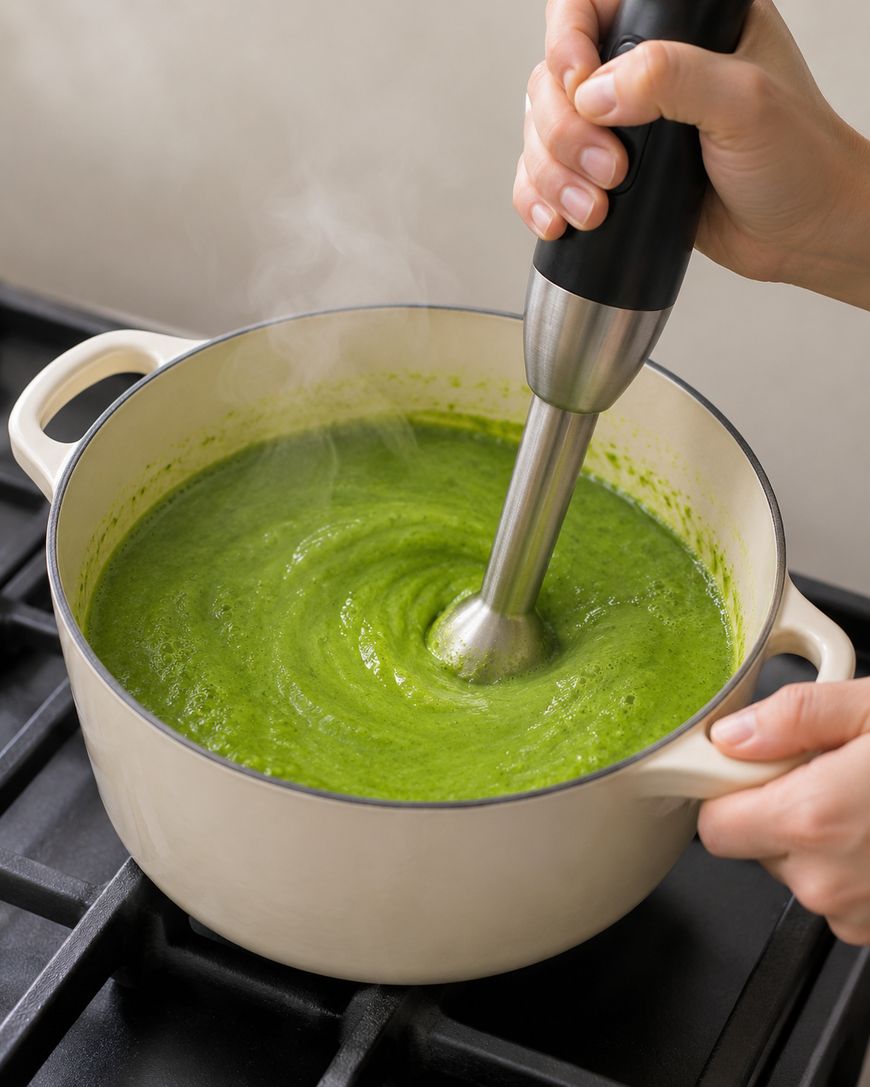
Vent the lid and hold a kitchen towel over it, because hot liquid expands and can push the lid off. Pour the smooth soup back into the pot before moving on.
Finish With Milk, Cream and Lemon
Return the pot to low heat and stir in the milk, cream and nutmeg. Heat gently for 3 to 4 minutes until the soup is steaming, and do not let it boil.

Remove the pot from the heat and stir in the lemon juice. Taste, then add more salt and pepper if the soup needs it.
Tips for the Best Cream of Broccoli Soup
A few small habits turn good cream of broccoli soup into the kind people ask you to make again. These tips cover texture, seasoning and timing.
Control the Texture
For a thinner soup, whisk in an extra splash of broth or milk at the end. For a thicker soup, simmer it uncovered for a few extra minutes before the milk and cream go in.

The soup thickens slightly as it sits, so it is always easier to thin it later than to fix a pot that is too thin. Wait until it has rested a few minutes before you decide.
Season Near the End
Blended soup tastes different once the dairy goes in, so save your final seasoning for the last step. Add salt in small pinches and taste after each one.
Starting with low sodium broth leaves you room to adjust without overshooting. A little black pepper at the end adds a gentle bite.
Keep the Dairy Gentle
Boiling milk and cream can make a soup look grainy or separated. Keep the heat low and stop as soon as you see steam rising from the surface.
Stirring in the lemon juice off the heat protects the texture too. Acid and high heat together are the usual cause of a curdled cream soup.
Cream of Broccoli Soup Variations and Substitutions
This soup is a flexible base, and a few swaps change it without much effort. The card shows the main version, so each idea below is optional.
Cheddar Cream of Broccoli Soup
After the milk and cream are in, take the pot off the heat and stir in 1 cup (4 ounces) of freshly shredded sharp cheddar a handful at a time. Shredding the block yourself usually melts more smoothly than a bag of pre-shredded cheese.
The card leaves the cheese out, so treat it as a fun add-in. Taste before adding extra salt, because cheese brings its own.
A Chunkier Bowl
Before blending, scoop out 1 cup of the cooked florets with a slotted spoon. Stir them back into the finished soup for a bowl with some texture.
The card blends everything until smooth, so this is a personal preference rather than part of the base recipe. It is a nice way to please people who like a little bite.
Frozen Broccoli
You can swap the fresh broccoli for 1 1/2 pounds of frozen florets without thawing them first. Simmer until they are very tender, which may take a few extra minutes.
The card uses fresh broccoli, so treat frozen as a handy backup. Fresh stems add more body, so the soup may be a touch thinner.
A Lighter Soup
Replace the heavy cream with an extra half cup of whole milk for a lighter finish. The soup will be a little less rich but still creamy thanks to the roux.
Vegetable broth works in place of chicken broth for a vegetarian pot, and the card lists both. Check the label on your broth if you are cooking for someone with dietary needs.
What to Serve With Cream of Broccoli Soup
Crusty bread is the classic partner, and a toasted slice of sourdough is perfect for dipping. A grilled cheese sandwich cut into strips turns the soup into a full dinner.

A crisp green salad with a sharp vinaigrette cuts through the creaminess nicely. For garnish, a drizzle of olive oil, a crack of black pepper or a swirl of cream makes each bowl look finished.
Homemade croutons add crunch, and a spoonful of sour cream adds a cool tang. Set out a few toppings and let everyone dress their own bowl.
Soup nights pair well with something crunchy and something fresh. A simple spread of bread, salad and toppings keeps the meal easy but still feels special.
For a casual dinner party, ladle the soup into small mugs and serve it as a starter. It also works as a cozy first course on a holiday table.
How to Store, Freeze and Reheat Cream of Broccoli Soup
Cream of broccoli soup keeps well, which makes it ideal for meal prep. These steps keep it safe and tasty from the first bowl to the last.

Let the soup cool slightly, then refrigerate it within 2 hours of cooking, as recommended by the USDA Food Safety and Inspection Service. Store it in an airtight container for 3 to 4 days.
For longer storage, freeze it in freezer safe containers for up to 3 months. Thaw overnight in the refrigerator before reheating.
Portion the soup into single servings before freezing so you can thaw only what you need. Leave a little space at the top of each container because soup expands as it freezes.
Reheat the soup gently on the stove over medium-low heat, stirring often, until it reaches 165°F as the USDA advises for leftovers. If it looks separated, a quick whisk brings it back together.
The Story Behind Cream of Broccoli Soup
Cream of broccoli soup belongs to the long tradition of pureed vegetable soups thickened with a roux, a technique that comes from classic French cooking. Home cooks have been turning vegetables, butter and milk into silky bowls for generations.
Broccoli itself reached American kitchens with Italian immigrants, and Monticello garden records show Thomas Jefferson planting it in the 1700s. It stayed a niche vegetable for a long time before becoming a weeknight staple.
Condensed canned soups, introduced by Campbell’s in 1897, later made cream soups a pantry staple. Making cream of broccoli soup from scratch takes only a little longer and tastes far fresher.
Today the soup is a favorite on restaurant menus and in home kitchens alike, especially in fall and winter. Its mild flavor makes it a gentle way to get more green vegetables on the table.
The cheddar version made famous by soup cafes is a close cousin, and the variations above show how to get there. The base recipe stays the same either way.
Ready to cook? Use the recipe card below to print or save the full recipe.

Cream of Broccoli Soup
A silky, from-scratch cream of broccoli soup made with fresh broccoli, a butter and flour base, milk and a splash of cream. It is ready in 45 minutes and cooks in one pot.
Ingredients
- 3 tablespoons unsalted butter
- 1 medium yellow onion, diced (about 1 cup)
- 3 cloves garlic, minced
- 3 tablespoons all-purpose flour
- 4 cups low sodium chicken or vegetable broth
- 1 1/2 pounds fresh broccoli (about 2 large heads), florets chopped and stems peeled and sliced (about 6 cups)
- 3/4 teaspoon kosher salt
- 1/4 teaspoon black pepper
- 1/8 teaspoon ground nutmeg
- 1 cup whole milk
- 1/2 cup heavy cream
- 2 teaspoons fresh lemon juice
Instructions
- Trim the broccoli and cut the florets into small, even pieces. Peel the tough outer skin from the stems and slice the stems into 1/2-inch pieces.
- Melt the butter in a 5.5-quart Dutch oven over medium heat. Add the onion and cook for 5 to 6 minutes, stirring often, until soft and translucent but not browned.
- Stir in the garlic and cook for 30 seconds until fragrant. Sprinkle in the flour and stir constantly for 1 minute.
- Slowly whisk in the broth, adding a splash at a time at first, until smooth. Add the broccoli, salt and pepper.
- Bring to a boil over medium-high heat, then reduce the heat to medium-low, partially cover and simmer for 12 to 15 minutes, until the stems are very tender when pierced with a fork.
- Blend until completely smooth with an immersion blender, about 2 minutes, or blend in batches in a countertop blender filled no more than halfway with the lid vented and covered with a kitchen towel. Pour the soup back into the pot.
- Return the pot to low heat and stir in the milk, cream and nutmeg. Heat gently for 3 to 4 minutes until steaming. Do not let it boil.
- Remove the pot from the heat and stir in the lemon juice. Taste and add more salt and pepper if needed. Serve hot.
Notes
Refrigerate within 2 hours of cooking in an airtight container for 3 to 4 days. Freeze in freezer safe containers for up to 3 months and thaw overnight in the refrigerator. Reheat gently on the stove, stirring often, until the soup reaches 165°F. For a lighter soup, replace the cream with an extra 1/2 cup whole milk. For a cheddar version, stir in 1 cup (4 ounces) shredded sharp cheddar off the heat after the dairy is added.
Nutrition Information:
Yield:
6Serving Size:
about 1 1/4 cupsAmount Per Serving: Calories: 215Total Fat: 15gSaturated Fat: 9gSodium: 420mgCarbohydrates: 16gFiber: 3gSugar: 5gProtein: 6g
Cream of Broccoli Soup FAQs
Why is my cream of broccoli soup grainy?
Grainy soup usually means the dairy got too hot or the broccoli was not blended long enough. Keep the heat low once the milk and cream go in, and blend for a full 2 minutes.
Peeling the stems also helps, since the tough skin does not break down well.
Can you make cream of broccoli soup without cream?
Yes, replace the heavy cream with an extra half cup of whole milk. The soup will be a little lighter, but the roux still gives it a creamy body.
You can also stir in a spoonful of sour cream at the table for extra richness.
How do you thicken cream of broccoli soup?
Simmer the soup uncovered for a few extra minutes before adding the milk and cream. That cooks off some liquid and concentrates the flavor.
Remember that the soup thickens a little as it cools, so wait before adding more flour.
Can you freeze cream of broccoli soup?
Yes, freeze it in freezer safe containers for up to 3 months. Thaw it overnight in the refrigerator, then reheat gently on the stove.
Whisk it as it warms up if the texture looks separated.
Can you use frozen broccoli?
Yes, use 1 1/2 pounds of frozen florets and skip the thawing step. Simmer until they are very tender, which may take a few extra minutes.
Fresh broccoli stems add a little more body, so frozen soup may be slightly thinner.
Why This Cream of Broccoli Soup Recipe Works
A quick roux of butter and flour gives the soup body before any cream goes in. That means the milk and cream add richness instead of doing all the work of thickening.
Peeled stems simmered until very tender blend into a smooth, sweet base. Using the whole vegetable also means you get more broccoli flavor from every head.
Adding the milk and cream at the end over low heat protects the texture. A splash of lemon juice off the heat then brightens the whole pot.
Using low sodium broth and seasoning at the end puts you in control of the final flavor. That makes the recipe forgiving, even if your broccoli heads are a little larger or smaller than expected.
Finally, the whole recipe cooks in one pot, so there is less to wash and fewer steps to track. Simple methods are easier to repeat, and repeatable is what makes a recipe worth keeping.
Final Thoughts on Cream of Broccoli Soup
This cream of broccoli soup proves that a silky, comforting bowl does not need a can or a long list of ingredients. With fresh broccoli, a simple roux and a gentle finish, you get a soup that tastes homemade in every spoonful.
The leftovers taste even better the next day, so do not be afraid to make the full batch. Pack a container for lunch and freeze the rest for a day when you need an easy dinner.
Small details like peeling the stems and keeping the dairy gentle make a big difference, so take your time with those steps. Once you have made it once, the whole process feels effortless.
Grab two heads of broccoli this week and try the recipe card above. Then pair it with crusty bread and let us know how your pot turns out in the comments.
If you love cozy soups, browse the related recipes below for more ideas to fill your fall and winter table.