Last updated: June 11, 2026
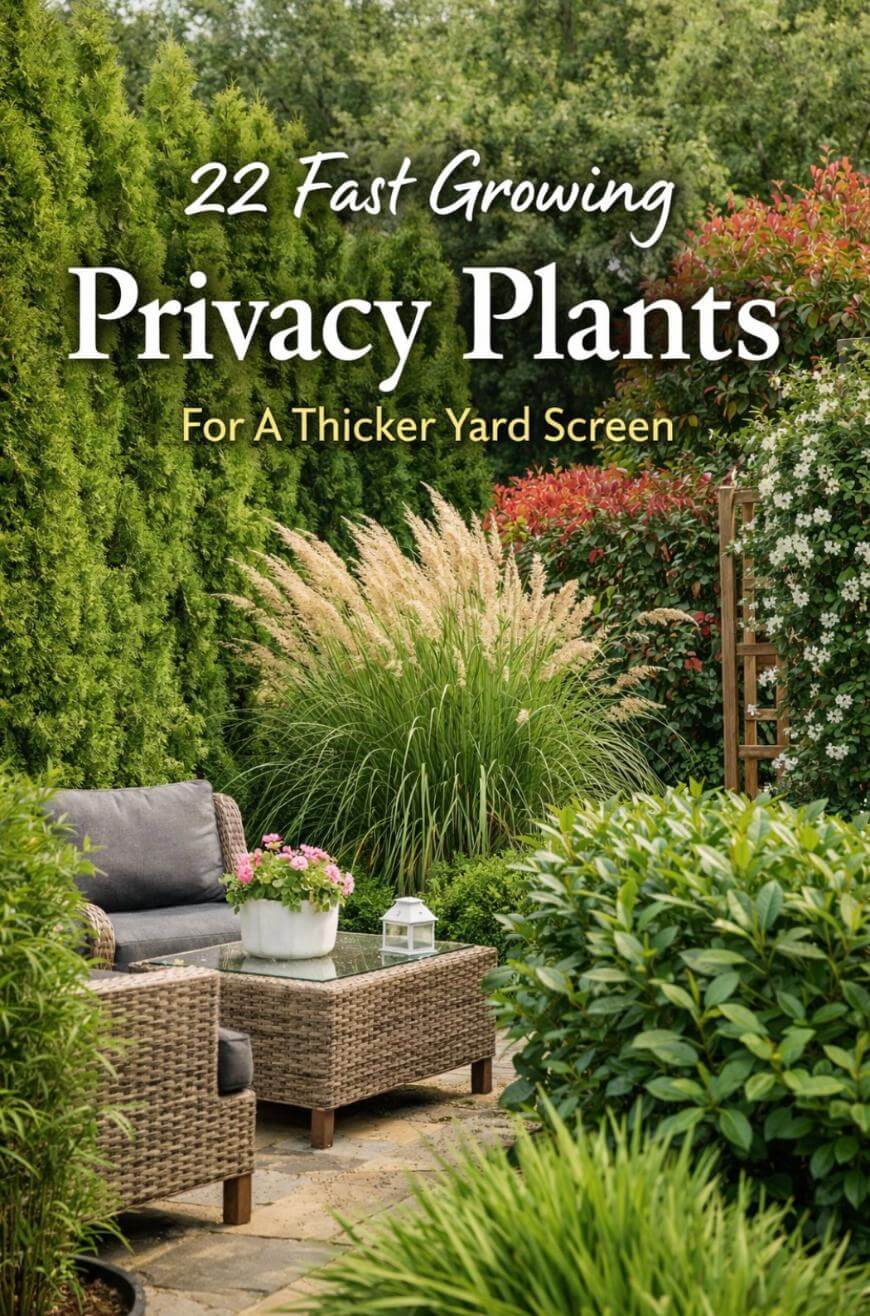
Fast growing privacy plants are specific plants that put on quick growth (or dense foliage) so you can block views from neighbors, streets, or nearby buildings sooner. The simplest default approach is to pick 1 evergreen privacy plant for year-round coverage, then add 1–2 faster “filler” plants (like grasses or vines) to get a thicker screen while the evergreen settles in.
Fast Growing Privacy Plants
1. Green Giant Arborvitae (Thuja ‘Green Giant’)
This is one of the most popular fast-growing evergreens for tall privacy because it fills in quickly and stays green all year. It works best when you want a classic hedge look without constant fussing.
A practical planting guideline is spacing around 5–8 feet apart for a hedge, depending on how quickly you want it to knit together. If you plant too close, you can create crowding later that forces harder pruning.
2. Leyland Cypress (× Cuprocyparis leylandii)
Leyland cypress is known for fast height and big screening power, which is why you see it used for quick privacy walls. It is especially useful when you need a tall barrier fast and you have enough room for a larger plant.
It can get wide if you ignore spacing, so it is best for properties where you can give it breathing room. If you want a tighter look, light trimming once or twice a year helps it stay dense.

3. Emerald Green Arborvitae (Thuja occidentalis ‘Smaragd’)
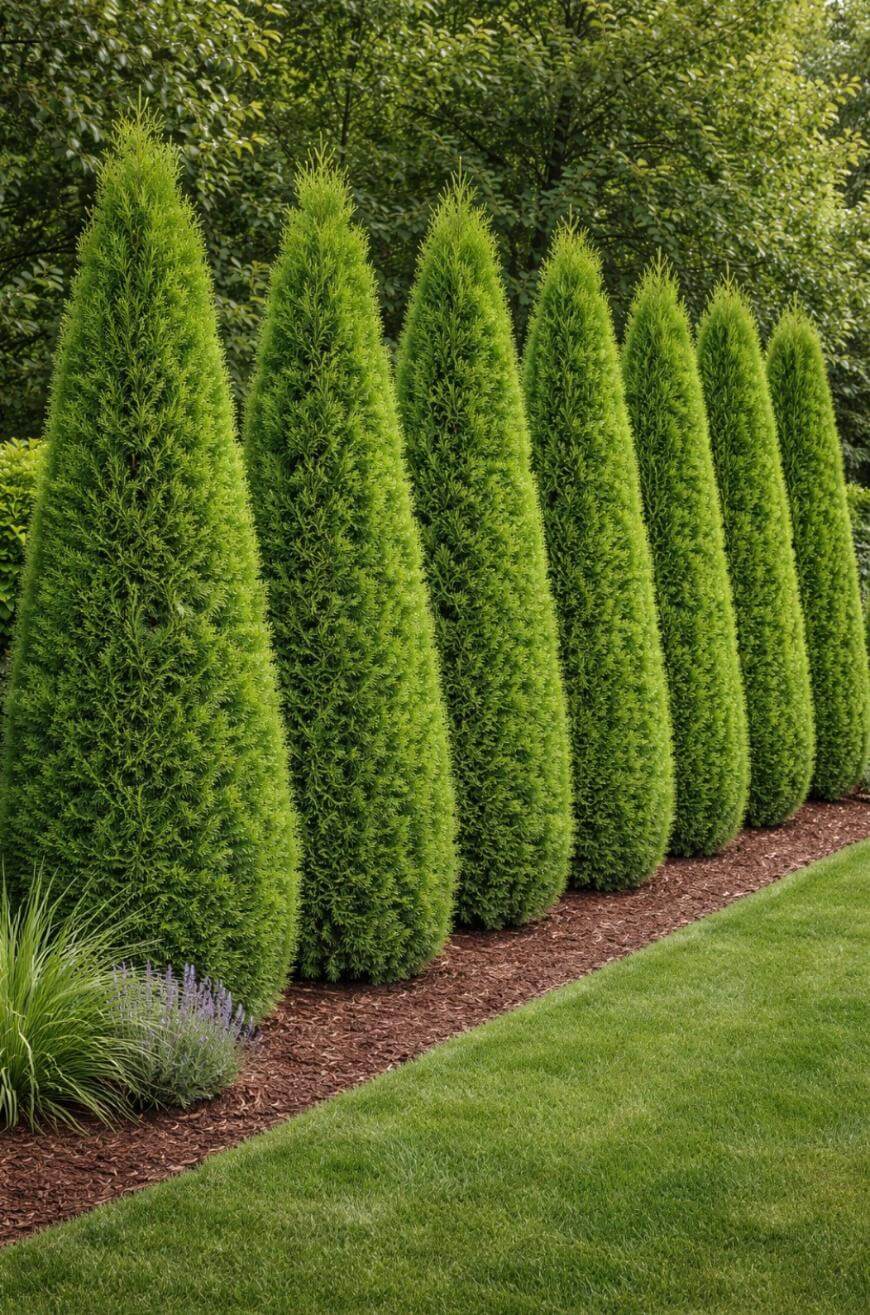
Emerald Green is a narrower arborvitae that stays tidy and elegant, making it great for smaller yards and side fences. It is not as explosive in growth as ‘Green Giant,’ but it is still a strong choice for privacy that looks polished.
If you want a clean “privacy column” effect, this is one of the easiest ways to get it. It also looks more intentional in front-yard settings where a giant hedge would feel heavy.
4. Wax Myrtle (Morella cerifera)
Wax myrtle is a fast-growing evergreen shrub in warmer climates, and it can create a thick, natural-looking screen. It is a good pick if you want privacy without the formal “hedge wall” vibe.
It can be shaped or left looser and more landscape-like depending on your style. If you want maximum density, trim it lightly after a growth flush to encourage branching.
5. Podocarpus (Podocarpus macrophyllus)
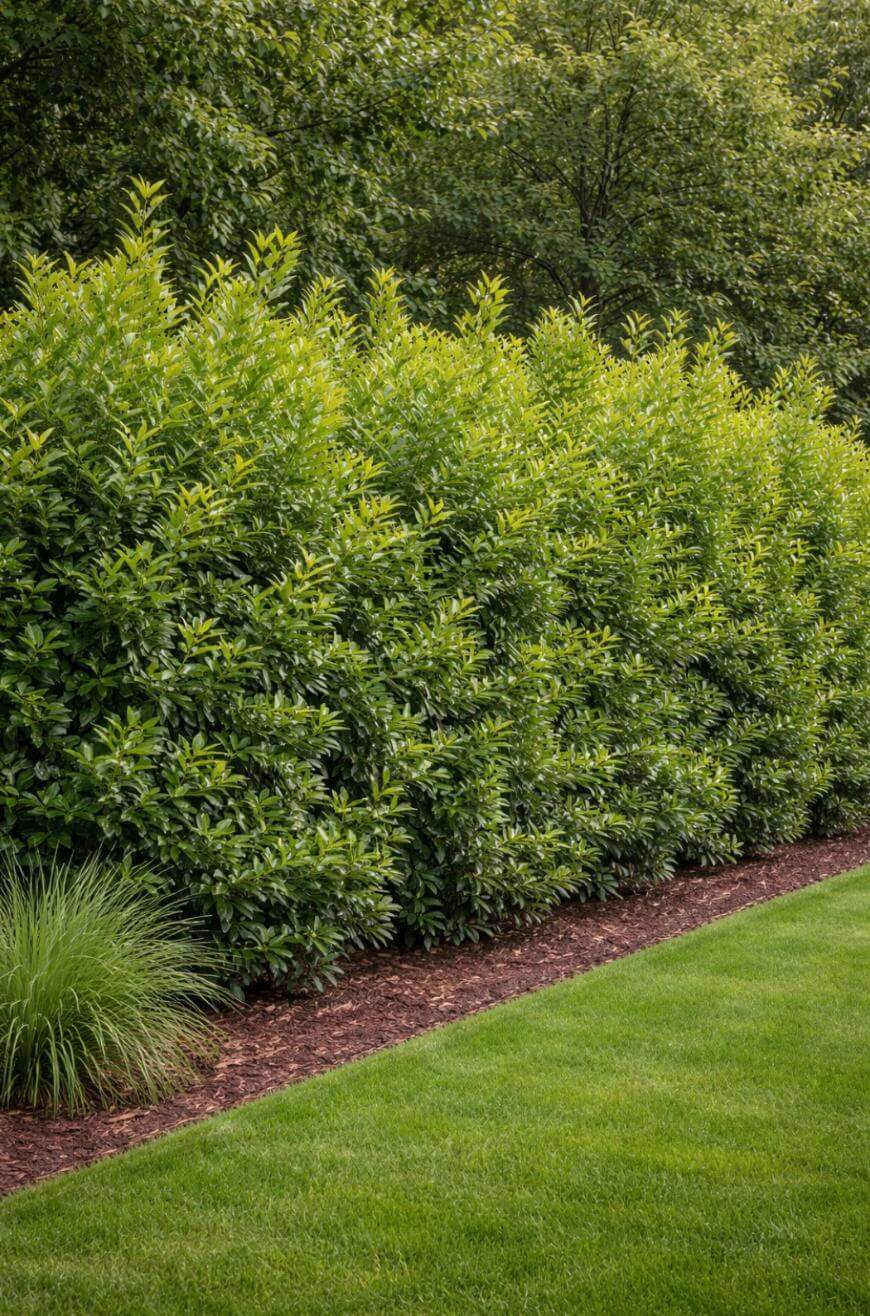
Podocarpus is a go-to privacy plant in many warm regions because it handles trimming well and creates a lush, upscale screen. It can be grown as a hedge or trained into a more tree-like form for layered privacy.
It is a smart choice if you want something that looks expensive without being fussy every week. If you water consistently while it establishes, it will usually reward you with faster fill-in.
6. Cherry Laurel (Prunus laurocerasus)
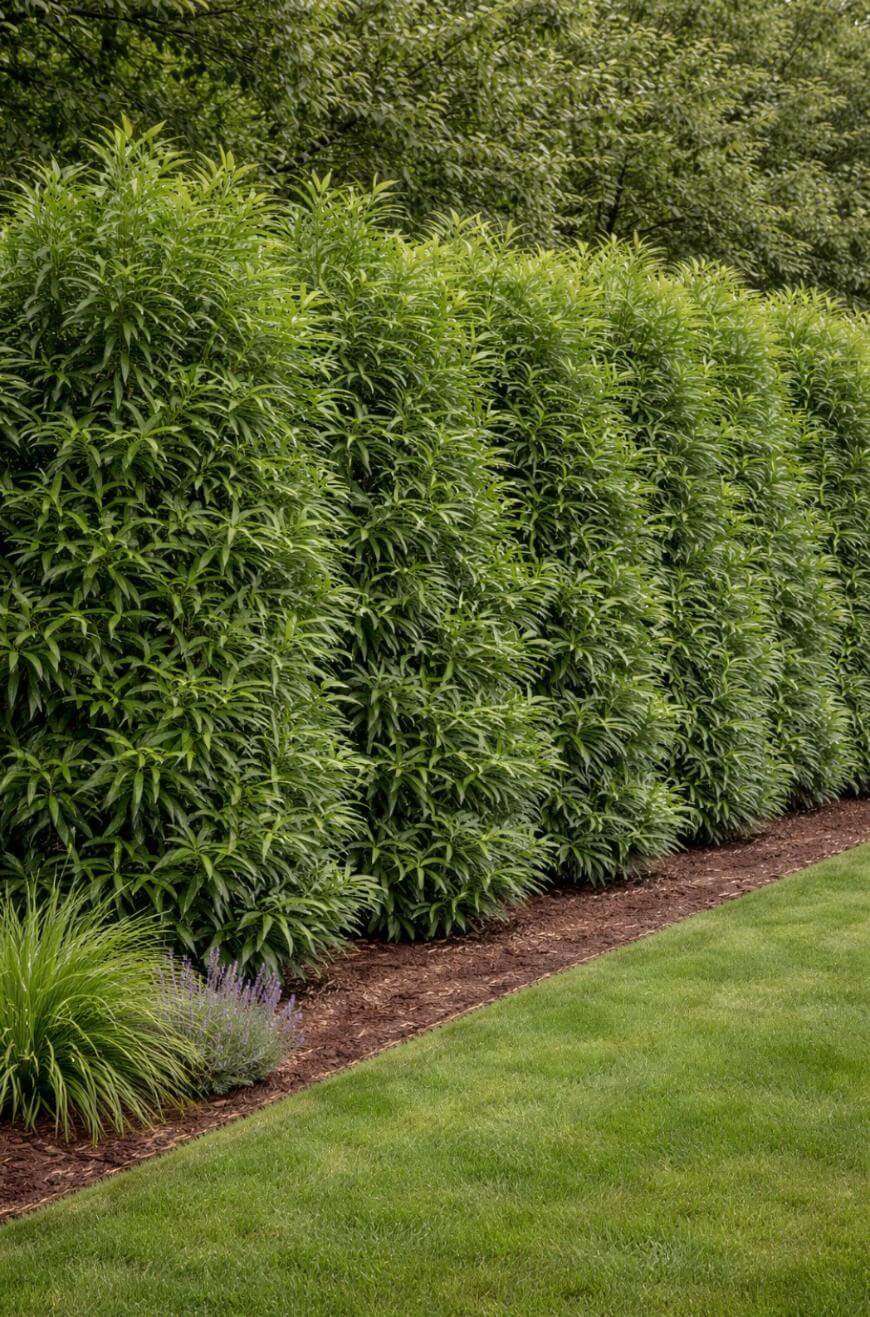
Cherry laurel grows quickly and makes a dense evergreen hedge with big glossy leaves. It is ideal if you want a thick “no peeking through” look rather than a wispy screen.
It responds well to pruning, so you can keep it tight and tailored. If you skip pruning entirely, it can get bulky, so plan for occasional shaping.
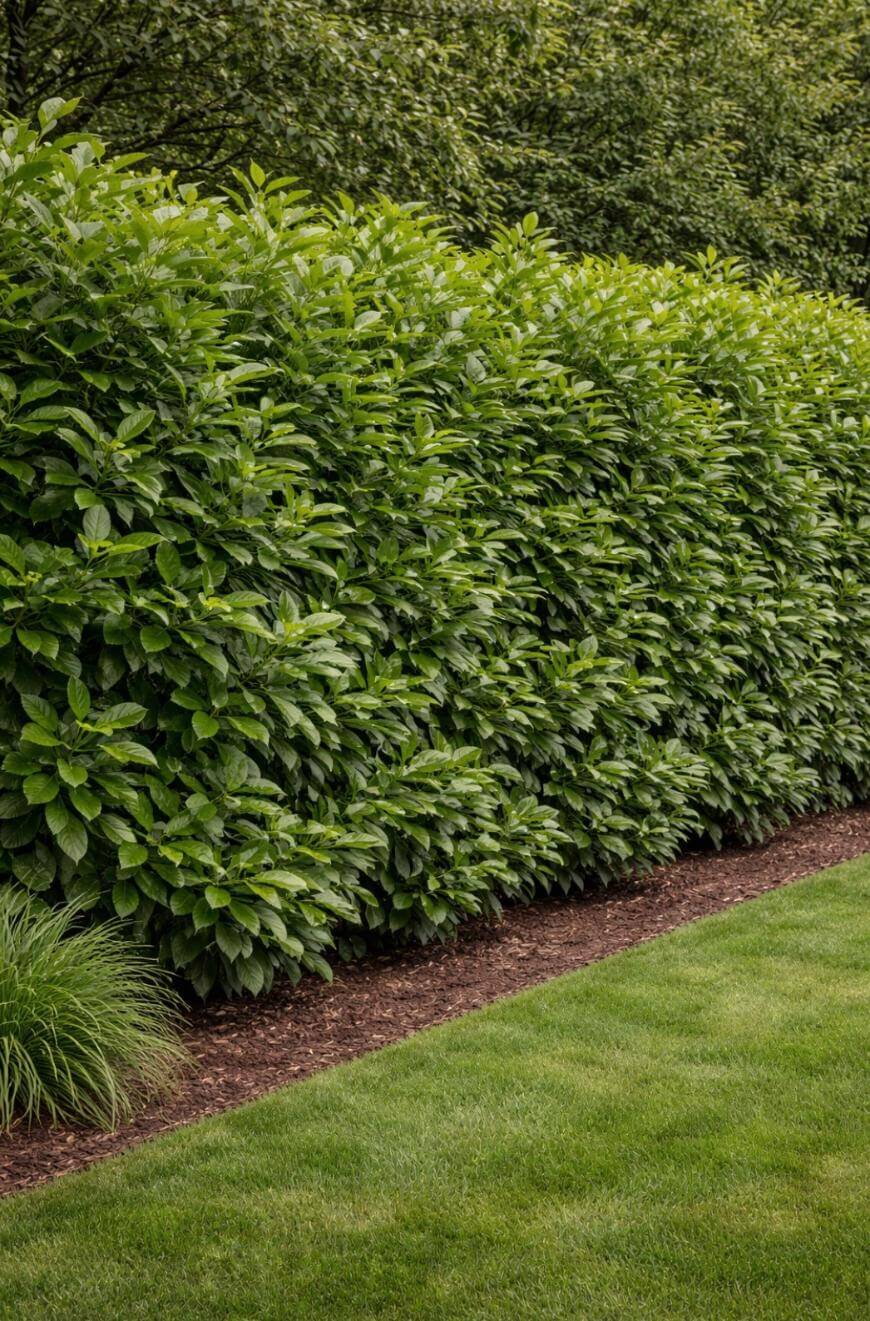
7. Skip Laurel (Prunus laurocerasus ‘Schipkaensis’)
Skip laurel is a narrower, more refined version of cherry laurel that still builds privacy fast. It is a strong pick for smaller yards where you want dense evergreen coverage but cannot spare extra width.
It also does well when you want a hedge that looks uniform without constant babysitting. For faster coverage, keep watering consistent during the first growing season.
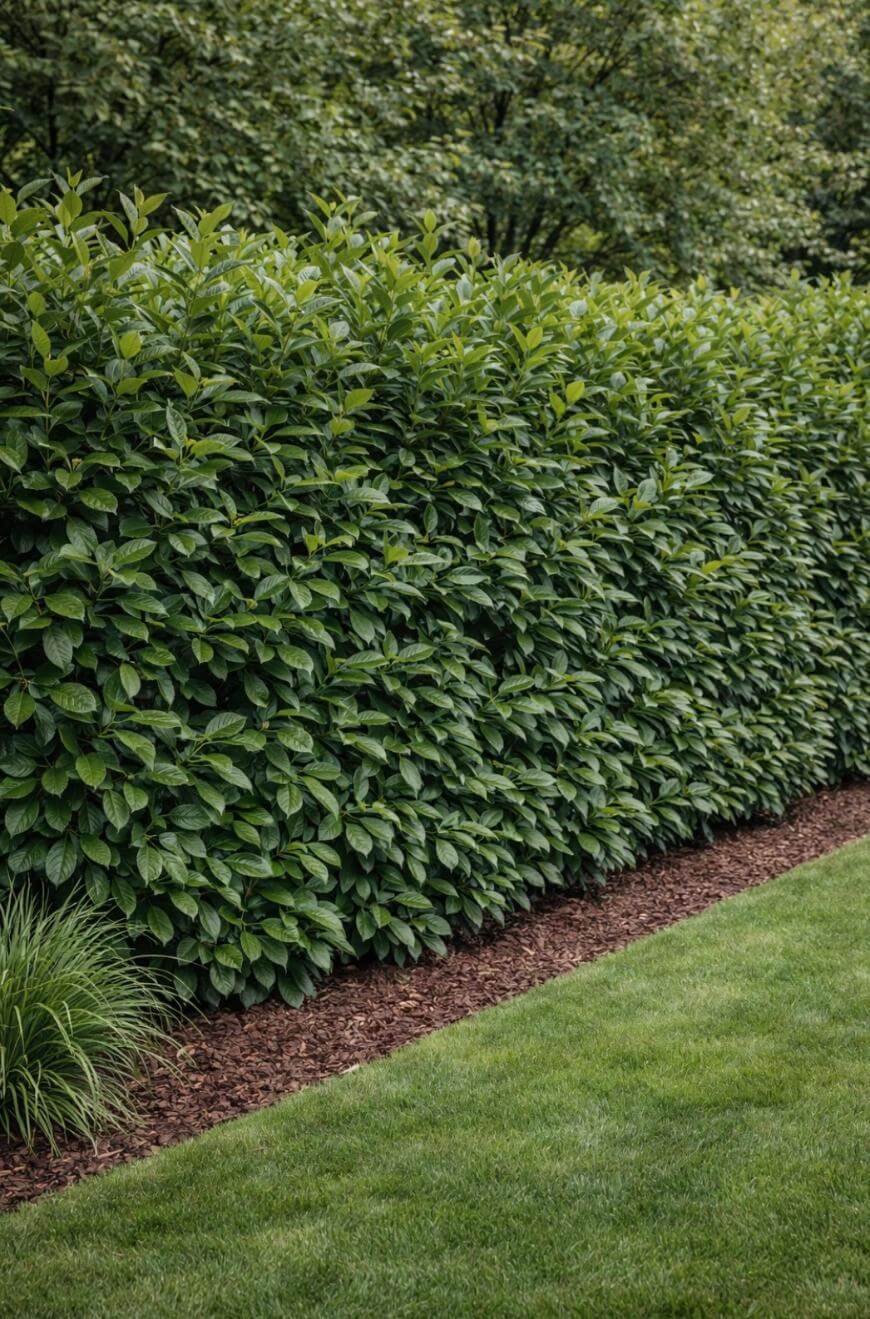
8. Privet (Ligustrum spp.)
Privet is a classic fast hedge plant because it grows quickly and can be clipped into a solid green wall. In many areas it is also easy to find and often costs less than slower specialty shrubs.
The main “watch out” is that some privets can be invasive depending on where you live, so you should choose a non-invasive or locally recommended type. If you prune it regularly, it becomes extremely dense.
9. Viburnum (Sweet Viburnum, Viburnum odoratissimum)
Sweet viburnum is a fast-growing evergreen shrub in many warm climates, and it creates a full, leafy screen. It is great for people who want privacy plus a softer, more natural landscape look.
It can be pruned into a hedge, but it also looks good left a bit looser. If you want it thick at eye level, tip prune early so it branches lower instead of getting leggy.
10. Photinia (Red Tip Photinia, Photinia × fraseri)
Red tip photinia is popular for privacy because it grows quickly and pushes bright red new growth that looks pretty in a hedge. It is a good choice if you want privacy with some color built in.
It can be prone to leaf-spot in some climates, especially if airflow is poor. If you want to reduce issues, avoid planting too tightly and keep overhead watering to a minimum.
11. Clumping Bamboo (Bambusa spp., Clumping Types)
Clumping bamboo can create a tall, modern-looking screen relatively quickly, and it is especially useful for narrow spaces. The “clumping” part matters because it is far easier to control than running bamboo.
If you love the look but fear the spread, stick to true clumping varieties and avoid anything labeled “running.” A root barrier can add extra peace of mind if you are planting near a fence line.
12. Feather Reed Grass (Calamagrostis × acutiflora ‘Karl Foerster’)
This ornamental grass grows upright and creates seasonal privacy quickly, especially during warm months. It is perfect when you want a lighter, airier screen that still blocks views at patio height.
It is also one of the easiest ways to fill gaps while shrubs are maturing. If you plant a row of these in front of young evergreens, your space looks finished much sooner.
13. Giant Miscanthus (Miscanthus × giganteus)
Giant miscanthus is a tall ornamental grass that can form a dramatic seasonal privacy barrier. It is a great option if you want height fast without committing to a permanent woody hedge.
Because it is seasonal, it is best for people who mainly want summer coverage. In colder months, it can still provide some screening if you leave the dried stalks standing.
14. Nellie R. Stevens Holly (Ilex × ‘Nellie R. Stevens’)
This holly grows quickly for an evergreen and can become a dense, glossy privacy screen. It is a strong choice if you want a more traditional landscape plant that still performs like a privacy workhorse.
It also handles pruning well, so you can tighten it up into a hedge shape. If you prefer a natural look, you can let it grow looser and still get solid coverage.
15. American Holly (Ilex opaca)
American holly can be a great privacy plant because it is evergreen, dense, and long-lived. It may not be the absolute fastest, but it builds into a very solid screen and looks classic.
If you want privacy that lasts for decades, this is a strong “plant it once” option. It is especially good if you like a more natural, woodland-style landscape.
16. Bamboo Muhly (Muhlenbergia dumosa) Or Pink Muhly (Muhlenbergia capillaris)
Muhly grasses can create a softer privacy layer, especially for patios or along low fences. They are not as tall as bamboo, but they fill in quickly and look very “designer” for the cost.
Pink muhly also gives you a fluffy pink bloom effect in season, which makes your privacy planting feel decorative. This is a great choice if you want coverage without a heavy wall.
17. Star Jasmine (Trachelospermum jasminoides)
Star jasmine is a fast climber that can cover fences and trellises to create privacy with a lush, evergreen look in many climates. It is ideal when you want vertical screening without taking up much yard space.
It also smells amazing when it blooms, which is a nice bonus for patios. If you want faster coverage, give it a sturdy support and guide the first few vines where you want them.
18. Clematis (Fast-Growing Types)
Clematis can give you fast privacy on a trellis, plus flowers that make your screen look intentional and pretty. It is a smart pick if you want privacy that feels like garden decor, not a hedge.
Different clematis types have different pruning needs, so it helps to pick a variety that matches how hands-on you want to be. If you want simpler care, choose a well-known vigorous type suited to your region.
19. Trumpet Vine (Campsis radicans)
Trumpet vine grows aggressively and can cover a structure quickly, making it a powerful privacy option for large fences or pergolas. It is best when you need a lot of coverage fast and you can keep it contained.
Because it is so vigorous, it can overwhelm small spaces if you do not prune it. If you want a “fast privacy, big impact” vine, this is one of the strongest options.
20. Virginia Creeper (Parthenocissus quinquefolia)
Virginia creeper climbs quickly and can create a thick privacy layer over fences and walls. It also brings dramatic fall color, which makes your screen look beautiful instead of purely functional.
It can spread fast, so it is best for people who are okay with regular trimming. If you want the speed without the takeover, train it carefully and prune edges often.
21. Camellia (Camellia sasanqua)
Camellia sasanqua can form a beautiful evergreen privacy hedge with the bonus of flowers. It is a great option if you want privacy that looks like a curated garden feature.
It tends to look more upscale than many fast hedge plants, which is perfect if you care about curb appeal. If you want it dense, prune lightly after blooming to encourage branching.
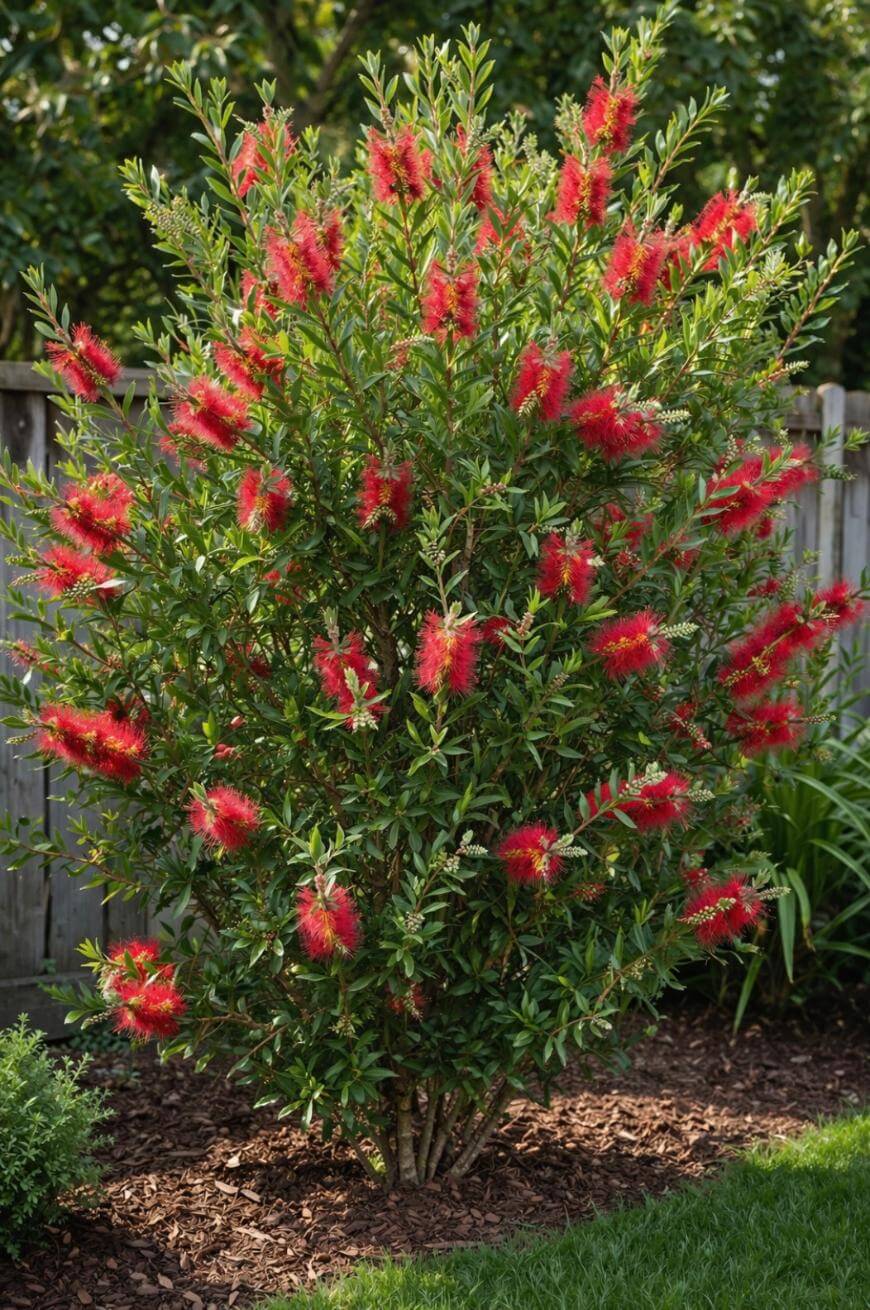
22. Bottlebrush (Callistemon spp.)
Bottlebrush shrubs or small trees can create privacy quickly in warm climates, and the flowers add a bold decorative element. It is a strong pick if you want screening plus a pop of color.
It works especially well as a looser screen rather than a tight clipped hedge. If you want it thicker, tip prune after flowering to encourage bushier growth.
Key Takeaways
Fast growing privacy plants work best when you match the plant to your climate and space.
Evergreens give the most consistent year-round privacy.
Climbers can create privacy faster than shrubs in tight spaces.
Ornamental grasses are an easy seasonal “fast fill” option.
Spacing and watering are the biggest controllable factors for quick coverage.
A mix of one backbone evergreen and one fast filler usually looks best.
FAQ
Are fast growing privacy plants always low maintenance?
No, fast growth often means you will prune more to keep things tidy. If you want low maintenance, choose plants that naturally stay narrow and dense.
What is the fastest way to get privacy on a fence?
A climber on a trellis is usually the quickest visual fix. You can also add tall planters with screening plants for instant coverage where you sit.
How many plants do you need for a privacy hedge?
You need enough plants so mature widths overlap slightly for a continuous screen. Spacing depends on the plant, but many hedges land in the 3–8 feet apart range.
Can you mix different plants in one privacy screen?
Yes, and it often looks better than a single-species wall. Use one main evergreen for consistency, then add a second texture like a grass or flowering shrub for a fuller look.