Last updated: October 19, 2026
Garlic butter pasta takes just 25 minutes, one pot, one skillet, and a handful of pantry staples, and the full recipe card is waiting below.
Here is exactly how we get a glossy sauce that clings to every strand instead of pooling greasy at the bottom of the bowl.
How to Make Garlic Butter Pasta Step by Step
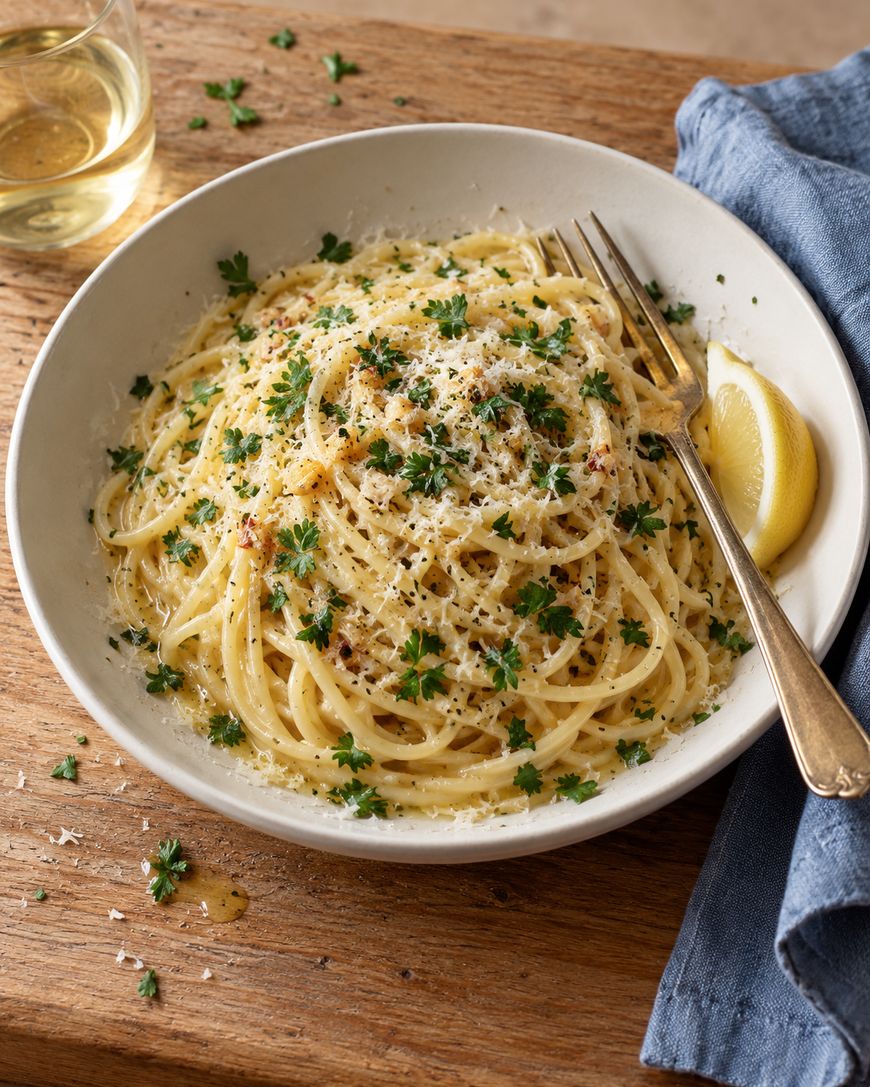
Garlic butter pasta comes together by cooking spaghetti in well-salted water, gently softening garlic in butter and olive oil, and then tossing everything with starchy pasta water, Parmesan, lemon, and parsley.
The whole process takes about 25 minutes, and this version serves 4.
Gather Your Ingredients
For 4 servings, we use 12 ounces of spaghetti, 6 tablespoons of unsalted butter, and 1 tablespoon of extra-virgin olive oil.
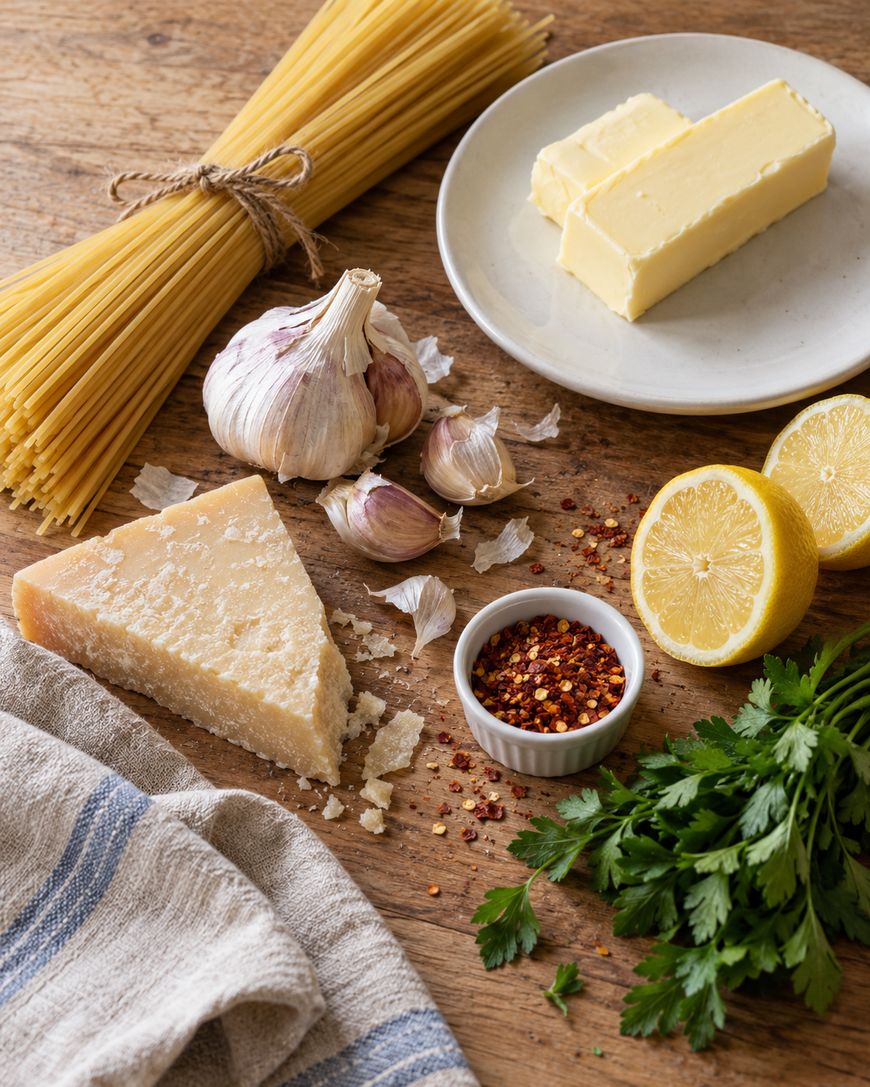
Add 6 large garlic cloves, 3/4 cup of finely grated Parmesan, 1/4 cup of chopped fresh parsley, and 1 tablespoon of fresh lemon juice.
Finish the shopping list with 1/4 teaspoon of red pepper flakes, 1/2 teaspoon of black pepper, and 1 tablespoon of kosher salt for the pasta water.
Unsalted butter lets you control the seasoning, since the Parmesan already brings plenty of salt of its own.
A block of Parmigiano-Reggiano grated fresh melts smoothly, while pre-shredded cheese is coated with anti-caking starch and can turn grainy in the sauce.
Choose the Right Pasta Shape
Long, thin strands like spaghetti, linguine, and fettuccine are the best match for garlic butter pasta because the silky sauce coats them evenly.
Bronze-die cut pasta such as De Cecco has a rougher surface that grips the sauce better than smooth, slick pasta, though Barilla spaghetti also works well.
Cook the Pasta Until Just Shy of Done
Bring 4 quarts of water to a rolling boil, stir in the 1 tablespoon of kosher salt, and add the spaghetti.

Cook it for 1 minute less than the package directions, which is about 9 minutes for most brands, because the pasta finishes cooking in the skillet.
Before you drain it, you will scoop out 1 cup of the cloudy cooking water, so keep a mug or glass measuring cup nearby.
Build the Garlic Butter Sauce
When the pasta has about 3 minutes left, melt the 6 tablespoons of butter with the 1 tablespoon of olive oil in a large skillet over medium-low heat.
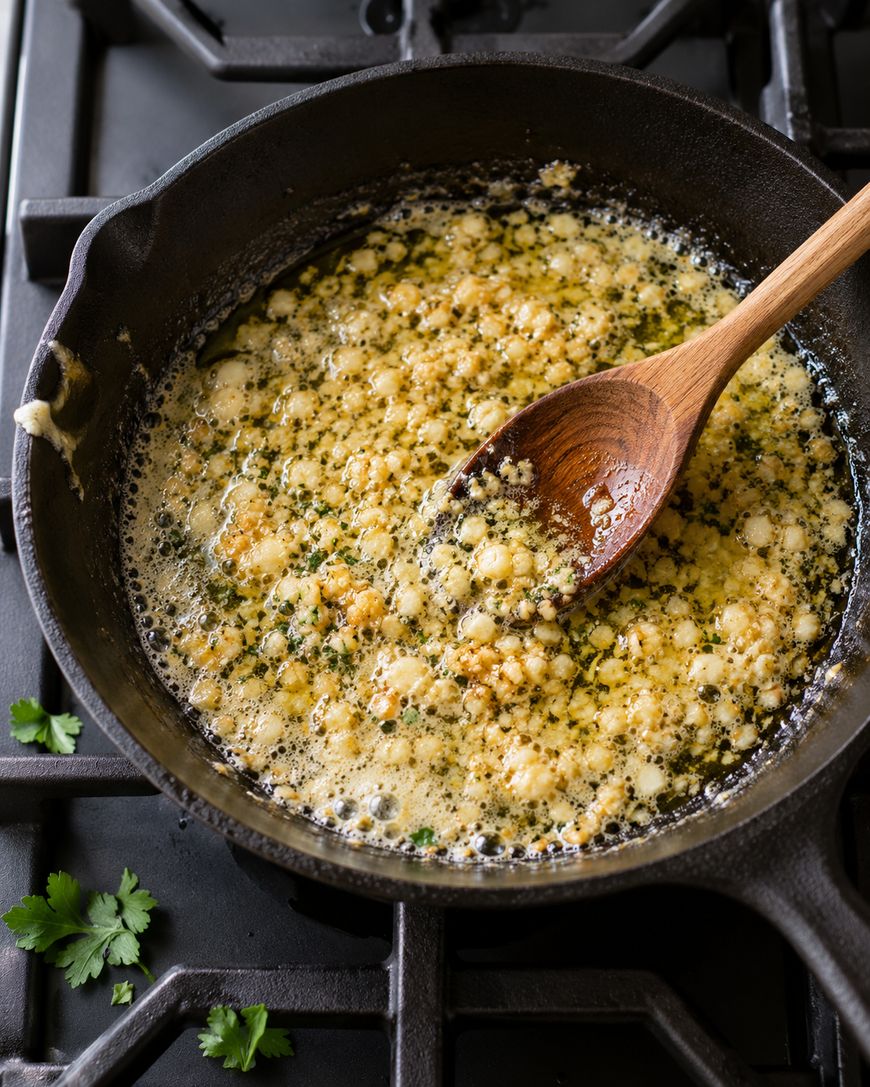
Add the minced garlic and red pepper flakes and stir constantly for 1 to 2 minutes, until the garlic smells sweet and looks pale gold.
If the garlic turns dark brown it will taste bitter, so pull the pan off the heat for a moment if it moves too fast.
Toss, Finish, and Serve
Scoop out 1 cup of the pasta water, drain the spaghetti, and use tongs to move it into the skillet with 1/2 cup of the reserved water.
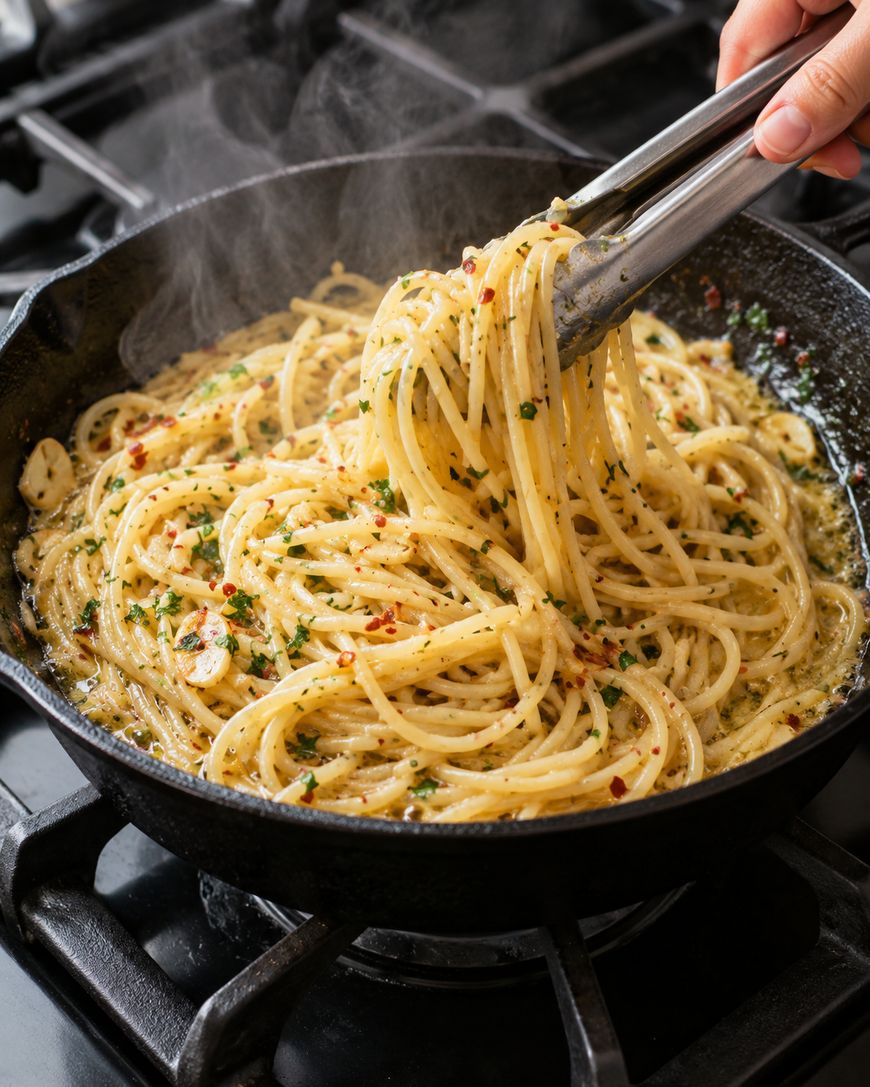
Toss over medium heat for 1 to 2 minutes, until the sauce turns glossy and clings to the noodles.
Take the pan off the heat, then add the Parmesan, lemon juice, parsley, and black pepper and toss again.
Add another splash of pasta water if the sauce looks tight, then taste and add salt only if it needs it.
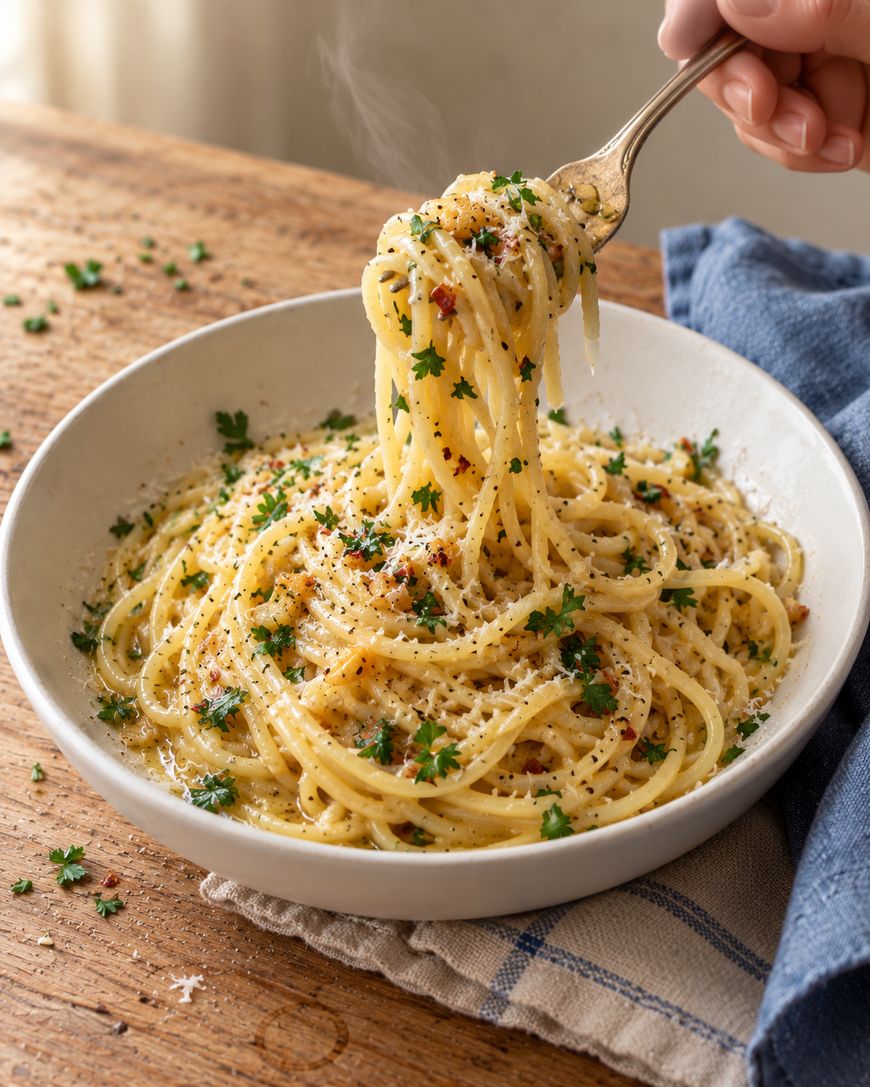
Serve right away in warm bowls, since the sauce is at its silkiest in the first few minutes.
Tips for the Best Garlic Butter Pasta
The three things that matter most are gentle heat for the garlic, plenty of starchy pasta water, and cheese added off the heat.
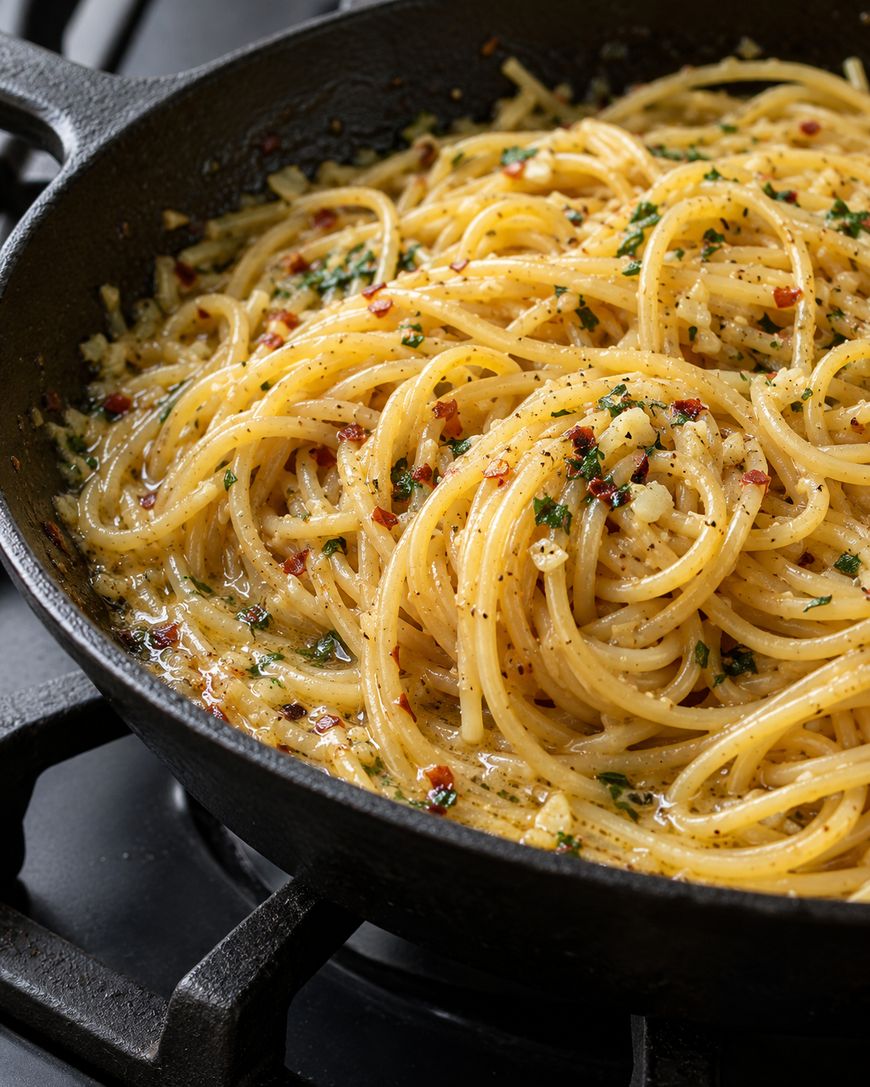
Get those right and even a very short ingredient list tastes like a restaurant plate.
Keep the Heat Low for the Garlic
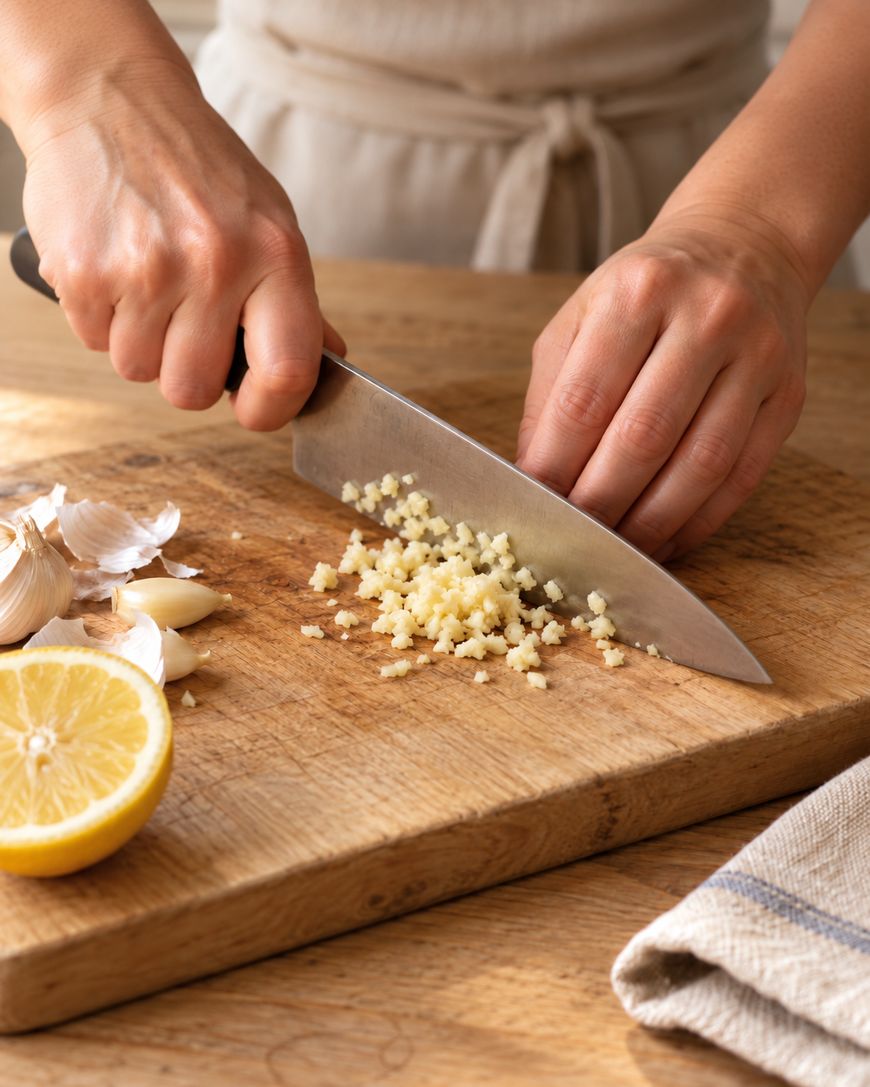
Garlic burns in seconds once butter gets hot, so medium-low heat and constant stirring are worth the attention.
Mincing the cloves finely helps them cook evenly, while thick slices can brown at the edges before the centers soften.
Use Pasta Water Generously
Starchy pasta water is the emulsifier that keeps the butter from separating into a greasy puddle.

Start with 1/2 cup in the skillet and add splashes from the remaining cup until the sauce flows like heavy cream.
Add the Cheese Off the Heat
Parmesan clumps when it hits a pan that is too hot, so remove the skillet from the burner before you add it.
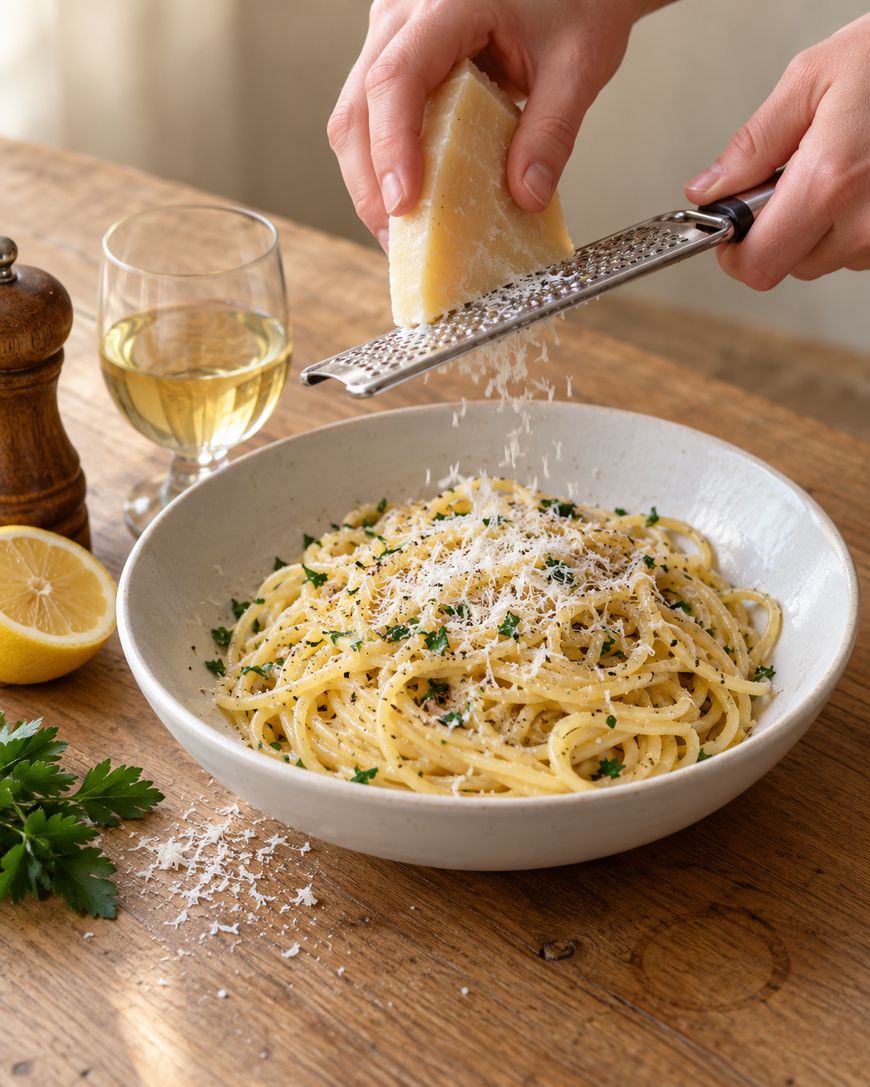
Toss quickly and the cheese melts into the sauce instead of forming a rubbery ball.
Garlic Butter Pasta Variations and Substitutions
Garlic butter pasta is a blank canvas, and a few simple swaps change the flavor without changing the base method.
Everything in this section is optional, and none of it appears in the recipe card below.
Add Protein
Cooked shrimp, sliced rotisserie chicken, or browned Italian sausage all fit well.
Stir them into the skillet along with the pasta and warm them through, and make sure shrimp are cooked until pink and opaque.
Swap the Herbs and Cheese
Fresh basil, chives, or thyme can replace the parsley, and Pecorino Romano gives a saltier, sharper finish than Parmesan.

If you use Pecorino, taste the pasta before adding any extra salt.
Use Salted Butter
Salted butter works in a pinch when that is what you have in the fridge.
Skip the final pinch of salt and taste first, since the butter and cheese already bring plenty.
Add Vegetables
A handful of baby spinach, halved cherry tomatoes, or steamed broccoli florets can go into the skillet with the pasta.
The spinach wilts in under a minute, which makes it the easiest add-in for a busy weeknight.
What to Serve With Garlic Butter Pasta
Garlic butter pasta is rich, so the best sides are bright, crisp, and a little acidic.
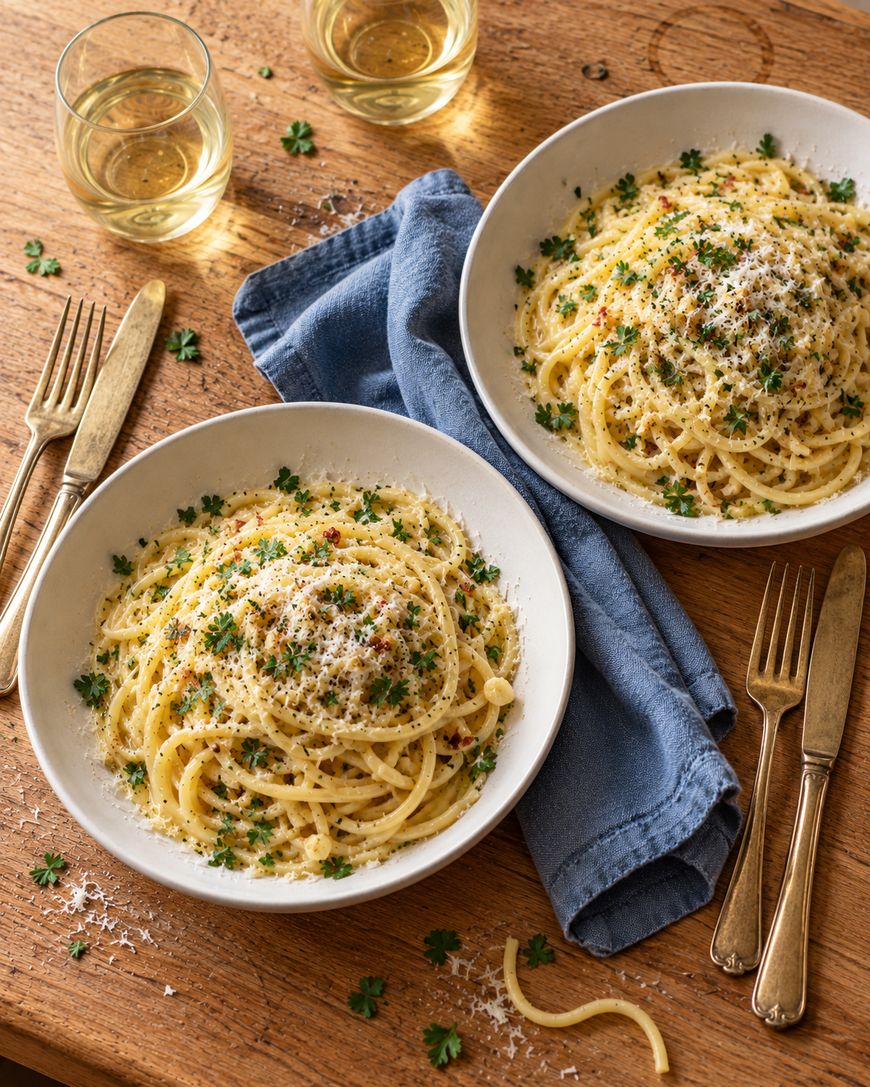
A lemony arugula salad with shaved Parmesan or a simple Caesar salad cuts through the butter beautifully.
Roasted broccoli, green beans, or asparagus add color and a little char on the plate.
For a heartier dinner, pair the pasta with roasted chicken thighs, baked salmon, or a pan of garlic shrimp.
Crusty bread from a local bakery is never a bad idea, because it mops up every drop of sauce left in the bowl.
Storing and Reheating Leftovers
Refrigerate leftover garlic butter pasta in an airtight container within 2 hours of cooking, and plan to eat it within 3 days.
That sits inside the 3 to 4 day window the USDA gives for cooked leftovers.
To reheat, warm the pasta in a skillet over medium-low heat with a splash of water, stirring until it is steaming hot all the way through.
The USDA recommends reheating leftovers to 165°F, so use an instant-read thermometer if you want to be sure.
The butter sauce firms up in the fridge and soaks into the noodles, so a splash of liquid brings it back to life.
We do not recommend freezing garlic butter pasta, because the butter sauce can separate and the noodles turn soft once thawed.
The Story Behind Garlic Butter Pasta
Garlic butter pasta is a close cousin of spaghetti aglio e olio, the classic Roman dish of spaghetti tossed with garlic, olive oil, and chili flakes.
American home cooks often swap in butter for a richer, rounder sauce, and the result shows up on weeknight tables across the country.
The technique is the same one Italian cooks use for cacio e pepe and other simple sauces, where starchy pasta water and cheese become the sauce.
That is why such a short ingredient list can taste so complete.
When you are ready to cook, use the recipe card below for the full ingredient list, steps, and nutrition details.
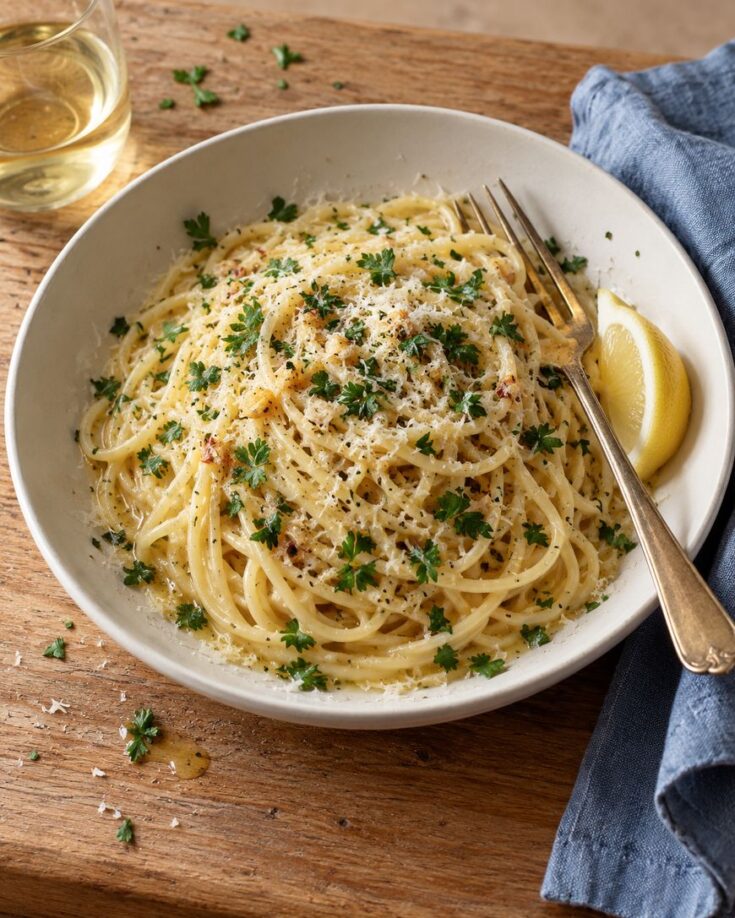
Garlic Butter Pasta
Silky garlic butter pasta with fresh garlic, Parmesan, lemon, and parsley, ready in 25 minutes with simple pantry ingredients.
Ingredients
- 12 ounces spaghetti
- 1 tablespoon kosher salt, for the pasta water
- 6 tablespoons unsalted butter
- 1 tablespoon extra-virgin olive oil
- 6 large garlic cloves, finely minced
- 1/4 teaspoon red pepper flakes
- 3/4 cup finely grated Parmesan cheese
- 1 tablespoon fresh lemon juice
- 1/4 cup chopped fresh parsley
- 1/2 teaspoon black pepper
Instructions
- Bring 4 quarts of water to a rolling boil in a large pot and stir in the kosher salt.
- Add the spaghetti and cook for 1 minute less than the package directions, about 9 minutes, stirring occasionally.
- When the pasta has about 3 minutes left, melt the butter with the olive oil in a large skillet over medium-low heat.
- Add the garlic and red pepper flakes and stir constantly for 1 to 2 minutes, until fragrant and pale gold.
- Scoop out 1 cup of the pasta water, then drain the spaghetti.
- Add the spaghetti to the skillet with 1/2 cup of the reserved pasta water and toss with tongs over medium heat for 1 to 2 minutes, until the sauce is glossy and clings to the noodles.
- Remove the skillet from the heat, add the Parmesan, lemon juice, parsley, and black pepper, and toss again, adding more pasta water a splash at a time if the sauce looks tight.
- Taste, add salt only if needed, and serve immediately.
Notes
Grate a block of Parmesan fresh for the smoothest sauce. Refrigerate leftovers in an airtight container within 2 hours and eat within 3 days. Reheat in a skillet with a splash of water until steaming hot, to 165°F. Not recommended for freezing.
Nutrition Information:
Yield:
4Serving Size:
1 1/2 cupsAmount Per Serving: Calories: 550Total Fat: 24gSaturated Fat: 14gSodium: 480mgCarbohydrates: 64gFiber: 3gSugar: 2gProtein: 16g
Garlic Butter Pasta FAQ
What is the best pasta for garlic butter pasta?
Spaghetti and linguine are the top choices because their long, thin strands carry the sauce well.
Fettuccine also works, and short shapes like penne can work if you toss them thoroughly.
Why is my garlic butter pasta greasy?
A greasy sauce usually means there was not enough starchy pasta water to bind the butter.
Add the reserved water a splash at a time while tossing over medium heat until the sauce turns glossy and creamy.
Can you use jarred garlic?
Fresh cloves give the sweetest, cleanest flavor, and this recipe is built around 6 of them.
Jarred garlic can taste sharp or sour, so we recommend using fresh.
Can you make garlic butter pasta ahead of time?
It tastes best right after tossing, when the sauce is at its silkiest.
You can mince the garlic and chop the parsley earlier in the day, and leftovers keep in the refrigerator for up to 3 days with a splash of water added when reheating.
Is garlic butter pasta vegetarian?
Yes, it contains no meat, but Parmigiano-Reggiano is made with animal rennet.
Strict vegetarians should look for a hard Italian-style cheese labeled vegetarian.
Can you freeze garlic butter pasta?
We do not recommend it, because the butter sauce can separate and the noodles turn soft after thawing.
It is better to cook a fresh batch, which only takes 25 minutes.
Why This Recipe Works
Cooking the garlic gently in a mix of butter and olive oil softens its bite and perfumes the fat without scorching it.
Pulling the pasta 1 minute early lets it finish in the skillet, where it absorbs flavor instead of just water.
The reserved pasta water is the real secret, because its starch binds the butter and water into a smooth sauce that clings to the noodles.
Adding the Parmesan, lemon juice, and parsley off the heat keeps the cheese smooth and keeps the lemon and herbs tasting fresh.
Make Garlic Butter Pasta Tonight
Garlic butter pasta proves that a short ingredient list can deliver big comfort when the technique is right.
Set a pot of water to boil, follow the recipe card above, and you will have dinner on the table in 25 minutes, so try it tonight and leave a rating once you have.