Last updated: November 5, 2026
This grits recipe gives you creamy, buttery stone-ground grits with no lumps in about 50 minutes, using a handful of pantry ingredients and one saucepan. Read on for the exact ratio, timing, and tips, or scroll to the recipe card below if you only need the quantities.

What You Need for This Grits Recipe
This grits recipe needs 1 cup of stone-ground grits, 2 cups of water, 2 cups of whole milk, 4 tablespoons of unsalted butter, and a little salt and pepper. Everything cooks in a single heavy 3-quart saucepan, and the whole list takes about five minutes to gather.

The Grits
Choose old-fashioned stone-ground grits such as Bob’s Red Mill or Anson Mills. Stone-ground grits are made from whole dried corn ground between stones, so they keep more corn flavor and a slightly toothsome texture.

Quick grits and instant grits cook in a fraction of the time, but they are ground finer and processed differently. Follow the package directions if you use them, because the liquid and timing in this recipe are written for stone-ground grits.
The Liquid, Butter, and Salt
We use 2 cups of water and 2 cups of whole milk, which makes 4 cups of liquid for 1 cup of grits. The water keeps the corn flavor clean, and the milk adds the creamy richness that makes a pot of grits taste like a restaurant side.
Season the liquid with 3/4 teaspoon of fine sea salt before the grits go in, since corn needs salt early to taste like anything. Finish with 4 tablespoons of unsalted butter and 1/4 teaspoon of freshly ground black pepper once the pot comes off the heat.
Optional Cheese and Extra Liquid
For cheese grits, stir in 1/2 cup of shredded sharp cheddar at the very end. Shred it from a block of Cabot or Tillamook, since bagged shredded cheese carries anti-caking starch that can make the grits a little grainy.
Keep a little extra warm milk or water nearby too, because grits keep thickening as they stand. A small splash loosens them right back up.
How to Make a Grits Recipe That Stays Creamy
Creamy grits come from three habits: whisking the grits in slowly, cooking them low, and stirring every few minutes. The whole pot takes about 45 minutes of cooking after a five minute prep, and it makes about 4 cups, enough for 4 servings.
Bring the Liquid to a Simmer
Pour the water and milk into a heavy 3-quart saucepan, add the salt, and set it over medium-high heat. Bring it to a gentle simmer and watch it closely, because milk foams up and boils over fast.

Whisk In the Grits
Pour the grits into the simmering liquid in a thin, steady stream while whisking constantly. That slow pour is the secret to a pot with no lumps.

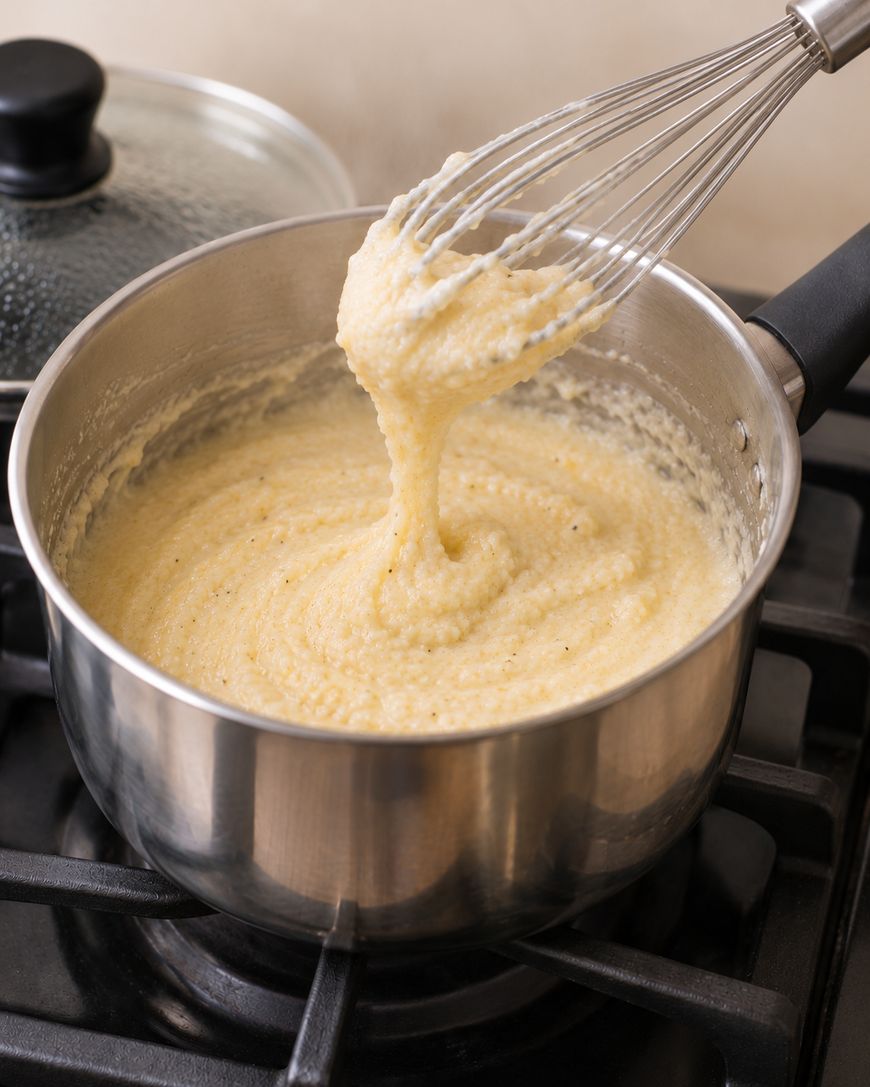
Keep whisking until the mixture looks evenly combined and begins to thicken. This is the moment when lumps either form or do not, so stay at the stove.
Cook Low and Slow
Turn the heat to low, cover the pot, and cook for about 45 minutes. Whisk every 5 to 10 minutes and scrape the bottom and corners, because grits stick there first.

The grits are done when they are thick, creamy, and tender with no gritty bite in a spoonful. If they thicken too much before they soften, whisk in a splash of warm water or milk and keep cooking.
Finish With Butter and Season
Take the pot off the heat and stir in the butter and pepper until the butter melts into the grits. Stir in the cheddar now if you are making cheese grits, then taste and add a pinch more salt if needed.
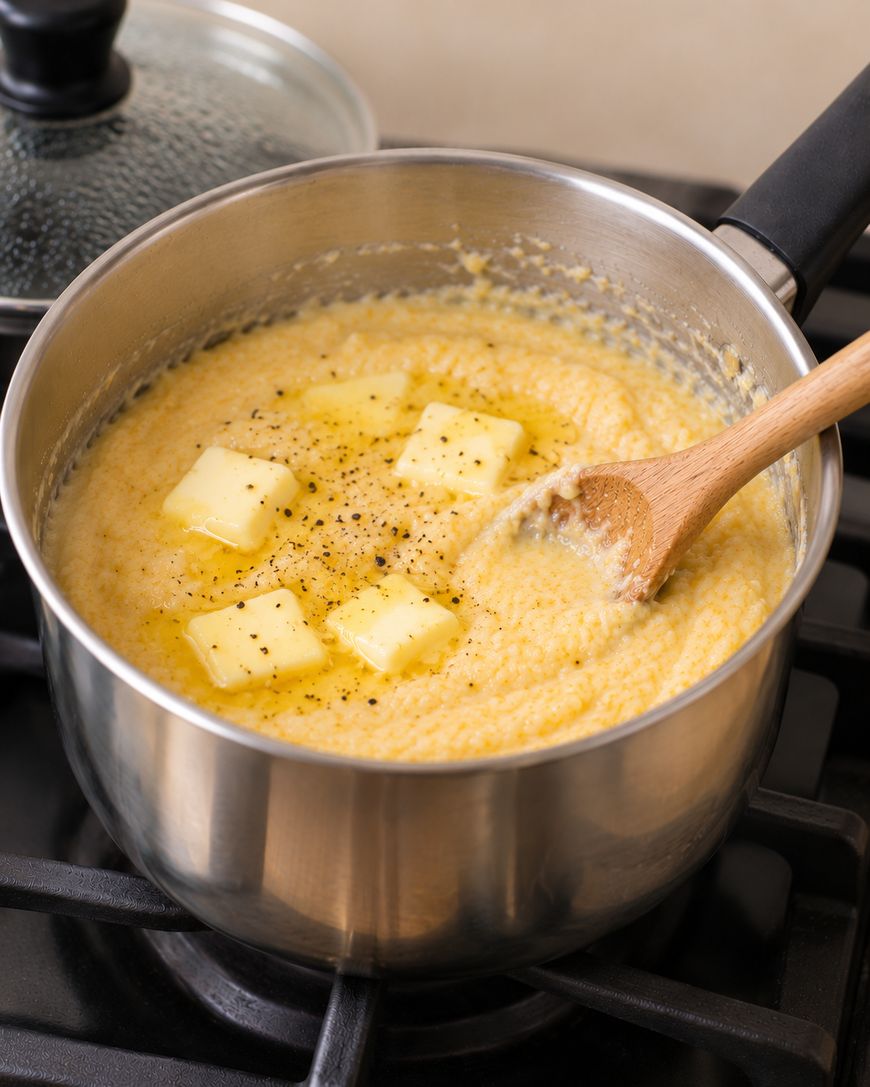
Spoon the grits into warm bowls right away, since they set up as they cool.
Tips for Smooth, Flavorful Grits Every Time
The most common grits problems are lumps, bland flavor, and a texture that turns stiff, and each one has a simple fix. Most of them come down to how you add the grits and how patient you are with the heat.

If lumps do form, whisk hard for a minute and keep cooking, because the lumps soften and smooth out as the grits swell. Keeping the heat low and the pot covered also prevents the scorched, stuck layer that can ruin the whole batch.
For looser grits, whisk in more warm milk a little at a time until the pot flows off the spoon in a slow ribbon. For thicker grits, keep stirring over low heat with the lid off until they reach the thickness you like.
Always taste before serving. Grits are a blank canvas, so a pinch of salt, an extra pat of butter, or a few grinds of pepper can turn a good bowl into a great one.
Ways to Serve and Flavor Your Grits
Grits work at breakfast, lunch, and dinner, which is why they have stayed a staple across the South. Serve them under a fried or poached egg with crisp bacon for a classic breakfast, or spoon them next to roasted chicken and braised greens for dinner.

Shrimp and grits is the most famous way to serve them, and the dish has deep roots in Charleston and the South Carolina Lowcountry. Pile sauteed shrimp, a little sausage, and a pan sauce on top of a creamy bowl and you have a meal.

Cheese grits are the easiest upgrade, and a spoonful of sausage gravy over a plain bowl turns grits into a hearty brunch plate. You can also swap the water for low-sodium chicken broth for a savory pot, but taste before you add the full amount of salt.
Leftover grits also make a great base for a grain bowl topped with a jammy egg, sauteed greens, and hot sauce. Pair them with buttermilk biscuits or cornbread on the side if you want a full Southern spread.

How to Store and Reheat Leftover Grits
Cool leftover grits and get them into an airtight container within 2 hours of cooking. Store them in the refrigerator for 3 to 4 days, in line with USDA Food Safety and Inspection Service guidance for leftovers.
Cold grits set into a firm block, which is completely normal. Reheat them in a saucepan over low heat with a splash of milk or water, stirring until smooth, and heat them until they reach 165°F on an instant-read thermometer, per FSIS guidance.
Use a shallow container so the grits cool quickly, and press plastic wrap onto the surface to stop a skin from forming. Stir the reheated grits well, since the edges warm faster than the center.
You can also slice the chilled block and pan-fry the pieces in butter until golden for crisp fried grits. We have not tested this recipe for freezing, so we recommend refrigerating only.
The Story Behind Grits
Grits trace back to a dried corn dish made by Native American peoples of the Southeast, including the Muscogee Creek, who ground corn on stone. Early settlers adopted the dish, and it became a daily staple across the South.
Grits are so woven into Southern food culture that Georgia named them its official state prepared food in 2002. Today you will find them on diner menus, at Sunday brunch tables, and in fine dining kitchens from Charleston to New Orleans.
Stone-ground grits carry that history best, since they are made much the way the original dish was. The extra cooking time is the price of a deeper corn flavor and a creamier bowl.
Small mills across Georgia and the Carolinas now sell heirloom corn grits with real character. If you can find a bag from a local mill, it is well worth trying in this recipe.
Use the recipe card below for the full ingredient list, step-by-step method, and nutrition estimates.
Creamy Grits
Creamy stone-ground grits cooked low and slow in water and whole milk, then finished with butter for a smooth, lump-free bowl.
Ingredients
- 2 cups water
- 2 cups whole milk
- 3/4 teaspoon fine sea salt, plus more to taste
- 1 cup stone-ground grits (not quick or instant)
- 4 tablespoons unsalted butter
- 1/4 teaspoon freshly ground black pepper
- 1/2 cup shredded sharp cheddar cheese (optional)
- Warm milk or water, for thinning as needed
Instructions
- Combine the water, milk, and salt in a heavy 3-quart saucepan over medium-high heat. Bring to a gentle simmer, watching closely so the milk does not boil over.
- Pour in the grits in a thin, steady stream, whisking constantly, until the mixture is evenly combined and begins to thicken.
- Reduce the heat to low, cover, and cook for about 45 minutes, whisking every 5 to 10 minutes and scraping the bottom and corners of the pot, until the grits are thick, creamy, and tender with no gritty bite. If they thicken too much before they soften, whisk in a splash of warm water or milk.
- Remove the pot from the heat and stir in the butter and pepper until the butter melts. Stir in the cheddar, if using, then taste and add more salt if needed.
- Serve right away in warm bowls.
Notes
Contains milk. Cool leftovers and refrigerate in an airtight container within 2 hours. Store for 3 to 4 days, per USDA Food Safety and Inspection Service guidance for leftovers. Reheat in a saucepan over low heat with a splash of milk or water, stirring until smooth, until the grits reach 165°F on an instant-read thermometer. This recipe has not been tested for freezing, so freezing is not recommended. Optional: use 4 cups of water in place of the water and milk, or swap low-sodium chicken broth for part or all of the water and taste before adding the full amount of salt. The cheddar adds about 55 calories and 4 grams of fat per serving. Quick and instant grits cook differently, so follow the package directions for those.
Nutrition Information:
Yield:
4Serving Size:
1 cupAmount Per Serving: Calories: 310Total Fat: 16gSaturated Fat: 9gSodium: 490mgCarbohydrates: 34gFiber: 2gSugar: 6gProtein: 7g
Frequently Asked Questions About This Grits Recipe
What is the ratio of liquid to grits?
This grits recipe uses 4 cups of liquid for every 1 cup of stone-ground grits, a 4 to 1 ratio. We split it evenly between 2 cups of water and 2 cups of whole milk.
Can you make grits with only water or broth?
Yes, use 4 cups of water in place of the water and milk, or swap in low-sodium chicken broth for part or all of the water. Water-only grits taste cleaner but less rich, and broth grits need less added salt.
Are grits the same as polenta?
They are close cousins but not identical. Grits are usually made from white or yellow dent corn, while polenta is traditionally made from yellow flint corn and is often ground coarser.
Why are my grits lumpy or gluey?
Lumps happen when grits go into the pot too fast, and a gluey texture usually means they ran short of liquid. Pour slowly while whisking, and whisk in warm milk or water if the pot gets too stiff.
Can you make grits ahead of time?
Yes, cook them as directed, cool them within 2 hours, and refrigerate them for 3 to 4 days. Reheat with a splash of milk or water until they reach 165°F.
Why This Grits Recipe Works
The 4 to 1 ratio of liquid to stone-ground grits gives the corn enough water to swell fully without turning pasty. Splitting that liquid between water and whole milk keeps the corn flavor clear while adding real creaminess and a gentle sweetness from the milk.
Pouring the grits into simmering liquid in a thin stream while whisking stops the starch from clumping. Cooking them low and covered for about 45 minutes lets each grain soften slowly and evenly without breaking down into paste.
Stirring every 5 to 10 minutes keeps the bottom from scorching and keeps the texture even from edge to center, so every spoonful tastes the same. A splash of warm water or milk rescues the pot if it tightens up before the grains are tender.
Salting the liquid at the start seasons the grits from the inside out. Stirring in the butter after the pot leaves the heat gives a glossy finish and a rich, round flavor that does not turn greasy.
Make This Grits Recipe Your New Go-To Side
This grits recipe delivers smooth, buttery, stone-ground grits with one saucepan and a little patience. Whisk them in slowly, cook them low, and finish with butter for a bowl that works at breakfast or dinner.
Leave a star rating and a comment below to tell us how they turned out, and share the recipe with someone who loves a Southern breakfast.
Easy Biscuits and Gravy With Flaky Buttermilk Biscuits and Peppery Sausage Gravy
Loaded Hashbrowns That Stay Crispy Under All the Cheese and Bacon