Last updated: October 2, 2026
Homemade bread crumbs take about 45 minutes from stale bread to crisp, pantry-ready crumbs, and all you need is a sheet pan and a food processor.
Follow the full walkthrough below, or scroll to the recipe card for the quick version.
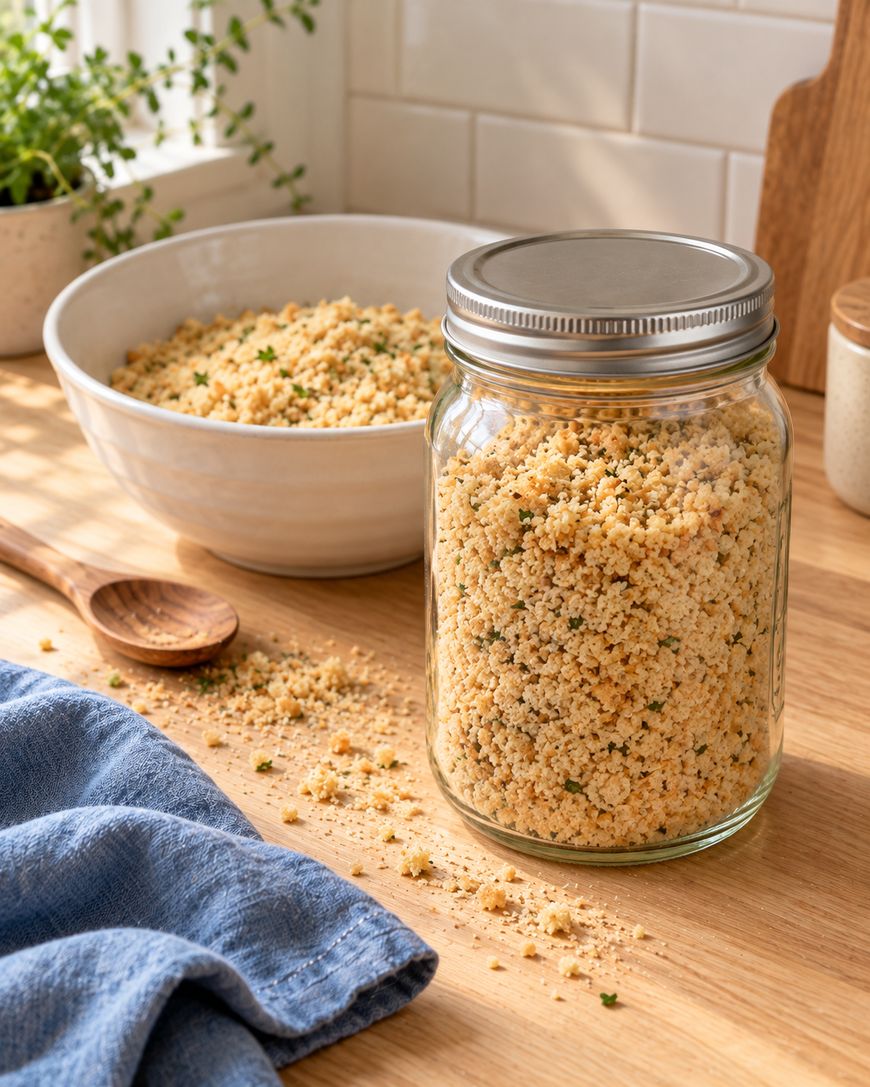
What You Need for Homemade Bread Crumbs
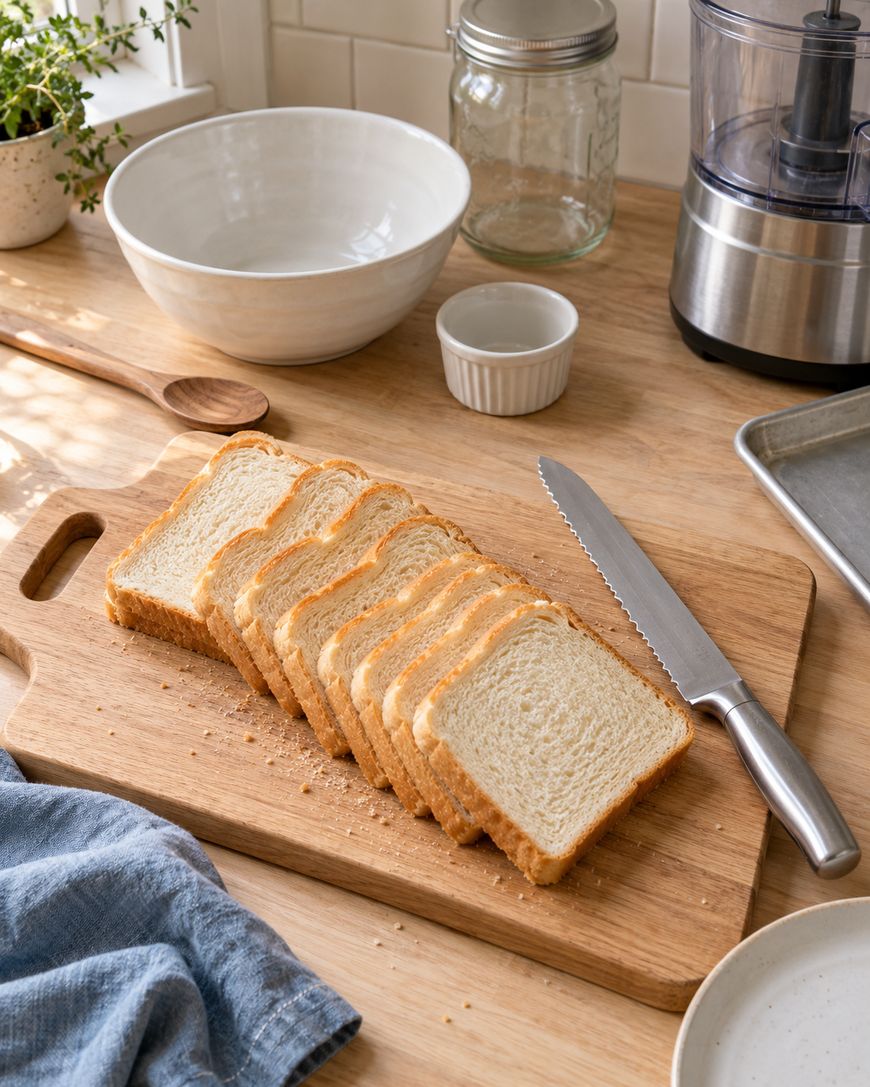
Homemade bread crumbs start with one ingredient, and that ingredient is bread. Eight slices of day-old sandwich bread, about 8 ounces in total, make roughly 2 cups of dry crumbs.
Choosing the Bread
Plain white sandwich bread gives you the most neutral, versatile crumbs. Italian loaves, French baguettes, and sourdough all work too, and they add a little more flavor and a sturdier crunch.
Leave the crusts on, because they add color and texture. If your bread is very fresh and soft, the oven step below does all the drying for you, so there is no need to wait for it to go stale.
Optional Italian Seasoning
For seasoned crumbs, you need 2 teaspoons of dried Italian seasoning and 1 teaspoon of garlic powder for the whole batch. Stir them in after the crumbs are ground, so the herbs never scorch in the oven.
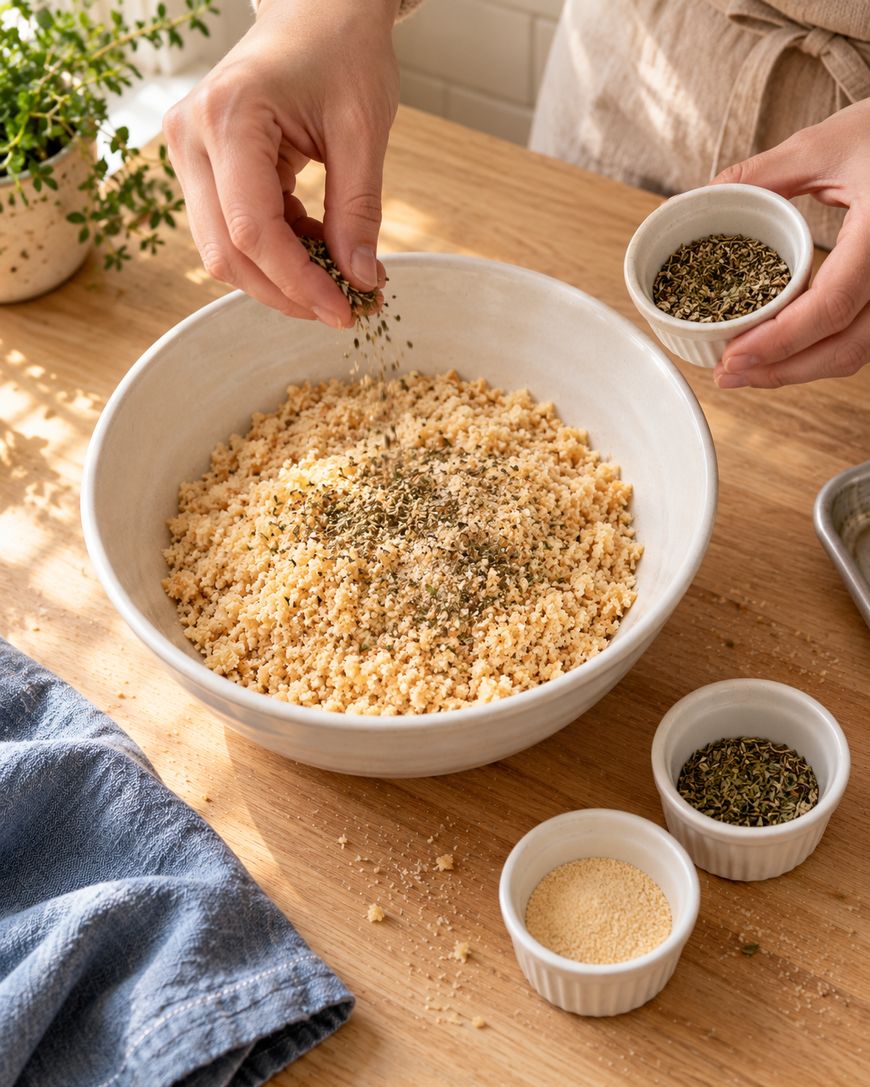
Plain crumbs are the better choice for sweet toppings and delicate dishes. Seasoned crumbs shine on chicken cutlets, meatballs, and baked pasta.
How to Make Homemade Bread Crumbs
The method is simple: cube the bread, dry it in a low oven, let it cool, and pulse it in a food processor. The whole process takes about 45 minutes, and most of that time is hands-off.
Cube the Bread
Heat your oven to 300°F and set a rack in the center. Cut the 8 slices into 1-inch cubes and spread them in a single layer on a rimmed baking sheet.
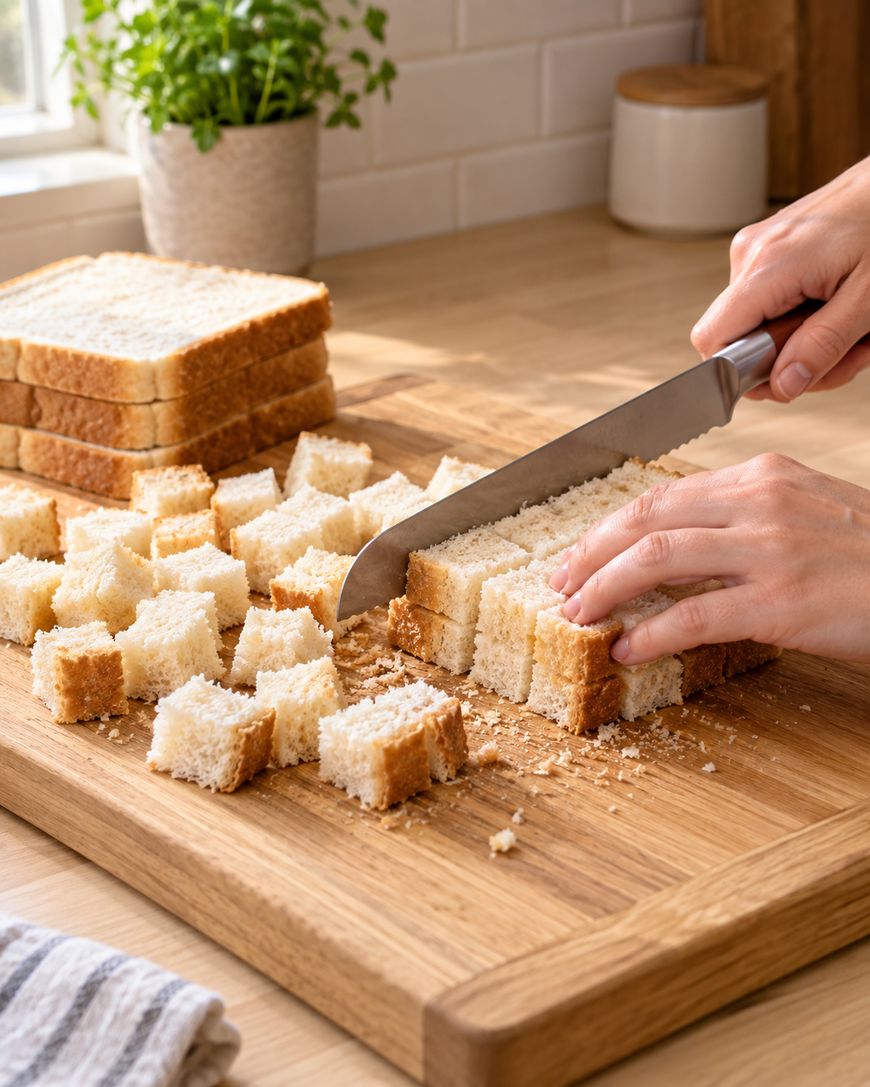
Cubes of similar size dry at the same rate, so take a minute to keep them fairly even. Crowded cubes steam instead of drying, so use a second pan if your sheet looks packed.
Bake Until Dry and Crisp
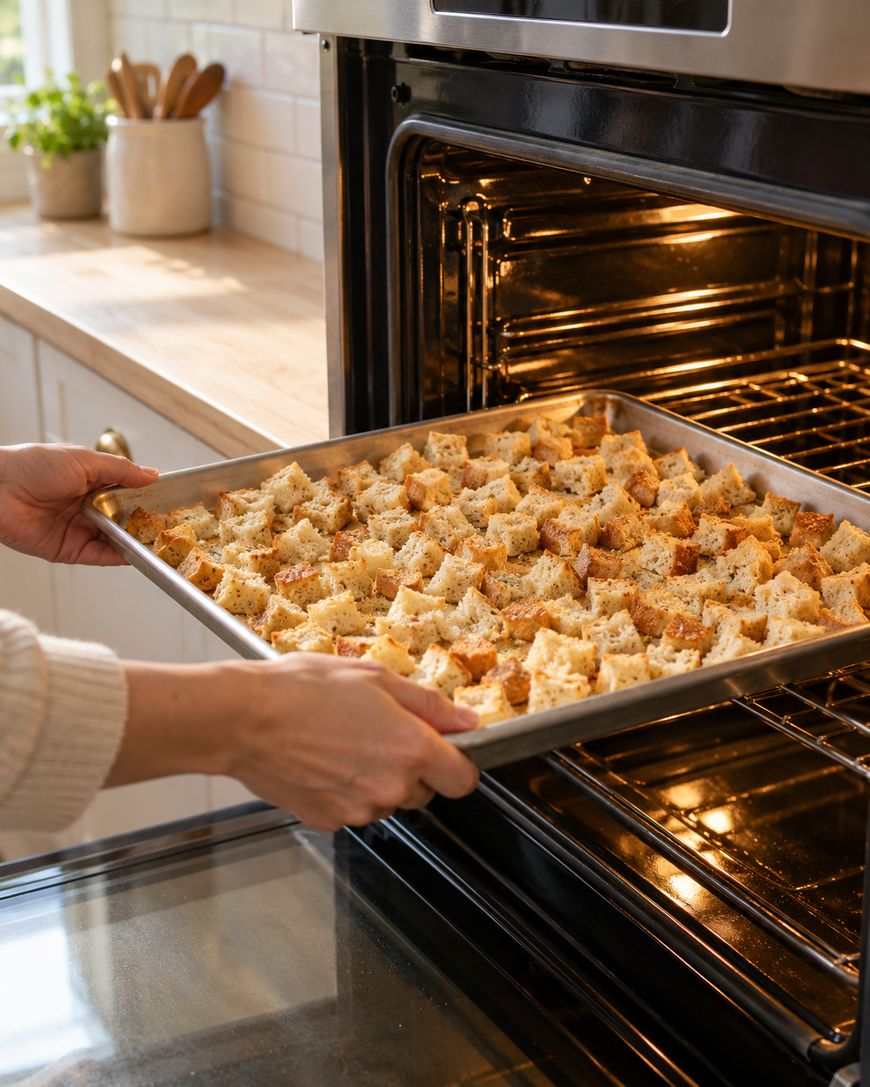
Bake the cubes for 15 to 20 minutes, stirring once at the 10-minute mark. They are ready when they feel dry, snap cleanly when you break one, and look pale golden rather than browned.

A low oven is the secret here. The goal is to remove moisture, not to toast the bread, because the crumbs will cook again later in your recipe.
Cool Completely
Let the cubes cool on the pan for 15 minutes before you touch the food processor. Warm bread releases steam, and steam turns crumbs gummy and shortens their shelf life.
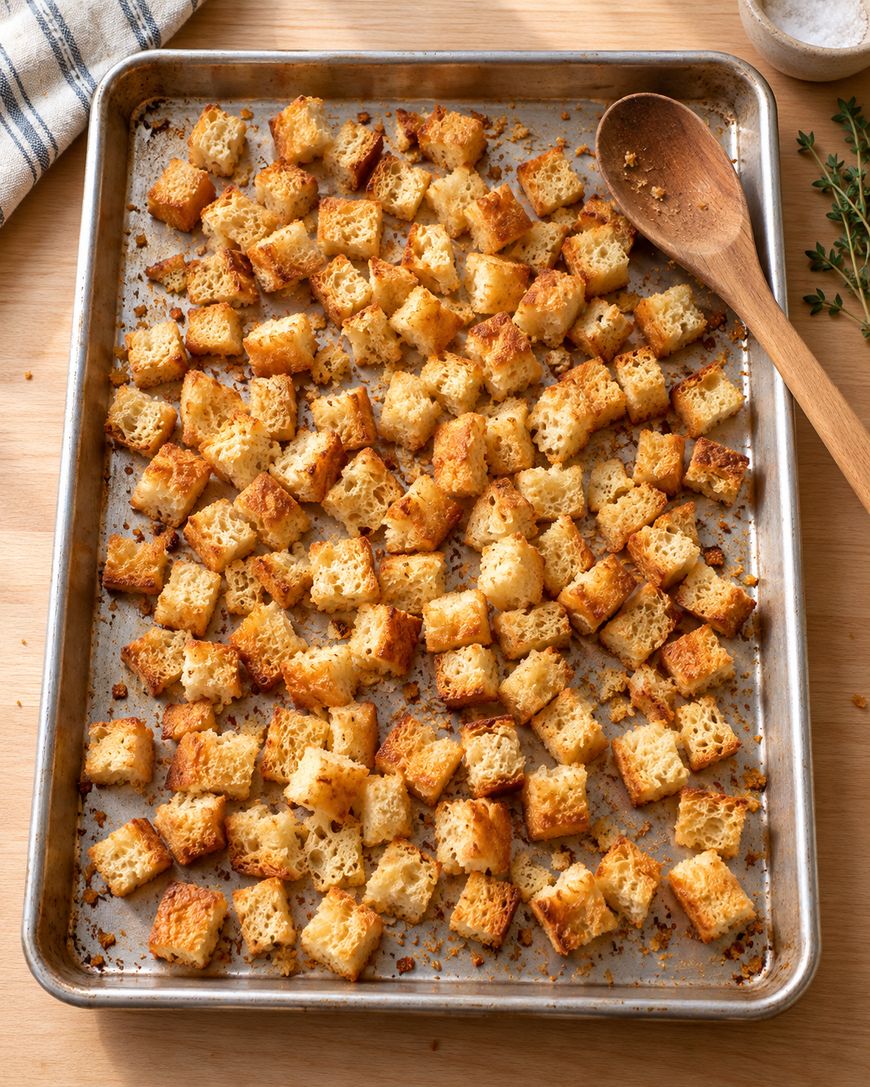
Break a cube in half after cooling to check it. If the center still feels soft, return the pan to the oven for 5 more minutes.
Pulse Into Crumbs
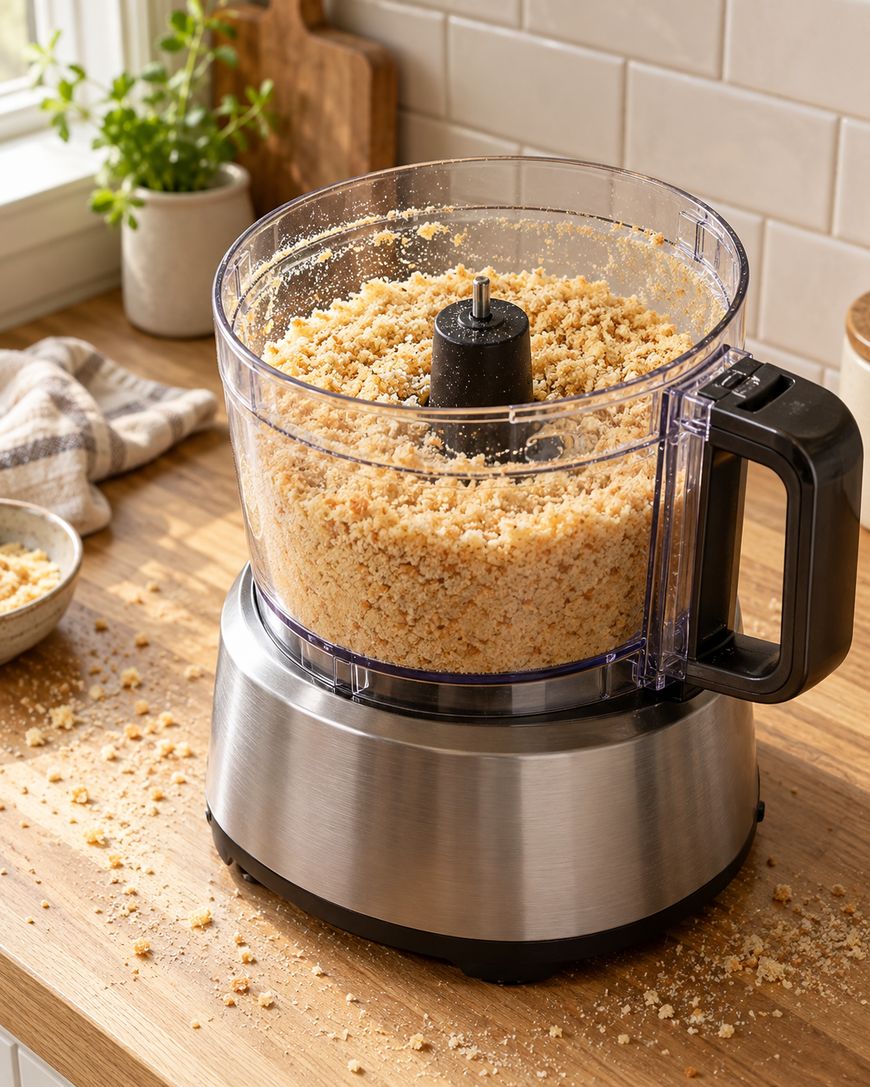
Add the cooled cubes to a food processor and pulse for 20 to 30 seconds, shaking the bowl once or twice, until the crumbs look fine and even. If you are making seasoned crumbs, stir in the Italian seasoning and garlic powder now.
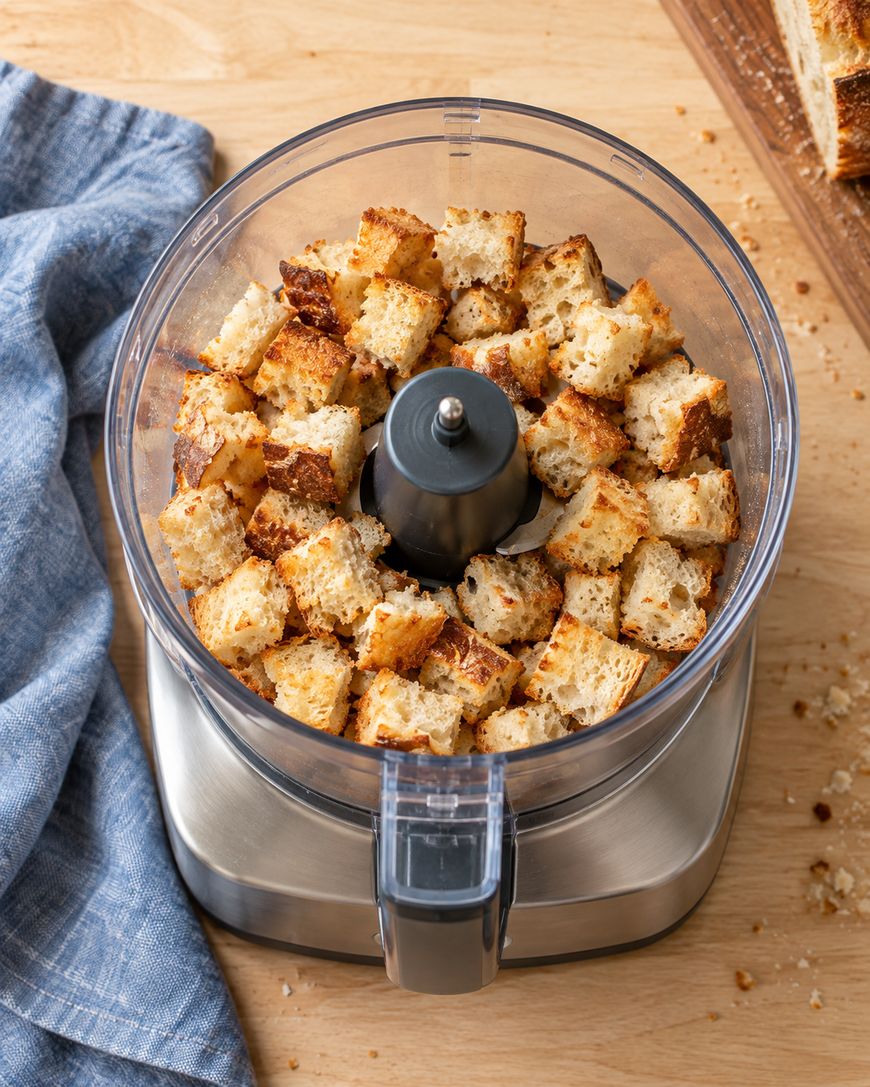
Work in two batches if your processor is small. An overfilled bowl leaves big chunks on top and powder on the bottom.
Fresh vs Dry Homemade Bread Crumbs
Fresh homemade bread crumbs are soft and moist, while dry homemade bread crumbs are crisp and fine. Both are useful, and you can make either one from the same loaf.

For fresh crumbs, tear fresh bread into pieces and pulse it for 10 to 15 seconds with no baking at all. Each slice makes roughly half a cup of soft crumbs.
Use fresh crumbs to bind meatballs and meatloaf, or to make a tender topping for baked fish. Dry crumbs are better for coating cutlets and for crunchy casserole tops.
Tips, Variations, and Substitutions
A few small changes let you match the crumbs to whatever you are cooking. Each one uses the same basic method as the recipe card.
Coarse Panko-Style Crumbs
Pulse the cooled cubes in 8 to 10 short bursts instead of running the processor continuously. The crumbs stay larger and flakier, which gives you a crisper coating on fried and baked foods.
Gluten-Free Crumbs
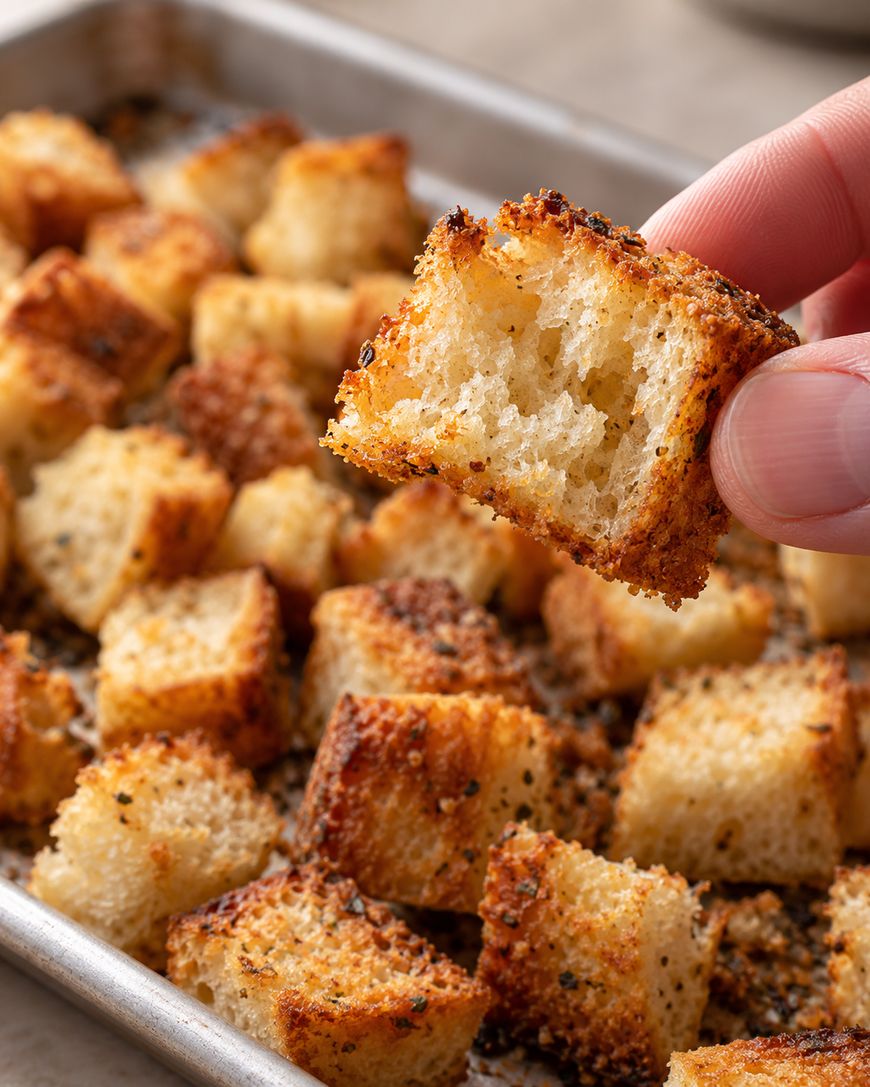
Swap in gluten-free sandwich bread and follow the same steps. The card is written for regular bread, so treat this as a variation and start checking the pan at 10 minutes, since some gluten-free slices dry faster.
No Food Processor
Seal the cooled cubes in a zip-top bag and crush them with a rolling pin until they look like crumbs. You can also grate fully dried slices on the small holes of a box grater.
Adding Cheese
Grated Parmesan makes seasoned crumbs taste like a restaurant coating. The card leaves cheese out, so stir it in just before cooking rather than storing it in the batch.
Storing and Freezing Homemade Bread Crumbs
Store dry homemade bread crumbs in an airtight jar in a cool, dark pantry for up to 1 month. For longer storage, freeze them in a zip-top bag or freezer-safe container for up to 6 months.
Fresh crumbs belong in the freezer. Spread them flat in a zip-top bag, press out the air, and use them within 3 months.
Make sure dry crumbs are completely cool before you seal them, because trapped moisture can lead to mold. If a batch ever smells musty or shows any spots, throw it away.
Ways to Use Homemade Bread Crumbs
Homemade bread crumbs work anywhere you want crunch, structure, or a little extra body. Use them to coat chicken cutlets, eggplant slices, and pork chops before frying or baking.
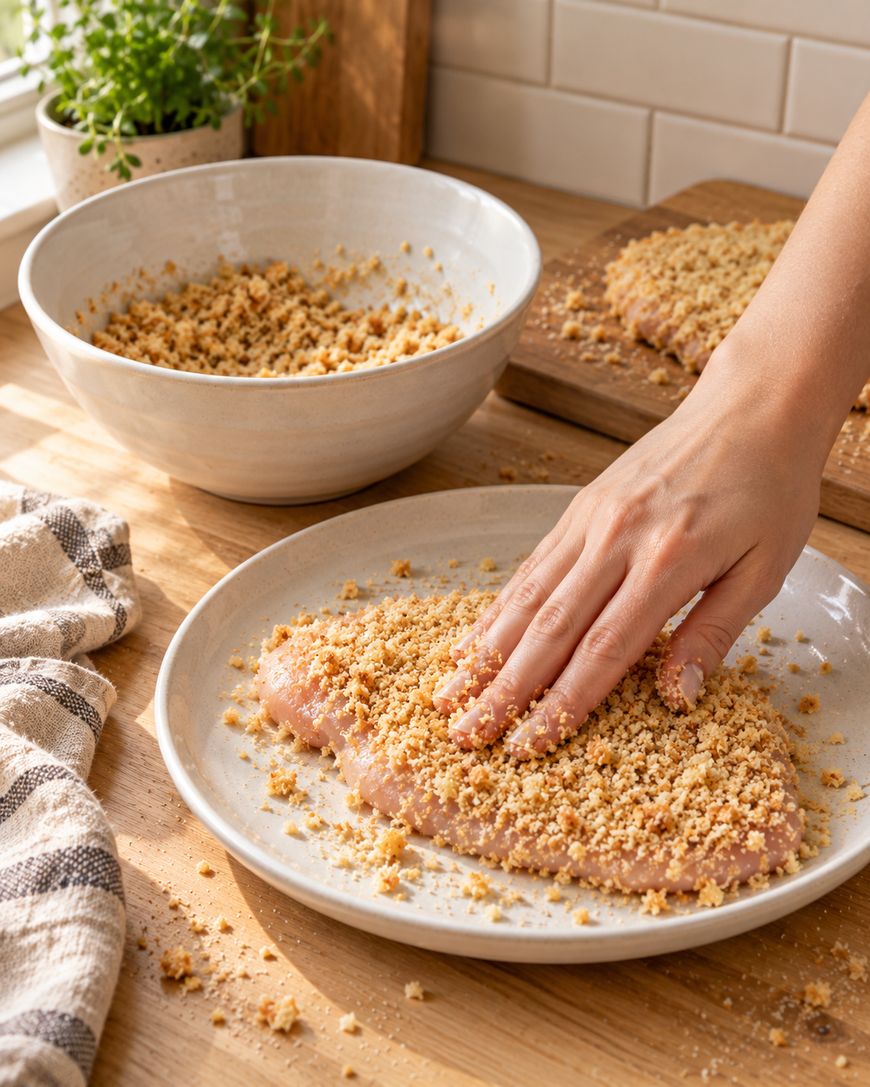
They also bind meatballs, meatloaf, and crab cakes, and they turn crunchy on top of macaroni and cheese, baked pasta, and vegetable casseroles. Toasted in butter, they become the classic finishing touch for green beans and roasted broccoli.
Where Bread Crumbs Come From
Bread crumbs began as a thrifty solution for stale bread in home kitchens across Europe. In Italy, cooks toast crumbs in olive oil and scatter them over pasta as pangrattato, a dish sometimes nicknamed poor man’s Parmesan.
French cooks call breadcrumbs chapelure and use them for gratins and coatings. Japanese cooks developed panko, a light, airy crumb made from crustless white bread that has become a staple in American kitchens.
Ready to make a batch? Use the recipe card below for the full ingredient list, steps, and nutrition details.
Homemade Bread Crumbs
Crisp, golden homemade bread crumbs made from day-old bread in a low oven. Use them plain or add Italian seasoning for cutlets, meatballs, and casserole toppings.
Ingredients
- 8 slices day-old sandwich bread (about 8 ounces)
- 2 teaspoons dried Italian seasoning (optional)
- 1 teaspoon garlic powder (optional)
Instructions
- Heat the oven to 300°F and set a rack in the center.
- Cut the bread into 1-inch cubes and spread them in a single layer on a rimmed baking sheet.
- Bake for 15 to 20 minutes, stirring once at the 10-minute mark, until the cubes are dry, crisp, and pale golden.
- Cool the cubes on the pan for 15 minutes.
- Pulse the cooled cubes in a food processor for 20 to 30 seconds until fine crumbs form.
- Stir in the Italian seasoning and garlic powder if using.
- Store in an airtight container.
Notes
Dry crumbs keep in an airtight jar in the pantry for up to 1 month or in the freezer for up to 6 months. For fresh crumbs, skip the baking, pulse torn fresh bread for 10 to 15 seconds, and freeze for up to 3 months. For panko-style crumbs, use 8 to 10 short pulses. For gluten-free crumbs, use gluten-free sandwich bread and start checking at 10 minutes.
Nutrition Information:
Yield:
8Serving Size:
1/4 cupAmount Per Serving: Calories: 80Total Fat: 1gSaturated Fat: 0gSodium: 150mgCarbohydrates: 15gFiber: 1gSugar: 1gProtein: 3g
Homemade Bread Crumbs Q&A
Can I use fresh bread instead of stale bread?
Yes, because the oven does the drying for you. Just bake the cubes until they snap, and skip any waiting around for bread to go stale.
How fine should homemade bread crumbs be?
For coatings and toppings, aim for a fine, even crumb that looks like coarse sand. For a crunchier, flakier texture, use short pulses to keep them larger, as described in the panko-style tip above.
Do I need a food processor?
No. A zip-top bag and a rolling pin work well, and a box grater handles fully dried slices. A blender can also work if you add only a few cubes at a time.
How long do homemade bread crumbs last?
Dry crumbs keep in an airtight jar in the pantry for up to 1 month and in the freezer for up to 6 months. Fresh crumbs keep in the freezer for up to 3 months.
What is the difference between homemade bread crumbs and panko?
Panko is made from crustless white bread and has a lighter, flakier texture. Homemade bread crumbs are usually denser and finer, though the panko-style method above gets you close.
Why This Recipe Works
A low 300°F oven dries the bread without browning it. That keeps the crumbs pale and neutral, so they brown properly later in the pan or oven instead of burning.
Cutting the bread into 1-inch cubes helps every piece dry at the same speed, and stirring once at the 10-minute mark prevents damp spots. Cooling the cubes for 15 minutes before grinding keeps steam out of the food processor, which is what keeps the crumbs light and dry.
Adding the seasoning after grinding protects the herbs and garlic powder from the oven heat. The ratio is easy to remember too, since each slice of sandwich bread makes about a quarter cup of dry crumbs.
Make Your Homemade Bread Crumbs Today
Homemade bread crumbs cost next to nothing, taste better than the canister on the store shelf, and rescue bread that would otherwise go to waste. Grab those last slices from the bread box, heat the oven to 300°F, and make a batch tonight.
Once you have a jar in the pantry and a bag in the freezer, you will always be ready for crispy cutlets, tender meatballs, and golden casserole tops.