Last updated: September 11, 2026
Homemade pumpkin puree turns a single sugar pumpkin into a silky, deeply flavored base for pies, soups, and breads. A full recipe card with exact measurements and timing sits below this walkthrough.
Why Make Pumpkin Puree From Scratch
Homemade pumpkin puree tastes brighter and less watery than most canned versions found at the grocery store. Sugar pumpkins, sometimes labeled pie pumpkins, hold less water and more natural sweetness than the large carving pumpkins sold for Halloween decorating.
Choosing The Right Pumpkin
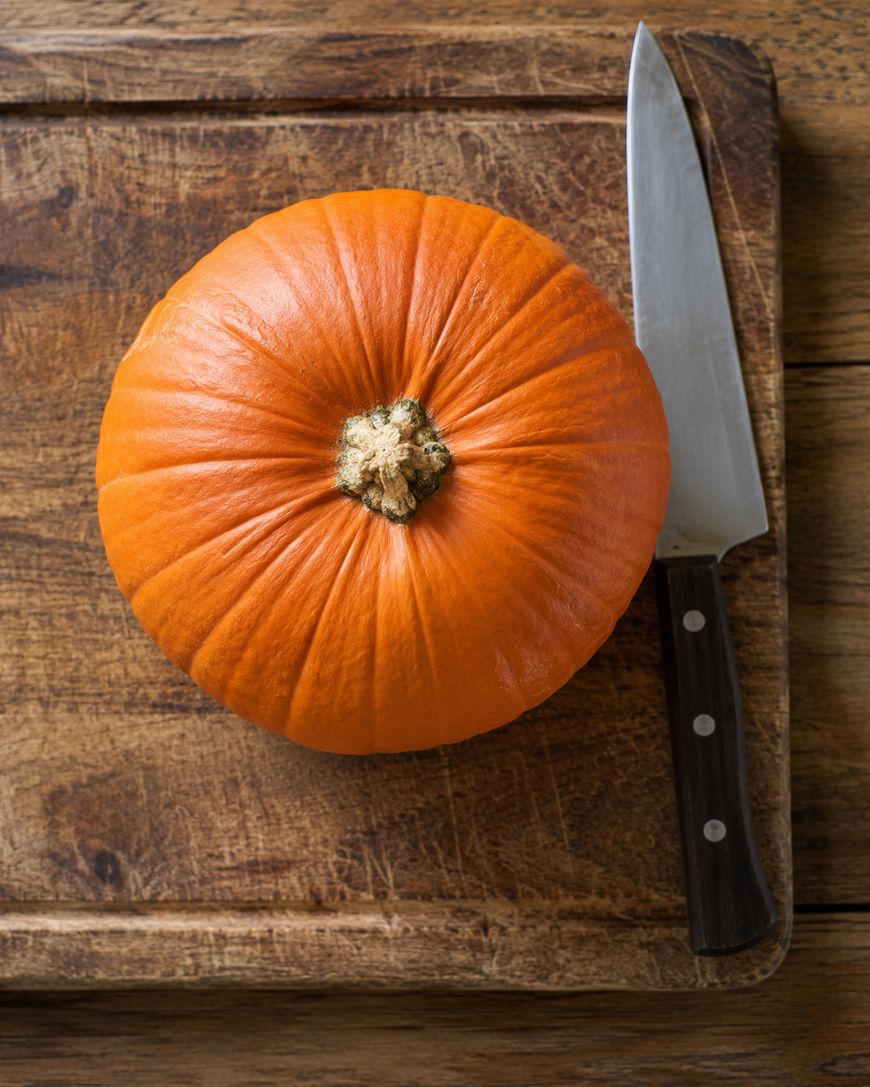
Sugar pumpkins weighing between three and five pounds work best for puree. Look for a pumpkin that feels heavy for its size and has smooth, unblemished skin.
What You Will Need
The ingredient list for this recipe stays short on purpose. A single sugar pumpkin, a small amount of neutral oil, and a pinch of salt are the only true requirements.
Olive oil or melted butter can replace the neutral oil without changing the result. Salt is optional but helps draw out extra moisture during roasting.
How To Roast The Pumpkin
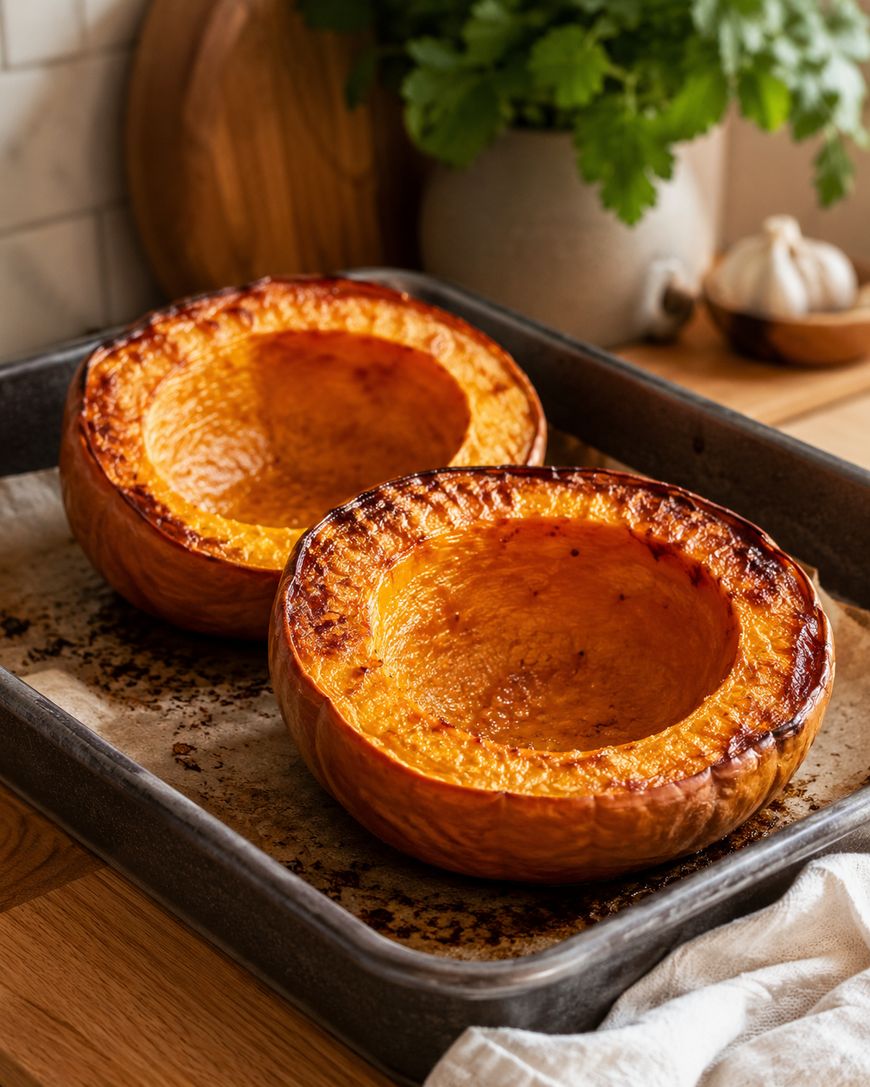
Roasting concentrates the natural sugars in the pumpkin and makes the flesh easy to scoop. This method produces a deeper flavor than boiling or steaming.
Preparing The Pumpkin
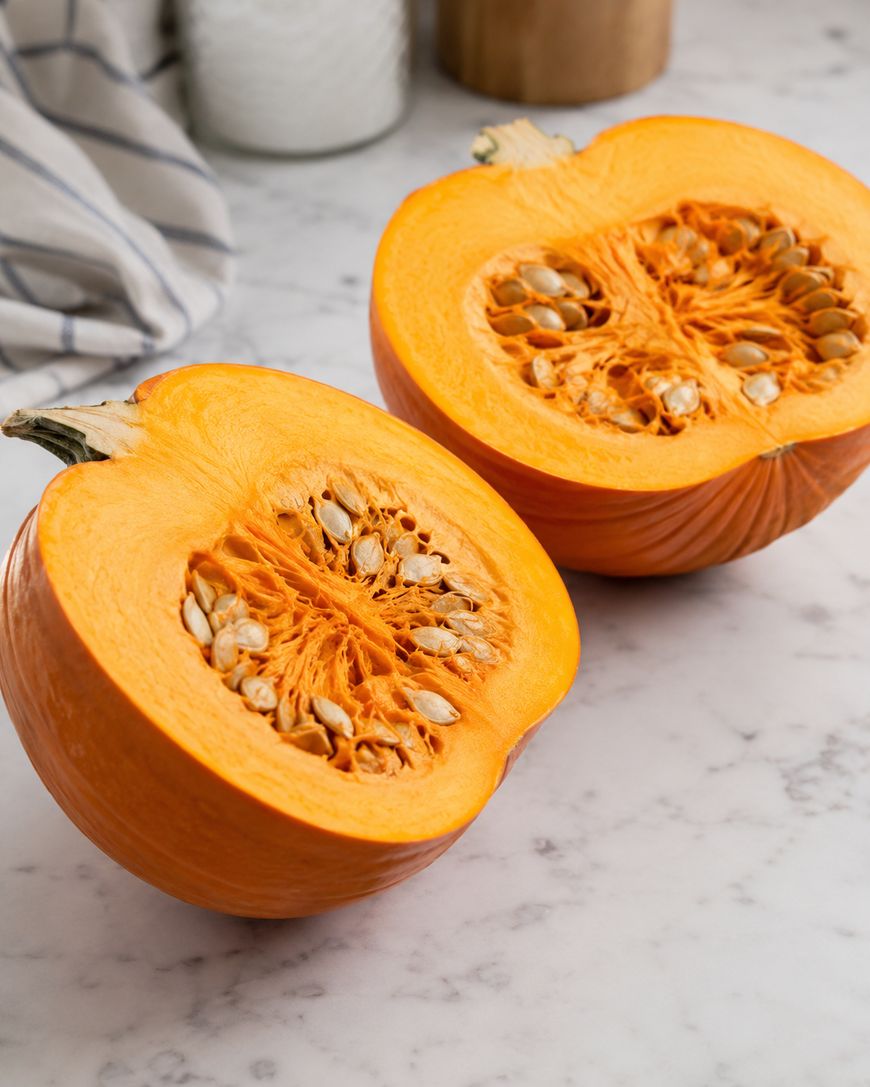
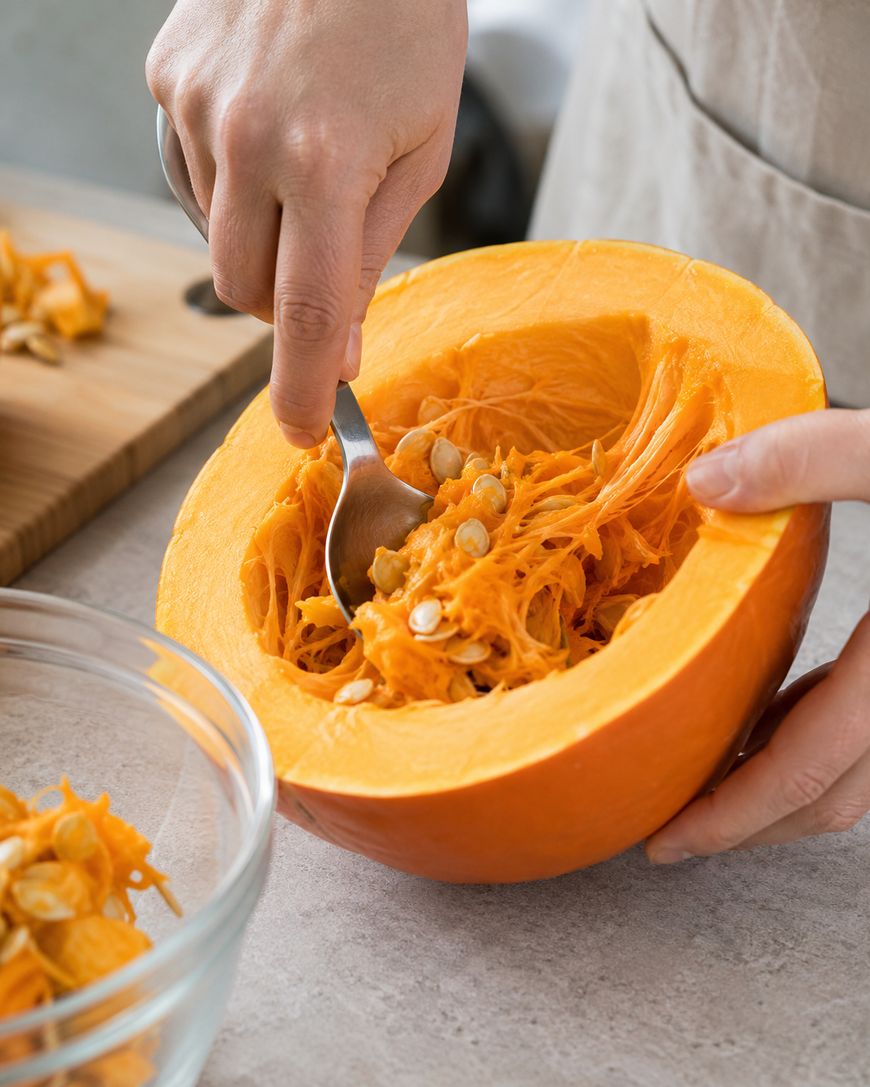
Cut the pumpkin in half through the stem using a sharp, sturdy knife. Scoop out the seeds and stringy pulp with a large metal spoon, then set the seeds aside for roasting separately if desired.
Roasting Time And Temperature
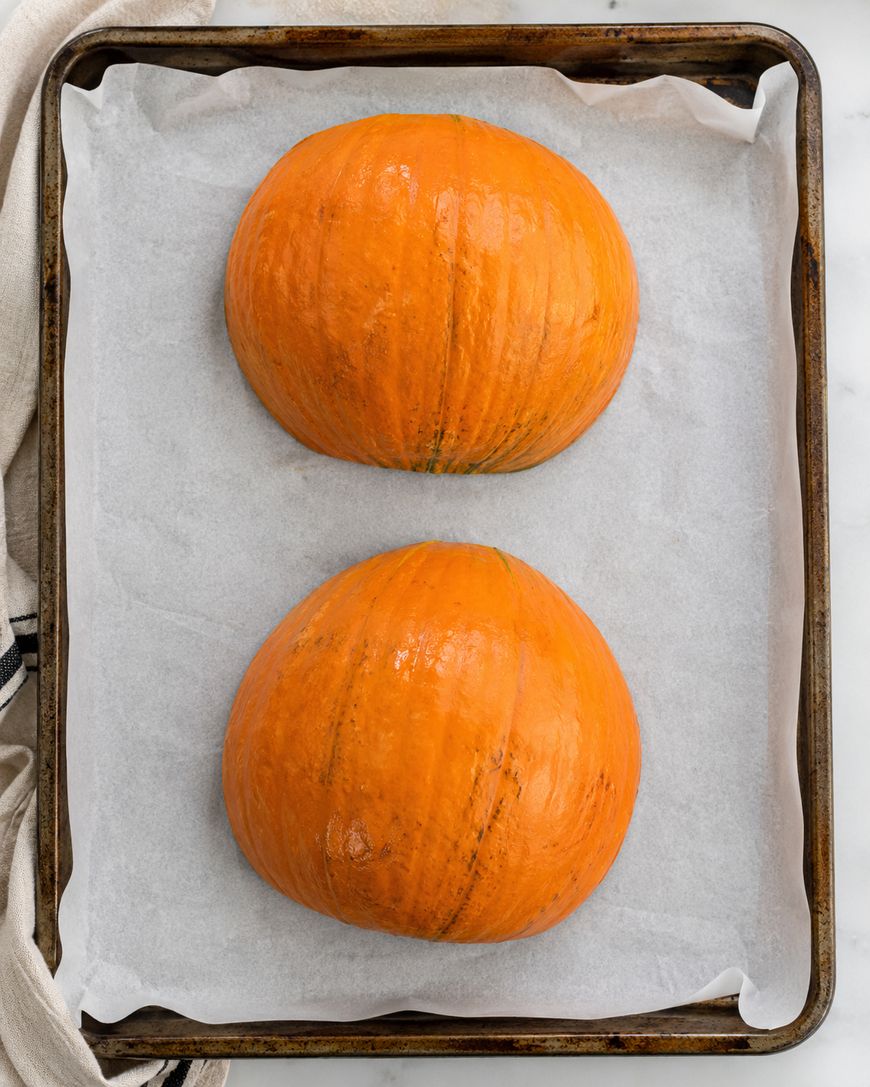
Place the halves cut side down on a parchment lined baking sheet and roast at 400 degrees Fahrenheit. Most sugar pumpkins take between 45 and 60 minutes, and the flesh is ready when a fork slides in with no resistance.
Blending For A Smooth Texture
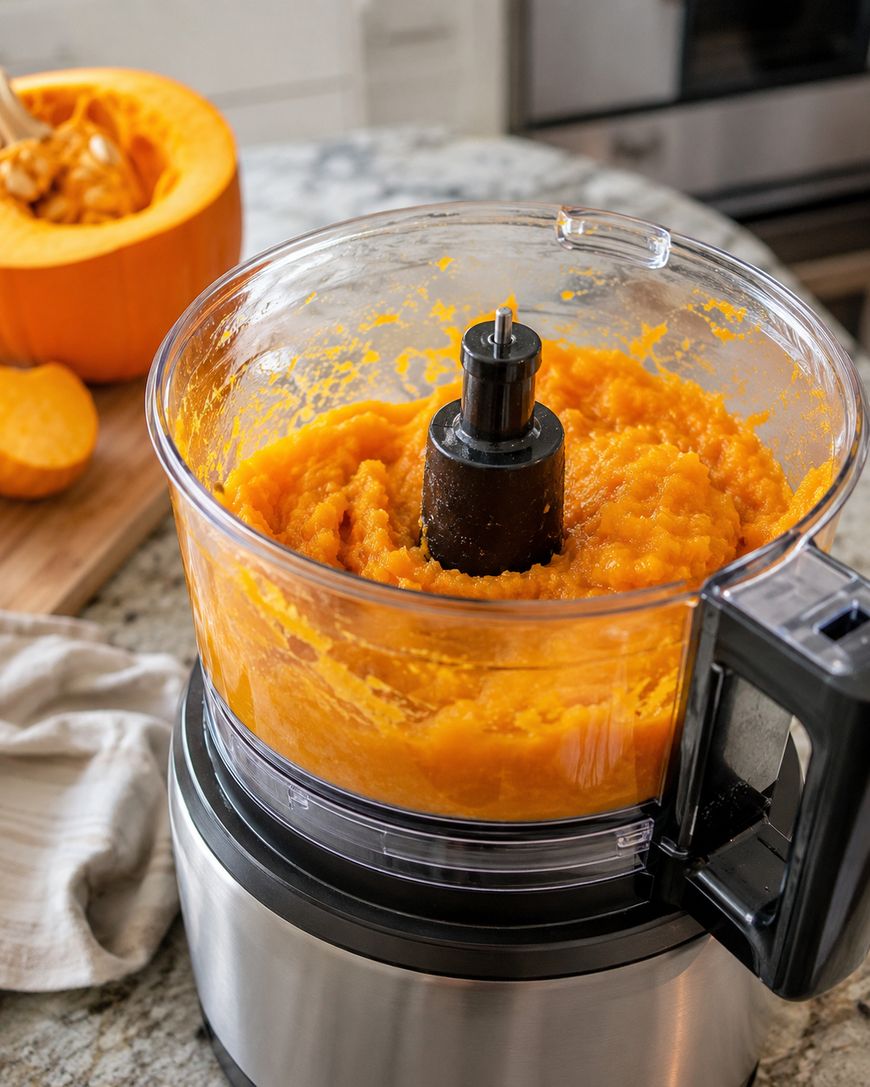
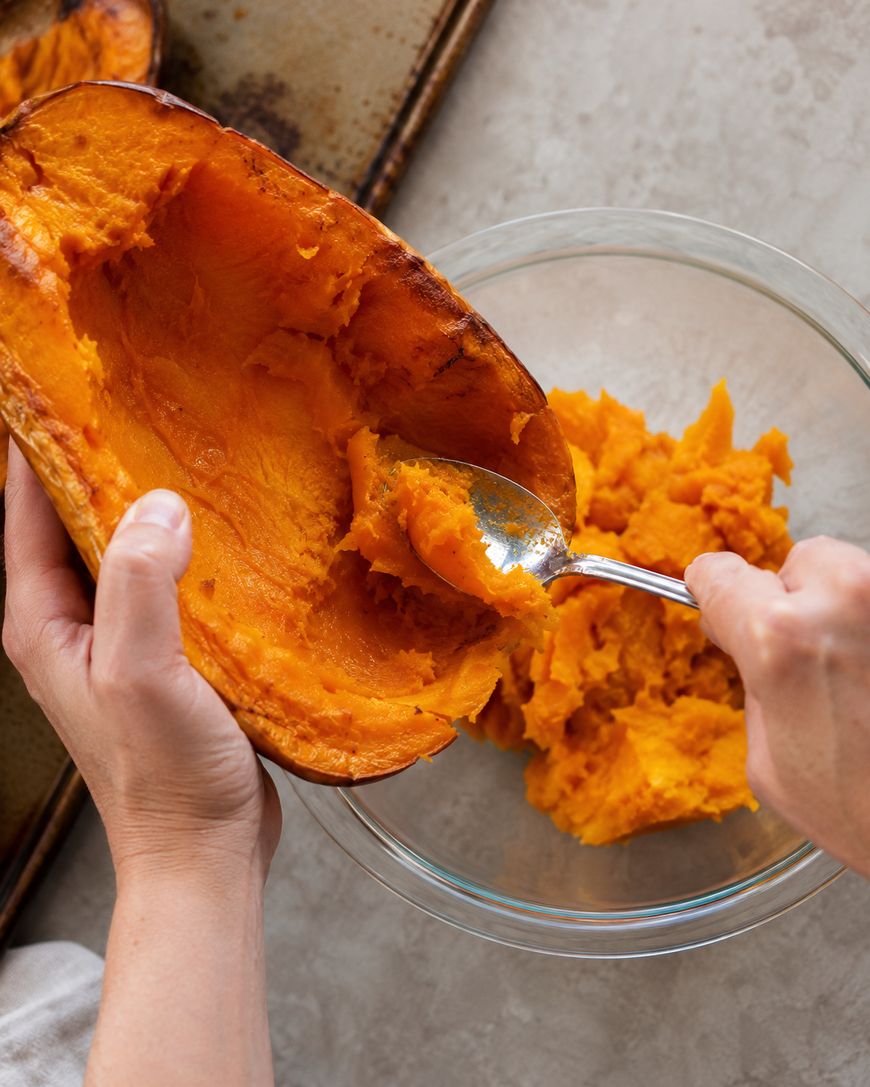
Let the roasted pumpkin cool for about fifteen minutes before scooping the flesh away from the skin. Transfer the flesh to a food processor or blender and puree until completely smooth, scraping down the sides as needed.
Draining Excess Water
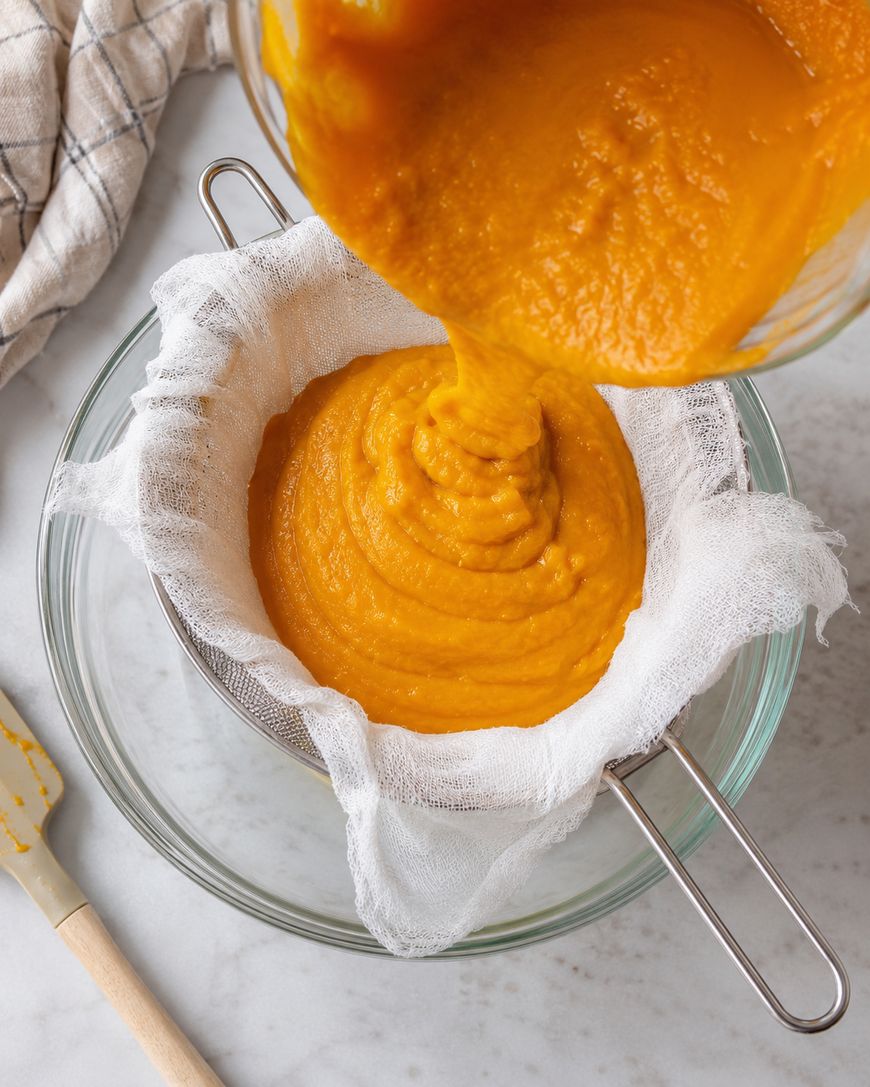
Pumpkin puree often holds more liquid than recipes expect, which can make baked goods dense or soggy. A fine mesh strainer lined with cheesecloth solves this problem effectively.
The Straining Method
Spoon the blended puree into the lined strainer and set it over a bowl in the refrigerator. Letting it drain for one to two hours removes enough liquid for most pie and bread recipes.
Variations And Substitutions
Butternut squash can replace the pumpkin in this recipe with nearly identical results. Kabocha squash also works well and brings a slightly nuttier flavor to the finished puree.
Adjusting For Different Uses
Puree intended for soup can skip the straining step entirely, since extra moisture is welcome there. Puree meant for pie filling benefits from a longer straining time to achieve a firmer set.
Storing Homemade Pumpkin Puree
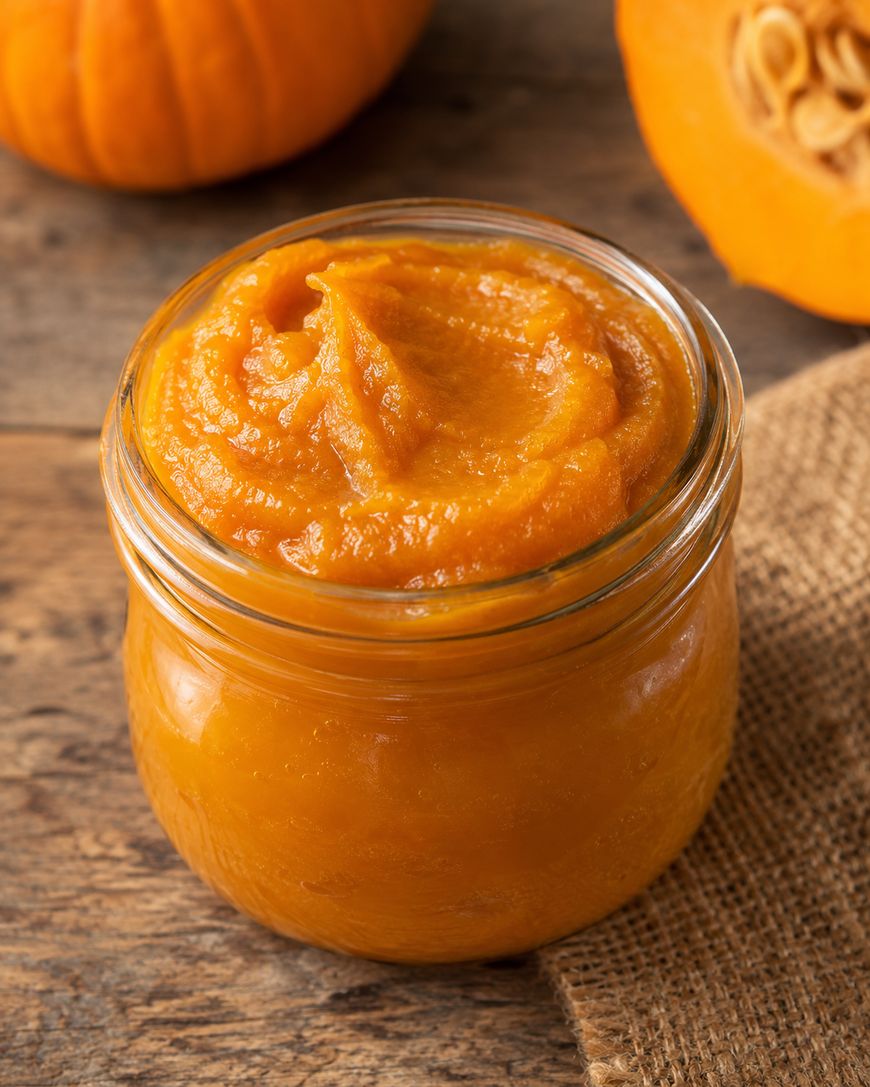
Homemade pumpkin puree keeps well in the refrigerator for 3 to 4 days when stored in an airtight container. Freezing extends its life significantly and makes it easy to have on hand throughout the fall and winter months.
Freezing Instructions
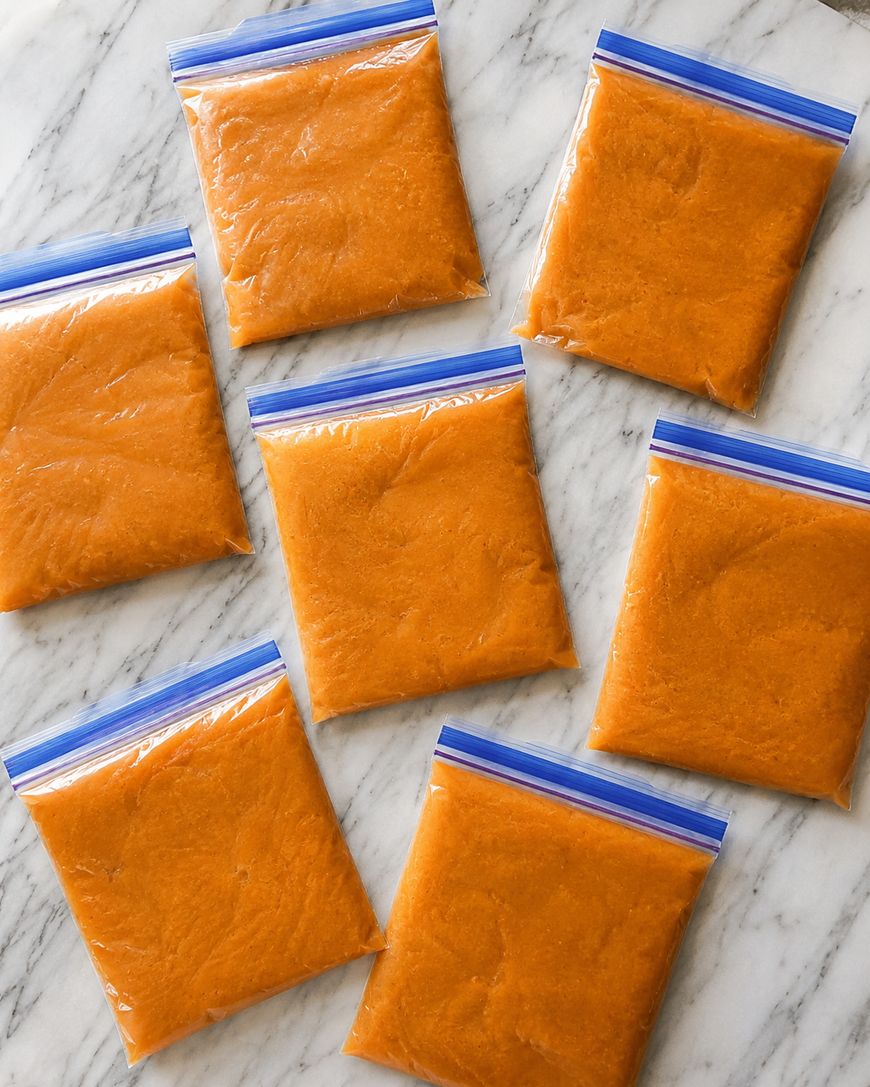
Portion the cooled puree into one or two cup amounts using freezer safe bags or containers. Flattening the bags before freezing saves space and allows the puree to thaw more quickly when needed.
Serving Suggestions
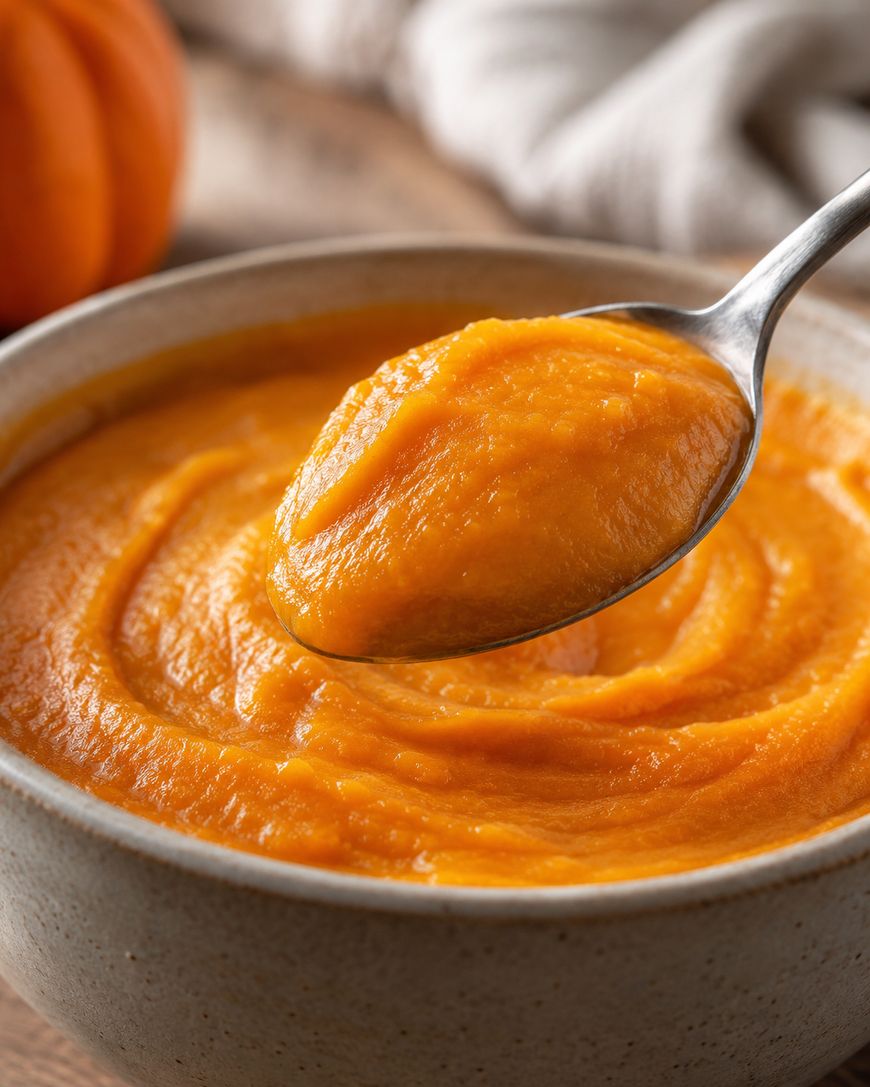
Homemade pumpkin puree fits naturally into pies, muffins, pancakes, and quick breads. It also stirs easily into oatmeal, soups, and even pasta sauces for a subtle sweetness and boost of color.
Pairing Ideas
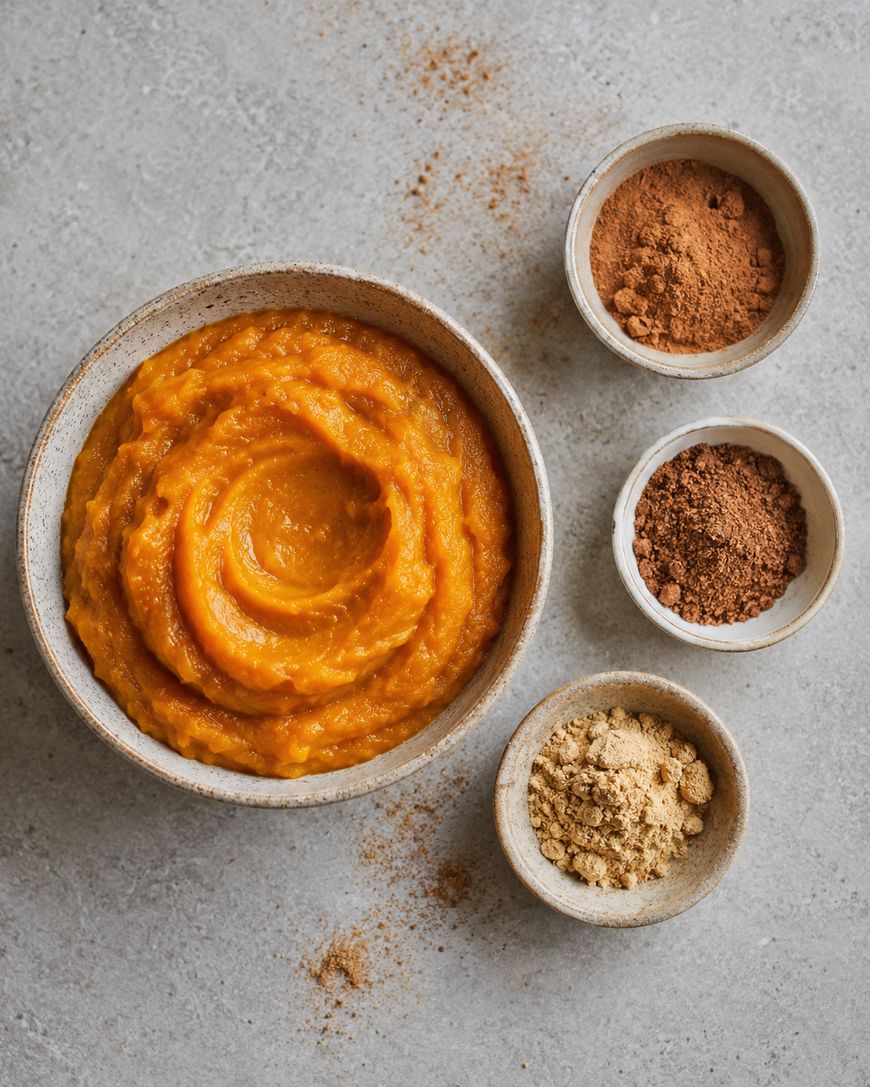
Cinnamon, nutmeg, and ginger complement the natural flavor of the puree in baked goods. For savory dishes, sage and brown butter bring out its earthier notes.
The Background Of Pumpkin Puree
Pumpkins are native to North America and have been cultivated for thousands of years. Canned pumpkin puree became widely available in the United States in the early twentieth century, though home cooks continued making their own version fresh each fall.
Try the full recipe card below for exact measurements and step by step timing.
Homemade Pumpkin Puree
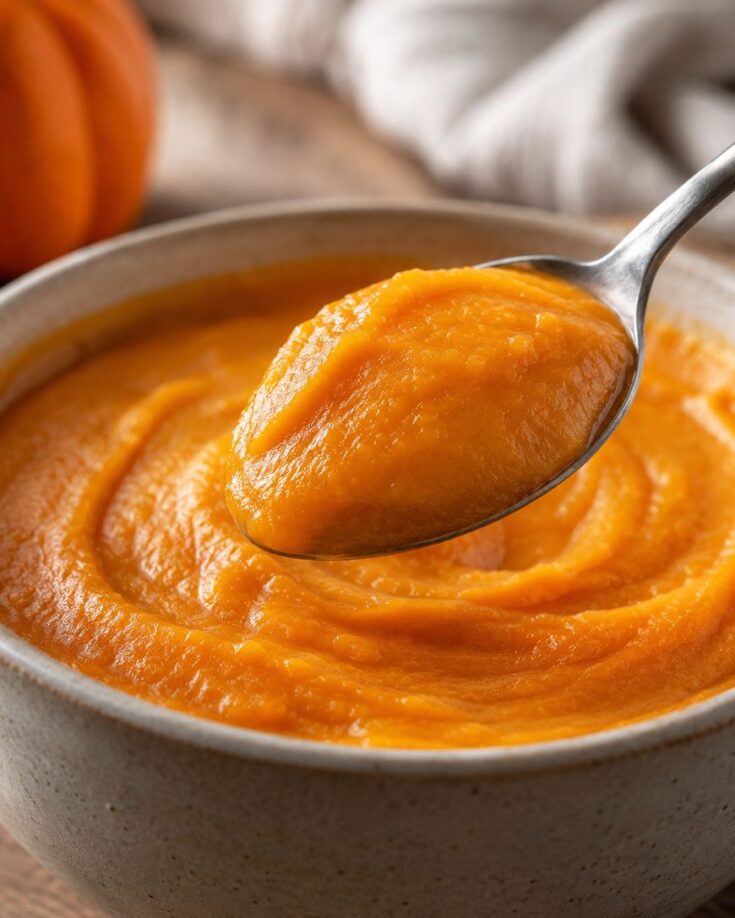
Homemade pumpkin puree brings a rich, natural sweetness to pies, breads, and soups that canned versions cannot match. Roasting a sugar pumpkin and straining the puree gives a smooth, ready-to-use base for all your fall baking.
Ingredients
- 1 sugar pumpkin (3 to 5 pounds)
- 1 tablespoon neutral oil
- 1/4 teaspoon salt
Instructions
- Preheat oven to 400 degrees Fahrenheit and line a baking sheet with parchment paper.
- Cut the pumpkin in half through the stem and scoop out the seeds and pulp.
- Rub the cut sides with oil and sprinkle with salt.
- Place halves cut side down on the prepared baking sheet.
- Roast for 45 to 60 minutes, until a fork slides easily into the flesh.
- Let the pumpkin cool for 15 minutes, then scoop the flesh away from the skin.
- Puree the flesh in a food processor or blender until smooth.
- Line a fine mesh strainer with cheesecloth and set over a bowl.
- Transfer the puree to the strainer and refrigerate for 1 to 2 hours to drain excess liquid.
- Transfer the finished puree to an airtight container and refrigerate or freeze.
Notes
For a smoother texture, blend in short bursts and scrape down the sides frequently.
Nutrition Information:
Yield:
6Serving Size:
1/2 cupAmount Per Serving: Calories: 42Total Fat: 1gSaturated Fat: 0gSodium: 75mgCarbohydrates: 9gFiber: 2gSugar: 4gProtein: 1g
This site provides estimated nutritional information. This information comes from online calculators. Although we try to provide accurate nutritional information, these figures are only estimates.
Common Questions About Pumpkin Puree
Can canned pumpkin be substituted in recipes calling for homemade puree?
Canned pumpkin can generally replace homemade puree in equal amounts. The texture may differ slightly since canned pumpkin is often denser and less sweet than fresh.
Why does homemade pumpkin puree taste different from canned?
Sugar pumpkins are bred specifically for flavor and texture, while canned pumpkin sometimes uses a blend of squash varieties. Roasting also develops caramelized notes that boiling cannot replicate.
Is it necessary to peel the pumpkin before roasting?
Peeling is not necessary when roasting halves, since the flesh separates easily from the skin once cooked. This method saves time and reduces the risk of cutting into slippery raw pumpkin.
How can watery pumpkin puree be fixed?
Straining the puree through cheesecloth for one to two hours removes most excess liquid. A dry skillet over low heat can also cook off remaining moisture if a firmer texture is needed quickly.
Can pumpkin seeds be saved and roasted separately?
Pumpkin seeds can be rinsed, dried, tossed with oil and salt, then roasted at 350 degrees Fahrenheit until golden. This turns a byproduct of making puree into a simple snack.
What is the best way to measure homemade puree for recipes?
A standard kitchen scale gives the most accurate measurement, since homemade puree can vary in density. Weighing roughly 15 ounces equals one standard can of store bought pumpkin.
Final Thoughts
Homemade pumpkin puree rewards a small amount of effort with noticeably better flavor in every recipe that calls for it. Once the roasting and straining steps become familiar, making a batch each fall turns into an easy seasonal habit.