Last updated: July 22, 2026
Not every inflatable water slide gets built the same way. Some photographs are beautiful but crumble under actual use, overcrowded birthday parties, brutal summer heat, weekend after weekend of rentals. The difference between a great afternoon and a hospital visit? Knowing what to look for before you buy or rent, it’s that simple.
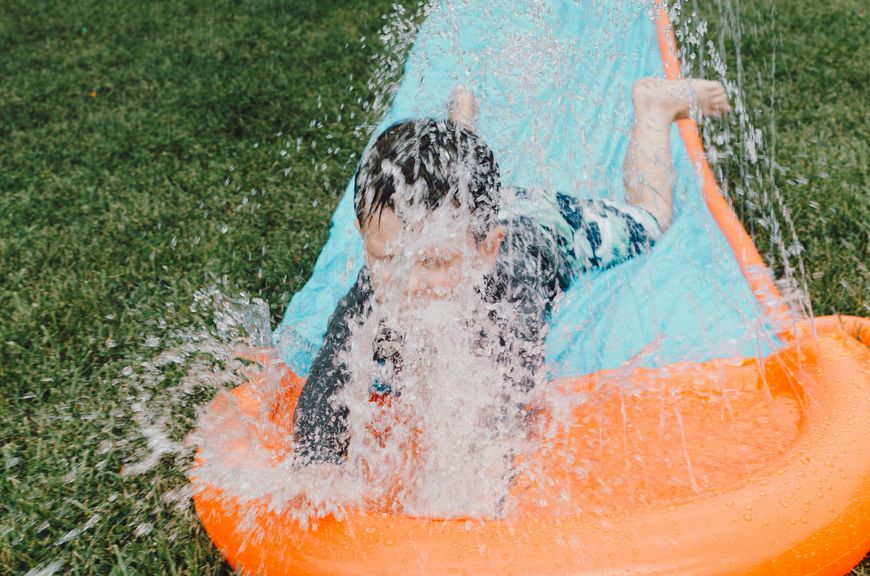
Six specific features directly shape how safe an inflatable water slide actually is, whether you’re a parent throwing a backyard party or a business owner with a fleet of rentals.
Reinforced Seams and Commercial-Grade Material
Material and seam quality determine whether your slide holds up or fails under pressure. You’ll find water slides at EZ Inflatables and similar trusted brands constructed from heavy-duty PVC-coated fabric, the kind that resists tears, UV degradation, and the relentless stress of constant inflation cycles. But seams matter just as much as the outer shell. Double-stitched or heat-welded seams stay airtight much longer than standard single-stitch work, particularly along the climbing wall, the slide surface, and the basin at the bottom.
A thin vinyl slide might look acceptable on day one; by the third or fourth use, weak points start showing. Check for material weight specs (measured in GSM) and seam-to-seam warranties; those warranties tell you the maker actually believes in the build. Here’s the thing: a slide that loses air pressure mid-use isn’t just frustrating; it’s a collapse hazard for anyone on or around it.
Non-Slip Surfaces on Steps and the Slide Entry Point
Wet feet meeting a slick climbing wall accounts for many falls on these slides. Safer designs use textured, non-slip material on the climbing steps and the top platform where kids position themselves before descent. Lower-quality models? They slather the same smooth vinyl everywhere, which stays fine until water touches it, then it becomes a hazard. Better construction incorporates raised ridges, mesh panels, or rubberized grip material along the entire climbing path and transition zone. And don’t forget the splash zone at the bottom. That area floods instantly and stays flooded; a smooth, featureless basin creates an exit fall risk most people overlook.
Non-slip surfaces across all three zones (steps, top platform, splash area) reduce injury odds without needing extra equipment or supervision changes.
Secure Anchor Systems and Ground Stakes
An inflatable water slide that shifts, tilts, or lifts during use puts everyone at risk. Quality slides come with multiple anchor loops around the base perimeter, plus heavy-duty ground stakes or sandbags that work across grass, dirt, or soft surfaces. The number and spacing of anchor points matter significantly. A slide with only two or three corner loops gives far less stability than one with six to eight spaced evenly around the base. Steel tent stakes or anchor sandbags hold firm; thin wire stakes bend and pull out under load. And wind, don’t underestimate it. Even a modest breeze can catch a large inflatable structure and create real lateral force on the frame. An anchor system rated for wind resistance? That’s a safety margin that counts at outdoor events.
Enclosed Side Walls and Safety Netting on the Climbing Section
Open-sided climbing walls look simpler and cost less to make, but they leave climbers exposed at height. A safer design encloses the climbing section with solid inflated walls on both sides and adds safety netting or mesh panels across open gaps. This makes the biggest difference at the top, where kids jostle for position or lose their balance before descent. Enclosed walls give them something solid to brace against. Safety netting across the climbing lane means a child who slips sideways hits the netting instead of the ground, a design choice that genuinely changes the risk profile for younger users. But check the netting material itself; it should be tightly woven with small gaps so a child’s foot or hand can’t slip through. Loose or wide-gauge netting becomes its own entanglement hazard. Look for netting firmly attached at multiple anchor points along the frame, not just pinned at the edges.
Clear Weight and Rider Capacity Ratings
Every commercial inflatable water slide gets tested and rated for maximum rider weight and simultaneous users. Those numbers aren’t arbitrary. Exceeding them stresses the seams, reduces buoyancy in pools, and increases collision injuries when too many kids occupy a space not designed for that volume. A slide that displays weight and capacity ratings directly on the unit makes it simple for supervisors to enforce those limits consistently. Pay attention to recommended age ranges as well. A slide built for kids six to twelve works completely differently from one designed for teenagers or adults, with different geometry, different slide speed, and different platform height. Using a slide outside its intended range often means proportions don’t match the rider, which leads to awkward exits, higher speeds than expected, or unstable positioning at the top. Capacity ratings aren’t suggestions; they’re the structural safety boundary the manufacturer confirmed.
Blower Motor Reliability and Pressure Maintenance
An inflatable slide stays safe only when it stays properly inflated. The blower motor feeding continuous air into the unit is the component most people skip over, but it’s one of the most critical safety features to evaluate. You want a motor that maintains consistent internal pressure throughout the session, even under active rider weight. A correctly sized blower matters; undersized motors cut costs but create problems. Visible softness in walls, sagging at the slide peak, or a pool that loses shape under normal use all signal inadequate pressure; each condition increases fall and entrapment risk. Look for slides with thermal overload protection on the motor, which shuts the blower off before overheating instead of failing mid-event. And if you’re running events regularly, keep a backup or replacement blower on hand; a motor failure mid-session with kids on the slide creates a rapid-deflation situation that’s incredibly hard to manage safely.
Conclusion
The features that keep an inflatable water slide genuinely safe aren’t always the flashy ones. Material quality, seam construction, anchor systems, and motor reliability do far more for day-to-day safety than aesthetics ever will. So before committing to a slide, check those specs directly. Ask manufacturers about seam type, material GSM, anchor point count, and blower sizing. A little upfront due diligence pays dividends every single time the slide goes up.