Last updated: October 8, 2026
Marshmallow fondant is a soft, sweet, three-ingredient dough that rolls out like pie crust and covers a cake without tearing. The full recipe card sits below, and everything you need to get it right is walked through in the sections ahead.
What Marshmallow Fondant Is and Why Bakers Love It
Marshmallow fondant is a homemade cake covering made by melting marshmallows with a little water and kneading in powdered sugar until the mixture becomes a smooth, pliable dough. It costs a fraction of what store-bought rolled fondant does, and it tastes like vanilla marshmallow instead of sweet cardboard.

Home bakers have leaned on this version for years because it needs no corn syrup, no glycerin, and no candy thermometer. If you can run a microwave and knead dough, you can make it.
Marshmallow Fondant Versus Store-Bought Fondant
Store-bought rolled fondant from brands like Satin Ice and Wilton is convenient and very stable, but it often has a waxy texture that guests peel off and leave on the plate. Homemade marshmallow fondant is softer and sweeter, so people actually eat it.
The trade-off is that marshmallow fondant is a little stickier and more forgiving than the commercial kind, which means it rewards a light hand and plenty of powdered sugar on the counter. A round two-layer cake or a batch of cupcakes is a friendly place to start.
What You Can Make With It
One batch of this fondant covers a 9 inch two-layer round cake and leaves enough over for a bow, a few flowers, or a banner. It also cuts into clean shapes for cupcake toppers, cookie decorations, and letters.
Because it dries slowly, you have time to work on a design without rushing. Small pieces will firm up on the counter, while a covered cake stays soft enough to slice neatly.
Marshmallow Fondant Ingredients and Tools
You need only a handful of ingredients for marshmallow fondant, and most of them are already in the pantry. The quality of each one matters more than you might expect, because there is nowhere for a stale or lumpy ingredient to hide.
The Ingredients
Start with one 16 ounce bag of fresh mini marshmallows, such as Jet-Puffed. Fresh marshmallows melt smoothly, while older, hardened ones leave stubborn lumps behind.

You also need 2 tablespoons of water, 6 to 7 cups of powdered sugar, and about 1/4 cup of vegetable shortening, such as Crisco, for greasing. A teaspoon of clear vanilla extract is optional, and it keeps the fondant bright white while adding a bakery-style flavor.
The Tools
A large microwave-safe bowl and a silicone spatula do most of the work. A silicone baking mat or a clean countertop gives you room to knead, and a rolling pin handles the final shaping.
Plastic wrap and an airtight container or zip-top bag are essential for the overnight rest. Sifting the powdered sugar through a fine mesh sieve is optional, but it prevents tiny lumps from showing up in the finished fondant.
How to Make Marshmallow Fondant Step by Step
The method is simple, but the order matters. Grease first, melt second, and add the sugar in stages so the dough never gets away from you.
Grease Everything First
Rub a thin coat of shortening over the inside of your mixing bowl, your spatula, your hands, and the work surface before you start. Melted marshmallow sticks to everything it touches, and shortening is the barrier that keeps cleanup easy.

Skipping this step is the most common reason beginners give up halfway through. Spend one minute on it and the rest of the recipe goes smoothly.
Melt the Marshmallows
Put the marshmallows and the 2 tablespoons of water in the greased bowl. Microwave in 30 second bursts, stirring after each one, until the mixture is smooth and fully melted, which takes about 2 minutes in total.
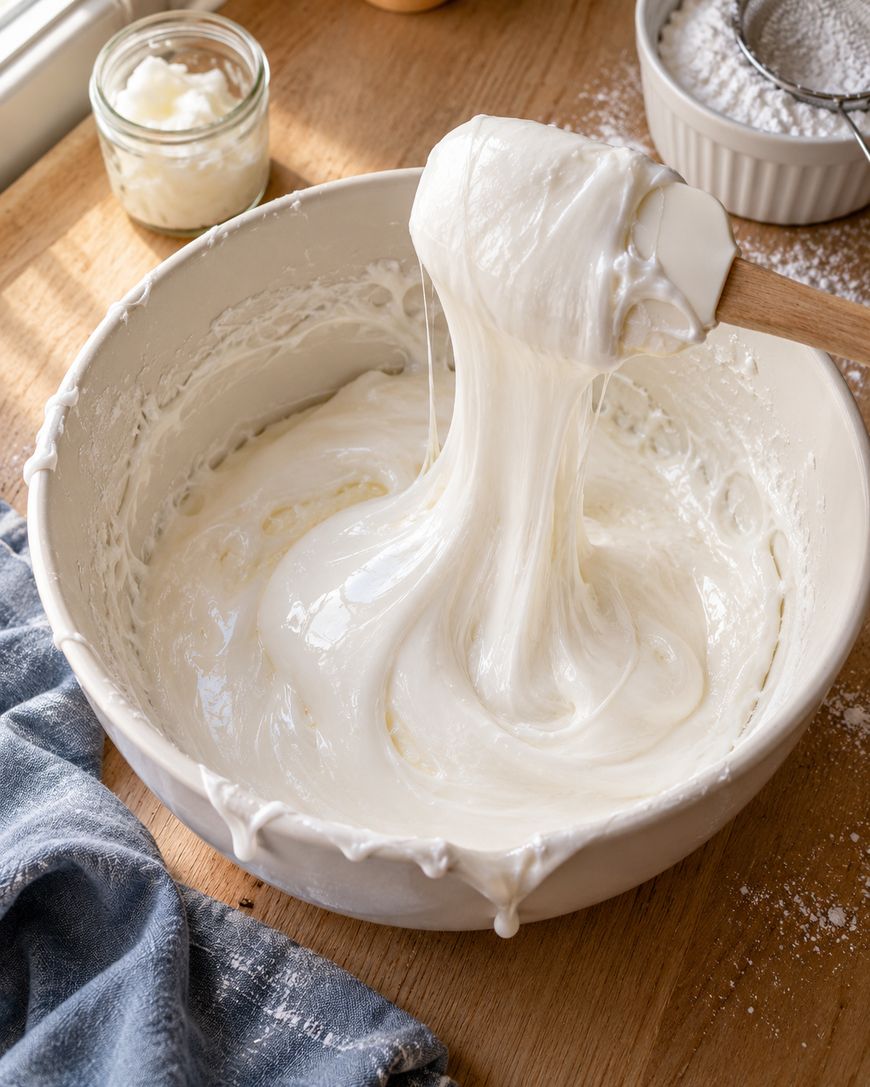
Stir in the vanilla if you are using it. The melted marshmallow is very hot, so let it sit for a moment before you handle the bowl or add the sugar.
Stir In the Powdered Sugar
Add 4 cups of the powdered sugar to the melted marshmallow. Stir with the greased spatula until a thick, sticky dough forms and begins to pull away from the sides of the bowl.

It will look messy and shaggy at this stage, which is exactly right. The rest of the sugar goes in by hand.
Knead Until Smooth
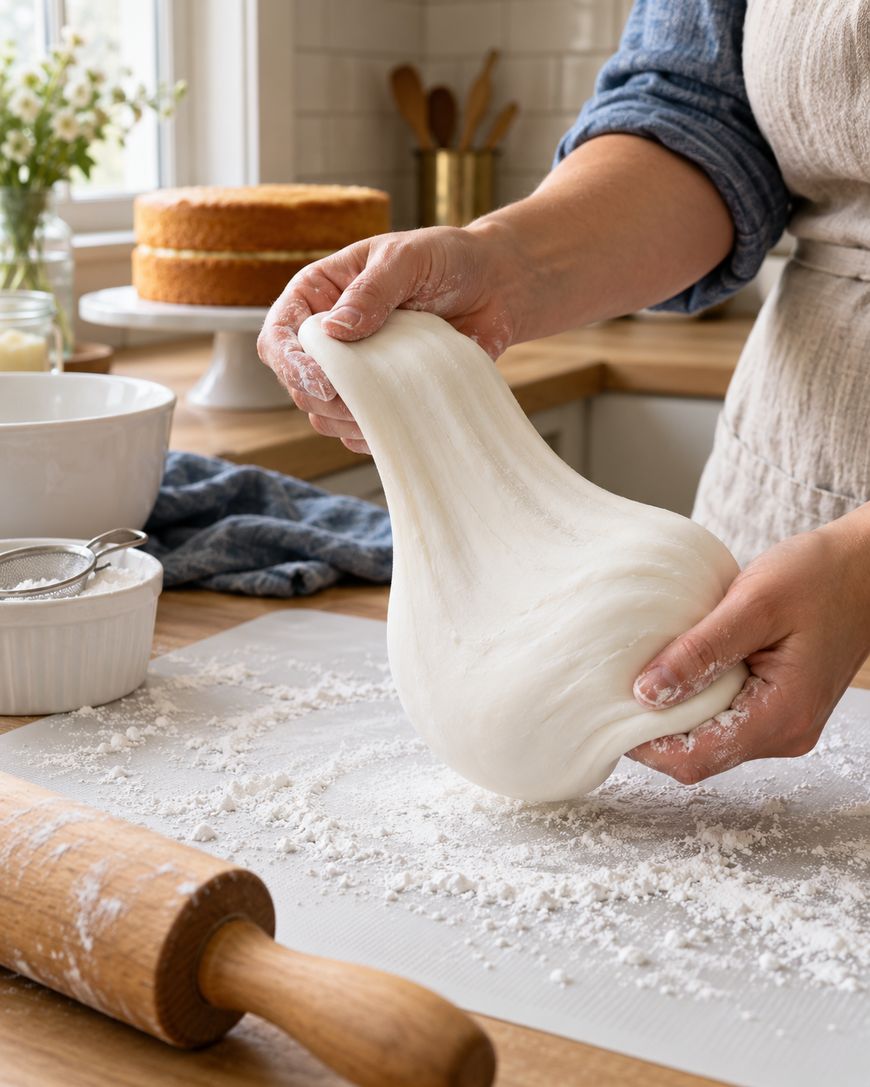
Dust your greased work surface with a little more powdered sugar and scrape the dough out onto it. Knead the dough, adding 2 to 3 more cups of powdered sugar a half cup at a time, until it turns smooth, soft, and no longer sticks to your hands.
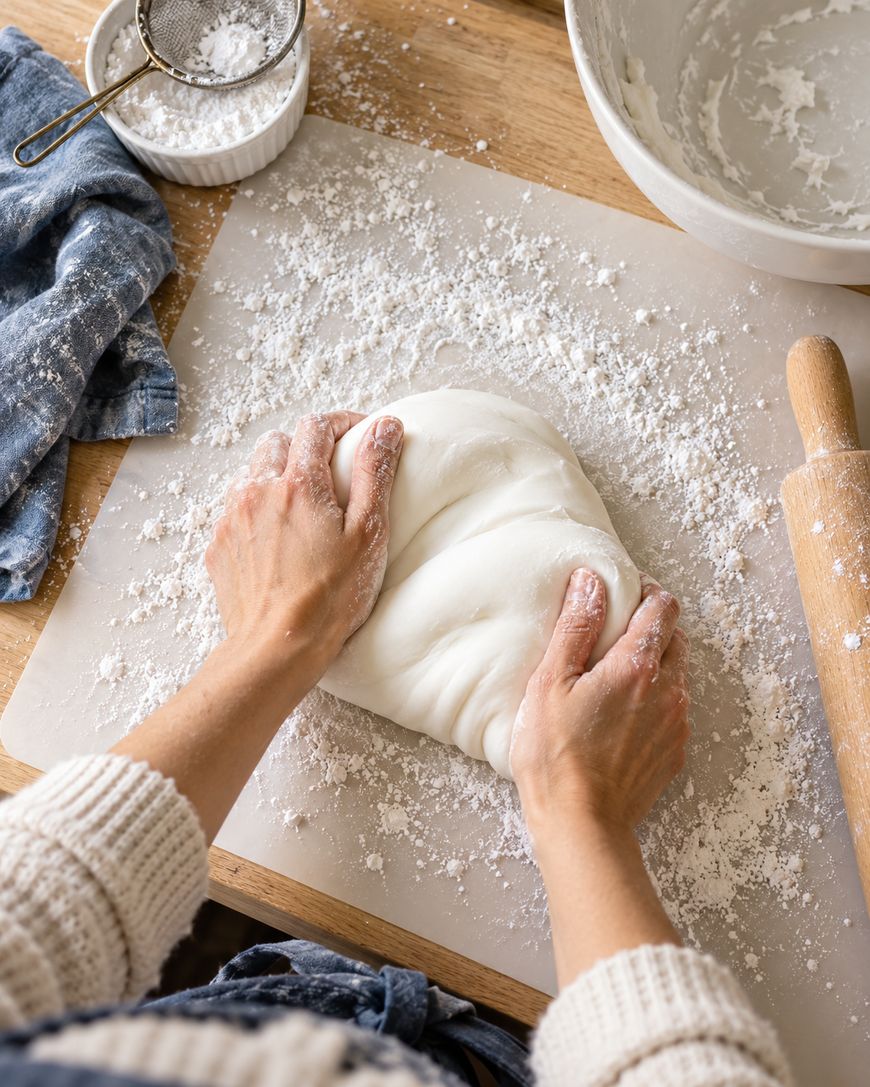
This takes about 5 minutes of kneading. The finished dough should feel like soft modeling clay, with a smooth surface that holds a fingerprint without tearing.
Rest the Fondant Overnight
Coat the finished ball of fondant in a thin layer of shortening, wrap it tightly in plastic wrap, and seal it in an airtight container or zip-top bag. Let it rest at room temperature overnight, for at least 8 hours.

Resting lets the sugar fully absorb the moisture, so the fondant firms up and becomes much less sticky. Skipping the rest leaves you with a dough that tears and smears when you try to roll it.
How to Use Marshmallow Fondant on a Cake
Marshmallow fondant goes over a cake that already has a smooth, thin layer of buttercream, called a crumb coat. The frosting acts as glue, and chilling the cake until the buttercream is firm gives you a stable base for the fondant to rest on.
Roll It Out
Knead the rested fondant for a minute or two until it turns pliable again. Dust a clean surface lightly with powdered sugar and roll the fondant out to about 1/8 inch thick, wide enough to cover the top and sides of the cake, which is usually about 18 inches across for a 9 inch two-layer cake.

Lift and turn the fondant as you roll so it never sticks to the counter. If it starts to cling, add a light dusting of powdered sugar underneath.
Drape, Smooth, and Trim
Roll the fondant loosely over your rolling pin, then unroll it across the cake. Smooth the top first with the flat of your hand, and then work down the sides, easing out any folds as you go.
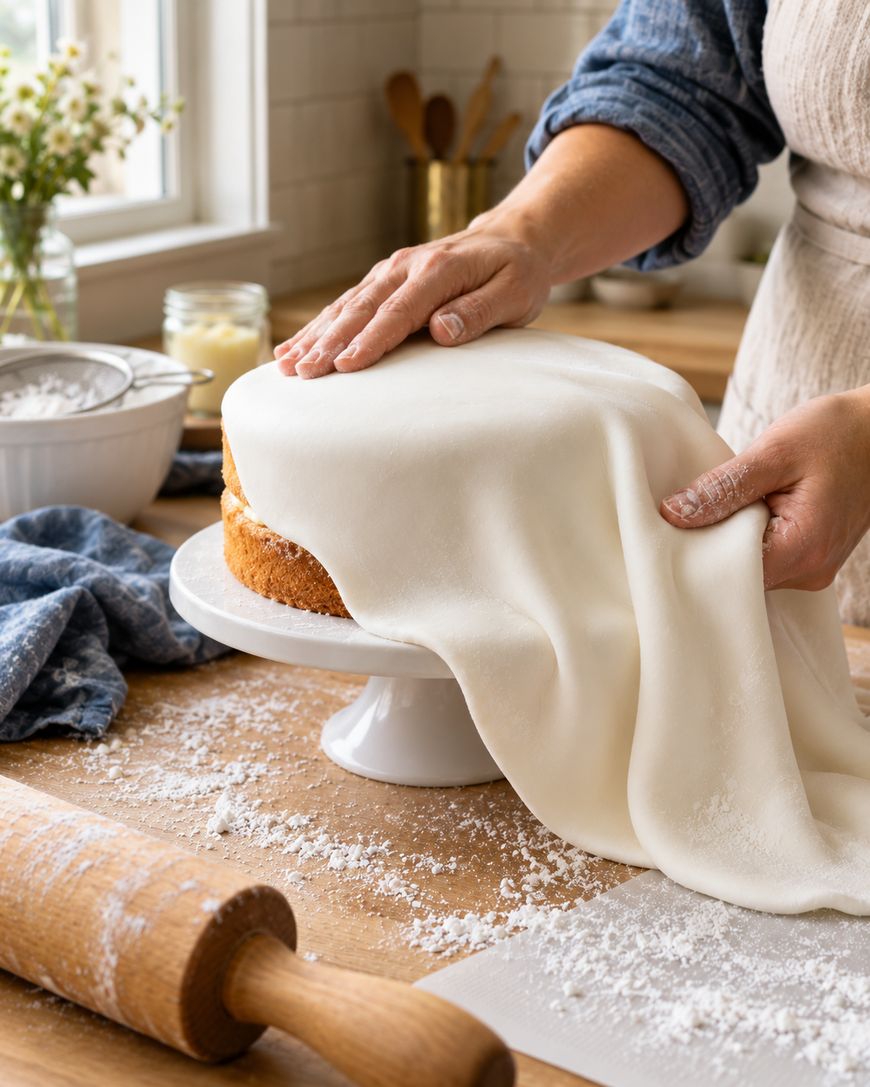
Trim the extra fondant at the base with a sharp knife or pizza cutter. Press the scraps together and save them for decorations, because you can reknead and reroll fondant several times.

Marshmallow Fondant Tips for Color, Flavor, and Troubleshooting
A few small adjustments make marshmallow fondant easier to work with and more fun to customize. Most problems come down to too much or too little powdered sugar.
Coloring Marshmallow Fondant
Gel food colors from brands like Americolor and Wilton work best, because liquid coloring adds extra moisture and makes the dough sticky. Wear gloves, add a small dab of gel color, and knead until the streaks disappear.
Deep shades such as red and black need more color and a little time to develop, so mix them a day ahead when you can. The recipe card leaves coloring out, so treat it as an optional step.
Flavoring Marshmallow Fondant
Clear vanilla is the classic choice because it keeps white fondant truly white. A half teaspoon of almond or lemon extract is a pleasant swap, as long as you add it at the same moment you would add the vanilla.
Fixing Sticky or Dry Fondant
If the fondant sticks to your hands or the counter, knead in more powdered sugar 1 tablespoon at a time. If it feels dry or cracks at the edges, knead in 1/2 teaspoon of shortening at a time until it softens again.
Go slowly with both fixes. A little correction goes a long way, and too much sugar makes fondant stiff and crumbly.
How to Store Marshmallow Fondant
Wrap leftover fondant tightly in plastic wrap, seal it in an airtight container, and keep it at room temperature for up to 2 weeks. For longer storage, freeze it well wrapped for up to 2 months and thaw it at room temperature before kneading.
Skip the refrigerator. Cold fondant collects condensation when it comes back to room temperature, and that moisture turns the surface sticky.
The Story Behind Marshmallow Fondant
The word fondant comes from the French verb fondre, which means to melt, and traditional rolled fondant is a cooked sugar paste that comes from European pastry kitchens. Making it the classic way takes a candy thermometer, careful timing, and a fair amount of patience.
Marshmallow fondant is the shortcut that home bakers adopted to skip all of that. Marshmallows already contain sugar, corn syrup, and gelatin, so they supply the stretch and structure that a cooked syrup normally provides.
Marshmallow Fondant Recipe Card
Use the recipe card below for the full ingredient list, step-by-step instructions, and notes whenever you are ready to bake.
Marshmallow Fondant
Soft, smooth marshmallow fondant made with mini marshmallows and powdered sugar. It rolls easily, drapes over cakes without tearing, and tastes better than store-bought.
Ingredients
- 1 (16 ounce) bag mini marshmallows
- 2 tablespoons water
- 1 teaspoon clear vanilla extract (optional)
- 6 to 7 cups powdered sugar, divided, plus more for dusting
- 1/4 cup vegetable shortening, for greasing
Instructions
- Grease a large microwave-safe bowl, a silicone spatula, your hands, and your work surface with vegetable shortening.
- Add the mini marshmallows and water to the bowl. Microwave in 30 second intervals, stirring after each, until smooth and fully melted, about 2 minutes total.
- Stir in the clear vanilla extract, if using.
- Add 4 cups of the powdered sugar and stir until a thick, sticky dough forms and pulls away from the sides of the bowl.
- Scrape the dough onto the greased work surface dusted with powdered sugar. Knead for about 5 minutes, adding the remaining 2 to 3 cups of powdered sugar a half cup at a time, until the dough is smooth, soft, and no longer sticky.
- Coat the ball of fondant in a thin layer of shortening, wrap it tightly in plastic wrap, and seal it in an airtight container or zip-top bag. Rest at room temperature overnight, at least 8 hours.
- To use, knead the fondant until pliable, then roll it out on a surface dusted with powdered sugar to about 1/8 inch thick and drape it over a cake that has a crumb coat of buttercream. Smooth it down and trim the excess.
Notes
One batch covers a 9 inch two-layer round cake with a little left over for decorations. If the fondant is sticky, knead in powdered sugar 1 tablespoon at a time. If it is dry or cracking, knead in 1/2 teaspoon of shortening at a time. Store wrapped airtight at room temperature for up to 2 weeks, or freeze well wrapped for up to 2 months. Do not refrigerate. For colored fondant, wear gloves and knead in gel food coloring at the end. This is optional.
Nutrition Information:
Yield:
40Serving Size:
1 ounceAmount Per Serving: Calories: 105Total Fat: 0gSaturated Fat: 0gSodium: 4mgCarbohydrates: 27gFiber: 0gSugar: 25gProtein: 0g
Marshmallow Fondant Questions Answered
Can You Make Marshmallow Fondant Ahead of Time?
Yes, and making it a day ahead is actually the best plan, since the dough needs to rest overnight anyway. Wrapped airtight, it keeps at room temperature for up to 2 weeks.
How Much Cake Does One Batch Cover?
One batch makes about 2 1/2 pounds of fondant. That is enough to cover a 9 inch two-layer round cake with a little left over for decorations.
Why Is My Marshmallow Fondant Cracking?
Cracking usually means the fondant has dried out or took in too much powdered sugar. Knead in 1/2 teaspoon of shortening at a time until it turns soft and stretchy again.
Can You Use Large Marshmallows Instead of Mini Marshmallows?
Yes, as long as you weigh them and use 16 ounces. Mini marshmallows are easier because they melt faster and more evenly.
How Long Does Homemade Fondant Last?
Airtight at room temperature, it lasts up to 2 weeks. Frozen and well wrapped, it lasts up to 2 months.
Why This Marshmallow Fondant Recipe Works
Melting the marshmallows with just 2 tablespoons of water gives you a smooth, glossy base that accepts sugar evenly. Stirring in 4 cups of powdered sugar first, then kneading in the remaining 2 to 3 cups by hand, keeps the dough from turning stiff before it has a chance to come together.
Shortening on your bowl, hands, and counter is what makes the sticky dough manageable. It also seals the finished ball so it does not form a dry crust while it rests.
The overnight rest is the quiet hero of the recipe. Time lets the sugar absorb the moisture, which is why rested fondant rolls thinner, drapes better, and cracks far less than fondant used right away.
Make Your Own Marshmallow Fondant Today
Marshmallow fondant is one of the easiest ways to give a homemade cake a smooth, polished finish without spending a fortune on store-bought fondant. Start the batch tonight, let it rest, and tomorrow you can roll, drape, and decorate.
Grab a bag of mini marshmallows and make your first batch of marshmallow fondant this weekend.