Last updated: October 4, 2026
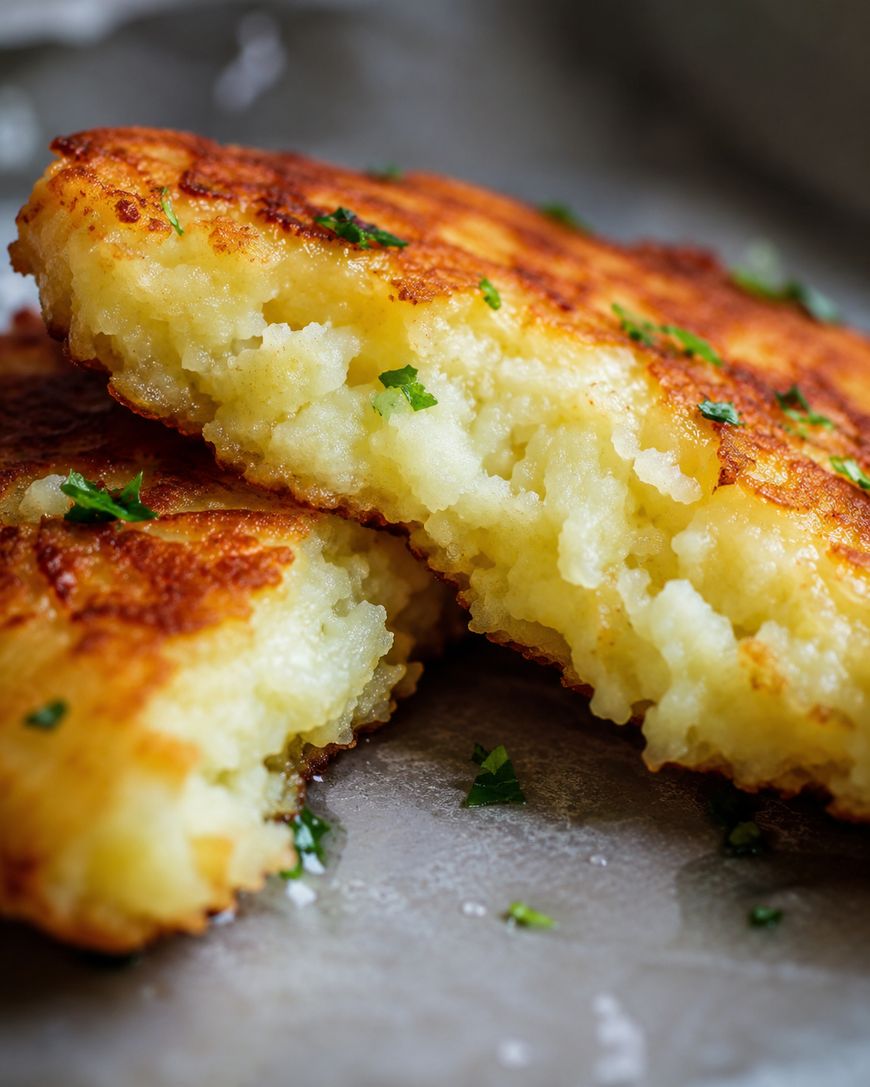
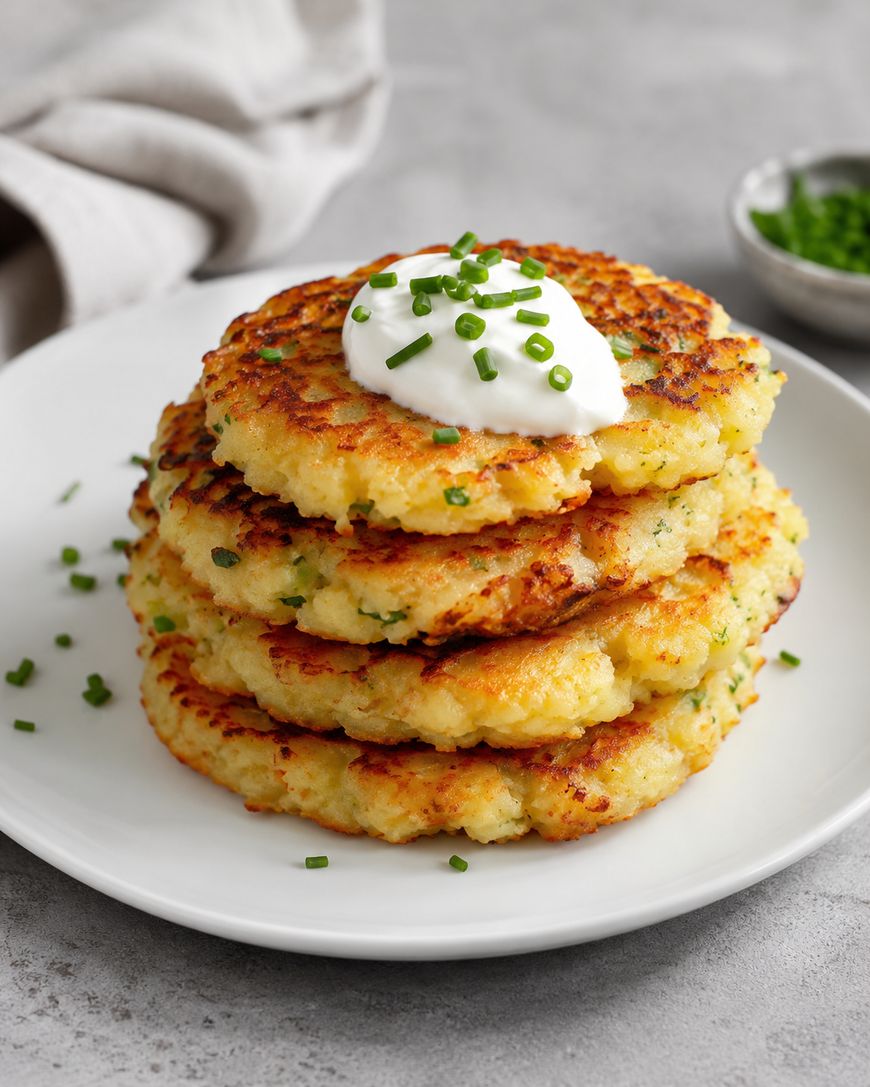
Mashed potato pancakes are the easiest way to turn leftover mashed potatoes into a crispy, golden side dish your family will fight over. You will find the full recipe card below, with exact measurements and step-by-step timing.
Why Mashed Potato Pancakes Work So Well
Cold mashed potatoes hold their shape far better than warm ones, which is exactly why this recipe leans on leftovers instead of a fresh batch.
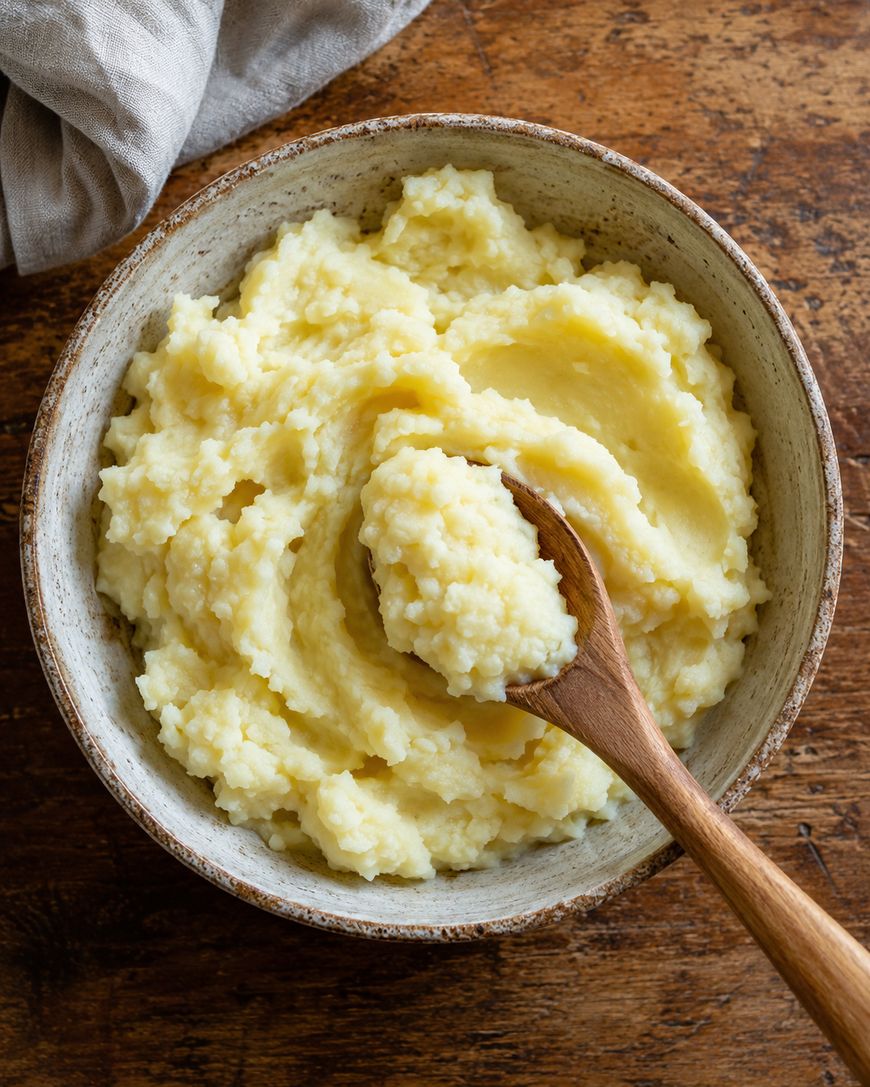
Starch that has cooled overnight in the refrigerator firms up, so when you shape the potatoes into patties they stay together in the skillet instead of falling apart.
This dish started as a way to avoid wasting Thanksgiving leftovers, but it has become popular enough on its own that cooks now boil and mash potatoes just to make it.
The Role of the Egg and Flour
An egg binds the shredded or mashed potato mixture together, while a few tablespoons of all-purpose flour absorb excess moisture so the pancakes crisp instead of steam.
Skip the egg and the pancakes tend to crumble the moment you flip them, so do not leave it out even if your mashed potatoes already feel dense.
Choosing the Right Skillet
A cast iron skillet or a heavy nonstick pan gives the most even, deep golden crust because it holds heat steadily once the oil is hot.
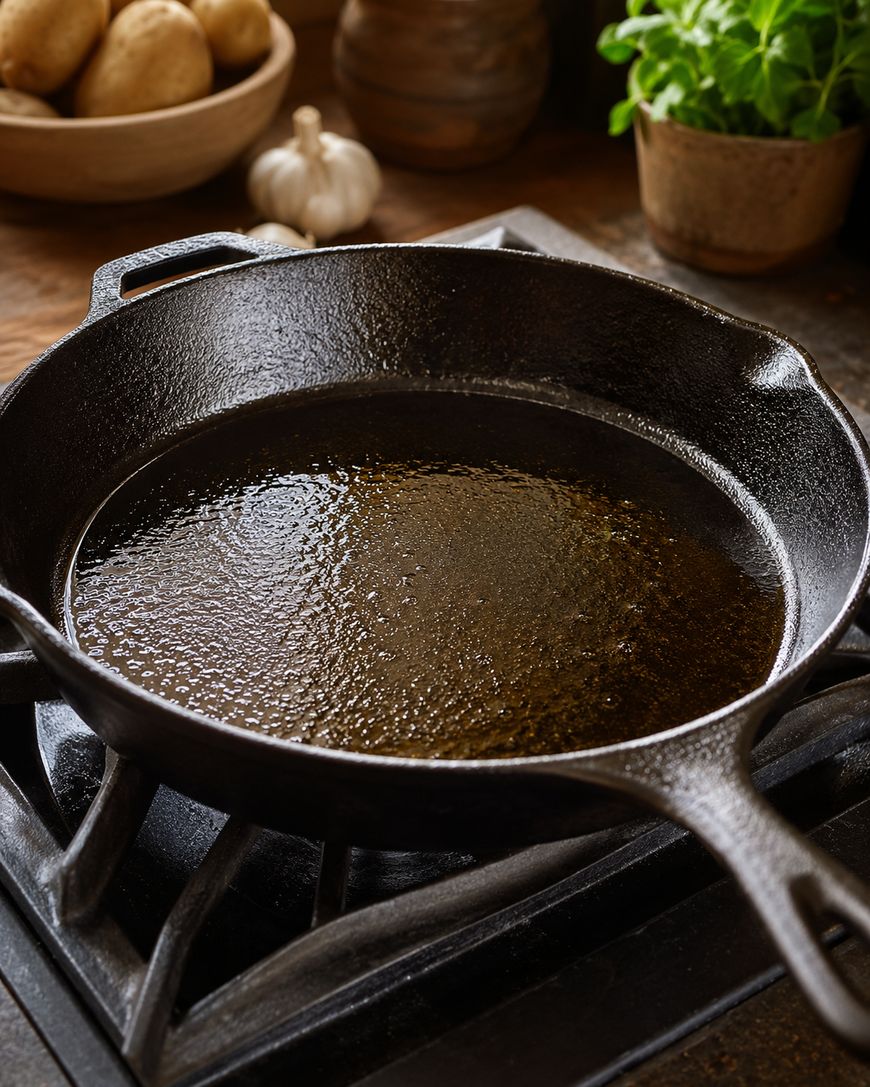
Thin aluminum pans tend to develop hot spots, which means some pancakes brown too fast while others stay pale, so reach for the heaviest pan in your cabinet.
Ingredients for Mashed Potato Pancakes
The base of this recipe is simple: leftover mashed potatoes, an egg, all-purpose flour, shredded cheddar cheese, sliced green onion, garlic powder, salt, and black pepper.
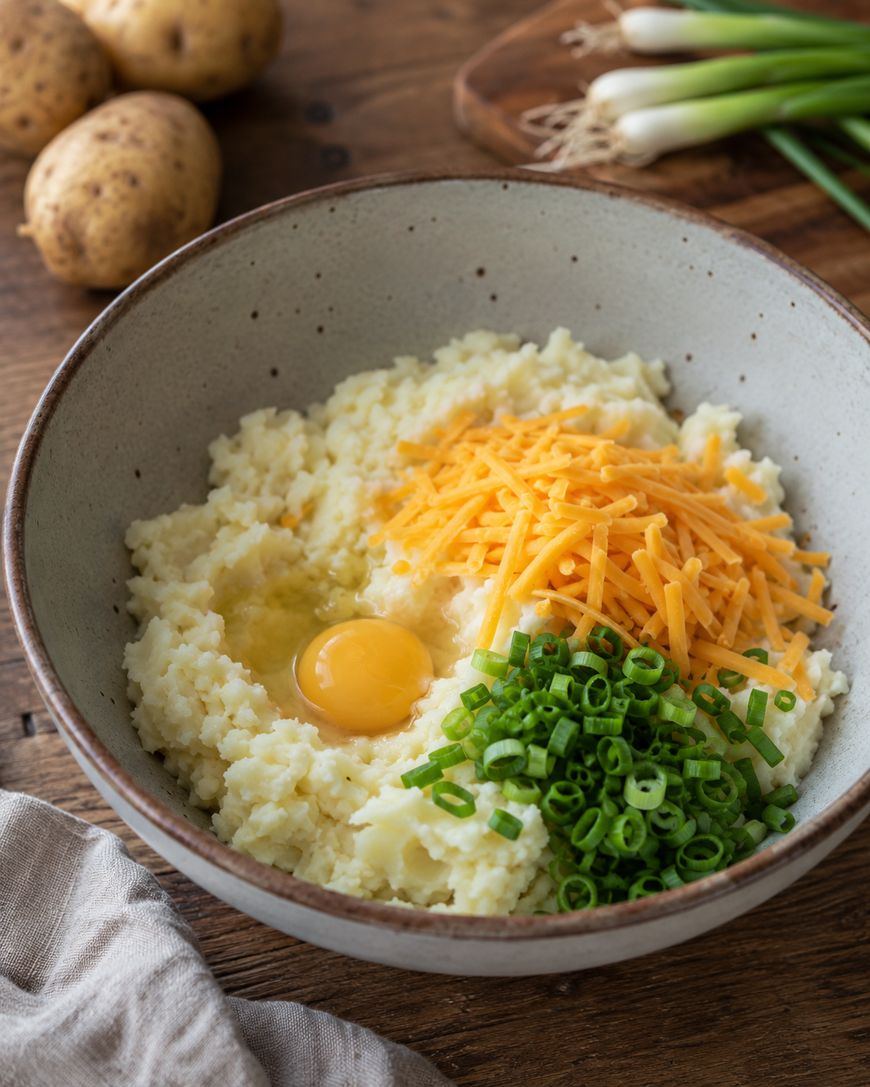
Sharp cheddar melts into the mixture and adds a savory backbone, while green onion brings a mild bite that keeps every pancake from tasting flat.
If your mashed potatoes were already seasoned heavily with butter and cream, cut back slightly on the added salt so the final pancakes do not taste over-salted.
Neutral oil, such as avocado or vegetable oil, works best for frying because it can handle medium-high heat without smoking or adding a strong flavor of its own.
How to Make Mashed Potato Pancakes
Start by combining cold mashed potatoes with the egg, flour, shredded cheddar, green onion, garlic powder, salt, and pepper in a large mixing bowl.
Stir just until everything is evenly distributed, since overmixing can make the potatoes gluey rather than fluffy inside the finished pancake.
Shaping the Patties
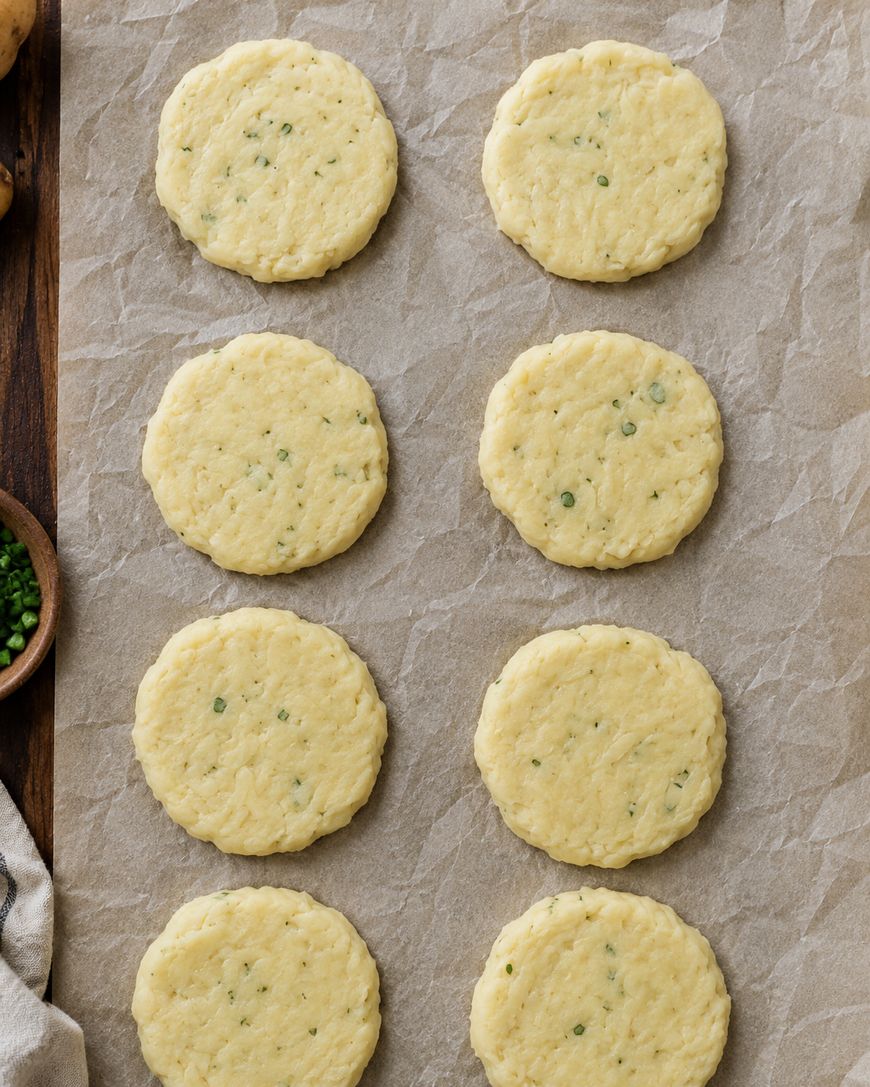
Scoop about a third of a cup of the mixture at a time and press it firmly into a disk roughly half an inch thick, using slightly damp hands to prevent sticking.
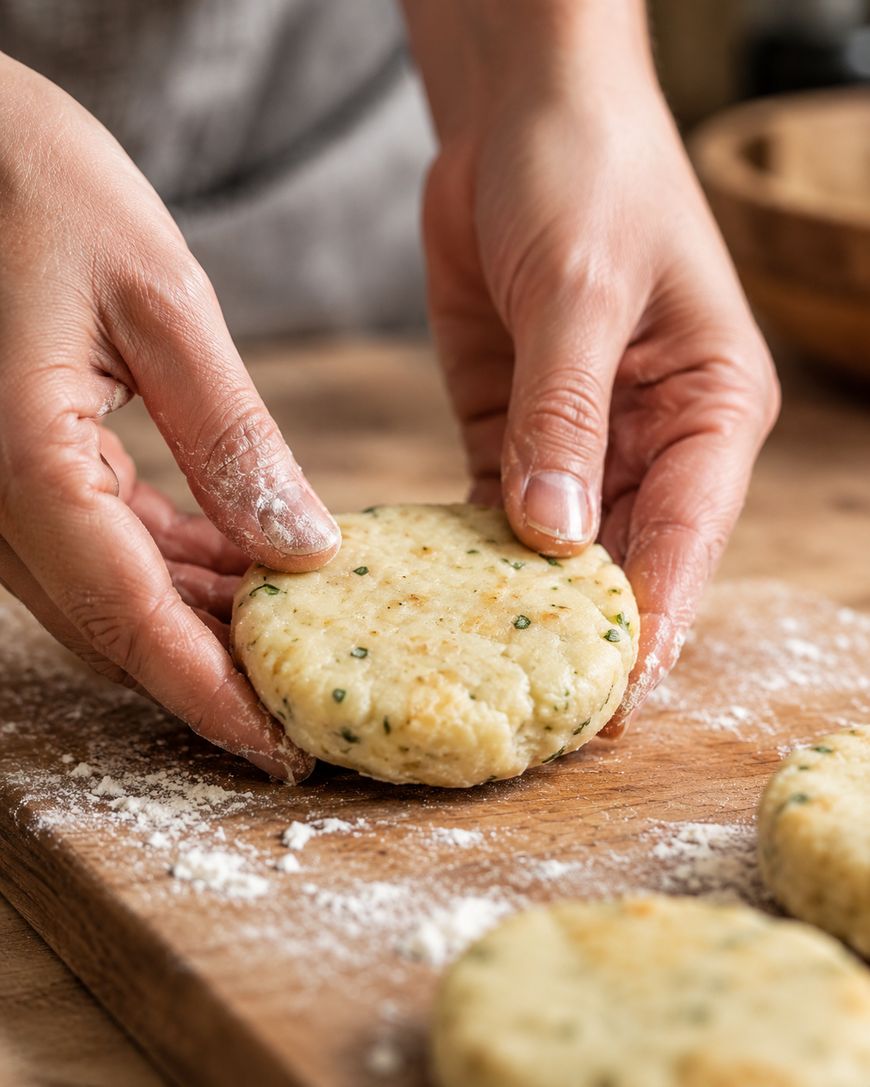
Uniform thickness matters here, because patties that are too thick stay raw in the center while the outside burns before it ever gets fully golden.
Frying to a Golden Crust
Heat two tablespoons of oil in your skillet over medium heat until it shimmers, then lay the patties in without crowding the pan.
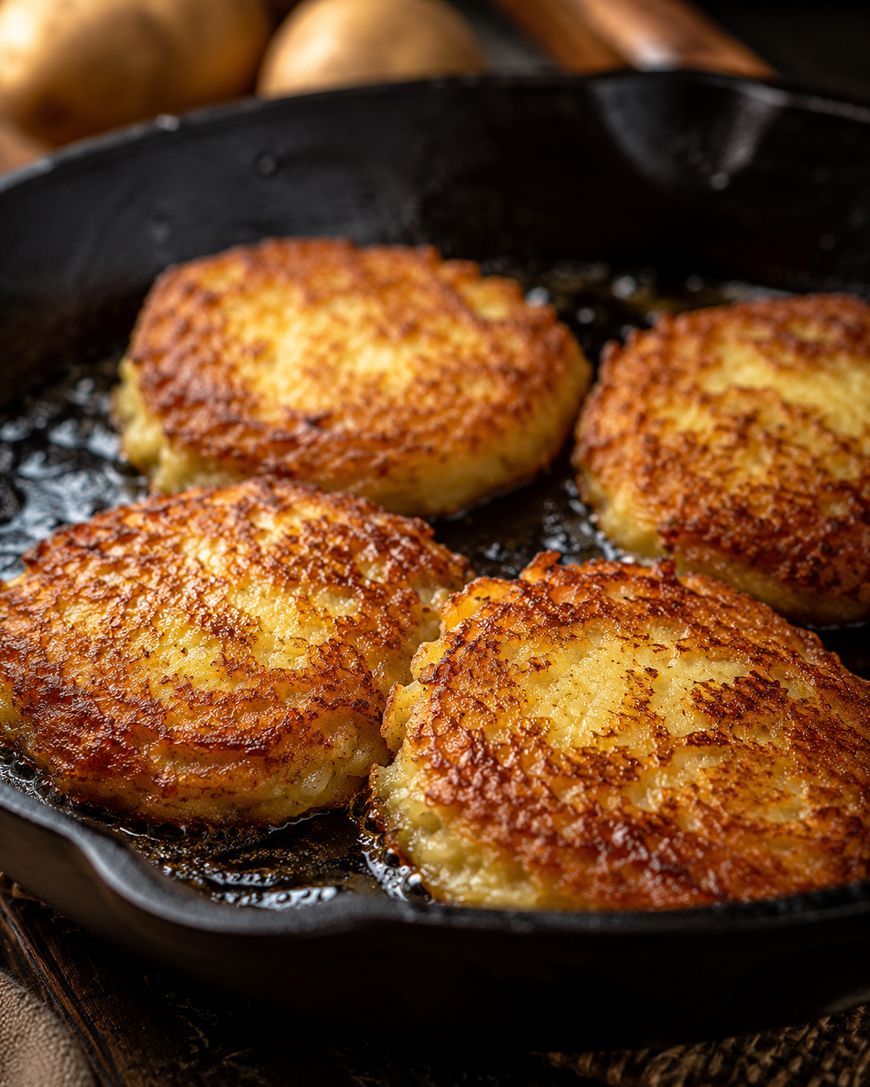
Cook each side for three to four minutes, resisting the urge to move the pancakes around, since letting them sit undisturbed is what builds that deep golden crust.
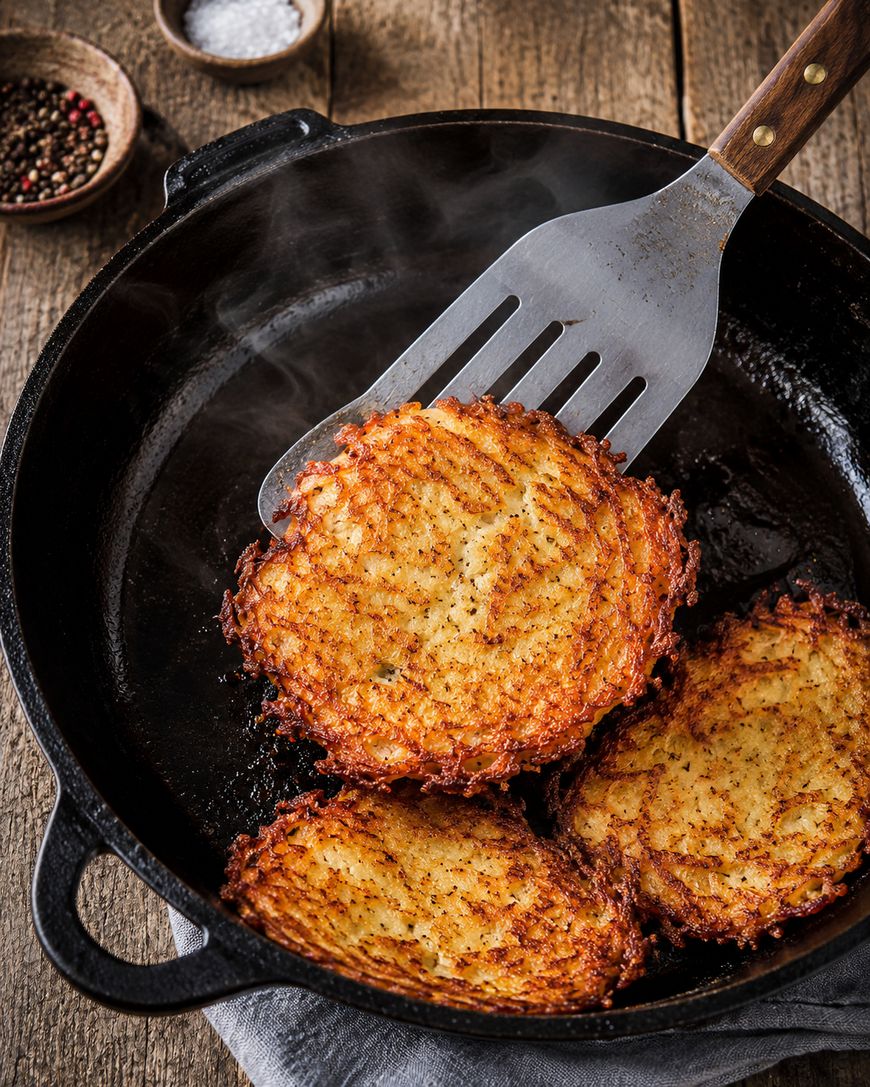
Flip once with a wide spatula, adding a touch more oil if the pan looks dry, and cook the second side until it matches the first in color.
Keeping Pancakes Warm While You Fry in Batches
Transfer finished pancakes to a wire rack set over a baking sheet in a 200 degree Fahrenheit oven while you fry the remaining batches.
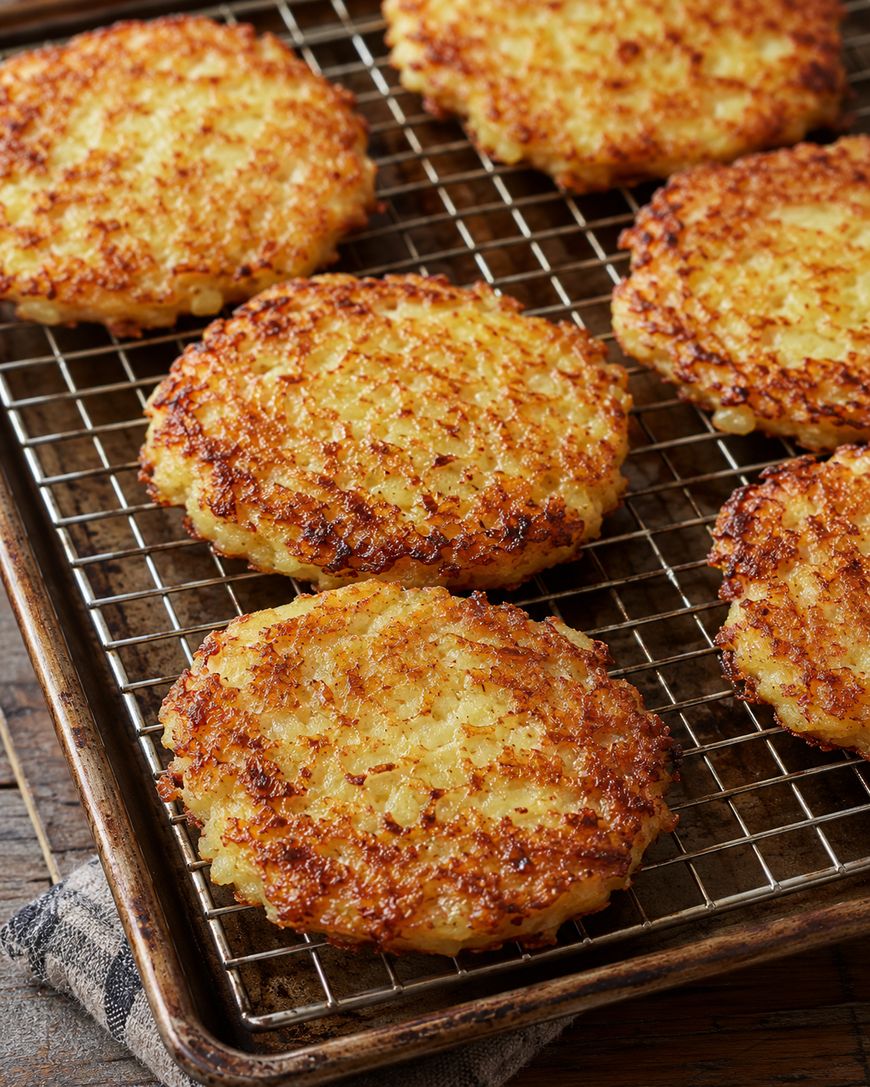
A wire rack keeps air circulating underneath the pancakes, which prevents the bottoms from turning soft the way they would if left directly on a plate.
Variations on Mashed Potato Pancakes
Swap cheddar for pepper jack if you want a spicier version, or fold in cooked and crumbled bacon for a heartier, brunch-style pancake.
For a herby take, stir in two tablespoons of chopped fresh chives or dill along with the green onion, which pairs especially well with a dollop of sour cream on top.
Garlic lovers can add an extra half teaspoon of garlic powder or a small clove of fresh minced garlic for a sharper background flavor.
Substitutions to Know
If you are out of all-purpose flour, panko breadcrumbs work as a substitute and add a slightly crisper texture to the finished pancake.
Greek yogurt can stand in for part of the mashed potatoes’ cream content if your leftovers were made without dairy, helping bind the mixture while adding a slight tang.
For a dairy-free version, omit the cheddar and use a plant-based shredded cheese, keeping the rest of the recipe exactly as written.
Storage and Reheating
Store leftover mashed potato pancakes in an airtight container in the refrigerator for up to four days.
Reheat them in a skillet over medium heat for two to three minutes per side to bring back the crispy exterior, since a microwave will leave them soft and slightly soggy.
Freezing Mashed Potato Pancakes
Freeze cooked, cooled pancakes in a single layer on a baking sheet until solid, then transfer them to a freezer bag for up to two months.
Reheat frozen pancakes directly from the freezer in a 375 degree Fahrenheit oven for about fifteen minutes, flipping halfway through so both sides crisp back up.
Serving Suggestions
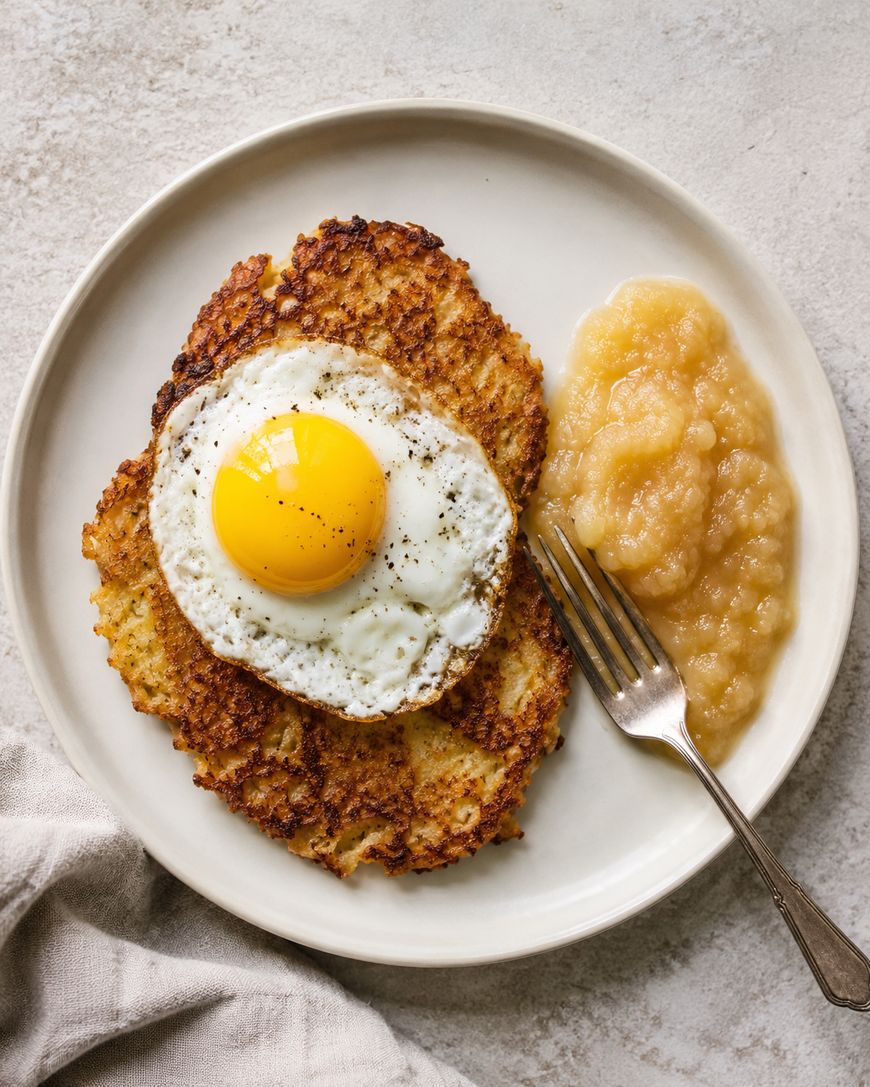
Mashed potato pancakes pair naturally with sour cream, applesauce, or a fried egg on top for a heartier breakfast plate.
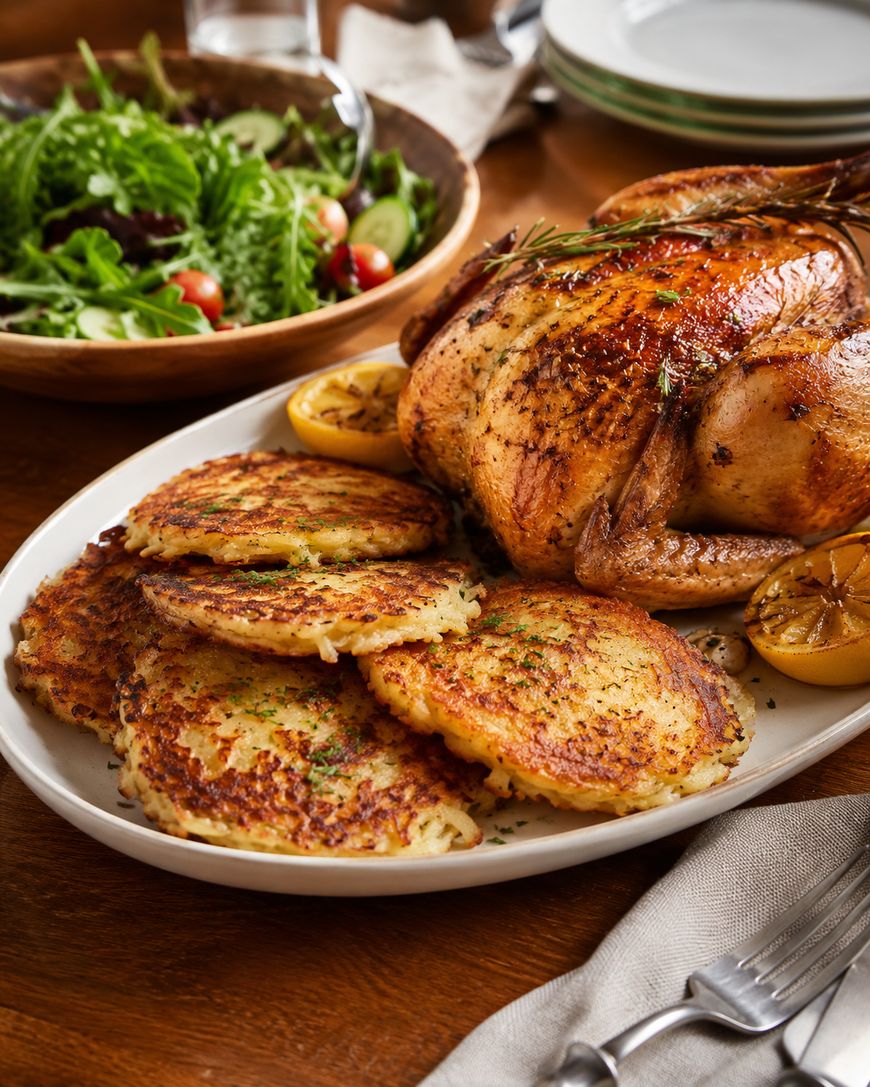
For dinner, serve them alongside roasted chicken or a simple green salad, letting the pancakes stand in for a traditional potato side.
Where This Recipe Comes From
Potato pancakes trace back generations across Eastern European kitchens, where cooks have long turned humble potatoes into a crisp, filling dish using whatever was on hand.
This particular version leans on already-mashed potatoes rather than raw, shredded ones, making it a distinctly American solution to holiday leftovers that has since become a year-round favorite in its own right.
Ready to see exact measurements and timing? The recipe card below has everything you need.
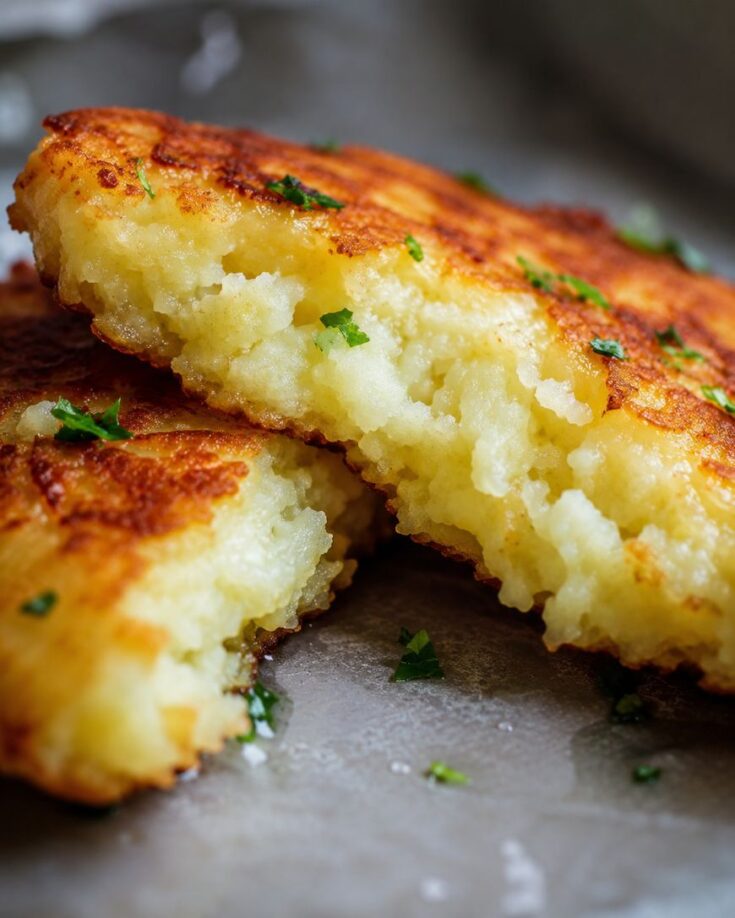
Mashed Potato Pancakes
Crispy, golden mashed potato pancakes made from leftover mashed potatoes, cheddar cheese, and green onion, pan-fried to a deep golden crust in under 30 minutes.
Ingredients
- 2 cups cold leftover mashed potatoes
- 1 large egg
- 3 tablespoons all-purpose flour
- 1/2 cup shredded sharp cheddar cheese
- 2 tablespoons sliced green onion
- 1/2 teaspoon garlic powder
- 1/2 teaspoon salt, plus more to taste
- 1/4 teaspoon black pepper
- 3 tablespoons neutral oil, such as avocado or vegetable oil, for frying
Instructions
- In a large mixing bowl, combine the mashed potatoes, egg, flour, cheddar cheese, green onion, garlic powder, salt, and pepper.
- Stir until just combined, being careful not to overmix.
- Scoop about 1/3 cup of the mixture at a time and shape into a disk about 1/2 inch thick using slightly damp hands.
- Heat 2 tablespoons of oil in a large skillet over medium heat until shimmering.
- Add the patties to the skillet without crowding, working in batches if needed.
- Cook for 3 to 4 minutes per side, undisturbed, until deep golden brown.
- Flip carefully with a wide spatula and cook the second side for 3 to 4 minutes, adding more oil as needed.
- Transfer cooked pancakes to a wire rack set over a baking sheet and keep warm in a 200 degree Fahrenheit oven while frying remaining batches.
- Serve warm with sour cream, applesauce, or a fried egg on top.
Notes
For extra crispy pancakes, avoid moving them in the pan until they release naturally from the skillet. Leftovers keep in the refrigerator for up to 4 days or in the freezer for up to 2 months.
Nutrition Information:
Yield:
4Serving Size:
2 pancakesAmount Per Serving: Calories: 260Total Fat: 14gSaturated Fat: 4gSodium: 480mgCarbohydrates: 26gFiber: 2gSugar: 1gProtein: 8g
This site provides estimated nutritional information. This information comes from online calculators. Although we try to provide accurate nutritional information, these figures are only estimates.
Frequently Asked Questions
Can I use instant mashed potatoes for this recipe?
Yes, instant mashed potatoes work as long as they are prepared thick rather than thin, since a loose consistency will make the patties difficult to shape.
Let the prepared instant potatoes cool completely in the refrigerator first so they firm up the same way leftover mashed potatoes do.
Why do my mashed potato pancakes fall apart?
The most common cause is skipping the egg or using mashed potatoes that are still warm and loose, both of which weaken the mixture’s structure.
Make sure your mashed potatoes are cold and firm, and do not skip the flour, since both steps are essential for pancakes that hold together in the skillet.
Can I bake these instead of frying them?
You can bake them on a parchment-lined sheet at 425 degrees Fahrenheit for about twenty minutes, flipping halfway, though the crust will be thinner than a pan-fried version.
A light brush of oil on both sides before baking helps them brown more evenly in the oven.
What is the best cheese to use?
Sharp cheddar is the most reliable choice because it melts smoothly and adds a strong savory flavor, but gruyere or pepper jack both work well too.
Avoid pre-shredded cheese with anti-caking additives if possible, since block cheese you shred yourself melts more evenly into the potato mixture.
Can I make the mixture ahead of time?
Yes, you can mix the potatoes, egg, flour, and seasonings up to a day ahead and store the mixture covered in the refrigerator until you are ready to fry.
Shaping the patties right before cooking, rather than ahead of time, gives the best texture since the mixture can soften slightly if it sits shaped for too long.
Can I make these pancakes gluten-free?
Substitute the all-purpose flour with an equal amount of gluten-free all-purpose flour or cornstarch, both of which absorb moisture just as effectively.
Double check that any add-ins, like seasoning blends, are labeled gluten-free as well before mixing them in.
Final Thoughts on Mashed Potato Pancakes
Mashed potato pancakes take a humble bowl of leftovers and turn them into a dish worth making on purpose, crispy on the outside and soft in the middle.
Once you try the recipe card below, you may find yourself boiling extra potatoes just to have leftovers for this on hand.