Last updated: August 30, 2026
Monstera plant care is straightforward once you understand what this tropical climbing plant actually needs, and getting those fundamentals right produces the dramatic fenestrated leaves that make Monstera deliciosa one of the most recognizable houseplants in the world. This guide covers every aspect of care from watering schedules and light requirements to repotting, propagation, and fixing the most common problems.
The Core Principles of Monstera Plant Care
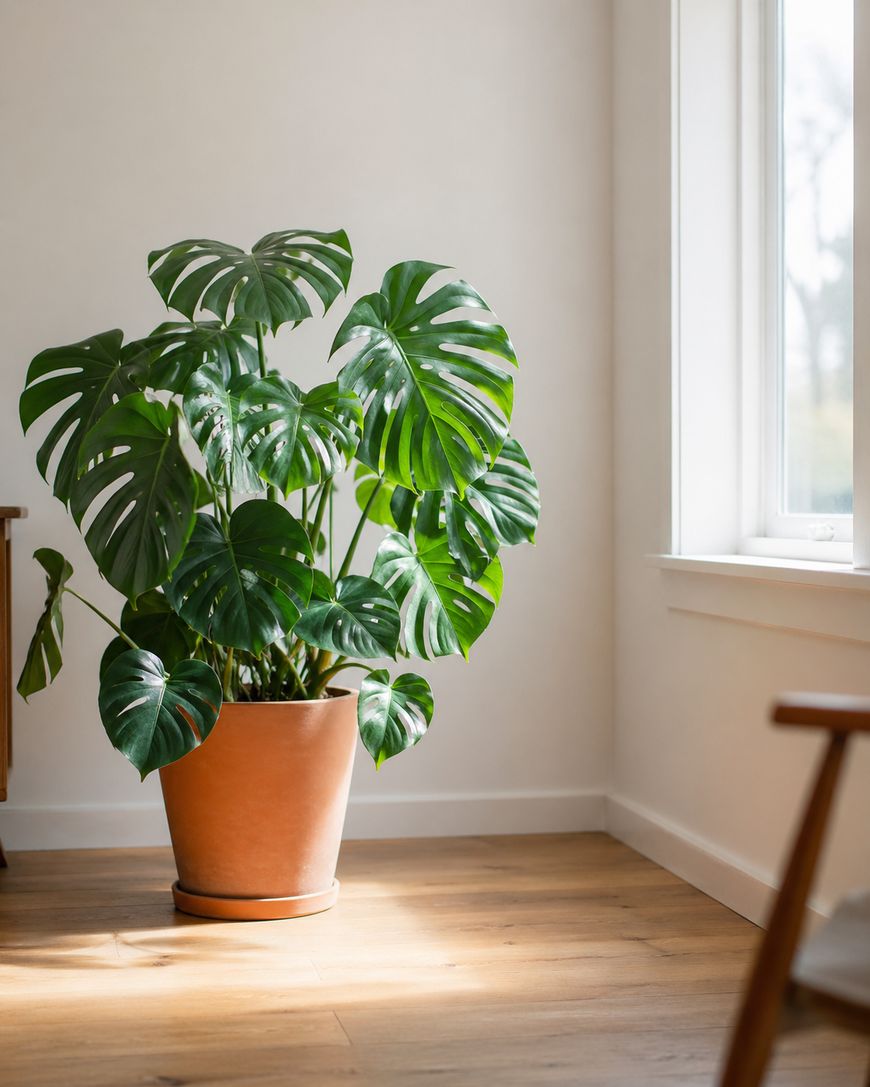
Monstera deliciosa originates from the tropical rainforests of southern Mexico and Central America, where it grows as an understory climber beneath a dense forest canopy. Understanding this native environment answers almost every question about monstera plant care: it wants bright indirect light, consistently moist but well-draining soil, warm temperatures, and high humidity.
The most common mistake in monstera plant care is overwatering. Monstera roots need to dry out slightly between waterings, and sitting in waterlogged soil causes root rot that can kill an otherwise healthy plant within weeks.
Light Requirements
Monstera deliciosa thrives in bright indirect light, which means a position within two to six feet of a south- or east-facing window where the plant receives abundant ambient light without direct sun hitting the leaves. Direct afternoon sun through a south-facing window bleaches the leaves and causes brown, crispy edges that indicate sun scorch.
A grow light from Soltech Solutions or the Barrina T5 LED plant light is an excellent supplement for rooms without strong natural light. Set the grow light on a timer for 12 to 14 hours daily and position it 12 to 18 inches above the plant for optimal photosynthesis.
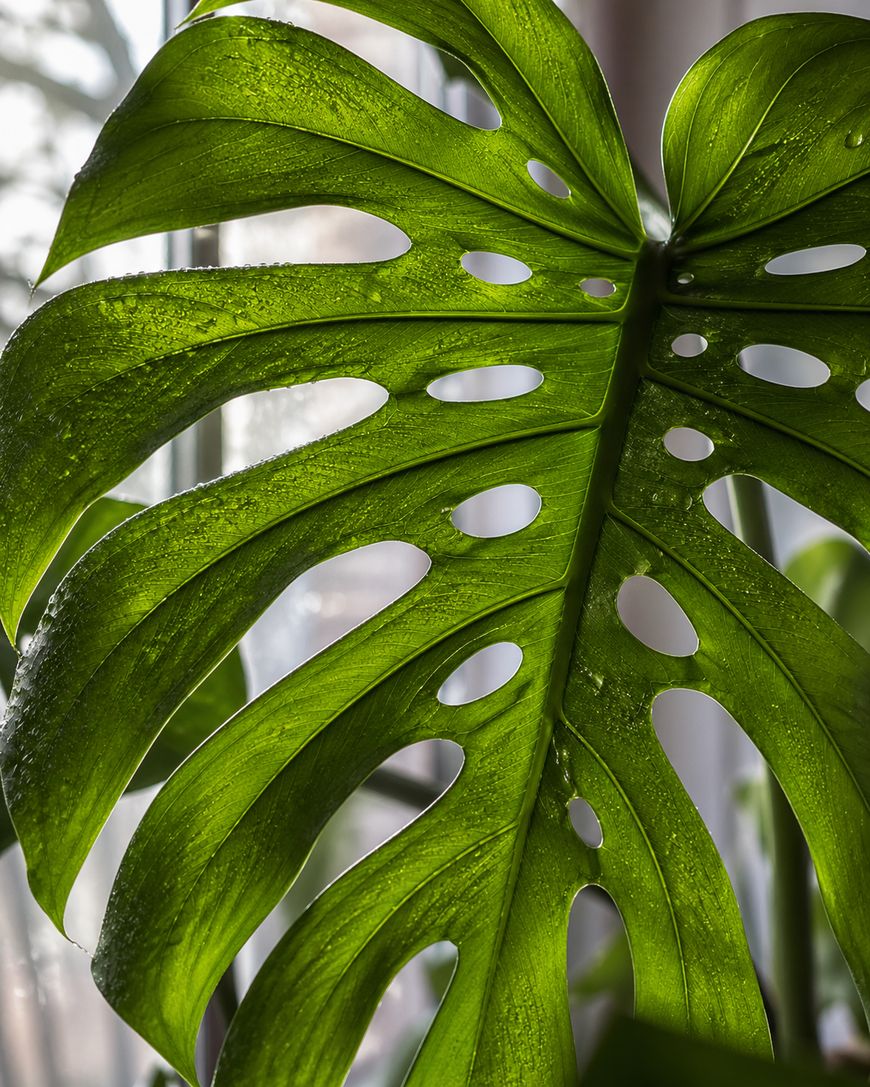
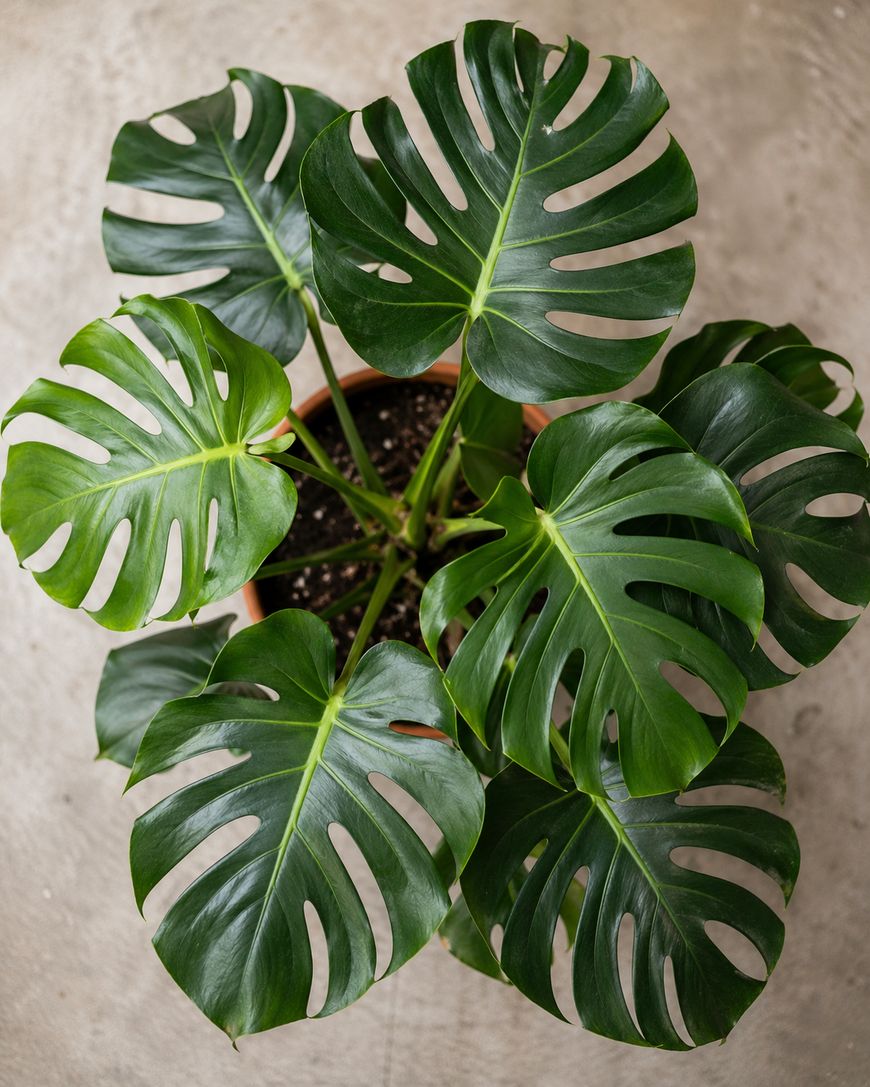
Low light conditions produce smaller leaves with fewer fenestrations, the characteristic splits and holes that make Monstera leaves distinctive. If a monstera is producing small, unfenestrated leaves on a mature plant, inadequate light is almost always the cause.
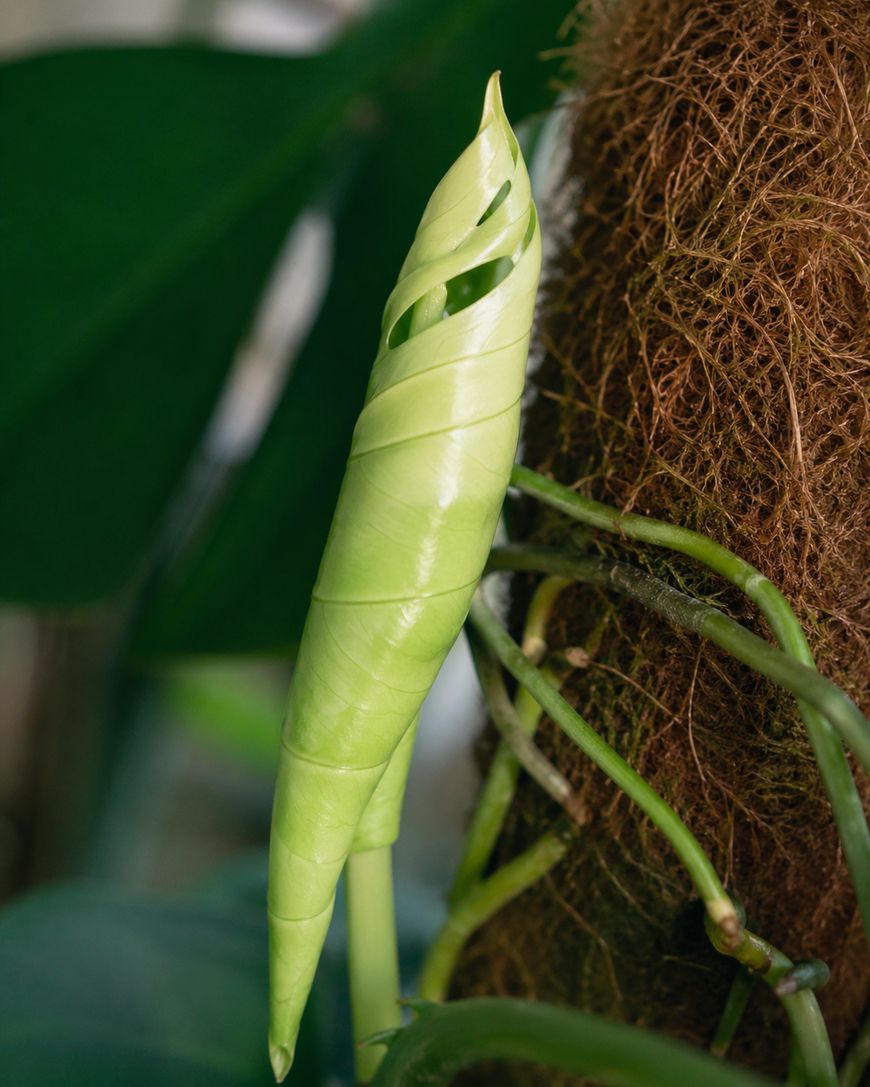
Watering Schedule
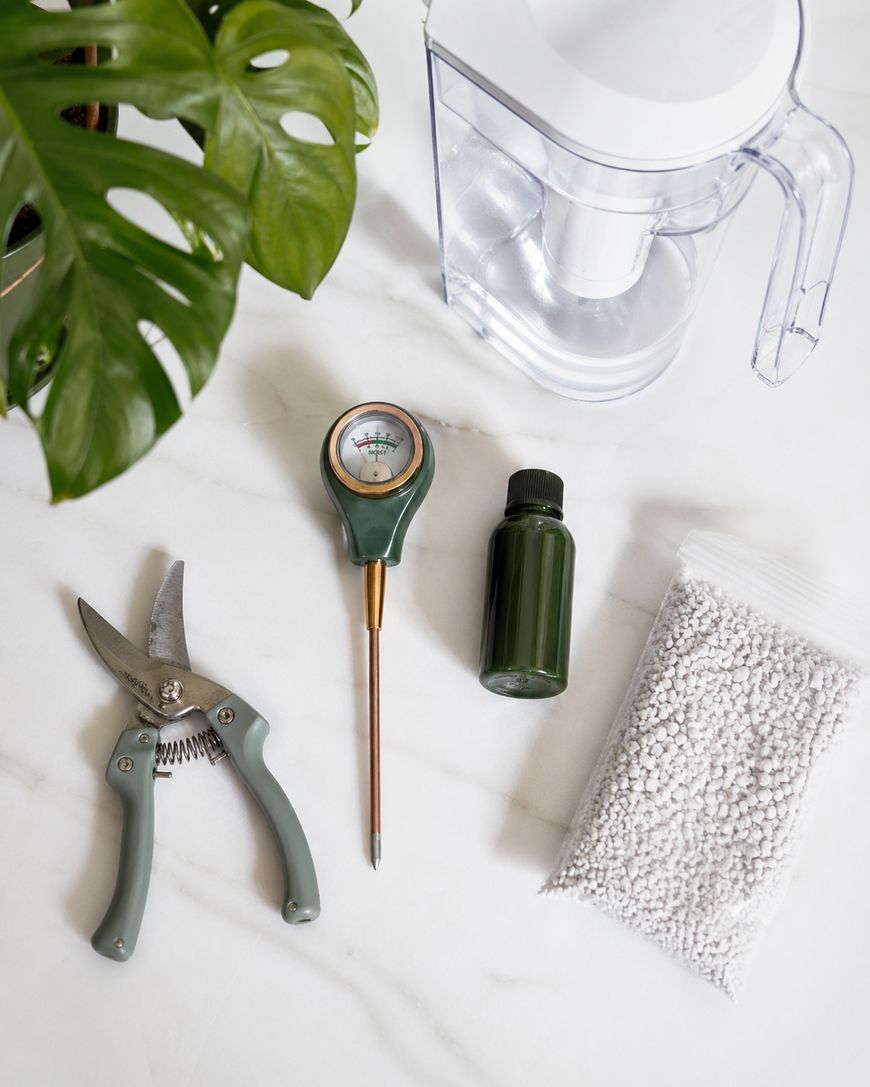
Water a Monstera deliciosa when the top two inches of soil are dry to the touch, which typically means every seven to ten days in summer and every ten to fourteen days in winter depending on pot size, soil type, and ambient humidity. The most reliable method is to use a moisture meter from XLUX or Gouevn and water when the reading reaches 3 to 4 on a scale of 10.
Always water thoroughly until water drains from the drainage hole, then empty the saucer after 30 minutes to prevent the roots from sitting in standing water. Tepid or room-temperature water is preferable to cold tap water, which can shock the roots of a tropical plant.
Tap water contains chlorine and fluoride that can cause brown leaf tips over time. Letting tap water sit out overnight before using it allows the chlorine to off-gas, or use filtered water from a Brita pitcher for the most sensitive plants.

Soil and Potting Mix
The best soil for monstera plant care is a well-draining aroid mix that holds some moisture while allowing excess water to drain freely. A mix of two parts Miracle-Gro Tropical Potting Mix, one part perlite from Espoma, and one part orchid bark from Perfect Plants produces the ideal balance of moisture retention and aeration.
Pre-mixed aroid soil from Rooted and The Sill is available for purchase and performs well without any modification. Standard potting soil alone retains too much moisture and compacts over time, reducing the oxygen availability to monstera roots and increasing the risk of root rot.
Monstera Plant Care for Growth and Health
Beyond the basics of light and water, monstera plant care involves feeding, humidity management, and support structures that significantly accelerate growth and leaf size. These are the factors that separate a monstera that sits stagnant for years from one that produces new leaves every two to three weeks.
Fertilizing
Fertilize a Monstera deliciosa monthly during the growing season from March through September with a balanced liquid fertilizer like Dyna-Gro Grow diluted to half strength, or a slow-release fertilizer like Osmocote Plus applied to the soil surface every four months. Fertilizing in fall and winter when the plant is not actively growing can cause salt buildup in the soil and root damage.
Yellowing leaves on a well-watered monstera are often a sign of nitrogen deficiency rather than overwatering. A single application of a nitrogen-forward fertilizer like Fox Farm Grow Big at half strength often resolves this within two to three weeks.
Humidity and Temperature
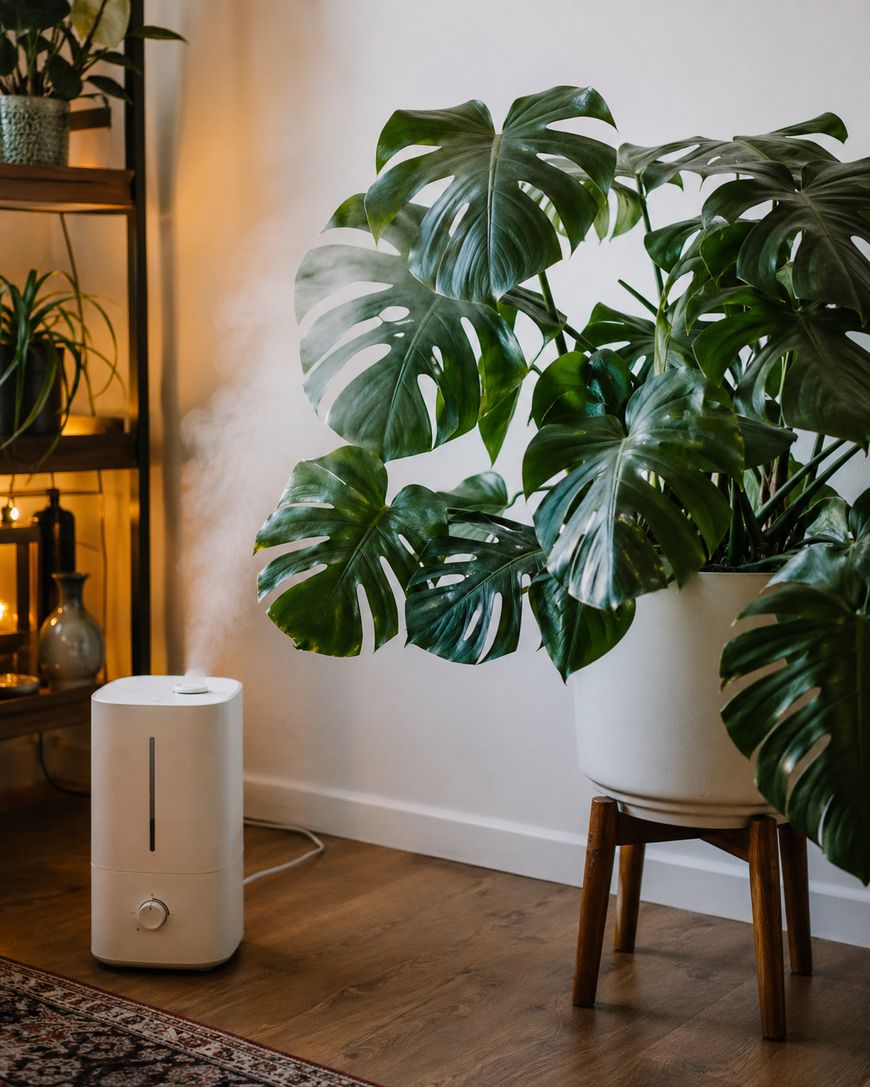
Monstera deliciosa prefers humidity levels between 60 and 80 percent, which is higher than most home environments. A Levoit or Honeywell cool mist humidifier running near the plant is the most effective way to raise ambient humidity, particularly in heated interiors during winter when indoor air becomes very dry.
Keep monstera plants away from heating and air conditioning vents, drafty windows, and exterior doors, as sudden temperature changes and dry air currents cause leaf stress. The ideal temperature range for Monstera deliciosa is 65 to 85 degrees Fahrenheit, and the plant does not tolerate temperatures below 55 degrees.
Moss Poles and Support Structures
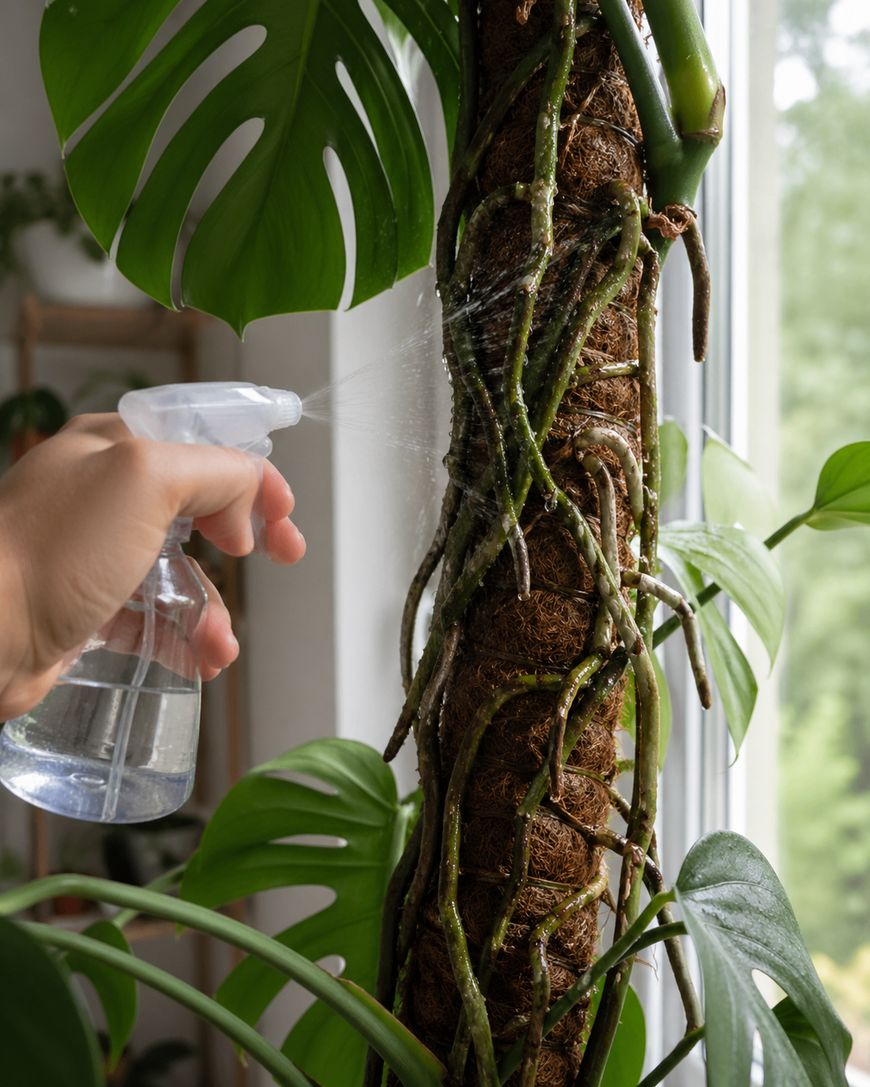
A moss pole from Grow Urban or a homemade version wrapped with coco coir pole from Costa Farms is the most important structural investment in monstera plant care for encouraging larger leaf production. In its native habitat, Monstera deliciosa uses its aerial roots to climb tree trunks, and providing a vertical climbing surface triggers a juvenile-to-mature leaf transition that produces dramatically larger, more fenestrated leaves.

Attach the monstera’s stems loosely to the moss pole using soft plant ties or jute twine and mist the moss pole with water regularly to encourage the aerial roots to attach. A monstera that is actively climbing a moss pole will produce noticeably larger leaves within two to three growth cycles.
Repotting and Propagation
Repotting and propagation are the two monstera plant care skills that most growers tackle after mastering basic care, and both are straightforward when approached correctly.
When and How to Repot
Repot a Monstera deliciosa when roots are visibly growing from the drainage hole, when the plant dries out within two to three days of watering, or when growth has stalled despite adequate light and fertilizer. Spring is the ideal time to repot, as the plant enters its active growing season and recovers quickly from root disturbance.
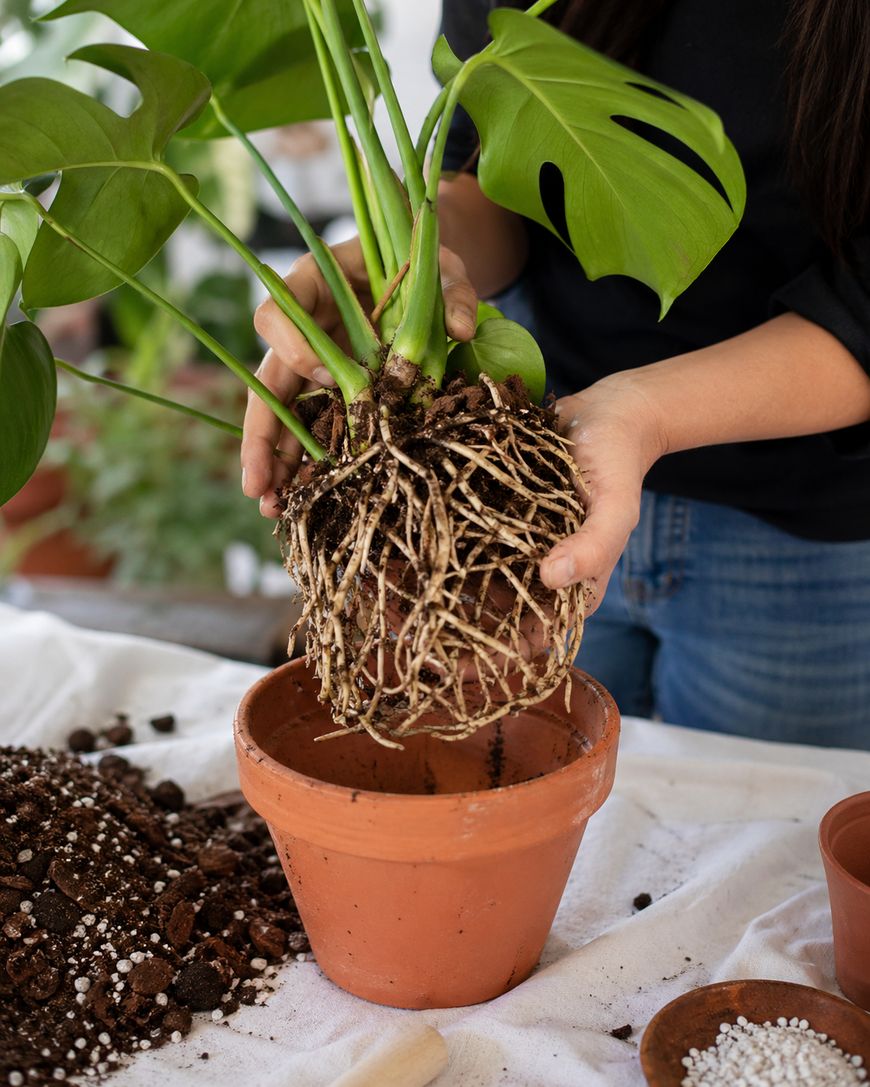
Choose a new pot that is two inches larger in diameter than the current pot, no more. A pot that is too large holds excess moisture that the roots cannot absorb, increasing the risk of root rot. Terra cotta pots from Deroma or HC Companies are the best choice for monstera plant care because their porous walls allow excess moisture to evaporate and improve airflow to the root zone.
Propagation in Water or Soil
Monstera deliciosa is propagated by stem cutting, and the cutting must include at least one node, the brown, knobby growth point on the stem from which roots emerge. Cut four to six inches below the node with clean pruning shears from Fiskars, and remove any leaves that would be submerged.
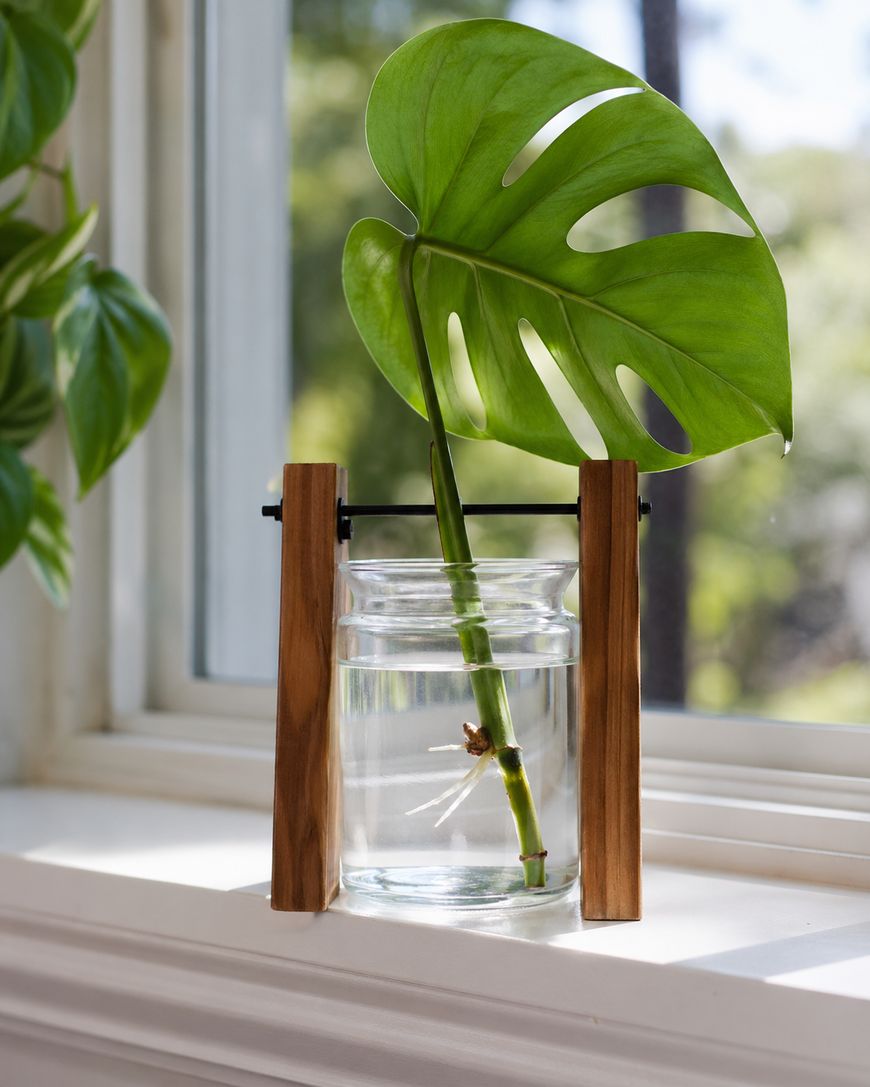
Propagate in a clear glass jar or propagation station filled with filtered water, changing the water every five to seven days, and place in bright indirect light. Roots appear within three to six weeks, and the cutting can be potted in aroid soil once roots are at least two inches long. Rooting hormone gel from Garden Safe applied to the cut end before placing in water speeds up the process.
Troubleshooting Common Monstera Plant Care Problems
Even with correct care, monsteras occasionally develop problems that need identification and correction. Most issues trace back to one of four causes: incorrect watering, insufficient light, pest infestation, or environmental stress.
Yellow Leaves
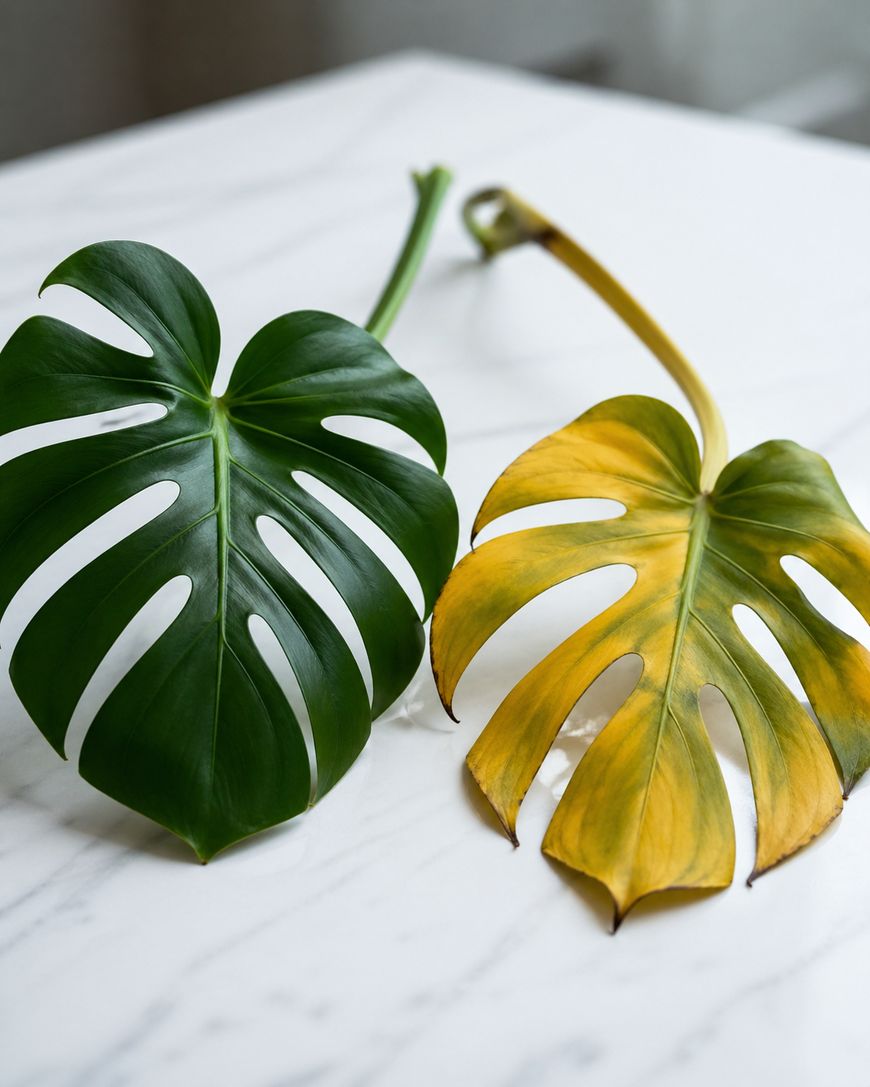
Yellow leaves on a Monstera deliciosa are the most common complaint in monstera plant care and the most frequently misdiagnosed. The most common cause is overwatering, followed by underwatering, insufficient light, and nutrient deficiency, in that order.
Check the soil moisture before diagnosing: if the soil is consistently wet, reduce watering frequency and ensure the pot has adequate drainage. If the soil is bone dry and the plant has not been watered in more than two weeks, water thoroughly and increase frequency.
Brown Leaf Tips and Edges
Brown tips on monstera leaves indicate low humidity, fluoride toxicity from tap water, or fertilizer salt buildup in the soil. Increase humidity with a humidifier, switch to filtered or distilled water, and flush the soil thoroughly with plain water every three to four months to remove accumulated salts.
Brown edges that spread from the margin inward are more likely a sign of underwatering or cold drafts. Move the plant away from air conditioning vents or exterior windows and check that the watering schedule is consistent.
Pest Management
Spider mites, thrips, and scale are the three most common pests that affect monstera plants in indoor environments. Spider mites produce fine webbing on the undersides of leaves and cause stippled, bronze discoloration; thrips leave silvery streaks and distorted new growth; scale appears as small brown bumps on stems and leaf midribs.
Treat all three with insecticidal soap from Safer Brand or neem oil from Bonide applied to all leaf surfaces and stems, repeating every seven days for three applications. Isolate the affected plant immediately to prevent spread to other houseplants.
Monstera Plant Care Questions
How often should you water a monstera? Water a Monstera deliciosa when the top two inches of soil are dry, which is typically every seven to ten days in summer and every ten to fourteen days in winter. A moisture meter is the most reliable tool for determining when to water, removing the guesswork from a decision that most houseplant owners get wrong.
Why does my monstera have no holes in the leaves? Monstera leaves develop fenestrations (holes and splits) only on mature plants that are receiving sufficient light and have a climbing support structure available. A monstera under two years old, growing in low light, or lacking a moss pole will typically produce solid, unfenestrated leaves regardless of how well it is otherwise cared for.
Why are my monstera leaves turning yellow? Yellow monstera leaves are most commonly caused by overwatering and root rot, followed by nutrient deficiency and insufficient light. Check the soil moisture before drawing conclusions, and if the soil has been consistently wet, allow it to dry out completely and consider repotting into fresh, well-draining aroid mix.
How big do monstera plants get indoors? Monstera deliciosa can grow to six to eight feet tall indoors with adequate light, a moss pole, and consistent feeding, and the leaves can reach two feet across on a mature, well-cared-for specimen. Growth rate is highly dependent on light intensity, with plants in bright indirect light growing two to three times faster than those in lower light conditions.
Is monstera plant care difficult for beginners? Monstera deliciosa is one of the most beginner-friendly large-leaf houseplants available because it tolerates occasional underwatering, adapts to a range of light conditions, and communicates its needs clearly through leaf color and texture. The most important rule for beginners is to check the soil before watering rather than following a fixed schedule.
Give Your Monstera the Care It Deserves
Monstera plant care rewards consistency and attention more than it demands perfection, and a healthy monstera that is climbing a moss pole in bright indirect light is one of the most dramatic and rewarding houseplants you can grow. Start with the right soil, water only when the top two inches are dry, and add a moss pole within the first year.
Get those three fundamentals right and a Monstera deliciosa will produce new leaves regularly, develop increasingly impressive fenestrations, and become the centerpiece of any room it occupies for years to come.
One thing worth knowing before you buy one: monstera is toxic if chewed. The sap contains calcium oxalate crystals that irritate skin and mouths, and the leaves are poisonous to cats and dogs and will make a small child very uncomfortable. Keep it well out of reach of pets and toddlers, and wear gloves when you prune or propagate.