Last updated: October 2, 2026
This mustard greens recipe gives you silky, peppery greens simmered in a smoky bacon broth in about an hour. Follow the walkthrough below, or jump to the recipe card for the full ingredient list and steps.

Mustard Greens Recipe Ingredients
You only need a handful of pantry staples to turn a big pile of raw leaves into a tender side dish. Each ingredient has a job, so it helps to know what it does before you start.

The Greens
Two large bunches of mustard greens, about 1 1/2 pounds total, make six servings once they cook down. Look for bunches with deep green, crisp leaves and no yellowing or slimy spots.
Smaller, younger leaves taste milder, while big curly leaves bring more of that sharp, horseradish-like bite. Both work well here because the long simmer softens the edge.
The Smoky Base
Four slices of thick-cut bacon flavor the whole pot with smoke and salt. One medium yellow onion and four cloves of garlic add sweetness and depth underneath.
Low-sodium chicken broth, 1 1/2 cups, supplies the simmering liquid without making the greens too salty. Bacon and broth both carry sodium, so start with only 1/2 teaspoon of kosher salt and adjust at the end.
The Finishing Touches
Two tablespoons of apple cider vinegar brighten the greens right before serving. One teaspoon of sugar and 1/2 teaspoon of red pepper flakes balance the bitterness and add a gentle warmth.
A quarter teaspoon of black pepper rounds it out. Hot sauce at the table is optional, but it is a classic Southern move.
How to Prep Mustard Greens Before Cooking
Prep takes about 15 minutes, and it is the step that decides whether your greens taste clean or gritty. Mustard leaves trap sand in their ruffles, so never skip a thorough wash.
Washing the Leaves
Fill a clean sink or a very large bowl with cold water and submerge the leaves. Swish them around, let the grit settle for a minute, then lift the leaves out instead of pouring the water off.
Repeat once more if you still see sand at the bottom. Shake the leaves dry, since a little clinging water is fine but a soaked pile will steam unevenly.
Removing the Stems and Chopping
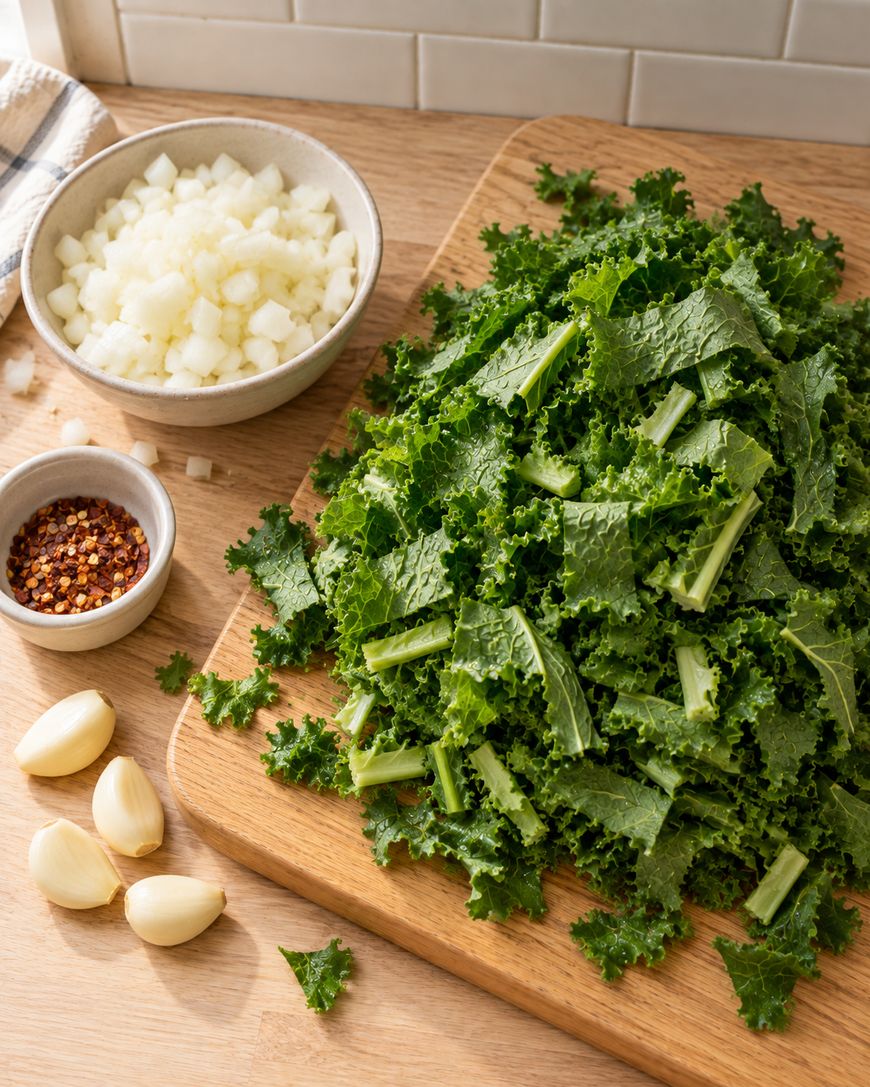
Fold each leaf in half along the center rib and slice the thick stem away with a knife. Tough stems stay chewy after simmering, so this step matters.

Stack the leaves, roll them loosely, and cut them into ribbons about one inch wide. Wide ribbons hold up better than tiny pieces and give the finished greens a pleasant, silky texture.
How to Cook Mustard Greens Step by Step
The whole method happens in one large Dutch oven or deep skillet with a lid. Set the pot over medium heat and have your chopped greens, onion and garlic within reach.
Crisp the Bacon
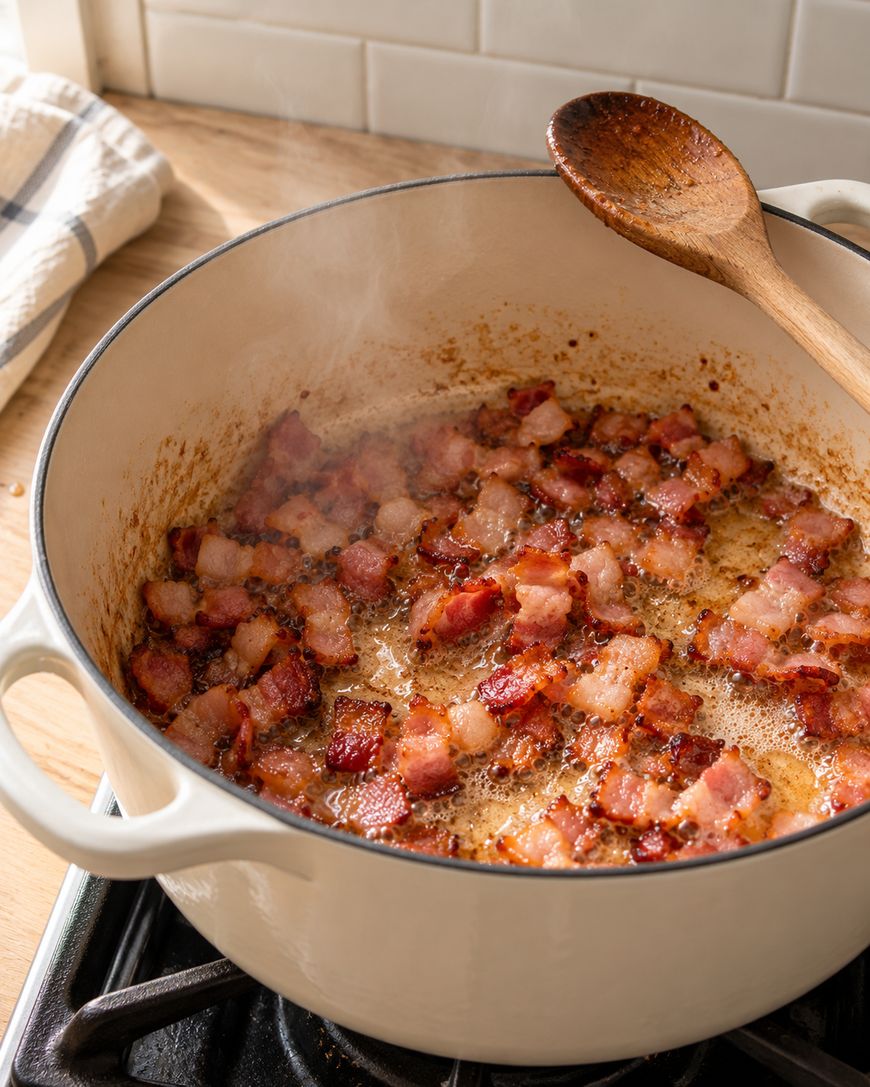
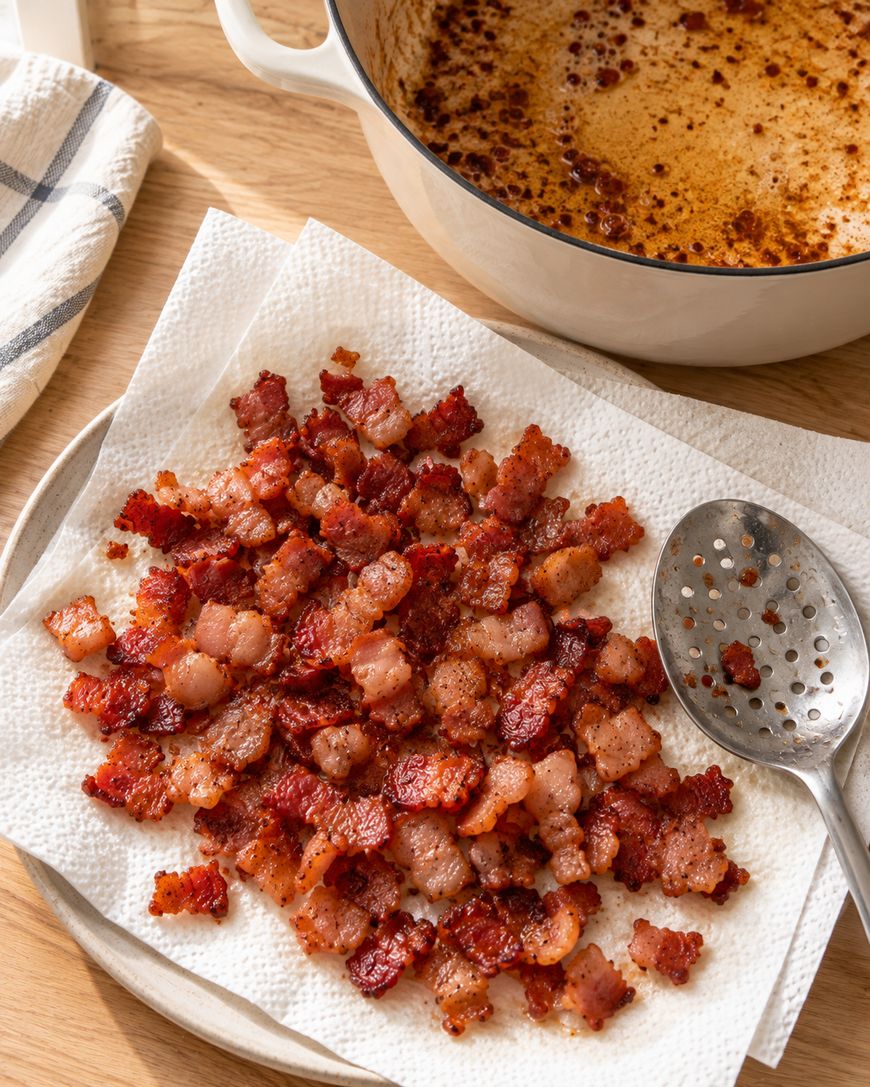
Chop the bacon into small pieces and cook it in the dry pot for 6 to 8 minutes, stirring now and then, until it is browned and crisp. Lift the bacon out with a slotted spoon and set it on a paper towel.
Leave about 2 tablespoons of drippings in the pot and pour off any extra. Those drippings carry the smoky flavor into everything that follows.
Soften the Onion and Garlic
Add the diced onion to the drippings and cook for about 4 minutes, stirring often, until it turns soft and translucent. Stir in the garlic and red pepper flakes and cook for 30 seconds until fragrant.

Watch the garlic closely, because it turns bitter fast if it browns. Bitter garlic is the last thing mustard greens need.
Wilt the Greens
Add the greens a few handfuls at a time, stirring after each addition so they collapse and make room for more. This takes about 4 minutes and feels like a lot of leaves for one pot at first.

Once all the greens are in, pour in the broth and stir in the sugar, salt and black pepper. Scrape up any browned bits from the bottom of the pot as you stir.
Simmer Until Tender
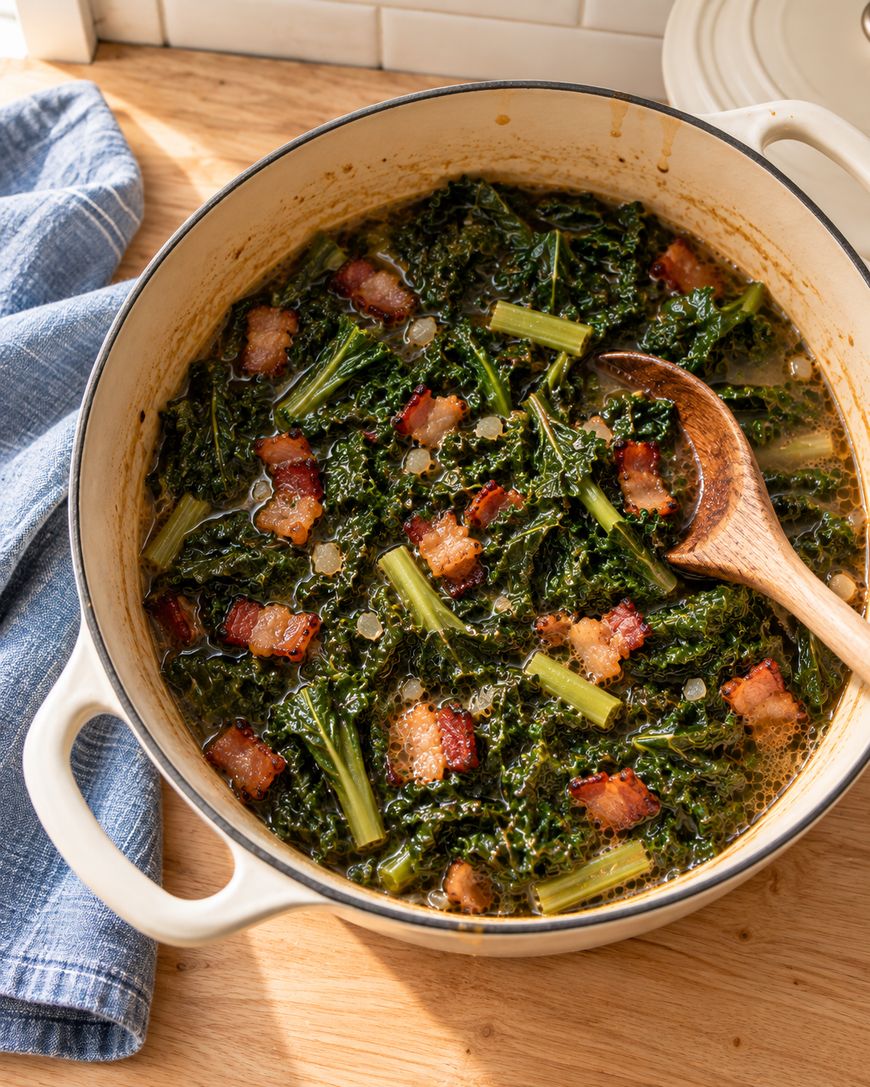
Bring the liquid to a gentle simmer, cover the pot, and cook for 25 minutes, stirring once or twice. The greens should be dark, soft and easy to cut with the side of a spoon.
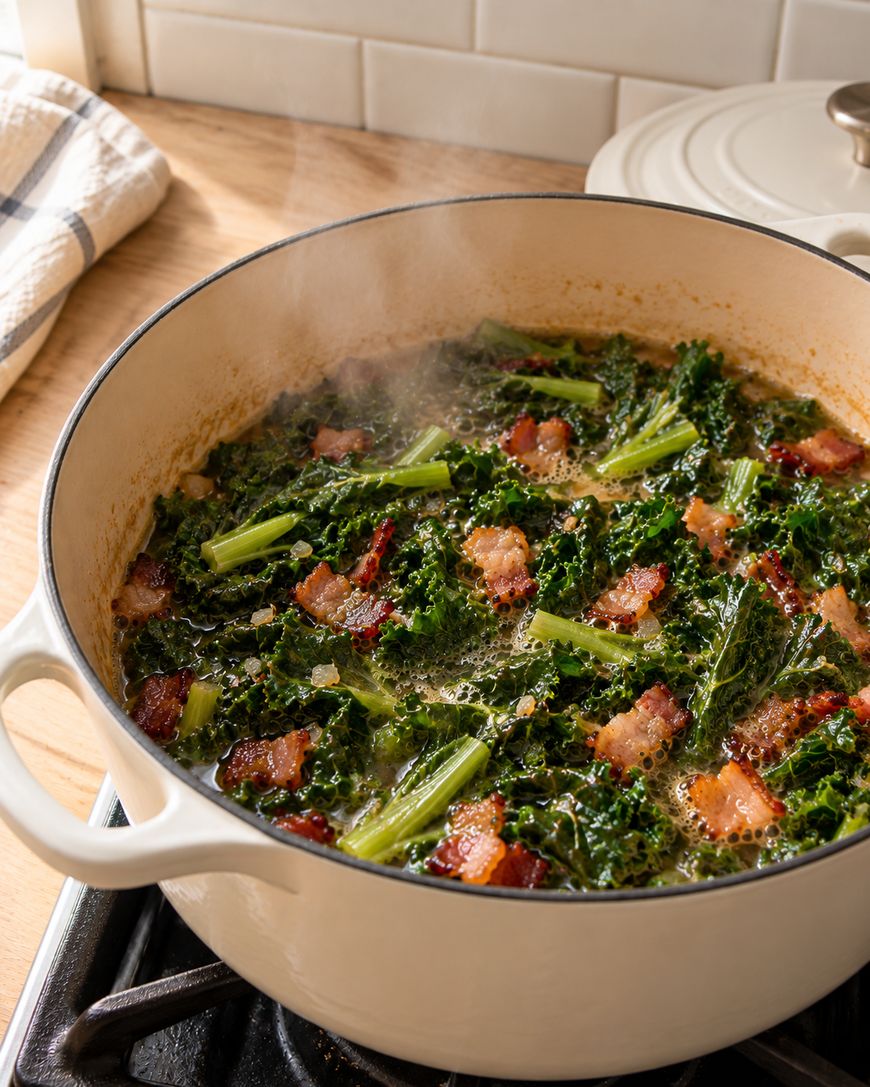
If the pot looks dry, add a splash of water. If the greens still have a firm chew, cover and cook for 5 more minutes.
Finish With Vinegar and Bacon
Uncover the pot, stir in the apple cider vinegar and the crisp bacon, and simmer for 3 minutes. Taste and add more salt, vinegar or pepper flakes until the flavor pops.
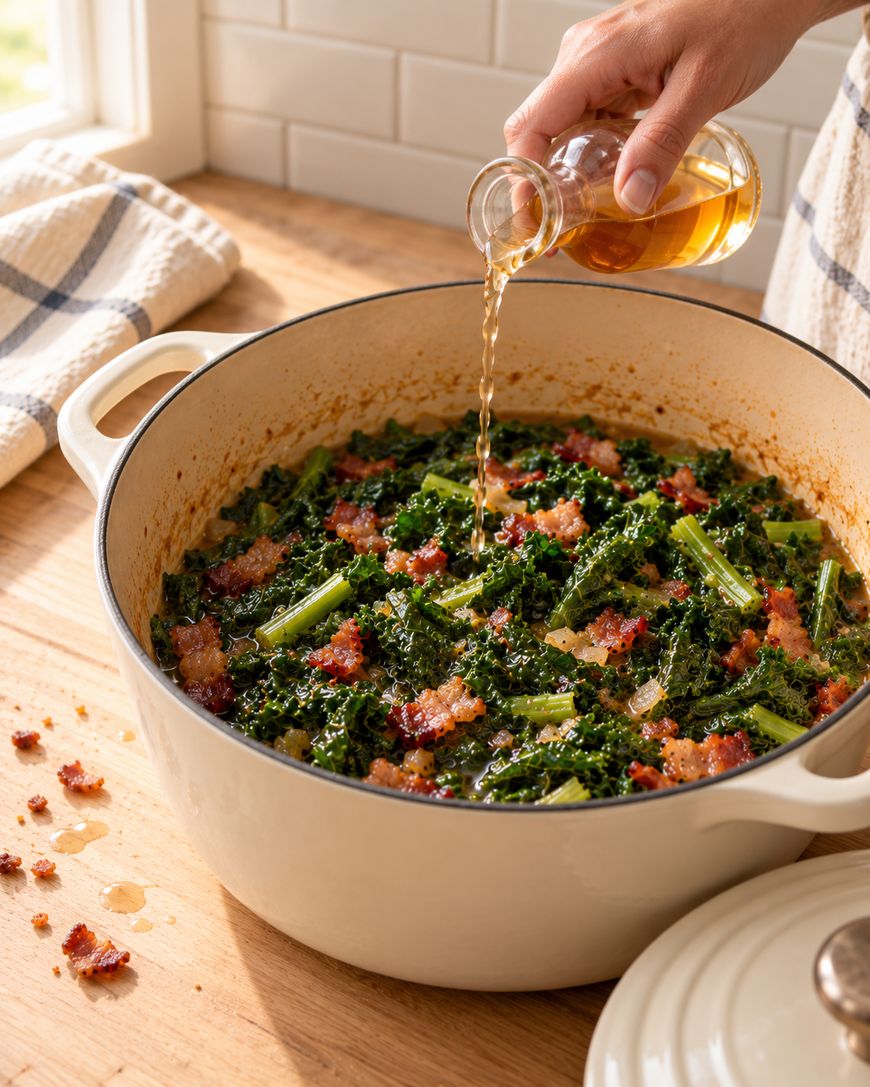
Serve the greens hot with some of the savory broth spooned over the top. That liquid, often called pot likker in the South, is meant to be enjoyed.
Tips for the Best Mustard Greens Recipe
Mustard greens have a reputation for bitterness, but a few small habits keep them balanced. These tips work whether you are cooking a first batch or your fiftieth.
Balance the Bitterness
Fat, acid and a touch of sweetness are the three tools that tame mustard greens. Bacon drippings supply the fat, vinegar supplies the acid, and the teaspoon of sugar rounds off the edges.
Add the vinegar at the end rather than at the start. Acid added early can dull the bright green color of the leaves.
Use a Big Pot
Raw mustard greens look enormous, so choose the biggest Dutch oven or stockpot you own. A crowded pot wilts unevenly and makes stirring messy.
Adding the leaves in batches also keeps the temperature steady. Each handful wilts in seconds and shrinks to a fraction of its raw size.
Do Not Rush the Simmer
Twenty-five minutes at a gentle simmer is the sweet spot for silky greens that still hold their shape. A hard boil breaks the leaves down into mush and can make the broth taste flat.
Keep the lid on so the steam does the softening work. Lift it only to stir.
Mustard Greens Recipe Variations and Substitutions
This recipe is flexible, and a few swaps change the character of the dish without changing the method. Choose the version that fits the meal you are planning.
Vegetarian Version
Skip the bacon and start with 2 tablespoons of olive oil plus 1/2 teaspoon of smoked paprika in the pot. Use vegetable broth in place of chicken broth, and the rest of the method stays the same.
The recipe card notes include this swap too. Smoked paprika brings back that campfire flavor that bacon usually provides.
Mixed Greens
Mustard greens pair well with collard greens or turnip greens. If you add collards, plan on about 10 extra minutes of simmering because they are sturdier.
The card keeps things simple with mustard greens only, so treat mixed greens as an optional variation. Our turnip greens recipe is a good place to see how a milder green behaves in the same style of pot.
Extra Heat or Extra Tang
Double the red pepper flakes for a spicier pot, or finish with a dash of your favorite vinegar-based hot sauce. Louisiana-style hot sauce fits naturally here.
For more tang, swirl in one extra teaspoon of apple cider vinegar at the end. Add it slowly so you do not overshoot.
Storing, Freezing and Reheating Mustard Greens
Cooked mustard greens taste even better the next day, which makes them a great make-ahead side. Cool the greens, then move them to an airtight container with a bit of their broth.
USDA guidance says cooked leftovers keep for three to four days in the refrigerator. The card notes list the same window, so use it as your limit.
For longer storage, freeze the greens with their broth in a freezer-safe container for up to 3 months for best quality. Thaw them overnight in the refrigerator before reheating.
Reheat the greens in a saucepan over medium-low heat with a splash of water until they are steaming hot. A small squeeze of vinegar brings the flavor back to life.
What to Serve With Mustard Greens
Mustard greens shine next to rich, savory mains that can stand up to their peppery bite. They also make a good foil for creamy sides.

Classic pairings include fried chicken, pulled pork, smothered pork chops, baked ham, and skillet cornbread for soaking up the broth. Black-eyed peas, mac and cheese, and buttery mashed potatoes round out a full Southern plate.
For a lighter meal, spoon the greens over rice or serve them alongside roasted chicken. If you want a creamy contrast, our creamed spinach recipe makes a lovely second green on the table.
The Story Behind Southern Mustard Greens
Mustard greens have been cultivated for thousands of years, and the plant is a relative of broccoli, cabbage and kale. Long, slow cooking with smoked meat became a hallmark of Southern kitchens, where greens were simmered until tender and the broth was treated as part of the meal.
That approach traces back to West African cooking traditions carried through the American South. The result is a humble dish with big flavor, and it remains a staple at Sunday suppers and holiday tables.
Today mustard greens show up in home kitchens across the country, especially in fall and early winter when the leaves are at their sweetest. Cooler weather mellows their sharp bite, so this mustard greens recipe is especially good once the temperature drops.
The full recipe card below has everything you need, so print it or save it before you head to the store.
Mustard Greens Recipe
Tender Southern-style mustard greens simmered with crispy bacon, garlic and a splash of apple cider vinegar until silky and full of smoky flavor.
Ingredients
- 2 large bunches mustard greens (about 1 1/2 pounds)
- 4 slices thick-cut bacon, chopped
- 1 medium yellow onion, diced
- 4 cloves garlic, minced
- 1/2 teaspoon red pepper flakes
- 1 1/2 cups low-sodium chicken broth
- 1 teaspoon sugar
- 1/2 teaspoon kosher salt
- 1/4 teaspoon black pepper
- 2 tablespoons apple cider vinegar
Instructions
- Wash the mustard greens in several changes of cold water to remove grit, then cut away the thick stems and slice the leaves into 1-inch ribbons.
- Cook the chopped bacon in a large Dutch oven over medium heat for 6 to 8 minutes, stirring occasionally, until browned and crisp.
- Remove the bacon with a slotted spoon to a paper towel, and pour off all but 2 tablespoons of drippings.
- Add the onion to the pot and cook for about 4 minutes until soft and translucent.
- Stir in the garlic and red pepper flakes and cook for 30 seconds until fragrant.
- Add the greens a few handfuls at a time, stirring until each batch wilts, about 4 minutes total.
- Pour in the broth and stir in the sugar, salt and black pepper, scraping up any browned bits from the bottom of the pot.
- Bring to a gentle simmer, cover, and cook for 25 minutes, stirring once or twice, until the greens are tender.
- Uncover, stir in the vinegar and the crisp bacon, and simmer for 3 minutes.
- Taste, adjust the salt and vinegar, and serve hot with some of the broth spooned over the top.
Notes
Refrigerate leftovers in an airtight container for 3 to 4 days. Freeze with the broth for up to 3 months for best quality. For a vegetarian version, skip the bacon, start with 2 tablespoons olive oil and 1/2 teaspoon smoked paprika, and use vegetable broth. If the greens still have a firm chew after 25 minutes, cover and cook 5 more minutes.
Nutrition Information:
Yield:
6Serving Size:
3/4 cupAmount Per Serving: Calories: 115Total Fat: 7gSaturated Fat: 2.5gSodium: 390mgCarbohydrates: 8gFiber: 3gSugar: 2gProtein: 6g
Mustard Greens Recipe FAQ
Why are my mustard greens bitter?
Mustard greens naturally carry a sharp, peppery bite, and older, larger leaves taste stronger. Bacon drippings, a little sugar and a splash of vinegar balance that bitterness, and removing the thick stems helps too.
How long does it take to cook mustard greens until tender?
In this recipe the greens simmer for 25 minutes after wilting, which gives a silky, tender texture. Younger leaves may soften a few minutes sooner, while sturdier leaves may need 5 extra minutes.
Do I need to remove the stems from mustard greens?
Yes, cut away the thick center stem on each leaf before chopping. The stems stay tough and stringy even after a long simmer, while the leafy part turns tender.
Can I use frozen mustard greens instead of fresh?
You can, and they save you the washing and chopping. Skip the wilting step, add the frozen greens straight to the pot with the broth, and simmer until tender, adding a few minutes if needed.
What can I use instead of bacon?
Olive oil and smoked paprika give a similar smoky depth for a vegetarian pot. Use vegetable broth as well, and finish with the same splash of vinegar.
Why This Mustard Greens Recipe Works
Rendering the bacon first builds a flavorful fat that coats every leaf. Cooking the onion and garlic in those drippings adds a savory base before any liquid goes in.
Wilting the greens in batches keeps the pot from overcrowding, and the covered 25-minute simmer softens the leaves without turning them to mush. The vinegar and bacon stirred in at the end keep the flavor bright and the bacon pieces crisp.
A single teaspoon of sugar might seem small, but it smooths the peppery edge without making the greens taste sweet. Together these steps give you greens that taste balanced instead of harsh.
Make This Mustard Greens Recipe Tonight
Now you have a reliable mustard greens recipe with tender leaves, smoky flavor and a broth worth sopping up with cornbread. Grab two bunches at the store, follow the steps on the card, and put a pot of greens on the table this week.
Turnip Greens Recipe: Southern-Style Braised Greens Done Right
The Creamy Steakhouse-Style Creamed Spinach You’ll Want to Make on Repeat