Last updated: October 19, 2026
A beautiful outdoor space needs more than attractive plants and comfortable seating. In Tampa, seasonal downpours, intense sunshine, and sandy soils can complicate landscape watering. A garden may look inviting immediately after installation yet become difficult to maintain once dry spells arrive. Thinking about water access before choosing turf, trees, and paving helps avoid costly changes later. The aim is not to use more water, but to design a yard where irrigation, drainage, and planting work together.
Plan the Landscape From the Ground Up
Homeowners often begin with the visible details: a patio, privacy hedge, flowerbeds, or an open lawn. Those choices matter, but their long-term success depends on soil conditions and the way water moves across the property.
Study where rain collects, which areas dry first, and whether established plants already struggle. A sunny lawn and a shaded border might require very different watering schedules, even when they sit close together. Poor grading can also send runoff toward hardscaping or the house.
Sketch irrigation routes before completing expensive surface work. Planning belowground connections early can reduce the need to disturb new paving or established planting later.
Consider the Water Source Before Choosing Plants
An irrigation plan depends on the available supply, its pressure, its capacity, and any restrictions that apply. Municipal water may be convenient, but a large landscape can place considerable demand on household usage. A private irrigation well is another possibility where groundwater conditions, regulations, and costs make it appropriate.
A reliable water source is essential for keeping lawns, gardens, and landscaped areas healthy throughout the year. For homeowners considering Tampa well drilling services, working with experienced professionals can help determine whether groundwater is suitable for irrigation. A proper assessment considers soil conditions, water availability, well depth, and the pumping equipment needed to support the landscape. With the right setup, homeowners can create an irrigation system that meets their property’s watering needs while reducing dependence on municipal water.
A well is not an unlimited or automatically cheaper source. Installation, electricity, maintenance, and responsible groundwater use belong in the decision.
Group Plants by Their Water Needs
A landscape becomes harder to manage when every planting bed has different demands but shares the same irrigation schedule. Grass may require regular coverage, while established shrubs can need less frequent watering. Mixing them on one zone risks leaving some plants thirsty and others saturated.
The landscaping guidance on soil and plant selection explains why grouping vegetation with similar requirements into watering zones improves efficiency. This approach, often called hydrozoning, also helps prevent overwatering.
Think about sun exposure, shade, slope, and root depth when dividing the yard. Separate controls let watering follow actual needs rather than forcing every part of the property onto one setting.
Work With the Soil Instead of Against It
Soil influences how quickly irrigation reaches roots and how long moisture remains available. Sandy ground may drain rapidly, while compacted or clay-rich patches may shed water before plants absorb enough. A property can contain more than one soil condition.
Before installing irrigation, check drainage and consider whether organic matter, mulch, or changes to the planting layout would improve moisture management. Healthy soil can make watering more effective without necessarily increasing the volume applied.
Keep mulch away from trunks and building materials, and avoid assuming frequent shallow watering is best. Encouraging appropriate root development and observing plant response matter more than following a rigid schedule throughout the year.
Make Irrigation Precise Rather Than Powerful
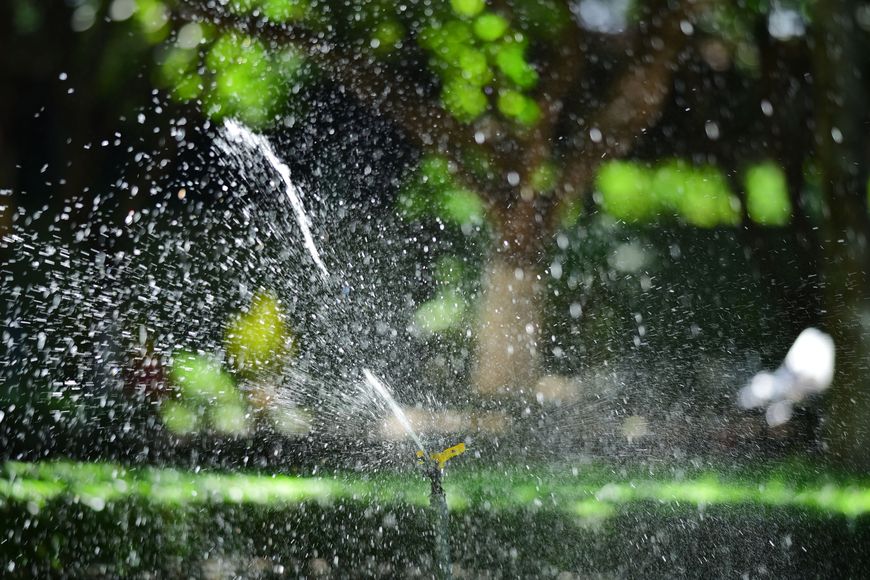
Sprinklers should water plants, not sidewalks, walls, and outdoor furniture. Incorrect spray patterns can waste water and create slippery surfaces. In planting beds, drip or microirrigation may deliver moisture more precisely near roots, although the system still needs filtering and maintenance.
The watering tips for efficient irrigation describe adjusting schedules for weather, checking sprinkler coverage, and avoiding runoff. Weather-responsive controllers or soil-moisture sensors can help when installed and programmed correctly.
Design separate zones around different planting types, then confirm that available pressure and flow can operate each zone. A system with more sprinkler heads is not necessarily better if those heads cannot perform properly together.
Leave Space for Rainfall and Drainage
Irrigation is only half of outdoor water management. During heavy rain, a landscape also needs safe routes for excess water. Pooling beside foundations, flooded paths, and soil erosion can undermine otherwise thoughtful design.
Observe runoff before changing slopes or adding drains. Rain gardens, permeable surfaces, and appropriate grading may help manage certain conditions, but each requires suitable soil and a safe overflow route. Avoid redirecting water onto neighboring property or assuming it will disappear underground.
Keeping irrigation separate from drainage planning can create unnecessary work. Coordinating both systems protects planted areas and helps patios, walkways, and lawns remain usable after wet weather.
Calculate Long-Term Costs Honestly
An outdoor upgrade should fit the budget after contractors leave. Consider pump energy, water testing where appropriate, filters, sprinkler repairs, controller settings, and seasonal upkeep. A well may reduce dependence on purchased water for irrigation, yet savings depend on installation costs and actual use.
Ask contractors for written estimates that describe equipment, connections, electrical needs, permits, and ongoing responsibilities. Compare alternatives using the same expected demand rather than relying on broad promises.
Replacing dead plants or repairing waterlogged paving is expensive too. Investing in the right design early can reduce avoidable maintenance, even if the initial project requires more careful planning.
Design for the Yard You Will Maintain
The most successful outdoor space is one that stays practical after the excitement of installation fades. Choose a realistic amount of lawn, place plants where they can thrive, and make valves, filters, and controls accessible for maintenance.
Review watering needs as plants establish and seasons change. Inspect for leaks, clogged emitters, uneven coverage, and overspray. Small adjustments can prevent recurring problems from becoming costly repairs.
An attractive landscape does not need to demand constant attention or excessive water. When supply, soil, drainage, and plant choices are considered together, the result is a yard that looks intentional and remains manageable for years without unnecessary ongoing expense.