Last updated: October 29, 2026
If your oven is streaked with baked-on splatters and burnt drips, these oven cleaning hacks will get it sparkling again. We start with the safest first steps, then move through the best methods for the cavity, racks and glass door.
You do not need a cabinet full of chemicals or a free weekend to get there.
Check Your Manual First for Safe Oven Cleaning Hacks
Before you try any oven cleaning hack, find the cleaning section of your oven manual. Manufacturers give different instructions for self-cleaning ovens, continuous-clean coatings and standard ovens, and following yours protects both the finish and your warranty.
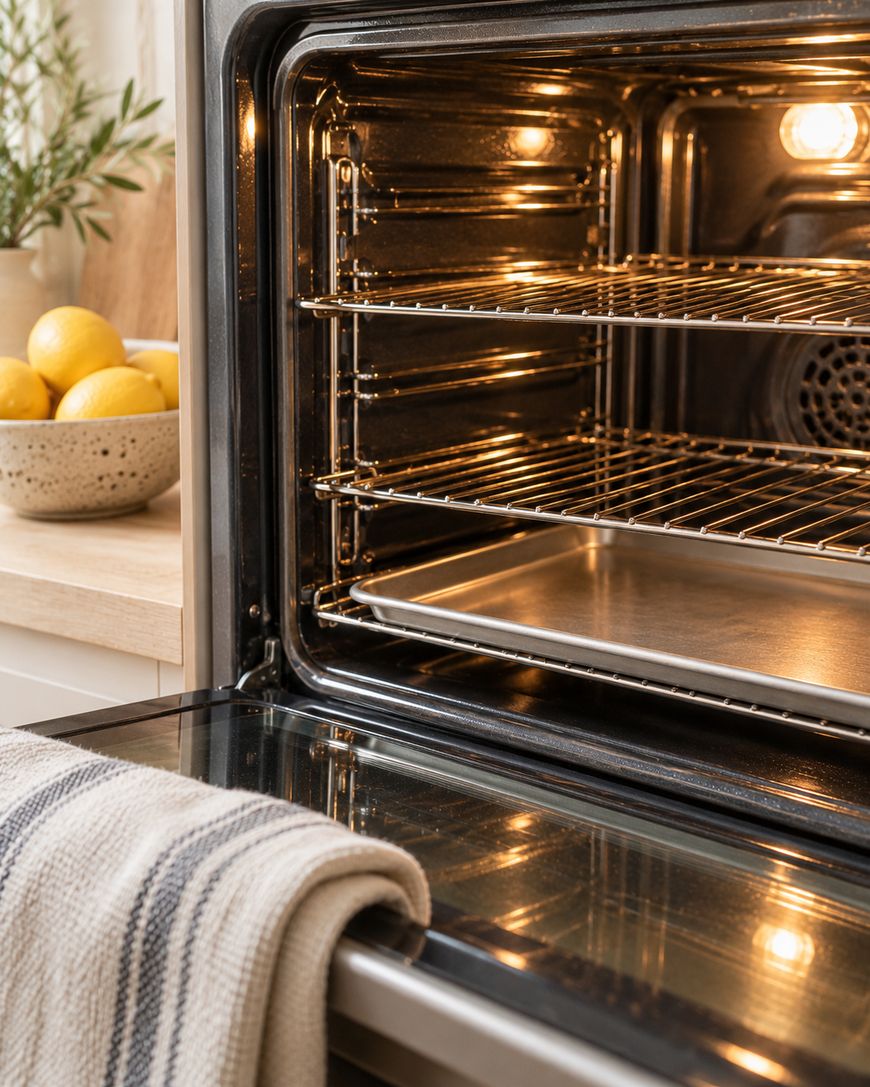
If you cannot find the paper manual, search your oven’s model number online and look for the manufacturer’s care guide. That page will tell you which products and tools are safe on your specific interior.
Know Which Type of Oven You Have
A self-cleaning oven usually has a dedicated cycle and a special enamel that some cleaners can damage. A standard oven can handle gentle scrubbing, but abrasive pads can still scratch it.
Let the oven cool completely and unplug it or switch off the power at the breaker if you will be reaching near heating elements or sensors. Take out the racks and any loose pans so you can see exactly what you are dealing with.
Never Mix Cleaning Products
Poison control centers and the CDC warn that mixing certain cleaners, such as bleach with ammonia or bleach with vinegar, can release dangerous gases. Choose one cleaning method at a time and rinse the oven well before you try another.

If you use a commercial oven cleaner, read the label for ventilation and glove instructions and follow them exactly. Keep children and pets out of the kitchen while you work, and open a window or run the vent hood.
The Baking Soda Paste Hack for a Dirty Oven
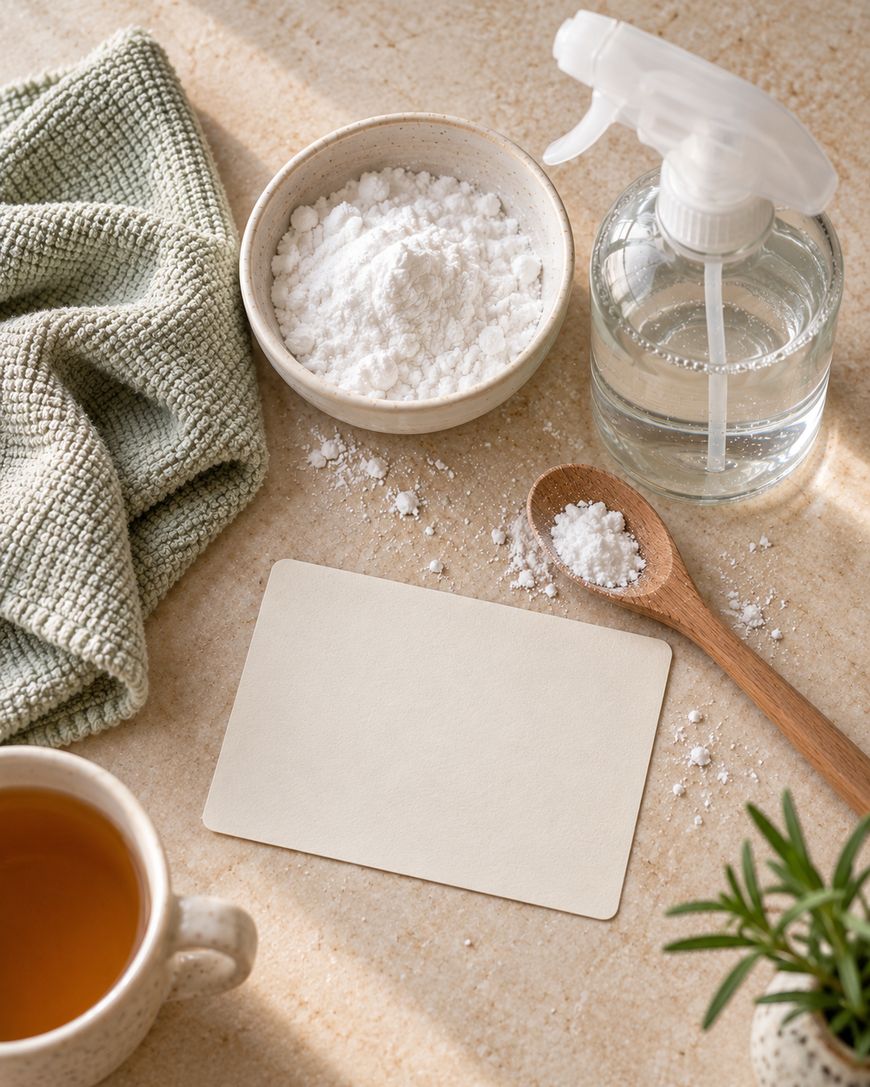
The baking soda paste method is the most popular of all oven cleaning hacks because it uses a pantry staple and needs no harsh fumes. It works by loosening grease so it wipes away instead of needing to be scraped.
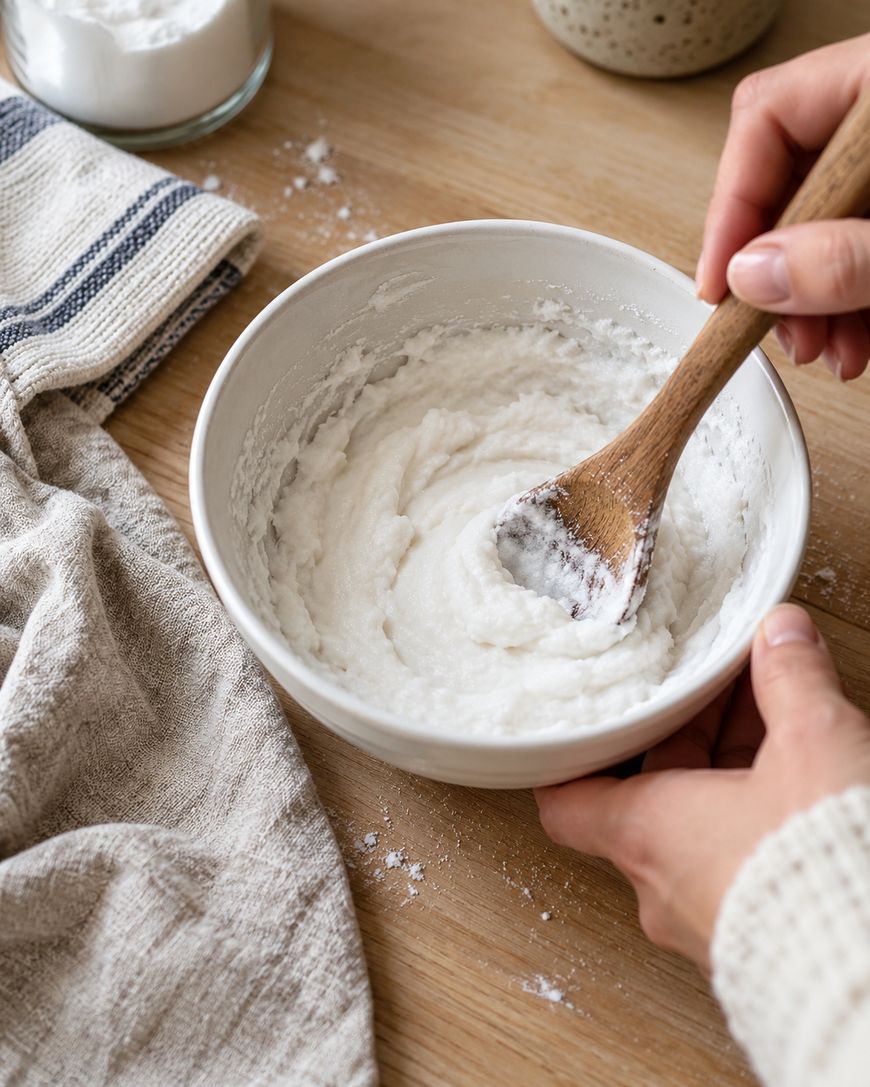
Mix baking soda with a little water until you have a spreadable paste that looks like thick frosting. Wear gloves and use a spoon or silicone spatula to spread it across the inside surfaces.
How to Apply and Leave the Paste
Cover the dirtiest spots first, such as the floor and the area around the door. Skip the heating elements and any vents or openings, because the paste can clog them.
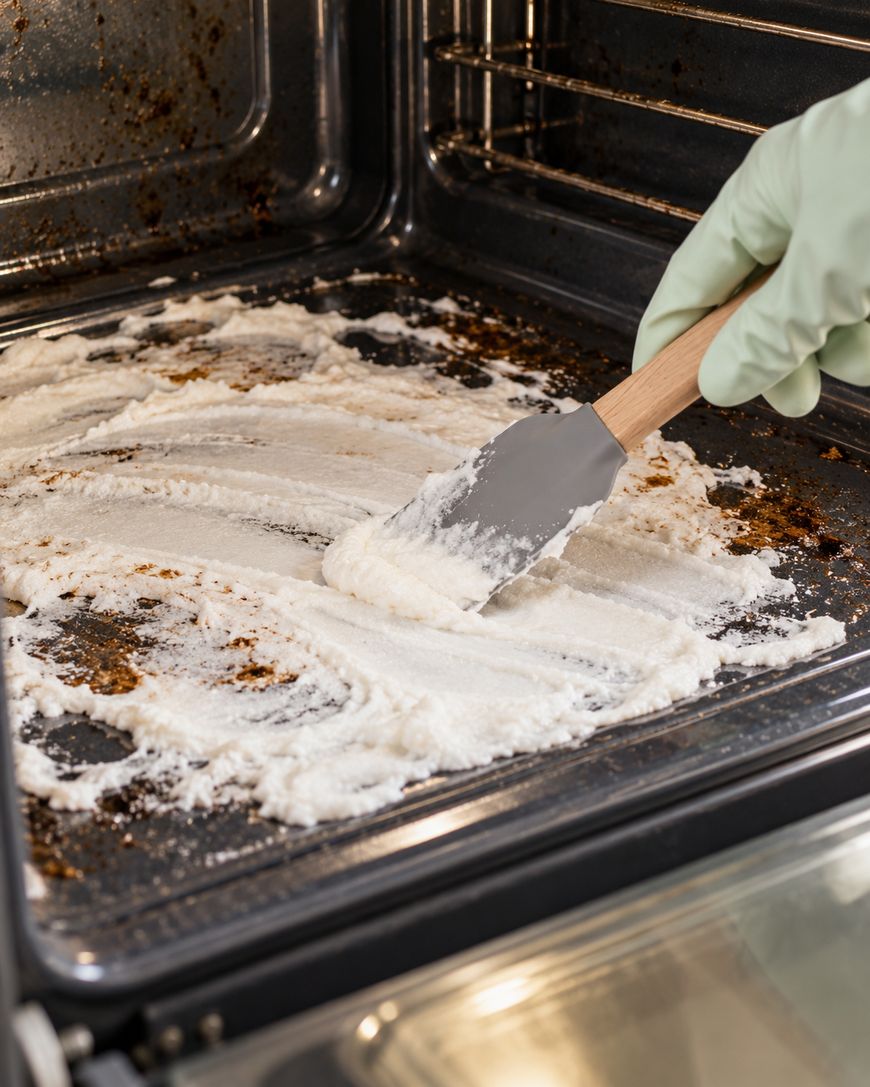
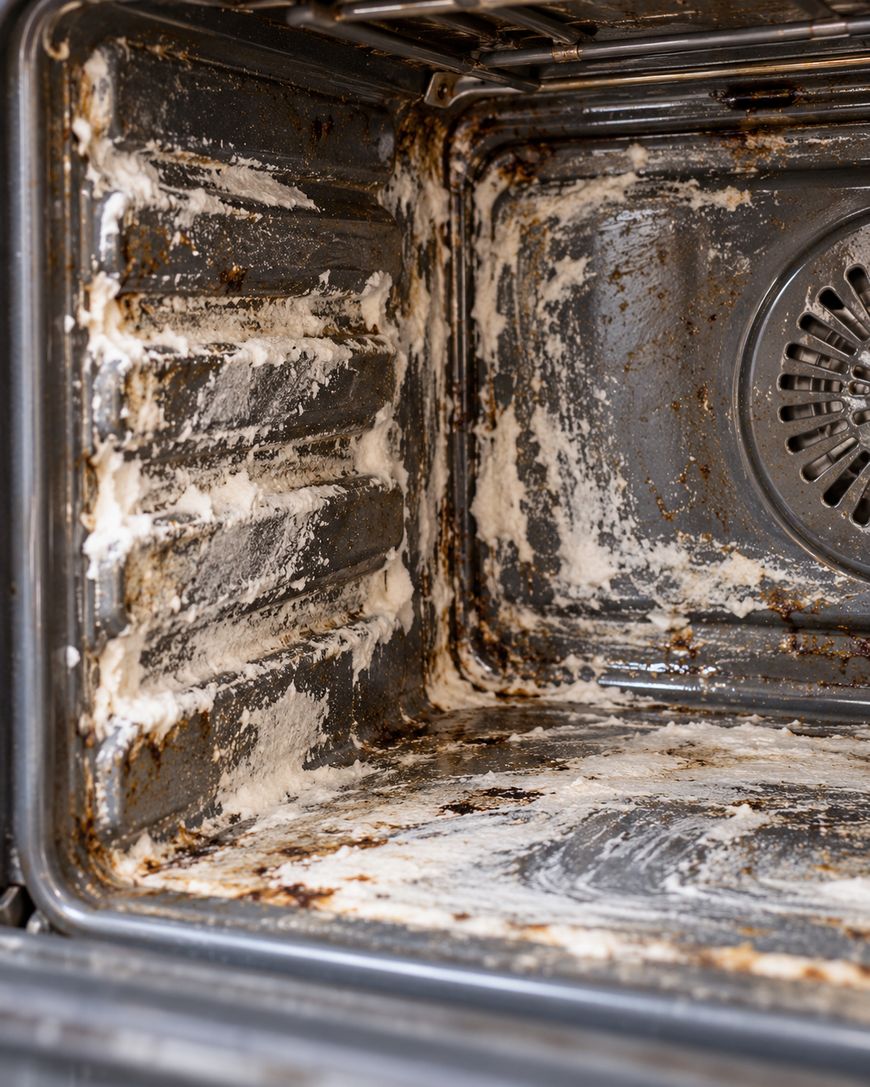
Leave the paste to sit for several hours or overnight so it has time to soften the grime. The longer it stays damp, the easier the wiping will be.
How to Wipe It Off Without a Mess
Wipe away the loosened paste with a damp cloth, working from the top of the oven to the bottom. A silicone spatula or a wooden spoon can lift any stubborn crusts without scratching the surface.
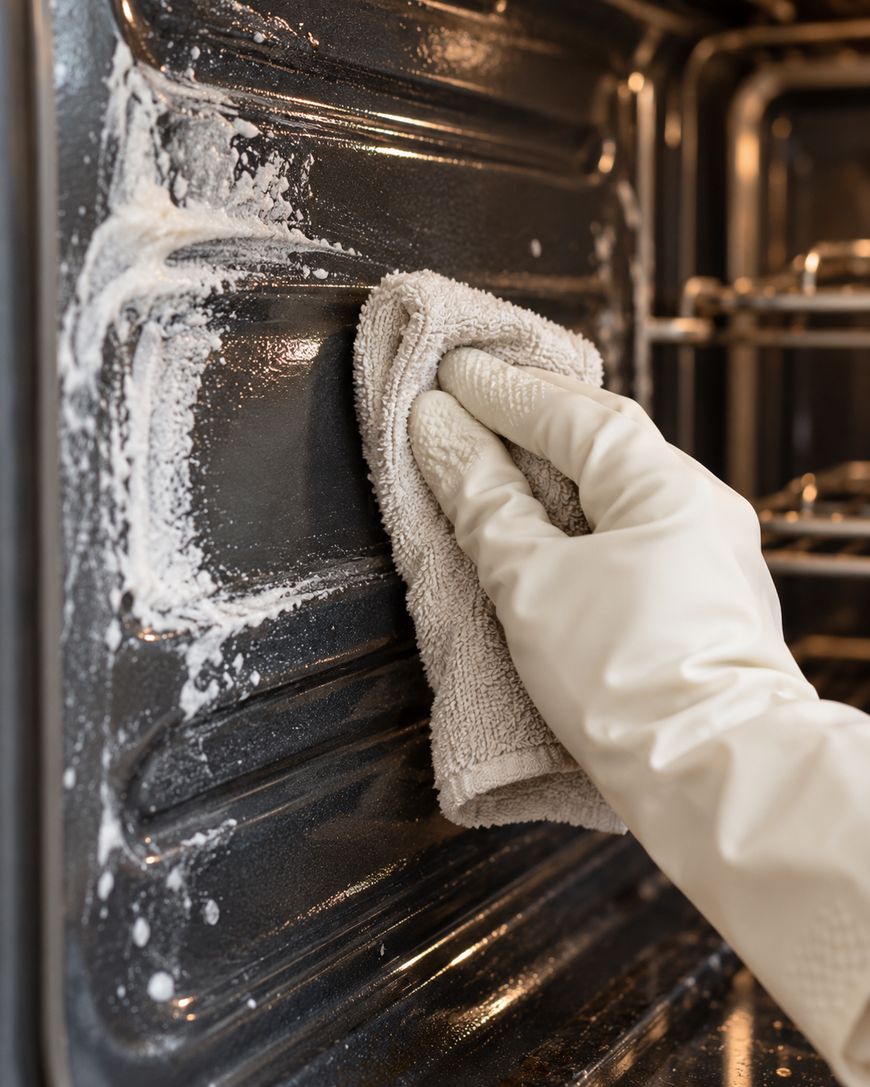
For leftover white residue, spritz a little white vinegar onto the area and wipe again. It will fizz gently as it reacts with the baking soda, which helps lift the last bits, and then you can rinse with a clean damp cloth.
Steam Cleaning Your Oven With Water
Steam is one of the gentlest oven cleaning hacks for light messes, since it softens grime with nothing more than hot water. It is a good choice when your oven is only mildly dirty or when you want to loosen things before a baking soda treatment.

Fill an oven-safe dish with water, place it on the middle rack and heat the oven using the low steam or low temperature setting that your manual recommends. Some ovens also have a built-in steam clean mode, which is worth using if yours does.
Letting the Oven Cool Before You Wipe
Once the cycle ends, turn the oven off and leave the door closed until the surfaces are cool enough to touch. The softened residue will wipe off with a damp microfiber cloth.
Be careful when you remove the dish, because the water and the dish itself will be hot. Use oven mitts and carry it slowly to the sink.
How to Clean Oven Racks and the Glass Door
Racks and glass doors collect their own kind of mess, so they deserve a separate plan. Cleaning them away from the oven cavity also keeps loose crumbs from landing back where you just wiped.
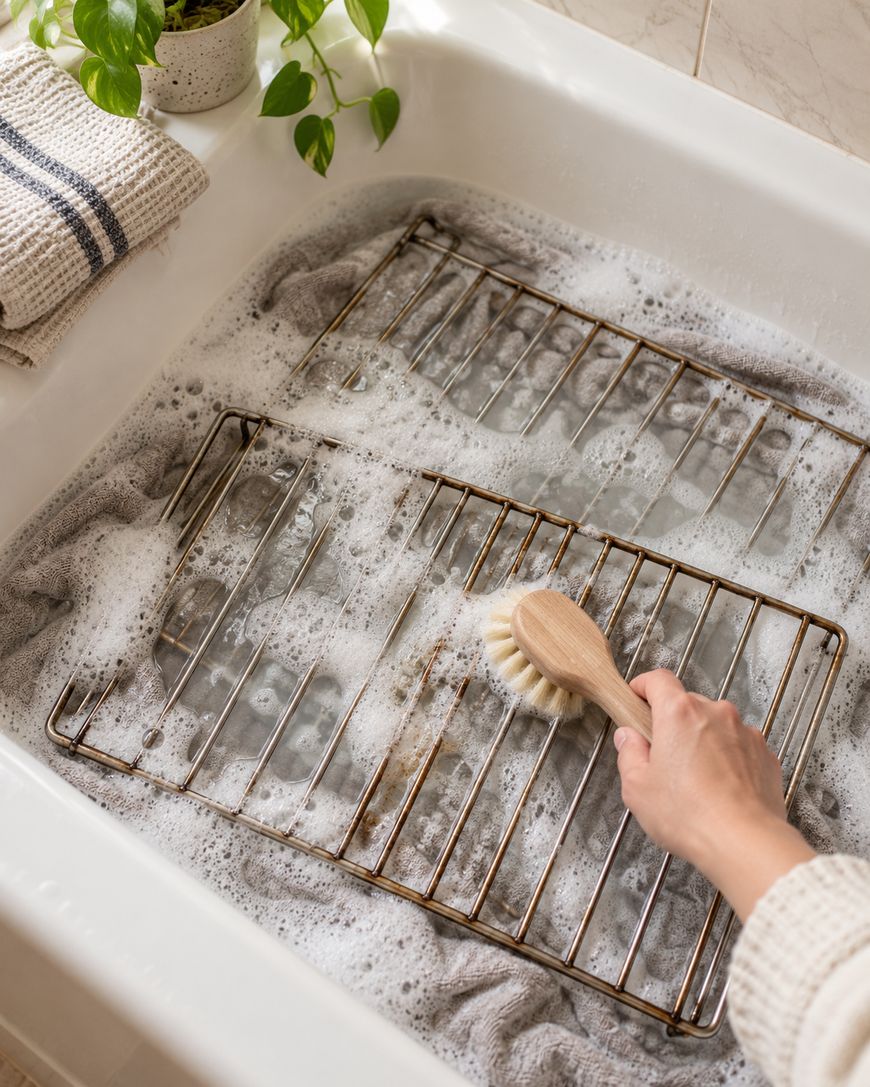
Soak the Racks in a Tub or Sink
Lay an old towel in the bottom of a bathtub or large sink so the racks do not scratch it. Add hot water and a generous squirt of dish soap, then lay the racks flat and let them soak for a few hours.
After soaking, scrub with a non-scratch sponge or a soft brush and rinse well. Dry the racks completely before sliding them back in so they do not rust.
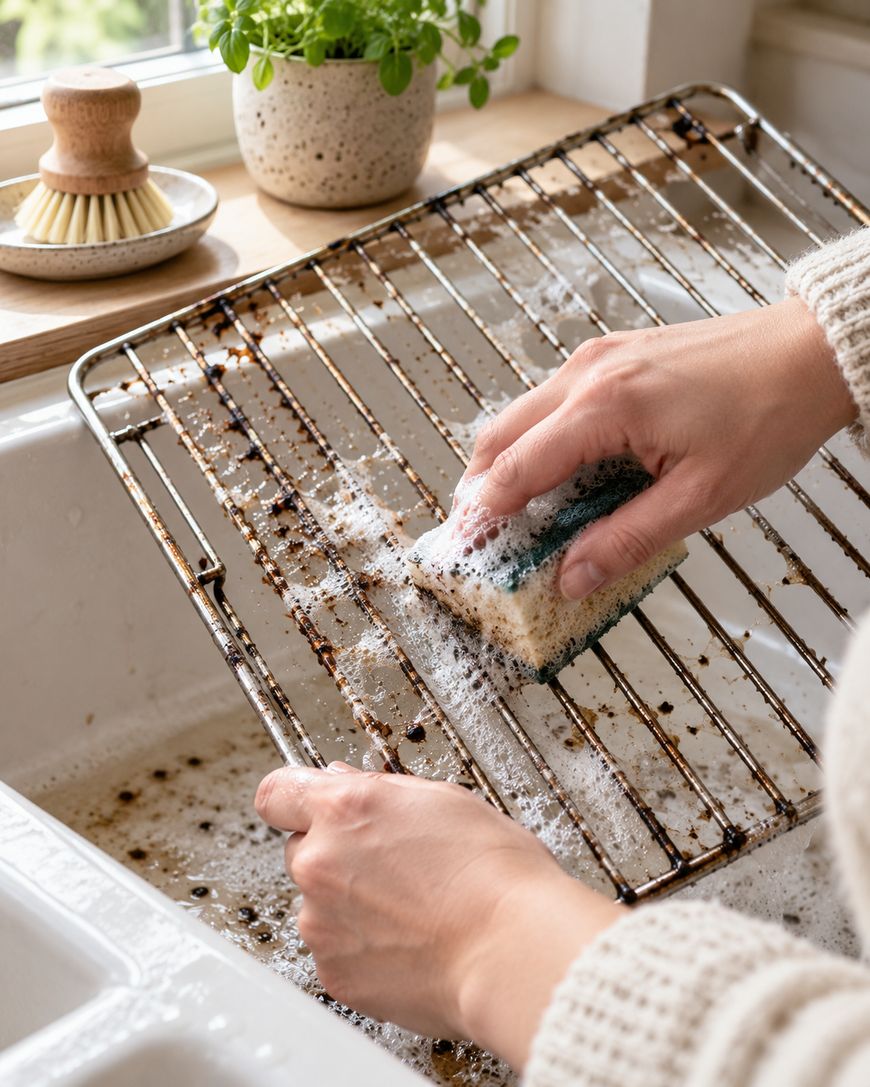
Clean the Glass Door With a Paste
Spread the same baking soda paste over the inside of the glass and let it sit while you clean elsewhere. Wipe it off with a damp cloth and finish with a glass cleaner or a vinegar and water spray for a streak-free shine.
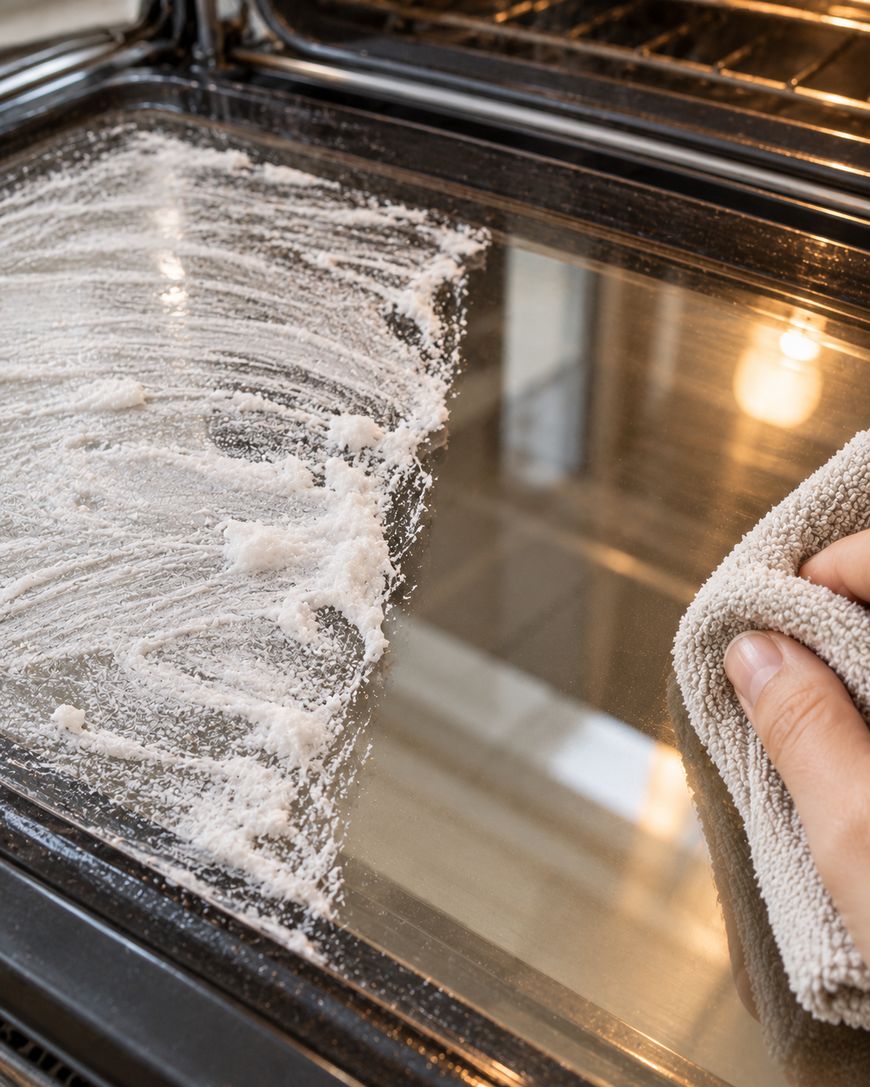
Do not use a razor scraper or steel wool unless your manual allows it. Scratches in the glass are permanent, and some doors have special coatings that need gentle handling.
Using the Self-Cleaning Cycle Safely
The self-cleaning cycle is one of the most convenient oven cleaning hacks, but it deserves some respect. It reaches very high heat to burn residue to ash, which can produce smoke and strong odors.
Wipe out large spills and loose crumbs first, because heavy grease can smoke more during the cycle. Remove the racks unless your manual says to leave them in, since the high heat can dull their finish and make them harder to slide.
Ventilate and Protect Your Household
Open windows and turn on the vent hood while the cycle runs. Many manufacturers also warn that fumes from the cycle can be harmful to pet birds, so keep birds well away from the kitchen and check your manual for other precautions.
When the cycle ends and the oven has cooled, wipe away the remaining ash with a damp cloth. Do not use oven cleaner before or after the cycle unless your manual specifically says it is safe.
Easy Habits That Keep Your Oven Cleaning Hacks Working Longer
The best way to avoid a big cleaning day is to catch messes while they are small. A few habits can cut your scrubbing time dramatically.
Set a baking sheet on the rack below anything that might bubble over, such as pies and casseroles. Cover dishes with a lid or foil so splatters stay put, and wipe up spills once the oven is cool before they bake on again.
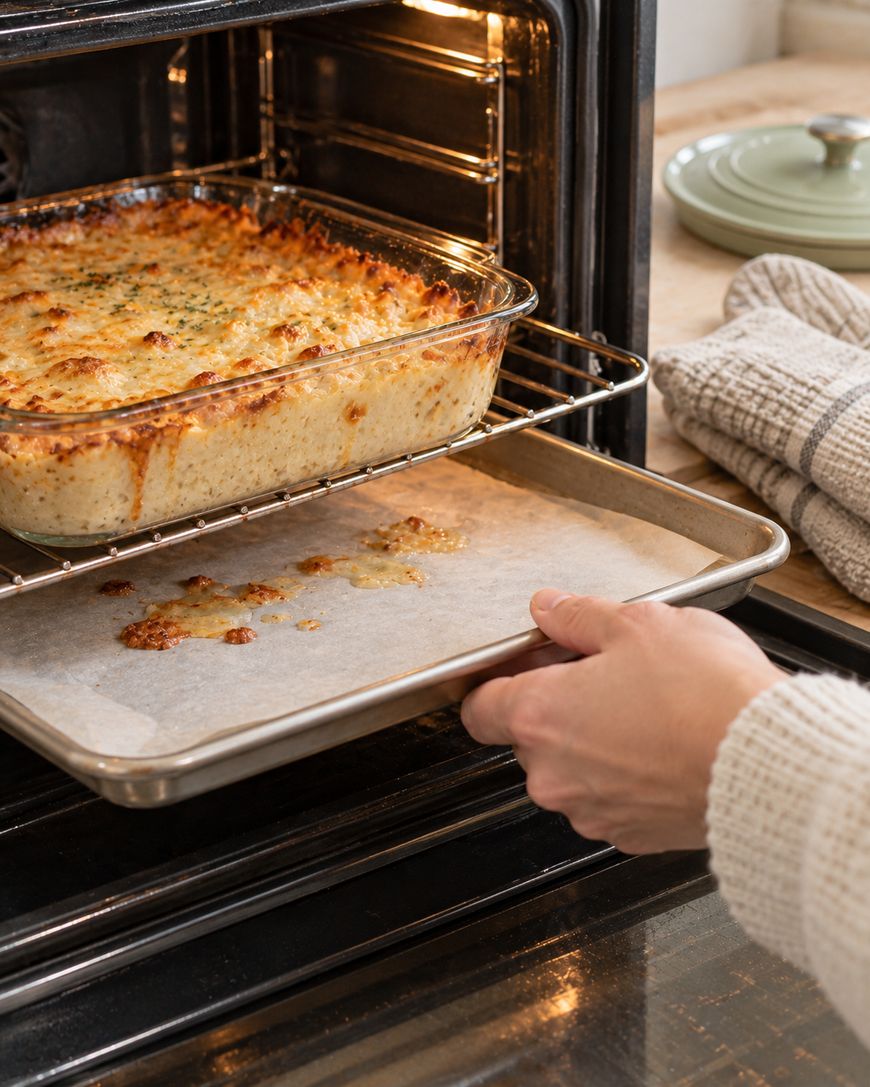
Many oven manuals advise against lining the oven floor with foil because it can damage the finish or block airflow. Check your manual before using any liner, and choose a product labeled as oven safe if your manufacturer approves of it.
Pick a regular day for a quick wipe-down, such as the first Sunday of the month. A few minutes with a damp cloth will make deeper cleaning far easier.
If you notice a spill while the oven is still warm, do not reach in with bare hands. Wait until it is safe, then wipe it up so it does not bake into a hard crust.
Why Regular Oven Cleaning Is Worth the Effort
Built-up grease and burnt food can smoke when you preheat, which makes your kitchen smell and can affect how your food tastes. A clean oven is simply a more pleasant place to bake and roast.
Clean surfaces also let you see what is happening inside. You can spot spills early, notice a loose rack or a worn seal, and keep the oven in good shape for years of dinners.
Regular care also makes the big jobs rare. Most people find that a light monthly wipe and an occasional deep clean is plenty.
If you have a holiday coming up, give the oven attention a week or so ahead. That way you are not scrubbing in a rush while the guests arrive, and a fresh oven will not send smoke through the house when you preheat for the big meal.
It also helps to know your oven’s quirks. A quick look at the cavity every few weeks tells you when it is time to clean.
Oven Cleaning Hacks FAQ
Can I Mix Baking Soda and Vinegar to Clean My Oven?
You can use them one after the other, as in the paste and spritz steps above, because both are household staples. Do not mix either of them with bleach, ammonia or commercial oven cleaner.
How Often Should I Clean My Oven?
Most households do well with a quick wipe monthly and a deeper clean a couple of times a year. If you bake or roast often, or if spills happen regularly, clean it more often.
Is It Safe to Use Oven Cleaner Spray?
Commercial oven cleaners can be effective but contain strong ingredients, so always read the label and follow its safety directions. They are not suitable for every oven, so check your manual first.
Can I Clean a Self-Cleaning Oven With Baking Soda?
In many cases a gentle baking soda paste is fine for the interior, but manuals vary. Check yours to be sure, and avoid scrubbing the special coating hard.
What Is the Easiest Way to Remove Burnt-On Grease?
Start with the baking soda paste and give it plenty of time to work. A silicone spatula helps lift stubborn spots without scratching.
Your Oven Cleaning Hacks Action Plan
Pick one of these oven cleaning hacks and try it this weekend. If your oven is only lightly dirty, start with steam, and if it is heavily soiled, go with the baking soda paste.
Check your manual, keep your cleaners separate and give each method time to work. Never combine products, and always ventilate the room when you are using anything stronger than water.
Start with the racks, because they are the easiest win and make the whole oven look better right away. Then tackle the glass door and the floor of the oven while the paste does its work.
Once the oven is clean, protect it with the small habits above. Set a reminder for next month, grab a damp cloth and keep your oven cleaning hacks routine simple so it never becomes a big job again.
You deserve a kitchen that feels fresh. Your next batch of cookies will thank you.