Last updated: October 4, 2026
This pierogi recipe gives you tender, buttery dumplings stuffed with creamy potato and sharp cheddar, boiled until puffed and then pan-fried until golden. Everything you need is in the recipe card below, and the full walkthrough here will help you get it right on the first try.

What You Need to Make Pierogi From Scratch
Homemade pierogi need just three groups of ingredients: a simple sour cream dough, a potato and cheese filling, and a pile of caramelized onions for the top. Everything comes from the regular grocery store, and none of it is hard to find.
The Sour Cream Dough
The dough uses 2 cups of all-purpose flour, 1 teaspoon of salt, 1 large egg, 1/2 cup of full-fat sour cream, 2 tablespoons of softened unsalted butter, and about 1/4 cup of warm water. The sour cream and butter are what make the dough soft and easy to roll instead of tough and chewy.

The Potato and Cheese Filling
The filling starts with 1 pound of Yukon Gold potatoes, which is about 3 medium potatoes, peeled and cut into chunks. You also need 3/4 cup of shredded sharp cheddar, 2 tablespoons of butter, 1/2 teaspoon of salt, and 1/4 teaspoon of black pepper.

Yukon Golds mash up creamy and naturally buttery. That keeps the filling smooth instead of grainy.
The Onion Topping and Serving Extras
One large yellow onion, sliced thin and cooked slowly in 2 tablespoons of butter, turns sweet and jammy. You also need another 2 tablespoons of butter for frying, plus sour cream and chopped chives for serving.
A tablespoon of salt goes into the pot of boiling water as well. That seasons the dough from the outside.
How to Make Pierogi Step by Step
Plan on about 1 hour and 45 minutes from start to finish, including 30 minutes while the dough rests. Most of that time is hands-off, so you can cook the filling and the onions while the dough relaxes.
Mix and Rest the Dough
Whisk the flour and salt in a large bowl, then add the egg, sour cream, softened butter, and 1/4 cup of warm water. Stir until a shaggy dough forms, then knead it on a lightly floured counter for 5 minutes until smooth and soft.
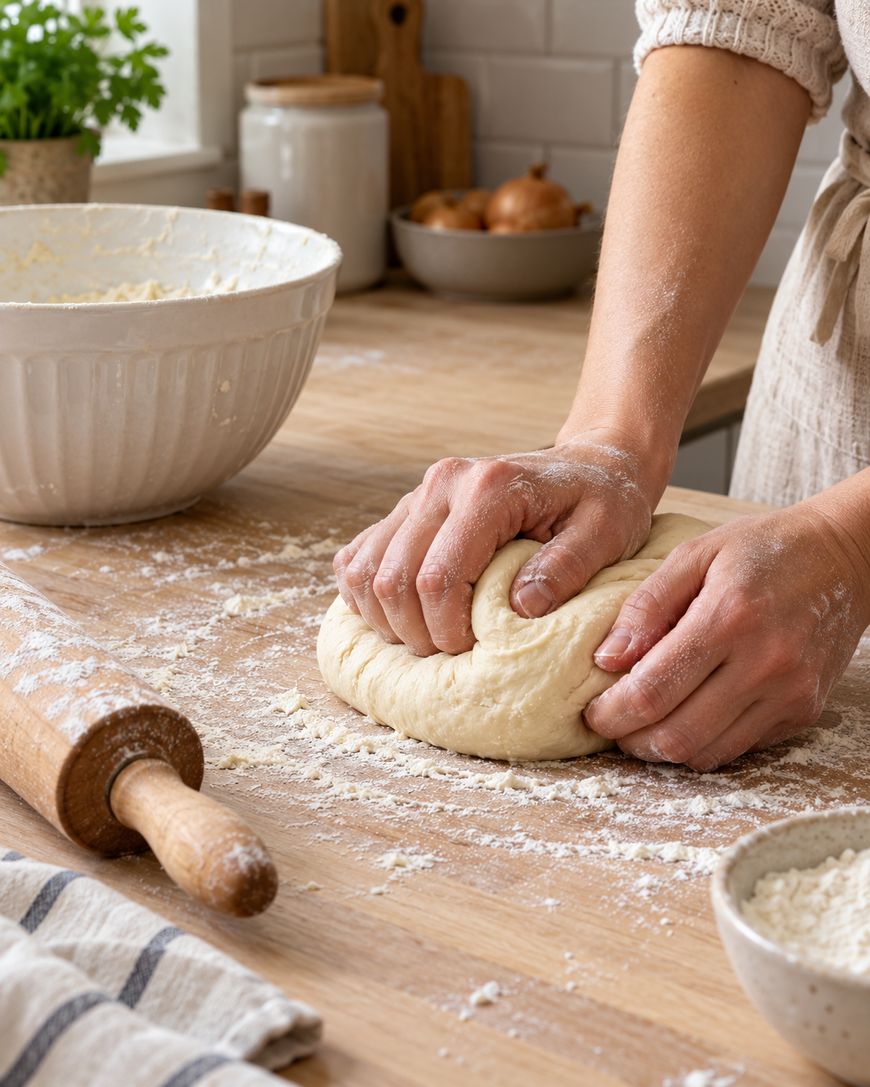
If the dough feels dry or crumbly, knead in up to 2 more tablespoons of water, one spoonful at a time. Wrap it tightly and let it rest for 30 minutes, which relaxes the gluten so it rolls out without snapping back.
Cook and Mash the Filling
Boil the potatoes in a pot of water for 15 to 20 minutes, until a fork slides in with no resistance. Drain them well and let them steam dry in the colander for 2 minutes.

Mash the potatoes with 2 tablespoons of butter, 1/2 teaspoon of salt, and 1/4 teaspoon of pepper until completely smooth. Stir in the cheddar until it melts, then let the filling cool for about 15 minutes so it is easy to handle.
Caramelize the Onions
Melt 2 tablespoons of butter in a large skillet over medium-low heat and add the sliced onion with 1/4 teaspoon of salt. Cook for 15 to 20 minutes, stirring often, until the onion is deep golden and soft.

Scoop the onions into a bowl and set them aside. You will use the same skillet for frying the pierogi.
Roll, Fill, and Seal
Roll the dough about 1/8 inch thick on a floured surface and cut out 3-inch rounds with a cookie cutter or the rim of a glass. Gather the scraps, reroll them once, and keep cutting until you have 24 rounds.
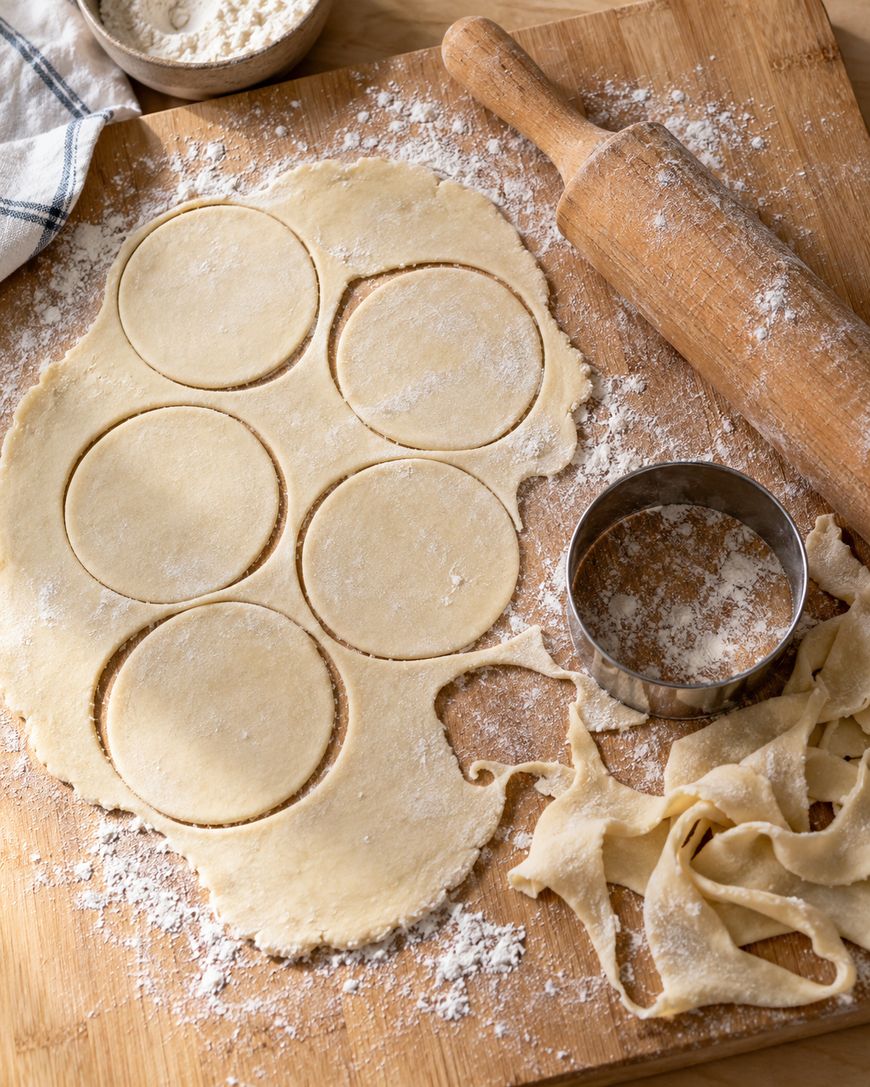
Place 1 tablespoon of filling in the center of each round, fold it over into a half moon, and pinch the edges firmly to seal. Set the finished pierogi on a floured tray under a clean towel so they do not dry out.

Boil, Then Pan-Fry
Bring a large pot of water to a boil with 1 tablespoon of salt and cook the pierogi in batches of about 8. Once they float, give them 3 to 4 minutes, then lift them out with a slotted spoon.

Melt the remaining 2 tablespoons of butter in the skillet over medium heat and fry the boiled pierogi in a single layer for 2 to 3 minutes per side until golden. Pile the caramelized onions on top and serve with sour cream and chives.

Tips for Pierogi That Never Burst Open
Leaks happen for three reasons, and all of them are easy to avoid. The filling is too warm, the edges are not sealed, or the dough is too thin.
Let the filling cool completely before you scoop it, because warm filling softens the dough and fights the seal. Keep the dough at 1/8 inch thick, which is sturdy enough to hold the filling and thin enough to cook through.
If the edges will not stick, dab a fingertip in water and run it along the rim before pinching. Make sure no filling touches the edge, since even a little potato keeps the dough from bonding.
Cook pierogi in small batches so the pot never gets crowded. A steady rolling simmer is gentler than a hard boil and keeps the seams intact.
Rolling evenly matters just as much as sealing. Turn the dough a quarter turn after each pass of the rolling pin so the thickness stays the same across the whole round.

Pierogi Variations and Substitutions
Potato and cheddar is the classic Polish-American filling, but the dough works with almost anything. The recipe card below keeps to the potato and cheddar version, so treat every swap in this section as optional.
Farmer’s cheese or cream cheese can replace the cheddar for a tangier filling that is closer to traditional pierogi ruskie. Use about the same amount and mash it in the same way.
For a savory twist, fold crumbled bacon or finely chopped browned kielbasa into the filling. Sauerkraut that has been drained and squeezed dry is another classic filling when it is sauteed with a little onion.
If you want a sweet version, fill the rounds with fresh blueberries or sweetened farmer’s cheese and serve them with sour cream and a sprinkle of sugar. Plain, cooled leftover mashed potatoes also work in the savory filling, so use about 1 1/2 cups and skip the boiling step.
How to Store, Freeze, and Reheat Pierogi
Cooked pierogi keep in an airtight container in the refrigerator for 3 to 4 days, which matches the USDA guidance for cooked leftovers. Reheat them in a buttered skillet over medium heat for a few minutes per side until hot and crisp.
To freeze pierogi, fill and seal them, then spread them in a single layer on a floured baking sheet and freeze until solid. Transfer them to a freezer bag and use them within 3 months for the best quality.

Do not thaw frozen pierogi before cooking. Drop them straight into boiling water, add about 2 minutes to the boiling time, and then pan-fry as usual.
Reheat leftovers until they are steaming hot throughout. A skillet brings back the crisp edges, while the microwave softens the dough.
The dough can also be made ahead. Wrap it tightly and refrigerate it for up to 1 day, then let it sit at room temperature for 20 minutes before rolling.
What to Serve With Pierogi
Pierogi make a filling main dish on their own, and they pair beautifully with something fresh or smoky. Keep the sides simple so the buttery onions stay the star.
Sliced kielbasa browned in the same skillet is the most traditional partner, and it turns this into a full dinner. A crisp cucumber salad with dill and sour cream cuts through the richness.
Sauteed cabbage, roasted beets, and applesauce also work well on the side. For a holiday spread, serve a platter of pierogi alongside roasted pork or a pot of mushroom soup.
Save the browned butter left in the skillet and spoon it over the plate just before you serve. It adds a nutty richness that makes the whole dish taste more finished.
A bowl of cold sour cream on the table is nonnegotiable for most families. If you are feeding a crowd, keep the fried pierogi warm on a baking sheet in a 200 degree oven while you finish the remaining batches.
The History of Pierogi
Pierogi are Polish dumplings, and the word is already plural, since a single dumpling is called a pieróg. They are filled half moons of dough that are boiled and often finished in butter, and similar dumplings appear all across Central and Eastern Europe.
Fillings change with the region and the season. Sauerkraut and mushroom, cottage cheese, meat, and fruit all appear on traditional tables, and the potato and farmer’s cheese version known as ruskie is one of the most beloved.
Polish immigrants brought pierogi to the United States, where church suppers and community festivals in Polish-American neighborhoods made them a familiar comfort food. Potato and cheese pierogi also have a place at Wigilia, the Polish Christmas Eve supper, which traditionally features meatless dishes.
Ready to cook? Use the recipe card below for the full ingredient list, timing, and nutrition, then keep reading for answers to common questions.

Pierogi (Potato and Cheese)
Tender sour cream dough filled with creamy potato and sharp cheddar, boiled until puffed, then pan-fried in butter and topped with caramelized onions.
Ingredients
- 2 cups all-purpose flour
- 1 teaspoon salt
- 1 large egg
- 1/2 cup full-fat sour cream
- 2 tablespoons unsalted butter, softened
- 1/4 cup warm water, plus up to 2 tablespoons more if needed
- 1 pound Yukon Gold potatoes (about 3 medium), peeled and cut into chunks
- 3/4 cup shredded sharp cheddar cheese
- 2 tablespoons unsalted butter, for the filling
- 1/2 teaspoon salt, for the filling
- 1/4 teaspoon black pepper
- 1 large yellow onion, thinly sliced
- 2 tablespoons unsalted butter, for the onions
- 1/4 teaspoon salt, for the onions
- 1 tablespoon salt, for the boiling water
- 2 tablespoons unsalted butter, for frying
- Sour cream and chopped chives, for serving
Instructions
- Whisk the flour and 1 teaspoon salt in a large bowl, then add the egg, sour cream, softened butter, and 1/4 cup warm water. Stir until a shaggy dough forms.
- Knead the dough on a lightly floured counter for 5 minutes until smooth and soft, adding up to 2 more tablespoons of water if it feels dry. Wrap tightly and rest for 30 minutes.
- Boil the potatoes in a pot of water for 15 to 20 minutes until fork tender. Drain well and let them steam dry in the colander for 2 minutes.
- Mash the potatoes with 2 tablespoons butter, 1/2 teaspoon salt, and the pepper until smooth. Stir in the cheddar until melted, then cool for about 15 minutes.
- Melt 2 tablespoons butter in a large skillet over medium-low heat. Add the onion and 1/4 teaspoon salt and cook for 15 to 20 minutes, stirring often, until deep golden. Scoop into a bowl and set aside.
- Roll the dough 1/8 inch thick on a floured surface and cut out 3-inch rounds. Reroll the scraps once to make 24 rounds.
- Place 1 tablespoon of filling in the center of each round, fold into a half moon, and pinch the edges firmly to seal. Keep the finished pierogi on a floured tray under a clean towel.
- Bring a large pot of water to a boil with 1 tablespoon salt. Cook the pierogi in batches of about 8, giving them 3 to 4 minutes after they float, and lift out with a slotted spoon.
- Melt 2 tablespoons butter in the skillet over medium heat. Fry the boiled pierogi in a single layer for 2 to 3 minutes per side until golden, then top with the caramelized onions and serve with sour cream and chives.
Notes
Make ahead: wrap the kneaded dough tightly and refrigerate for up to 1 day, then rest at room temperature for 20 minutes before rolling. Storage: refrigerate cooked pierogi in an airtight container for 3 to 4 days and reheat in a buttered skillet. Freezing: freeze filled, uncooked pierogi in a single layer on a floured baking sheet until solid, then bag for up to 3 months. Cook straight from frozen and add about 2 minutes to the boiling time. Keep fried pierogi warm on a baking sheet in a 200 degree oven while you finish the remaining batches.
Nutrition Information:
Yield:
6Serving Size:
4 pierogi with onionsAmount Per Serving: Calories: 420Total Fat: 19gSaturated Fat: 11gSodium: 560mgCarbohydrates: 51gFiber: 3gSugar: 4gProtein: 13g
Pierogi Questions Answered
Can You Make Pierogi Dough Ahead of Time?
Yes. Wrap the kneaded dough tightly and refrigerate it for up to 1 day, then let it sit at room temperature for 20 minutes before rolling.
What Is the Best Potato for Pierogi?
Yukon Gold potatoes are the best choice because they mash up creamy and flavorful without any added cream. Russets also work and give a fluffier filling, but they can turn grainy if you overmix them.
Do You Have to Boil Pierogi Before Frying?
Yes, because boiling cooks the dough through and heats the filling, and the quick fry afterward adds the golden, crisp surface. Skipping the boil leaves the dough raw in the middle by the time the outside browns.
Why Did My Pierogi Fall Apart in the Water?
The most common cause is an unsealed seam or filling that touched the edge of the dough. Cool the filling completely, dab the rim with a damp fingertip before pinching, and keep the water at a steady simmer.
How Many Pierogi Does This Recipe Make?
This recipe makes 24 pierogi, which serves 6 people at 4 pierogi each. If you are feeding a hungry crowd, double the batch and freeze the extras.
Can You Freeze Pierogi?
Yes, freeze the filled, uncooked pierogi in a single layer until solid, then bag them for up to 3 months. Cook them straight from the freezer and add about 2 minutes to the boiling time.
Why This Pierogi Recipe Works
This pierogi recipe works because every part of the method protects the texture of the dough. Sour cream and softened butter make the dough tender, while the egg gives it enough strength to be rolled thin and sealed without tearing.
Resting the dough for 30 minutes lets the flour fully hydrate and the gluten relax, so the rounds stretch around the filling instead of shrinking back. Cooling the mashed filling before it goes into the dough keeps the seams from softening and splitting.
Boiling first cooks the dough through, and the quick fry in butter adds a golden, lightly crisp surface. Slow-cooked onions on top add a sweetness that balances the sharp cheddar.
Salting the boiling water seasons the dough itself, so the finished pierogi taste balanced from the first bite to the last.
The ratios help as well. One pound of potatoes with 3/4 cup of cheddar fills 24 rounds with a creamy but firm filling that holds its shape when you bite in.
Make Your Pierogi Tonight
A batch of homemade pierogi turns plain potatoes and flour into a cozy dinner that feels like a celebration. Start the dough, let it rest, and you will have buttery golden pierogi on the table in under two hours.
Print the recipe card, pull out the flour and Yukon Golds, and make a double batch so you can freeze half for a busy night. Then leave a comment and tell us which filling you tried.
If you love dumpling dinners, pierogi are one of the most forgiving places to start, because the dough is soft, easy to patch, and hard to overwork. Once you find the rhythm of rolling, filling, and pinching, a full tray goes quickly.
Serve them hot with plenty of onions and cold sour cream. Every buttery bite is worth the effort, and the recipe card keeps the whole process easy to follow.