Last updated: October 31, 2026
This pineapple upside down Bundt cake gives you everything you love about the classic skillet version, with a sticky brown sugar pineapple topping over a tender buttery crumb, in a pan that turns it into a bakery style centerpiece. The full recipe card sits below, and the walkthrough that follows covers every step, including how to flip the cake so the topping stays put.
How to Make Pineapple Upside Down Bundt Cake
You make a pineapple upside down Bundt cake by lining a greased 12-cup Bundt pan with melted butter, brown sugar, and canned pineapple rings, covering them with a buttery batter, and baking at 350°F for 50 to 55 minutes. Ten minutes after the cake leaves the oven, you flip it onto a platter so the glossy fruit layer becomes the top.
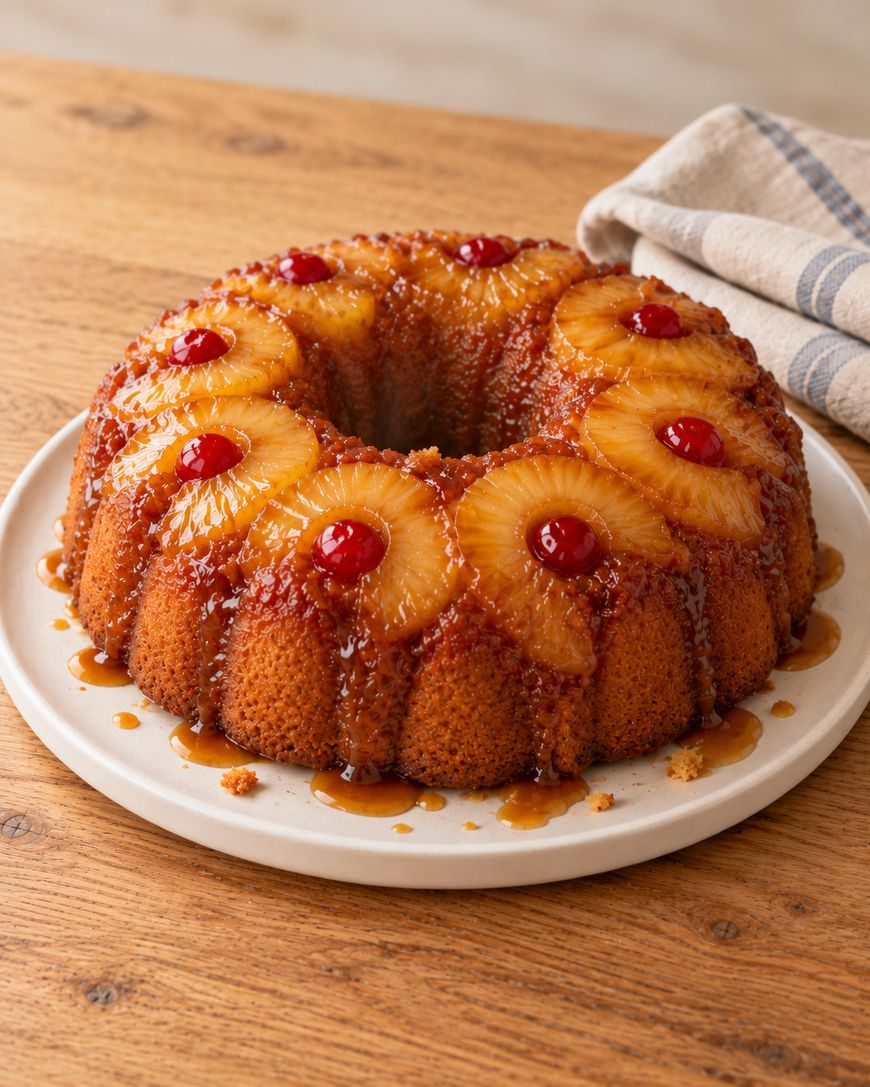
The whole process takes about 1 hour and 25 minutes from the first step to the flip, and only about 20 minutes of that is hands-on work. The recipe makes one cake with 12 slices.
What You Need for This Cake
The topping takes 6 tablespoons of melted unsalted butter, 3/4 cup of packed light brown sugar, and one 20-ounce can of pineapple slices in 100 percent juice, such as Dole. Eight maraschino cherries are optional, but they give the cake its classic look.

The batter takes 2 1/4 cups of all-purpose flour, 2 teaspoons of baking powder, 1/4 teaspoon of baking soda, and 1/2 teaspoon of salt. You also need 3/4 cup of softened unsalted butter, 1 cup of granulated sugar, 3 large eggs at room temperature, 2 teaspoons of vanilla extract, 1/2 cup of buttermilk, and 1/3 cup of the pineapple juice from the can.
For equipment, you need a 12-cup Bundt pan, such as the Nordic Ware Original Bundt pan, plus a pastry brush and a rimmed baking sheet. A serving platter with a small rim catches any drips of caramel when you flip the cake.
Building the Topping in the Pan
Preheat the oven to 350°F with a rack in the center. Brush about 1 tablespoon of the melted butter over the sides and the center tube of the Bundt pan, getting into every ridge.

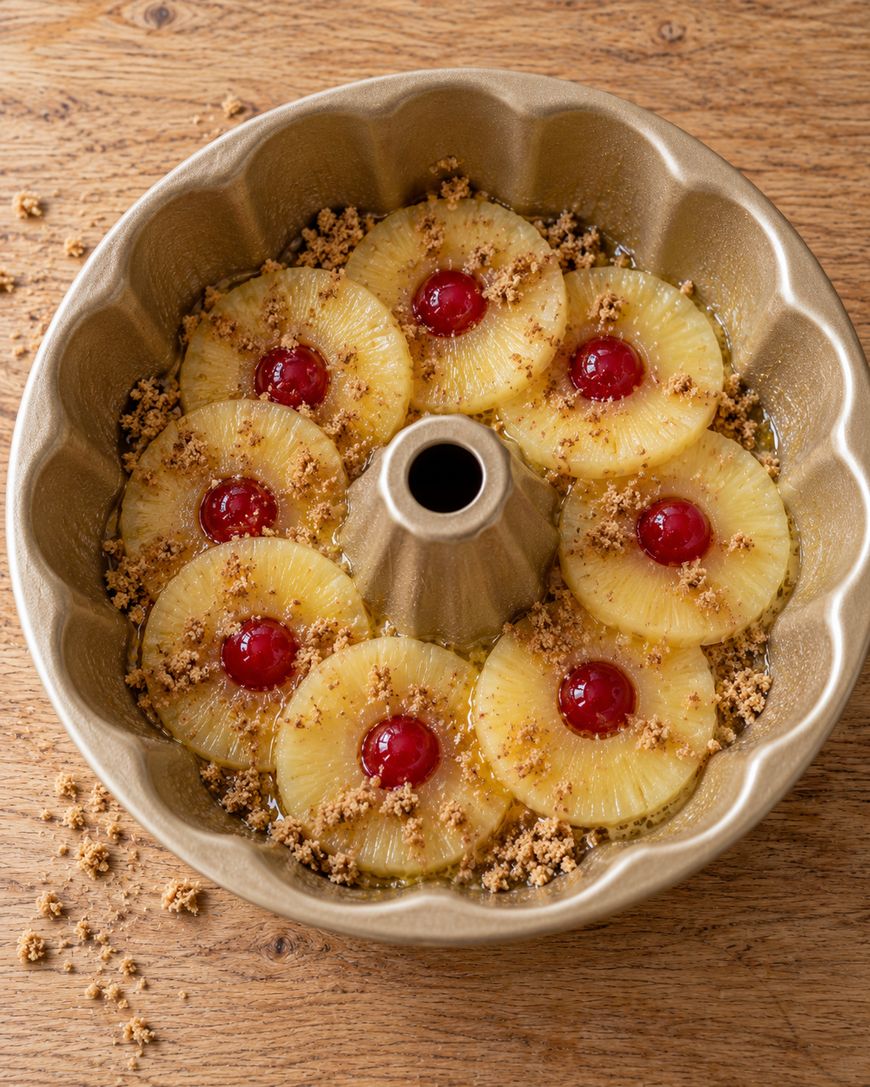
Pour the remaining 5 tablespoons of melted butter into the bottom of the pan and sprinkle the brown sugar evenly over it. Drain the pineapple well and save the juice, then lay the slices in a single overlapping layer over the sugar.
Press a cherry into the center of each slice if you are using them. Dry pineapple matters here, because extra liquid thins the caramel and makes the topping slide off instead of cling.
Mixing the Batter
Whisk the flour, baking powder, baking soda, and salt together in a medium bowl. In a large bowl, beat the softened butter and granulated sugar for about 3 minutes, until pale and fluffy.
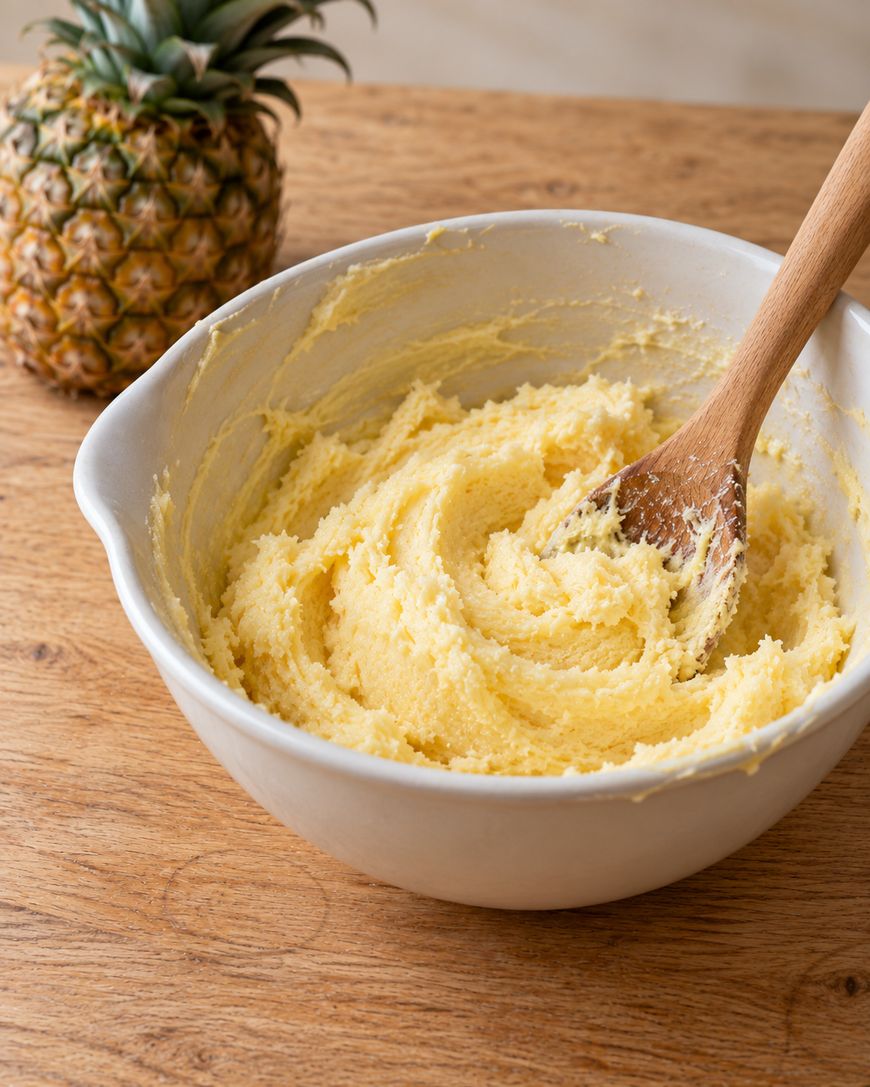
Add the eggs one at a time, beating well after each, then beat in the vanilla. Stir the buttermilk and the 1/3 cup of pineapple juice together in a measuring cup.

Add the flour mixture in three parts and the buttermilk mixture in two parts, starting and ending with the flour. Mix on low speed just until the last streaks disappear, because overmixing makes the crumb tough.

Baking and Flipping the Cake
Spoon the batter over the pineapple in dollops and smooth the top gently so the fruit does not shift. Set the pan on a rimmed baking sheet to catch any bubbling butter, and bake for 50 to 55 minutes.
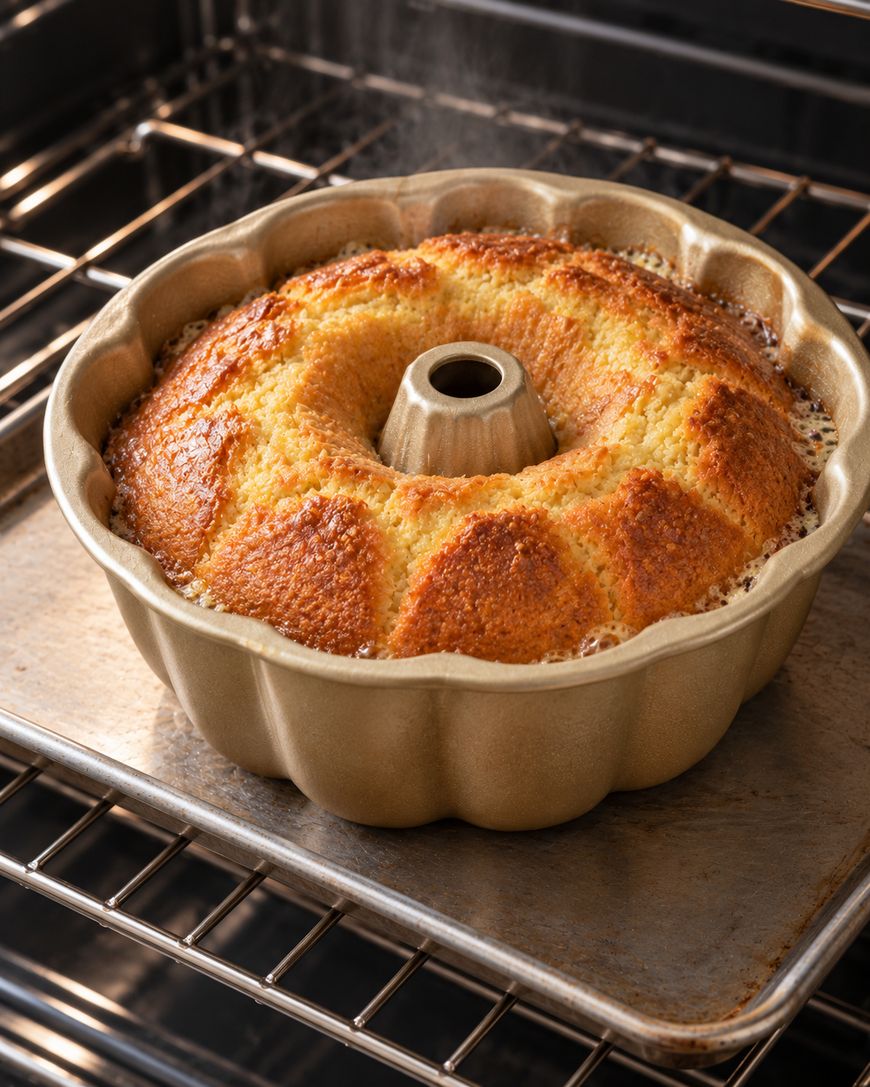
The cake is done when the top is golden, springs back lightly, and a toothpick inserted into the cake instead of the pineapple comes out clean. Cool the cake in the pan on a wire rack for 10 minutes, no longer, so the caramel stays soft enough to release.

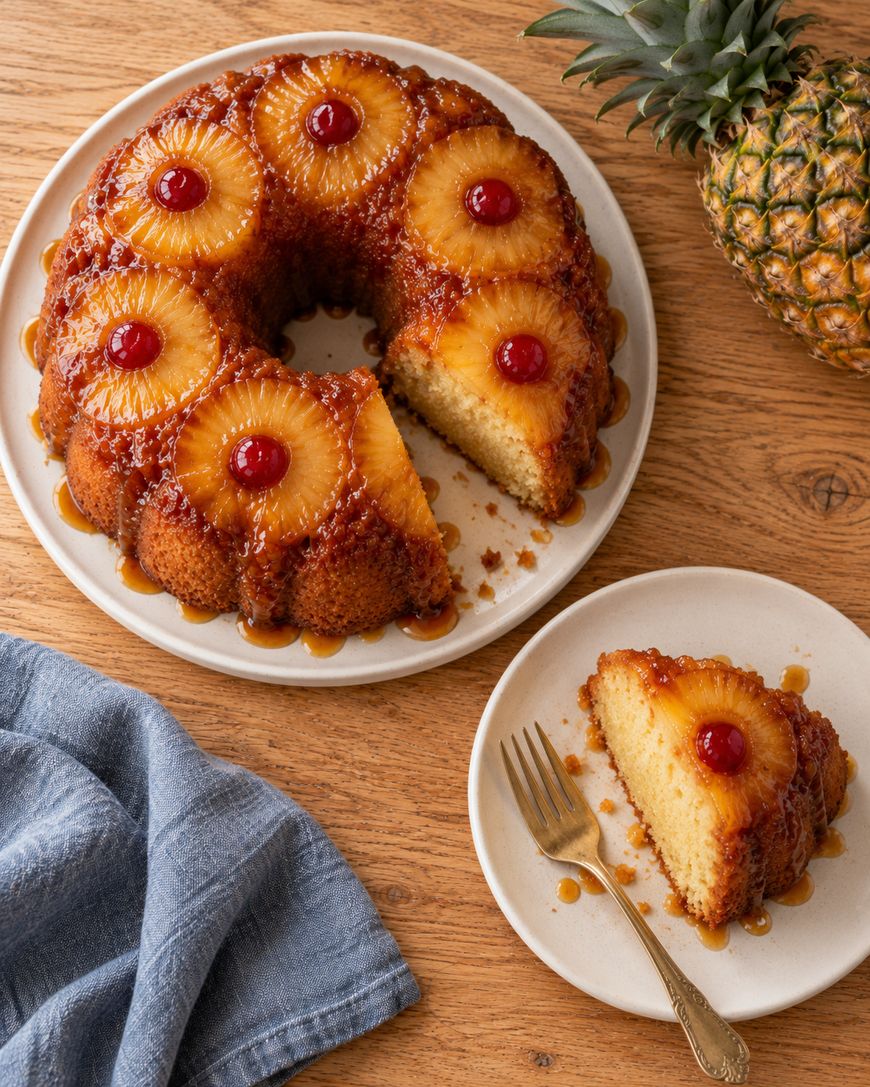
Slide a thin knife around the center tube and the outer edge, then set the serving platter upside down over the pan. Holding both firmly with oven mitts, flip them over, wait 1 minute, and lift the pan straight up.
If any pineapple or caramel stays behind, spoon it back onto the cake while it is still warm. Let the cake rest for about 20 minutes before slicing so the topping sets and the slices stay neat.
Easy Variations and Substitutions
Fresh pineapple works if you cut it into 1/2-inch rings and pat it very dry, though the card below uses canned slices. Whole milk can stand in for the pineapple juice in the batter if you prefer a more neutral cake. The card leaves this out, so treat it as optional.
Chopped pecans, about 1/2 cup, can be scattered over the brown sugar before the pineapple goes in for a little crunch. The card leaves them out, so treat them as optional.
Storing, Freezing, and Serving
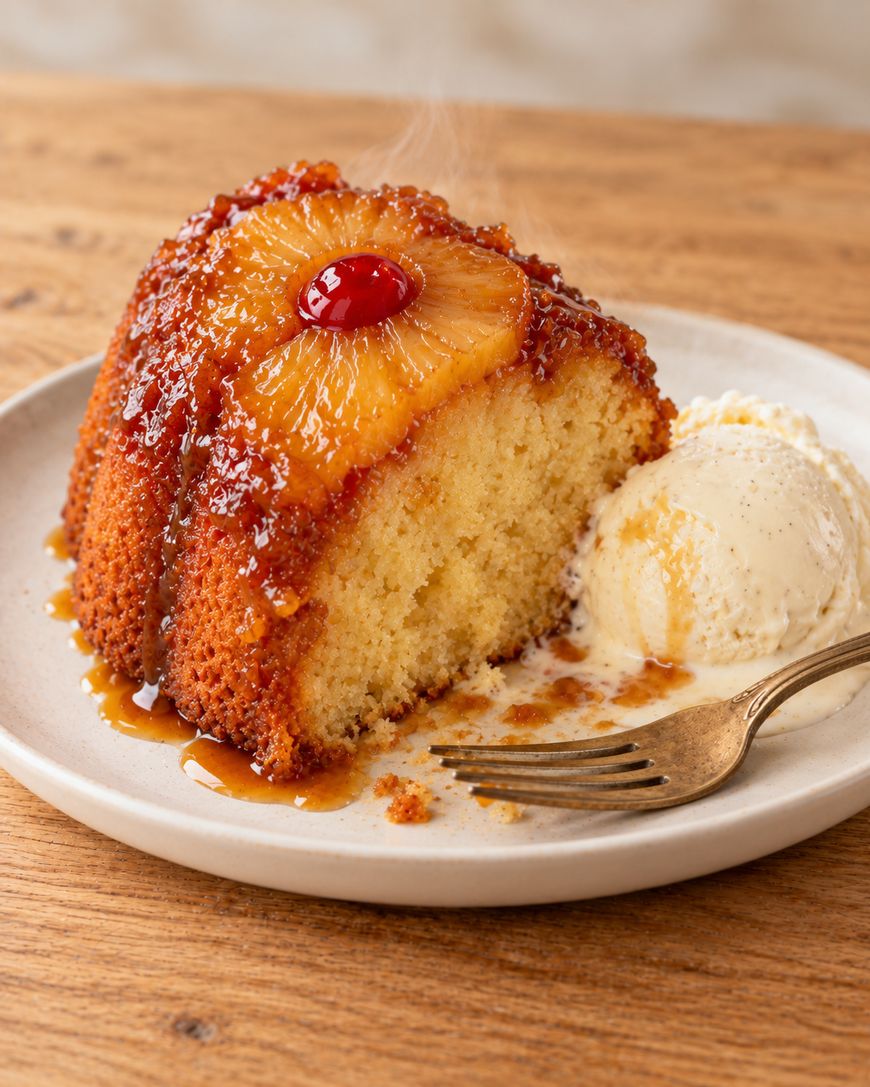
Serve the cake warm or at room temperature with vanilla ice cream or whipped cream. Because the topping is moist fruit, we refrigerate leftovers within 2 hours of serving, which follows USDA guidance for perishable foods.
Covered and refrigerated, the cake keeps for up to 4 days. Wrap individual slices tightly and freeze them for up to 2 months, then thaw them overnight in the refrigerator.
Where Pineapple Upside Down Cake Comes From
Pineapple upside down cake is an American classic that grew out of skillet cakes baked in cast iron long before canned fruit was common. It took off in the 1920s, when canned pineapple rings made the pattern easy for home cooks to build.
The history most often shared credits a 1925 recipe contest run by the Hawaiian Pineapple Company, now Dole, which drew thousands of upside down cake entries. The Bundt version is a newer twist that swaps the skillet for a fluted pan, so the cake bakes taller and every slice carries a ring of fruit.
We love this version for potlucks, holiday tables, and Sunday dinners, since one cake feeds 12 and looks dramatic without any decorating. The only special tool is the Bundt pan itself, and the brown sugar and butter do the rest of the work.
Ready to bake? Use the recipe card below for the full ingredient list and numbered steps, and print it if you like to cook from paper.

Pineapple Upside Down Bundt Cake
A buttery Bundt cake baked over a sticky brown sugar and pineapple topping, then flipped onto a platter for a glossy, caramelized finish.
Ingredients
- 6 tablespoons unsalted butter, melted
- 3/4 cup packed light brown sugar
- 1 can (20 ounces) pineapple slices in 100% juice, drained, juice reserved
- 8 maraschino cherries (optional)
- 2 1/4 cups all-purpose flour
- 2 teaspoons baking powder
- 1/4 teaspoon baking soda
- 1/2 teaspoon salt
- 3/4 cup unsalted butter, softened
- 1 cup granulated sugar
- 3 large eggs, room temperature
- 2 teaspoons vanilla extract
- 1/2 cup buttermilk
- 1/3 cup reserved pineapple juice
Instructions
- Preheat the oven to 350°F with a rack in the center.
- Brush about 1 tablespoon of the melted butter over the sides and center tube of a 12-cup Bundt pan.
- Pour the remaining 5 tablespoons melted butter into the bottom of the pan and sprinkle the brown sugar evenly over it.
- Lay the drained pineapple slices in a single overlapping layer over the sugar and press a cherry into the center of each slice, if using.
- Whisk the flour, baking powder, baking soda, and salt together in a medium bowl.
- Beat the softened butter and granulated sugar for 3 minutes, until pale and fluffy. Beat in the eggs one at a time, then the vanilla.
- Stir the buttermilk and the 1/3 cup pineapple juice together. Add the flour mixture in three parts and the buttermilk mixture in two parts, starting and ending with the flour, mixing on low speed just until combined.
- Spoon the batter over the pineapple in dollops and smooth the top gently. Set the pan on a rimmed baking sheet.
- Bake for 50 to 55 minutes, until the top is golden and a toothpick inserted into the cake comes out clean.
- Cool the cake in the pan on a wire rack for 10 minutes.
- Run a thin knife around the center tube and outer edge, set a serving platter upside down over the pan, flip, wait 1 minute, and lift the pan straight up. Spoon any pineapple or caramel left in the pan back onto the cake.
- Let the cake rest for about 20 minutes before slicing.
Notes
Cool the cake in the pan for 10 minutes only, so the caramel releases cleanly. Refrigerate leftovers within 2 hours of serving (USDA guidance for perishable foods). Covered and refrigerated, the cake keeps up to 4 days. Wrap slices tightly and freeze up to 2 months, then thaw overnight in the refrigerator.
Nutrition Information:
Yield:
12Serving Size:
1 sliceAmount Per Serving: Calories: 405Total Fat: 19gSaturated Fat: 11gSodium: 230mgCarbohydrates: 56gFiber: 1gSugar: 37gProtein: 4g
Pineapple Upside Down Bundt Cake FAQ
Why did the topping stick to the Bundt pan?
Sticking usually comes from leaving the cake in the pan too long, because the brown sugar caramel hardens as it cools and glues the fruit down. Flip the cake after 10 minutes.
A pan that was not brushed with butter in every ridge can also hold on to the cake. Coat the center tube and the sides thoroughly before the sugar goes in.
Can you use fresh pineapple instead of canned?
Yes, cut fresh pineapple into 1/2-inch rings and pat them very dry with paper towels. Fresh fruit releases more water than canned, so the topping may be a little looser.
What size Bundt pan do you need?
Use a 12-cup Bundt pan. A 10-cup pan can overflow because the topping takes up space at the bottom.
Can you make this cake ahead?
Yes, bake and flip the cake a day ahead, let it cool, then cover and refrigerate it. It keeps for up to 4 days in the refrigerator, and slices freeze well for up to 2 months.
Warm a slice for about 15 seconds in the microwave before serving to bring back the soft, sticky topping.
Do you have to use the maraschino cherries?
No, the cherries are optional and the cake bakes exactly the same without them. Leave the pineapple plain for a more modern look.
Why This Pineapple Upside Down Bundt Cake Works
This recipe uses the classic creaming method, where softened butter and sugar are beaten for about 3 minutes. That step traps tiny air pockets that give the crumb its lift, and baking powder with a little baking soda adds the rest.
Adding the eggs one at a time keeps the batter smooth, and alternating the flour with the buttermilk and pineapple juice prevents overmixing. The acidity in the buttermilk reacts with the baking soda for a tender, moist crumb.
The topping works because the melted butter and brown sugar turn into a caramel layer as the cake bakes. Draining the pineapple keeps that layer thick instead of watery, and the 10 minute rest lets it set just enough to cling to the fruit without hardening to the pan.
A heavy fluted Bundt pan also bakes evenly around the center tube, so the middle of the cake cooks through at the same pace as the edges.
Final Thoughts on Pineapple Upside Down Bundt Cake
A good pineapple upside down Bundt cake comes down to dry pineapple, a well buttered pan, and a flip at the 10 minute mark. Get those three right, and the cake slides out with its sticky topping intact.
Now it is your turn to bake it. Print the recipe card, preheat the oven to 350°F, and make this pineapple upside down Bundt cake this weekend, then leave a rating and tell us how it turned out.
The Pineapple Upside Down Cake With Sticky Caramel Topping and a Tender Buttery Crumb
The Snickerdoodle Bundt Cake That Tastes Like the Cookie, Only Softer
Pineapple Upside Down Cupcakes With Caramelized Pineapple and a Soft Buttery Crumb