Last updated: June 14, 2026
This poke bowl recipe delivers restaurant-quality results in under 20 minutes, using sushi-grade fish, seasoned rice, and a savory soy-sesame marinade. Scroll down for the full recipe card, where every measurement is listed out precisely.
What Is a Poke Bowl
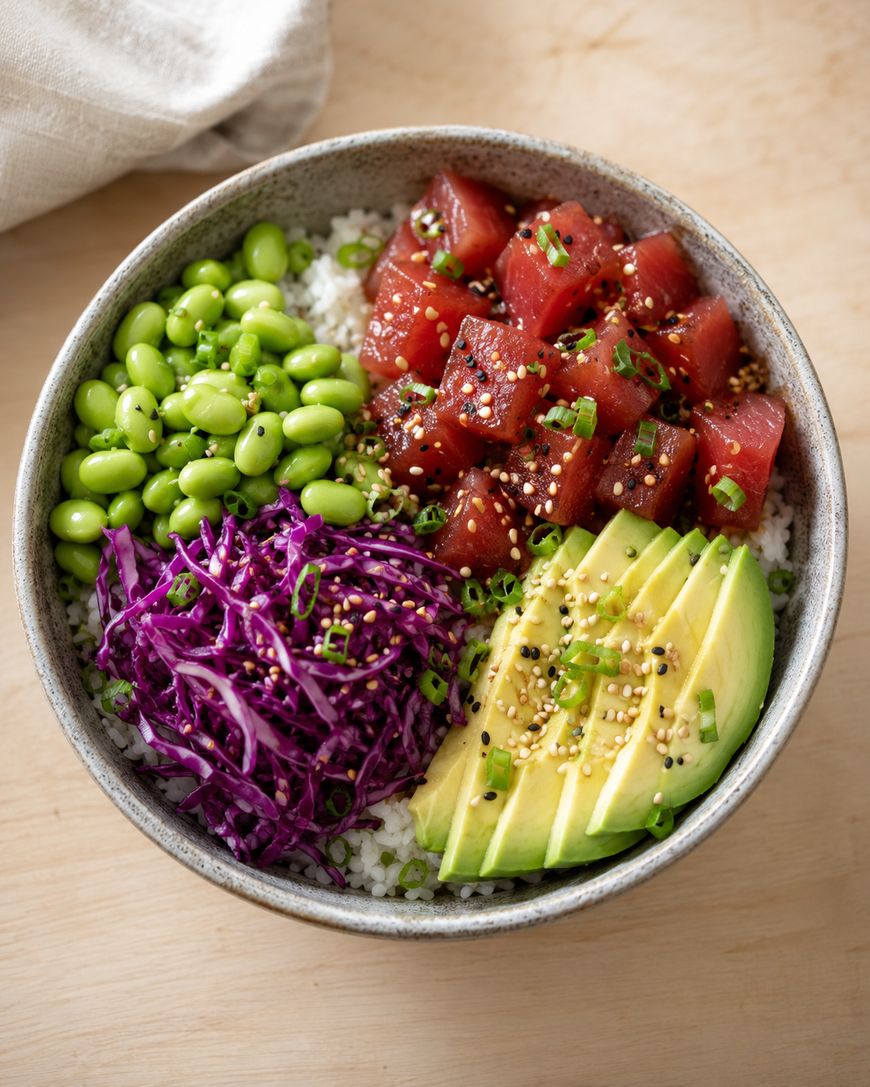
Poke (pronounced poh-kay) is a Hawaiian dish of cubed raw fish seasoned with soy sauce, sesame oil, and green onion.
The bowl format became widely popular on the US mainland around 2012, largely credited to restaurants like Pokéworks and Sweetfin, which made the build-your-own bowl model accessible.
The Core Components
A traditional poke bowl has four building blocks: a base, a protein, a sauce, and toppings.
The base is usually white sushi rice, though brown rice, cauliflower rice, and mixed greens are all common modern swaps.
Understanding Sushi-Grade Fish
Sushi-grade is not a regulated USDA label — it is a trade term meaning the fish has been handled and frozen in a way considered safe for raw consumption.
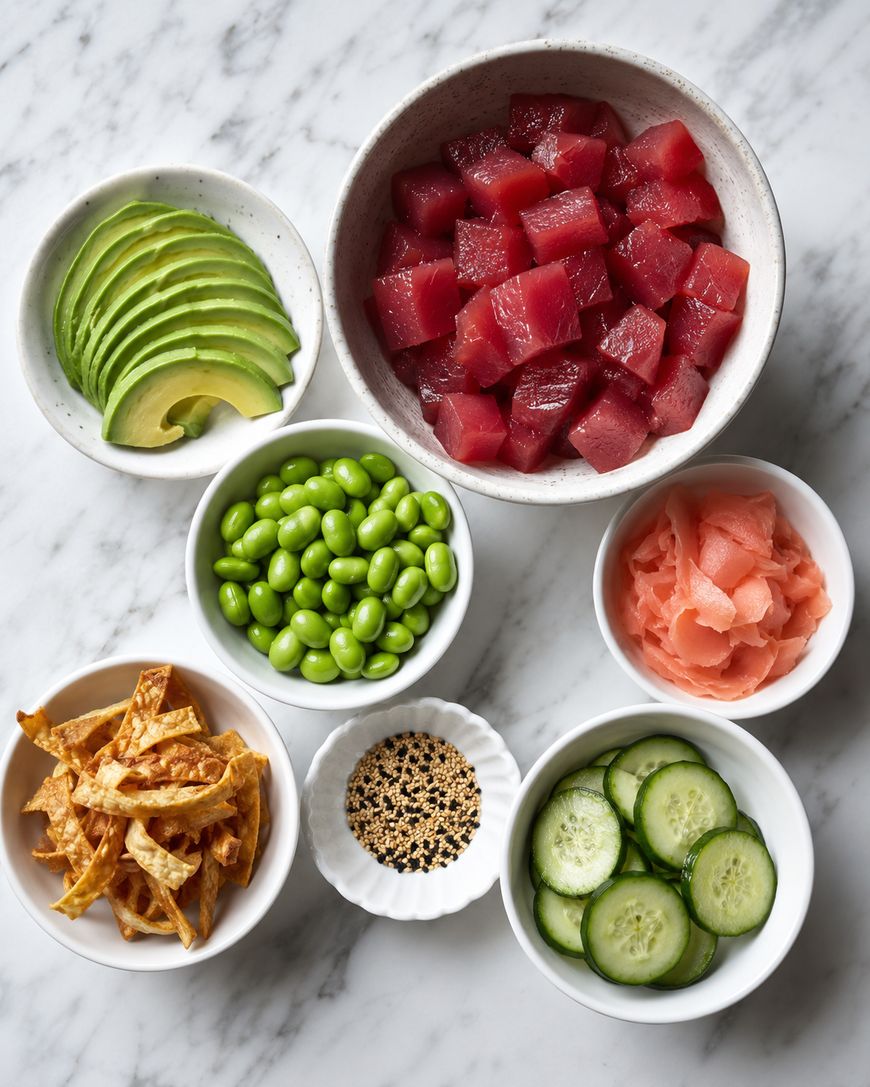
Look for fish labeled “sushi-grade” or “sashimi-grade” at Japanese grocery stores like Mitsuwa, H Mart, or a reputable fishmonger.
Ahi tuna (yellowfin or bigeye) and Atlantic salmon are the most popular choices for a poke bowl recipe at home.
Ingredients for Poke Bowl Recipe
For the Rice Base
Japanese short-grain rice, also sold as sushi rice, is the correct variety here — it has the starch content needed to clump slightly without being sticky.
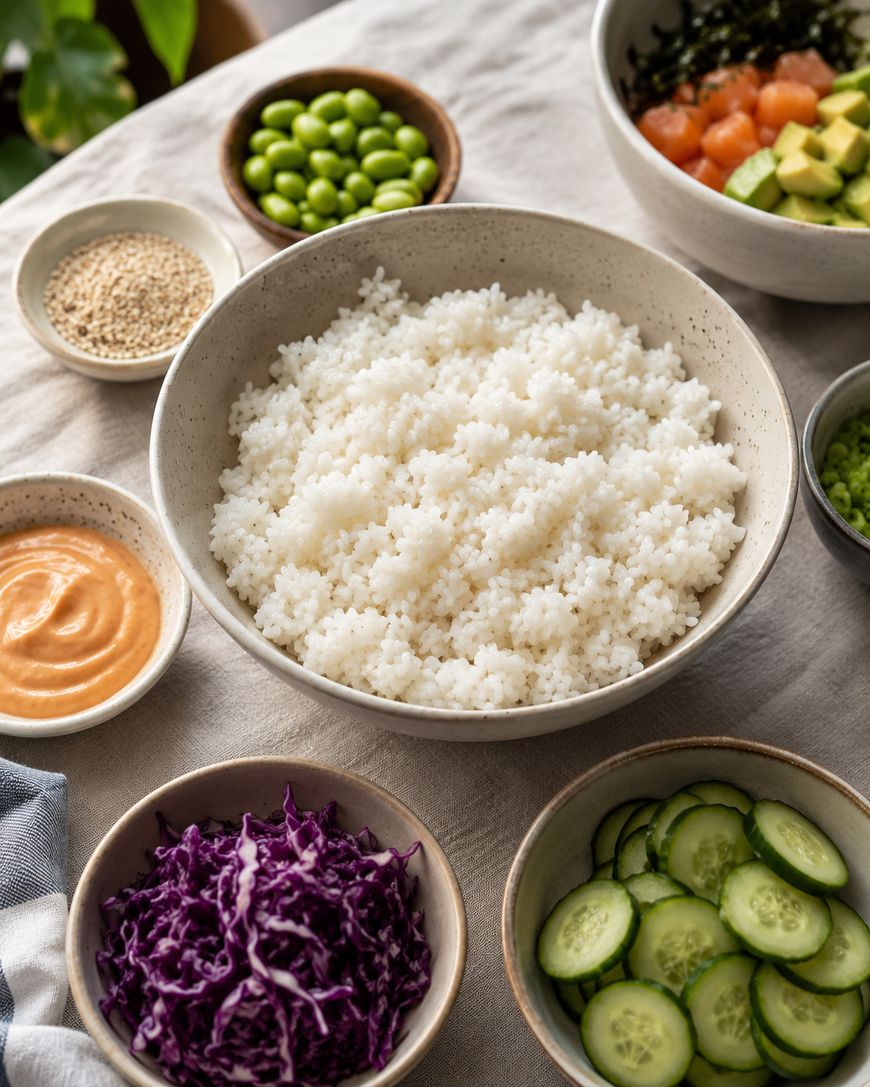
Rinse the rice under cold water until the water runs clear, which removes excess surface starch and results in a cleaner, fluffier texture.
Season the cooked rice with a mixture of rice vinegar, granulated sugar, and fine sea salt while the rice is still hot so the grains absorb the seasoning evenly.
For the Poke Marinade
The classic marinade uses low-sodium soy sauce as its base, which gives depth without over-salting the fish.
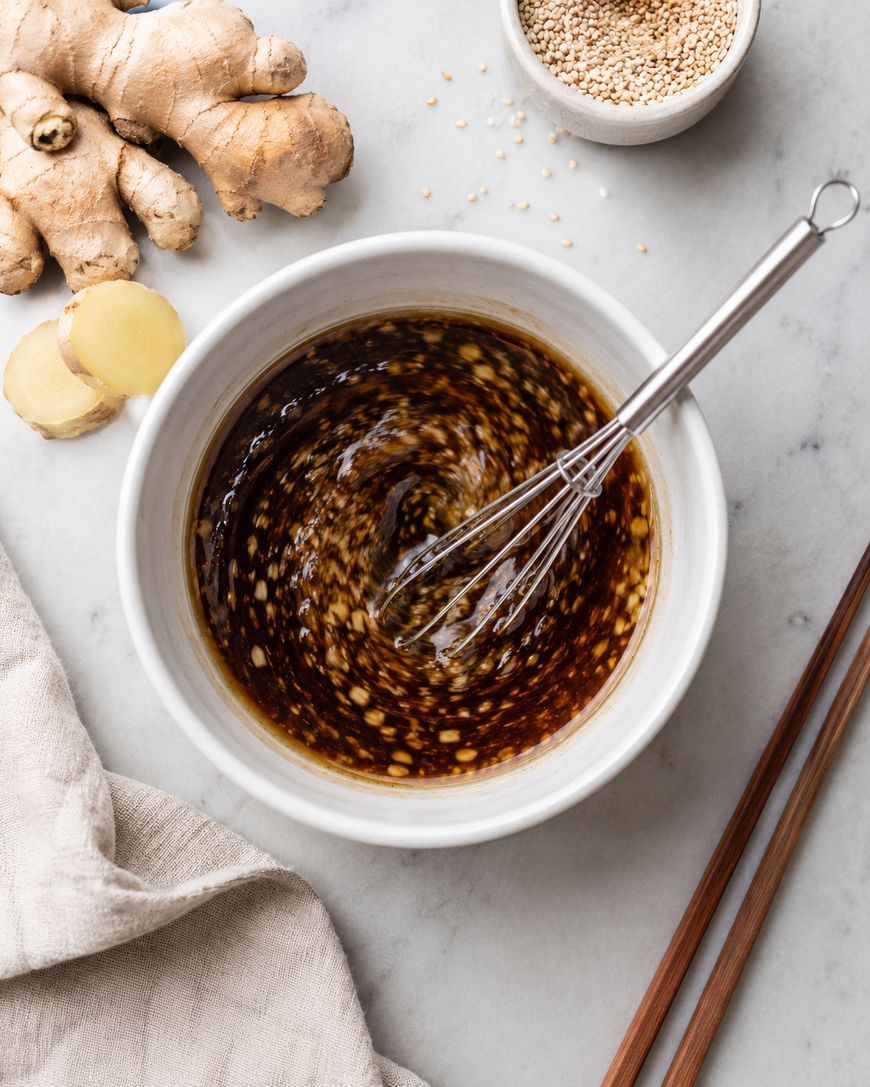
Toasted sesame oil adds nuttiness — use it sparingly, as it is potent.
Freshly grated ginger and minced garlic round out the savory base, and a small drizzle of sriracha adds gentle heat without overwhelming the fish’s natural flavor.
For the Fish
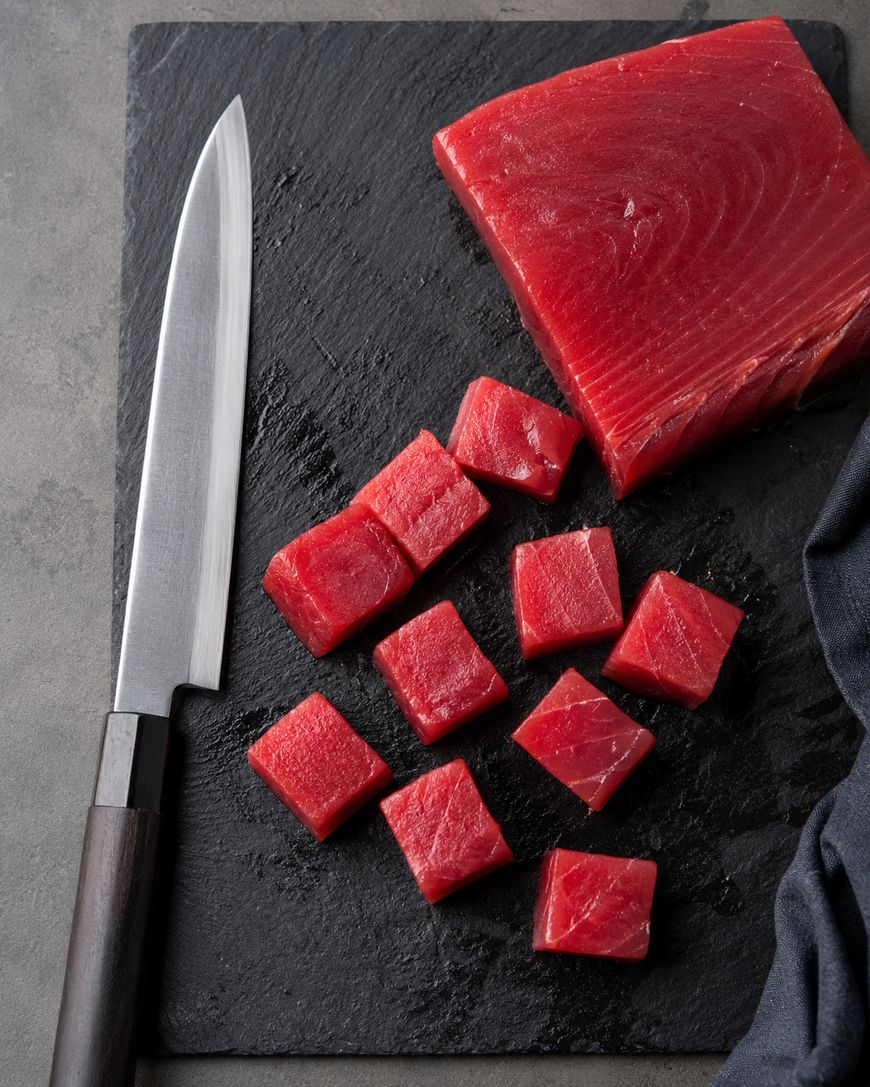
Cut the tuna or salmon into uniform three-quarter-inch cubes so every piece marinates evenly.
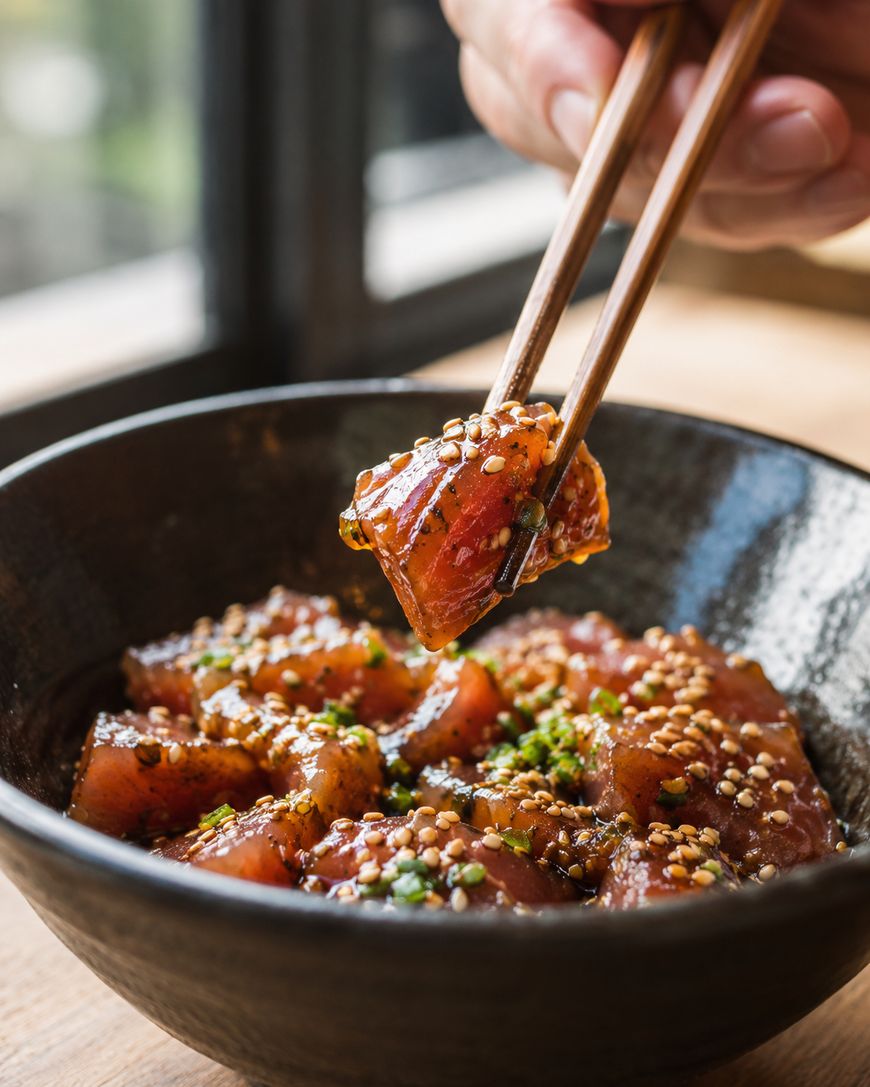
Keep the fish refrigerated right up until you are ready to assemble — raw fish should never sit at room temperature for more than 20 minutes.
For the Toppings
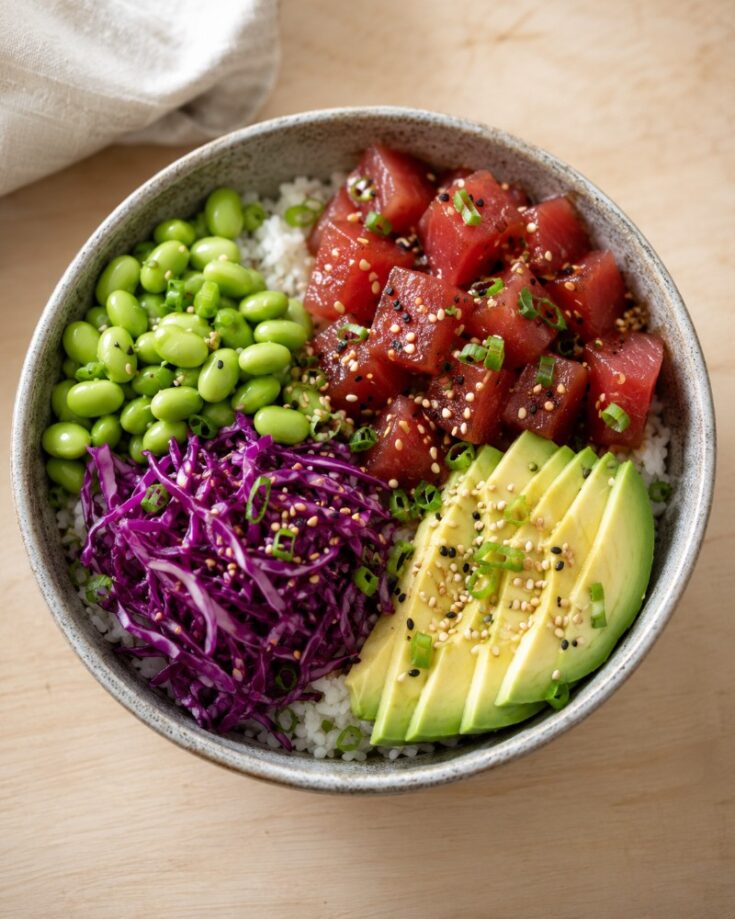
Avocado, edamame, shredded cucumber, thinly sliced red onion, and shredded purple cabbage are the most common fresh toppings.
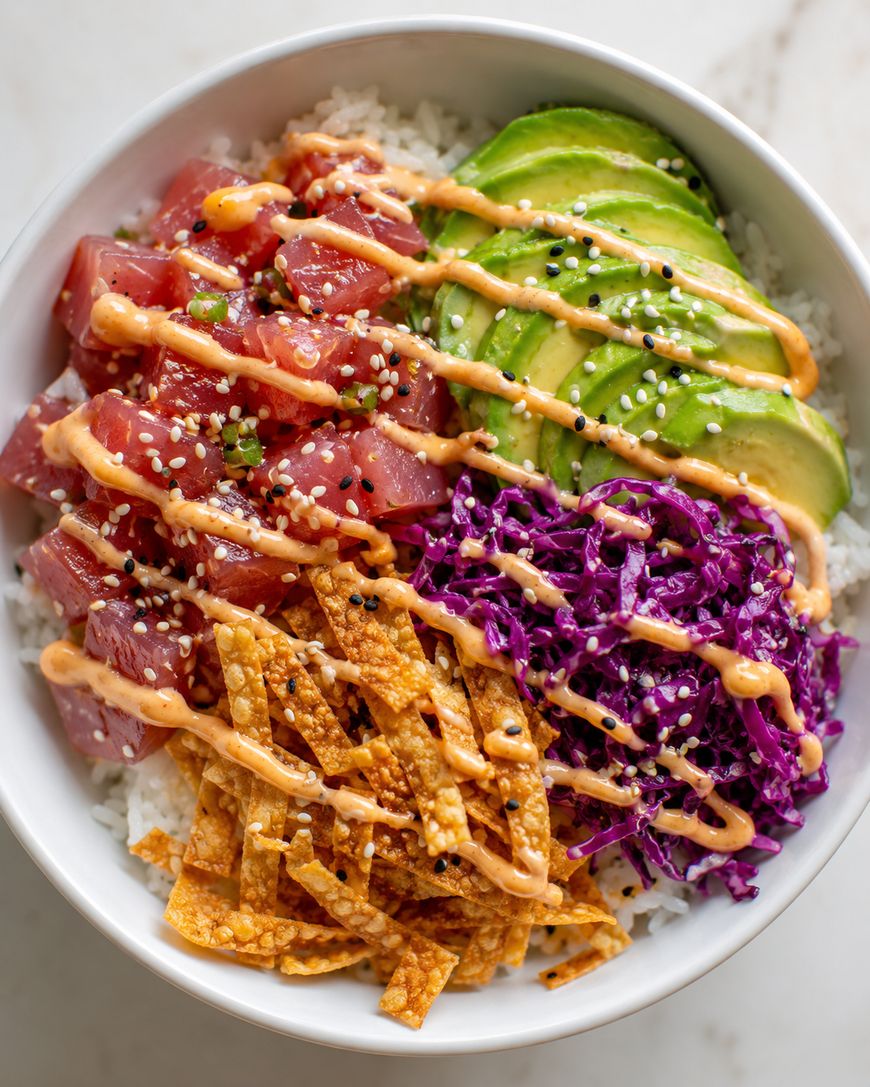
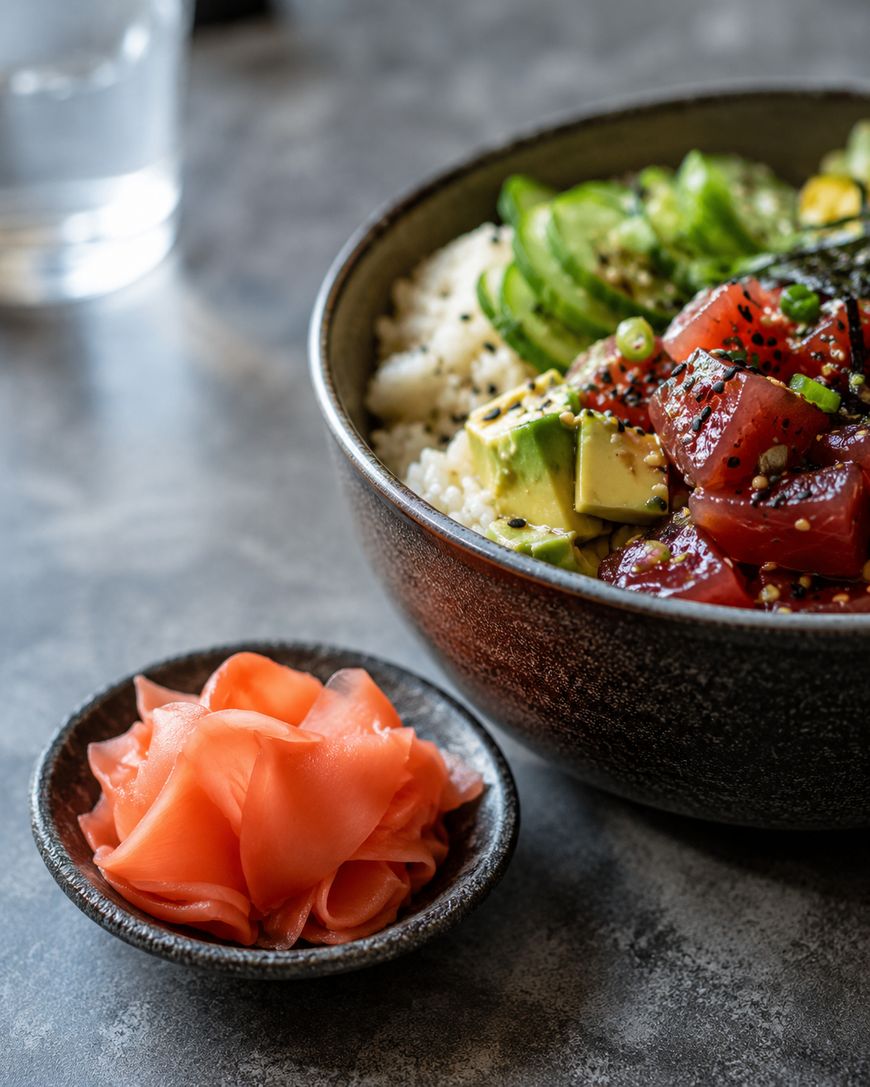
Crispy wonton strips, sesame seeds, and pickled ginger add texture and brightness.
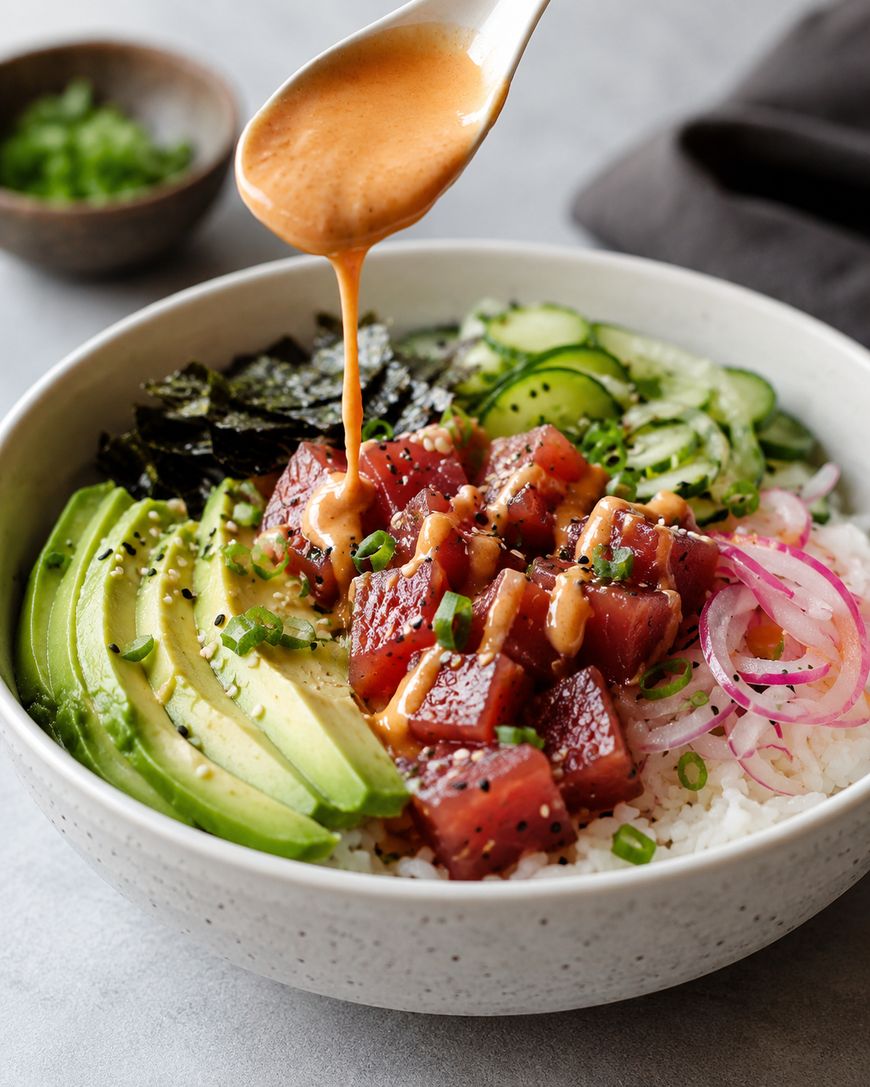
Sriracha mayo, made by combining mayonnaise with sriracha in a two-to-one ratio, is an excellent finishing drizzle.
How to Make a Poke Bowl
Step 1: Cook and Season the Rice
Combine one and a half cups of sushi rice with two cups of water in a medium saucepan and bring to a boil.
Reduce the heat to low, cover, and cook for 18 minutes.
Remove from heat and let steam for 10 minutes before folding in two tablespoons of rice vinegar, one teaspoon of sugar, and half a teaspoon of salt.
Spread the rice on a sheet pan or wide bowl to cool — this prevents it from continuing to cook and becoming mushy.
Step 2: Make the Marinade
Whisk together three tablespoons of low-sodium soy sauce, one tablespoon of toasted sesame oil, one teaspoon of freshly grated ginger, one minced garlic clove, and one teaspoon of sriracha in a medium bowl.
Taste the marinade before adding the fish — it should be savory, slightly nutty, and have a gentle kick.
Step 3: Marinate the Fish
Add the cubed tuna or salmon to the marinade and toss gently to coat.
Let it marinate for five to ten minutes maximum in the refrigerator — longer than ten minutes and the soy sauce begins to cure the fish, changing its texture.
Step 4: Assemble the Bowls
Divide the cooled rice between two to four bowls.
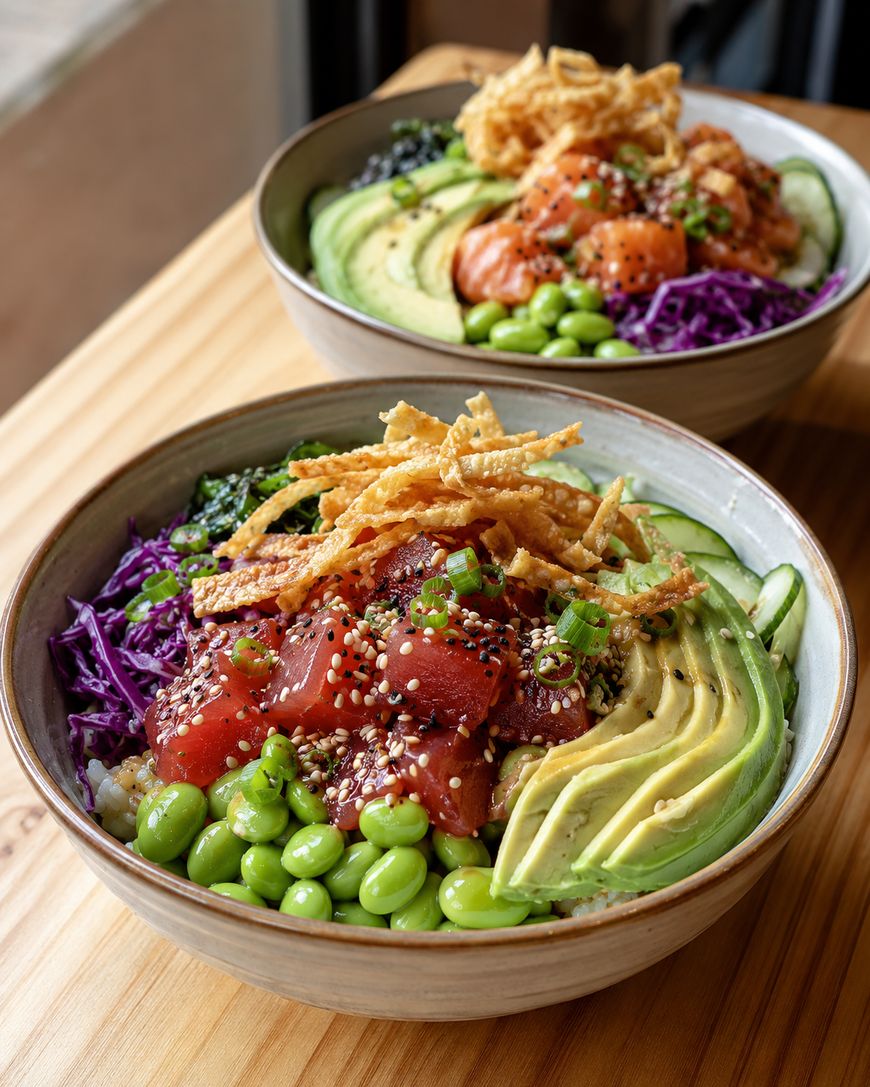
Arrange the marinated fish, avocado, edamame, cucumber, red onion, and cabbage in separate sections over the rice.
Drizzle with sriracha mayo, scatter sesame seeds and wonton strips over the top, and add pickled ginger on the side.
Variations and Substitutions
Protein Swaps
Cooked shrimp, canned albacore tuna in water, or baked tofu all work as substitutes if sushi-grade fish is unavailable.
For a spicy tuna version, mix the cubed fish with a tablespoon of sriracha and a teaspoon of sesame oil before adding to the marinade.
Base Swaps
Brown rice adds a nuttier flavor and extra fiber, though it requires a longer cooking time — about 40 to 45 minutes.
Cauliflower rice keeps the bowl low-carb and is best lightly sauteed with a pinch of salt before serving.
Sauce Variations
Ponzu sauce, which is soy sauce combined with citrus juice, gives a brighter, lighter marinade than standard soy.
Miso paste whisked into the marinade adds umami depth — use white miso for a milder flavor.
Storage and Meal Prep Tips
Store each component separately in airtight containers in the refrigerator.
The cooked rice keeps for up to four days; the marinated fish should be eaten the same day it is prepared.
Toppings like avocado should be cut fresh each time — avocado oxidizes quickly and turns brown within a few hours even with lime juice.
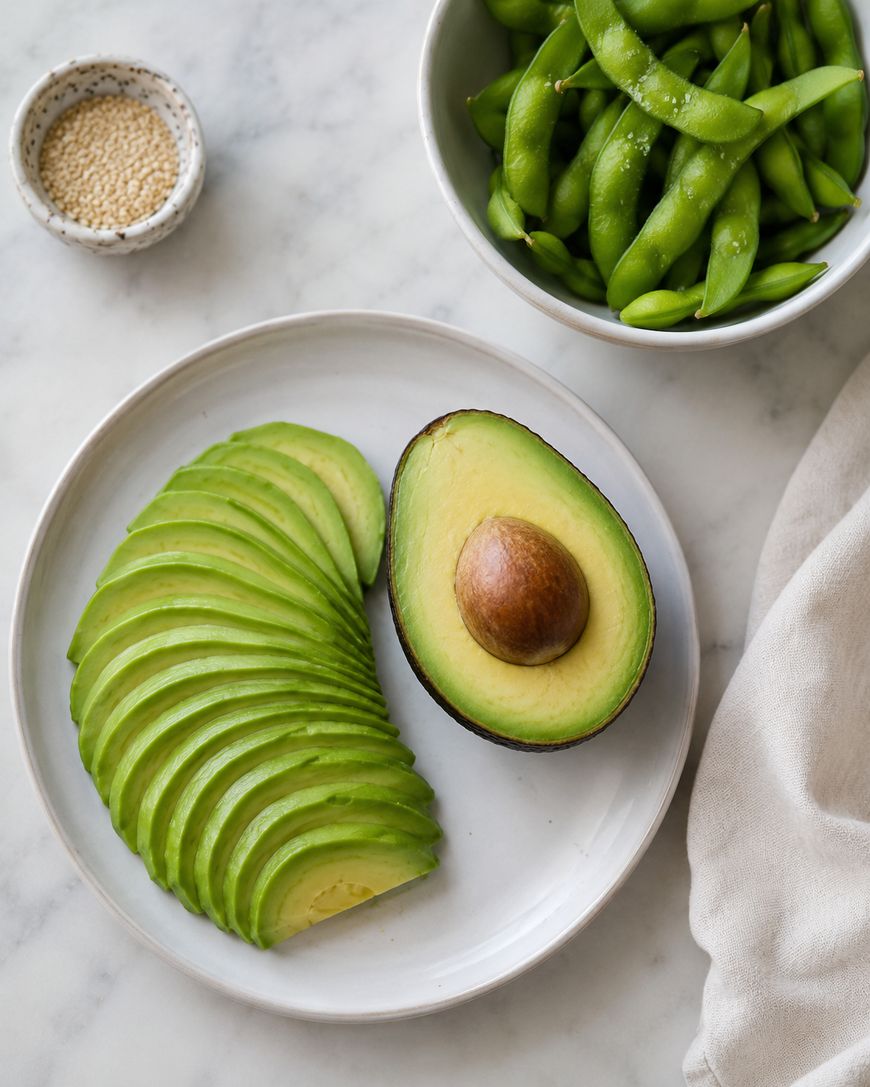
If meal prepping, marinate the fish just before eating rather than in advance.
Serving Suggestions
A poke bowl recipe pairs naturally with miso soup, Japanese cucumber salad (sunomono), or a simple seaweed salad from an Asian grocery store.
For entertaining, set up a poke bowl bar with the rice in a central bowl and the toppings arranged in small dishes so guests can build their own.
Origin and History of Poke
Poke has been a staple of Hawaiian cuisine for centuries, traditionally made by Native Hawaiian fishermen who seasoned freshly caught reef fish with sea salt, candlenut, seaweed, and limu (a type of algae).
The modern version incorporating soy sauce and sesame oil reflects the significant Japanese and Chinese immigration to Hawaii in the late 19th and early 20th centuries.
Hawaii officially recognized October 11 as Poke Day in 2009, and the dish has since become one of the most recognizable exports of Hawaiian food culture.
The full ingredient list and step-by-step instructions are in the recipe card below. Use it to build your bowl exactly how you like it.
Poke Bowl Recipe
A fresh, customizable poke bowl recipe with sushi-grade tuna or salmon, seasoned sushi rice, and a savory soy-sesame marinade. Ready in 20 minutes and better than takeout.
Ingredients
- 1 1/2 cups cups Japanese short-grain sushi rice
- 2 cups water
- 2 tablespoons rice vinegar
- 1 teaspoon granulated sugar
- 1/2 teaspoon fine sea salt
- 3 tablespoons low-sodium soy sauce
- 1 tablespoon toasted sesame oil
- 1 teaspoon freshly grated ginger
- 1 clove garlic, minced
- 1 teaspoon sriracha
- 12 oz sushi-grade ahi tuna or salmon, cut into 3/4-inch cubes
- 1 avocado, sliced
- 1/2 cup shelled edamame, thawed
- 1/2 English cucumber, thinly sliced
- 1/4 red onion, thinly sliced
- 1 cup shredded purple cabbage
- 2 tablespoons sesame seeds
- 1/4 cup crispy wonton strips
- pickled ginger, to serve
- 3 tablespoons mayonnaise
- 1 1/2 tablespoons sriracha (for sriracha mayo)
- 3 tablespoons low-sodium soy sauce
Instructions
- Rinse the sushi rice under cold water until the water runs clear. Combine with 2 cups of water in a saucepan, bring to a boil, reduce to low, cover, and cook for 18 minutes. Remove from heat and let steam 10 minutes. Fold in rice vinegar, sugar, and salt. Spread on a sheet pan to cool.
- Whisk together soy sauce, sesame oil, ginger, garlic, and sriracha in a medium bowl to make the marinade.
- Add the cubed fish to the marinade and toss gently to coat. Refrigerate for 5 to 10 minutes.
- Mix mayonnaise and sriracha together to make the sriracha mayo.
- Divide the cooled rice between 2 bowls. Arrange the marinated fish, avocado, edamame, cucumber, red onion, and cabbage over the rice in separate sections.
- Drizzle with sriracha mayo, scatter sesame seeds and wonton strips over the top, and serve with pickled ginger on the side.
Notes
Use only sushi-grade fish from a reputable fishmonger or Japanese grocery store. Do not marinate the fish for more than 10 minutes or the soy sauce will begin to cure it and change the texture. Components can be stored separately in the refrigerator for meal prep -- cook rice up to 4 days ahead and marinate fish just before eating. Substitute tamari for soy sauce to make gluten free.
Nutrition Information:
Yield:
2Serving Size:
1 bowlAmount Per Serving: Calories: 620Total Fat: 24gSaturated Fat: 4gTrans Fat: 0gUnsaturated Fat: 18gCholesterol: 65mgSodium: 980mgCarbohydrates: 62gFiber: 7gSugar: 5gProtein: 40g
This site provides estimated nutritional information. This information comes from online calculators. Although we try to provide accurate nutritional information, these figures are only estimates.
Frequently Asked Questions
Is a poke bowl safe to eat?
A poke bowl made with sushi-grade fish from a reputable source is safe for most healthy adults to eat raw.
Pregnant individuals, young children, the elderly, and people with compromised immune systems should consult a doctor before eating raw fish, as these groups face higher risk from foodborne illness.
What is the difference between ahi tuna and regular tuna?
Ahi refers specifically to yellowfin or bigeye tuna, both of which have a firm, meaty texture and mild flavor ideal for eating raw.
Regular canned tuna is typically skipjack or albacore that has been cooked and processed — it has a completely different texture and is not used in a traditional poke bowl recipe.
Can you make a poke bowl without raw fish?
Yes — cooked shrimp, crab, octopus (tako), or baked tofu are all popular substitutes that maintain the bowl’s fresh, bright flavor profile.
These options are also preferable when serving guests whose dietary preferences or health conditions make raw fish unsuitable.
How long does sushi-grade fish last in the refrigerator?
Sushi-grade fish is best used within 24 hours of purchase.
Store it on the coldest shelf of your refrigerator, ideally sitting on a bed of ice in a sealed container, and never leave it at room temperature for more than 20 minutes before serving.
What rice is best for a poke bowl?
Japanese short-grain white rice, sold as sushi rice, is the standard choice because its starch content creates the right texture — slightly sticky without being gummy.
Brands like Kokuho Rose, Tamaki Gold, or Nishiki are widely available in most US grocery stores and produce consistent results.
What does poke mean in Hawaiian?
Poke (poh-kay) is a Hawaiian verb meaning to slice or cut crosswise into pieces.
The name refers directly to the preparation method — the fish is cut into uniform chunks before seasoning, which is what distinguishes poke from other forms of raw fish preparations like ceviche or sashimi.
Make This Poke Bowl Recipe Tonight
This poke bowl recipe proves that restaurant-quality Hawaiian food does not require a trip to a specialty shop or a long prep time.
With sushi-grade tuna or salmon from a trusted fishmonger, seasoned sushi rice, and a simple soy-sesame marinade, you can build a fresh, satisfying poke bowl at home in under 25 minutes.