Last updated: October 4, 2026
Potato croquettes are mashed potatoes shaped into small logs, coated in flour, egg, and breadcrumbs, and fried until crunchy around a soft, buttery center. This guide walks you through every stage, and the recipe card below keeps the full ingredient list and numbered steps in one place.

How to Make Potato Croquettes From Start to Finish
Making potato croquettes comes down to five stages: boil the potatoes, mash them dry, chill the mixture, coat each croquette in three layers, and fry in 350°F oil. Each stage protects the next one, so skipping the chill or crowding the pot is where most batches go wrong.
The whole process takes about two hours including chilling, but much of that is hands-off time. You will get 16 croquettes, which is enough for eight people at two croquettes each.
Choosing and Cooking the Potatoes
Start with 2 pounds of Russet potatoes, which is about four medium potatoes. Russets are high in starch and low in moisture, so they mash up fluffy and dry instead of gluey and wet.
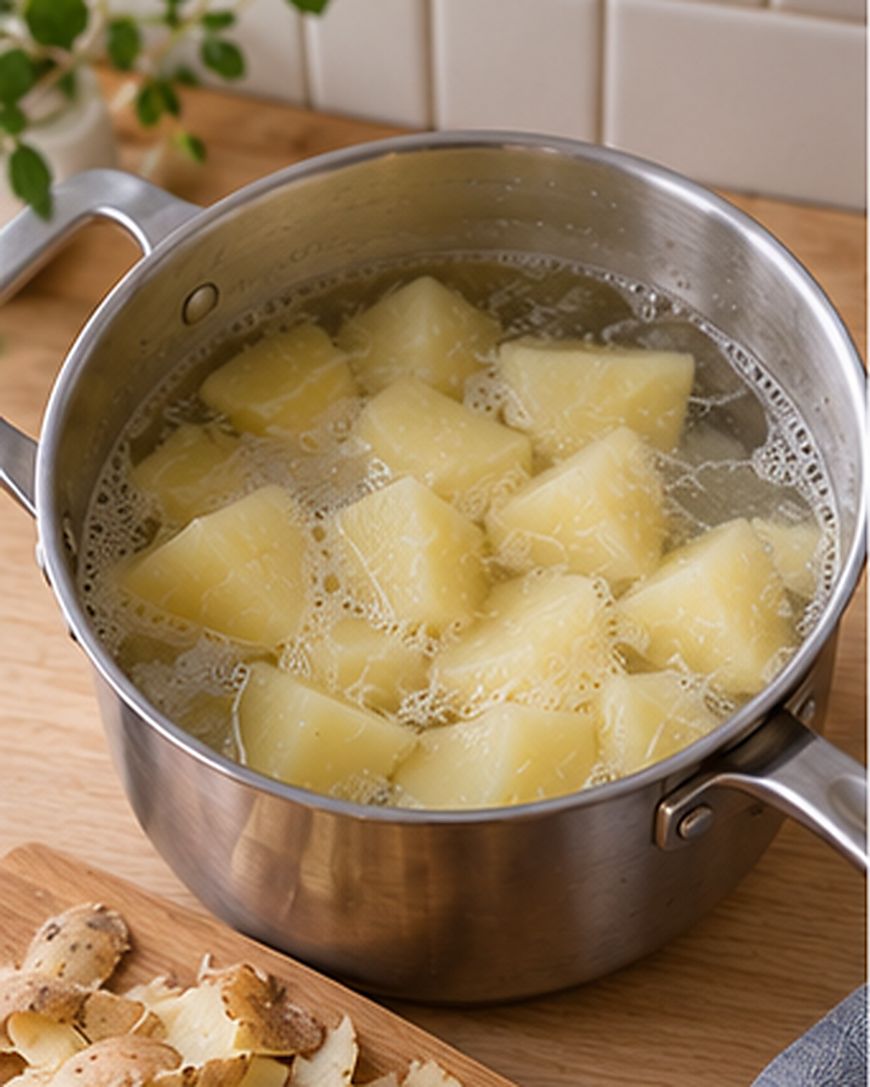
Peel the potatoes and cut them into even 2-inch chunks so they cook at the same pace. Place them in a large pot, cover with cold water by about an inch, and stir in 1 tablespoon of kosher salt.
Bring the pot to a boil, then lower the heat and simmer for 15 to 20 minutes. The potatoes are ready when a fork slides into a chunk with no resistance.
Drain the potatoes well and return them to the hot, empty pot over low heat for about a minute. This steams off surface moisture, which matters because wet potatoes make a soft filling that falls apart in the fryer.
Mixing the Filling
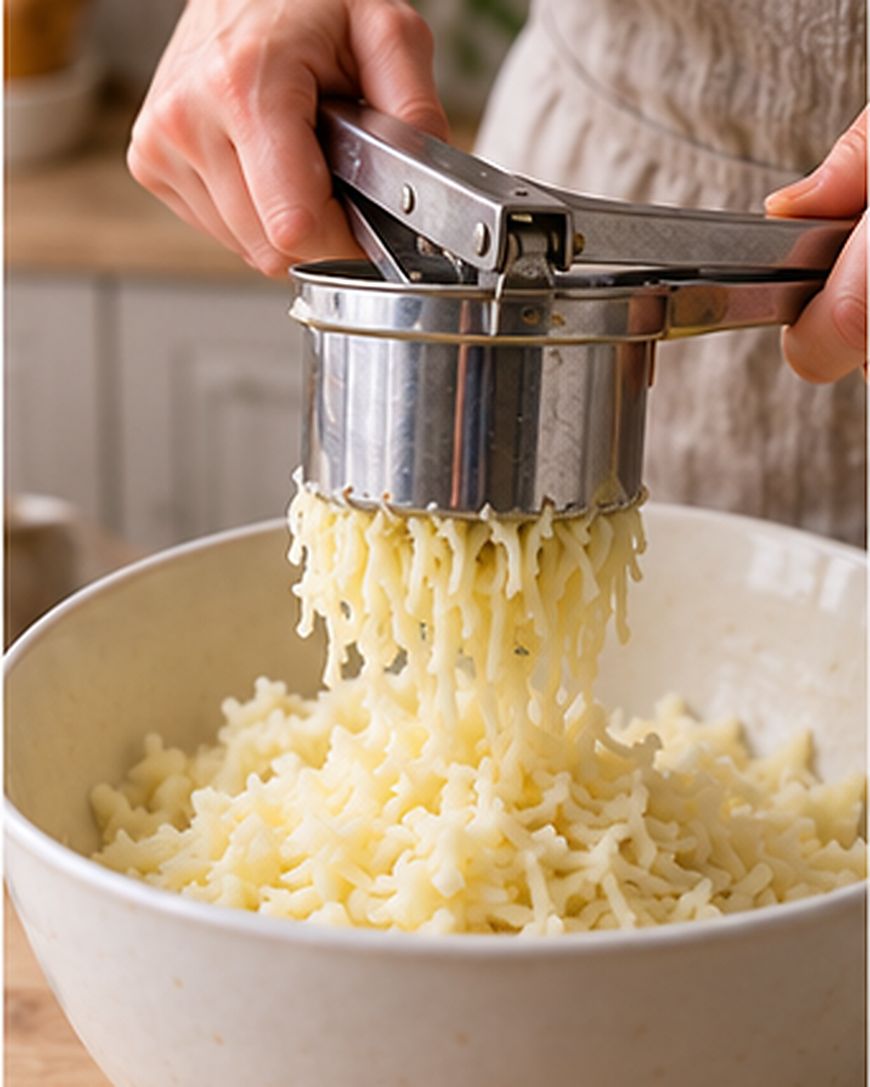
Mash the potatoes until completely smooth, using a potato ricer if you have one. Do not add milk or cream, because this mixture needs to be stiff enough to hold a shape.
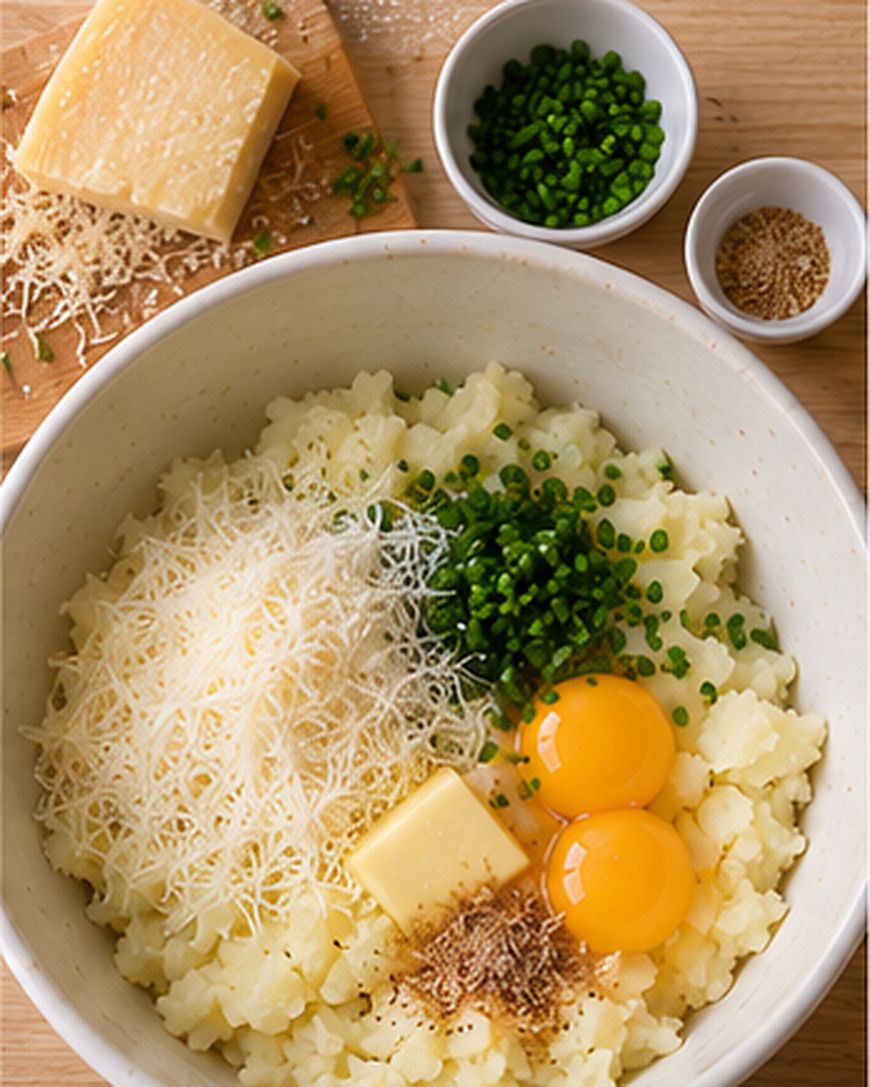
Stir in 3 tablespoons of unsalted butter, 2 egg yolks, 1/2 cup of finely grated Parmesan, 2 tablespoons of chopped fresh chives, 1/4 teaspoon of ground nutmeg, 1 teaspoon of kosher salt, and 1/2 teaspoon of black pepper. Mix just until combined, since overworking potatoes can turn them gummy.
Chilling and Shaping
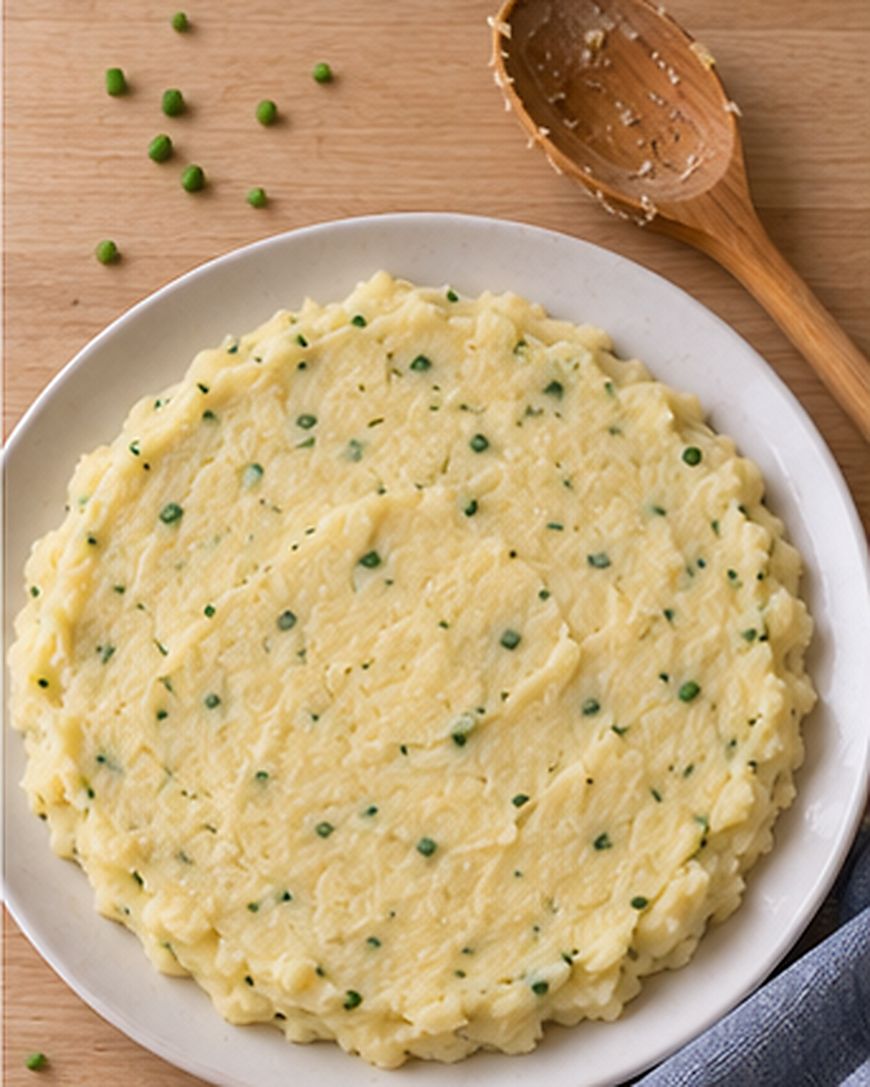
Spread the mixture on a plate or small sheet pan and chill it, uncovered, for 30 minutes. Cold potato mixture firms up and becomes easy to shape without sticking to your hands.
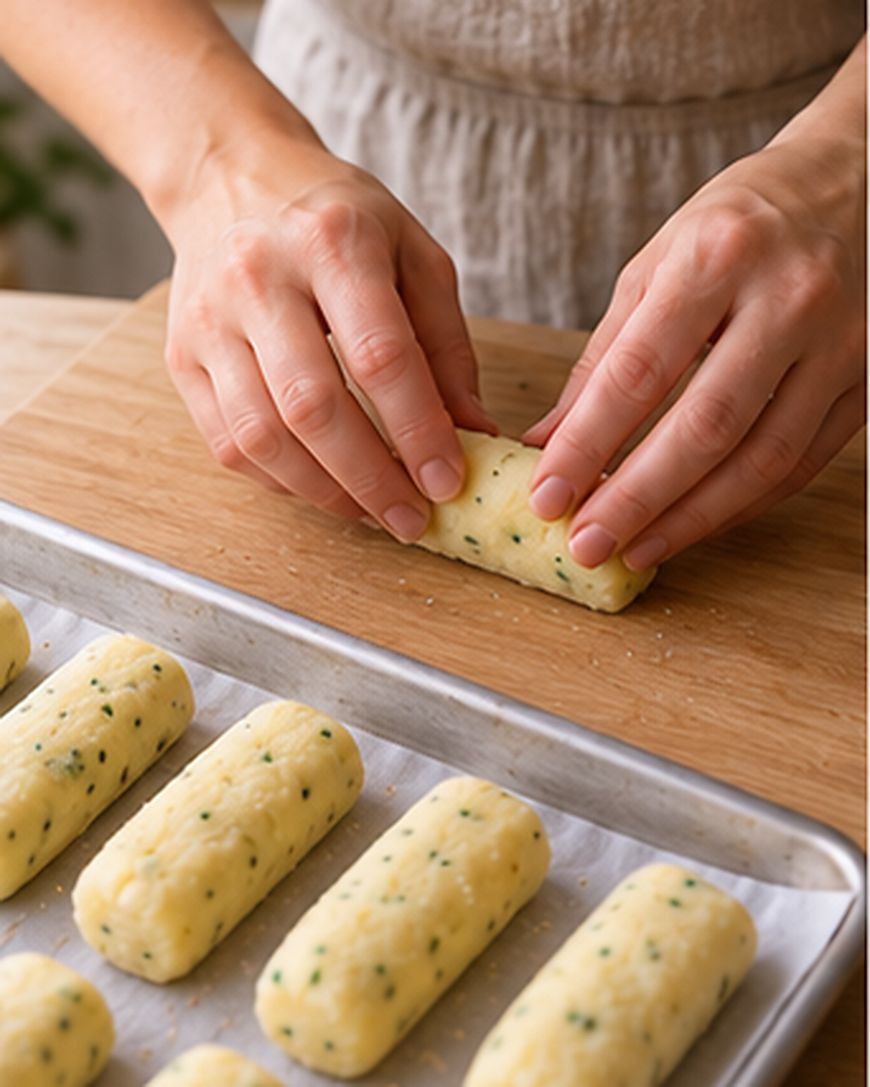
Scoop about 1/4 cup of the mixture for each croquette and roll it into a log roughly 2 1/2 inches long and 1 inch thick. Set the shaped logs on a parchment-lined tray as you work.
Coating the Croquettes
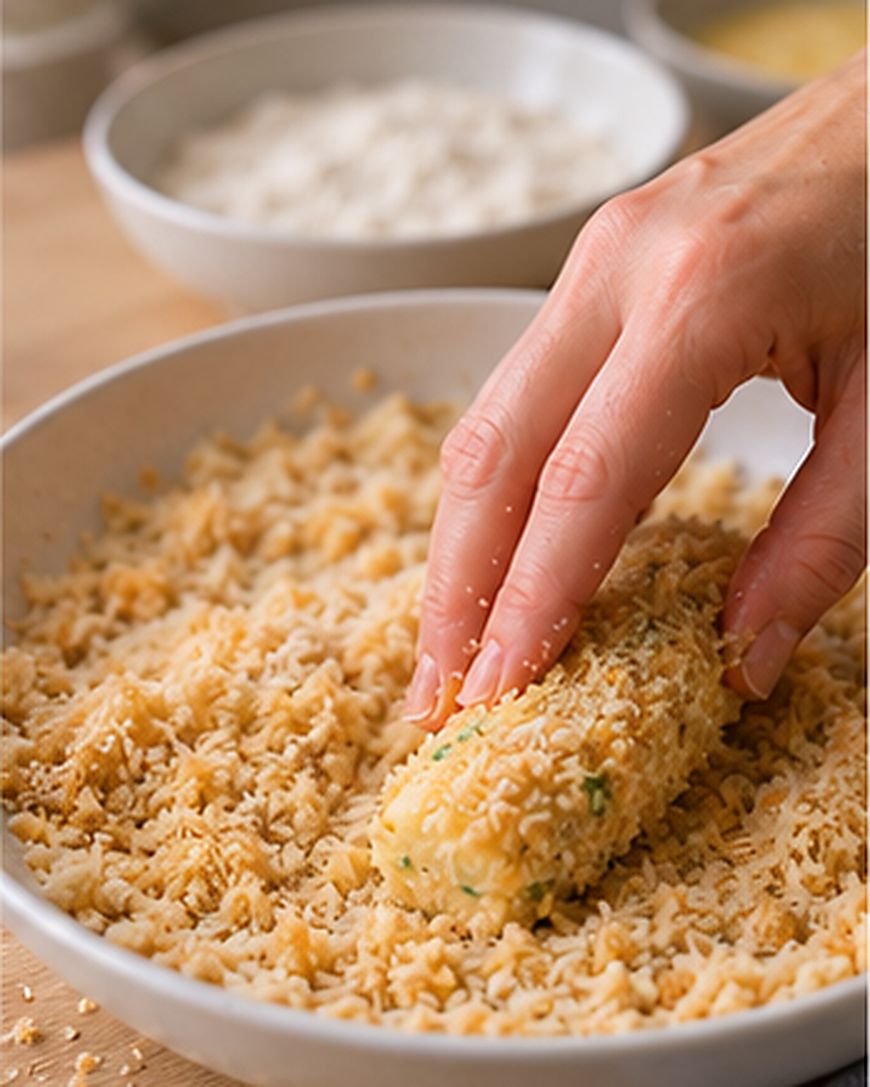
Set up three shallow dishes in a row. Fill the first with 1/2 cup of all-purpose flour, the second with 2 large eggs beaten with 1 tablespoon of water, and the third with 1 1/2 cups of plain dry breadcrumbs.
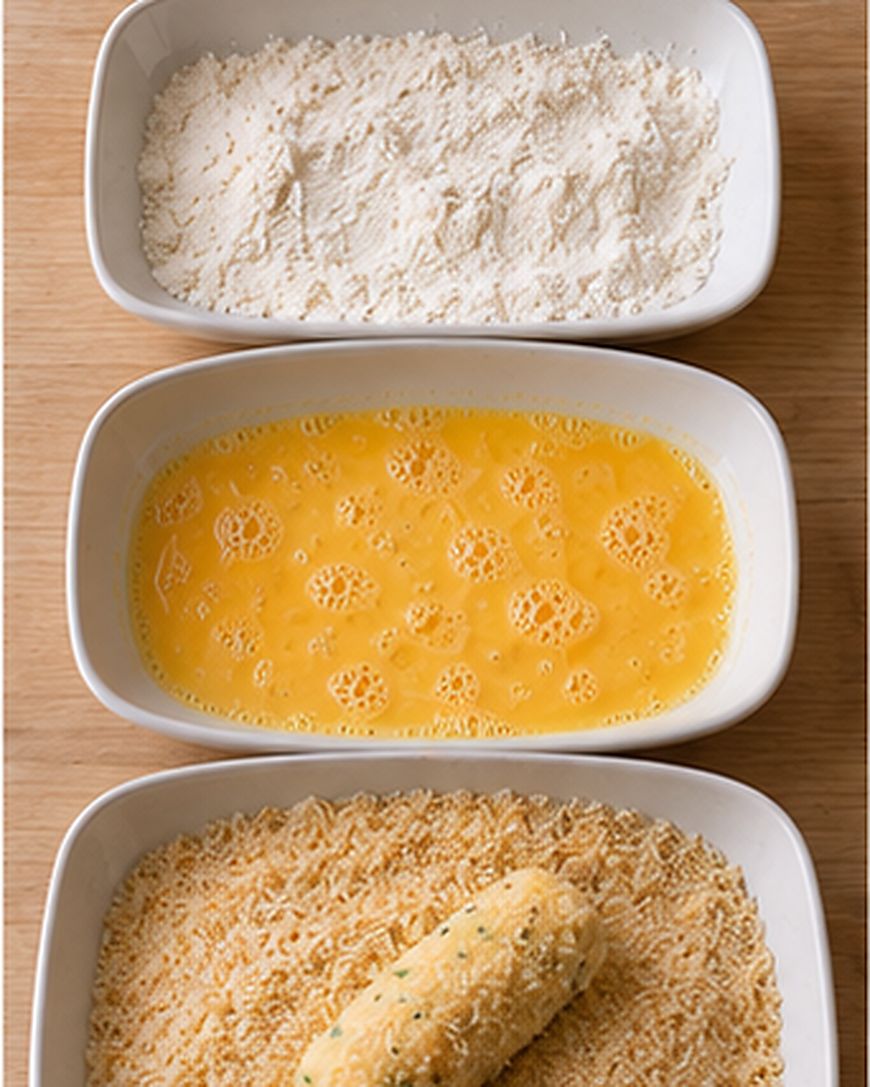
Roll each log in flour and shake off the excess, dip it in the egg, then press it into the breadcrumbs until fully covered. Return the coated croquettes to the tray and chill them for another 15 minutes so the coating sets and stays put in the hot oil.
Frying Until Golden
Pour about 6 cups of vegetable oil into a heavy 3-quart saucepan so the oil is about 2 inches deep, and heat it to 350°F. Use a clip-on deep fry thermometer, because guessing the temperature leads to croquettes that are either greasy or burnt.

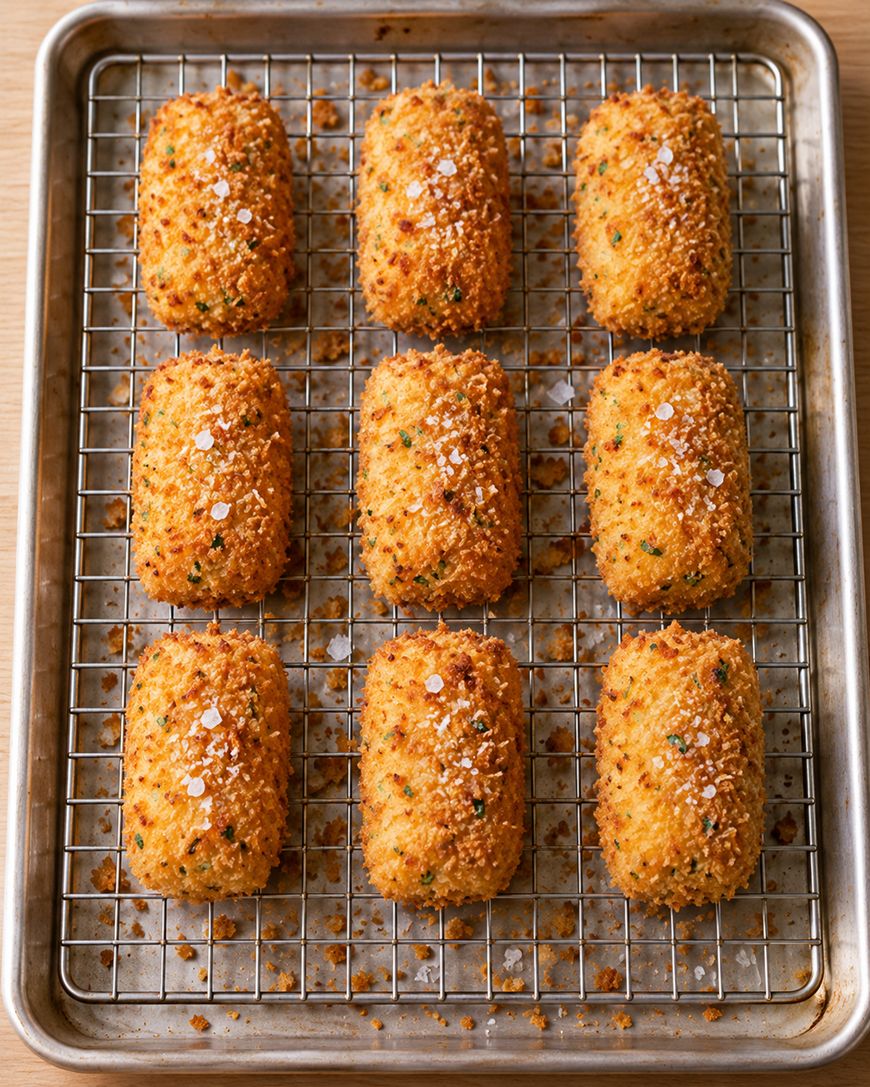
Fry four croquettes at a time for 3 to 4 minutes, turning them once or twice, until deep golden brown all over. Lift them out with a spider or slotted spoon, drain on a wire rack, and sprinkle with a pinch of flaky sea salt while they are hot.

Keep finished batches warm on a rack in a 200°F oven while you fry the rest. Let the oil climb back to 350°F between batches.
Tips for Perfect Potato Croquettes Every Time
The three biggest tips for potato croquettes are to keep the mash dry, keep the croquettes cold before they hit the oil, and keep the oil at 350°F. Get those three right and everything else falls into place.

Fry Safely
Deep frying is the part of this recipe that deserves your full attention. Never fill the saucepan more than halfway with oil, never leave hot oil unattended, and keep a pot lid nearby in case of a flare-up.
Lower each croquette into the oil gently and away from you so the oil does not splash. If oil ever catches fire, slide the lid over the pan and turn off the heat instead of using water.
Prevent Blowouts
When a croquette bursts open in the oil, the cause is usually a thin spot in the coating or a filling that was too warm or too wet. Press the breadcrumbs on firmly and make sure every spot is covered.
For extra insurance you can dip a croquette in egg and breadcrumbs a second time. The card keeps a single coat, so treat a second dip as optional.
Season With Care
Potatoes need more salt than most people expect, which is why the cooking water gets a full tablespoon. Salting the water seasons the potatoes from the inside as they simmer.
Skip tasting the mixture once the raw egg yolks are in. If you want to check the seasoning, taste a plain piece of the boiled potato before mashing.
Potato Croquettes Variations and Substitutions
The classic potato croquettes recipe is easy to adapt. Fillings and seasonings change the flavor without changing the method.
Cheesy Centers
For a molten center, press a small cube of sharp cheddar, Gruyere, or mozzarella into the middle of each croquette and roll the potato closed around it. Seal the seam completely so the cheese cannot leak into the oil.
The card leaves the cheese out, so treat it as an optional add-in.
Hearty Add-Ins
Fold in finely chopped ham, crumbled cooked bacon, or minced onion that has been sauteed until soft. Keep add-ins small and dry, and limit them to about 1/2 cup total so the mixture still holds together.
The card leaves these out too, so treat them as optional.
Easy Swaps
Panko makes a crunchier, craggier crust than fine dry breadcrumbs, and you can use the same amount. Parsley or dill can stand in for the chives, and Pecorino Romano can replace the Parmesan.
Use a neutral oil such as canola, vegetable, or peanut oil for frying. For a gluten-free version, use a gluten-free flour and gluten-free breadcrumbs.
Storing, Freezing, and Reheating Potato Croquettes
Let fried croquettes cool briefly, then refrigerate them within 2 hours, which is the USDA guideline for perishable leftovers. Store them in an airtight container for 3 to 4 days, which matches the USDA and FSIS guidance for refrigerated leftovers.
To reheat, set the croquettes on a wire rack over a baking sheet and bake at 375°F for 12 to 15 minutes. USDA recommends reheating leftovers to 165°F, so check the center with an instant-read thermometer.
To freeze, arrange cooled fried croquettes on a tray, freeze until solid, then move them to a freezer bag. They keep their best quality for up to 2 months, although the USDA notes that food kept at 0°F stays safe indefinitely.
Bake frozen croquettes straight from the freezer at 375°F for 20 to 25 minutes, again until the center reaches 165°F. Skip the microwave, which turns the crust soft and damp.
If you want to get ahead, coated croquettes can wait on the tray in the refrigerator for up to 4 hours before frying.
What to Serve With Potato Croquettes
Potato croquettes work as an appetizer, a side dish, or the center of a snack board. A bowl of garlic aioli, spicy mayo, warm marinara, or honey mustard turns them into a dunking situation that disappears fast.
As a side, they pair well with roast chicken, pork chops, steak, or baked salmon. The crisp coating also balances rich, saucy mains like pot roast or braised short ribs.
For a lighter plate, serve potato croquettes next to a peppery arugula salad dressed with lemon juice and olive oil. The acid cuts through the fried coating and keeps the meal feeling fresh.
At brunch, a couple of croquettes beside a fried egg and a spoonful of sour cream makes a cozy plate. Dust them with a little extra chopped chives for color.
Where Potato Croquettes Come From
The word croquette comes from the French verb croquer, which means to crunch. That name describes the whole point of the dish, a crisp shell around a soft filling.
Potatoes reached Europe from South America in the 1500s, and cooks soon found that mashed potatoes shaped and fried made a thrifty, filling food. Versions now appear around the world, including Spanish croquetas, Dutch kroket, and Japanese korokke.
Japanese korokke arrived as a Western-style dish in the Meiji era and became a staple of home cooking and corner shops. Each country has its own seasonings and fillings, but the crunchy outside and tender inside stay the same.
When you are ready to cook, use the recipe card below for the full ingredient list and numbered steps.
Crispy Potato Croquettes
Crispy potato croquettes with a creamy, buttery center and a golden breadcrumb crust. A dry mash, a double chill, and 350°F oil keep them from falling apart.
Ingredients
- 2 pounds Russet potatoes, peeled and cut into 2-inch chunks
- 1 tablespoon kosher salt, for the cooking water
- 3 tablespoons unsalted butter
- 2 large egg yolks
- 1/2 cup finely grated Parmesan cheese
- 2 tablespoons chopped fresh chives
- 1/4 teaspoon ground nutmeg
- 1 teaspoon kosher salt, for the potato mixture
- 1/2 teaspoon black pepper
- 1/2 cup all-purpose flour
- 2 large eggs
- 1 tablespoon water
- 1 1/2 cups plain dry breadcrumbs
- 6 cups vegetable oil, for frying
- Flaky sea salt, for finishing
Instructions
- Place the potatoes in a large pot, cover with cold water by about 1 inch, and stir in 1 tablespoon kosher salt. Bring to a boil, then reduce the heat and simmer for 15 to 20 minutes, until a fork slides in easily.
- Drain the potatoes well and return them to the hot, empty pot over low heat for 1 minute to steam off excess moisture.
- Mash the potatoes until completely smooth, without adding any milk. Stir in the butter, egg yolks, Parmesan, chives, nutmeg, 1 teaspoon kosher salt, and pepper until just combined.
- Spread the mixture on a plate or small sheet pan and chill, uncovered, for 30 minutes.
- Scoop about 1/4 cup of the mixture per croquette and roll into 16 logs, each about 2 1/2 inches long and 1 inch thick. Place on a parchment-lined tray.
- Set up three shallow dishes: flour in the first, the 2 eggs beaten with 1 tablespoon water in the second, and breadcrumbs in the third.
- Roll each log in flour and shake off the excess, dip in the egg mixture, then press into the breadcrumbs until fully coated. Return to the tray and chill for 15 minutes.
- Pour 6 cups of vegetable oil into a heavy 3-quart saucepan so it is about 2 inches deep, and heat to 350°F. Never fill the pan more than halfway with oil.
- Fry 4 croquettes at a time for 3 to 4 minutes, turning once or twice, until deep golden brown. Let the oil return to 350°F between batches.
- Drain on a wire rack, sprinkle with flaky sea salt while hot, and keep warm in a 200°F oven while you fry the remaining croquettes. Serve hot.
Notes
Coated croquettes can be refrigerated on the tray for up to 4 hours before frying. Refrigerate cooled leftovers within 2 hours and store in an airtight container for 3 to 4 days. Reheat on a wire rack over a baking sheet at 375°F for 12 to 15 minutes until hot throughout (165°F). To freeze, freeze cooled fried croquettes on a tray until solid, then bag for up to 2 months, and bake from frozen at 375°F for 20 to 25 minutes until the center reaches 165°F. Cheese centers, ham, bacon, and onion are optional add-ins not included in the card. Do not taste the mixture once the raw egg yolks are added.
Nutrition Information:
Yield:
8Serving Size:
2 croquettesAmount Per Serving: Calories: 290Total Fat: 15gSaturated Fat: 5gSodium: 500mgCarbohydrates: 31gFiber: 3gSugar: 2gProtein: 8g
Potato Croquette FAQs
Why are my potato croquettes falling apart?
The mixture is usually too wet or too warm. Steam the boiled potatoes dry in the hot pot, skip any milk, and chill the shaped logs before coating.
Also make sure the breadcrumb layer covers every spot, since gaps let the filling push out into the oil.
Can you bake or air fry potato croquettes instead?
This recipe is written for frying, so the card does not cover baking or air frying. Expect a paler, less crisp crust if you try either method.
Which potatoes are best for potato croquettes?
Russet potatoes are the best choice because their high starch and low moisture create a dry, fluffy mash. Yukon Gold potatoes work too, but they hold more moisture, so dry them well in the pot after draining.
What is the right oil temperature for frying?
Aim for 350°F and check it with a thermometer. Oil that is too cool lets the croquettes soak up grease, while oil that is too hot browns the crust before the center is hot.
Can you make potato croquettes ahead of time?
Yes. Coat the croquettes and refrigerate them on the tray for up to 4 hours before frying.
You can also freeze fried croquettes for up to 2 months and bake them straight from frozen until hot throughout.
Why This Potato Croquettes Recipe Works
Russet potatoes steamed dry and mashed without any milk give you a stiff, fluffy base that holds its shape. The egg yolks and butter add richness and act as binders, so the filling stays creamy instead of crumbly.
Chilling the mixture for 30 minutes firms up the butter, which makes the logs easy to shape. A second 15 minute chill after coating sets the crust so it clings through frying.
The flour, egg, and breadcrumb coating works in layers. The flour gives the egg something to grip, the egg glues on the crumbs, and the crumbs turn crisp and golden.
Oil held at 350°F is hot enough to brown the crust in 3 to 4 minutes without overcooking the outside before the center is hot. Frying only four croquettes at a time keeps the oil from dropping in temperature.
Make Potato Croquettes Tonight
Potato croquettes look like restaurant food, yet they come together with ordinary pantry staples and a little patience. Boil the potatoes, chill the mixture, and fry in small batches for the crispiest results.
Grab a bag of Russets, pull up the recipe card above, and make a batch tonight. Serve them hot with your favorite dipping sauce and watch them disappear.
Roasted Garlic Potatoes That Turn Golden and Crispy Every Time
Roasted Fingerling Potatoes That Come Out Crispy Every Single Time