Last updated: May 12, 2026
These potluck themes are simple “party rules” you set for what people bring so the table feels intentional instead of random. For your party, pick one broad theme (like “Tacos” or “Comfort Food”), give guests 3–4 example items, and ask everyone to label allergens.

Best Potluck Themes You Can Use This Year
1. Potluck Themes That Start With A Simple Color Rule
You pick one color family (all-white, all-green, all-red-and-gold), and everyone brings something that matches. It instantly makes the spread look styled with almost zero effort.
Give guests examples like “white = Alfredo pasta, cauliflower bites, coconut cupcakes” so nobody overthinks it. Ask them to add a garnish in the same color for extra impact.

2. Taco Bar Night
You provide tortillas and two proteins, and guests bring toppings, salsas, sides, and desserts. It’s flexible, filling, and naturally “mix-and-match,” so picky eaters still win.
To keep it smooth, set one guideline: each guest brings one item that fits in a taco or beside a taco. A simple upgrade is adding one vegetarian protein option like seasoned black beans.

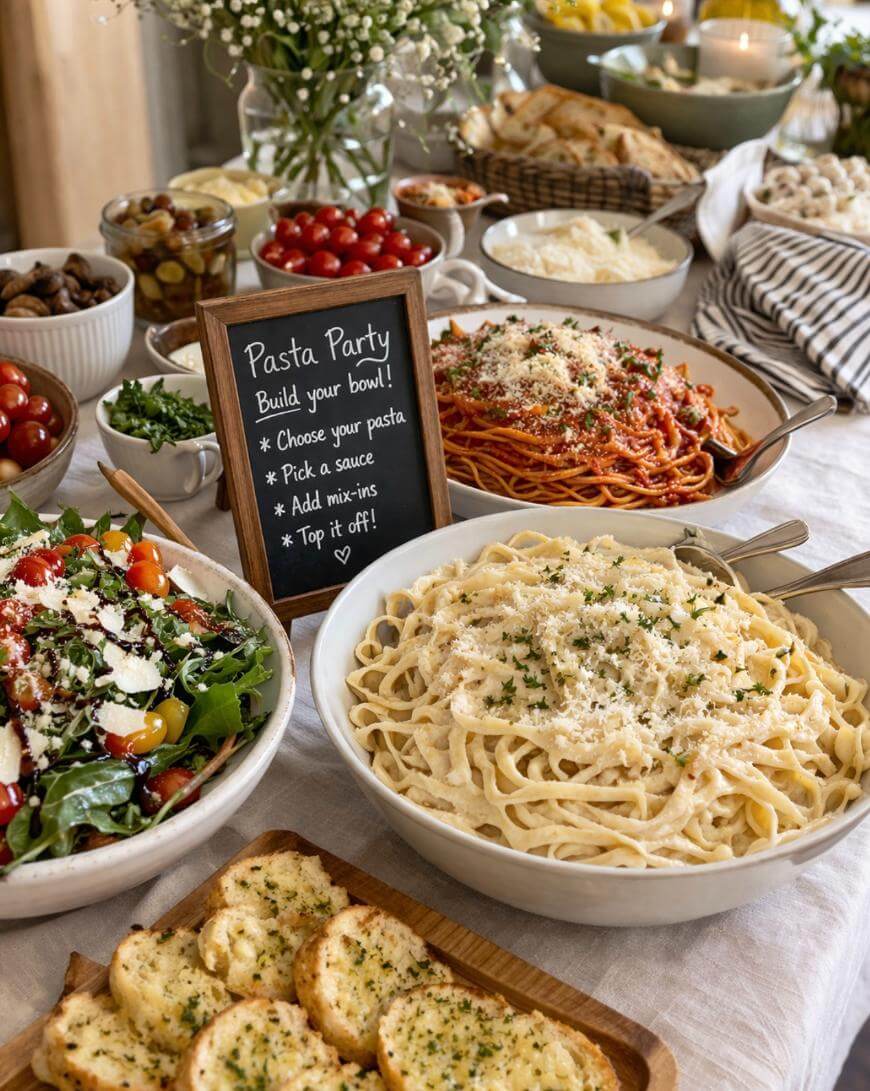
3. Pasta Party Potluck
You anchor with two big pots (marinara and Alfredo), and everyone else brings noodles, mix-ins, bread, salad, and sweets. It’s comfort-forward and budget-friendly without looking cheap.
A practical rule is “one dish feeds 6–8 people,” which keeps portions realistic. If you want it to feel elevated, ask guests to bring a topping like fresh basil, parmesan, or chili oil.
4. Brunch-For-Dinner
You pick “brunch foods only,” then let people interpret it however they want. The variety is fun, and it’s easy for guests to shop for and prep.
To avoid ten identical casseroles, suggest categories: egg dish, pastry, fruit, coffee/juice, or breakfast-style side. A smart add-on is having one syrup and one hot sauce station.

5. Soup And Dip Night
You ask everyone to bring either a soup or a dip plus a “dunker” (bread, chips, crackers, veggies). It’s cozy, shareable, and perfect when you want minimal utensils.
Make the theme easier by recommending slow cooker recipes for transport. If you want fewer spills, encourage thicker soups like chowders or blended veggie soups.

6. Comfort Food Classics
You set the vibe as “the dishes you crave when you’re tired,” and guests show up with their best cozy recipes. It tends to please a crowd because it’s familiar and hearty.
To keep it from becoming all beige, suggest one bright side per person, like a citrus salad or roasted veggies. A simple hosting move is setting out flaky salt and hot sauce for easy upgrades.
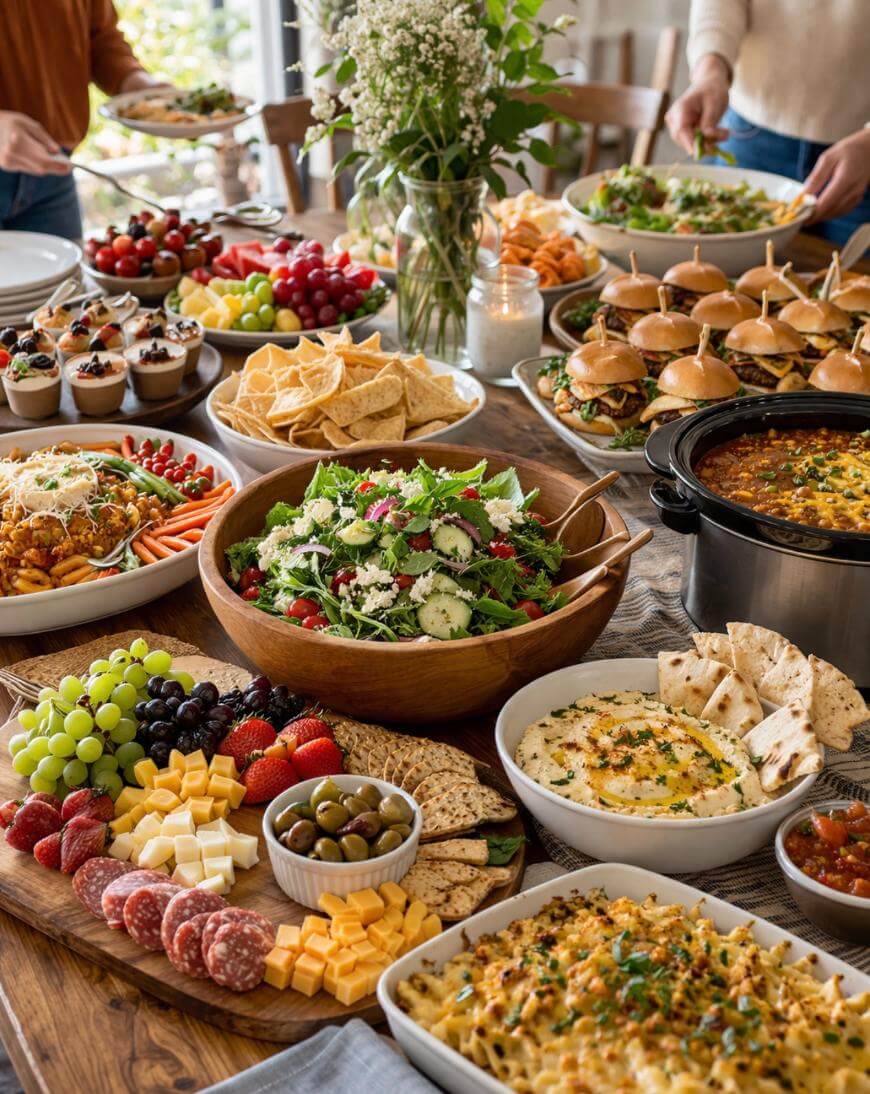
7. Global Street Food
Everyone brings a dish inspired by street food from any country. You get built-in variety without forcing people into one cuisine.
Encourage “handheld or snackable” items so the table doesn’t turn into only casseroles. A helpful boundary is “no deep frying at the venue,” which keeps cleanup sane.
8. Slider And Mini Sandwich Night
Mini sandwiches are easy to eat while chatting, and they don’t require plates the size of a dinner tray. You can do burger sliders, pulled pork, chicken parm, or veggie options.
Ask guests to bring either a slider filling, a bun option, or a topping/sauce. If you want a more polished look, set out parchment squares so people can grab-and-go.
9. Build-Your-Own Salad Bar
You provide greens and bowls, and guests bring proteins, crunch, fruit, cheese, and dressings. It works for mixed diets because people can customize.
Give one clear instruction: bring your item in a separate container, not pre-mixed. A great numeric guideline is planning 2–3 ounces of protein per person if you want it to feel like a full meal.
10. Movie Night Snack Potluck
You choose a movie genre and match snacks to the vibe, or you simply do “snacks only.” It’s lower effort for guests and feels instantly fun.
To avoid all sweet snacks, ask for a 60/40 split: about 60% savory and 40% sweet across the table. A quick win is having paper bags or cups so people can portion snacks easily.
11. Pizza Night Without The Oven Stress
Instead of baking pizzas on-site, everyone brings “pizza-flavored” dishes: pizza sliders, caprese skewers, pepperoni rolls, pizza dip, and a big salad. You still get the pizza mood without timing chaos.
You can also do a cold “pizza board” with mozzarella, marinara for dipping, olives, and cured meats. Ask guests to label anything spicy so people can choose their heat level.
12. Summer Picnic Favorites
You set the theme as “picnic foods that taste great at room temp.” That makes travel easier and keeps you from worrying about reheating schedules.
Encourage one classic item per person: pasta salad, slaw, fruit, sandwiches, lemonade, or cookies. A simple hosting tip is keeping a cooler area for mayo-based dishes.
13. Cozy Fall Harvest Table
Think apples, squash, cinnamon, maple, and warm spices. It feels seasonal without requiring complicated recipes.
To keep it balanced, suggest categories like “one veggie side, one baked good, one soup, one dessert.” If you want a cute touch, ask everyone to include at least one fall garnish like pepitas or apple slices.
14. Holiday Cookie Exchange Potluck
You make it dessert-forward, but still potluck-style, so nobody has to bake six dozen alone. It’s perfect when you want a social event that doesn’t feel like a full dinner.
Set a clear amount like “bring 24–36 cookies,” so people can take home a mixed box. A thoughtful add-on is providing small containers or treat bags.
15. Game Day Finger Foods
Everyone brings something you can eat with one hand. It’s the easiest way to keep the vibe casual and minimize dishware.
Encourage a mix of dips, wings, sliders, veggie trays, and brownies. A practical upgrade is asking one guest to bring extra napkins and another to bring paper plates.
16. Baked Potato Bar
You provide baked potatoes (or sweet potatoes), and guests bring toppings: chili, broccoli cheese, sour cream, bacon, salsa, or roasted veggies. It’s filling and surprisingly affordable.
A good planning number is 1 potato per person, plus 1 extra for every 6 guests. If you want to make it feel more “party,” add one crunchy topping station (chips, fried onions, toasted breadcrumbs).

17. Mac And Cheese Remix
You set the base theme as “mac and cheese or mac-and-cheese-adjacent.” People can go classic, spicy, veggie-packed, or gluten-free.
To keep variety, suggest different formats: baked mac, stovetop mac, mac bites, or mac with mix-ins. If you’re hosting, provide hot sauce and extra shredded cheese for easy finishing.
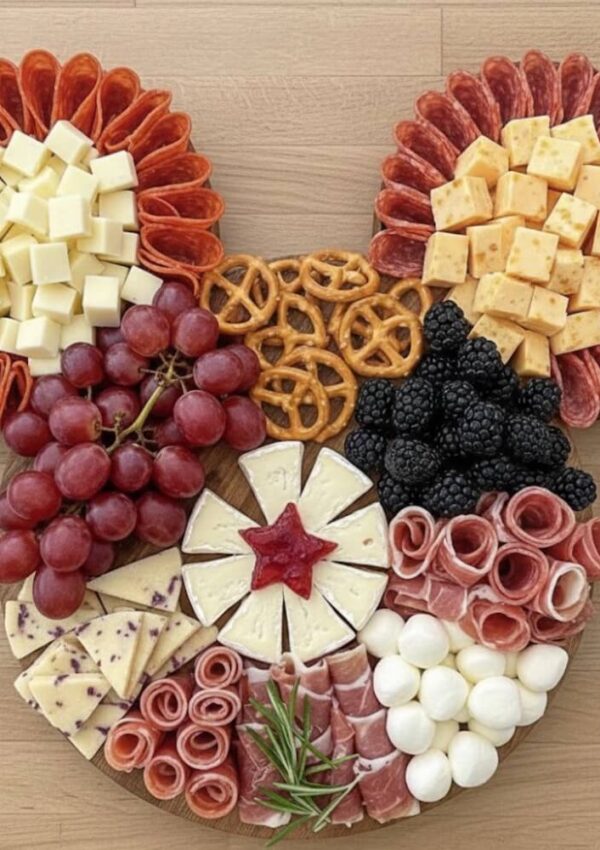
18. Charcuterie-Style Boards Only
Instead of casseroles, everyone brings a board or board component: cheeses, meats, fruit, crackers, pickles, dips, or sweets. The table looks curated even if everything is store-bought.
A helpful guideline is “one board feeds 4–6 people,” so you don’t end up with three crackers and 40 grapes. If you want a budget cap, suggest $10–$20 per person as a comfortable range for board items.
19. “Store-Bought Allowed” Potluck
You explicitly say it’s okay to buy items, which removes pressure and increases attendance. This theme is a lifesaver for busy weeks and last-minute invites.
Give guests permission to bring something as simple as a rotisserie chicken, a bagged salad kit, or bakery cookies. It still feels thoughtful when you ask them to plate it nicely at home.
20. Meatless Night
You make the entire potluck vegetarian, and everyone brings dishes that don’t rely on meat for flavor. It’s lighter, inclusive, and often cheaper.
To prevent “all carbs,” ask for at least one protein-rich item like beans, lentils, tofu, or eggs. A smart move is having one clearly labeled vegan dessert so everyone has a sweet option.
21. Freezer-Friendly Favorites
Guests bring dishes they’ve successfully frozen before, which means you can send leftovers home and reduce waste. It’s practical and very weeknight-friendly.
Encourage freezer-ready packaging like foil pans or freezer bags. If you want to make it extra useful, ask everyone to include reheating instructions on a sticky note.

22. Local Restaurant Copycats
Everyone tries a copycat recipe inspired by a popular menu item. It gives people a clear direction while still leaving room for creativity.
Suggest that guests name the dish on a card, like “Copycat Honey Walnut Shrimp.” This makes the table feel playful and helps others decide what to try first.
23. DIY Dessert Bar
You provide the base (ice cream, brownies, or cupcakes), and guests bring toppings and sauces. It’s easy to scale and makes people feel like they’re “creating” something.
A simple numeric guide is planning 3–5 toppings total for a small group and 6–10 toppings for a larger group. If you want it to look polished, use small bowls and spoons for each topping.

24. “One Pan” Dinner Theme
Everything must be made in one pan, one pot, or one sheet tray. It keeps prep realistic for guests and makes the menu cohesive.
Give examples like sheet-pan fajitas, baked ziti, skillet cornbread, or one-pot rice dishes. This theme tends to be affordable and low-stress, which matches a practical, friendly hosting vibe.

25. Around-The-World By Alphabet
You assign each guest a letter, and they bring a dish from a country that starts with that letter. It’s structured, but it still gives people freedom.
To avoid confusion, let guests swap letters if theirs feels too hard. A great hosting tip is to print little country cards so the table becomes self-explanatory.
26. “Clean-Out-The-Fridge” Potluck
You make it a playful challenge: bring something that uses up odds and ends at home. It reduces waste and often leads to surprisingly creative dishes.
Give one boundary so it stays appetizing: the dish must be intentionally finished, not a random mix. If you want to keep it safe, ask guests to list all major ingredients for allergy awareness.
How To Make Any Theme Work Smoothly
27. Set One Clear Food Rule And One Clear Logistics Rule
Your food rule might be “everything must be handheld” or “everything must fit the theme.” Your logistics rule might be “label allergens” or “bring a serving spoon.”
This keeps the event consistent without micromanaging people. If you do nothing else, do this, because it prevents the most common potluck chaos.
28. Use A Simple Portion Standard
Ask guests to bring enough for 6–8 servings unless you know your group is very small. That one sentence prevents “one tiny dip for 20 people” problems.
If you’re expecting bigger appetites, nudge the range to 8–10 servings. You can also tell people that leftovers are welcome so nobody feels pressured to under-bring.
29. Assign Categories Instead Of Letting Everyone Guess
You can have guests choose from categories like main, side, veggie, dessert, drink, or paper goods. It keeps your table balanced without forcing a specific recipe.
If you want it even easier, share a short sign-up note that says “claim one category only.” This avoids duplicates and makes shopping faster.
30. Plan Your Hosting Budget Like A Per-Person Number
A simple default is budgeting $8–$12 per person for what you provide as the host. That usually covers a main base, a drink option, and basic supplies.
If you’re hosting a themed bar (tacos, potatoes, dessert), you can bump it to $12–$18 per person. You’ll spend less overall when you choose themes with one shared base item.
Key Takeaways
Pick one clear theme and give 3–4 examples so guests don’t guess.
Use a portion standard like 6–8 servings to prevent shortages.
Assign categories when you want a balanced table with less duplication.
Label allergens and include serving utensils to keep things easy.
Choose themes with a shared base (tacos, potatoes, dessert) to simplify hosting.
Keep it flexible by allowing store-bought items when needed.
FAQ
What if you get too many desserts and not enough real food?
You fix it by assigning categories next time. You can also keep a simple “host base” like a big salad or protein so the meal still works.
How do you keep hot foods hot during a potluck?
You keep them hot by encouraging slow cookers and insulated carriers. You can also set up one outlet area so warm dishes stay plugged in safely.
Can you do a potluck theme with dietary restrictions?
Yes, you do it by choosing a flexible build-your-own theme like tacos, salad bars, or baked potatoes. You also ask guests to label ingredients and note allergens clearly.
How far ahead should you share the theme?
You should share it 7–10 days ahead for the smoothest planning. That gives guests time to shop, test a recipe, or grab a store-bought option.