Last updated: July 31, 2026
This protein bread recipe produces a soft, sliceable loaf with roughly 10 grams of protein per slice, and the recipe card below has the exact measurements and timing.
Scroll down to the recipe card for the full ingredient list and step-by-step instructions.
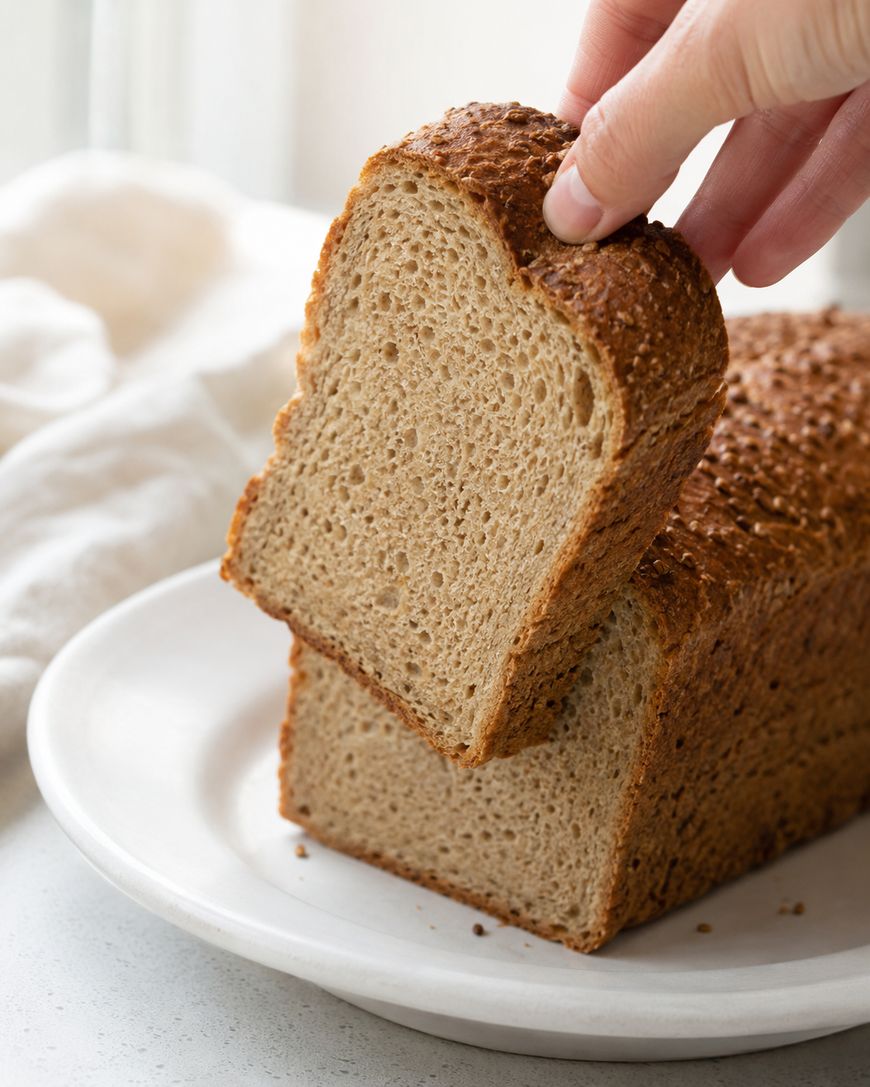
Why This Protein Bread Works
Cottage cheese and egg whites are the two ingredients doing most of the protein work in this loaf. Blended smooth before mixing into the dry ingredients, they disappear completely into the crumb without leaving any tang or curd texture behind.
Whole wheat flour and oat flour form the base of the batter, giving the loaf enough structure to hold together for sandwiches while still baking up soft rather than dense. A small amount of Greek yogurt keeps the crumb moist for several days after baking.
The Role of Cottage Cheese
Cottage cheese contributes both protein and moisture without adding significant fat.
Full-fat or low-fat cottage cheese both work in this recipe, though full-fat produces a slightly richer crumb. Brands like Good Culture or Daisy blend smoothly in a standard blender within about 30 seconds, leaving no visible curds in the finished batter.
Why Egg Whites Instead of Whole Eggs
Egg whites add protein without the extra fat and richness that whole eggs contribute.
Two whole eggs are still used for structure and flavor, and four additional egg whites boost the protein count without making the loaf heavy. Liquid egg whites from a carton work just as well as separated fresh eggs and save time.
Balancing Whole Wheat and Oat Flour
Whole wheat flour alone can produce a dense, dry loaf, so oat flour is blended in to soften the texture.
The ratio used in this recipe is roughly two parts whole wheat flour to one part oat flour, which keeps the fiber and protein content high while still producing a tender crumb.
Ingredients You Will Need
The full ingredient list uses items that are already common in a high-protein kitchen.

The main components are whole wheat flour, oat flour, cottage cheese, egg whites, whole eggs, Greek yogurt, baking powder, baking soda, a small amount of honey, and salt. Optional add-ins include everything bagel seasoning on top or a tablespoon of vital wheat gluten for extra chew.
Choosing Your Protein Powder Alternative
This recipe intentionally skips protein powder in favor of whole food protein sources.
Protein powder can make baked bread gummy or dense because of how the isolate reacts with gluten during baking. Cottage cheese and egg whites bake more predictably and produce a texture closer to standard sandwich bread.
Sweetener Options
A single tablespoon of honey balances the tang from the cottage cheese and yogurt without making the loaf taste sweet.
Maple syrup works as a direct substitute in the same quantity. For a completely unsweetened version, the honey can be left out entirely, though the flavor will taste slightly more savory.
How to Make Protein Bread
The full process takes about 15 minutes of active preparation and roughly 40 minutes in the oven.
Step 1: Blend the Wet Ingredients
Add the cottage cheese, egg whites, whole eggs, Greek yogurt, and honey to a blender.
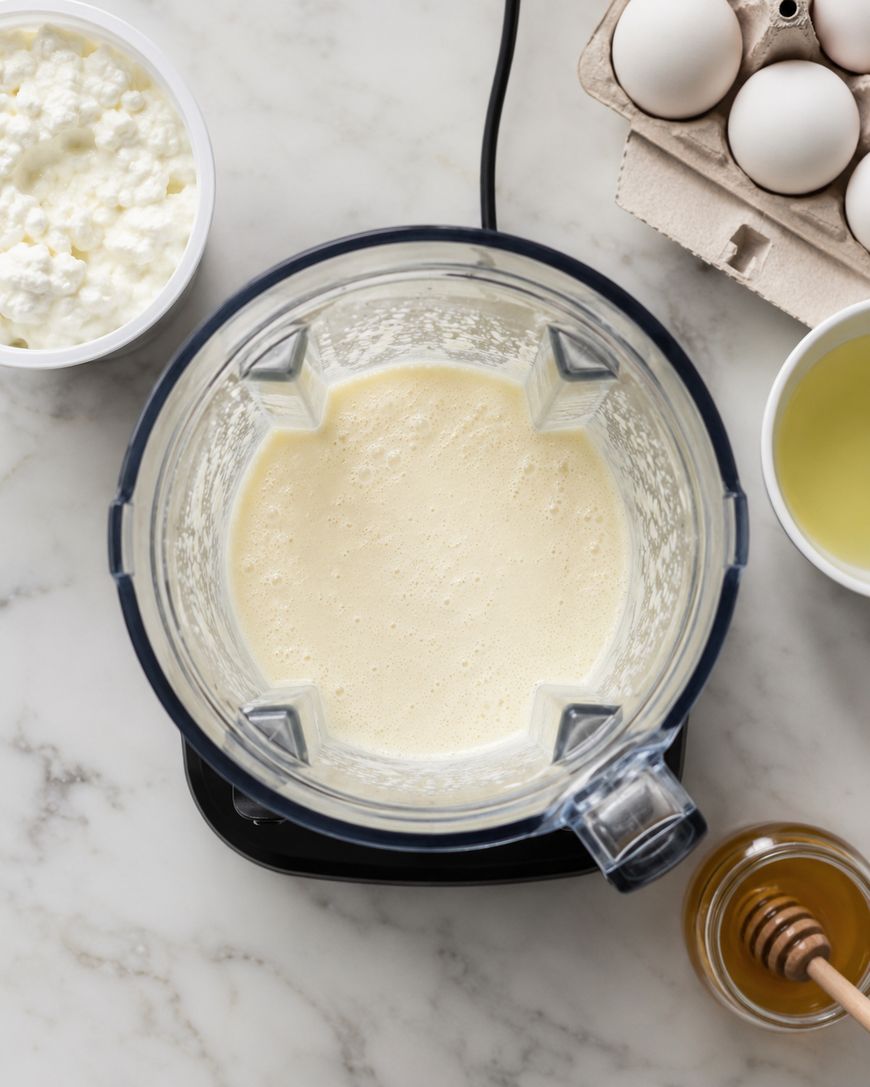
Blend on high for about 30 seconds until completely smooth with no visible curds. This step determines the final texture of the loaf, so scrape down the sides once and blend again if any lumps remain.
Step 2: Combine the Dry Ingredients
Whisk the whole wheat flour, oat flour, baking powder, baking soda, and salt together in a large bowl.
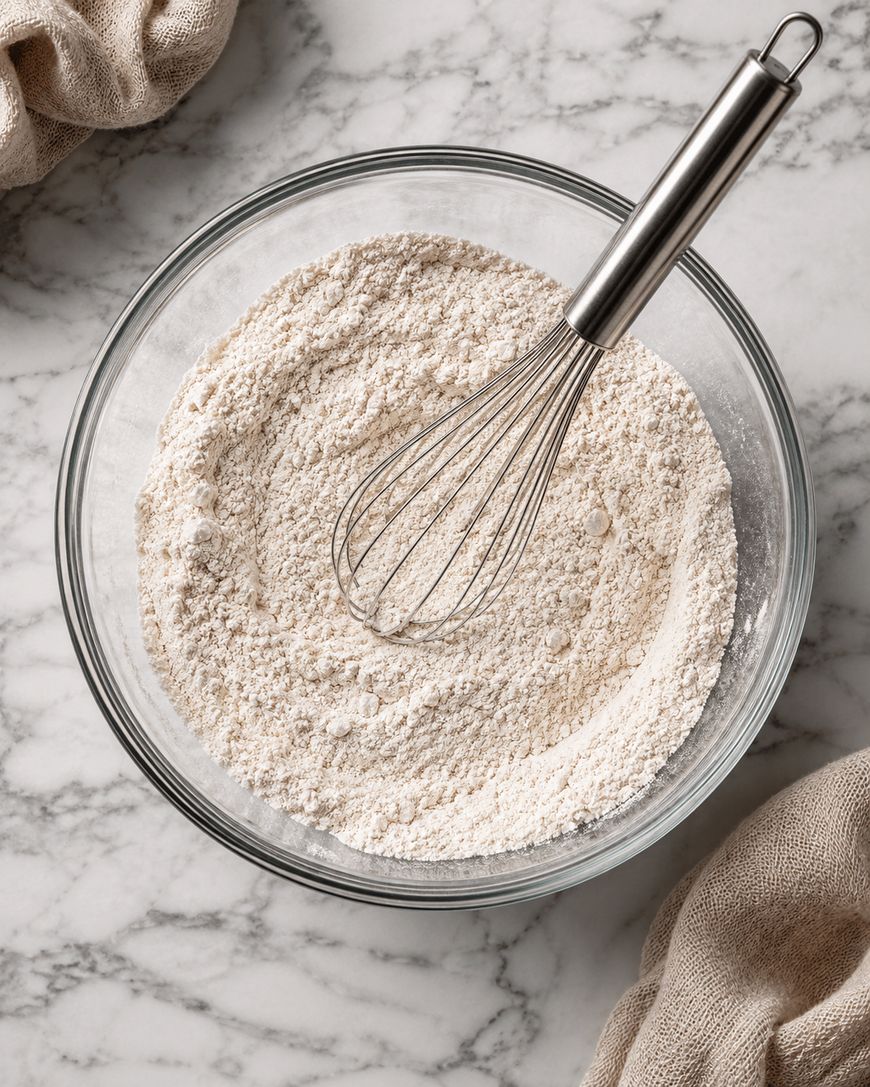
Whisking the dry ingredients separately before combining prevents pockets of baking soda from creating uneven bitter spots in the finished loaf.
Step 3: Fold Wet Into Dry
Pour the blended wet mixture into the bowl of dry ingredients.
Fold gently with a spatula until just combined. Overmixing at this stage activates the gluten in the whole wheat flour and results in a tougher, chewier crumb than intended.
Step 4: Bake the Loaf
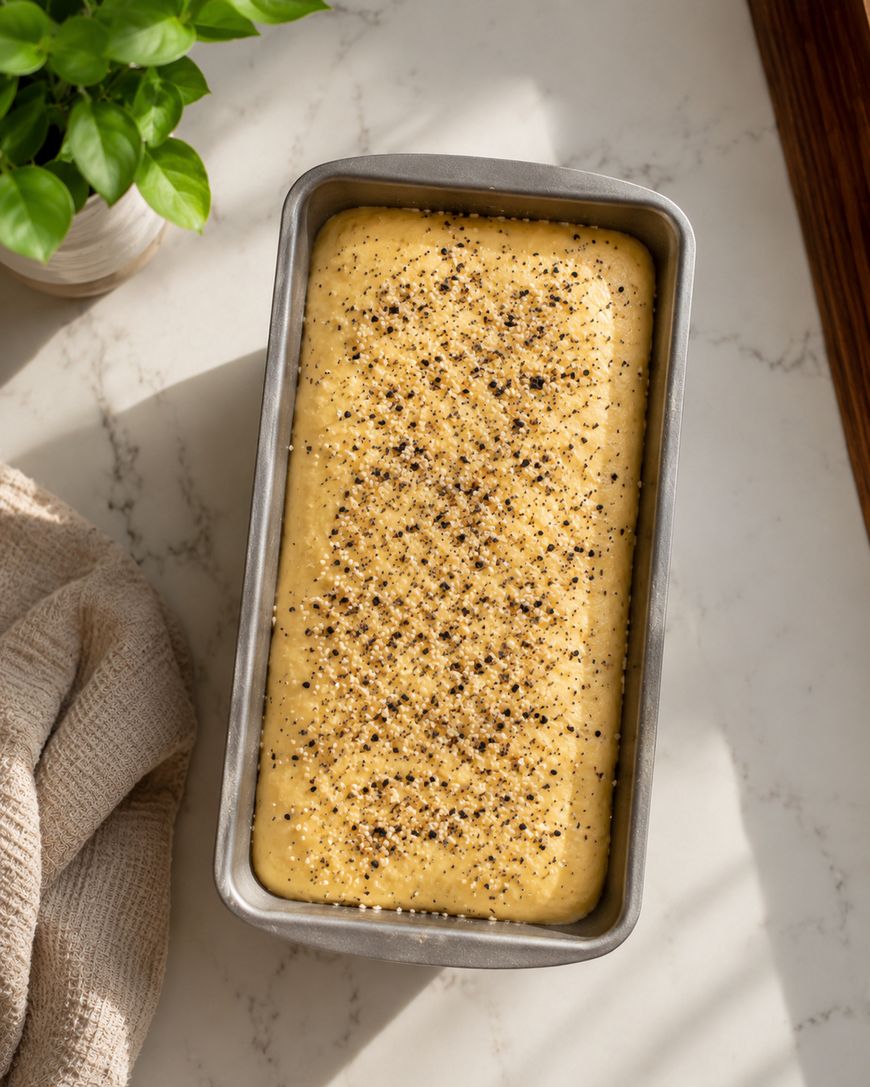
Pour the batter into a greased 9×5 inch loaf pan and smooth the top with a spatula.
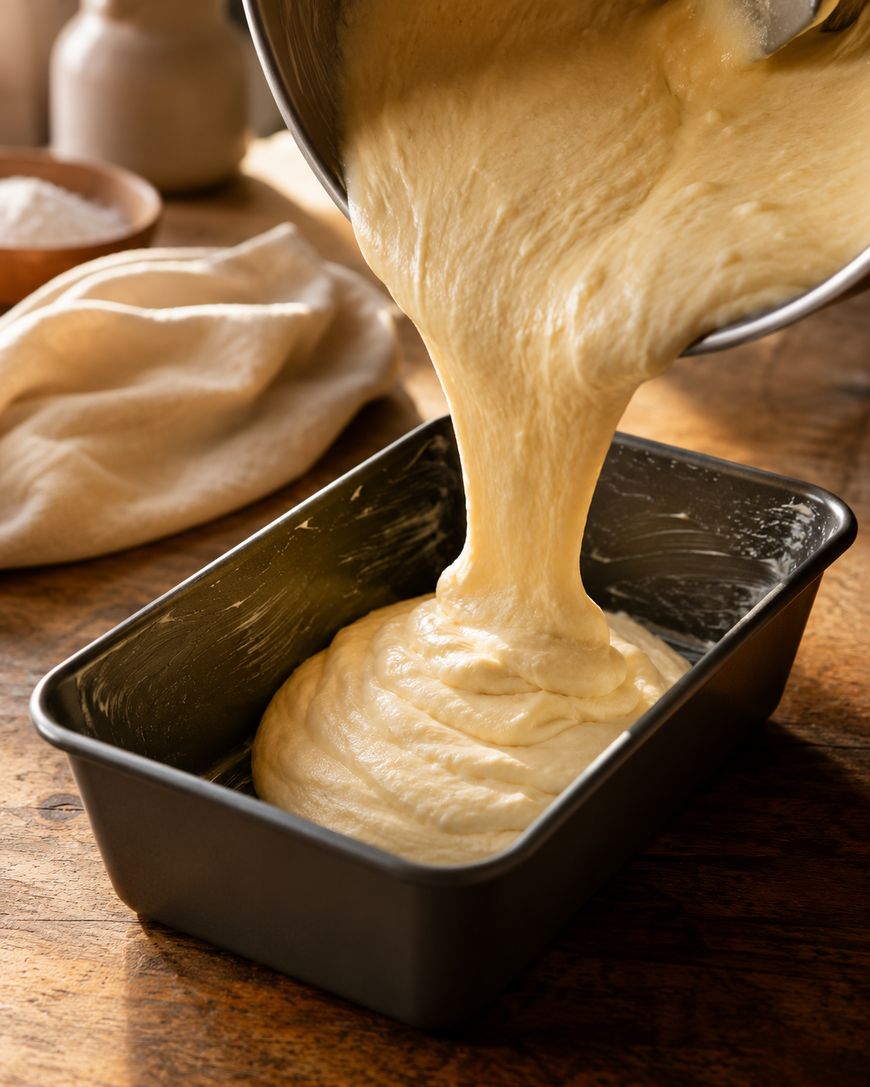
Bake in a preheated oven until a toothpick inserted in the center comes out clean and the top is golden brown. A digital thermometer reading of 200 to 205 degrees Fahrenheit in the center confirms the loaf is fully baked.
Tips for the Best Results
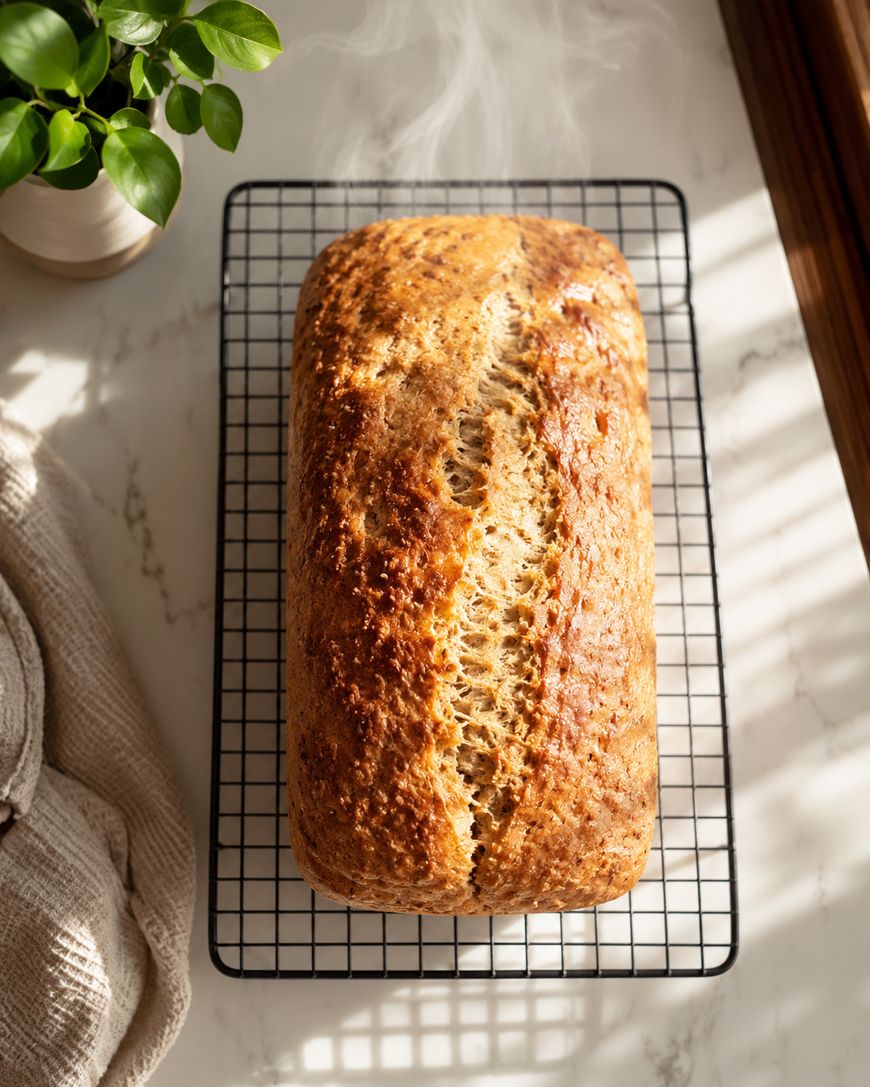
The most common mistake is slicing the loaf while still warm, which causes the crumb to compress and turn gummy.
Letting the loaf rest in the pan for 10 minutes, then cooling completely on a wire rack for at least an hour, gives the structure time to set properly before slicing.
Variations and Flavor Options
This base recipe adapts well to a handful of different flavor directions.
Everything Bagel Protein Bread
Sprinkle a generous layer of everything bagel seasoning over the top of the batter before baking.
The seasoning bakes into a slightly crisp crust that pairs well with cream cheese or avocado toppings.
Cinnamon Raisin Protein Bread
Fold half a cup of raisins and a tablespoon of ground cinnamon into the batter before pouring it into the pan.
This version works well toasted with a light spread of nut butter for a sweeter breakfast option.
Herb and Cheese Protein Bread
Fold in a quarter cup of shredded sharp cheddar and a tablespoon of chopped fresh chives or rosemary.
This savory version pairs well with soup or as a base for an open-faced sandwich.
Substitutions for Common Dietary Needs
Several swaps keep this recipe flexible for different needs without changing the basic method.
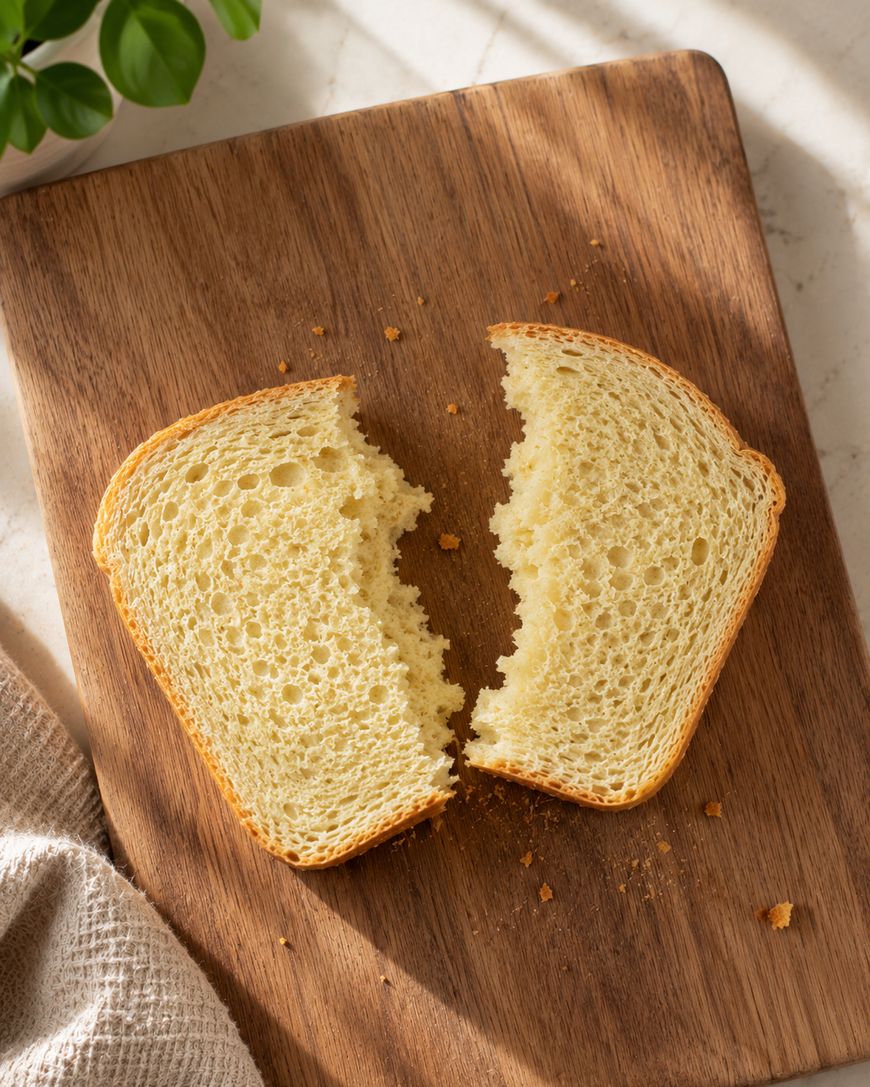
Gluten-free rolled oats can replace the oat flour when ground fine in a blender, and a certified gluten-free all-purpose blend can replace the whole wheat flour, though the loaf will be slightly less dense. Dairy-free cottage cheese alternatives from brands like Kite Hill work in place of traditional cottage cheese, though the protein count will be somewhat lower.
Storage and Serving Suggestions
This loaf stores well, which makes it practical for weekly meal prep.
Counter and Refrigerator Storage
Once fully cooled, wrap the loaf tightly in plastic wrap or store it in an airtight container at room temperature for up to three days.
For longer storage, keep the wrapped loaf in the refrigerator for up to a week, though the texture is best within the first four days.
Freezer Storage
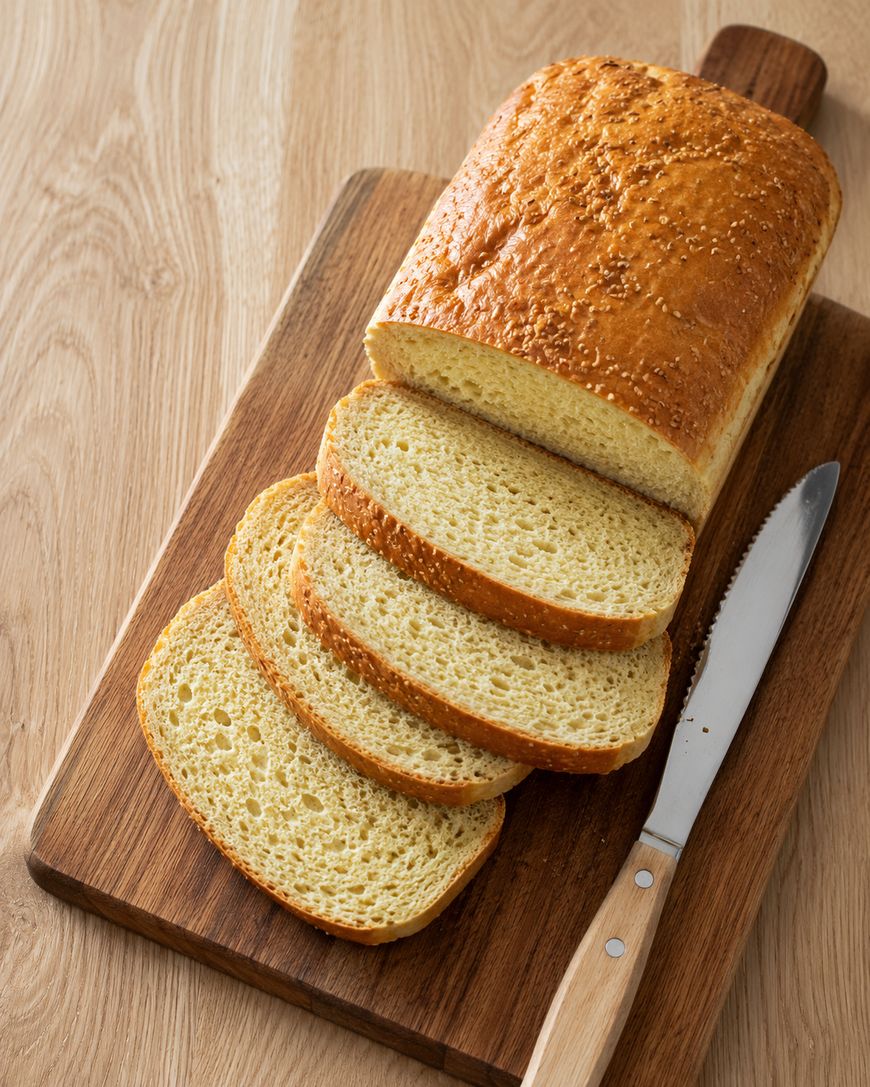
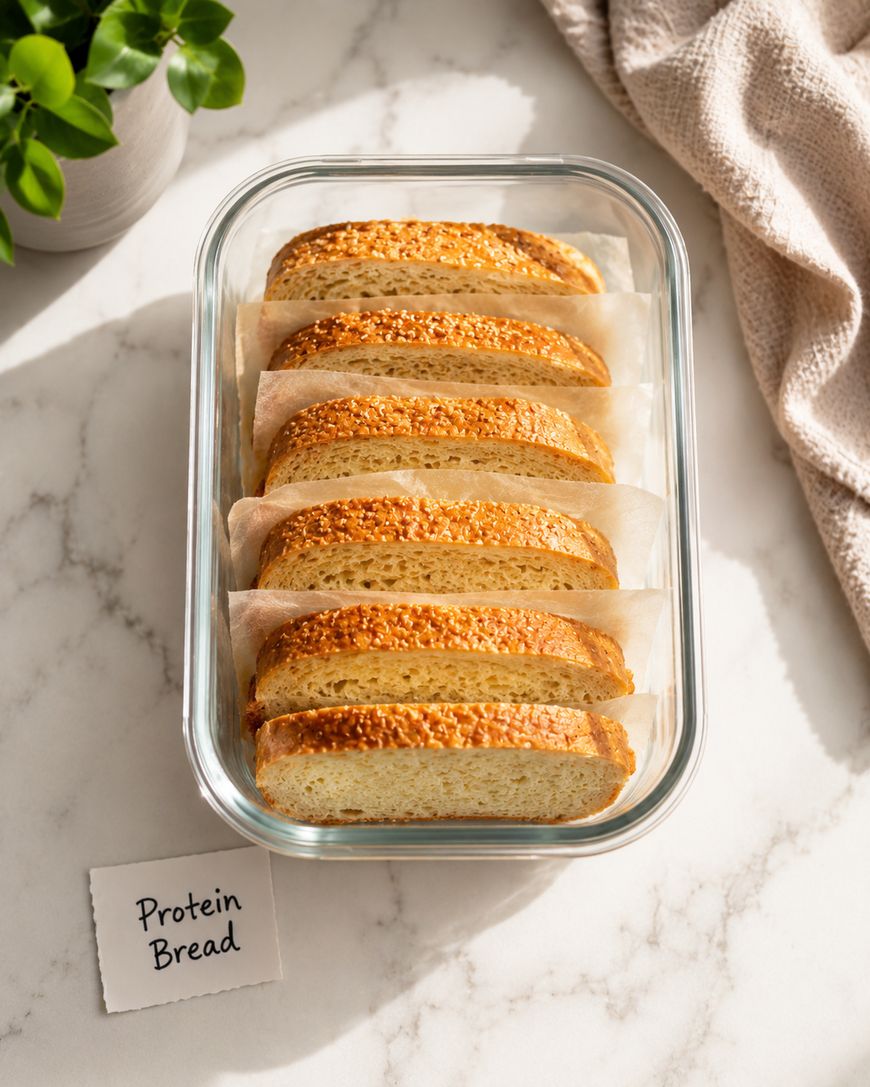
Slice the entire loaf before freezing so individual slices can be pulled out as needed.
Layer parchment paper between slices, place them in a freezer-safe bag, and store for up to three months. Toast slices directly from frozen for the easiest defrosting method.
Serving Suggestions
This loaf works well as a base for both sweet and savory toppings.
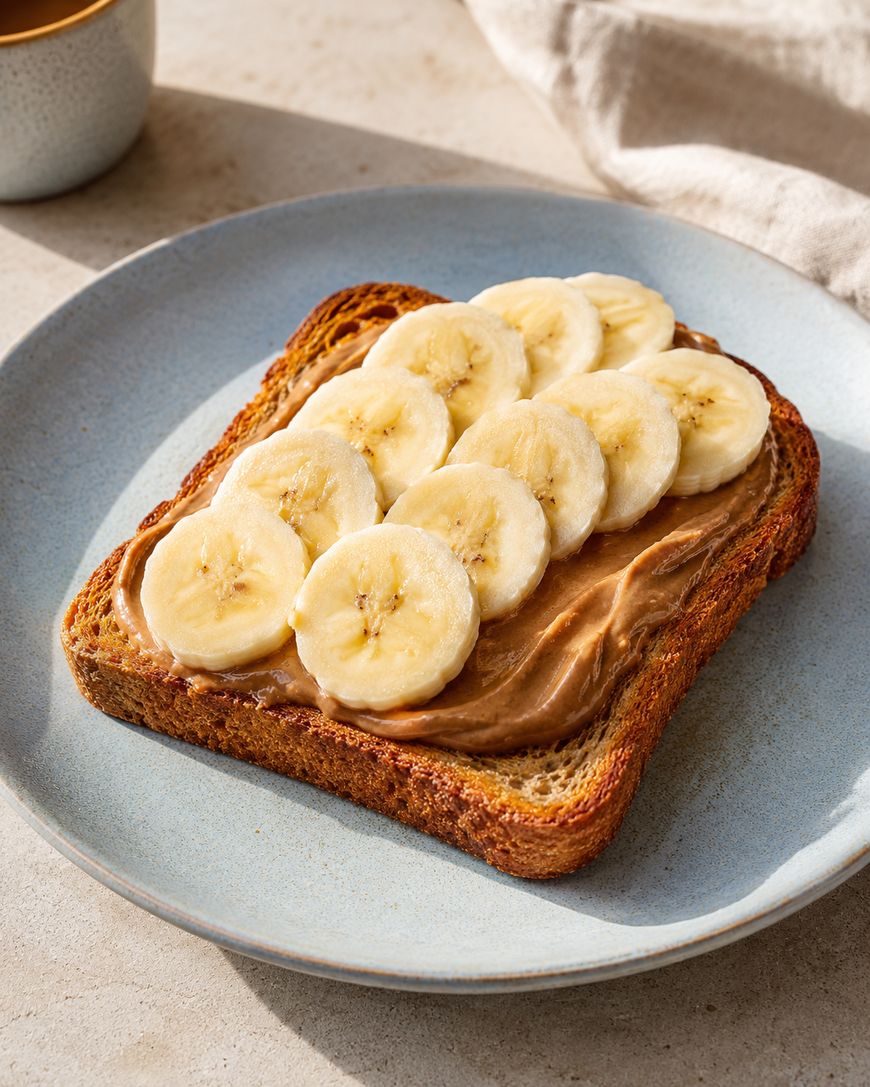
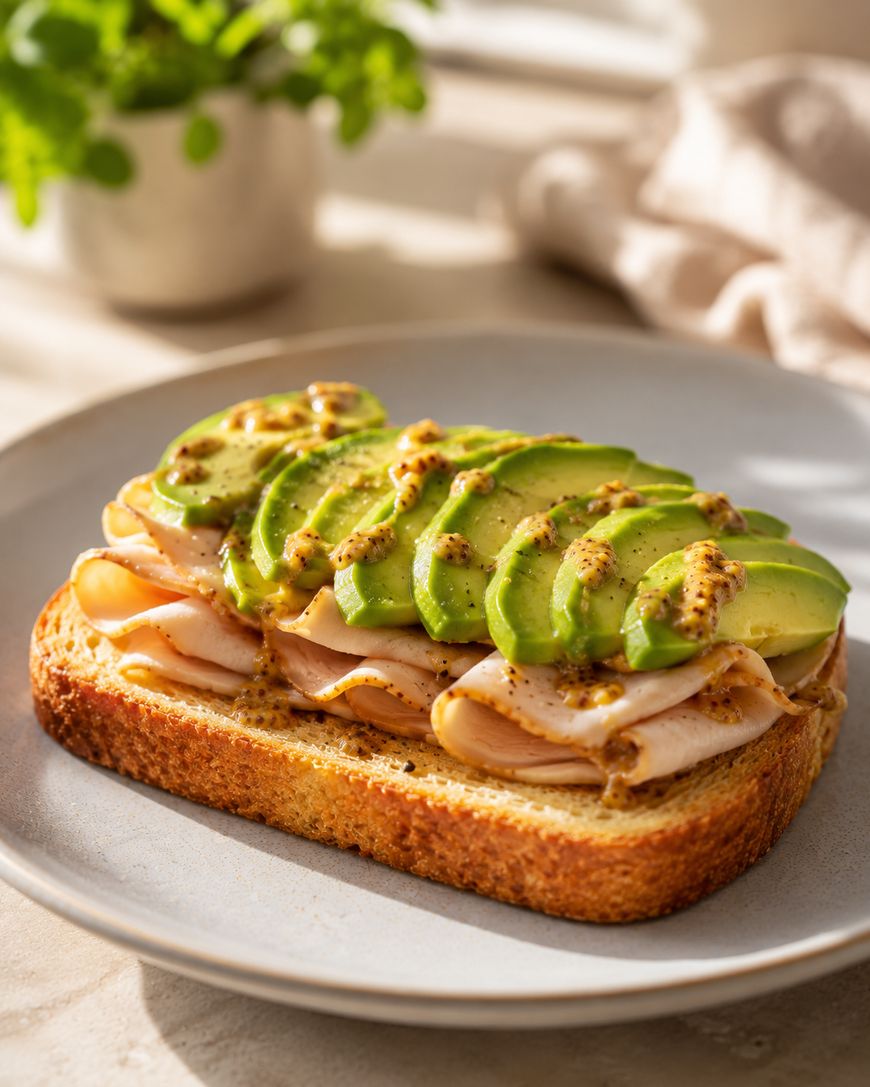
A slice toasted with almond butter and sliced banana makes a filling breakfast, while a slice topped with turkey, avocado, and mustard works as a satisfying lunch sandwich. It also holds up well as a base for French toast on weekend mornings.
The Background Behind High-Protein Baking
High-protein bread recipes gained popularity alongside the broader rise of fitness-focused eating in the 2010s, as home bakers began experimenting with cottage cheese, Greek yogurt, and egg whites as alternatives to traditional enriched dough.
Commercial protein breads entered grocery stores in the following years, often relying on vital wheat gluten and soy protein isolate to boost the nutrition label. Home versions using whole food ingredients like the ones in this recipe have become popular because they avoid the dense, gummy texture that isolate-heavy commercial loaves are often known for, while still delivering a comparable protein count per slice.
Everything needed to make this recipe is in the card below, including exact measurements, bake time, and the full nutrition breakdown.
Protein Bread Recipe
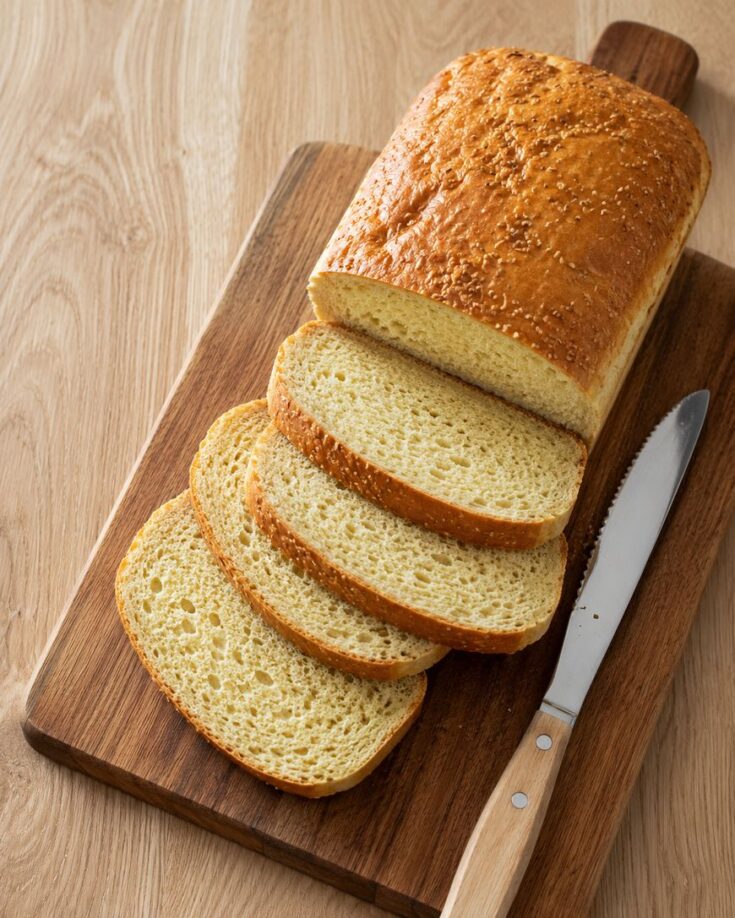
A soft, sliceable protein bread made with cottage cheese, egg whites, and whole wheat and oat flour. Around 10 grams of protein per slice with no protein powder required.
Ingredients
- 1 cup (225g) cottage cheese
- 4 large egg whites
- 2 large eggs
- 1/2 cup (115g) plain Greek yogurt
- 1 tablespoon honey
- 1 1/2 cups (180g) whole wheat flour
- 3/4 cup (90g) oat flour
- 2 teaspoons baking powder
- 1/2 teaspoon baking soda
- 3/4 teaspoon salt
Instructions
- Preheat oven to 350 degrees Fahrenheit and grease a 9x5 inch loaf pan.
- Add cottage cheese, egg whites, eggs, Greek yogurt, and honey to a blender. Blend on high for about 30 seconds until completely smooth.
- In a large bowl, whisk together whole wheat flour, oat flour, baking powder, baking soda, and salt.
- Pour the blended wet mixture into the dry ingredients and fold gently until just combined.
- Pour batter into the prepared loaf pan and smooth the top.
- Bake for 38 to 42 minutes, until a toothpick inserted in the center comes out clean and the internal temperature reaches 200 to 205 degrees Fahrenheit.
- Let the loaf rest in the pan for 10 minutes, then transfer to a wire rack and cool completely, at least 1 hour, before slicing.
Notes
For a gluten-free version, use certified gluten-free oat flour and a gluten-free all-purpose blend in place of the whole wheat flour. Slice the entire loaf before freezing for easy grab-and-go portions -- store for up to three months with parchment paper between slices.
Nutrition Information:
Yield:
12Serving Size:
1 sliceAmount Per Serving: Calories: 145Total Fat: 3gSaturated Fat: 1gSodium: 260mgCarbohydrates: 18gFiber: 2gSugar: 4gProtein: 10g
Frequently Asked Questions About This Protein Bread Recipe
How much protein does each slice actually contain?
A standard slice from a loaf cut into 12 pieces contains approximately 10 grams of protein, depending on the specific brands of cottage cheese and egg whites used.
This is roughly double the protein found in a slice of standard whole wheat sandwich bread, which typically contains 3 to 4 grams per slice.
Can this bread be made without a blender?
Yes, though the texture will be slightly different. A hand mixer or even a whisk and some patience can smooth out the cottage cheese enough to prevent large curds from showing in the finished loaf.
A blender or food processor produces the smoothest result and is recommended for a texture closest to standard sandwich bread.
Does the finished loaf taste like cottage cheese?
No. Once baked, the cottage cheese flavor is not detectable, and the loaf tastes similar to a mild whole wheat sandwich bread with a slightly tangy background note from the yogurt.
Testers unfamiliar with the recipe have consistently been unable to identify cottage cheese as an ingredient without being told in advance.
Can this recipe be made as muffins instead of a loaf?
Yes. Divide the batter evenly among a lined 12-cup muffin tin and reduce the bake time to roughly 20 to 22 minutes, checking for a clean toothpick at the center.
Muffins are a convenient grab-and-go option for those who want individual portions rather than slicing a full loaf.
Why did the loaf sink slightly in the middle?
A slight dip in the center usually means the loaf was slightly underbaked or the pan was moved before the structure fully set.
Confirming doneness with a digital thermometer reading of 200 to 205 degrees Fahrenheit, rather than relying on time alone, helps prevent this issue on future bakes.
Can the loaf be made ahead for the week?
Yes. Baking this loaf on a Sunday and storing it sliced in the refrigerator or freezer makes it an easy grab-and-go option throughout a busy week.
Toasting individual slices as needed keeps the texture fresh even several days after baking.
Make This Protein Bread Recipe Part of Your Weekly Rotation
This protein bread recipe offers a practical way to add meaningful protein to breakfast and lunch without relying on protein powder or pre-packaged commercial loaves.
The texture holds up to toasting, sandwich building, and freezing, and the base recipe adapts easily to sweet or savory add-ins depending on the week. Once this loaf becomes part of a regular baking rotation, it is easy to see why so many high-protein kitchens keep one in the freezer at all times.
Try this focaccia bread recipe next for another simple homemade loaf.
These Italian bread recipes are another great way to expand your homemade bread rotation.