Last updated: September 23, 2026
Roasted fall vegetables turn a handful of simple produce into a caramelized, cozy side dish you will want on repeat all season. You can jump straight into the recipe card below, or read on for every tip that makes this version work so well.

What You Need For Roasted Fall Vegetables
This recipe leans on the vegetables that show up at every farmers market and grocery store display once the weather turns cooler. Butternut squash brings natural sweetness and a soft, almost custardy interior once it roasts.

Brussels sprouts add a little bitterness and crisp, browned edges that balance the squash. Carrots and red onion round things out with color, texture, and a savory backbone that keeps the dish from tasting one-note.
Olive oil and a touch of maple syrup coat everything before it goes into the oven, helping the vegetables caramelize instead of just softening. A finishing splash of balsamic vinegar at the end adds brightness that cuts through all that roasted sweetness.
How To Get Perfectly Caramelized Roasted Fall Vegetables
The single biggest factor in how these vegetables turn out is space on the pan. Crowded vegetables release steam and end up soft and pale instead of browned, so you want a single layer with room to breathe.

Using two sheet pans instead of one makes a real difference here, especially with denser vegetables like squash and carrots. A hot oven, set to 425 degrees, is what gives you those deeply caramelized edges rather than a dish that just tastes boiled.
Flipping the vegetables halfway through roasting matters just as much as the initial spacing. This lets both sides of each piece touch the hot pan directly, so you get even color instead of vegetables that are browned on top and pale underneath.

The balsamic vinegar goes on at the very end, tossed with the vegetables while they are still hot from the oven. Adding it too early causes it to burn onto the pan rather than glaze the vegetables themselves.
Variations And Substitutions For Roasted Fall Vegetables
Sweet potatoes work beautifully in place of butternut squash if that is what you have on hand or prefer the flavor of. Cut them to a similar size so everything finishes roasting at the same time.

Parsnips or turnips can stand in for some of the carrots, giving the dish an earthier, slightly peppery note. Shallots make a fine substitute for red onion if you want something a little sweeter and milder.
If you want a bit of crunch and extra protein, toasted pecans or pepitas scattered over the finished dish work well. A sprinkle of crumbled feta or goat cheese also plays nicely against the caramelized vegetables, though it does move the dish away from strictly plant based.

For a spicier take, a pinch of red pepper flakes added to the oil before tossing gives the vegetables a subtle warmth. You can also swap the thyme for rosemary or sage if that fits your table better.
Storage And Make Ahead Tips
Leftover roasted fall vegetables keep well in an airtight container in the refrigerator for up to four days. The flavor actually deepens a little overnight as the balsamic vinegar continues to soak into the vegetables.
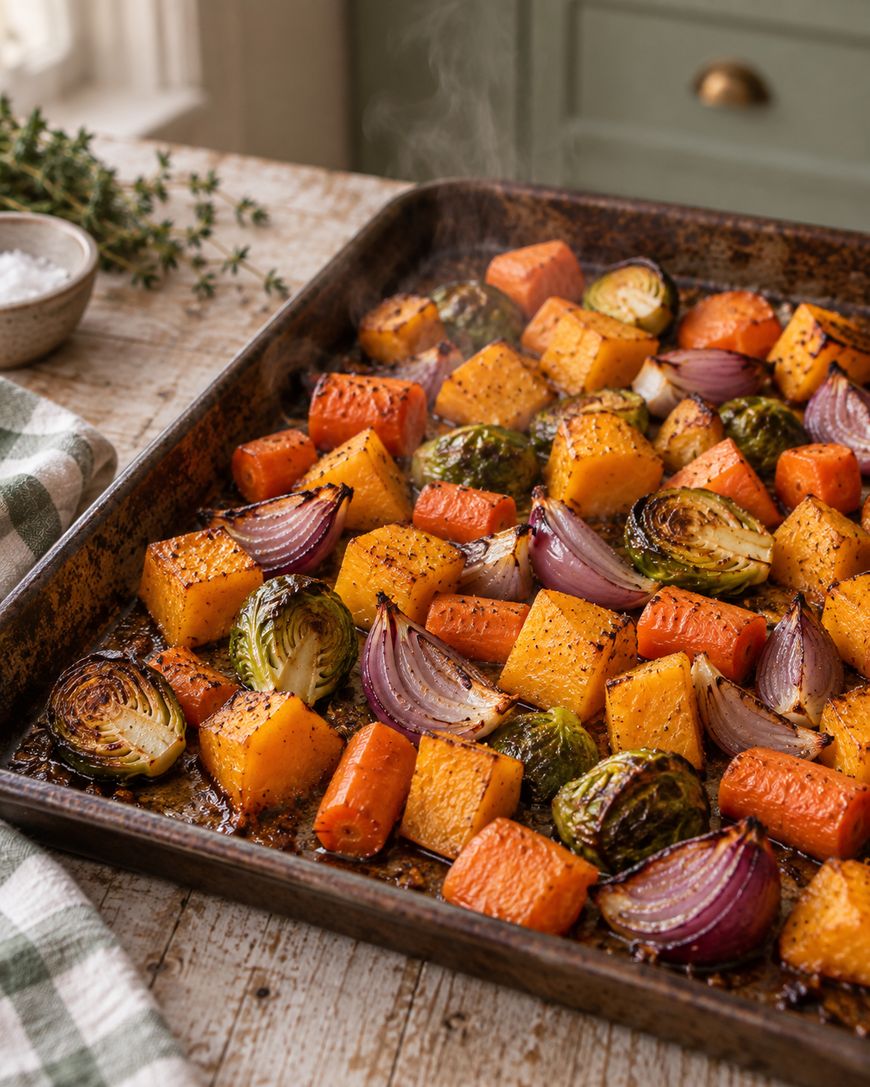
To reheat, spread the vegetables back out on a sheet pan and warm them in a 400 degree oven for about eight minutes. This brings back some of the crisp, caramelized edges that a microwave tends to soften.
You can also prep the vegetables ahead of time by chopping everything and storing it in the refrigerator up to a day before roasting. Wait to toss them with the oil and maple syrup until just before they go in the oven so they roast rather than steam.
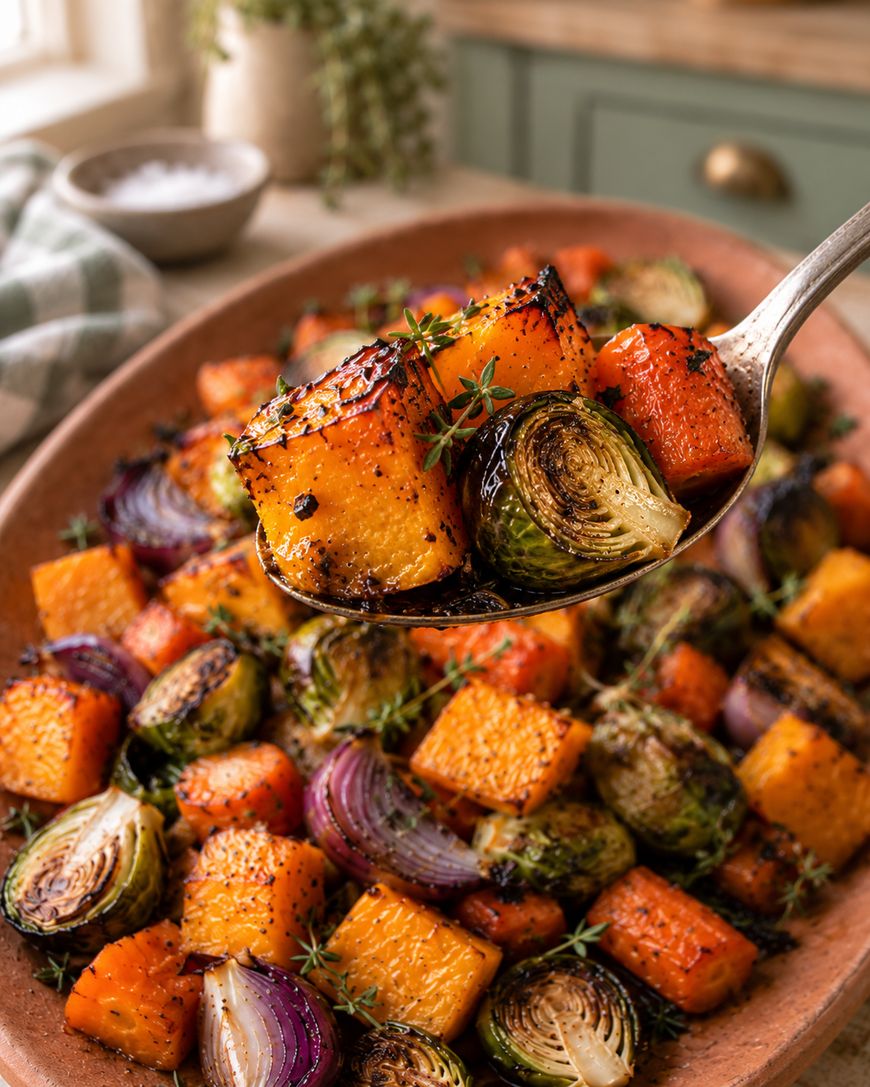
These vegetables freeze reasonably well for up to two months, though the texture will be softer once thawed. They are best used in soups, grain bowls, or blended into a sauce after freezing rather than served on their own.
Serving Suggestions
Roasted fall vegetables work as a side dish for almost anything on your dinner table this time of year. They pair especially well with roasted chicken, a simple pork tenderloin, or a hearty grain like farro or wild rice.

For a full vegetarian meal, spoon the vegetables over creamy polenta or a bed of couscous. A fried or soft boiled egg on top turns the same dish into a satisfying lunch on its own.

Leftovers fold nicely into a grain bowl with a drizzle of tahini or a simple vinaigrette. You can also chop them smaller and use them as a filling for a warm quesadilla or a savory galette.
Where This Recipe Comes From
Roasting a mix of whatever vegetables are in season is one of the oldest, simplest ways to cook, and fall produce is especially suited to it. Squash, carrots, and Brussels sprouts all hold their shape and develop real sweetness under high heat in a way that quicker cooking methods do not allow.

The combination of maple syrup and balsamic vinegar reflects a very New England approach to fall cooking, pairing the season’s produce with the season’s other signature flavors. It is the kind of dish that shows up on Thanksgiving tables and weeknight dinners alike because it scales up or down without any trouble.

Ready to see exactly how it comes together? The recipe card below has the full ingredient list and step by step instructions.

Roasted Fall Vegetables
A one-pan mix of butternut squash, Brussels sprouts, carrots, and red onion roasted until caramelized, then finished with a splash of balsamic vinegar for a cozy fall side dish.
Ingredients
- 1 medium butternut squash, peeled and cut into 1-inch cubes (about 4 cups)
- 3 cups Brussels sprouts, trimmed and halved
- 3 medium carrots, peeled and cut into 1-inch chunks
- 1 large red onion, cut into wedges
- 1/4 cup olive oil
- 1 tablespoon pure maple syrup
- 2 teaspoons fresh thyme leaves, plus more for serving
- 1 teaspoon kosher salt
- 1/2 teaspoon black pepper
- 2 tablespoons balsamic vinegar
Instructions
- Preheat the oven to 425 degrees F and line two large sheet pans with parchment paper.
- In a large bowl, toss the butternut squash, Brussels sprouts, carrots, and red onion with olive oil, maple syrup, thyme, salt, and pepper until evenly coated.
- Spread the vegetables in a single layer across the two sheet pans, giving each piece space so it roasts instead of steams.
- Roast for 20 minutes, then remove the pans and flip the vegetables with a spatula.
- Return the pans to the oven and roast for another 15 to 18 minutes, until the vegetables are tender and caramelized at the edges.
- Drizzle the balsamic vinegar over the hot vegetables and toss gently to coat.
- Transfer to a serving platter, scatter with extra fresh thyme, and serve warm.
Notes
Store leftovers in an airtight container in the refrigerator for up to 4 days. Reheat in a 400 degree F oven for about 8 minutes to re-crisp the edges. Leftovers can also be frozen for up to 2 months, though the texture will soften slightly.
Nutrition Information:
Yield:
6Serving Size:
about 1 cupAmount Per Serving: Calories: 165Total Fat: 8gSaturated Fat: 1gSodium: 320mgCarbohydrates: 22gFiber: 5gSugar: 9gProtein: 3g
Common Questions About Roasted Fall Vegetables
What vegetables work best for roasted fall vegetables?
Butternut squash, Brussels sprouts, carrots, and red onion are the base of this recipe because they all roast at a similar rate. Sweet potatoes, parsnips, and turnips are easy additions or substitutions if you want to change things up.
Why do my roasted vegetables turn out soggy instead of caramelized?
Soggy vegetables almost always come down to overcrowding the pan, which traps steam instead of letting the vegetables brown. Spreading everything in a single layer across two pans, as this recipe calls for, solves the problem.
Can you make roasted fall vegetables ahead of time?
You can chop the vegetables up to a day ahead and store them in the refrigerator before tossing them with oil and roasting. Fully roasted vegetables also reheat well in the oven, so you can roast them earlier in the day and warm them just before serving.
Do you have to use maple syrup in this recipe?
The maple syrup helps the vegetables caramelize and adds a gentle sweetness, but you can leave it out if you prefer a more savory dish. Honey works as a substitute if that is what you have on hand.
How long do roasted fall vegetables last in the fridge?
Stored in an airtight container, these vegetables keep well in the refrigerator for up to four days. The flavor tends to improve on day two once the balsamic vinegar has had time to soak in.
Can you freeze roasted fall vegetables?
Yes, though the texture softens once thawed, so they work best folded into soups or grain bowls rather than served plain. They will keep in the freezer for up to two months in a sealed container.
Why This Recipe Works
The combination of vegetables here is not random. Butternut squash and carrots bring natural sugars that caramelize under high heat, while Brussels sprouts and red onion add bitterness and savory depth that keep the dish balanced rather than one-note sweet.
Roasting at 425 degrees, with real space between the pieces, is what separates caramelized vegetables from steamed ones. That high, dry heat is doing most of the work, and the maple syrup simply helps it along.
Finishing with balsamic vinegar off the heat, rather than cooking it in, means you get a bright, tangy glaze instead of a burnt one. It is a small step that makes the whole dish taste more intentional.
Because everything roasts on sheet pans with minimal hands-on time, this recipe fits easily into a busy fall weeknight or a crowded holiday oven schedule. You get a dish that tastes like it took far more effort than it actually did.
Bring Roasted Fall Vegetables To Your Table
This roasted fall vegetables recipe is the kind of side dish that earns a permanent spot in your fall and winter rotation. Give it a try this week, and use the recipe card above to get the exact quantities and timing right.