Last updated: November 2, 2026
Rosemary bread is a soft, chewy loaf with a crackly golden crust and fresh herb flavor in every slice. The full recipe card is below, and the walkthrough that follows covers every stage so you can bake it with confidence.
What Makes Rosemary Bread So Good
Rosemary bread is a yeast loaf made with olive oil and fresh chopped rosemary, baked in a standard 9×5-inch loaf pan. It takes about 35 minutes of hands-on work, and the rest of the time is simply waiting for the dough to rise.

The olive oil keeps the crumb soft and tender, while bread flour gives it a satisfying chew. Rosemary stirred into the dough perfumes every bite, and more on top turns crisp and savory in the oven.
This is the kind of bread that makes a simple bowl of soup feel like a proper meal. It also toasts beautifully, so leftovers never go to waste.
If you have never baked with yeast, this is a friendly place to start. The dough is forgiving, the ingredient list is short, and the loaf bakes in a pan, so there is no fussy shaping or scoring involved.
Rosemary Bread Ingredients
You need only a handful of pantry staples plus a few sprigs of fresh rosemary. Here is what goes into the loaf and why each ingredient matters.

Flour, Water, and Yeast
Use 3 1/4 cups of bread flour, which is about 390 grams. Bread flour has more protein than all-purpose, so it builds a stronger structure and a chewier crumb.
You also need 1 cup plus 2 tablespoons of warm water at about 110°F and 2 1/4 teaspoons of active dry yeast, which is one standard packet. The water should feel comfortably warm on your wrist, never hot, because hot water can kill the yeast.
Sugar and Salt
One tablespoon of granulated sugar feeds the yeast during the first few minutes and helps the crust brown evenly. It does not make the bread sweet.
Add 1 1/2 teaspoons of fine sea salt to the dough for flavor and to keep the yeast in check. A teaspoon of flaky sea salt sprinkled over the top before baking adds a pleasant crunch.
Olive Oil and Fresh Rosemary
Three tablespoons of extra-virgin olive oil go into the dough, and one more tablespoon is brushed over the top. A fruity, good-quality oil makes a noticeable difference here.

You need 3 tablespoons of finely chopped fresh rosemary in total. Two tablespoons are mixed into the dough and the last tablespoon goes on top of the loaf.
How to Make Rosemary Bread Step by Step
The method has seven simple stages, and the order matters more than speed. Follow along below and the dough will tell you when it is ready.
Proof the Yeast
Stir the warm water, sugar, and yeast together in a large bowl. Let it sit for 5 to 10 minutes until the surface turns foamy and smells bready.
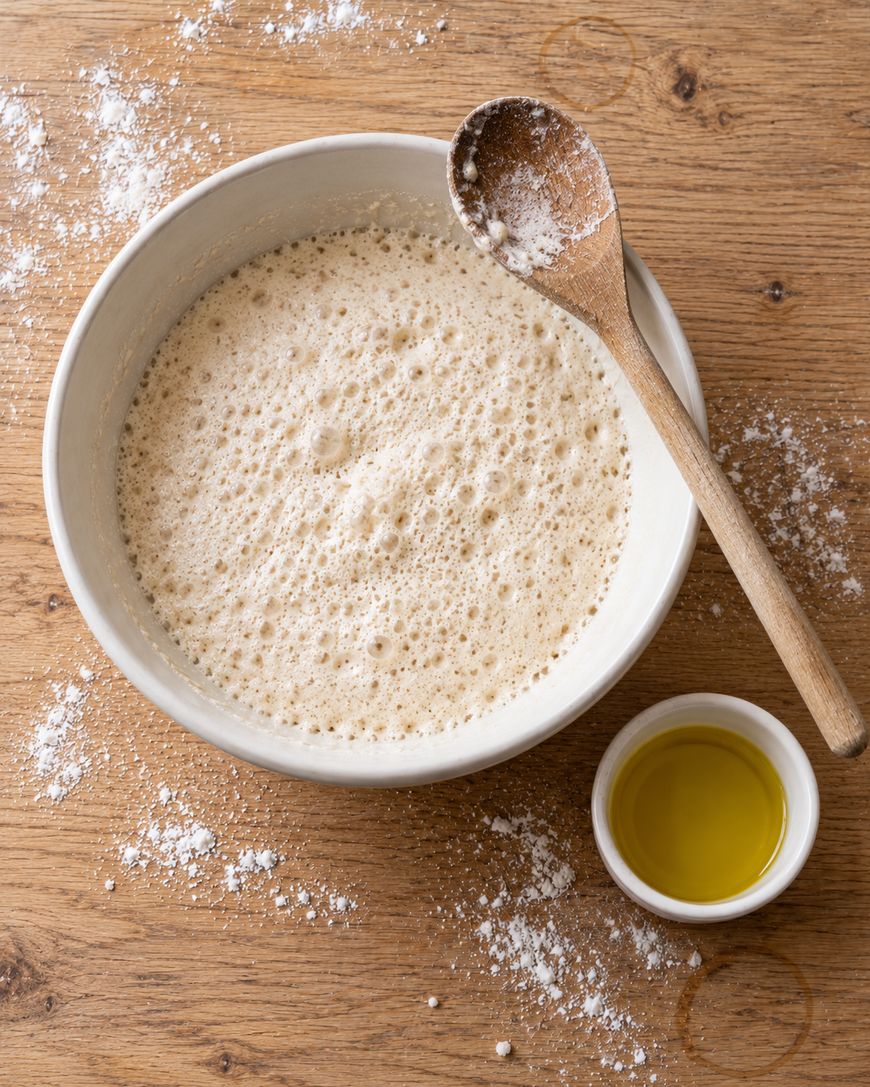
If nothing happens after 10 minutes, the yeast is likely old or the water was the wrong temperature. Start over with fresh yeast so you do not waste the rest of your ingredients.
Mix and Knead the Dough
Add the flour, fine sea salt, 3 tablespoons of olive oil, and 2 tablespoons of the chopped rosemary to the foamy yeast. Stir with a wooden spoon until a shaggy dough forms.

Turn it onto a lightly floured surface and knead for 8 minutes by hand, or knead for 5 minutes in a stand mixer with a dough hook on medium-low speed.
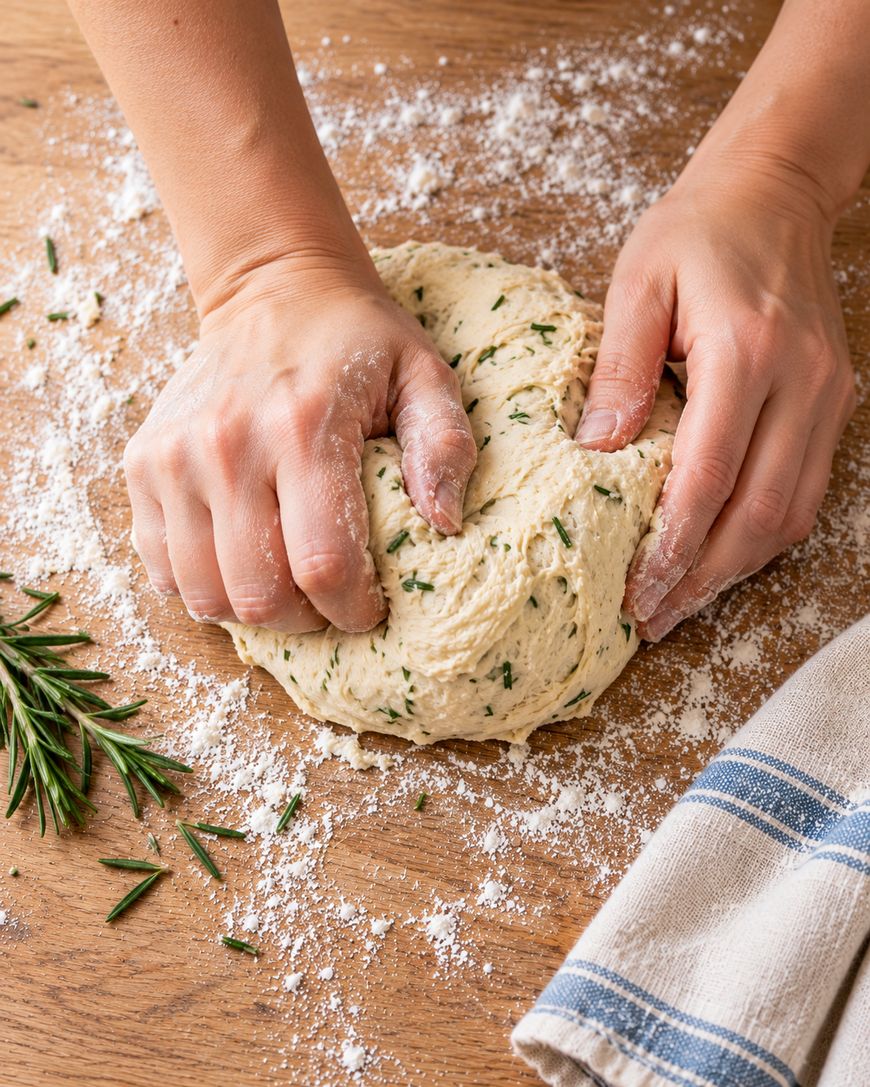
The dough should feel smooth, elastic, and slightly tacky without sticking to your fingers.
Let the Dough Rise
Place the dough in a lightly greased bowl and turn it once so the top is coated. Cover the bowl and set it in a warm spot, around 75°F to 80°F, for about 1 hour.
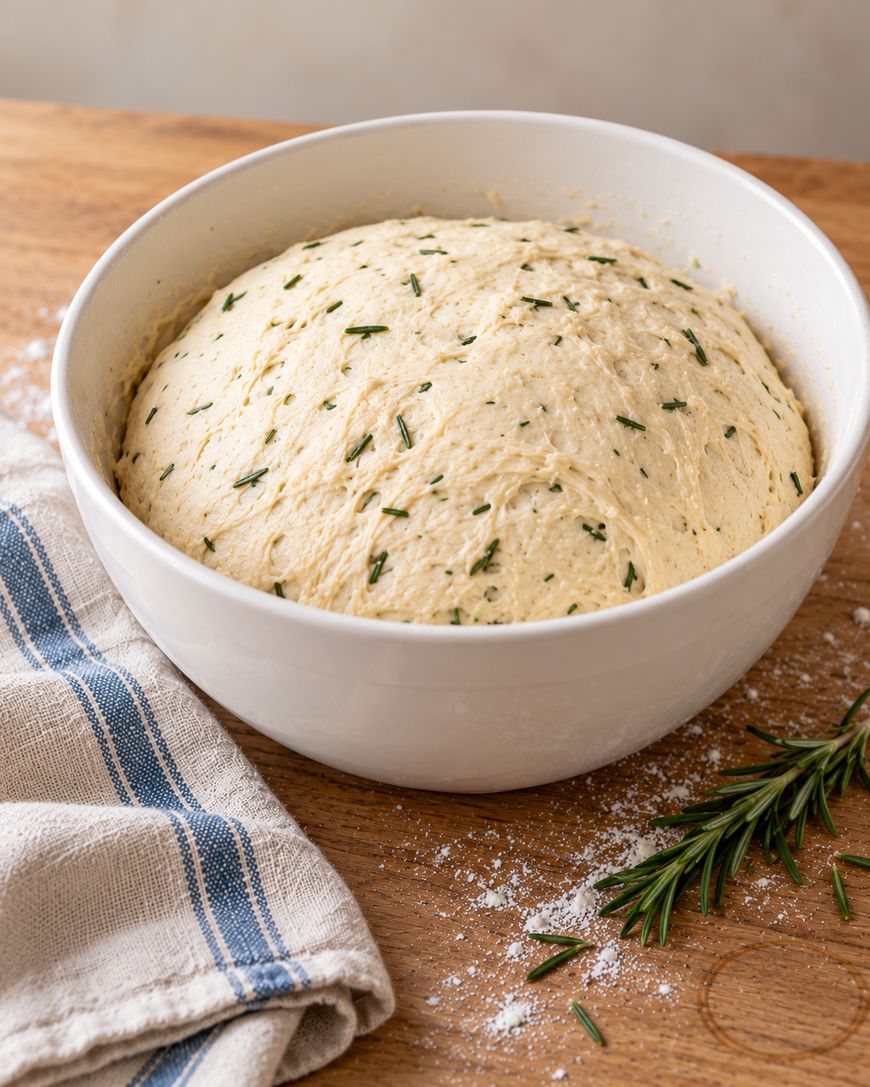
The dough is ready when it has doubled in size and a gentle poke leaves a slow-fading dent. A cold kitchen needs a little extra time, so judge by the dough rather than the clock.
Shape the Loaf
Grease a 9×5-inch loaf pan. Press the risen dough into a rectangle about 9 by 12 inches, pushing out the large bubbles.
Roll the dough up tightly from the short side into a 9-inch log and pinch the seam closed. Set the log seam side down in the pan.

Let It Rise Again
Cover the pan loosely and let the dough rise for 30 to 40 minutes. It should crown about 1 inch above the rim of the pan.
Preheat the oven to 400°F during the last 15 minutes of this rise. Place a rack in the lower middle of the oven.
Top and Bake the Bread
Brush the top with 1 tablespoon of olive oil, then sprinkle with the remaining tablespoon of rosemary and the flaky sea salt. Bake for 30 to 35 minutes, until the crust is deep golden brown.

An instant-read thermometer inserted in the center should read 190°F to 200°F. If the top browns too quickly, tent the loaf loosely with foil for the last 10 minutes.
Cool Before Slicing
Let the loaf cool in the pan for 10 minutes, then turn it out onto a wire rack. Wait at least 45 minutes before slicing.
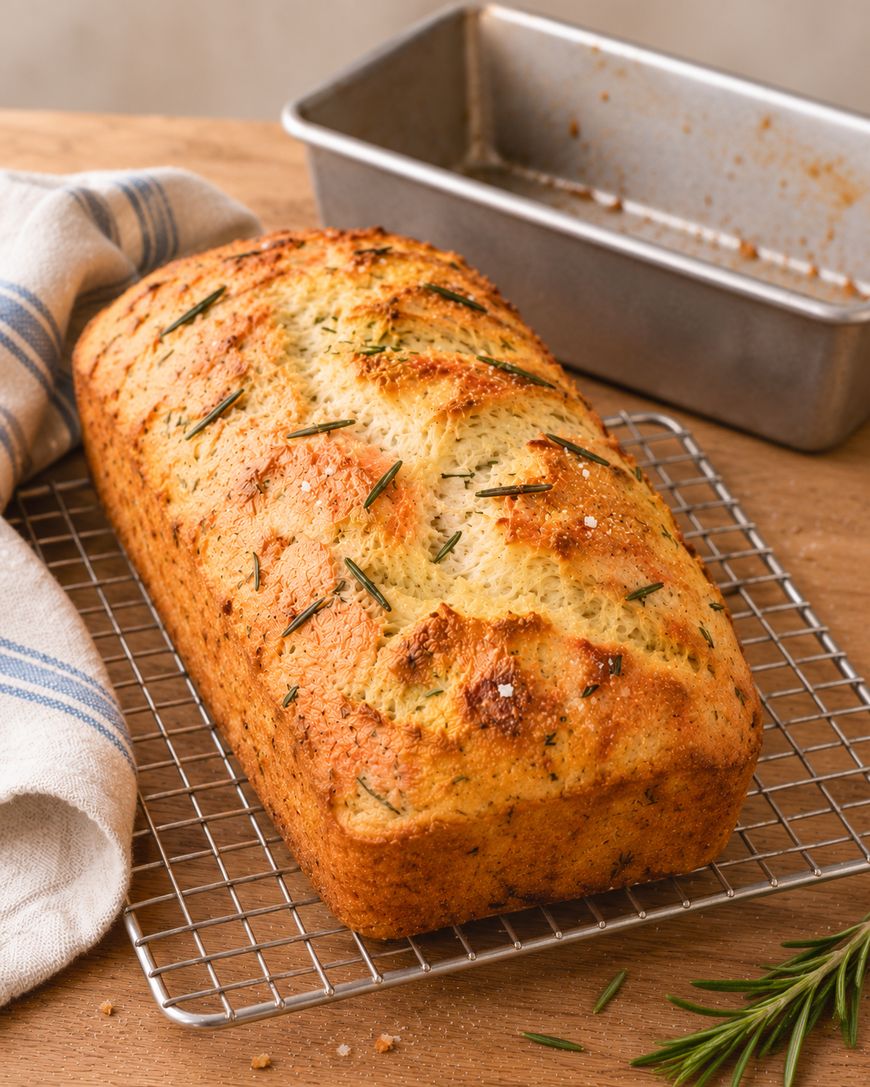
Cutting too early squashes the soft interior and makes the crumb seem gummy. Patience gives you clean slices and a better texture.
Tips for the Best Rosemary Bread
Chop the rosemary finely, because large needles feel sharp and woody in a soft loaf. Strip the leaves from the stems, discard the stems, and run your knife through the leaves until they look like coarse green flecks.

Measure the flour by spooning it into the cup and leveling it off, or better yet, weigh it. Too much flour is the most common reason homemade bread turns dense.
Keep the dough slightly tacky. If it sticks to the bowl in sheets, add a tablespoon of flour at a time, but stop as soon as it pulls away cleanly.
Use a warm, draft-free spot for both rises. An oven with only the light switched on works well, as long as it is not actually heating.
Finally, do not skip the thermometer if you own one. Bread that looks done on the outside can still be doughy in the middle, and a quick temperature check removes the guesswork.
Rosemary Bread Variations and Substitutions
You can make this rosemary bread with all-purpose flour instead of bread flour, and the loaf will have a slightly softer crumb. Use the same amount and follow the recipe exactly as written.
Dried rosemary works in a pinch. Use 1 tablespoon of dried rosemary in place of the 3 tablespoons of fresh, crumbling it between your fingers first, then stir 2 teaspoons into the dough and sprinkle the last teaspoon on top.
For a savory twist, grated Parmesan or a few cloves of roasted garlic folded into the dough are lovely additions. The recipe card leaves both out, so treat them as optional extras and expect a slightly longer bake if the dough feels heavier.
Thyme or sage can replace part of the rosemary if you want a gentler herb flavor. Rosemary is the strongest of the three, so a mixed herb loaf tastes softer and more rounded.
How to Store, Freeze, and Reheat Rosemary Bread
Store the cooled loaf in a bread bag or wrapped tightly at room temperature for up to 3 days. Keep it cut side down on a board for the first day to protect the crumb.

For longer storage, slice the loaf and freeze the slices in a zip-top bag for up to 3 months. Pull out what you need and toast the slices straight from the freezer.
Avoid storing the bread in the refrigerator, because the cold air dries out the crumb faster than a countertop does. A paper bag keeps the crust crisp, while plastic keeps the crumb softer, so choose based on what you prefer.
To refresh a whole or half loaf, wrap it in foil and warm it in a 350°F oven for 10 minutes. The crust crisps back up and the inside turns soft again. Slices can also go straight into a toaster or a hot skillet with a little butter.
What to Serve With Rosemary Bread
Rosemary bread is a natural partner for soups and stews. A slice beside tomato soup, minestrone, or a creamy potato soup soaks up every drop.

It also makes outstanding sandwiches and toast. Try it with sliced turkey and Brie, or toast a thick slice and top it with ricotta and a drizzle of honey.
For a simple appetizer, serve warm slices with a small dish of olive oil and a pinch of flaky salt. A pat of softened salted butter is just as good.
On a holiday table, this loaf sits comfortably next to roast chicken, lamb, or a platter of roasted vegetables. The herb flavor echoes the main dishes without competing with them.
Leftover slices make excellent croutons and bread crumbs too. Cube the bread, toss it with a little olive oil, and bake until crisp for a salad topper that tastes far better than anything from a box.
The Story Behind Rosemary Bread
Rosemary grows wild along the Mediterranean coast, and the name comes from the Latin words for dew of the sea. Cooks in Italy and Provence have long used it with olive oil, which is why herb breads from those regions often pair the two.
Italian focaccia with rosemary is probably the best known relative of this loaf. Rosemary bread borrows that same flavor combination and bakes it into a sliceable sandwich-style loaf.
Today, rosemary bread is a bakery and farmers market favorite, and it is just as easy to make in a home kitchen. A single loaf needs very little equipment and fills the house with a wonderful herbal aroma.
Fresh rosemary is easy to find in most grocery stores, and a small pot on a sunny windowsill will keep you supplied all year. The plant is hardy, so even a beginner gardener can grow enough for plenty of loaves.
Ready to bake? Use the recipe card below to follow along and print the full instructions.
Rosemary Bread
Soft, chewy rosemary bread with a crackly golden crust, made with fresh rosemary and olive oil and baked in a standard loaf pan.
Ingredients
- 3 1/4 cups (390 g) bread flour
- 1 cup plus 2 tablespoons warm water (about 110°F)
- 2 1/4 teaspoons (1 packet) active dry yeast
- 1 tablespoon granulated sugar
- 1 1/2 teaspoons fine sea salt
- 4 tablespoons extra-virgin olive oil, divided (3 for the dough, 1 for brushing)
- 3 tablespoons finely chopped fresh rosemary, divided (2 for the dough, 1 for the top)
- 1 teaspoon flaky sea salt
- Cooking spray, for greasing the bowl and pan
Instructions
- Stir the warm water, sugar, and yeast together in a large bowl and let sit for 5 to 10 minutes, until foamy.
- Add the flour, fine sea salt, 3 tablespoons of olive oil, and 2 tablespoons of the rosemary. Stir with a wooden spoon until a shaggy dough forms.
- Turn the dough onto a lightly floured surface and knead for 8 minutes by hand, or for 5 minutes in a stand mixer with a dough hook on medium-low speed, until smooth, elastic, and slightly tacky.
- Place the dough in a lightly greased bowl, turning once to coat. Cover and let rise in a warm spot (75°F to 80°F) for about 1 hour, until doubled in size.
- Grease a 9x5-inch loaf pan. Press the dough into a 9 by 12-inch rectangle, roll it up tightly from the short side into a 9-inch log, pinch the seam closed, and place it seam side down in the pan.
- Cover loosely and let rise for 30 to 40 minutes, until the dough crowns about 1 inch above the rim. Preheat the oven to 400°F during the last 15 minutes, with a rack in the lower middle position.
- Brush the top with the remaining 1 tablespoon of olive oil and sprinkle with the remaining 1 tablespoon of rosemary and the flaky sea salt. Bake for 30 to 35 minutes, until deep golden brown and an instant-read thermometer reads 190°F to 200°F in the center. If the top browns too quickly, tent loosely with foil for the last 10 minutes.
- Cool in the pan for 10 minutes, then turn out onto a wire rack and cool for at least 45 minutes before slicing.
Notes
Store cooled bread wrapped tightly at room temperature for up to 3 days. Freeze sliced bread in a zip-top bag for up to 3 months. To refresh, wrap in foil and warm in a 350°F oven for 10 minutes. All-purpose flour can replace bread flour for a slightly softer crumb. To use dried rosemary, use 1 tablespoon in total in place of the 3 tablespoons fresh, stirring 2 teaspoons into the dough and sprinkling 1 teaspoon on top. Spoon and level the flour, or weigh it, for accurate measuring. Total time does not include the 45 minutes of cooling.
Nutrition Information:
Yield:
12Serving Size:
1 sliceAmount Per Serving: Calories: 165Total Fat: 5gSaturated Fat: 1gSodium: 400mgCarbohydrates: 26gFiber: 1gSugar: 1gProtein: 4g
Rosemary Bread Questions Answered
Can you make rosemary bread without a stand mixer?
Yes, this dough is kneaded by hand in about 8 minutes. A stand mixer with a dough hook shortens the kneading to about 5 minutes on medium-low speed.
Why is my rosemary bread dense?
Dense bread usually comes from too much flour, old yeast, or a rise that was cut short. Weigh the flour, check that the yeast foams, and let the dough double before shaping.
Can you use dried rosemary instead of fresh?
Yes. Use 1 tablespoon of dried rosemary in place of the 3 tablespoons of fresh, with 2 teaspoons in the dough and 1 teaspoon on top.
How long does homemade rosemary bread stay fresh?
The loaf keeps for up to 3 days at room temperature when wrapped well. Freeze sliced bread for up to 3 months for longer storage.
How do you know when rosemary bread is done baking?
The crust should be deep golden brown, and an instant-read thermometer should read 190°F to 200°F in the center. The loaf also sounds hollow when you tap the bottom.
Why This Rosemary Bread Recipe Works
Proofing the yeast with warm water and a spoonful of sugar proves it is alive before any flour goes in. That one step removes the biggest risk in yeast baking.
Mixing the rosemary and olive oil into the dough from the start spreads the flavor evenly through the whole loaf. The oil also coats the flour proteins, which keeps the crumb tender while the bread flour supplies the chew.
Two rises give the dough both strength and flavor. The first rise builds structure, and the second, in the pan, makes the loaf light and tall.
A hot 400°F oven sets the crust quickly, and the olive oil, rosemary, and flaky salt on top bake into a fragrant, crackly finish. Cooling the loaf before slicing finishes the job by letting the crumb set.
The loaf pan matters too, because its walls support the dough as it rises and give the finished bread an even, sliceable shape. That is why this rosemary bread cuts into neat slices for sandwiches and toast instead of spreading out flat like a free-form loaf.
Bake Rosemary Bread Today
Rosemary bread is easy, impressive, and made from ingredients you probably already have.
With a little patience you get a golden loaf that smells like a bakery and tastes even better. Once you have made it a couple of times, the steps become second nature and you can start experimenting with your own herb combinations.
Grab the recipe card, bake a loaf this weekend, and leave a star rating and comment to tell us how it turned out. Share the recipe with a friend who loves fresh bread.
Wrap a few slices for the freezer, and you will have homemade rosemary bread ready whenever soup night comes around.