Last updated: July 19, 2026
If your school mornings feel like a race you never signed up for, you are not alone—and you are in the right place. This guide walks you through a school morning routine that genuinely works, so you can swap the daily chaos for something that actually feels manageable. We will cover everything from the night-before prep that changes everything to the small habits that keep kids moving without constant reminders.
The Night Before Is Where the Real Magic Happens
A smooth school morning routine actually starts the evening before. When you handle the predictable tasks at night, you eliminate the scramble that derails most mornings before they even begin.
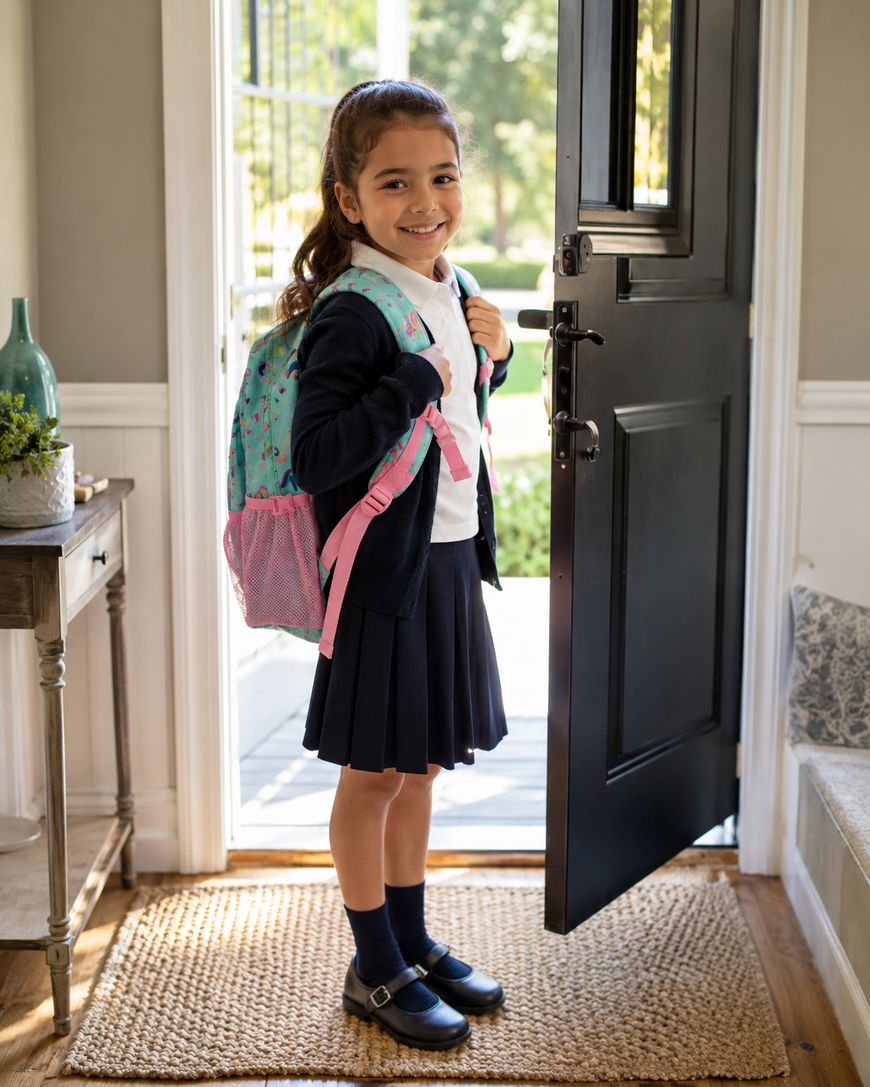
Have your kids pick out their clothes and lay them out before bed—this alone eliminates one of the most common morning meltdowns. Backpacks should be packed and parked by the door each night, not assembled in a panic at 7:52 a.m.

Lunches are another game-changer to prep the night before. Even if you are only doing partial prep—chopping fruit, packing snacks, laying out containers—you are saving yourself a meaningful chunk of morning time. The more decisions you make the night before, the fewer you have to make when everyone is tired and rushed.

Check the calendar each evening too. Knowing about picture day, library books due, or a permission slip that needs a signature before the morning hits means nothing falls through the cracks. A quick five-minute check-in before bed can prevent a lot of morning stress.

Building a Morning Schedule That Actually Flows
The most effective school morning routines follow a consistent order, not just a consistent time. Kids thrive on knowing what comes after what, not just what time something happens.

A sequence that works well for most elementary-aged kids looks something like this: wake up, get dressed, eat breakfast, brush teeth and hair, then gather bags and shoes. The exact timing can flex, but the order stays the same every day, which helps children move through the steps with less prompting.
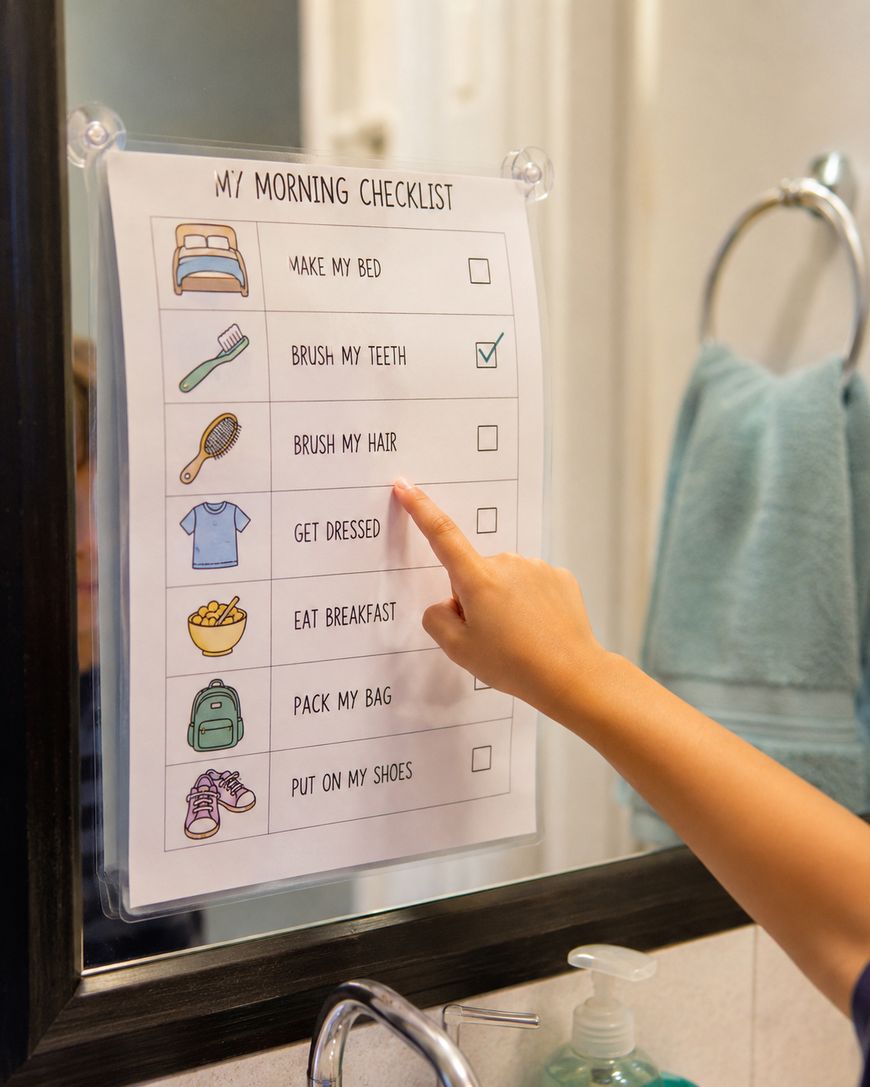
Older kids and teens can take on more ownership of this sequence. Posting a simple checklist on the bathroom mirror or kitchen wall gives them a reference point so they are not relying on you to cue every step. Giving them that independence—while keeping the structure intact—builds confidence and responsibility over time.
One thing that disrupts the flow more than anything else is screens in the morning. Save screen time for after school, or at minimum after every morning task is complete. The promise of a few minutes of a show or game at the end can actually work as a motivator rather than a distraction.
How to Wake Kids Up Without the Battle
Getting kids up is often the hardest part of the school morning routine, especially in the fall and winter when it is still dark outside. The goal is to make waking up as gentle and predictable as possible.
Natural light is your best friend here. If you can open blinds or curtains as part of your wake-up process, that light cue helps bodies shift out of sleep mode faster. A consistent wake-up time every weekday—even after a late night—also helps regulate your child’s internal clock over time.

Some families find success with an alarm clock the child controls themselves, which gives kids a sense of ownership. Others use a calm, consistent verbal cue and a few minutes of transition time before expecting anyone to be vertical and functional. What does not work is yanking off covers and declaring it is time to go—that just starts the morning on a defensive note.

If your child is consistently hard to wake, look at bedtime first. Most school-age children need 9 to 11 hours of sleep, and many are not getting it. Fixing the evening routine often fixes the morning wake-up problem.
Breakfast That Fuels Without Slowing You Down
Breakfast does not need to be elaborate to be effective—it needs to be quick, nutritious, and ready before anyone sits down. Planning breakfast the night before, even loosely, means no one stands in front of the fridge at 7:30 wondering what to eat.

Rotating through a short list of easy options your kids actually like keeps mornings simple. Overnight oats prepped the night before, whole-grain toast with nut butter, yogurt with granola, or a smoothie blended fresh in under three minutes all hit the mark. The goal is something with protein and complex carbs that will hold kids over until lunch.

Avoid anything that requires significant cooking or cleanup on busy weekday mornings. Save the big breakfast for weekends when the pace is slower and everyone can actually enjoy it. Weekday breakfast should be functional, fast, and familiar.
Eating together—even for just ten minutes—can also set a calmer tone for the morning. It creates a natural pause before the rush to the door and gives you a moment to connect before everyone heads off in different directions.

Getting Kids to Take Ownership of the Routine
One of the most powerful shifts you can make in your school morning routine is handing more responsibility to your kids. Children who feel ownership over their routine are more likely to follow through without prompting and less likely to resist each step.
Start by involving them in creating the routine. Ask what order feels right to them, what they need to feel ready, and what gets in their way. Kids who help design the system are far more invested in making it work.
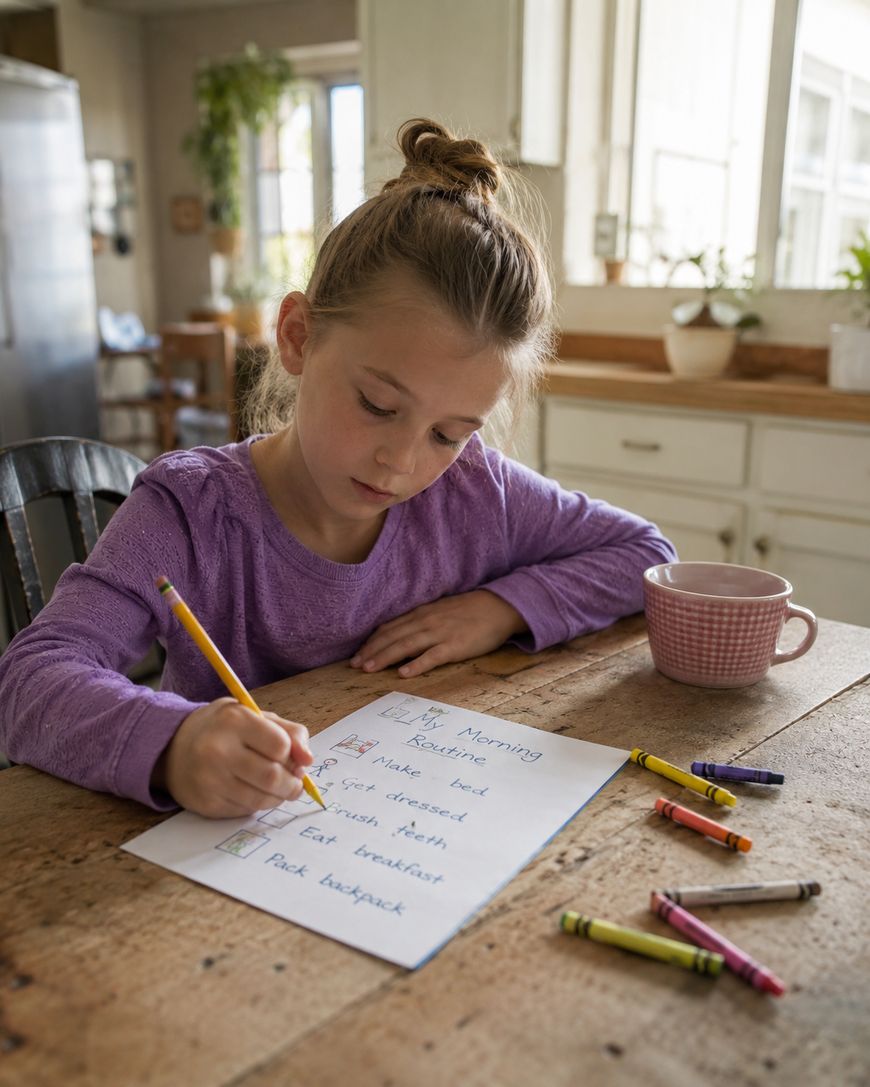
Visual checklists work especially well for younger kids. A laminated chart with pictures or simple words posted at their eye level gives them something to reference independently. You become a resource instead of a drill sergeant, which makes mornings feel less combative for everyone.
For older kids, tying the routine to natural consequences—not punishments—works well. If getting ready early means there is time to watch a video or shoot hoops before the bus, that is a compelling incentive. If they are running late, the natural consequence is that there is no buffer time. Keeping the tone matter-of-fact rather than emotional takes the power struggle out of it.
What to Do When the Morning Goes Sideways
Even the best school morning routine hits rough patches. Someone cannot find a shoe, there is a last-minute meltdown, or the coffee maker decides today is the day to stop working. What matters is having a recovery plan so one bad moment does not spiral into a completely lost morning.
Keep a mental list of what can be skipped or shortened without real consequences. Hair does not have to be perfect. A granola bar eaten in the car is still breakfast. Knowing which corners you can cut without guilt helps you triage quickly when time gets short.
After a rough morning, do a quick debrief—not a lecture—with your kids later in the day. Ask what got in the way and whether there is a simple fix. Maybe the shoes need a permanent home by the door. Maybe the wake-up time needs to shift by fifteen minutes. Treating it as a problem to solve together keeps the relationship intact and actually improves the routine over time.
Why Most School Morning Routines Fall Apart
Most families try to fix their mornings by waking up earlier, but that rarely solves the real problem. The issue is almost never the clock—it is the lack of a clear, repeatable system everyone understands.
When kids do not know what to do next, they stall. When parents are reactive instead of proactive, the whole household feels the pressure. A solid school morning routine removes the guesswork so that mornings run almost on autopilot, even on the hard days.
What makes a routine stick is that it accounts for your family’s real life, not some idealized version of it. That means building in buffer time, keeping expectations age-appropriate, and setting up the environment so the routine is easy to follow without anyone having to think too hard.
Frequently Asked Questions About School Morning Routines
What time should kids wake up for school?
Most kids need 30 to 60 minutes to wake up, eat, and get ready without rushing—so work backward from your departure time. If the bus comes at 8:00 a.m. and you need to leave by 7:45, a 7:00 a.m. wake-up gives you a reasonable buffer. Add more time if your child is a slow riser or if mornings tend to involve extra steps.
How do I get my child to stop dawdling in the morning?
Dawdling usually happens when kids are not clear on what comes next or when they are not motivated to move. Try a visual checklist, a consistent routine order, and a small reward for being ready early. Reducing distractions—especially screens—before all tasks are done also helps significantly.
Should I wake my kids up or let them use an alarm?
Both can work depending on age and temperament. Kids who are 8 or older often respond well to managing their own alarm because it builds responsibility. Younger kids typically still need a gentle parental wake-up. The key is being consistent so their bodies adjust to the same wake time each school day.
How do I handle mornings when I am also getting ready for work?
Stagger your wake-up time so you have 15 to 20 minutes of head start before the kids are up. Getting yourself ready first means you can give your full attention to the family routine once they are awake. Meal prep, outfit selection, and bag packing done the night before also free up a significant amount of morning bandwidth.
What is the best way to start a new school morning routine?
Start over a weekend or during a school break so there is no real pressure. Walk through the routine at a relaxed pace, let kids practice each step, and use a checklist to make it concrete. Expect the first couple of weeks to feel imperfect—routines take time to become automatic, and consistency matters more than perfection in the early stages.
How long does it take for a morning routine to feel natural?
Most families find that a new routine starts to feel genuinely smooth after two to three weeks of consistent practice. The first week is the hardest because everything is deliberate. By week two, kids start to internalize the order. By week three, you will notice fewer prompts needed and a noticeably calmer morning overall.
Make Your School Morning Routine Work for Your Family
A great school morning routine is not one-size-fits-all—it is the one that fits your family’s real schedule, real kids, and real life. The principles are universal: prep the night before, keep a consistent order, reduce decisions, and give kids ownership. But how those principles show up in your home is entirely yours to shape.
Start with one change this week. Maybe it is just getting backpacks packed by the door each night, or committing to a consistent wake-up time. Small, sustainable shifts build into a school morning routine that eventually runs itself—and that is where the real relief kicks in. Your mornings can feel different, and they are absolutely worth the effort to get there.