Last updated: October 23, 2026
Formal dining rooms are no longer the automatic setting for having friends over. More hosts are serving relaxed food in the living room, where everyone can settle into a comfortable seat, share dishes and stay for as long as the conversation lasts.
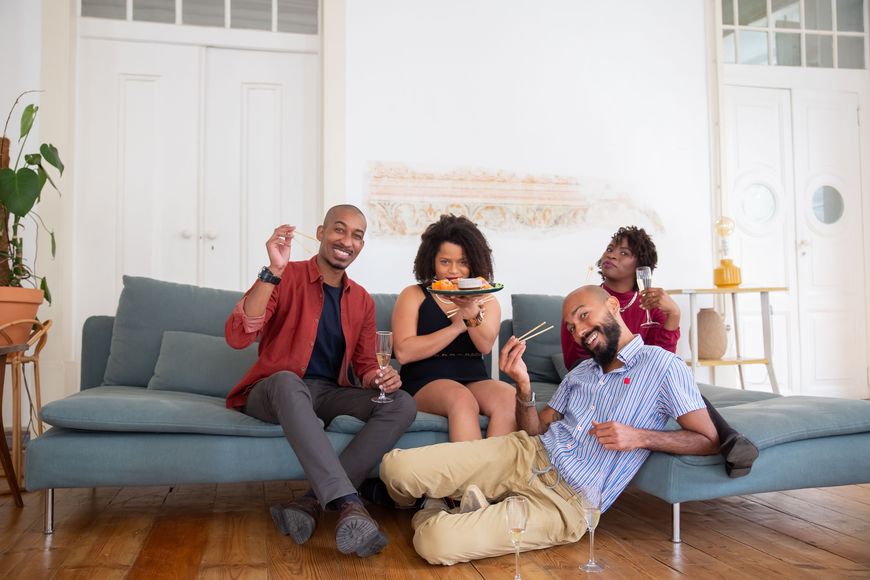
The sofa supper suits smaller homes and low-key evenings especially well. It also removes much of the pressure associated with creating a perfectly laid table, without losing the pleasure of eating together.
The Rise of Casual Evening Dining
Eating habits have become more flexible, and home entertaining is following suit. The growing interest in social dining formats reflects a wider appetite for gatherings that feel easy, sociable and open to different kinds of guests. A sofa supper fits that mood because people can move around, change seats and talk in smaller groups as the evening unfolds.
This style of hosting also makes sense when a separate dining room isn’t available. A coffee table, a couple of side tables and a few stable trays can turn an ordinary living room into a useful dining space without rearranging the entire home.
Planning still matters, but the tone can remain informal. Set a clear arrival time, prepare most dishes beforehand and tell guests that dinner will be served in the living room. If you’re inviting several people, the practical ideas in this guide to a successful group dinner can help with timing, portions and making everyone feel included.
Bowls and Finger Foods That Work Best
Choose food that can be managed with one hand or eaten from a deep bowl. Guests should be able to put a dish down safely, pick it up again and continue chatting without balancing several items at once. The wider trend towards snack-style dining offers plenty of inspiration, from small savoury bites to sharing plates that arrive in stages.
Good bowl options include thick chilli, risotto, curry with rice and short pasta shapes in a sauce that won’t splash easily. For finger food, try mini flatbreads, vegetable fritters, filled pastries, skewers with blunt ends and sliced wraps. Avoid dishes that require vigorous cutting or produce lots of crumbs, drips or awkward shells.
Think about how your seating arrangement will affect the flow of the evening. Spacious corner sofas can give guests room to settle together while keeping the living room open for conversation. Their L-shaped or U-shaped layouts can also help define the seating area, making it easier to position coffee tables and smaller serving surfaces within reach. Before choosing a design, measure the room and leave enough space for guests to move around comfortably, even when everyone is seated with food and drinks.
Seating Built for Group Comfort
Comfortable seating needs more than enough space for the number of guests. Each person should also have somewhere to place a drink and enough room to eat without keeping their elbows tucked in all evening. Before guests arrive, sit in each spot and check that a table, tray or stable surface is within easy reach.
Keep the arrangement open enough for conversation. An L-shaped seating area works well because guests can see one another without turning sharply, while an armchair placed at a slight angle can complete the group. Pouffes are useful for extra seating, though they’re best for younger or more mobile guests. Anyone who may find a low seat difficult should get a supportive chair with a back and arms.
Avoid squeezing every available seat into the room. Six people with a little space will usually feel more relaxed than eight packed closely together. If the gathering is larger, create a second seating zone nearby and allow people to swap places naturally. Good lighting also helps. Use a floor lamp or table lamps to provide warm, even light so guests can see their food clearly without the room feeling overly bright.
Clever Habits to Prevent Spills
A few practical choices can protect upholstery and carpets without making the room look covered up. Start with stable drinkware. Short tumblers and stemless glasses have a lower centre of gravity, while narrow side tables are safer when they have a solid base and enough surface area for more than one glass.
Serve modest portions first and offer seconds. A half-full bowl is easier to carry from the kitchen and less likely to spill when someone sits down. Keep serving dishes in one area so hot or heavy pans aren’t passed over people’s laps. Drinks can go on coasters at fixed points around the room, with water in small jugs that are easy to lift.
Place washable throws over the seats most likely to be used for eating, particularly if you’re serving tomato-based sauces or colourful dips. Keep a clean cloth, kitchen roll and a bowl of warm water nearby, but out of sight. If something spills, blot it promptly and check the furniture care label before applying any cleaning product.
Finally, clear empty plates between courses. This creates room for dessert or tea and stops used dishes building up on the floor and armrests. End the evening with something simple, such as brownies cut into small squares or individual fruit tarts. Guests can help themselves, settle back into their seats and let the last part of the supper unfold without another round of plates and cutlery.