Last updated: November 19, 2026
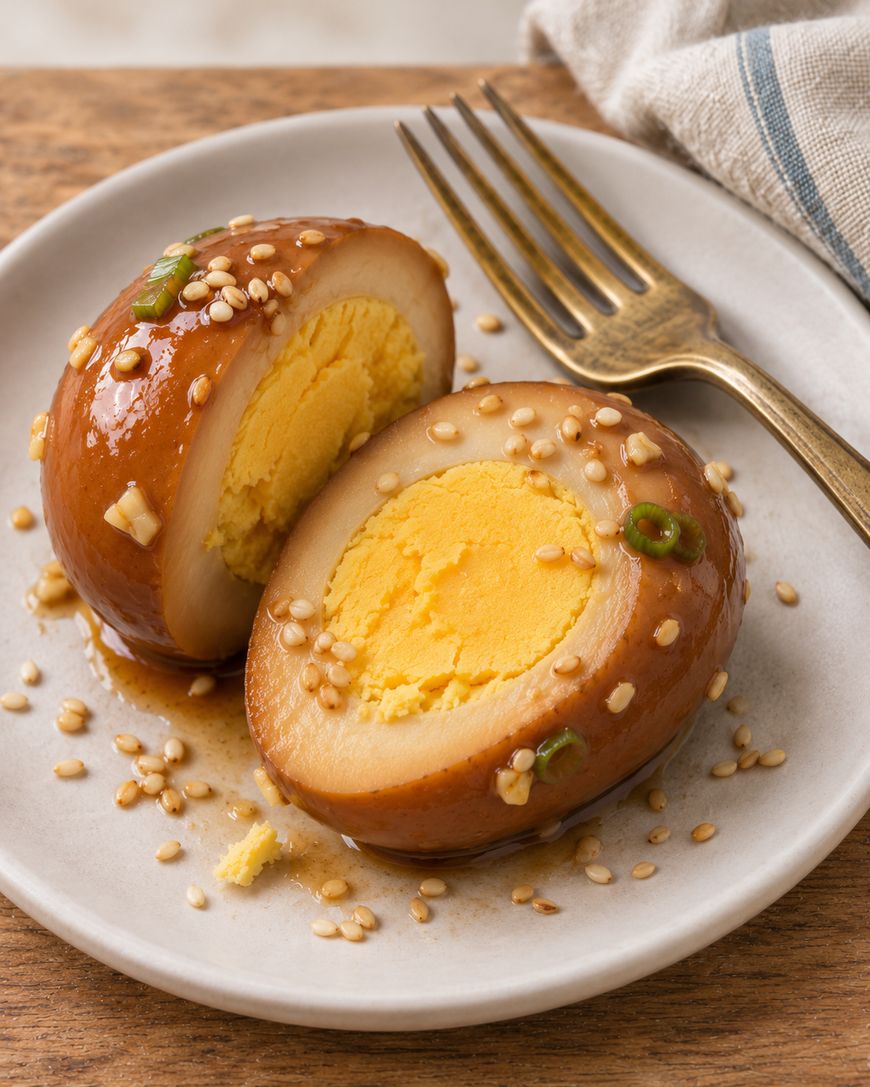
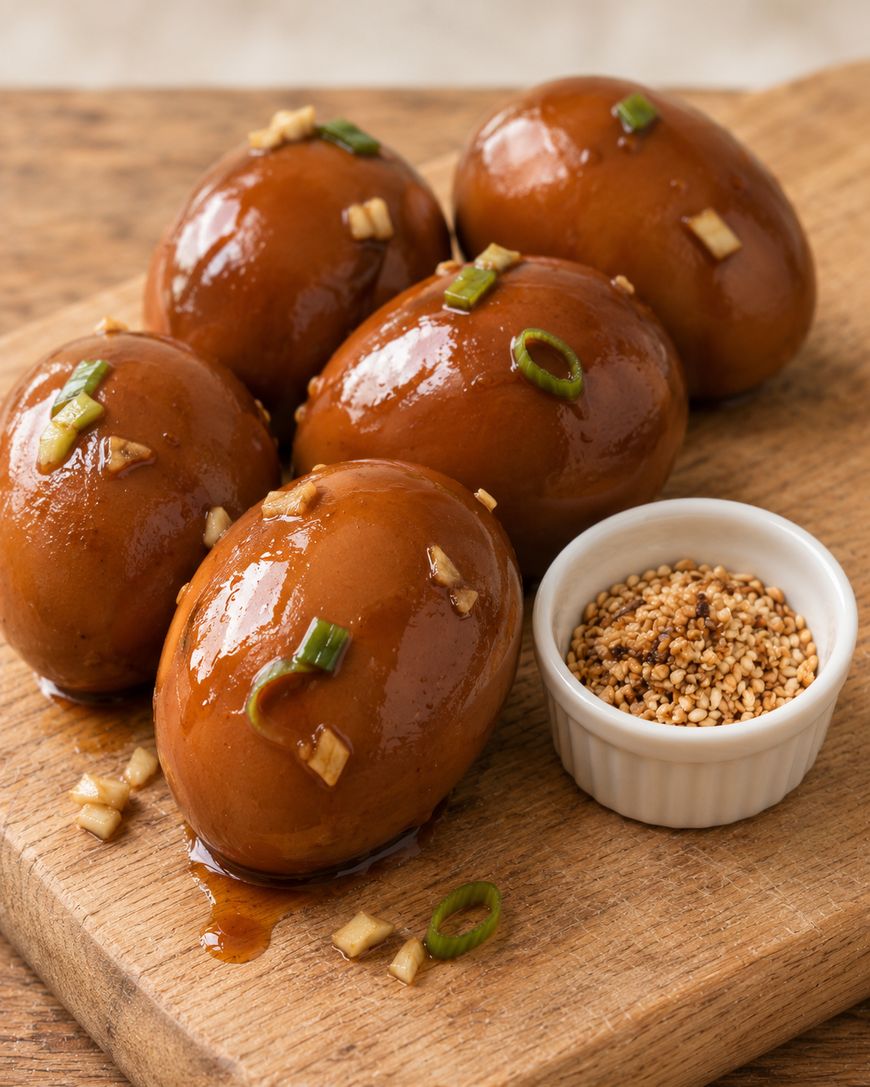
Soy sauce eggs are hard-cooked eggs that soak in a sweet, salty, garlicky marinade until the whites turn glossy and deeply savory.
This easy version needs one pot and about 25 minutes of hands-on work, and the recipe card below has the full ingredient list and steps.
How to Make Soy Sauce Eggs
Soy sauce eggs come together in three moves: boil the eggs for 10 minutes, simmer a quick marinade, and let the peeled eggs soak in the fridge for at least 4 hours.
Everything else is just patience.
What You Need for Soy Sauce Eggs
You need 6 large eggs, 1/2 cup of low-sodium soy sauce, 1/2 cup of water, 2 tablespoons of packed brown sugar, and 1 tablespoon of rice vinegar.
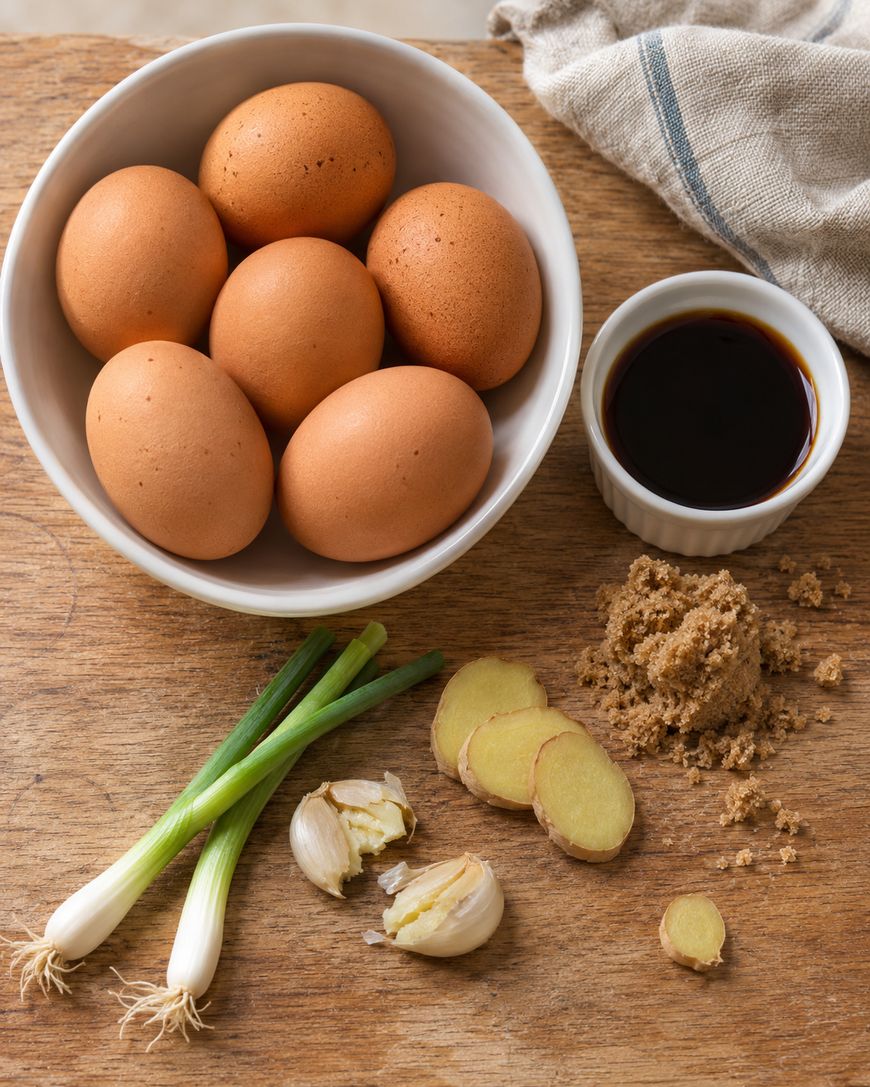
For the aromatics, add 2 smashed garlic cloves, 3 thin coins of fresh ginger cut from about 1 inch of root, and 2 green onions cut into 2-inch pieces.
Low-sodium soy sauce matters because the whites absorb salt steadily as they soak. A Japanese-style brand such as Kikkoman Less Sodium works well, and regular soy sauce also works if you cut the soak to 4 to 6 hours.

- Kosher
- Less Sodium/Lower Sodium/Reduced Sodium

Boil the Eggs
Bring a medium pot of water to a gentle boil, then lower the cold eggs in with a slotted spoon so they do not crack.
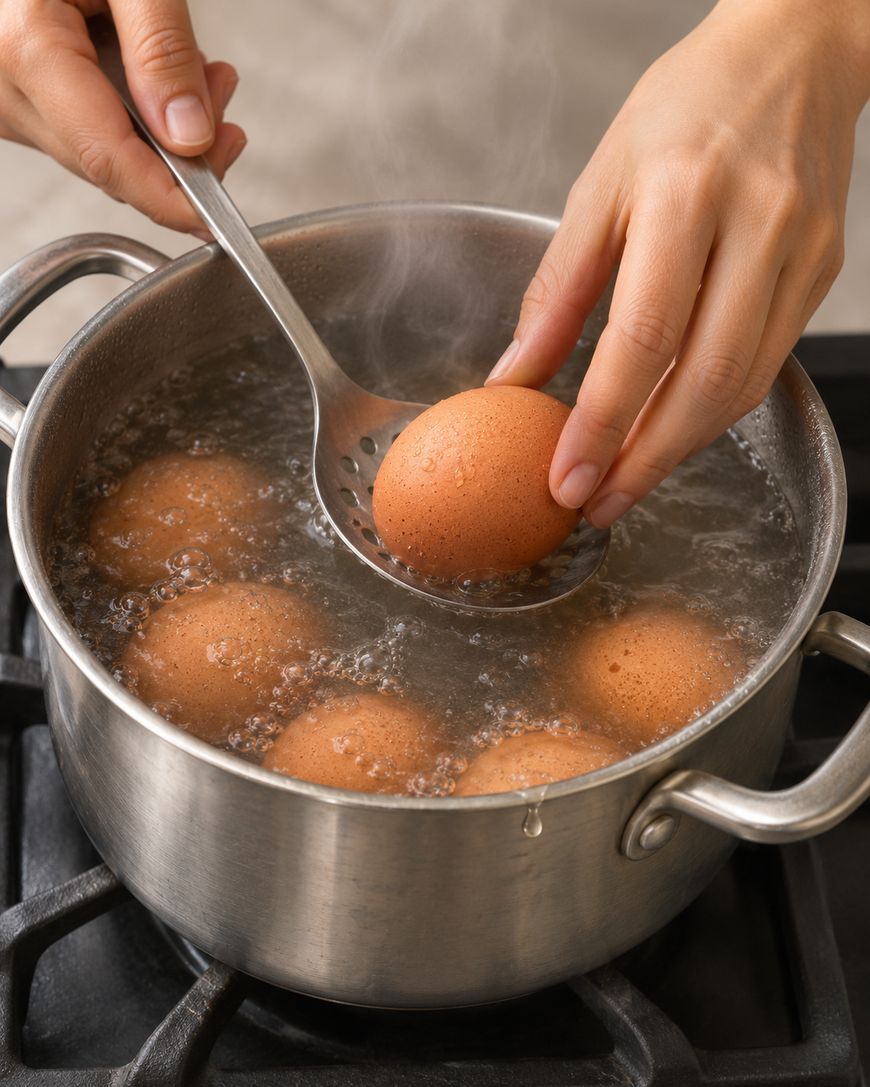
Boil them for 10 minutes, which sets the whites completely and leaves a tender, fully cooked yolk.

- Slotted spoon stirs, strains and serves for efficient meal prep
- Ideally sized for straining vegetables, pasta and more
- Sturdy stainless steel design is built to last
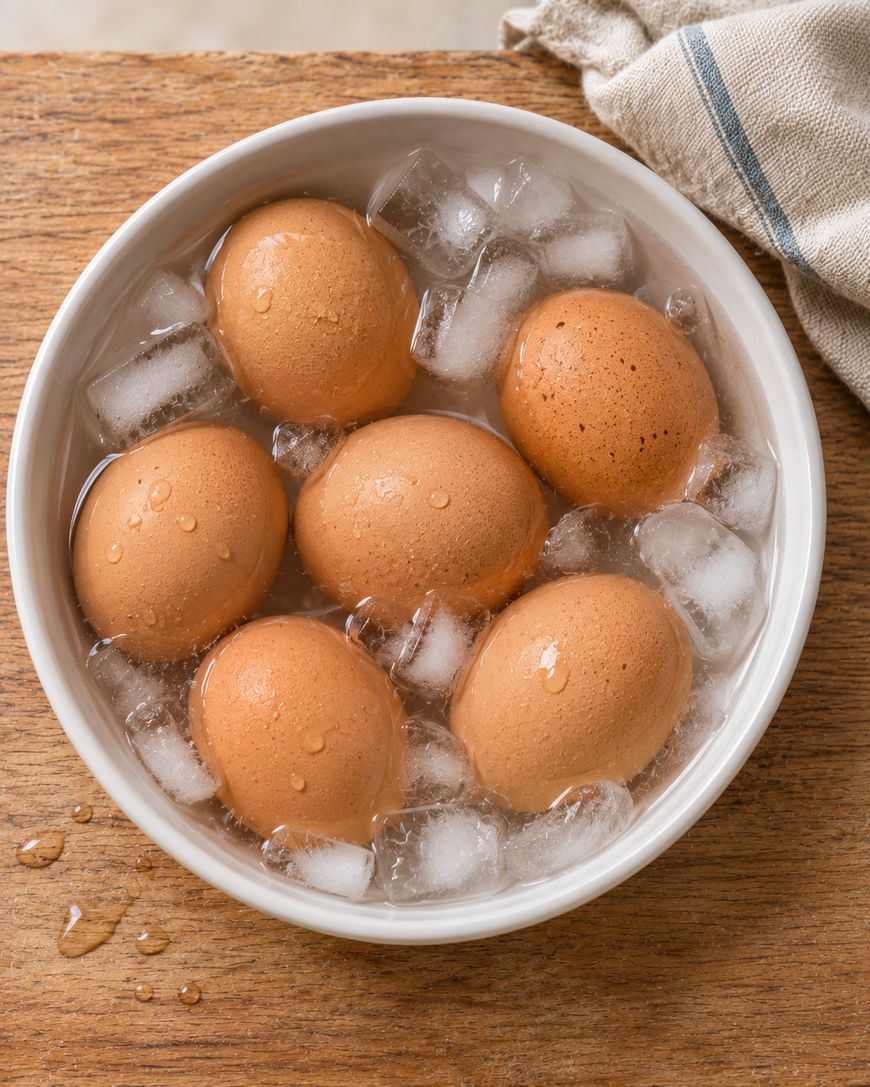
Move the eggs straight into a bowl of ice water for 5 minutes. The chill stops the cooking and helps the shells slip off cleanly.
Simmer the Marinade
While the eggs chill, combine the soy sauce, water, brown sugar, rice vinegar, garlic, ginger, and green onions in a small saucepan.
Simmer over medium heat for 3 minutes, stirring until the sugar dissolves.
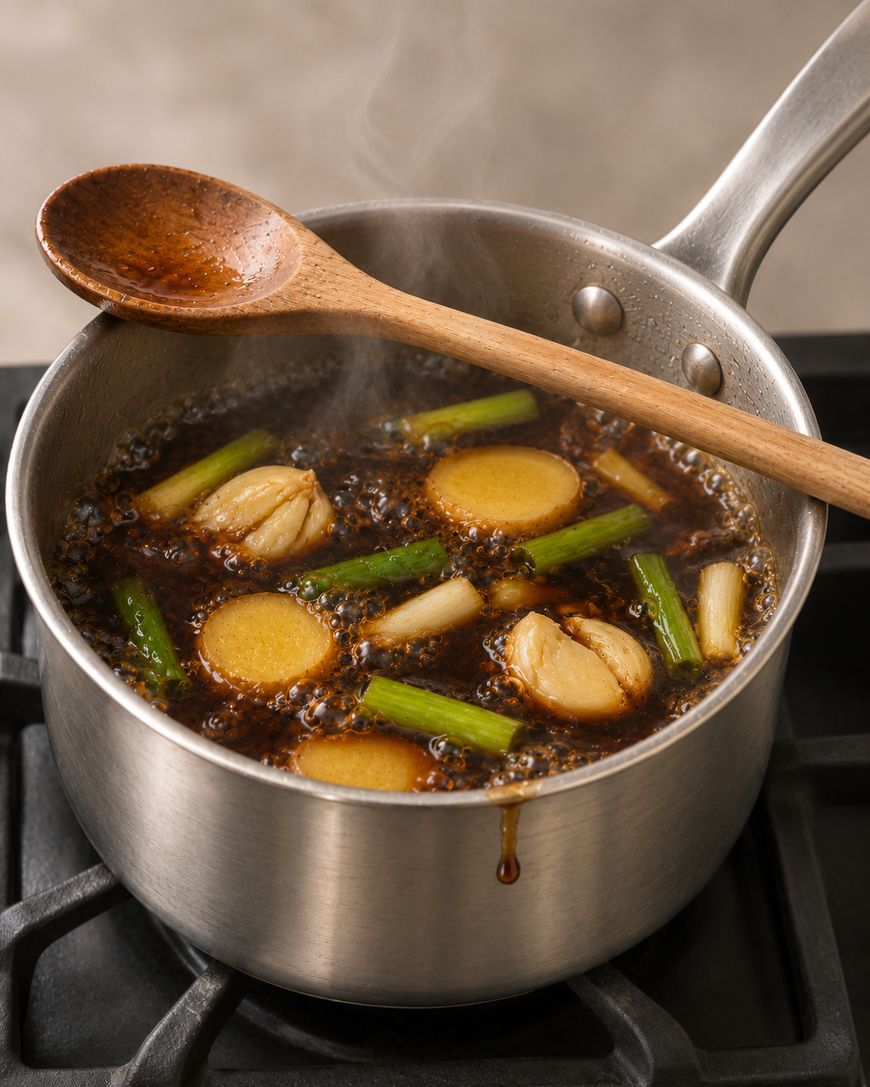
Take the pan off the heat and let the marinade cool to room temperature, about 30 minutes. Pouring hot marinade over peeled eggs keeps cooking the whites and turns them rubbery, so the cooling step matters.
Peel and Marinate
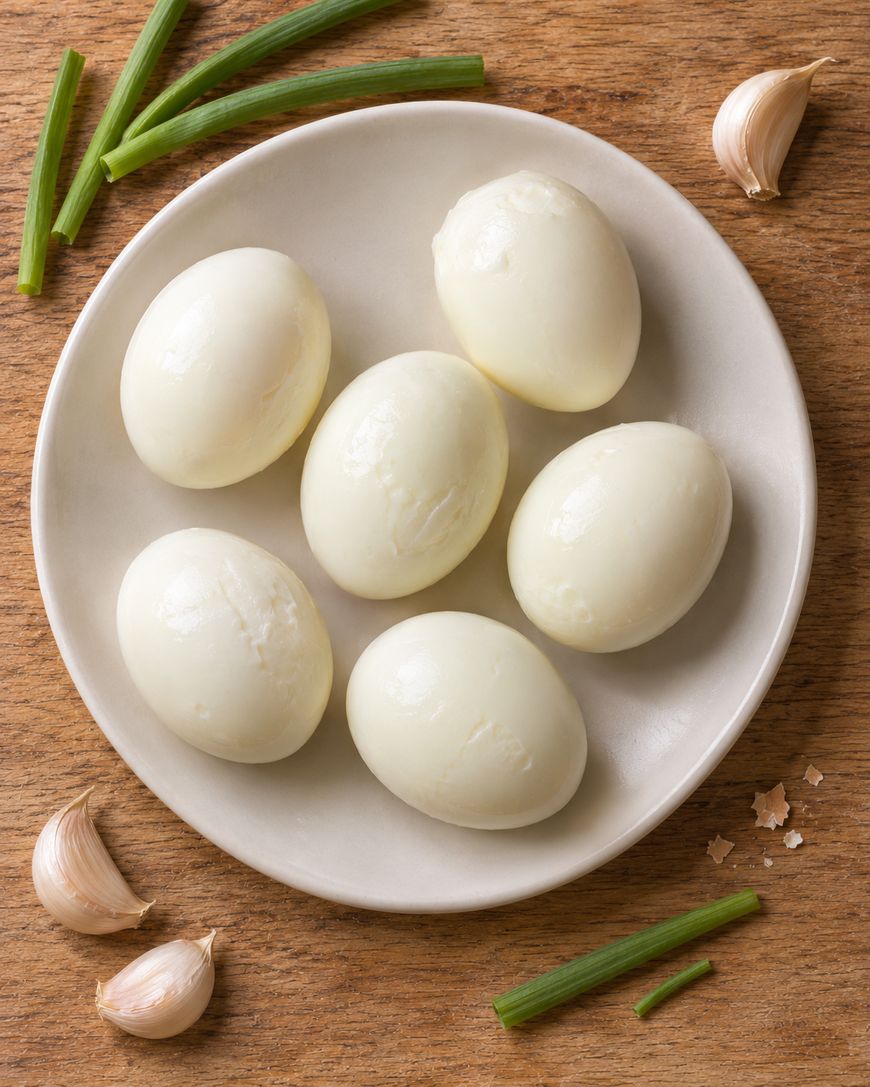
Crack each egg gently all over and peel it under cool running water, starting at the wide end where the air pocket sits.
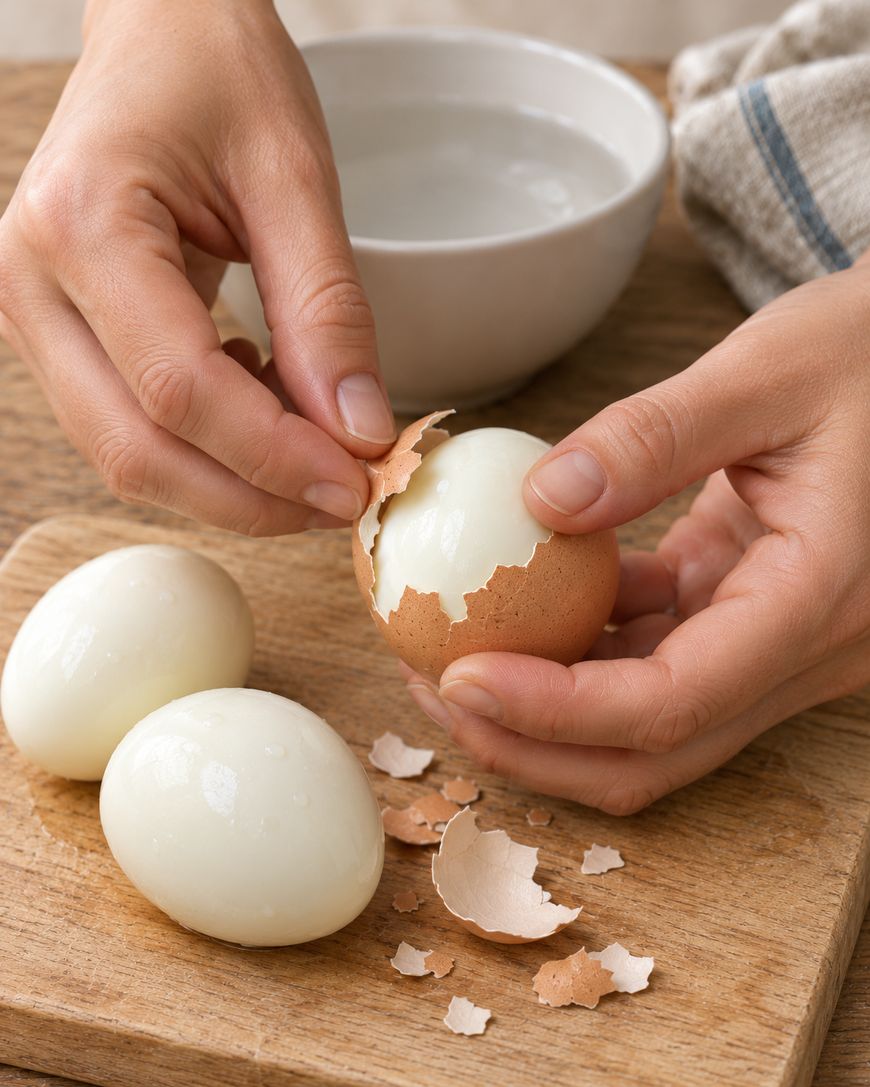
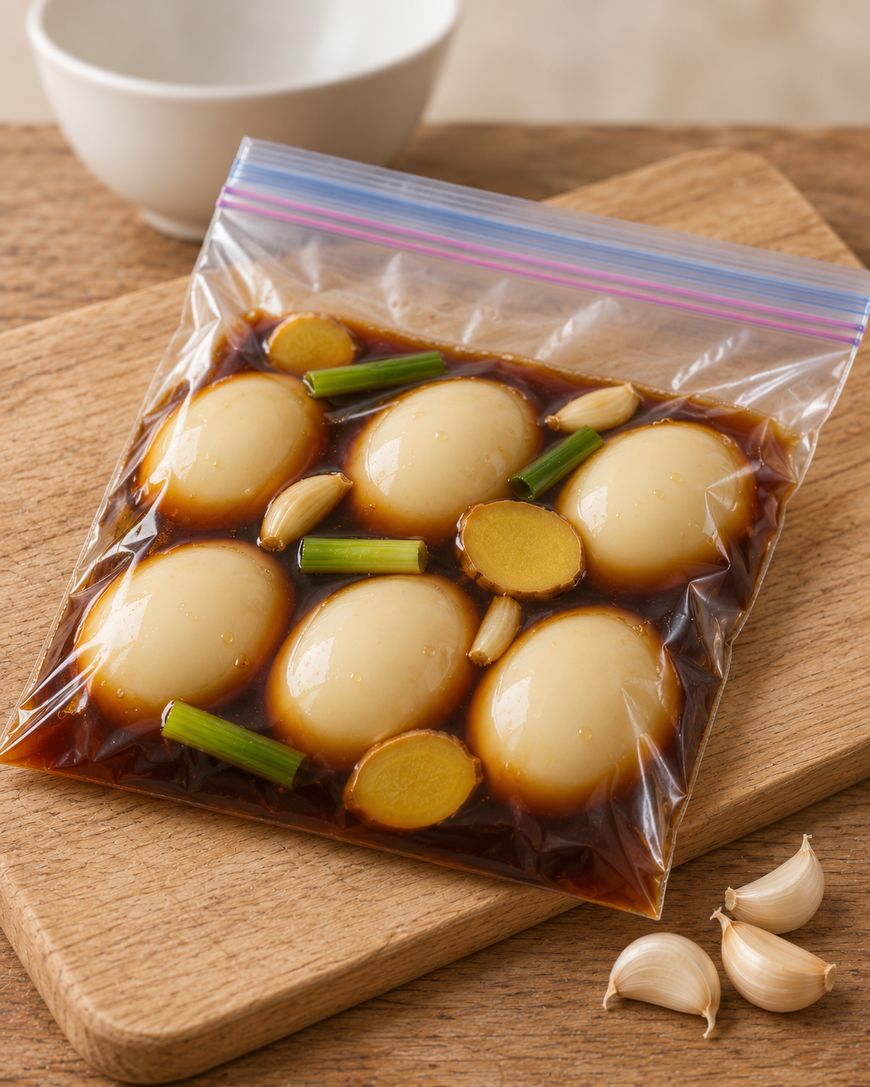
Slide the peeled eggs into a quart-size zip-top bag or a narrow container, then pour in the cooled marinade with the garlic, ginger, and green onions.
Press the air out of the bag so the liquid covers every egg, seal it, and refrigerate for 4 to 12 hours. Turn the bag once or twice along the way so the color develops evenly.
Soy Sauce Eggs Variations and Substitutions
The base recipe is flexible, and most swaps change the flavor without changing the method.
Use tamari in place of soy sauce for a gluten-free version, since regular soy sauce contains wheat.
For a spicy batch, add 1/2 teaspoon of red pepper flakes to the saucepan with the aromatics. The recipe card lists it only as an optional note, so treat it as an extra.
A single star anise in the saucepan gives the marinade the warm, faintly licorice note common in Chinese braised eggs. The card lists this as an optional note too.
Honey or maple syrup can stand in for the brown sugar in the same amount, although the marinade tastes a little rounder and less caramel-like.
Some cooks pull their eggs at 7 minutes for a jammy yolk. We keep this recipe at 10 minutes so the yolk is fully set, because the FDA advises cooking eggs until the yolks are firm.
How to Serve Soy Sauce Eggs
The classic move is to halve a soy sauce egg and float it in a bowl of ramen, where the savory white seasons the broth as it sits.

The same halves look great over a rice bowl with steamed broccoli, sliced cucumber, and a drizzle of sesame oil.

For a grab-and-go snack, keep a few whole eggs in the fridge and eat them cold with a sprinkle of toasted sesame seeds. They also pack well for lunchboxes because each egg carries plenty of flavor on its own.
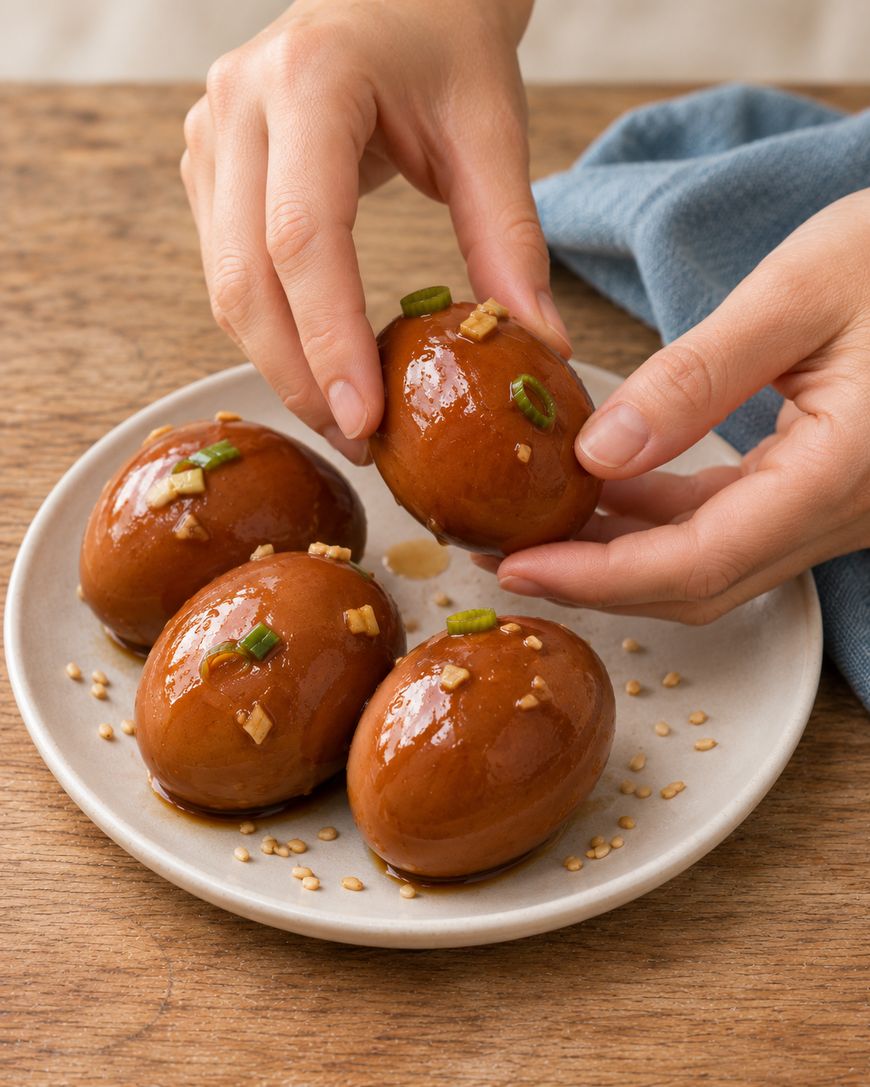
Slice them with unflavored dental floss or a thin, sharp knife wiped clean between cuts to keep the yolk from smearing. Chopped soy sauce eggs also make a savory topping for avocado toast or a simple green salad.
For a quick weeknight dinner, pair two halved eggs with leftover rice, a handful of baby spinach, and a spoonful of chili crisp. The fully set yolks hold their shape, so the bowl stays tidy even when you pack it for work.
How to Store Soy Sauce Eggs
Keep soy sauce eggs in the refrigerator at 40°F or below, sealed in their marinade.

- 6-PIECE SET: Includes (1) 7-Cup, (1) 4-Cup, and (1) 2-Cup round. All glass storage containers come with lids. These containers will help you store your food safely while saving space.
- HOUSEHOLD ESSENTIALS: Life can get hectic and messy. This Pyrex set is meant to take the burden off your shoulders when it comes to food storage and meal prepping. With a diverse range of sizes, you can be flexible with the way you manage your meals.
- EVERYDAY USE: High-quality tempered glass gives you a peace of mind when storing your food, resists stains and odors. Worry less about scrubbing hard to get rid of stains or any funny smells.
The FDA and USDA both say hard-cooked eggs, in the shell or peeled, should be used within 1 week after cooking. That clock starts when the eggs finish boiling, so we recommend finishing the batch within 5 days.
Cooked eggs should not sit out for more than 2 hours, or 1 hour when the temperature is above 90°F, according to the FDA. This matters for parties and picnics, so serve only what you need and return the rest to the fridge.
Use a clean fork or tongs to lift eggs out of the bag rather than reaching in with your fingers. If the marinade smells sour or the whites feel slimy, throw the whole batch away.
The FDA advises against freezing eggs in their shells, so we do not recommend freezing soy sauce eggs.
Where Soy Sauce Eggs Come From
Soy-seasoned eggs show up across East Asia, and each cuisine has its own take.
In China, braised eggs known as lu dan simmer in soy sauce, sugar, and warm spices. Japan has ajitsuke tamago, the marinated ramen egg, and Korea has gyeran jangjorim, a soy-braised egg served as a side dish with rice.
Our version borrows from all three. It uses a simple soy and brown sugar marinade like the Japanese and Korean versions, with garlic and ginger for depth.
The cooling-and-soaking method also means the eggs need no extra attention once they are in the fridge. That makes them an ideal make-ahead food for busy weeks.
Whichever version you grew up with, the idea is the same: plain eggs become a bold, savory side with very little work. That simplicity is a big part of why soy-seasoned eggs have stayed popular for so long.
Ready to try it? Use the recipe card below to print or save the full ingredients and steps.

Soy Sauce Eggs
Hard-cooked eggs marinated in a sweet and savory soy, garlic, and ginger bath until the whites turn glossy and deeply flavorful. They are easy, make-ahead, and perfect on ramen or rice.
Ingredients
- 6 large eggs
- 1/2 cup low-sodium soy sauce
- 1/2 cup water
- 2 tablespoons packed brown sugar
- 1 tablespoon rice vinegar
- 2 garlic cloves, smashed
- 3 thin coins fresh ginger (about 1 inch of root)
- 2 green onions, cut into 2-inch pieces
- Ice, for the ice bath
Instructions
- Bring a medium pot of water to a gentle boil over medium-high heat.
- Lower the cold eggs into the water with a slotted spoon and boil for 10 minutes.
- Move the eggs to a bowl of ice water and chill for 5 minutes.
- While the eggs chill, combine the soy sauce, water, brown sugar, rice vinegar, garlic, ginger, and green onions in a small saucepan.
- Simmer over medium heat for 3 minutes, stirring until the sugar dissolves.
- Remove the pan from the heat and let the marinade cool to room temperature, about 30 minutes.
- Peel the eggs under cool running water, starting at the wide end.
- Place the peeled eggs in a quart-size zip-top bag or narrow container and pour the cooled marinade with the aromatics over them.
- Press out the air so the eggs are covered, seal, and refrigerate for 4 to 12 hours, turning once or twice.
- Halve the eggs and serve cold, or let them sit out for no more than 2 hours.
Notes
Store soy sauce eggs sealed in the marinade in the refrigerator at 40°F or below and eat within 5 days of boiling. The FDA and USDA say hard-cooked eggs should be used within 1 week after cooking. Discard the marinade after one batch. Do not freeze. Optional extras: 1/2 teaspoon red pepper flakes or 1 star anise added to the saucepan. Use tamari for gluten-free.
Nutrition Information:
Yield:
6Serving Size:
1 eggAmount Per Serving: Calories: 85Total Fat: 5gSaturated Fat: 2gSodium: 420mgCarbohydrates: 2gFiber: 0gSugar: 1gProtein: 6g
Soy Sauce Eggs FAQ
How long should soy sauce eggs marinate?
Plan on 4 to 12 hours in the refrigerator. At 4 hours the whites have a light brown tint and mild flavor, and by 12 hours they are deeply seasoned and darker.
Can you use soft-boiled eggs for soy sauce eggs?
You can, but we do not recommend it for this recipe. The FDA advises cooking eggs until the yolks are firm, and people who are pregnant, older, very young, or have weakened immune systems should avoid runny yolks.
Why are my soy sauce eggs too salty?
Most often the soak ran too long or the soy sauce was regular strength. Use low-sodium soy sauce, keep the water in the marinade, and stop at 12 hours.
Can you reuse the marinade?
We recommend discarding it after one batch. It has sat in the fridge with the eggs, and stretching it into a second round is not worth the food safety risk.
How long do soy sauce eggs last in the fridge?
Up to 5 days is our recommendation, counted from the day you boil them. The FDA and USDA set the outer limit for hard-cooked eggs at 1 week.
Do soy sauce eggs need to stay refrigerated?
Yes, always. Serve them cold or let them sit out for no more than 2 hours, then return them to the fridge.
Why This Soy Sauce Eggs Recipe Works
A 10-minute boil followed by an ice bath gives you a fully set white and a tender yolk with no gray ring. The ice bath also stops the cooking so the whites stay delicate rather than rubbery.
Cutting the soy sauce with an equal amount of water keeps the marinade seasoned but not harsh, so the eggs reach full flavor overnight without turning overly salty.
Brown sugar balances the salt, and a spoonful of rice vinegar brightens the whole marinade. Garlic, ginger, and green onions perfume the eggs gently as they soak.
Cooling the marinade before it meets the eggs protects the texture of the whites. After that, the fridge does the work for you.
Peeling before marinating also matters, because it exposes the whites directly to the soak. Eggs left in their shells would take on very little flavor in the same time.
Make Soy Sauce Eggs This Week
Soy sauce eggs turn a plain carton of eggs into a savory topping, snack, and meal-prep staple with very little effort.
Boil a batch tonight, set them in the marinade, and you will have ramen, rice bowls, and lunchbox snacks ready by tomorrow. Save the recipe card and tag us when you make your first batch.
If you love make-ahead snacks like this one, browse the related recipes below for more easy ideas to keep ready in the fridge.
Classic Deviled Eggs With a Creamy, Tangy Filling That Disappear First at Every Party
Marinated Mozzarella Balls With Garlic and Herbs That Take 10 Minutes
This post contains affiliate links. A full disclosure is available from the main menu.