Last updated: March 9, 2026
Teacher appreciation week ideas are simple, thoughtful ways you can thank educators during Teacher Appreciation Week, usually with small gestures, notes, or coordinated treats that make them feel genuinely seen. The simplest default approach is to send one specific, heartfelt note and pair it with a small classroom-useful item (or a gift card) that doesn’t create extra clutter.
Teacher Appreciation Week Ideas That Actually Feel Helpful
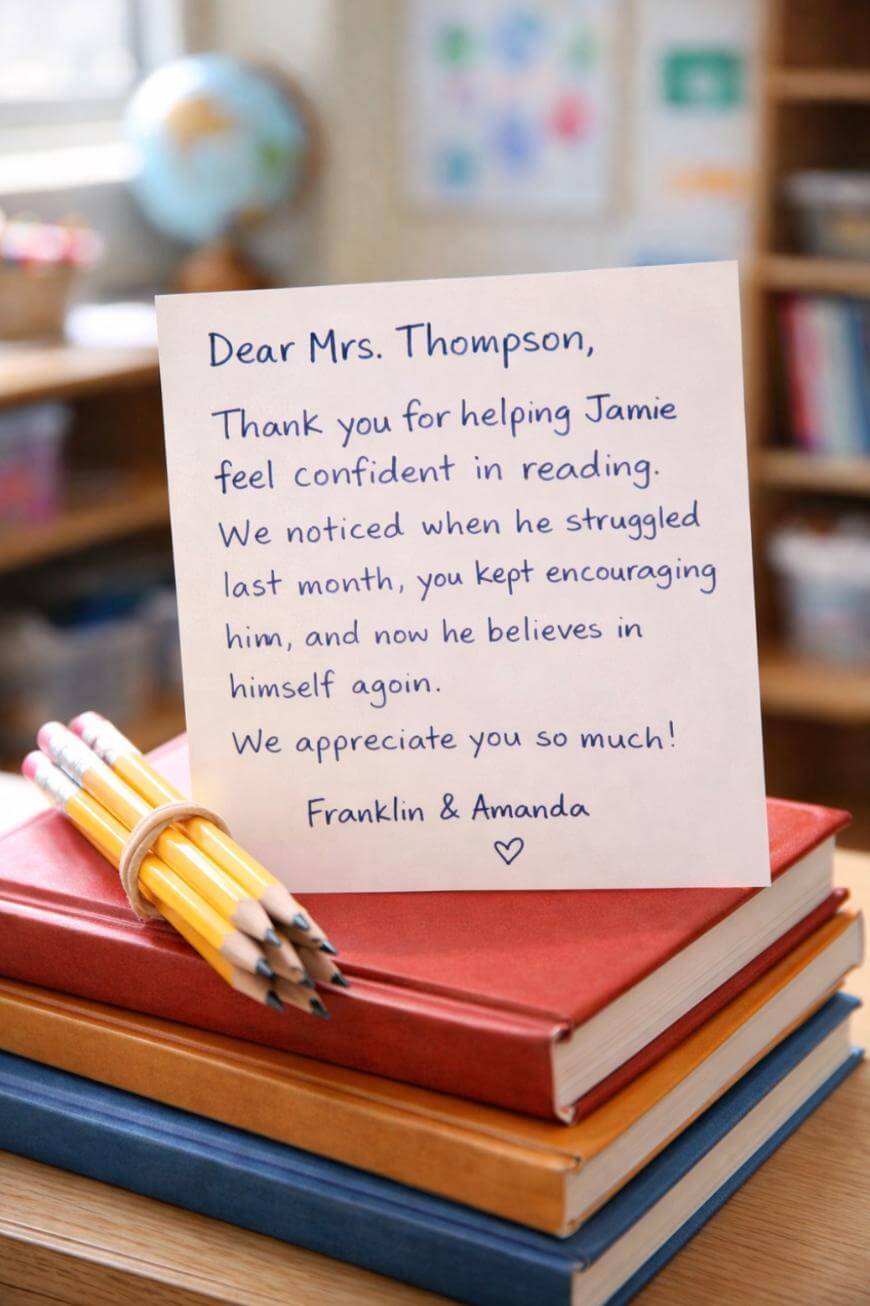
1. Write A “Specific Praise” Note Instead Of A Generic Card
Name one moment when the teacher helped your child feel confident or understood. Specific beats “thank you for all you do” every time.
Add one sentence that proves you noticed effort, like how they handled a tough day or made learning fun. That tiny detail lands.
2. Coordinate One Class Gift Instead Of 25 Separate Things
A single, organized gift avoids duplicate mugs and random trinkets. It also reduces the teacher’s end-of-week sorting pile.
A practical target is $5–$15 per family for one shared gift, like a larger gift card or classroom supply bundle.
3. Ask What They Actually Need For The Classroom
A quick message to the room parent or teacher can reveal real needs: tissues, dry erase markers, pencils, hand sanitizer. These get used immediately.
If you can’t ask, choose universal basics like expo markers, sticky notes, and paper towels.
4. Gift Cards With A “What This Covers” Note
Gift cards feel less personal only when they’re tossed in with no context. Fix that by adding a line like “Coffee on me this week.”
Even $10 can be meaningful when you frame it as a specific break or treat.
5. Bring A Breakfast That Isn’t All Sugar
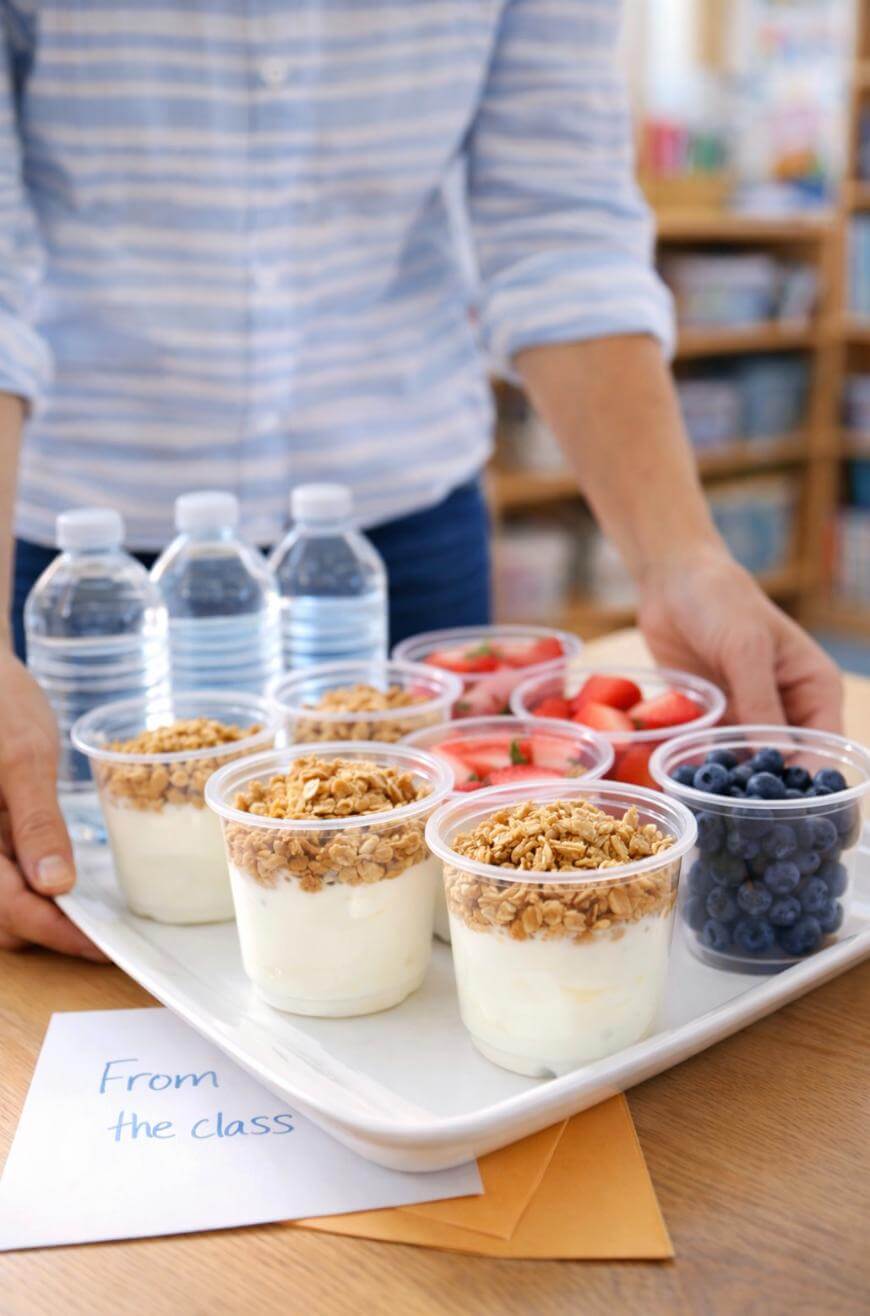
A tray of pastries disappears fast, but teachers also appreciate protein and fruit. Think yogurt cups, granola, fruit, and bottled water.
If you’re doing it as a group, aim for 1 item per teacher plus 2–3 extras for staff or late arrivals.
6. Do A “Snack Stash” Drop-Off For The Week
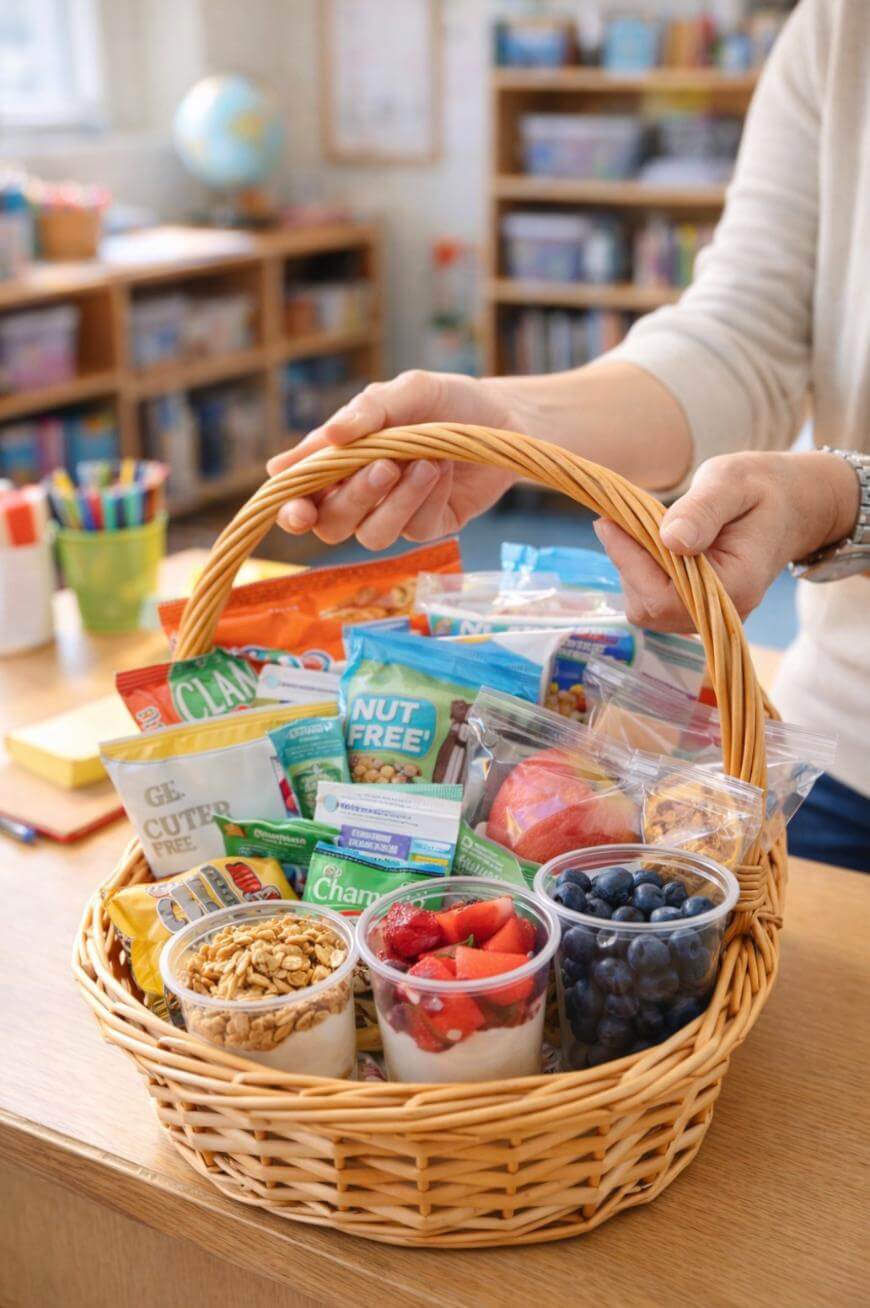
Teachers often don’t get a real lunch break. A snack basket they can grab from between classes is a win.
Include a mix of sweet, salty, and allergy-aware options, and label anything that’s nut-free or gluten-free.
7. Offer A Classroom Volunteer Slot That Saves Time
Time is the most valuable gift. Offer to cut laminated items, prep folders, or organize a shelf.
A realistic offer is 30–60 minutes once, scheduled when it’s actually useful (not during a busy pickup line).
8. Create A “One Less Decision” Gift
Pick something that removes a tiny daily burden: a pack of nice pens, a badge reel, a lanyard, or a new stamp pad.
This kind of gift is small, but it improves their everyday workflow.
9. Donate Books With A Bookplate Dedication
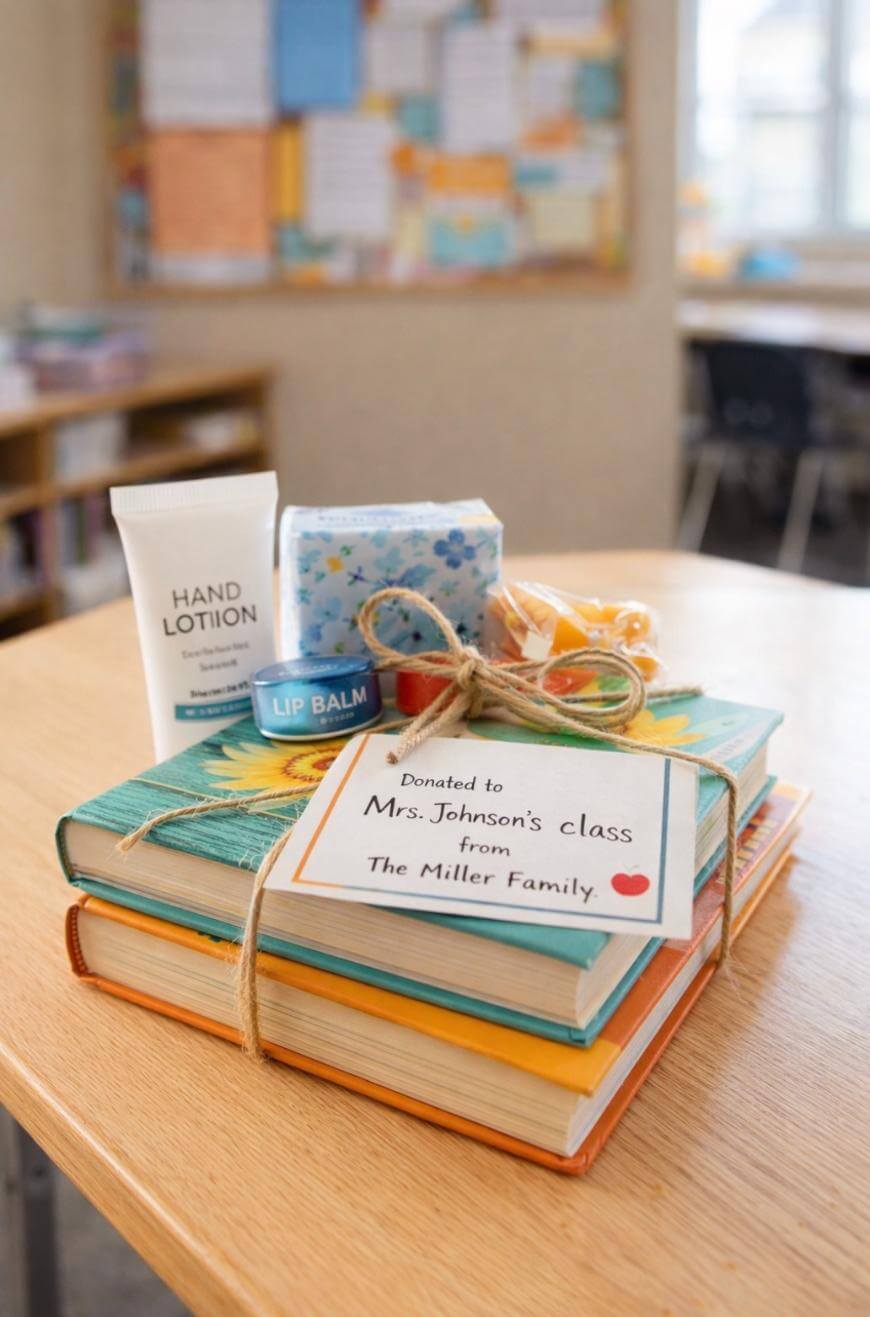
Ask for grade-level favorites or choose high-interest titles. Add a simple bookplate: “Donated to Mrs. ___’s class from ___.”
Two to three books can refresh a classroom library without becoming clutter.
10. Make A “Classroom Comfort” Mini Kit
Teachers spend hours on their feet and in dry air. Think hand lotion, lip balm, throat lozenges, and a small pack of tissues.
Keep it fragrance-light and school-appropriate so it works for sensitive environments.
11. Send A Thank-You Email To The Principal With The Teacher CC’d
Compliments to administrators can matter for evaluations and morale. Keep it short and specific.
Mention one strength: communication, classroom culture, creativity, or how they support your child’s confidence.
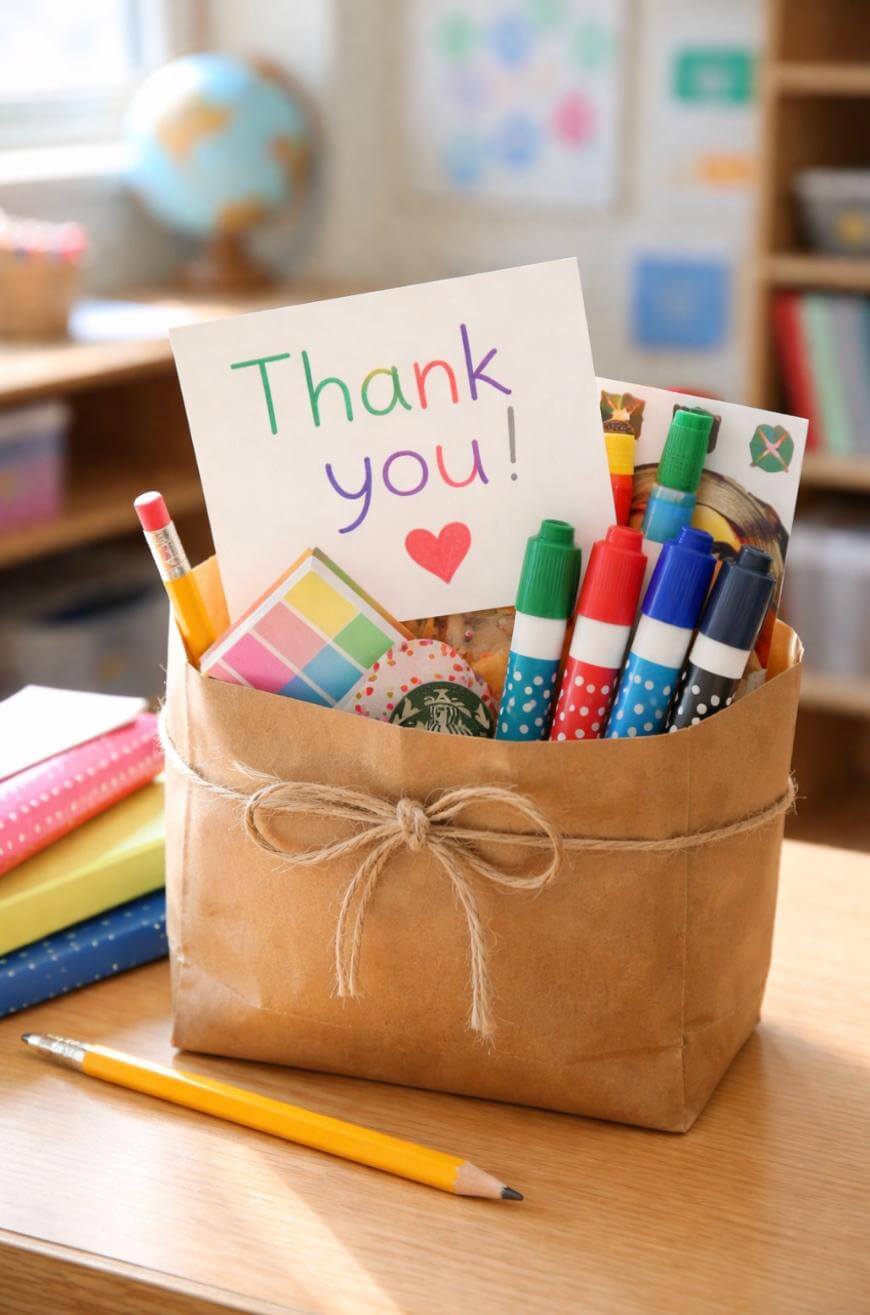
12. Have Your Child Write The Card (With One Prompt)
Kids’ notes are gold when they’re readable and focused. Give one prompt: “My favorite thing you teach me is ___.”
Add a quick parent line at the bottom if your child is very young.
13. Do A “Favorite Things” Survey Early In The Week
If your school allows it, collect preferences: coffee order, snack dislikes, allergies, classroom needs. This prevents waste.
A simple survey can turn random gifts into perfectly used ones.
14. Give Supplies In A Pretty, Usable Container
If you’re gifting supplies, make the container part of the gift: a sturdy bin, pencil cup, or drawer organizer.
Avoid packaging that becomes trash—teachers already haul enough home.
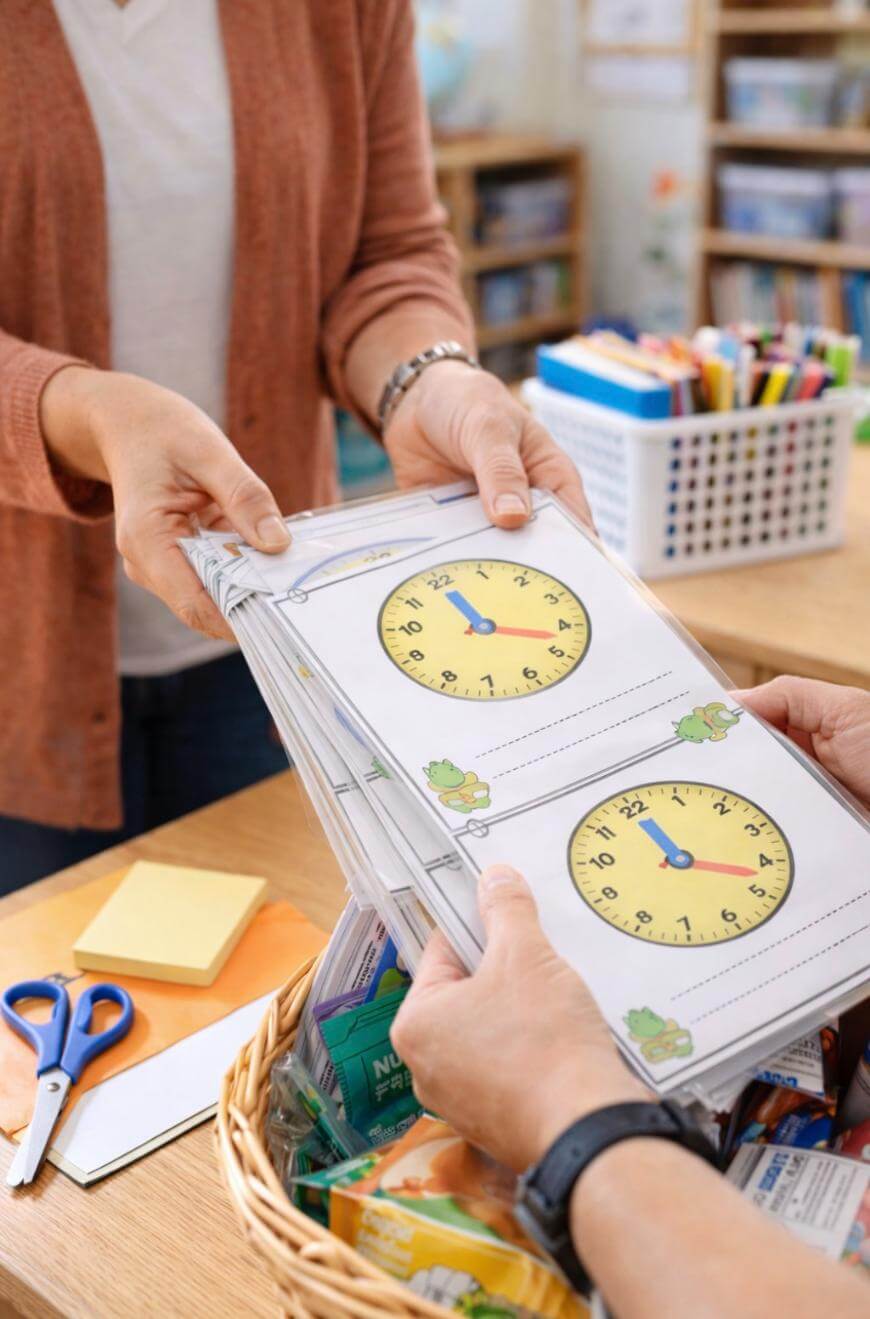
15. Cover Recess Duty Or A Morning Task If Allowed
Some schools allow parents to help with arrival routines or copying. If it’s permitted, it’s one of the most appreciated gifts.
Even one morning of help can free a teacher to prep lessons and breathe.
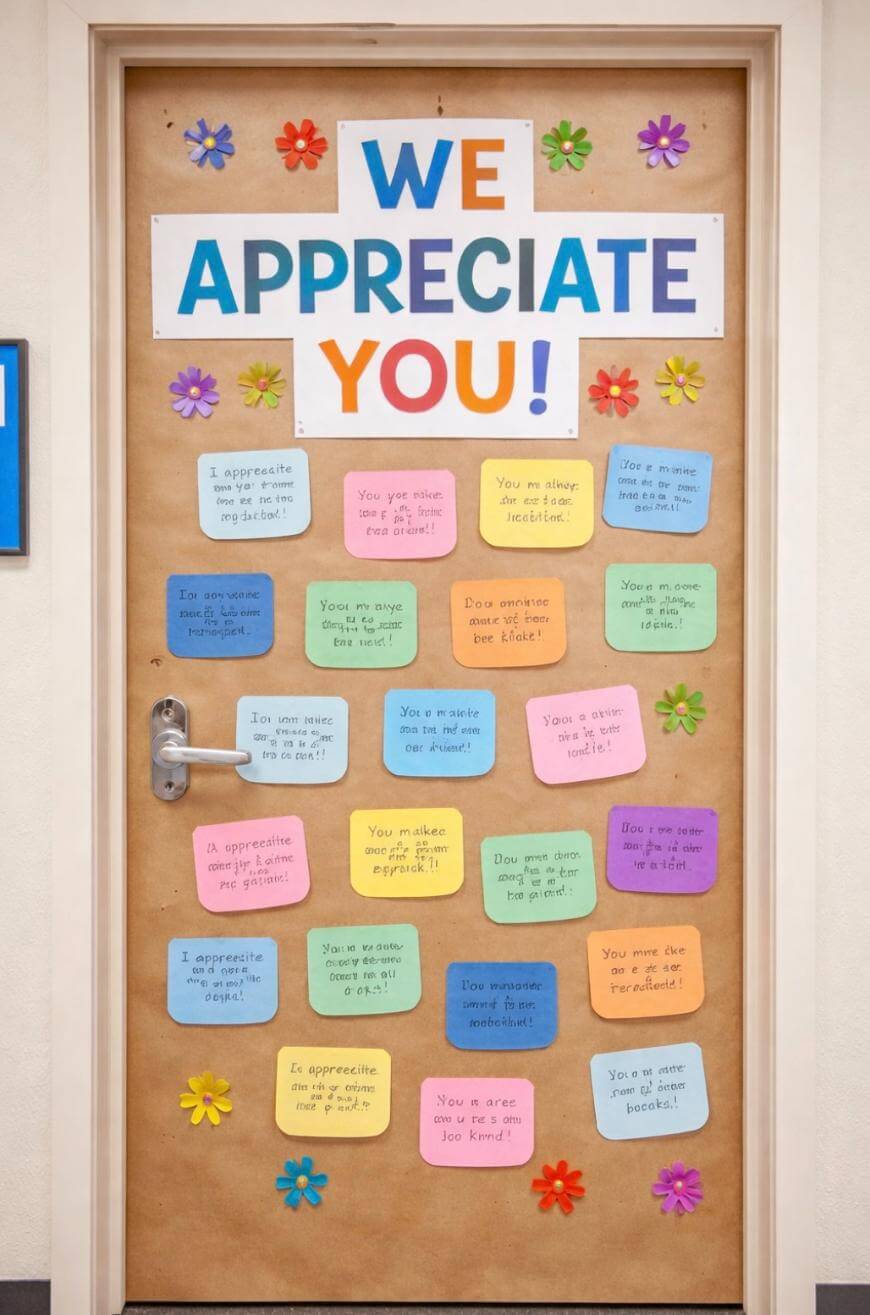
16. Create A Door Display Or Hallway “Appreciation Wall”
Collect one sentence from each student: “I appreciate you because ___.” Post it neatly on a board or door.
It’s meaningful, visible, and doesn’t require the teacher to store anything later.
17. Bring Lunch That Is Truly Grab-And-Go
Teachers often can’t sit down. Individually packaged items make it easy: wraps, salads, fruit cups, and drinks.
If you’re coordinating, label everything clearly and include napkins and utensils so it’s not a scavenger hunt.
18. Choose “No Clutter” Gifts On Purpose
Candles, mugs, and décor are common duplicates. Instead, go for consumables or classroom-useful items.
If you want something cute, keep it tiny: a fun notepad or a single great pen.
19. Include The Whole Staff When You Can
Teachers rely on office staff, aides, custodians, and specials teachers. A shared treat basket in the lounge spreads the love.
If you’re doing a class gift, consider adding $1–$2 per family for staff treats.
20. Make A Weeklong Plan That Doesn’t Burn Parents Out
Instead of five big days, do one coordinated moment that’s easy and consistent. Simpler plans get followed through.
A practical rhythm is: Monday note, midweek snack drop, Friday class gift card—done.

21. Give A “Classroom Wishlist” Gift The Teacher Already Picked
Many teachers keep an online wishlist or share a supply list. Buying from it guarantees the gift is wanted and needed.
If you’re unsure where to find it, ask the room parent or school PTA group.
22. Offer A Small “After School Reset” Help
Ask if they’d like help tidying books, straightening bins, or prepping next week’s folders. It’s low-cost and high-impact.
Keep it bounded: “I can help for 45 minutes on Thursday.”
23. Make A Photo Collage Of Class Memories
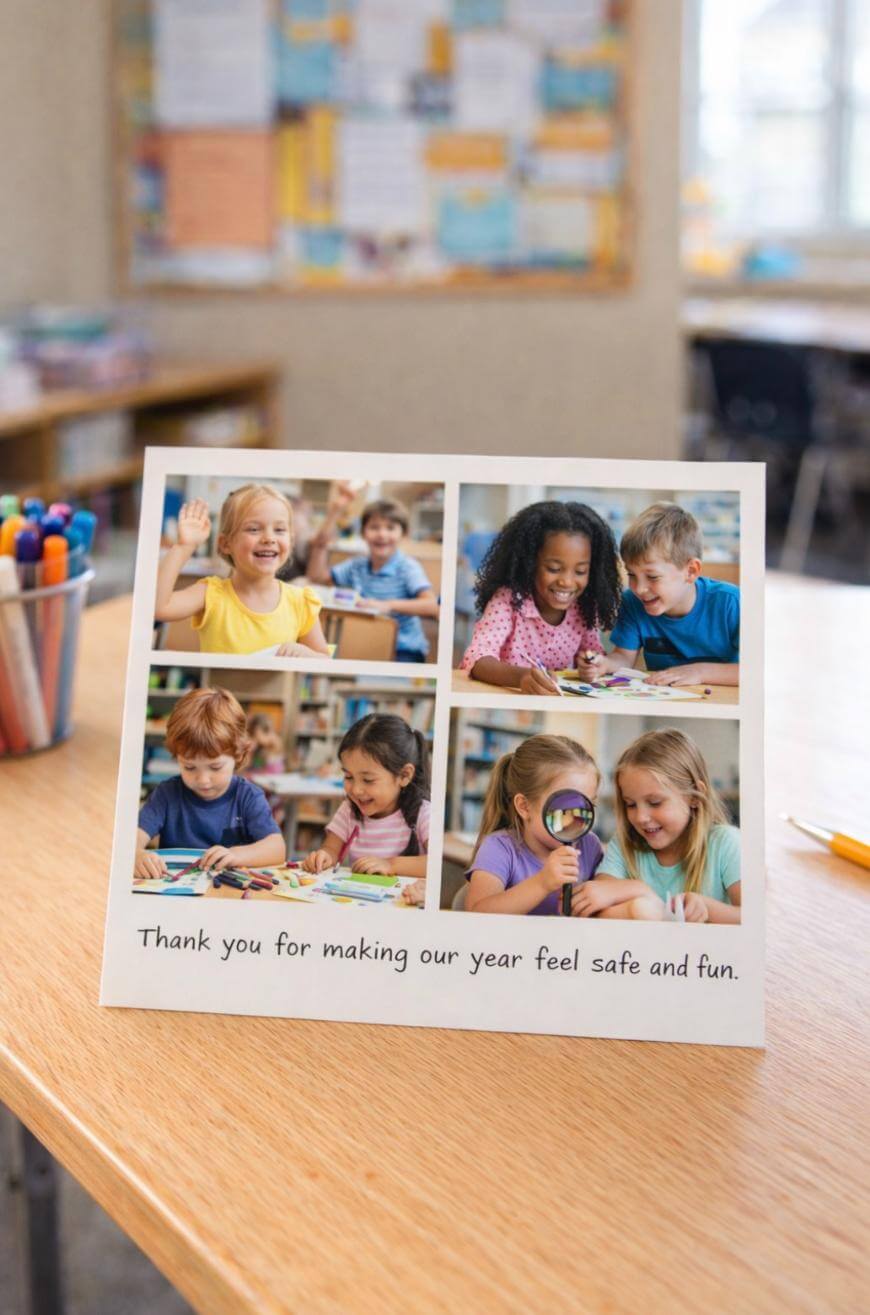
One printed page collage is easy to store and genuinely meaningful. Skip giant frames.
Add one line at the bottom: “Thank you for making our year feel safe and fun.”
24. Create A “Sub Folder” Restock Set
Teachers often keep emergency sub plans. Help by providing a folder, sheet protectors, pencils, and a few ready-to-use worksheets if appropriate.
This supports them beyond appreciation week, which is exactly the point.
How To Plan Teacher Appreciation Week Without Overspending
25. Set A Simple Budget Range Up Front
Pick a number that won’t stress you out. For many families, $5–$20 total for the week is realistic.
If you’re contributing to a class gift, consider making that your main spend and keeping the rest note-based.
26. Use A “One Meaningful + One Useful” Rule
Pair one heartfelt message with one practical item. This keeps gifts from getting random.
Example: a note plus a pack of quality dry erase markers.
27. Avoid Anything That Creates Extra Work
Skip gifts that require assembly, tracking, or storage. Teachers shouldn’t have to manage your appreciation.
If you’re sending food, make it clearly labeled and easy to distribute.
What To Avoid So Your Appreciation Lands Well
28. Don’t Assume Preferences For Scents Or Foods
Strong fragrances and homemade food can be tricky in schools. If you do food, choose store-bought with ingredient labels.
If you do self-care items, keep them neutral and simple.
29. Don’t Make It A Popularity Contest
Teachers talk to each other, and uneven gifting can feel awkward. A coordinated class approach avoids weirdness.
If you’re doing something extra, keep it personal and quiet, not performative.
30. Don’t Forget Specials Teachers And Support Staff
Art, music, PE, librarians, aides, and front office staff often get overlooked. A small note or shared treat helps.
Even one basket in the lounge can cover multiple people at once.
Key Takeaways
Specific praise in a note is the most meaningful “gift” you can give.
A coordinated class gift prevents clutter and duplicates.
Useful classroom supplies beat decorative items nearly every time.
Food gifts work best when they are labeled, allergy-aware, and grab-and-go.
A simple budget like $5–$20 total keeps the week stress-free.
Time-saving help is often more valuable than money.
FAQ
What if you can’t afford a gift?
A heartfelt note is enough. Write 2–3 specific sentences about what you’ve noticed and it will matter more than an object.
Are gift cards okay for teachers?
Yes, gift cards are usually appreciated. Add a line that frames it as a break or treat so it feels personal.
What should you do if the teacher has allergies or restrictions?
Choose non-food gifts like supplies or a note. If you do food, only use store-bought items with clear ingredient labels.
Is it better to give one big gift or small gifts all week?
One coordinated gift is usually best. Small daily gestures can work too, but only if they’re simple and not wasteful.