Last updated: August 30, 2026
Turn Your Stump Into a Planter
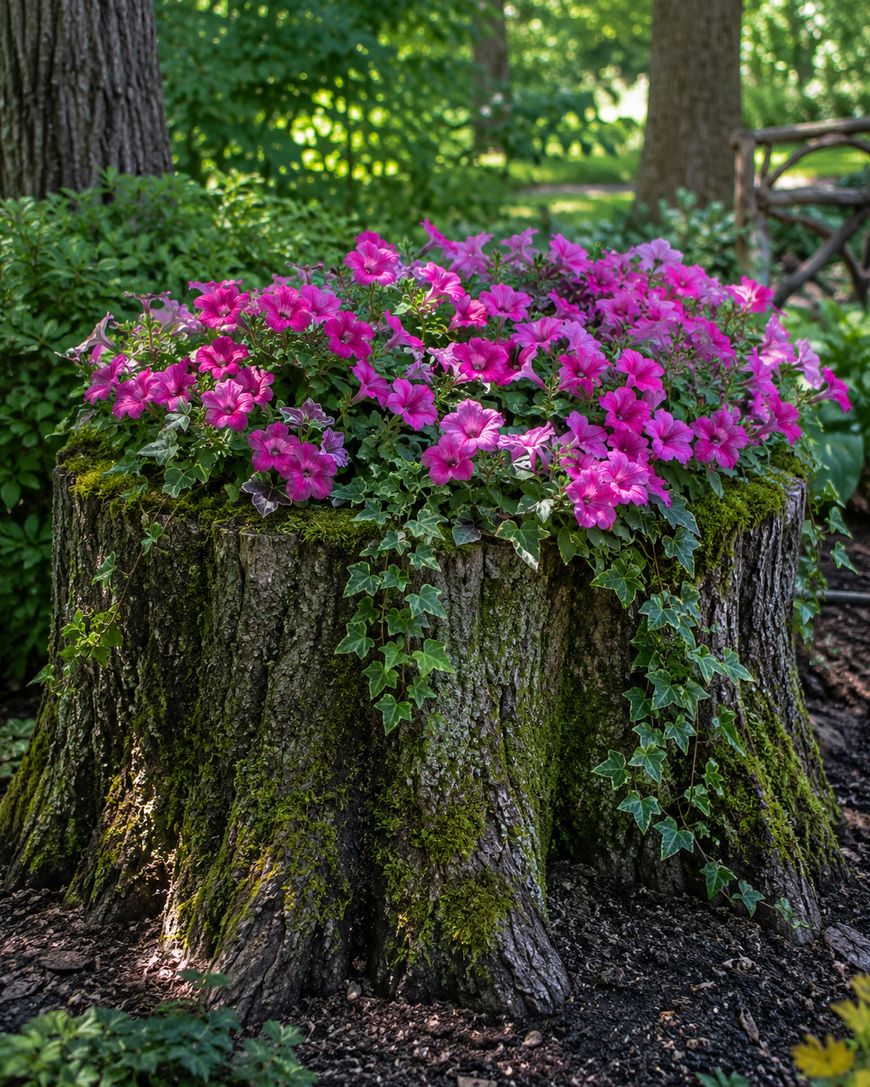
One of the most popular tree stump ideas is hollowing out the top to create a natural planter. You can use a chisel and mallet to carve out a shallow bowl, fill it with potting soil, and plant colorful annuals, succulents, or trailing ivy directly inside.
The stump itself acts as a rustic pot that blends seamlessly with the surrounding landscape. Because the wood retains moisture, many plants actually thrive in a stump planter longer than they would in a traditional clay pot.
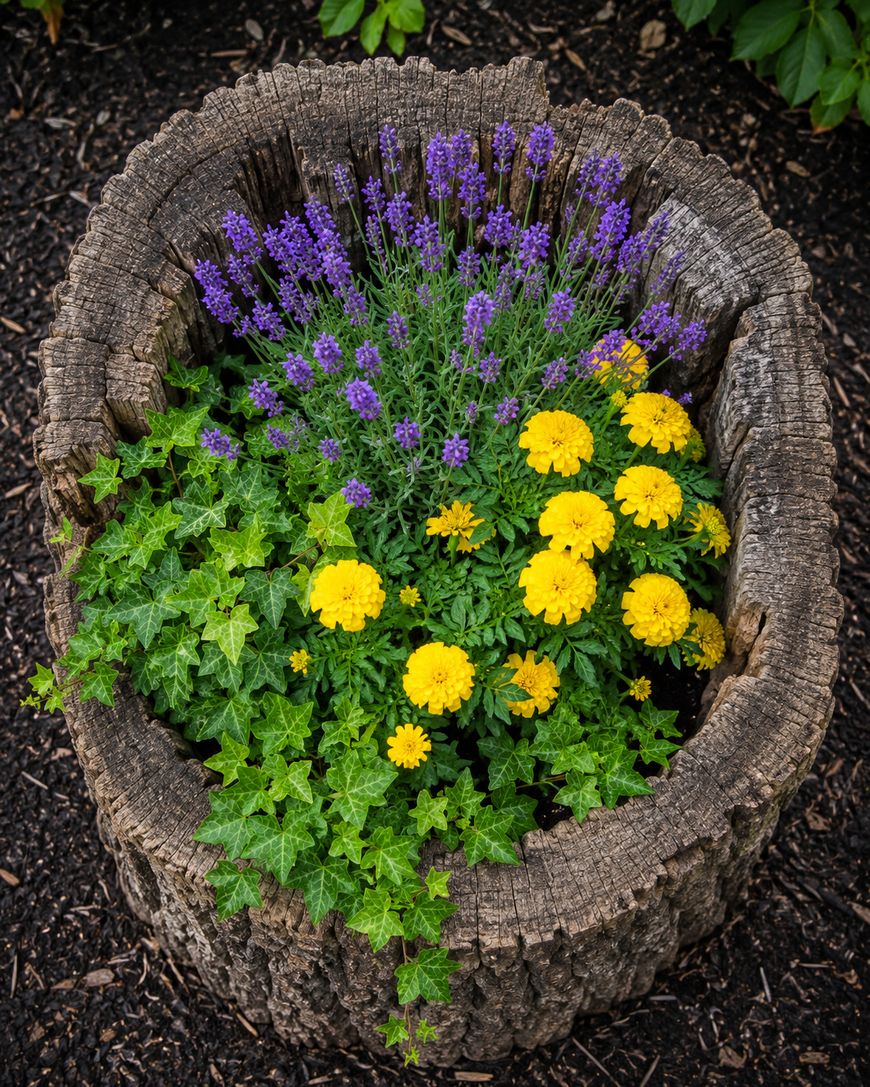
For a dramatic look, plant tall ornamental grasses in the center and let them spill over the sides. You can also layer in seasonal blooms with pansies in spring, petunias in summer, and mums in fall to keep the display fresh all year long.
Drainage is key with this approach. Drill a few holes in the bottom of the carved section so water does not pool and rot the roots of your plants prematurely.
Use the Stump as a Garden Seat or Table
A wide, flat stump makes a surprisingly sturdy outdoor seat or side table with almost zero effort required. Sand the top surface smooth with 80-grit sandpaper, then finish with outdoor wood sealant to protect it from weather and splinters.
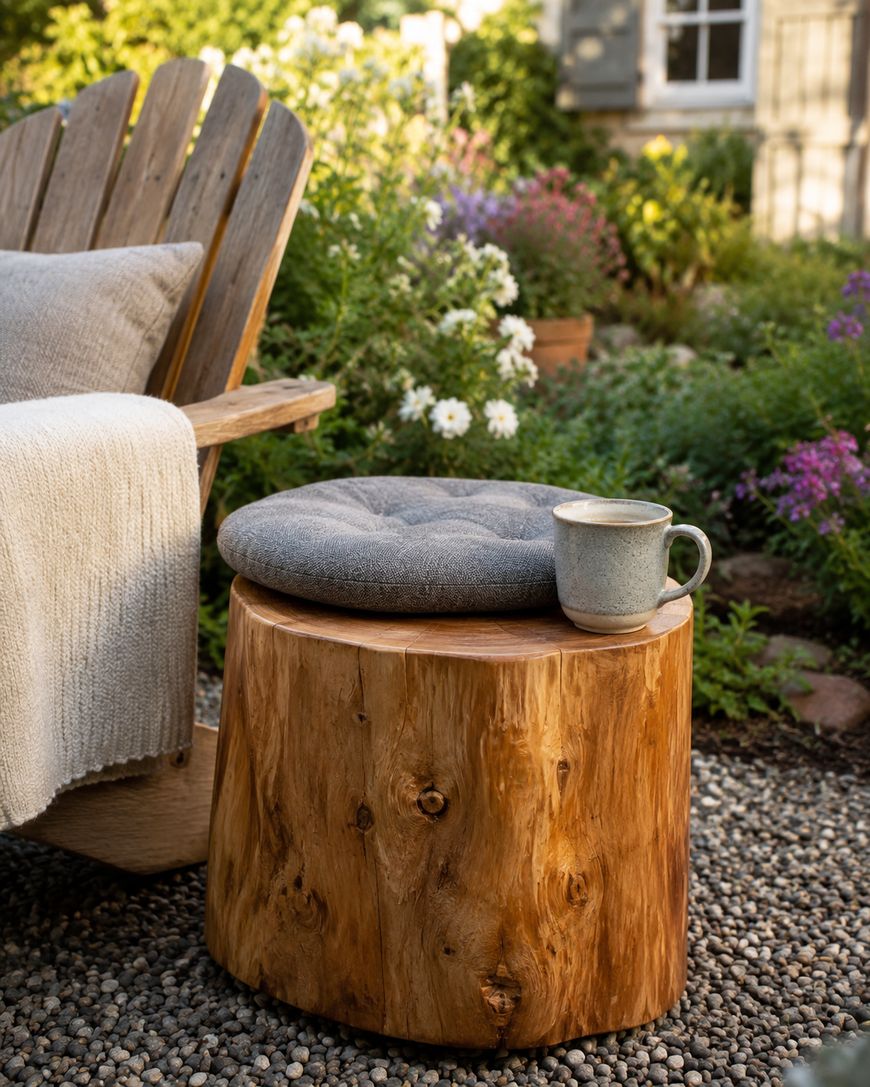
You can place a round cushion on top to make it comfortable enough for reading or morning coffee. Pair two or three stumps of different heights together to create a casual outdoor seating area that looks intentional and inviting rather than accidental.
For a side table, a stump that stands roughly 18 to 24 inches tall is the perfect height to sit beside an outdoor chair. Set a potted plant or a lantern on top to complete the look and give the space a cozy, cottage-garden feel.
If you want to go further, you can attach hairpin legs to a flat-cut stump round to create a mid-century modern side table that works both outdoors on a covered porch and indoors in a living room.
Create a Fairy Garden on Your Stump
Kids and adults alike are charmed by miniature fairy gardens, and a tree stump provides the perfect natural stage. The textured bark, nooks, and irregular surface give a fairy garden far more character than a standard pot or container.
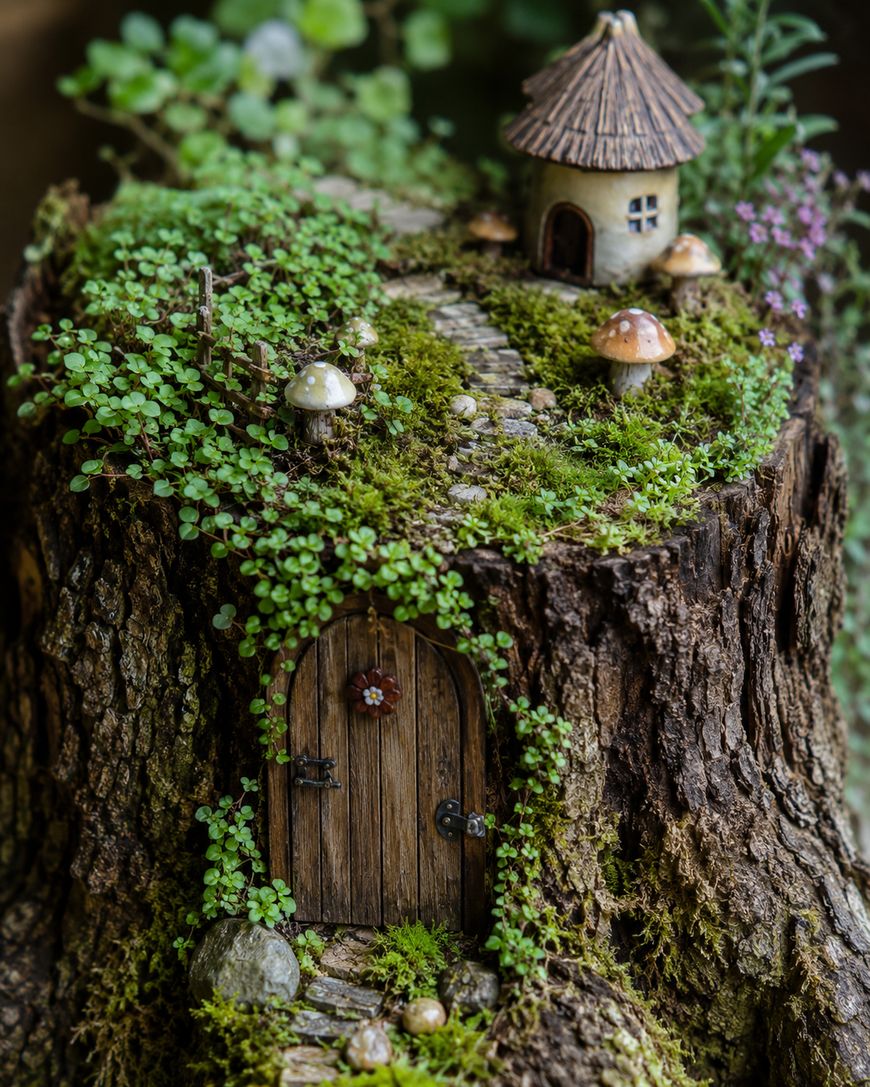
Start by arranging a layer of fine gravel or pebbles around the base of the stump. Add tiny potted plants like miniature hostas, Irish moss, or baby tears to build a lush green floor around your stump centerpiece.
On top of the stump, place small fairy garden accessories such as a tiny bench, a miniature door tucked into the bark, a small lantern, or a winding pebble path. You can find these at most craft stores or order them inexpensively online.
The bark itself often develops moss over time, which adds to the enchanted look without any effort from you. If you want moss faster, paint a slurry of buttermilk and moss onto the bark and mist it regularly until the moss takes hold.
Carve the Stump Into Sculpture
If you have a chainsaw and some artistic confidence, carving your stump into a sculpture is one of the most impressive tree stump ideas you can tackle. Chainsaw carving is not a casual afternoon project though: wear chaps, steel-toe boots, gloves, goggles and ear defenders, understand kickback before you start, and if you have never used a saw freehand, hire a carver instead. Common designs include owls, bears, mushrooms, and abstract organic shapes that look like natural extensions of the landscape.
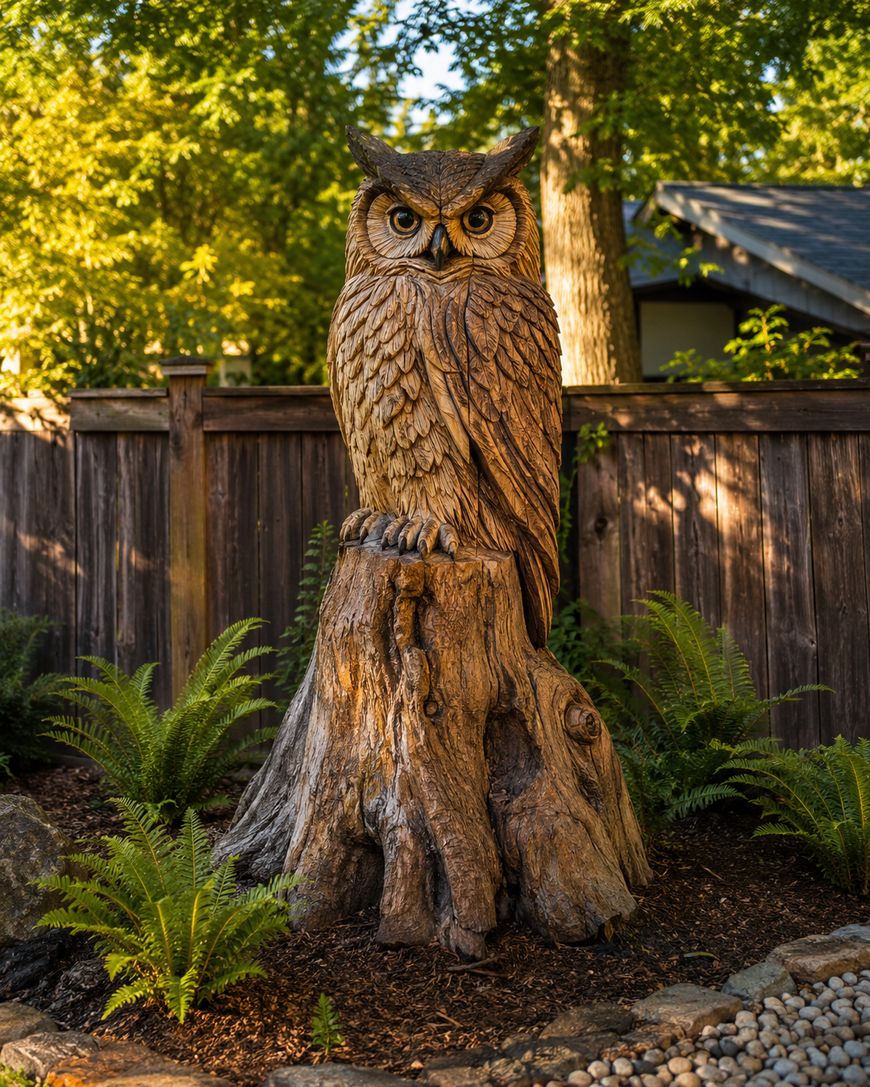
Even without professional carving skills, a simple owl or mushroom shape is very achievable with basic chainsaw and chisel work. There are plenty of beginner tutorials online that walk you through the process step by step.
If you would rather hire someone, professional stump carvers can turn even a modest stump into a true work of art in just a few hours. Many local arborists and woodworkers offer this service, and the result can become the most talked-about feature of your entire yard.
Apply a wood sealant after carving to protect the sculpture from the elements and extend its life significantly. Reapply every year or two to keep the carving looking sharp and prevent cracking.
Build a Stump Bird Bath or Feeder
Turning your stump into a bird bath or bird feeder is one of the most wildlife-friendly tree stump ideas you can try. Hollow out the top of the stump slightly and set a shallow dish or ceramic bowl in the depression to create a bird bath that looks completely natural.
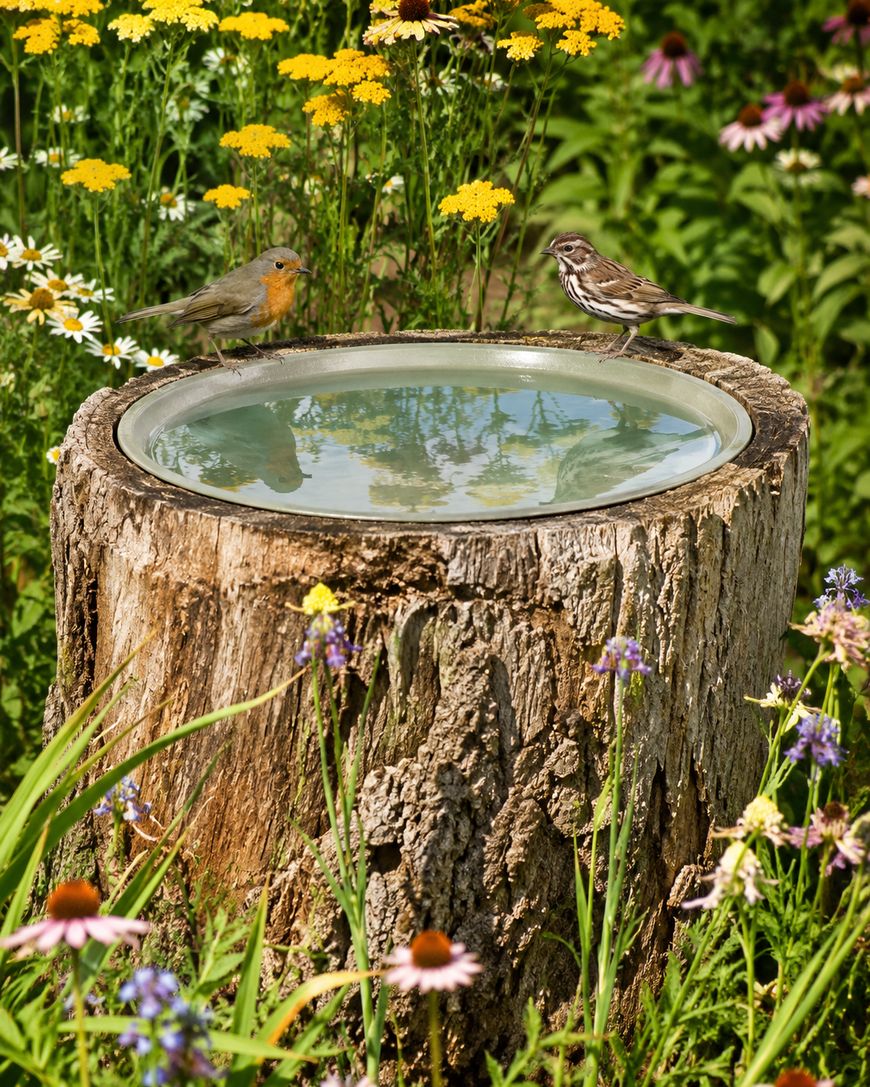
Fill the bowl with fresh water and place a few flat stones inside so smaller birds can wade in safely. Position the stump in a spot that gets morning sun so the water stays warm and inviting through the cooler months.
For a bird feeder, simply set a wooden tray or platform on top of the stump and fill it with seed. You can attach small hooks around the sides of the stump to hang suet cages or tube feeders, turning the whole stump into a multi-level feeding station.
The natural wood blends far better with garden surroundings than plastic feeders do, and birds tend to feel more comfortable approaching a natural-looking structure.
Paint or Mosaic Your Stump
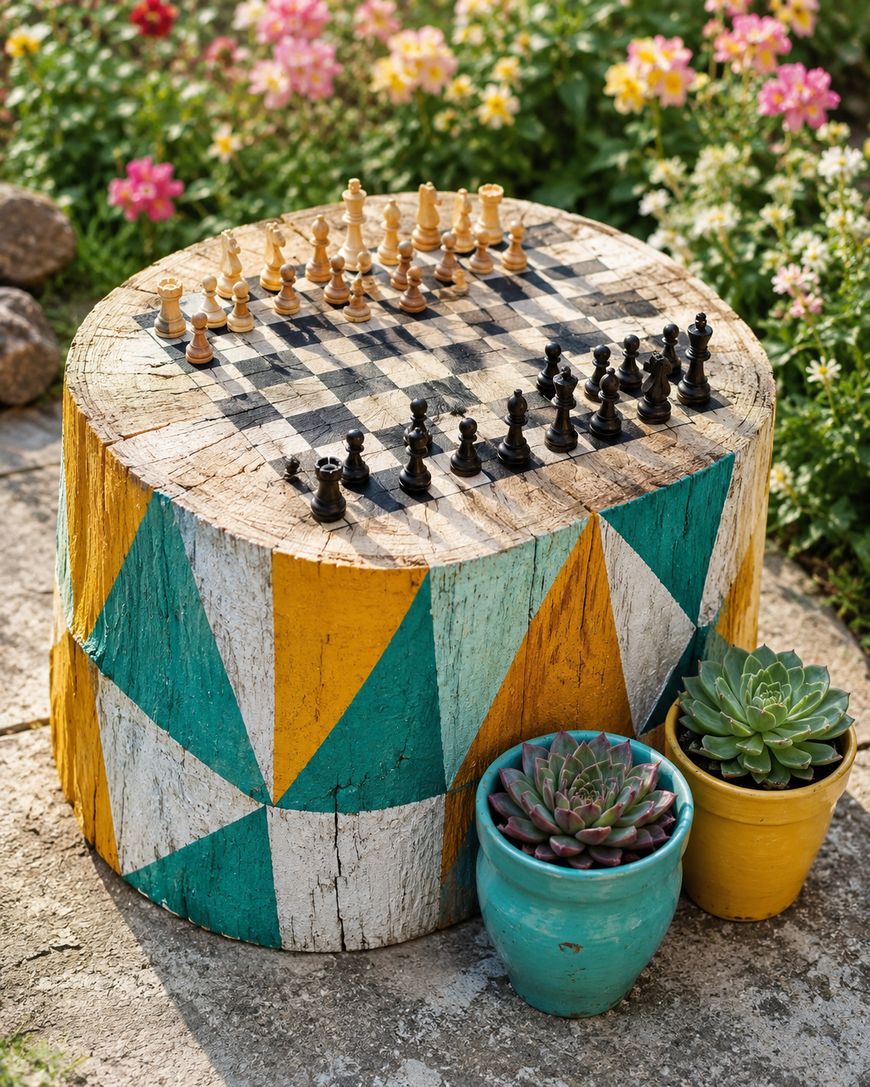
For a burst of color and personality in your yard, painting your stump or covering it in mosaic tiles is a fantastic option. This approach works especially well in gardens that already feature colorful garden art, painted fences, or bold planting schemes.
Clean the stump thoroughly and let it dry completely before you paint. Use exterior-grade paint or acrylic craft paint sealed with outdoor varnish so the colors hold up through rain and UV exposure.
Popular designs include geometric patterns, florals, ladybugs, toadstools, or even a chessboard top if you want to double the stump as an outdoor game table. Mosaic tile versions are even more durable and glitter beautifully in sunlight.
For mosaic work, use outdoor tile adhesive and unsanded grout to attach broken ceramic tiles, glass gems, or mirror pieces to the flat top and sides of the stump. Seal the grout once cured to prevent moisture from getting in.
Plant a Stump Garden Around the Base
You do not always have to alter the stump itself. Planting a lush garden around the base of the stump is one of the simplest tree stump ideas and can make the stump look like it belongs there by design.
Surround the base with shade-loving plants like hostas, ferns, astilbe, and impatiens if the stump sits under the canopy of nearby trees. In sunnier spots, lavender, black-eyed Susans, and ornamental grasses frame a stump beautifully.
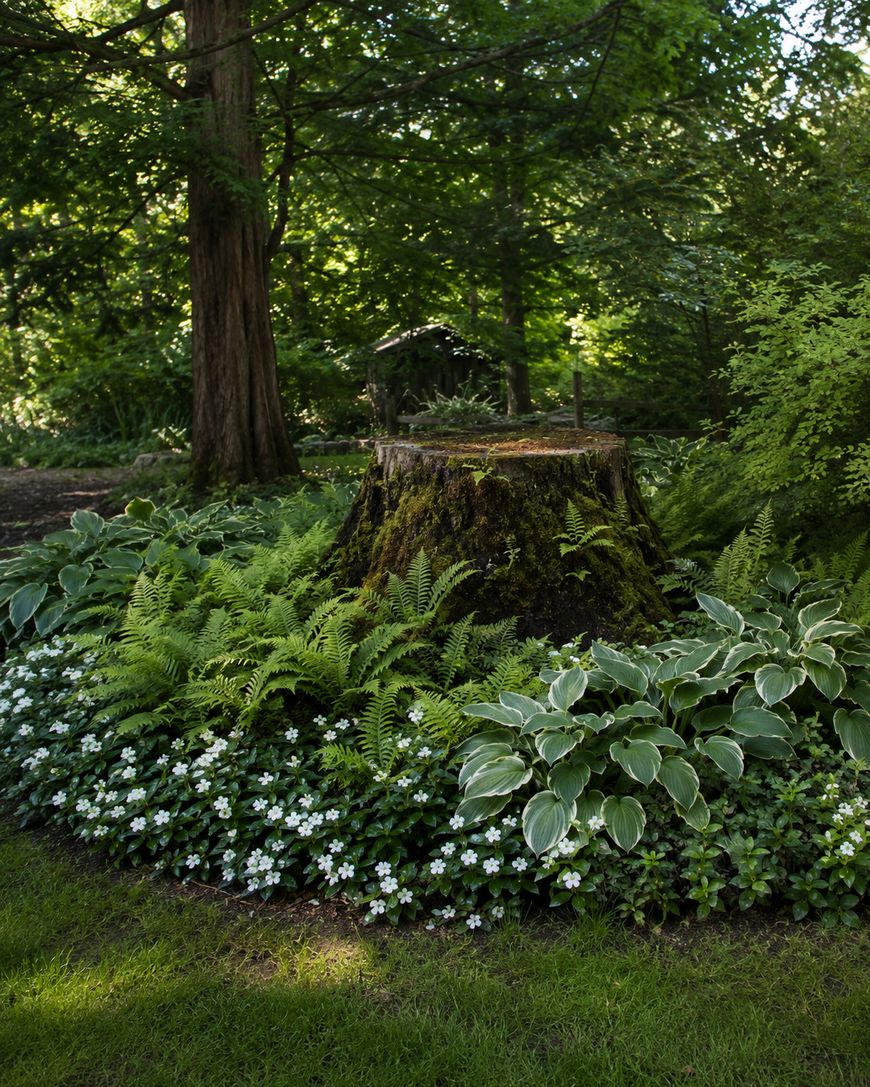
Add a ring of decorative gravel or mulch around the planting area to define it as an intentional garden bed. Edge the bed with small stones or garden border edging for a polished look.
Over time, the plants will mature and soften the base of the stump entirely, giving it the look of a natural woodland garden feature rather than an afterthought.
Use the Stump as an Outdoor Display Stand
A flat-topped stump makes a charming outdoor display stand for potted plants, garden art, or seasonal decorations. Arrange a cluster of different-sized pots on top in varying heights, trailing some plants over the sides of the stump for a layered, full look.

For holidays and seasons, swap out the display easily with pumpkins and gourds in fall, evergreen boughs and pinecones in winter, and a collection of terracotta pots with spring bulbs when warmer weather arrives.
This is one of the most flexible tree stump ideas because it requires no permanent modification to the stump. You can change the display as often as you like without any tools or special skills.
Make a Stump Stepping Stone Pathway
If you have had a tree removed and are left with a flush-cut stump or a section of trunk, you can slice it into rounds and use those rounds as stepping stones throughout your garden. The natural wood texture looks beautiful against gravel, grass, or ground cover.
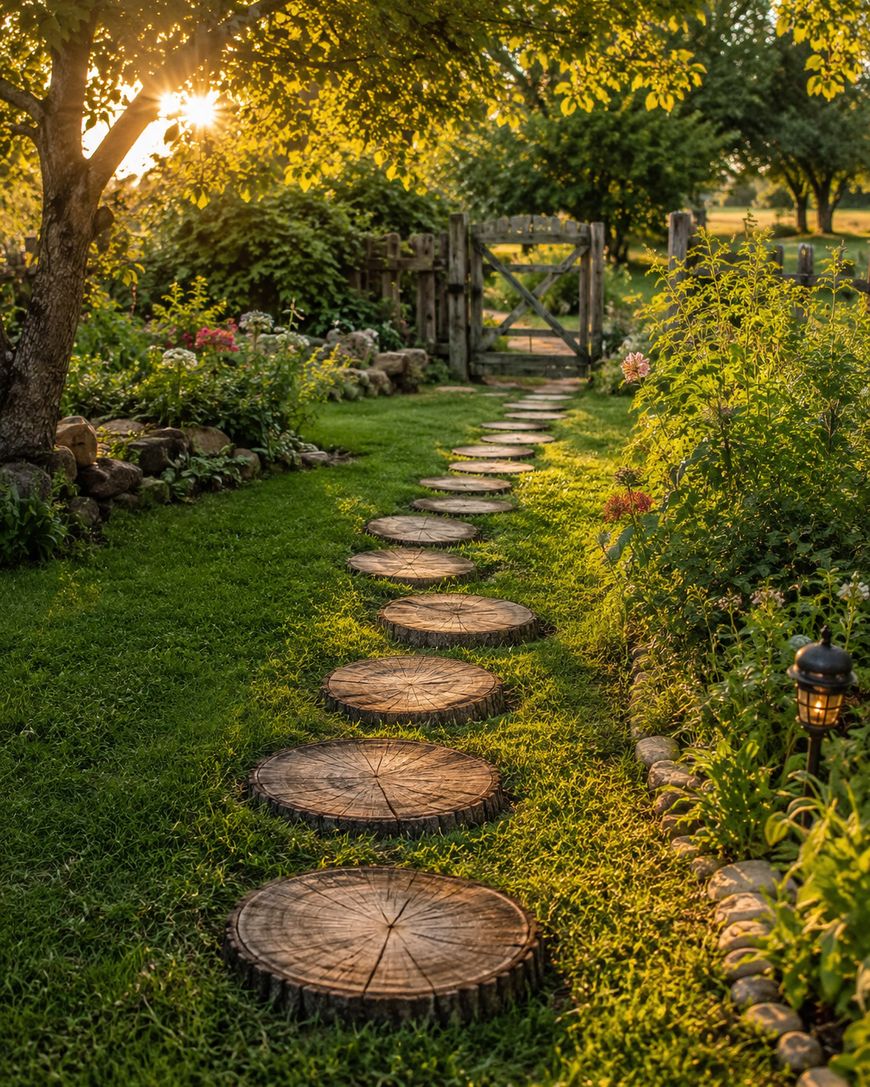
Seal each round thoroughly with outdoor wood sealant and allow it to cure completely before placing it in the garden. Refresh the sealant once a year to prevent rot and keep the stepping stones looking clean.
Arrange the rounds in a curved path leading to a garden gate, a shed, or a favorite sitting area. Nestle them into the ground so the tops sit flush with the surrounding surface, making them safe and comfortable to step on.
Grow Mushrooms in Your Stump
If your stump is already beginning to break down naturally, growing edible or ornamental mushrooms in it is one of the most unique and practical tree stump ideas available. Oyster mushrooms, shiitake, and wine cap mushrooms all colonize decaying wood readily.
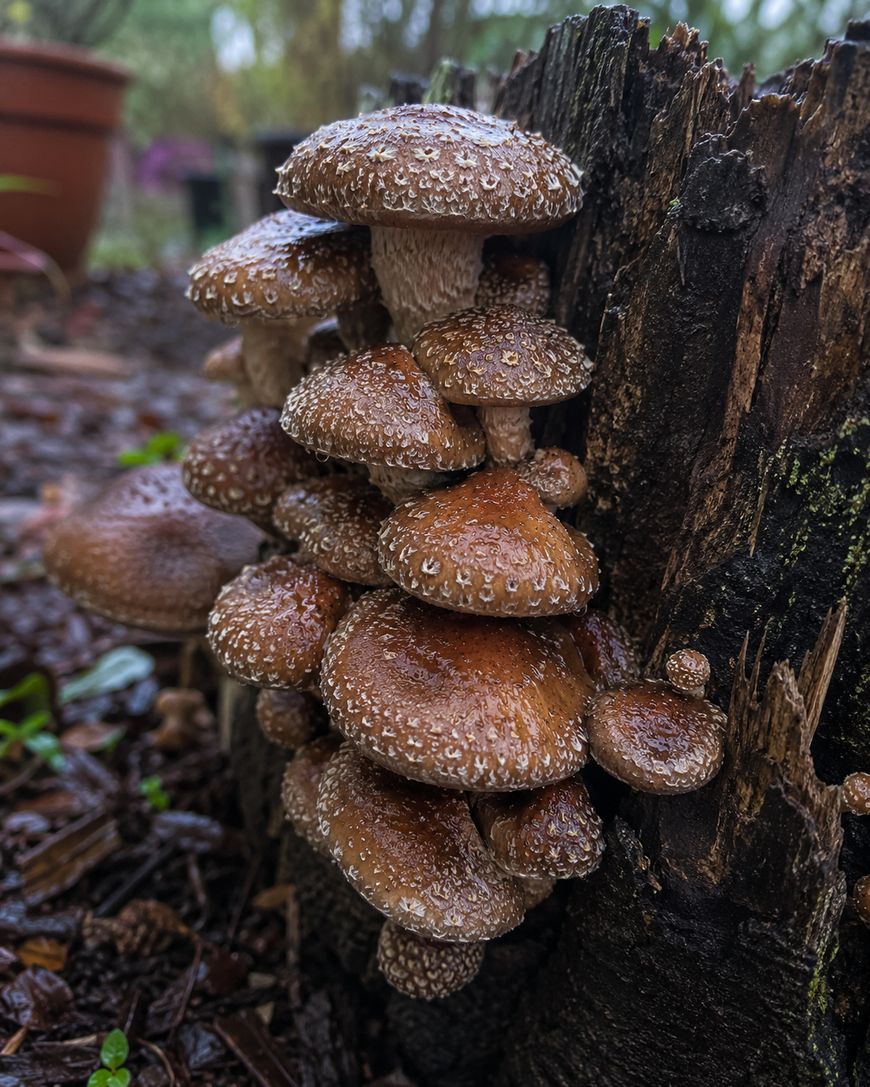
Purchase mushroom plug spawn from a gardening supplier and hammer the plugs into holes drilled across the top and sides of the stump. Cover the holes with wax to seal in moisture, then water the stump regularly and watch the mycelium spread.
Within several months to a year, you can be harvesting flushes of fresh mushrooms directly from your backyard. This approach also speeds up the natural decomposition of the stump, so it solves two problems at once.
Make sure to identify the stump species first, as some hardwoods are better suited to mushroom cultivation than others. Oak, alder, maple, and poplar stumps are generally the most productive.
Light Up Your Stump With Solar Lights
Adding solar lights to or around your stump is a quick, low-cost way to turn it into a nighttime garden feature. Cluster several solar stake lights in a ring around the base so the stump glows from below after dark.
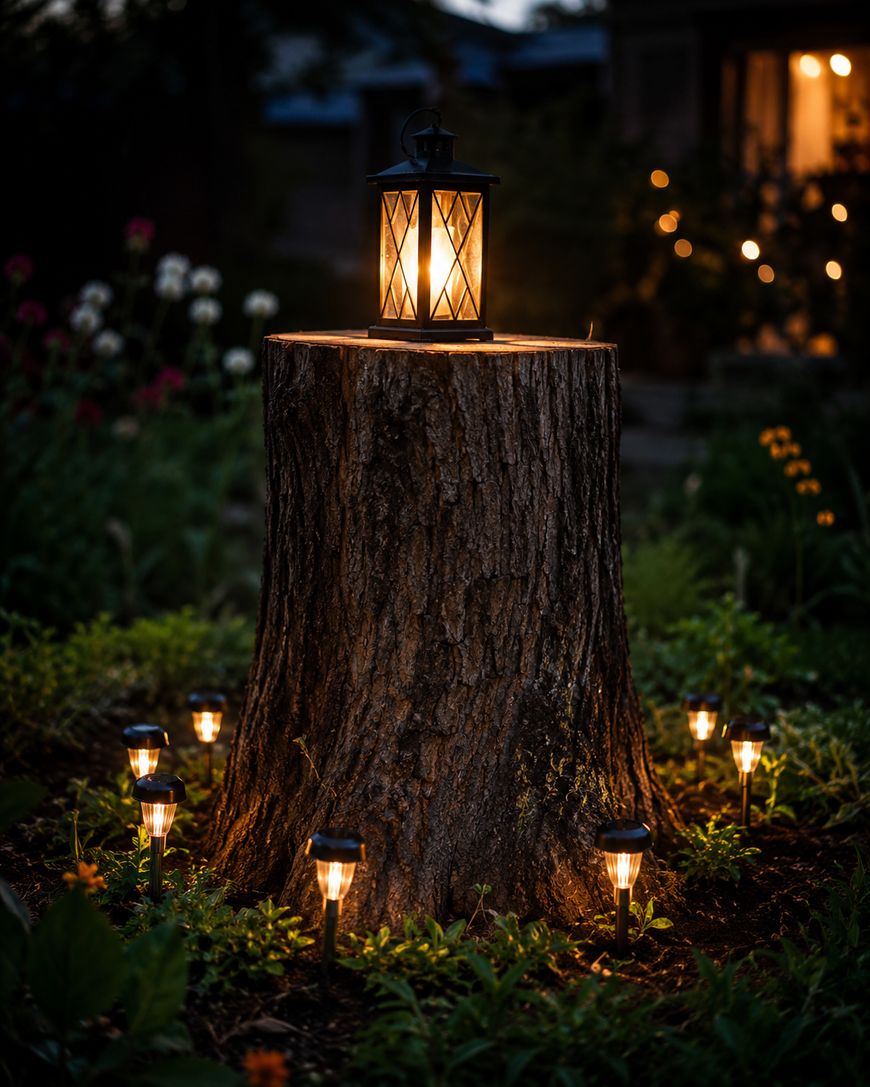
You can also set a solar lantern directly on top of a flat stump to create a warm, inviting beacon in your garden at night. String lights wrapped loosely around the stump and into surrounding shrubs create a magical, fairy-light effect that looks especially beautiful in summer evenings.
Because solar lights need no wiring, this is truly a no-tools tree stump idea that you can set up in minutes. Move the lights around seasonally to change the mood and the focus area of your yard lighting.
Convert the Stump Into a Raised Garden Bed Base
A large stump can serve as the anchor and partial base of a small raised garden bed. Build a simple frame of untreated cedar boards around the stump, fill it with quality garden soil, and plant herbs, flowers, or vegetables in the surrounding bed while letting the stump occupy part of the interior.
As the stump gradually decomposes, it actually enriches the surrounding soil with organic matter and feeds beneficial fungi that support healthy plant growth. This technique is sometimes called hugelkultur and is a well-established method in permaculture gardening.
The stump also helps retain moisture inside the raised bed, reducing how often you need to water. Over several years, the stump breaks down completely and the bed becomes entirely usable planting space.
Let It Go Wild With Native Plants
Sometimes the best of all tree stump ideas is the most hands-off approach: let the stump decompose naturally while encouraging native plants, moss, lichen, and fungi to colonize it. This creates a small wildlife habitat that supports beetles, birds, frogs, and other garden-friendly creatures.
Place the stump in a quiet corner of the yard where a wild, naturalistic look fits in. Leave the bark on if possible, as it provides habitat for insects and accelerates the colonization of mosses.
Over time, the stump becomes a genuinely beautiful piece of natural sculpture, textured, layered with color, and buzzing with life. This is especially fitting for gardens designed around native plantings or wildlife habitat goals.
Add a Stump Clock or Garden Art Installation
For a truly unique look, mount a large outdoor clock face, a decorative metal art piece, or a hand-painted sign to the face of a tall stump. This works beautifully on stumps that sit at eye level near a garden gate or seating area.
Use weather-resistant hardware and outdoor-rated art pieces so the installation holds up through all seasons. A clock in particular adds a practical and whimsical element that guests always comment on.
You can also attach a small chalkboard to a stump for seasonal messages, plant labels, or welcome notes, a charming detail that costs almost nothing and takes only minutes to set up.
Remove It Gracefully With a Moss and Stone Garden
If none of the above tree stump ideas feel right and you want the stump gone, consider a graceful removal approach that uses the process as a feature. Surround the stump with a carefully arranged moss and stone garden while it decomposes, turning the waiting period into an intentional design choice.
Place flat river stones in patterns around the base, fill the gaps with creeping phlox or thyme, and let moss cover the stump naturally over time. By the time the stump has fully decomposed in a few years, the surrounding garden will be well established and the space will be ready for whatever planting you have in mind next.
Frequently Asked Questions About Tree Stump Ideas
How long does a tree stump last in the yard if left alone?
Most stumps take 3 to 7 years to decompose naturally, depending on the tree species, climate, and moisture levels. Hardwood stumps like oak tend to last longer than softwood stumps like pine.
Can I plant flowers directly in a tree stump?
Yes, and it works beautifully. Hollow out a section of the stump with a chisel, add potting soil, and plant your flowers directly inside. Drill drainage holes to prevent waterlogging, and the stump will hold moisture better than most standard containers.
What is the easiest tree stump idea for beginners?
Using the stump as a display stand or surrounding it with a planted garden bed requires no tools, no special skills, and very little cost. Both options deliver a great visual result in a single afternoon.
Will painting a tree stump damage it?
Exterior paint will not harm the stump, but it may slightly slow the natural decomposition process. If you eventually want the stump to break down and enrich your soil, choose a design that does not seal the wood heavily. For stumps you plan to keep indefinitely, a full sealant and paint finish will extend the stump’s life significantly.
How do I stop a tree stump from sprouting new growth?
The most effective approach is to drill holes across the top of the stump and pour a stump killer solution into them. Alternatively, covering the stump completely with a dark tarp and weighing it down deprives new shoots of light and gradually exhausts the root system.
Is it expensive to have a stump carved by a professional?
Professional stump carving typically costs between $100 and $500 depending on the size of the stump and the complexity of the design. Many local arborists and woodworkers offer this service, and results are often spectacular.
Start Transforming Your Stump Today
There is no shortage of creative tree stump ideas to work with, whether you have a small decorative stump or a massive old-growth anchor in your backyard. The key is choosing an approach that fits your yard’s style, your available time, and how long you want the stump to last.
We hope at least a few of these ideas have you excited to head outside and start turning that eyesore into a genuine feature. Pick your favorite tree stump idea, gather your supplies, and enjoy the transformation, your yard will thank you for it.