Last updated: June 21, 2026
Planning your wedding reception seating does not have to be stressful. We have rounded up the most creative and practical wedding seating chart ideas to help you seat every guest comfortably and keep the evening running smoothly.
Whether you are hosting an intimate backyard gathering or a grand ballroom affair, these ideas will give you a clear starting point so you can stop overthinking and start planning.
Classic Assigned Seating Charts
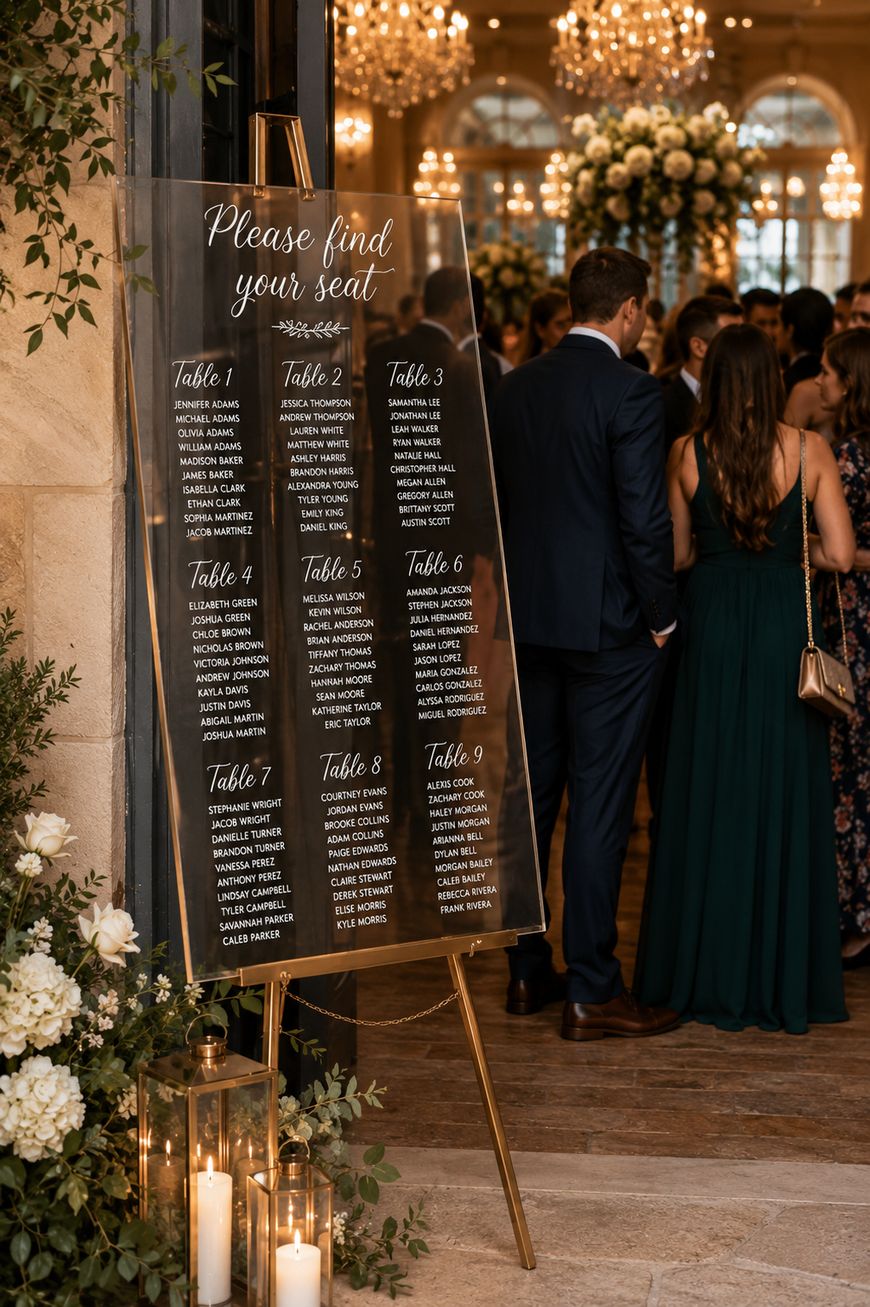
The most traditional approach to wedding seating chart ideas is the classic assigned seat method, where every guest has a specific chair designated for them. This style works especially well for plated dinners where catering staff need to match meals to guests.
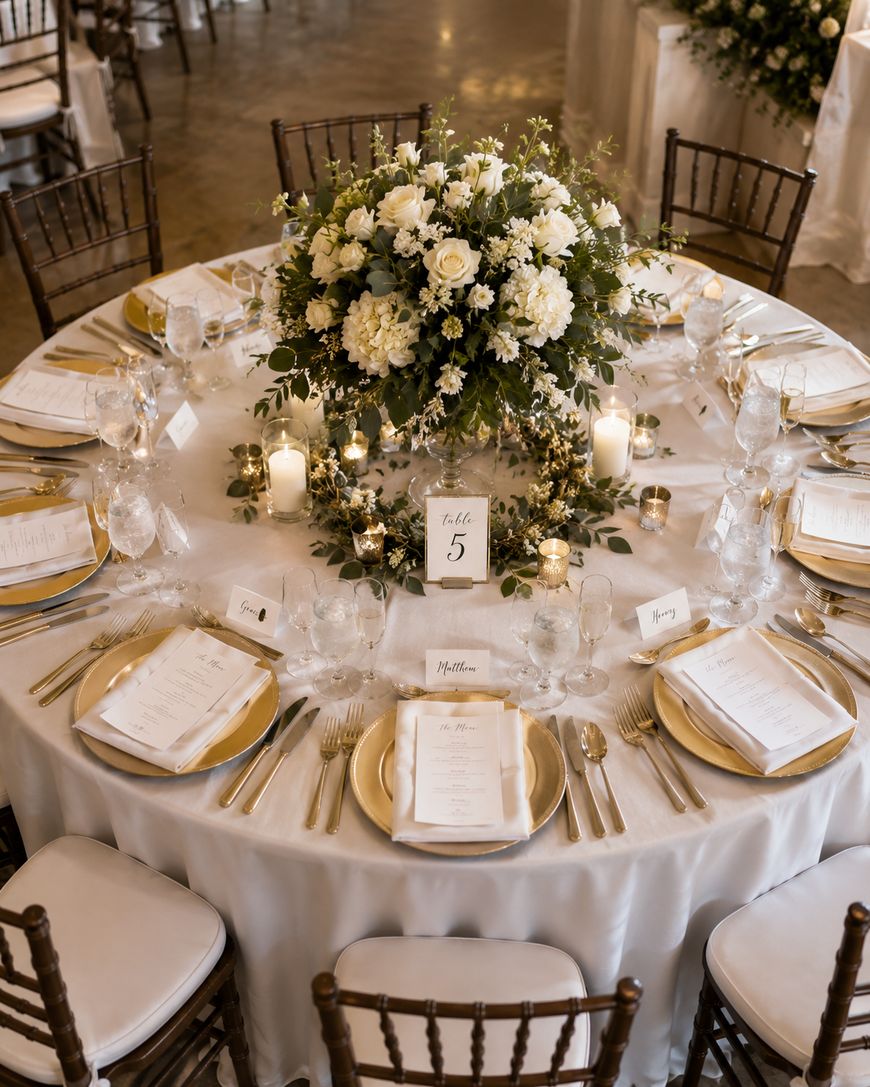
With assigned seats, you can be very deliberate about who sits next to whom. This is particularly helpful when you have blended families, guests who do not know many people, or colleagues from different parts of your life who you want to introduce.
For the display itself, you can go as simple or as elaborate as you like. A printed seating chart on a large foam board is affordable and easy to set up, while a custom acrylic or mirror display adds a stunning focal point at the reception entrance.
Escort cards are another classic option that pairs well with assigned seating. Each guest picks up a small card with their name and table number, and a separate chart at each table lists the specific seat assignments.
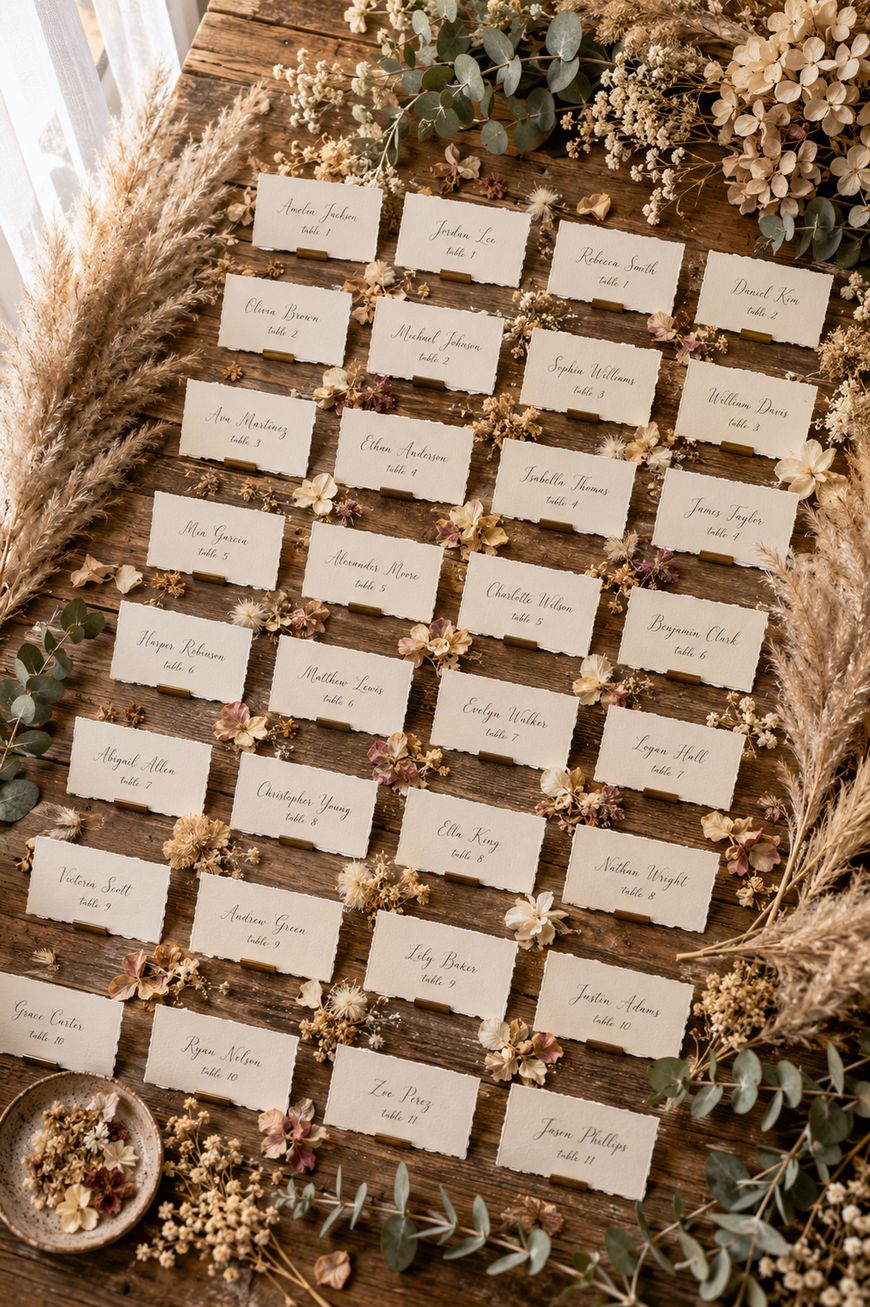
This two-step system creates a lovely moment as guests arrive — searching for their name among the escort cards becomes a fun little ritual before they head to their table.
You can personalize escort cards endlessly: dried flowers, mini succulents, small favor bags, or luggage tags all work beautifully depending on your wedding aesthetic.
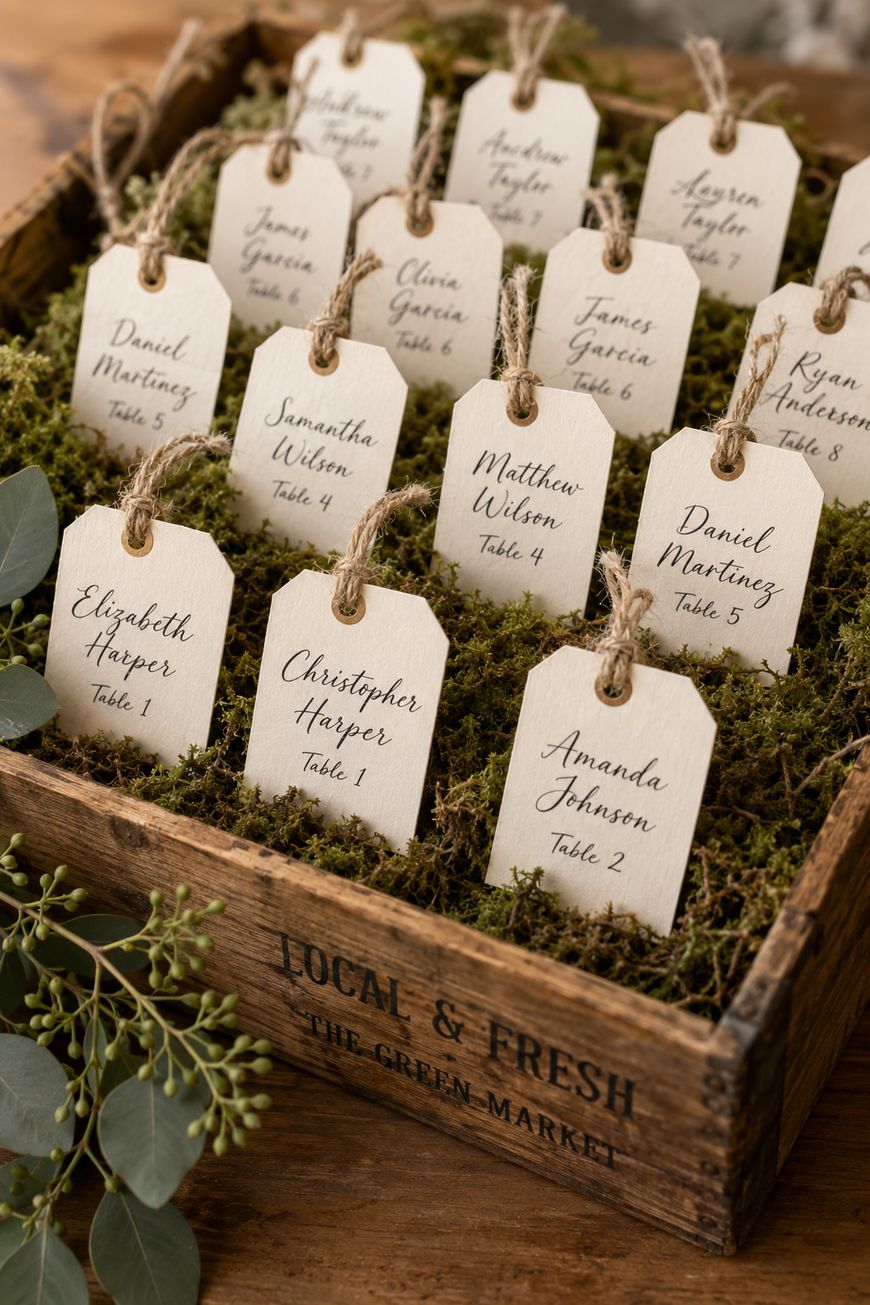
Creative and Unique Wedding Seating Chart Display Ideas
If you want your seating display to double as decor, there are so many imaginative wedding seating chart ideas that go well beyond the standard foam board. A vintage window frame with seating assignments written in chalk paint is romantic and rustic at the same time.

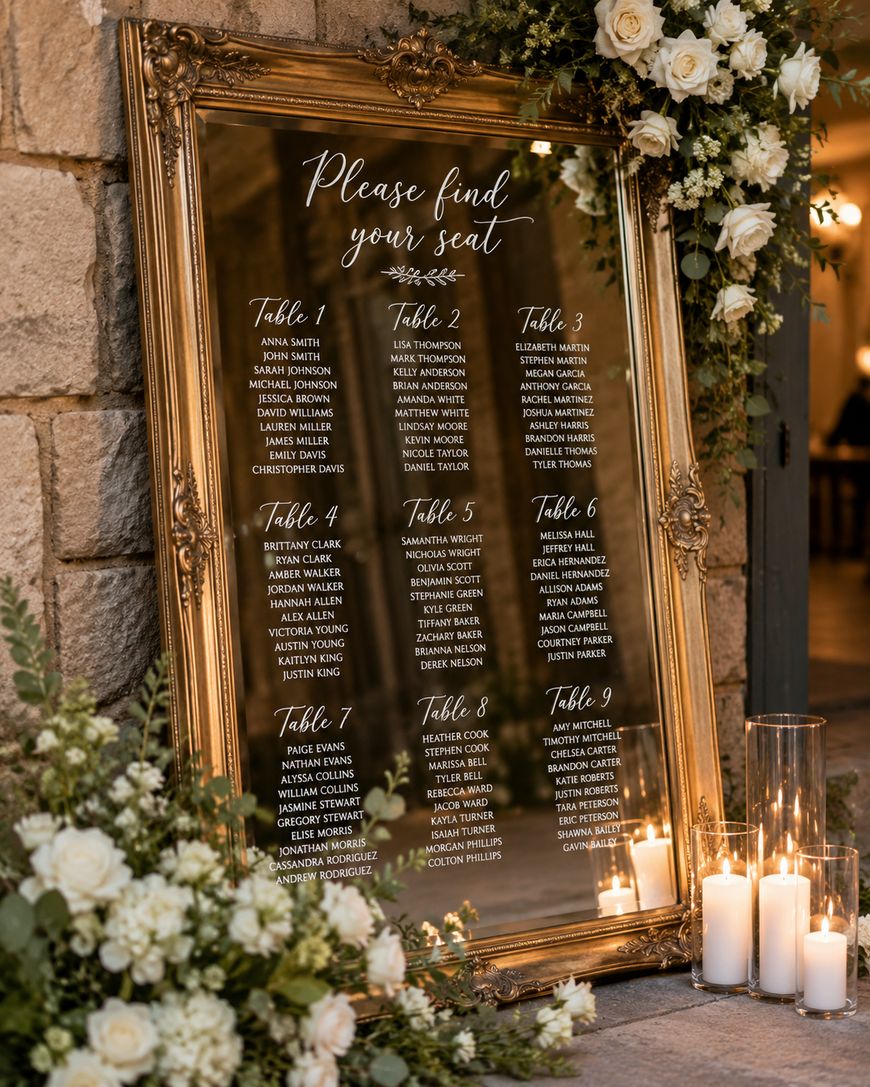
Mirrors are one of the most popular choices right now because they reflect light beautifully and add a glamorous touch to any venue. A large ornate mirror with calligraphy lettering is a stunning keepsake too — you can hang it in your home after the wedding.
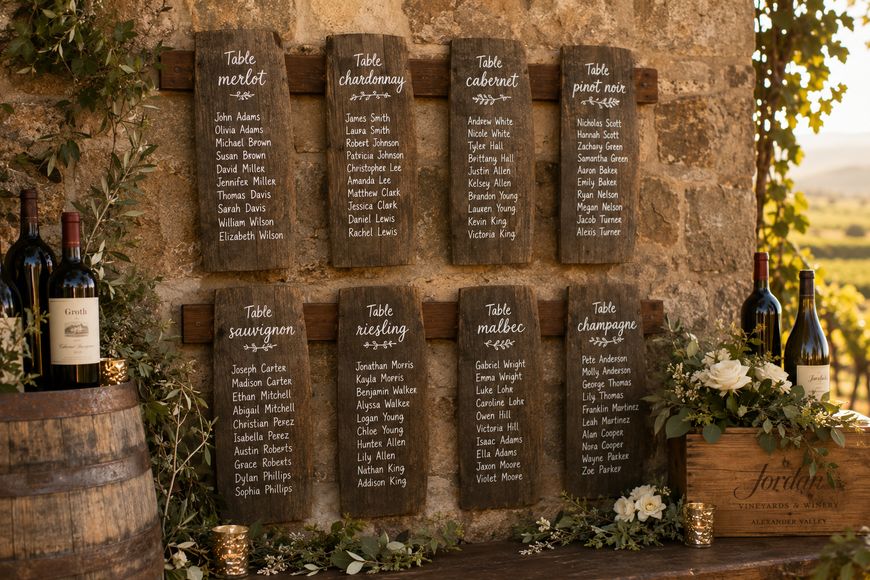
Wine or whiskey barrel staves work wonderfully for rustic or vineyard weddings. Each stave can represent a table, with guest names attached via tiny clothespins or written directly on the wood.
For a garden or bohemian wedding, consider stringing seating cards from tree branches, a wooden arch, or a length of rope hung between two stands. The effect is whimsical and light, and it doubles as ceremony decor if you plan ahead.
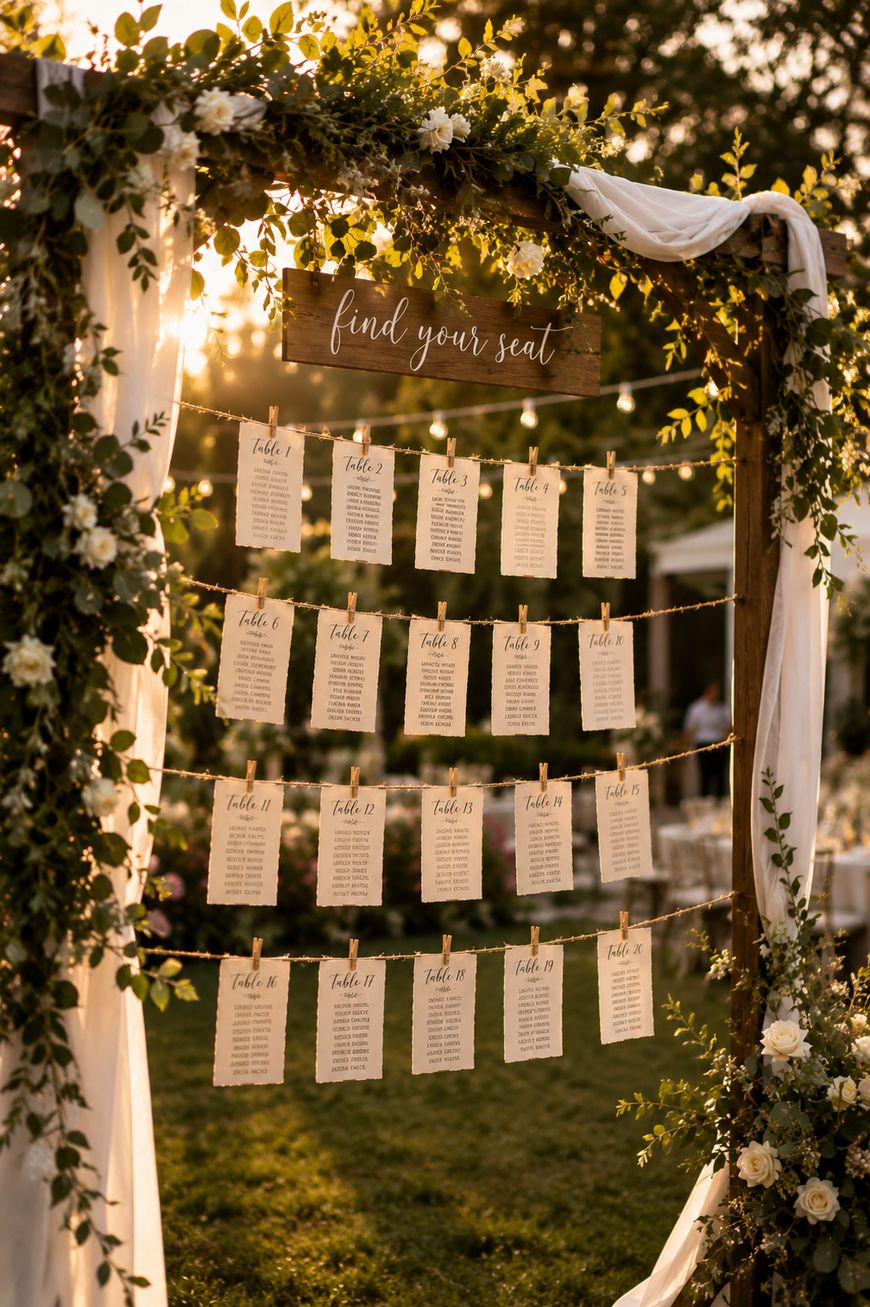
Book lovers often create seating charts based on their favorite novels, assigning each table the name of a beloved book instead of a number. Guests find their table by looking up the book title, and small paperback copies of each book make adorable centerpieces.
Travel-themed weddings can assign table names based on countries or cities that are meaningful to the couple. A vintage map as the backdrop for the seating display ties the whole theme together beautifully.
Digital and Modern Seating Chart Tools
Technology has made managing wedding seating chart ideas easier than ever before. Online planning tools like AllSeated, Zola, and WeddingWire all offer interactive seating chart builders where you can drag and drop guests into tables and adjust on the fly.
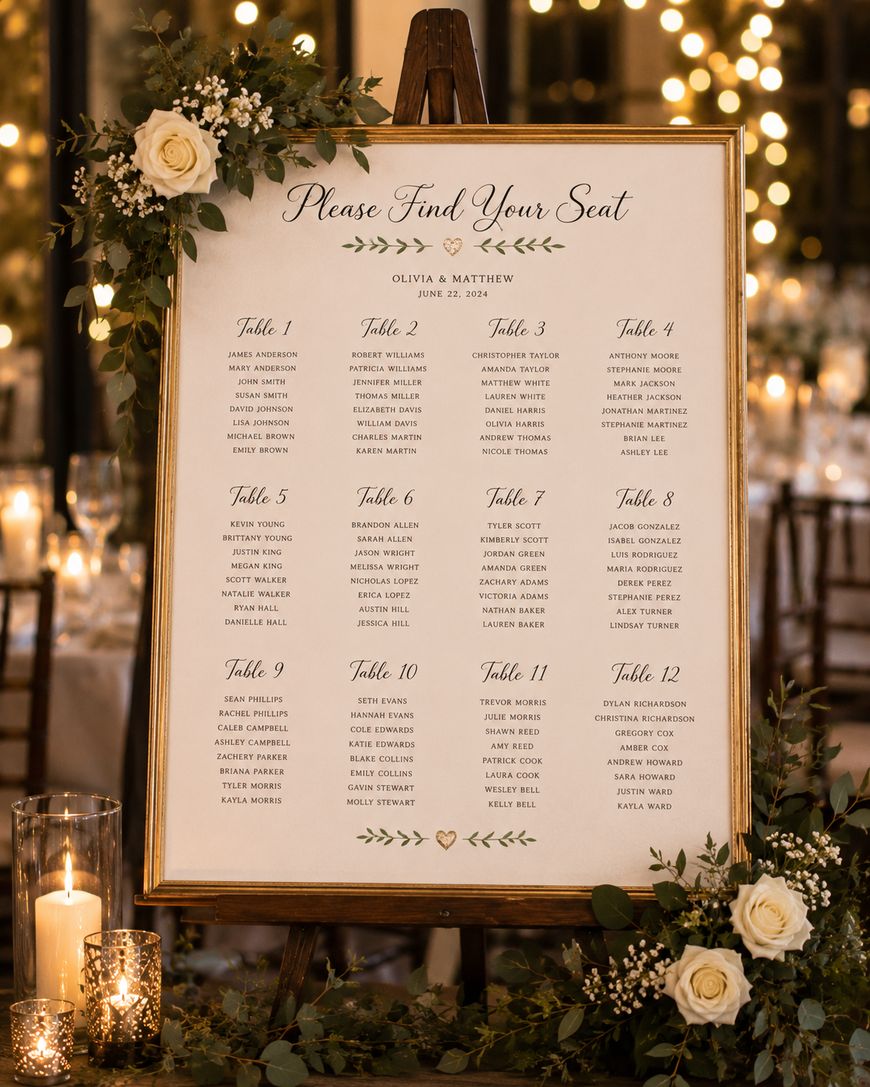
These platforms sync with your RSVP list, so when guests respond and note dietary restrictions or plus-ones, the information feeds directly into your seating tool. This saves you from juggling multiple spreadsheets and losing track of changes.
If you prefer a low-tech but still digital option, a shared Google Sheet works well for small to medium weddings. You can color-code by family group, dietary need, or table assignment, and share editing access with your partner or planner.
QR code seating charts have become popular at modern weddings. Guests scan a code displayed at the entrance on a small sign, and the seating chart loads on their phone. This cuts down on printing costs and is easy to update right up until the day before.
Some couples opt for a digital display on a large tablet or TV screen near the reception entrance. A slideshow cycling through table assignments is clean, modern, and entirely customizable to match your wedding colors and fonts.
Whatever digital approach you choose, always have a printed backup on hand. Technology has a way of failing at the worst possible moments, and a printed list tucked with your coordinator ensures no guest ends up stranded.
How to Organize Your Guest List Before You Start Seating
Before you dive into any of these wedding seating chart ideas, you need a clean, complete guest list sorted by household and RSVP status. Do not start placing people until every response is in, or you will end up rearranging everything multiple times.
Group your guests into categories first: immediate family, extended family, wedding party, college friends, work colleagues, neighbors, and so on. Visualizing these clusters helps you see which guests naturally belong at the same tables.
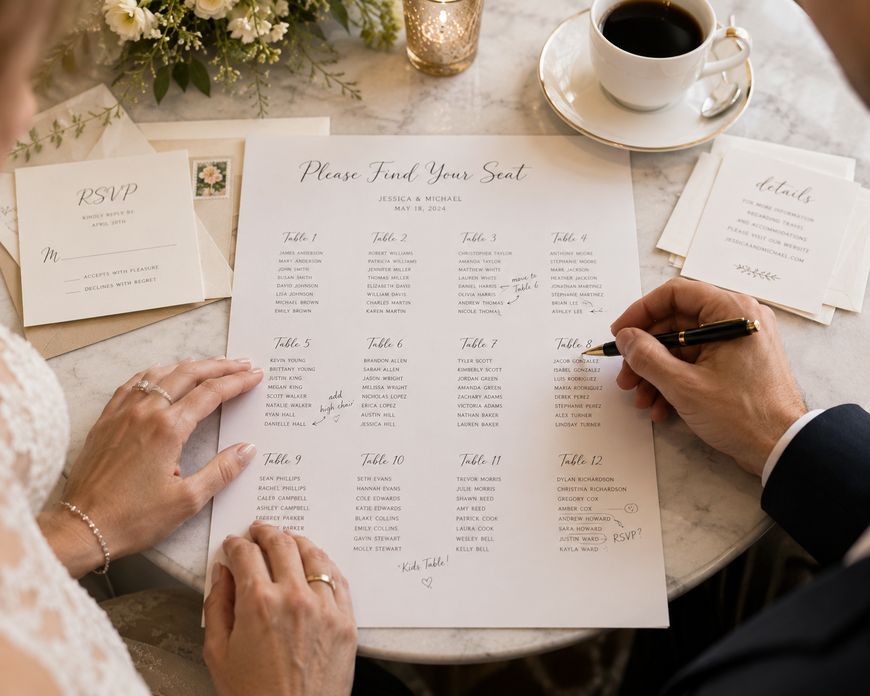
Aim for tables of eight to ten guests as a general guideline. Larger tables can feel impersonal while smaller tables of four or six work well for intimate weddings but require more tables and more seating assignments to manage.
Consider the energy and personality of your guests as you build each table. A table full of quiet, reserved relatives will have a very different feel from one filled with your most extroverted college friends.
Also think about which guests may have tension with one another — exes, estranged relatives, feuding coworkers — and make sure they are seated far apart. Preventing uncomfortable encounters is just as important as creating good ones.
Once you have a rough draft of your seating chart, sit with it for a day or two before finalizing. You will almost always spot a better arrangement or remember something important about a guest that changes their placement.
Seating Children and Guests with Special Needs
Children deserve special thought in your wedding seating chart. If you have a lot of young guests, consider creating one or two dedicated kids tables near the wall or a quieter corner, stocked with activity sheets, crayons, and small toys to keep them occupied during dinner.
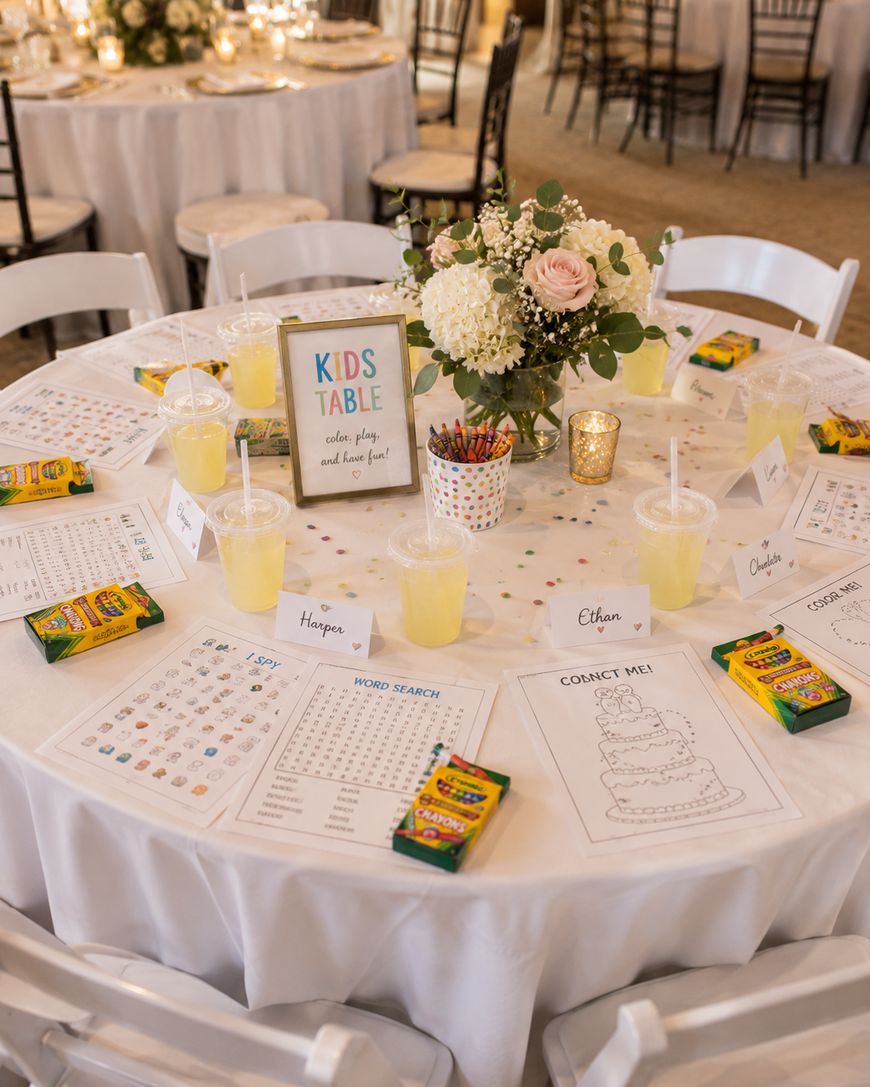
Seat parents close to their children so they can check in easily without disrupting other guests. A kids table that is too far from the parents tends to cause more interruptions as kids wander over looking for mom or dad.
For elderly guests or those with mobility challenges, choose tables that are easy to reach from the entrance without navigating stairs, tight spaces, or long walks across the venue. Being seated near an aisle or exit is also helpful if they need to step away discreetly.
Guests with hearing loss often do better at tables slightly away from the band or speakers. Ask your DJ or band where the loudest sound points will be so you can steer sensitive guests away from those areas.
If any guests have food allergies or strict dietary needs, mark their seats clearly on your catering chart so servers know which guests to approach with alternative meal options. A small card on their place setting can also signal to the catering team that a special meal is required.
Why Your Wedding Seating Chart Matters More Than You Think
A thoughtful seating chart is one of the most important logistics decisions you will make for your wedding day. When guests know exactly where to go, the reception starts on time and the atmosphere stays relaxed and celebratory.
Without a seating plan, guests tend to cluster awkwardly near the entrance or spend the first fifteen minutes searching for a spot. This creates delays, confusion, and a chaotic energy that takes time to settle.
Beyond logistics, your seating arrangement shapes the social dynamics of the whole evening. Placing people near others they will connect with — whether they know each other or not — makes for a livelier, warmer celebration.
Think about family dynamics, friend groups, and shared interests as you build your chart. A little thought upfront saves you from a lot of awkward moments during dinner.
Your seating chart also helps your catering team serve the meal efficiently. When they know exactly how many guests are at each table and what meals were ordered, service becomes seamless and guests are not waiting long.
Finally, a well-planned chart allows you to be intentional about where certain guests sit relative to the dance floor, speakers, or exits. Elderly relatives and guests with mobility needs will appreciate being placed somewhere accessible and quieter.
Questions and Answers About Wedding Seating Chart Ideas
Do you have to have assigned seating at a wedding?
Assigned seating is not required, but it is strongly recommended for seated dinners with more than fifty guests. Open seating works well for cocktail-style receptions or smaller, casual weddings where guests largely know one another.
When should you finalize your seating chart?
You should aim to finalize your seating chart about one to two weeks before the wedding, once all RSVPs are in. Give yourself a buffer of at least a few days before the wedding to make last-minute changes if guests cancel or add-on.
What is the difference between a seating chart and escort cards?
A seating chart is a large display listing every guest and their assigned table, while escort cards are individual cards each guest picks up that tell them their table number. Many couples use both together for a polished and easy-to-navigate entrance experience.
How do you handle last-minute RSVP changes?
Keep a few empty seats distributed across different tables so you have flexibility if a guest adds a plus-one at the last minute. For cancellations, simply note the empty seat and alert your catering team so they can adjust the meal count.
How many guests can sit at a round table?
A standard 60-inch round table seats eight guests comfortably, or up to ten with slightly tighter spacing. A 72-inch round can seat ten to twelve guests. Always confirm table dimensions with your venue before finalizing your seating chart.
Should the wedding party sit together at a head table?
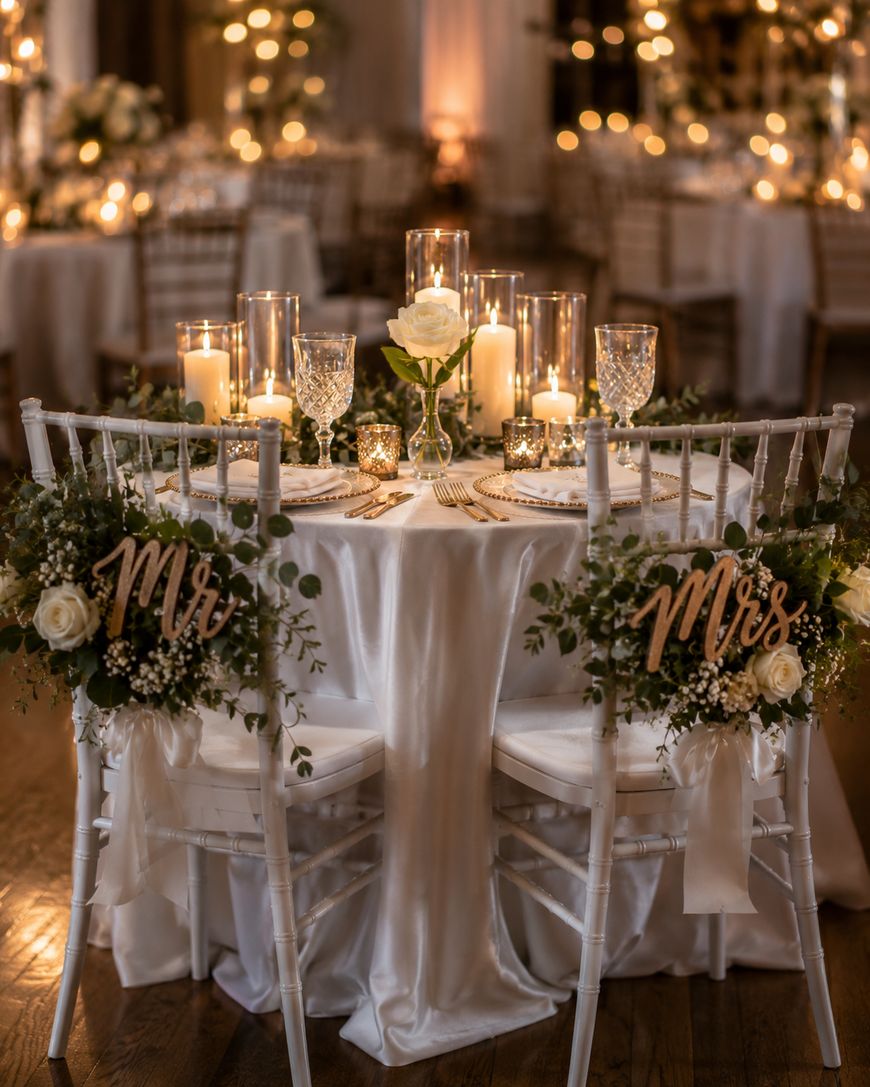
Whether the wedding party sits together at a head table is entirely up to you. A sweetheart table for just the couple is a popular modern alternative that lets the wedding party sit with their own partners and families, which many guests prefer.
Putting Your Wedding Seating Chart Together
Now that you have explored these wedding seating chart ideas, the best next step is to gather your final RSVP list and start grouping guests on paper or in a digital tool before committing to a layout. The physical or digital display comes last — get the people sorted first, and the presentation will follow naturally.
Give yourself grace during this process. Seating charts take longer than most couples expect, and almost every draft goes through several rounds of revisions before it feels right.
When you are done, you will have created something that serves every single one of your guests and sets the tone for a warm, well-organized celebration. Your guests will feel welcomed and cared for from the moment they walk through the door.