Last updated: October 2, 2026
You can make almond bark at home with just three ingredients and about 25 minutes of hands-on time. The recipe card below has the exact quantities and steps, and the walkthrough here covers every detail so you never have to guess.
Almond Bark Ingredients and Equipment
Great almond bark comes down to three things: real chocolate, well-toasted almonds, and a pinch of flaky salt. Because the recipe is so simple, the quality of each one shows up in every bite.

Choosing the Chocolate
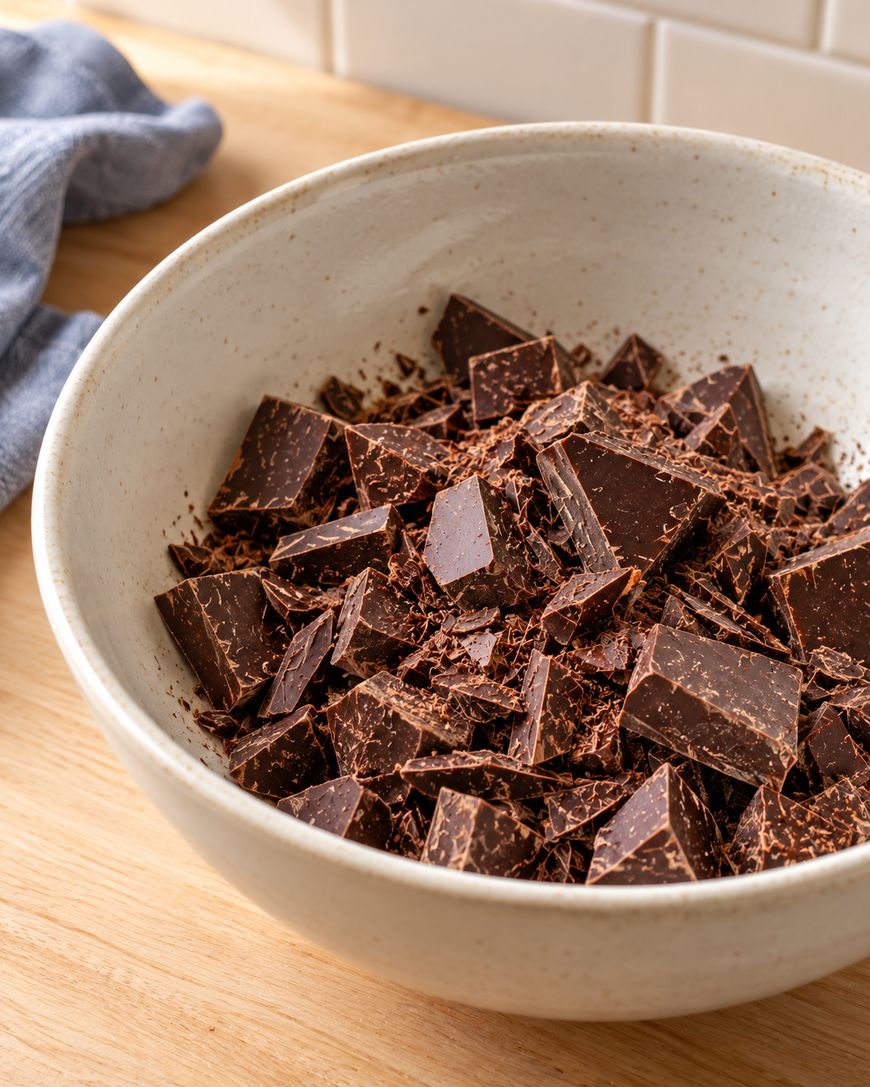
Use 12 ounces of semisweet or dark chocolate, chopped into small, even pieces. Bars from Ghirardelli, Guittard, or Lindt melt smoothly and taste rich, and their cocoa butter gives the finished bark a clean snap.
Chocolate chips work in a pinch, but they contain stabilizers that keep them from melting quite as fluidly. Chopped bar chocolate gives you a glossier, more even layer.
Choosing the Almonds
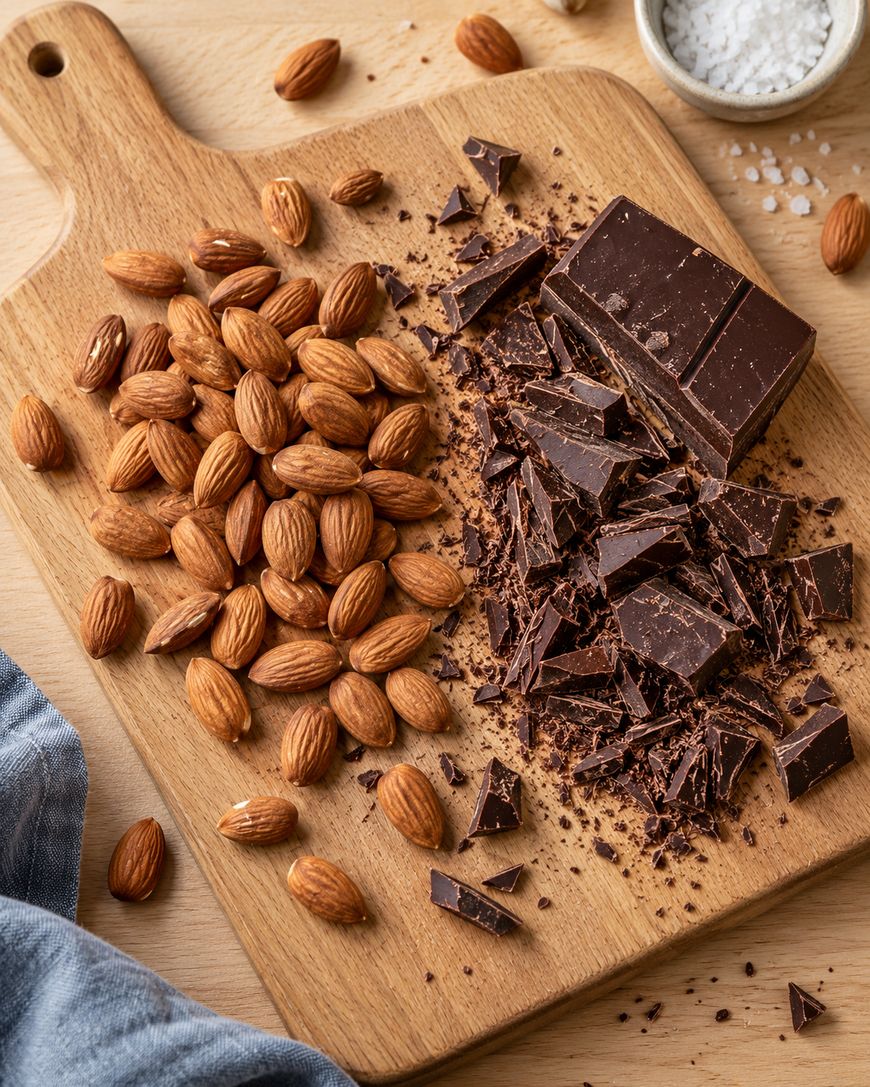
You need about 1 cup of raw whole almonds. California almonds are the most common type in US grocery stores, and any brand works as long as the nuts are fresh and not stale.
Roughly chopping the almonds is optional, since whole almonds give you a chunkier, more rustic look. Either way, toasting them first is what turns a plain candy into something that tastes like it came from a specialty shop.
The Salt and the Pan
Flaky sea salt, such as Maldon, is the finishing touch, and you need just 1/2 teaspoon for the whole batch. Table salt is too harsh and dissolves into the chocolate, while flakes sit on top and give you little bursts of savory contrast.
You also need one rimmed baking sheet and parchment paper. A microwave-safe bowl and a spatula round out the equipment, so there is no need for a double boiler or a candy thermometer.
How to Make Almond Bark Step by Step
Making almond bark takes four short stages: toast the almonds, melt the chocolate, spread and top, then chill. Each stage takes only a few minutes, and the only real waiting happens in the refrigerator.
Toast the Almonds
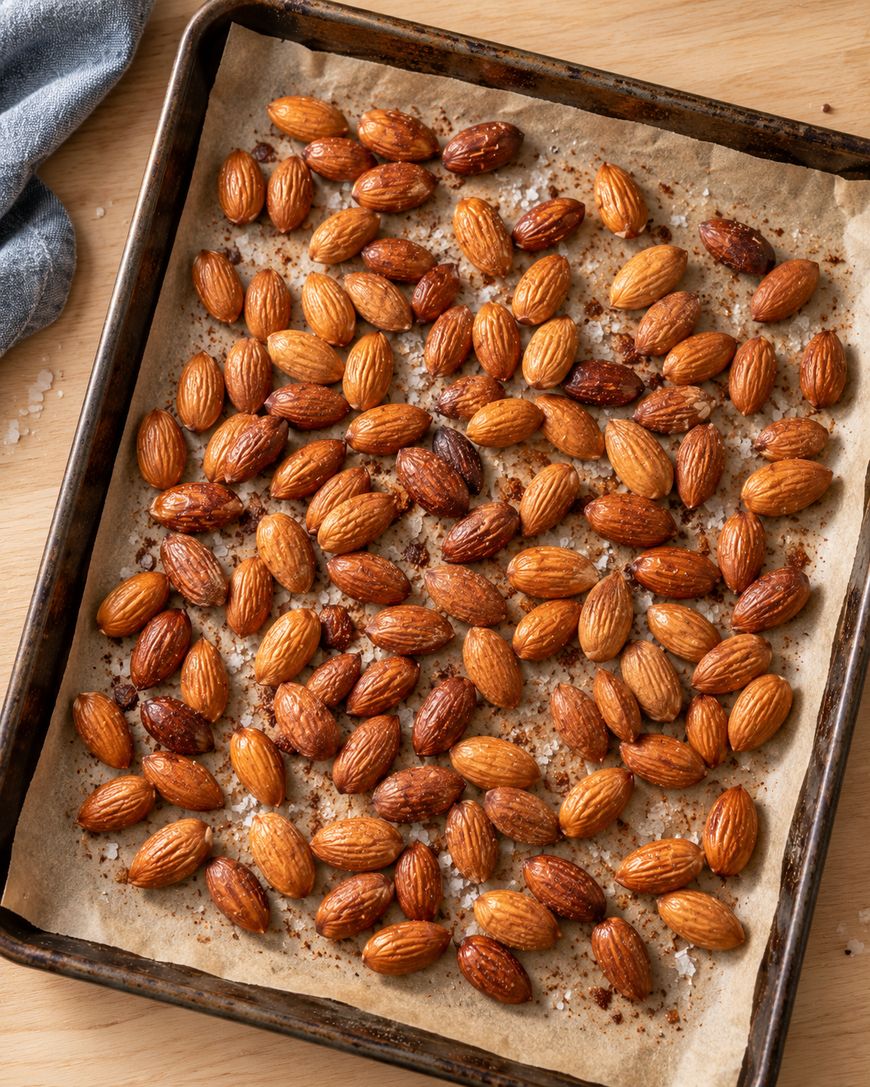
Heat your oven to 350°F and spread the almonds in a single layer on a rimmed baking sheet. Toast them for 8 to 10 minutes, stirring once halfway through, until they smell nutty and look lightly golden.

Watch them closely near the end, because almonds go from toasted to burnt quickly. Transfer them to a bowl and let them cool for about 10 minutes so they do not soften the chocolate later.
Melt the Chocolate
Line the same baking sheet with parchment paper once it has cooled. Place the chopped chocolate in a dry, microwave-safe bowl and heat it in 30-second bursts, stirring well between each one.
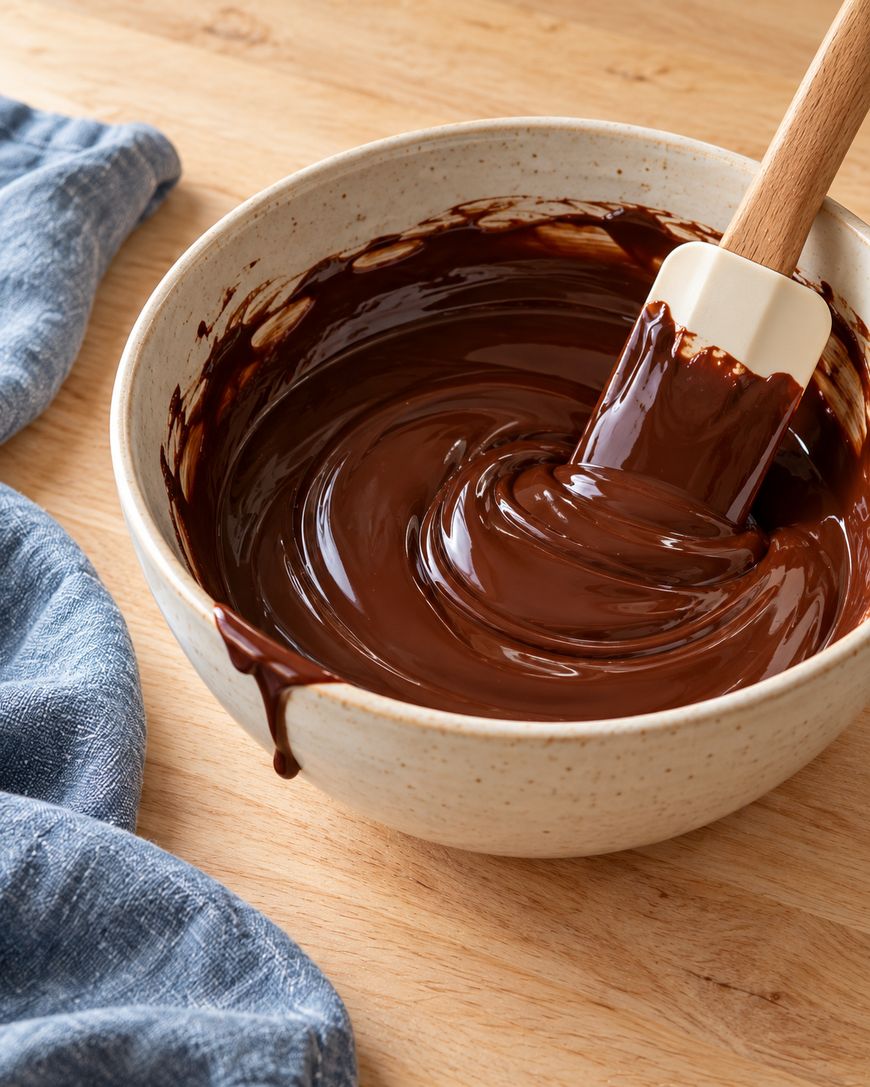
Stop when the chocolate is smooth, which usually takes about 2 minutes in total. Chocolate holds its shape even when it is soft, so stirring is the only way to know it has fully melted.
Spread and Top
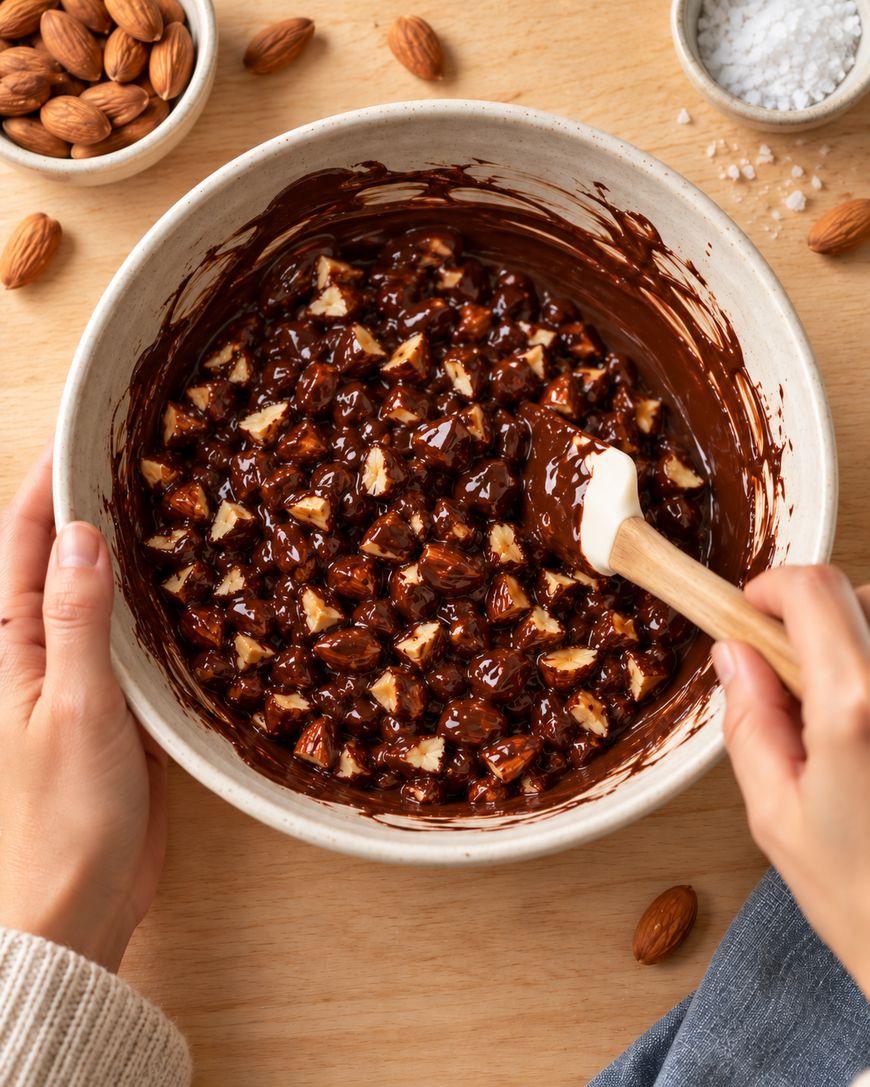
Stir 3/4 cup of the cooled almonds into the melted chocolate until every nut is coated. Pour the mixture onto the parchment and spread it into a thin rectangle about 9 by 12 inches.
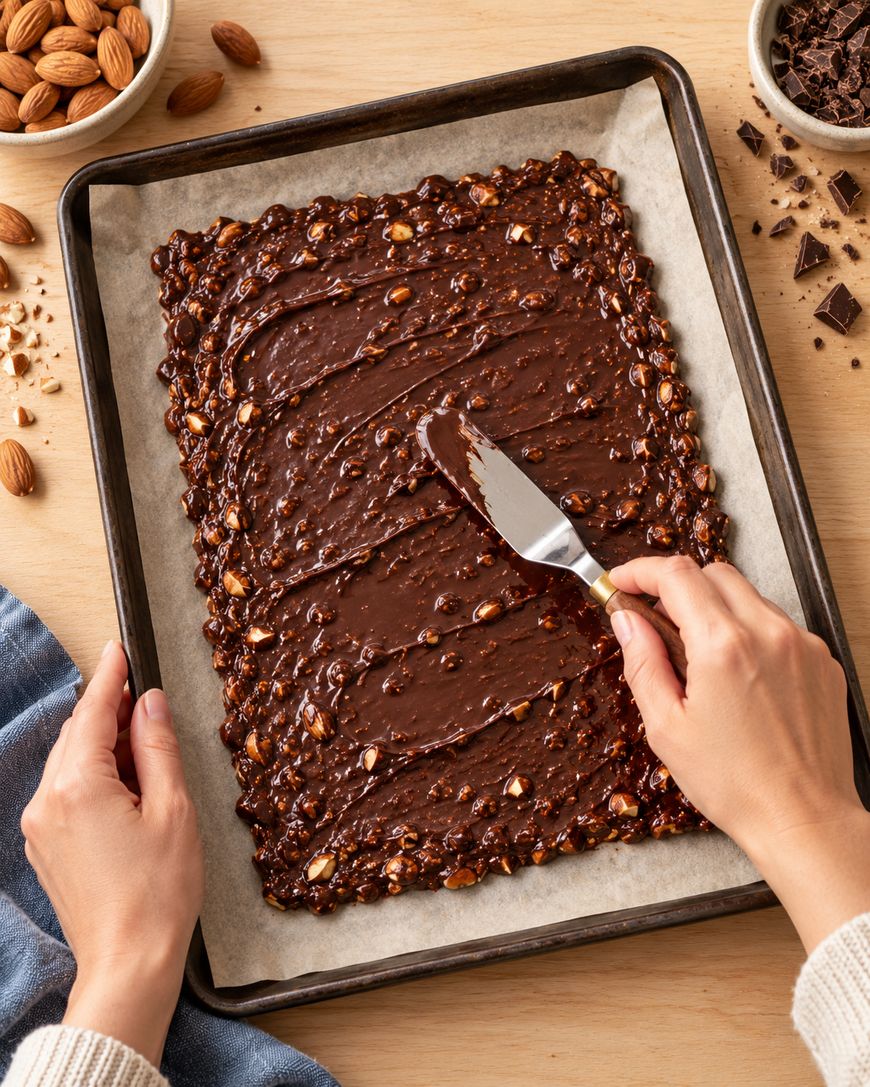
Scatter the remaining 1/4 cup of almonds over the top and press them in gently so they stick. Finish with the flaky sea salt while the chocolate is still wet.

Chill and Break
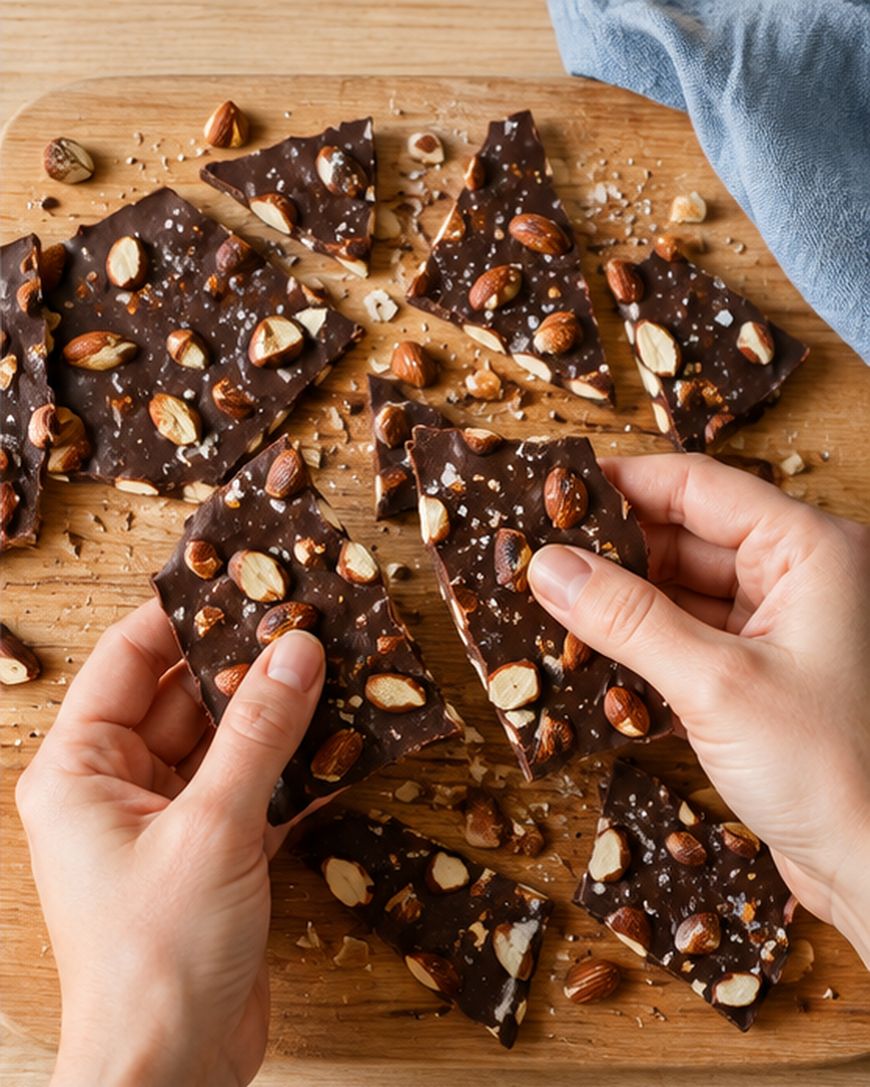
Refrigerate the pan for 30 minutes, until the chocolate is completely firm and no longer glossy on top. Lift the parchment out of the pan and break the bark into about 20 pieces by hand.
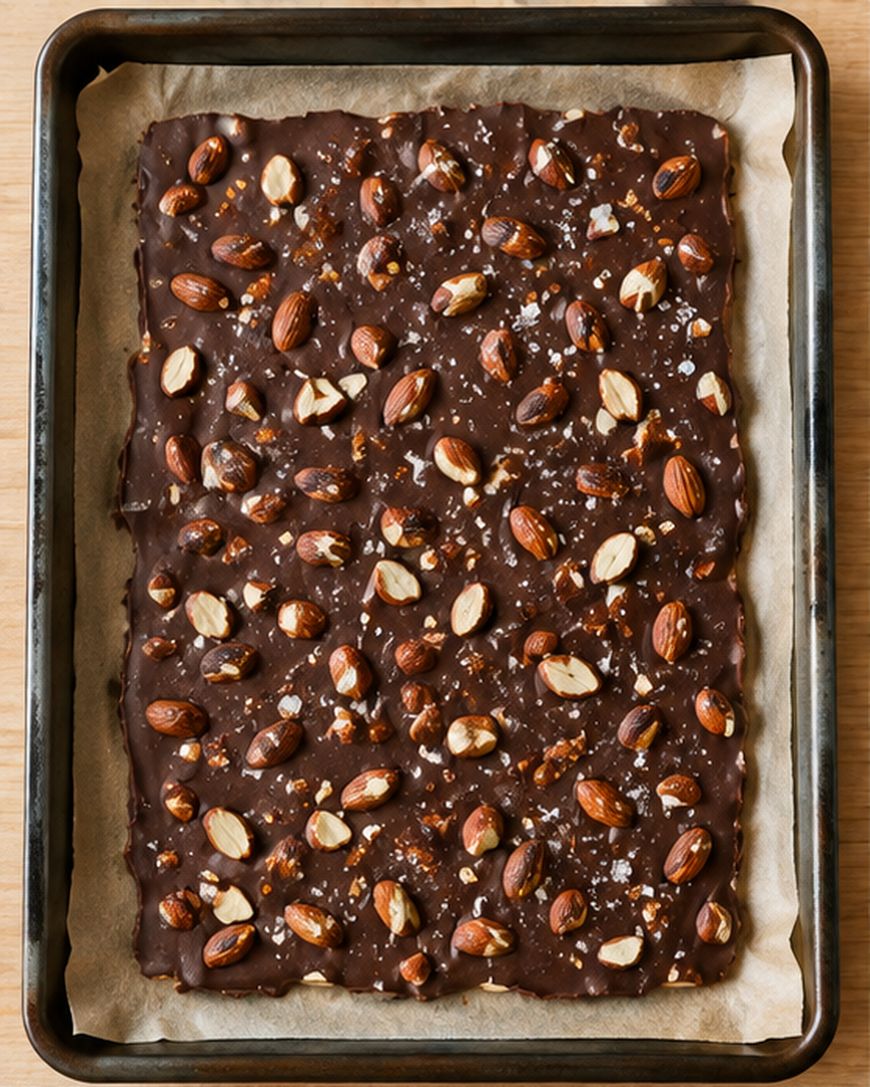
Breaking along the natural cracks gives you rustic, uneven shards that look great on a plate. A knife tends to shatter the thin layer, so it is best to skip it.
Almond Bark Variations and Substitutions
Almond bark is a flexible base, and a few small swaps change the personality of the whole batch. The card below keeps to the classic version, so treat every idea in this section as an optional extra.
Swap in white chocolate for a sweeter, creamier bark, or use a mix of dark and milk chocolate if you like a gentler cocoa flavor. Melt white chocolate more slowly than dark, since it scorches more easily.

For a warm, cozy twist, stir a pinch of cinnamon into the melted chocolate before the almonds go in. A little orange zest scattered on top pairs beautifully with dark chocolate, and dried cranberries or cherries add a chewy contrast to the crunch.
If you cannot eat almonds, pistachios, pecans, or hazelnuts toast and taste wonderful in the same method. Anyone with a nut allergy should skip this recipe entirely and check labels on the chocolate for shared-facility warnings.
Sprinkle a few extra flakes of salt right after spreading if you like a more pronounced sweet and salty bite. The salt only sticks while the chocolate is still soft, so do it right away.
Storing and Serving Almond Bark
Store almond bark in an airtight container at cool room temperature for up to 2 weeks. If your kitchen runs warm, refrigerate it for up to 1 month and let the pieces sit out for a few minutes before serving.
You can also freeze almond bark for up to 2 months. Layer the pieces between sheets of parchment so they do not stick, and thaw them in the refrigerator to avoid condensation on the surface.
Almond bark makes an easy homemade gift when you pack the shards into a tin or a cellophane bag tied with ribbon. It also looks lovely on a dessert board next to fresh berries, salted caramels, and cookies.
For a simple after-dinner treat, serve a small piece with coffee or a glass of dessert wine. The bitterness of dark chocolate and the roasted flavor of the almonds suit both drinks well.
Where Almond Bark Comes From
Almond bark has two meanings in American kitchens, which can be confusing. Traditionally, bark candy describes a slab of melted chocolate with nuts or fruit pressed into it and broken into irregular pieces, named for its rough, bark-like appearance.
Grocery stores also sell a product labeled almond bark, which is vanilla-flavored candy coating sold in blocks or squares. It melts easily without tempering, and it became popular in mid-century home candy making because it is so forgiving.
This recipe uses real chocolate instead, which gives you better flavor and a cleaner snap. The two approaches are related, and the same almonds and salt work with either one.
Chocolate-covered almonds have a much longer history, and almonds have been paired with chocolate in European confectionery for centuries. Bark simply turns that classic pairing into something anyone can make on a baking sheet without special tools.
Use the recipe card below whenever you want the quick version of this almond bark, with quantities and steps in one place.
Almond Bark
Crunchy toasted almonds and flaky sea salt set into smooth dark chocolate, chilled until firm and broken into rustic pieces.
Ingredients
- 12 ounces semisweet or dark chocolate, chopped
- 1 cup raw whole almonds
- 1/2 teaspoon flaky sea salt
Instructions
- Heat the oven to 350°F and spread the almonds in a single layer on a rimmed baking sheet.
- Toast the almonds for 8 to 10 minutes, stirring once halfway through, until fragrant and lightly golden.
- Transfer the almonds to a bowl and let them cool for about 10 minutes.
- Line the baking sheet with parchment paper.
- Melt the chocolate in a dry microwave-safe bowl in 30-second bursts, stirring between each one, until smooth, about 2 minutes total.
- Stir 3/4 cup of the almonds into the melted chocolate until coated.
- Pour the mixture onto the parchment and spread it into a thin rectangle about 9 by 12 inches.
- Scatter the remaining 1/4 cup almonds over the top, press them in gently, and sprinkle with the flaky sea salt.
- Refrigerate for 30 minutes, until completely firm.
- Lift the parchment out of the pan and break the bark into about 20 pieces by hand.
Notes
Store in an airtight container at cool room temperature for up to 2 weeks, or refrigerate for up to 1 month. Freezes well for up to 2 months. Use bar chocolate for the smoothest melt. Not suitable for anyone with a nut allergy.
Nutrition Information:
Yield:
20Serving Size:
1 pieceAmount Per Serving: Calories: 125Total Fat: 9gSaturated Fat: 3.5gSodium: 55mgCarbohydrates: 13gFiber: 2gSugar: 10gProtein: 2g
Almond Bark Questions People Ask Most
Is almond bark the same as candy coating?
Not exactly. Store-bought almond bark is a vanilla-flavored candy coating made with vegetable fat instead of cocoa butter.
The bark in this recipe is made with real chocolate, so it tastes richer and sets with a crisper snap.
Do you need to temper the chocolate for almond bark?
No, this recipe does not require tempering. A quick chill in the refrigerator sets the chocolate firmly enough for home serving.
Tempered chocolate has a slightly glossier shine, but most home cooks find the difference too small to matter.
Why did my chocolate turn thick and grainy?
Chocolate seizes when it overheats or touches even a drop of water. Use a completely dry bowl and spatula, and melt in short bursts with plenty of stirring so it never gets too hot.
Why does my almond bark have white streaks?
Those streaks are called bloom, and they happen when cocoa butter separates because of temperature swings or moisture. The bark is still safe to eat and tastes fine.
Storing it in an airtight container at a steady cool temperature helps prevent it.
Can you use chocolate chips instead of chopped chocolate?
Yes, chocolate chips work, but they melt a little less smoothly because of the stabilizers that help them hold their shape in cookies. Stir often and use gentle heat, and the results will still be delicious.
Do you have to toast the almonds first?
Toasting is not required, but it makes a big difference. Raw almonds taste mild and slightly chewy, while toasted ones are crunchy, nutty, and far more flavorful against the chocolate.
Why This Recipe Works
This almond bark works because each step protects the two things that matter most: crunchy almonds and smooth chocolate. Toasting the almonds for 8 to 10 minutes deepens their flavor and dries them out, so they stay crisp instead of going soft in the chocolate.
Stirring most of the almonds into the chocolate and pressing the rest on top gives you nuts in every bite and a bark that looks generous. Melting the chocolate in 30-second bursts keeps it from overheating, which is what causes grainy, dull results.
Spreading the mixture thin, into a rectangle about 9 by 12 inches, is what gives the bark its satisfying snap rather than a thick, chewy bite. A 30-minute chill then sets the chocolate firmly enough to break into clean, rustic pieces.
Flaky sea salt ties everything together by sharpening the chocolate and balancing the sweetness. With only three ingredients, every small choice counts, and that is exactly why the method stays so reliable.
Make Your Almond Bark Today
Almond bark is proof that a handful of good ingredients and a little patience can beat anything you find in a store. Toast the almonds, melt the chocolate gently, and let the refrigerator do the rest.
Keep the recipe card handy so you can make this almond bark again for gifts, parties, and quiet nights at home.
The Sweet and Salty Pretzel Bark You’ll Keep Making All Season