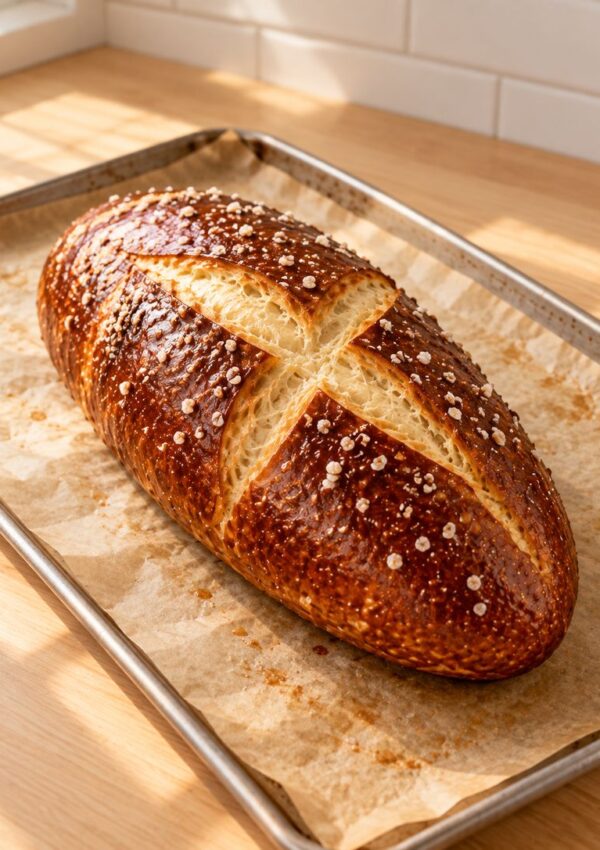
Last updated: October 20, 2026
Cinnamon raisin bread bakes up soft, buttery, and swirled with brown sugar and cinnamon in about 3 hours and 40 minutes plus cooling time, and the full recipe card is waiting below.
Here is exactly how we get a tall loaf with a thick swirl and plump raisins instead of dry, gappy slices.

How to Make Cinnamon Raisin Bread Step by Step
Cinnamon raisin bread starts with a soft milk and butter dough that rises twice, gets rolled up with brown sugar, cinnamon, and soaked raisins, and bakes in a 9 by 5 inch loaf pan at 350°F.
The recipe makes 1 loaf, which cuts into 12 generous slices.
Gather Your Ingredients
For the dough, we use 1 cup of whole milk, 2 1/4 teaspoons of active dry yeast, 1/4 cup of granulated sugar, 4 tablespoons of melted unsalted butter, 1 large egg, and 1 1/2 teaspoons of fine salt.
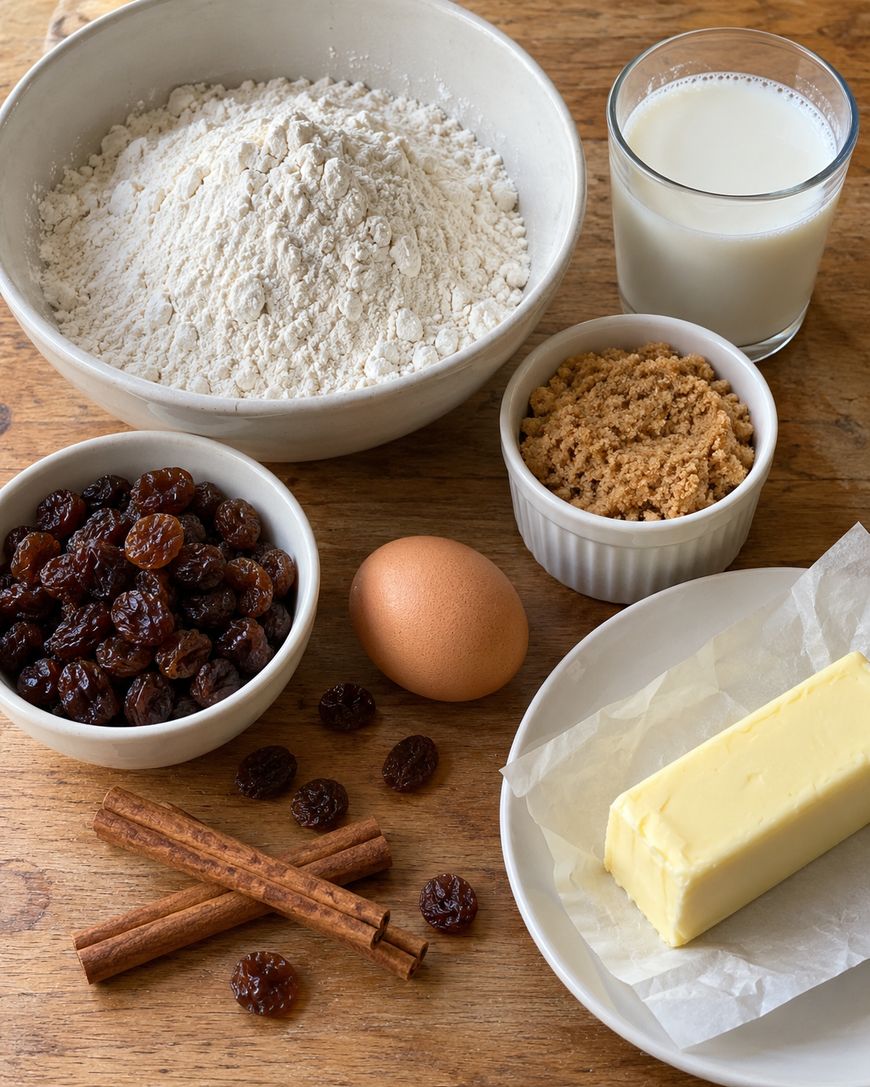
You also need 3 1/4 cups (406 grams) of bread flour, divided, and 1 cup (150 grams) of raisins.
The swirl is made from 1/3 cup (67 grams) of packed light brown sugar and 1 tablespoon of ground cinnamon.
Two more tablespoons of melted butter go on the dough before the filling, and 1 tablespoon goes on the finished loaf.
Why Bread Flour Works Best
Bread flour has more protein than all-purpose flour, so it builds a stronger gluten network that holds up under a heavy load of raisins and filling.
King Arthur and Bob’s Red Mill both make reliable bread flour, and all-purpose flour works in a pinch with a slightly softer, less chewy crumb.
Soak the Raisins First
Cover the raisins with hot tap water and let them sit for 10 minutes, then drain them well and pat them dry with paper towels.
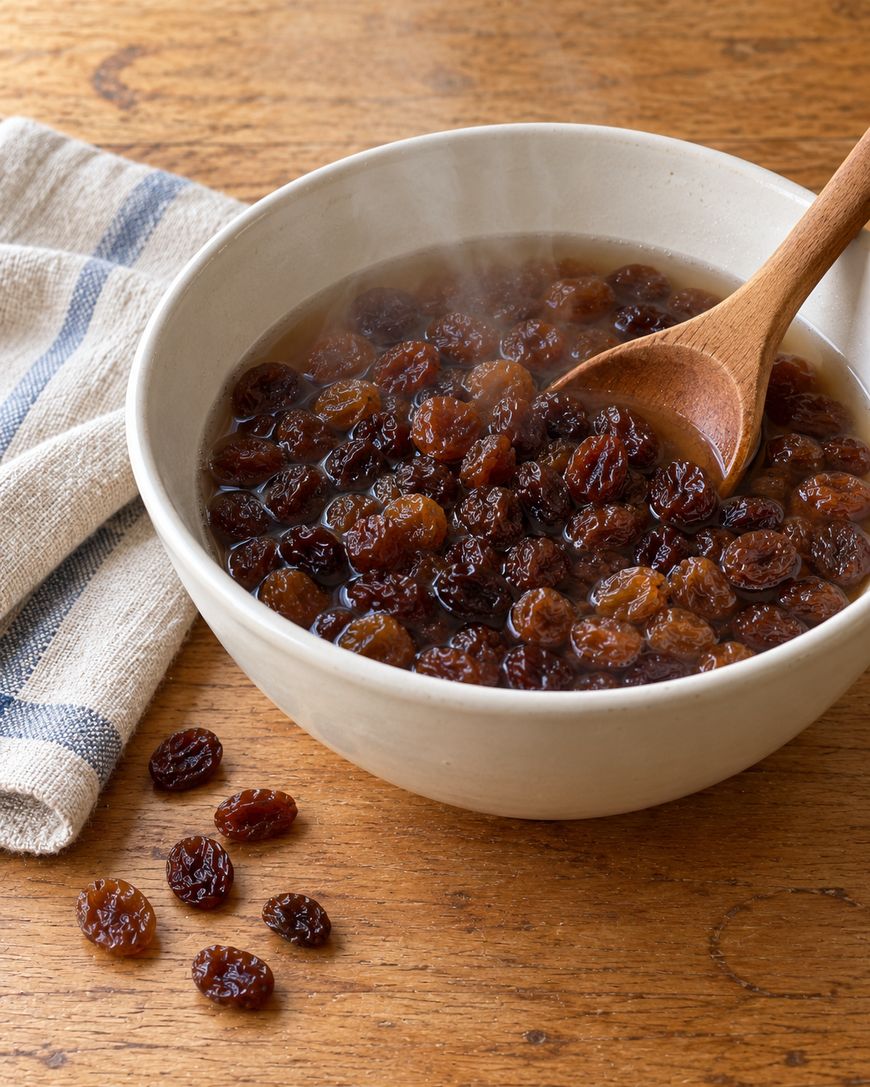
Dry raisins pull moisture out of the surrounding dough while the loaf bakes, and soaking them keeps them plump and juicy instead of hard and leathery.
Proof the Yeast and Mix the Dough
Warm the milk to between 105°F and 110°F, which feels comfortably warm on your wrist but never hot.
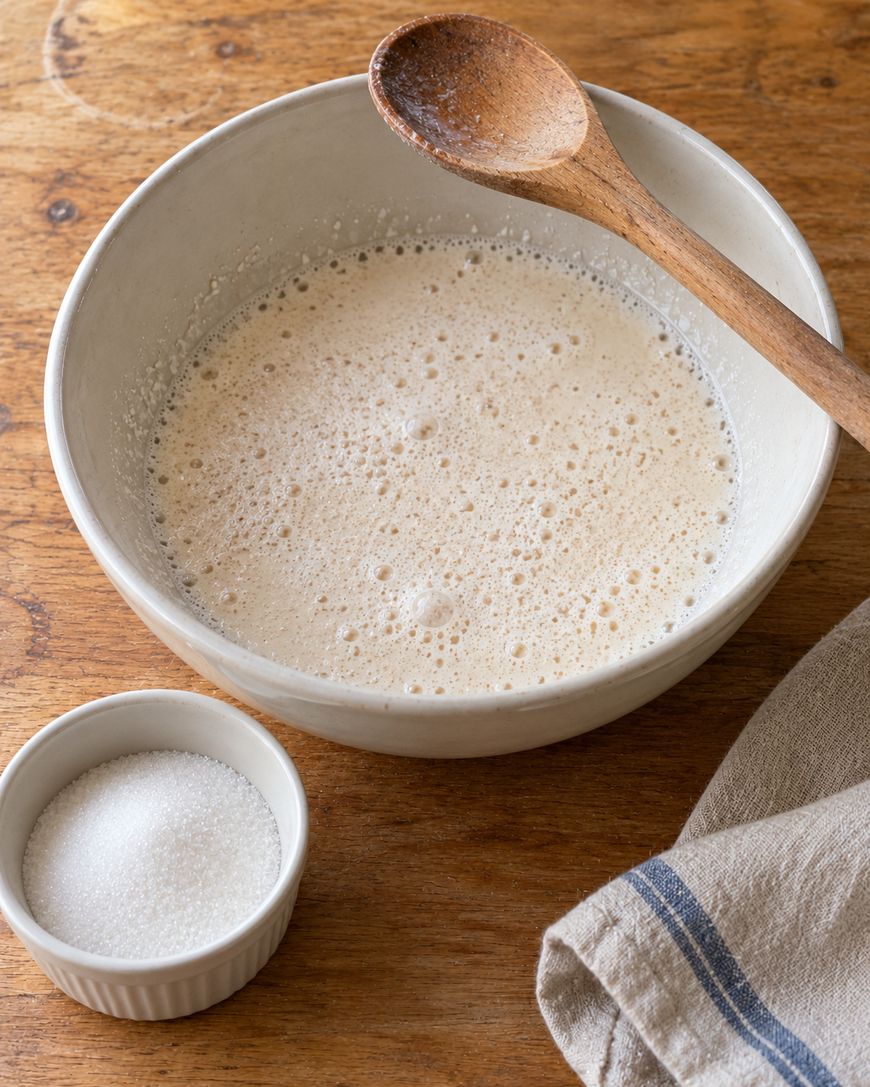
Whisk it in the bowl of a stand mixer with the yeast and 1 tablespoon of the sugar, then let it stand for 5 to 10 minutes until the surface looks foamy.
Add the remaining 3 tablespoons of sugar, the melted butter, the egg, the salt, and 3 cups of the flour.
Mix with the dough hook on low speed until a shaggy dough forms and no dry flour remains at the bottom of the bowl.
Knead Until Smooth and Slightly Tacky
Knead the dough on medium-low speed for 8 minutes, adding the last 1/4 cup of flour one spoonful at a time only if the dough sticks stubbornly to the bowl.
It is ready when it pulls cleanly from the sides, feels smooth and elastic, and still sticks very lightly to your fingertip.
Too much flour is the most common reason homemade cinnamon raisin bread turns out dense, so resist the urge to knead in more than you need.
Let the Dough Rise
Place the dough in a lightly greased bowl, cover it with a clean towel or plastic wrap, and let it rise in a warm spot for 60 to 90 minutes.
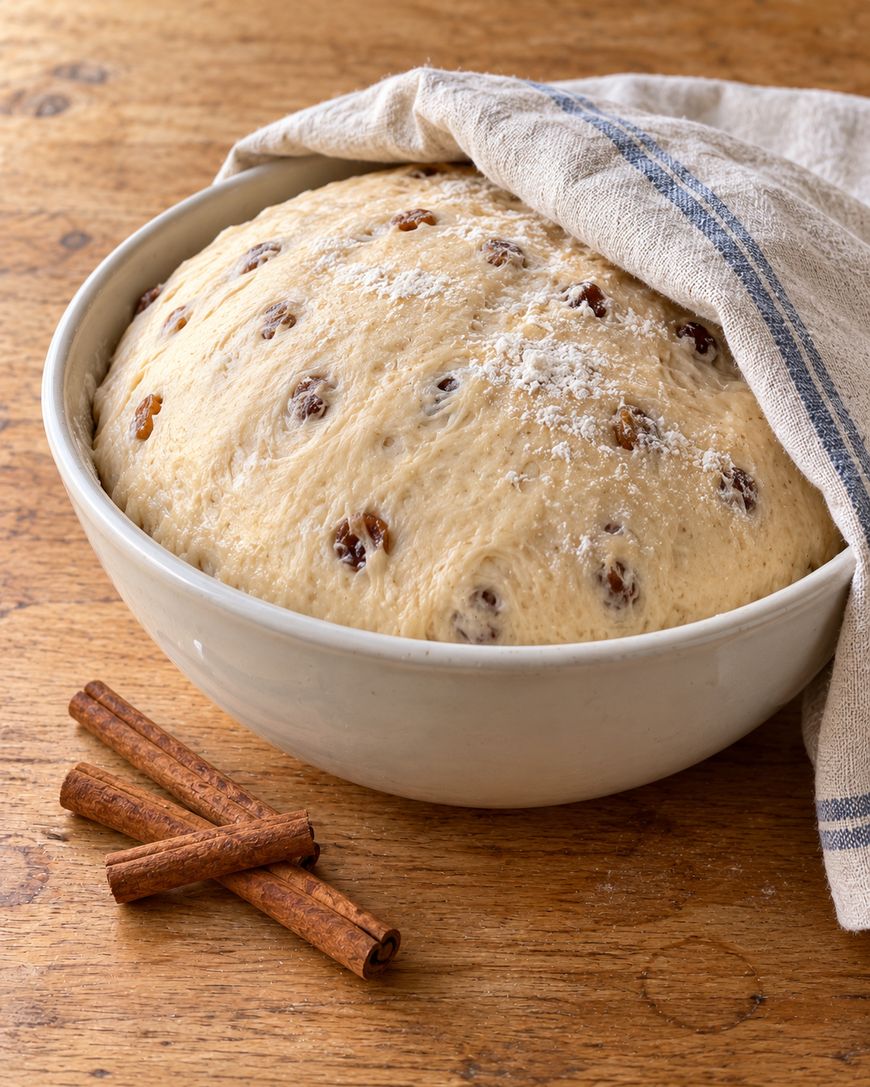
It should double in size, and a gentle poke with a floured finger should leave a dent that springs back slowly.
Rolling, Filling, and Shaping Your Cinnamon Raisin Bread
Shaping is where cinnamon raisin bread gets its signature swirl, and a tight roll is the difference between a neat spiral and a hollow tunnel under the crust.
Grease a 9 by 5 inch loaf pan with softened butter or nonstick spray before you start.
Roll Out the Dough
Turn the risen dough onto a lightly floured surface and pat it into a rough rectangle, pressing out the large air bubbles.
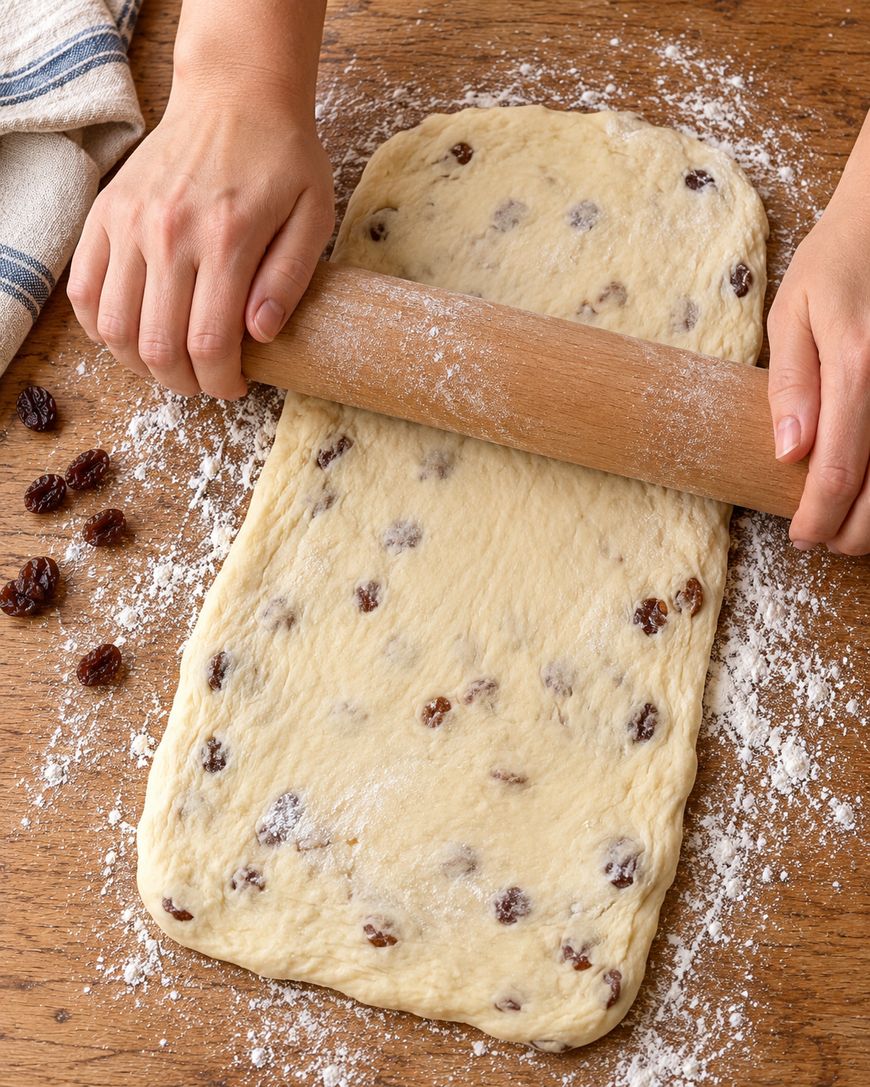
Roll it to about 9 inches wide and 16 inches long, keeping the short side facing you and the corners as square as you can.
Add the Swirl
Brush the surface with the 2 tablespoons of melted butter, then stir the brown sugar and cinnamon together and sprinkle the mixture evenly over the top.

Leave a 1/2 inch border bare along the edges so the dough can seal, then scatter the drained raisins over the cinnamon sugar and press them in gently.
Roll and Seal the Loaf
Starting at a short end, roll the dough up snugly into a log, tucking and tightening as you go.
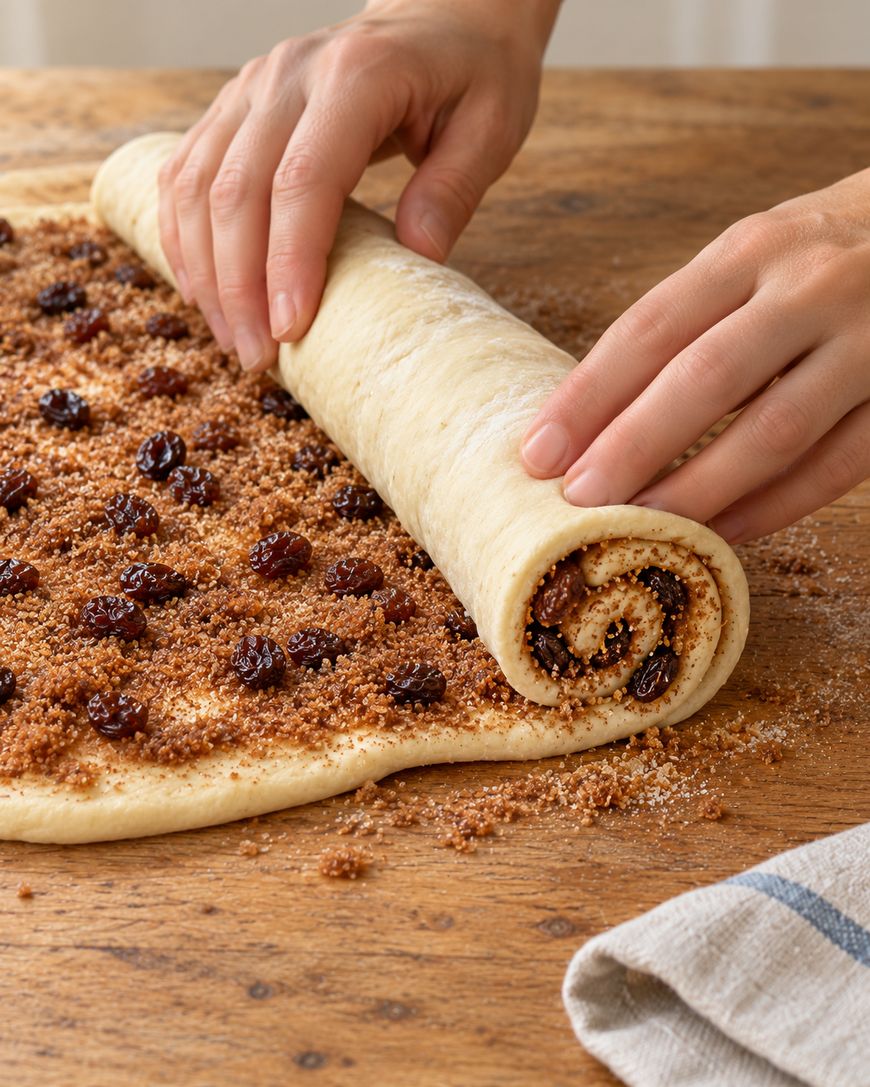
Pinch the seam closed along the bottom, then lower the log into the pan seam side down so the swirl stays centered.
The Second Rise
Cover the pan loosely and let the loaf rise for 45 to 60 minutes, until the dough crowns about 1 inch above the rim of the pan.
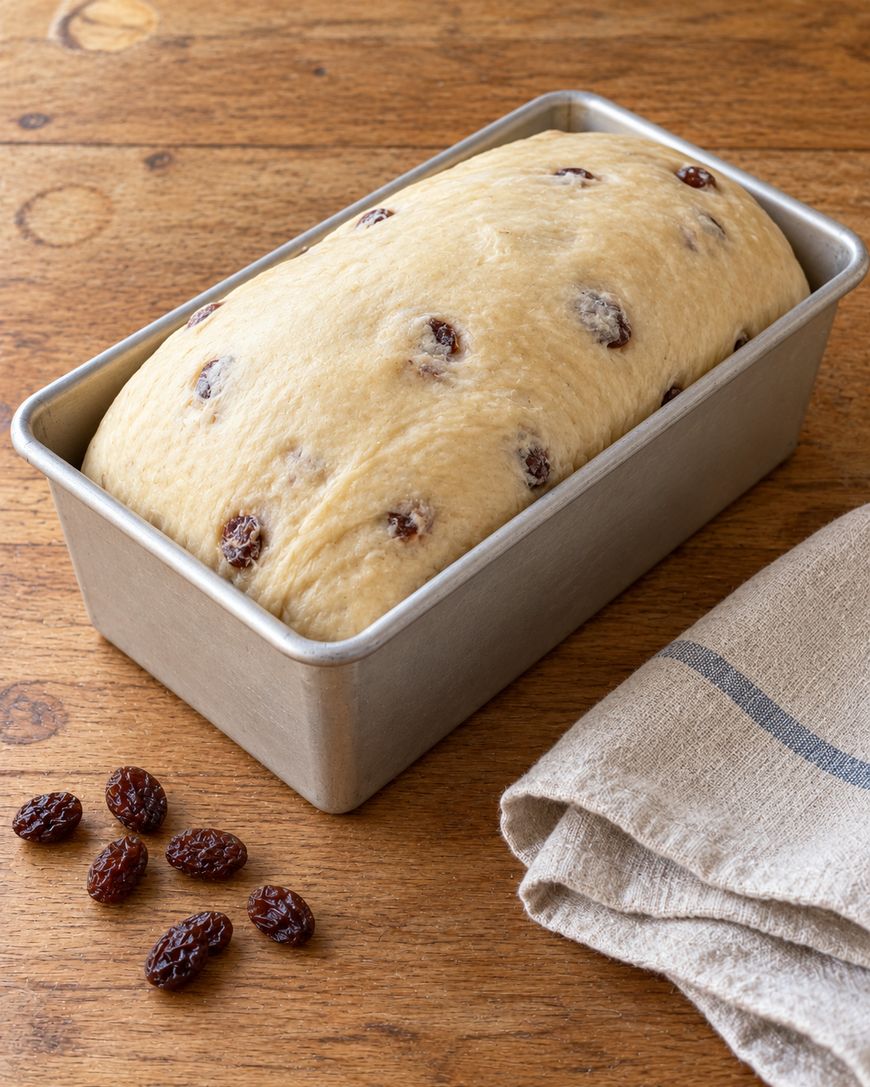
Position an oven rack in the center and preheat the oven to 350°F during the last 20 minutes of rising.
Baking and Cooling Cinnamon Raisin Bread
Bake the loaf at 350°F for 35 to 40 minutes, until the crust is deep golden brown and the center of the loaf reads 190°F on an instant-read thermometer.
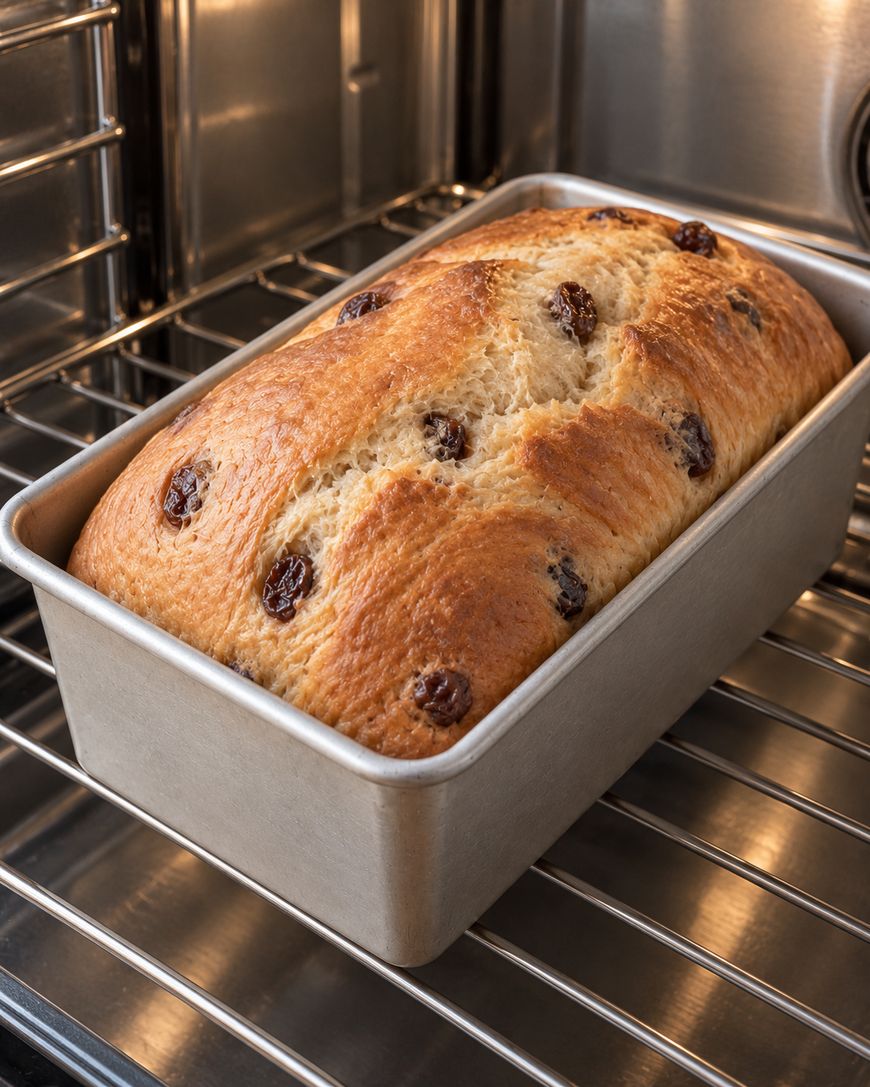
If the top darkens too fast, tent the pan loosely with foil after about 25 minutes.
Finish With Butter
As soon as the loaf comes out of the oven, brush the top with the final tablespoon of melted butter.

The butter soaks into the crust, which keeps it soft and gives the loaf a pretty, glossy sheen.
Cool Before Slicing
Let the bread rest in the pan for 10 minutes, then turn it out onto a wire rack.
Wait at least 1 hour before slicing, because cutting into a hot loaf squashes the crumb and makes the swirl smear instead of showing off clean spirals.
Tips for the Best Cinnamon Raisin Bread
The best cinnamon raisin bread comes from three habits: measuring flour carefully, rolling the dough tightly, and baking to temperature rather than guessing by color.
Spoon flour into your measuring cup and level it off, or weigh it, because scooping straight from the bag packs in up to an extra 1/2 cup.
Prevent a Gap Under the Crust
A hollow gap between the swirl and the top of the loaf usually means the dough was rolled loosely or the filling was too wet.
Brush the butter on in a thin layer, keep the border bare, and roll firmly so each layer touches the next.
Check Doneness With a Thermometer
A rich dough with milk, butter, and egg browns early, so the crust can look finished long before the inside is.
An instant-read thermometer inserted into the center should read 190°F, which tells you the crumb is cooked through and still tender.
Cinnamon Raisin Bread Variations and Substitutions
The card below is the base recipe, and these swaps all work without changing the method.
Chopped toasted walnuts or pecans can go in with the raisins, and the card leaves them out, so treat them as an optional extra.
Swap the Yeast or Flour
Instant yeast works in place of active dry yeast at the same 2 1/4 teaspoons, and you can mix it straight into the flour and skip the foaming step.
Using all-purpose flour instead of bread flour gives a slightly softer loaf, and the dough may feel a touch stickier, so add the last 1/4 cup of flour as the card directs.
Change Up the Fruit
Golden raisins taste milder and fruitier, and dried cranberries or chopped dried apricots bring a tart edge.
Keep the total at 1 cup so the dough can still roll and seal properly.
Knead by Hand
No stand mixer is needed, since you can stir the dough together in a large bowl and knead it on a floured counter for 10 to 12 minutes.
The dough should feel smooth and springy when you are done.
How to Store, Freeze, and Serve Cinnamon Raisin Bread
Store cooled cinnamon raisin bread in an airtight container or zip-top bag at room temperature for up to 3 days.
Refrigerating it dries out the crumb faster, so keep it on the counter.
Freeze for Later
Slice the cooled loaf, wrap it tightly in plastic wrap, and place it in a freezer bag for up to 3 months.
Pull out individual slices as you need them and thaw them on the counter for 30 minutes or pop them straight into the toaster.
Ways to Serve It
Cinnamon raisin bread is made for toast, and a thick slice with salted butter is hard to beat.
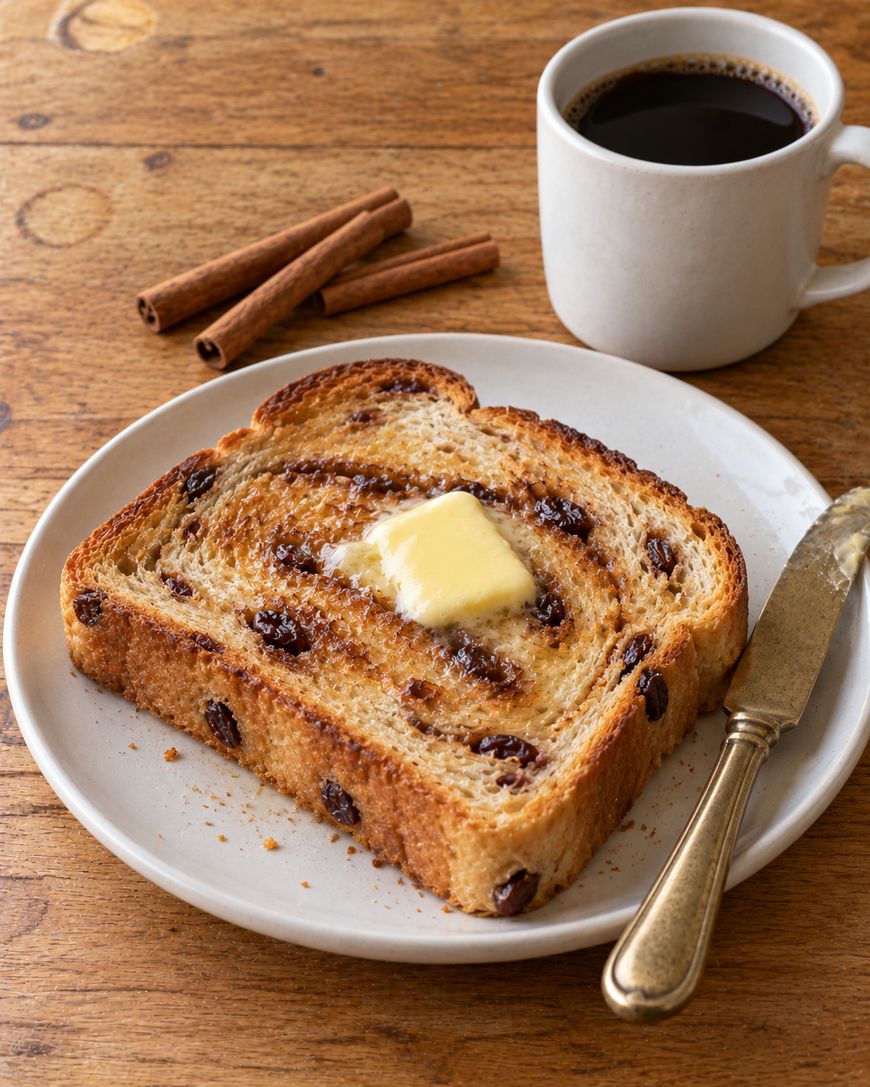
It also makes outstanding French toast, a cream cheese sandwich, or a bread pudding base for a weekend brunch.
The Story Behind Cinnamon Raisin Bread
Raisin breads and spiced sweet breads have been baked in many European kitchens for centuries, usually as a way to turn dried fruit and warm spices into something special for a holiday or a Sunday table.
Cinnamon raisin bread in its swirled loaf form became a familiar sight in American bakeries and breakfast kitchens, where it was loved for toast and French toast.
The version we make here keeps the classic idea and uses a simple milk and butter dough that any home baker can handle.
It takes a little patience for the two rises, but most of the time is hands-off.
Ready to bake? Scroll to the recipe card below for the complete ingredients, steps, and nutrition information.
Cinnamon Raisin Bread
Soft, buttery cinnamon raisin bread with a thick brown sugar cinnamon swirl and plump soaked raisins in every slice.
Ingredients
- 1 cup (150 g) raisins
- 1 cup (240 ml) whole milk, warmed to 105°F to 110°F
- 2 1/4 teaspoons active dry yeast
- 1/4 cup (50 g) granulated sugar, divided
- 4 tablespoons (57 g) unsalted butter, melted and cooled slightly
- 1 large egg, at room temperature
- 1 1/2 teaspoons fine salt
- 3 1/4 cups (406 g) bread flour, divided
- 1/3 cup (67 g) packed light brown sugar
- 1 tablespoon ground cinnamon
- 2 tablespoons unsalted butter, melted, for brushing the dough
- 1 tablespoon unsalted butter, melted, for brushing the baked loaf
- Nonstick spray or softened butter, for the bowl and pan
Instructions
- Cover the raisins with hot tap water and soak for 10 minutes, then drain well and pat dry with paper towels.
- Whisk the warm milk, yeast, and 1 tablespoon of the sugar in the bowl of a stand mixer and let stand 5 to 10 minutes, until foamy.
- Add the remaining 3 tablespoons sugar, the 4 tablespoons melted butter, egg, salt, and 3 cups of the flour, and mix with the dough hook on low speed until a shaggy dough forms.
- Knead on medium-low speed for 8 minutes, adding the last 1/4 cup flour one spoonful at a time only if the dough sticks stubbornly to the bowl, until smooth, elastic, and slightly tacky.
- Transfer the dough to a lightly greased bowl, cover, and let rise in a warm spot for 60 to 90 minutes, until doubled in size.
- Grease a 9 by 5 inch loaf pan and stir the brown sugar and cinnamon together in a small bowl.
- Turn the dough onto a lightly floured surface, press out the large bubbles, and roll into a 9 by 16 inch rectangle. Brush with the 2 tablespoons melted butter, sprinkle with the cinnamon sugar leaving a 1/2 inch border bare, scatter the raisins on top, and press them in gently.
- Starting at a short end, roll the dough up tightly into a log, pinch the seam closed, and place the log seam side down in the prepared pan.
- Cover loosely and let rise 45 to 60 minutes, until the dough crowns about 1 inch above the rim. Position an oven rack in the center and preheat the oven to 350°F during the last 20 minutes of rising.
- Bake for 35 to 40 minutes, until deep golden brown and the center reads 190°F on an instant-read thermometer, tenting loosely with foil after about 25 minutes if the top browns too quickly.
- Brush the top with the 1 tablespoon melted butter. Cool in the pan for 10 minutes, then turn out onto a wire rack and cool at least 1 hour before slicing.
Notes
Store cooled bread in an airtight container at room temperature for up to 3 days. For longer storage, slice, wrap tightly, and freeze in a freezer bag for up to 3 months. All-purpose flour can replace bread flour for a slightly softer crumb. Instant yeast can replace active dry at the same amount and mixed straight into the flour. To knead by hand, knead on a floured counter for 10 to 12 minutes. Chopped toasted walnuts or pecans are an optional add-in with the raisins.
Nutrition Information:
Yield:
12Serving Size:
1 sliceAmount Per Serving: Calories: 275Total Fat: 8gSaturated Fat: 5gSodium: 300mgCarbohydrates: 45gFiber: 2gSugar: 18gProtein: 6g
Cinnamon Raisin Bread FAQ
Why is my cinnamon raisin bread dry?
Dry bread is almost always the result of too much flour or too much time in the oven.
Spoon and level your flour, and pull the loaf when the center reaches 190°F.
Why is there a gap under the swirl?
A gap forms when the dough is rolled loosely, the filling is too wet, or the sugar layer is too thick.
Roll the log tightly, brush the butter on thinly, and keep a 1/2 inch border bare.
Do you have to soak the raisins?
Soaking is not required, but it makes a noticeable difference.
Ten minutes in hot tap water keeps the raisins plump instead of letting them draw moisture from the dough.
Can you use all-purpose flour?
Yes, all-purpose flour works well and gives a slightly softer crumb.
Add the last 1/4 cup of flour only if the dough is sticking to the bowl.
How long does cinnamon raisin bread last?
The loaf keeps in an airtight container at room temperature for up to 3 days.
For longer storage, slice it and freeze it for up to 3 months.
Can you knead the dough by hand?
Yes, knead it on a lightly floured counter for 10 to 12 minutes until it is smooth and springy.
It should stay slightly tacky, so avoid adding too much flour.
Why This Recipe Works
The dough is enriched with milk, butter, and egg, which gives the crumb a soft, tender, almost cakey texture that still holds together for toast.
Bread flour supplies the structure to carry a full cup of raisins and a thick swirl without collapsing.
Soaked raisins stay plump instead of stealing moisture from the loaf, and brushing melted butter under the brown sugar and cinnamon creates a moist, syrupy swirl rather than a dry, sandy one.
Rolling the dough tightly and baking in a standard 9 by 5 inch pan at 350°F gives an even rise and a golden crust, and checking for 190°F in the center removes the guesswork.
Make Cinnamon Raisin Bread This Weekend
Cinnamon raisin bread is one of the most rewarding loaves you can bake at home, and the house will smell wonderful while it rises and bakes.
Set aside a relaxed afternoon, follow the recipe card, and let the loaf cool before slicing.
Toast a slice with butter, then share a few with a neighbor and see how quickly the rest disappear.