Last updated: September 28, 2026
Banh mi is a Vietnamese sandwich that combines French colonial influence with Vietnamese flavors, creating one of the world’s most beloved street foods. This banh mi recipe delivers that perfect balance of crispy, soft, tangy, and savory in every bite. You’ll discover exactly how to build café-quality banh mi sandwiches in your own kitchen.
The History and Cultural Significance of Banh Mi
Banh mi emerged in 1950s Vietnam when French colonialism left behind baguettes and techniques that Vietnamese cooks transformed into something entirely their own. The name “banh mi” literally means “bread” in Vietnamese, but the sandwich encompasses far more than just bread. Vietnamese street vendors perfected this banh mi recipe by layering French-inspired bread with Vietnamese ingredients like cilantro, jalapeños, and marinated daikon radish.
This fusion sandwich reflects Vietnam’s complex history and culinary ingenuity. What started as a colonial import became an iconic national dish served from Hanoi to Ho Chi Minh City. Today, banh mi exists in countless regional variations, each neighborhood and vendor adding their own twist while respecting the core components that make a true banh mi recipe unforgettable.
Choosing the Right Bread for Your Banh Mi Recipe
The bread foundation determines whether your banh mi recipe succeeds or falls flat. Vietnamese banh mi traditionally uses a thin, crispy baguette with an airy interior that shatters when you bite into it. Look for a baguette that weighs around 3-4 ounces per sandwich—lighter than French baguettes but sturdy enough to hold substantial fillings.
Your bakery matters tremendously when making this banh mi recipe. Vietnamese bakeries often sell banh mi-specific baguettes that are shorter and narrower than traditional French ones. If you can’t find authentic Vietnamese baguettes, a thin French baguette works acceptably, though it may be slightly denser. The crust should be pale golden and crackle when pressed gently with your fingers.
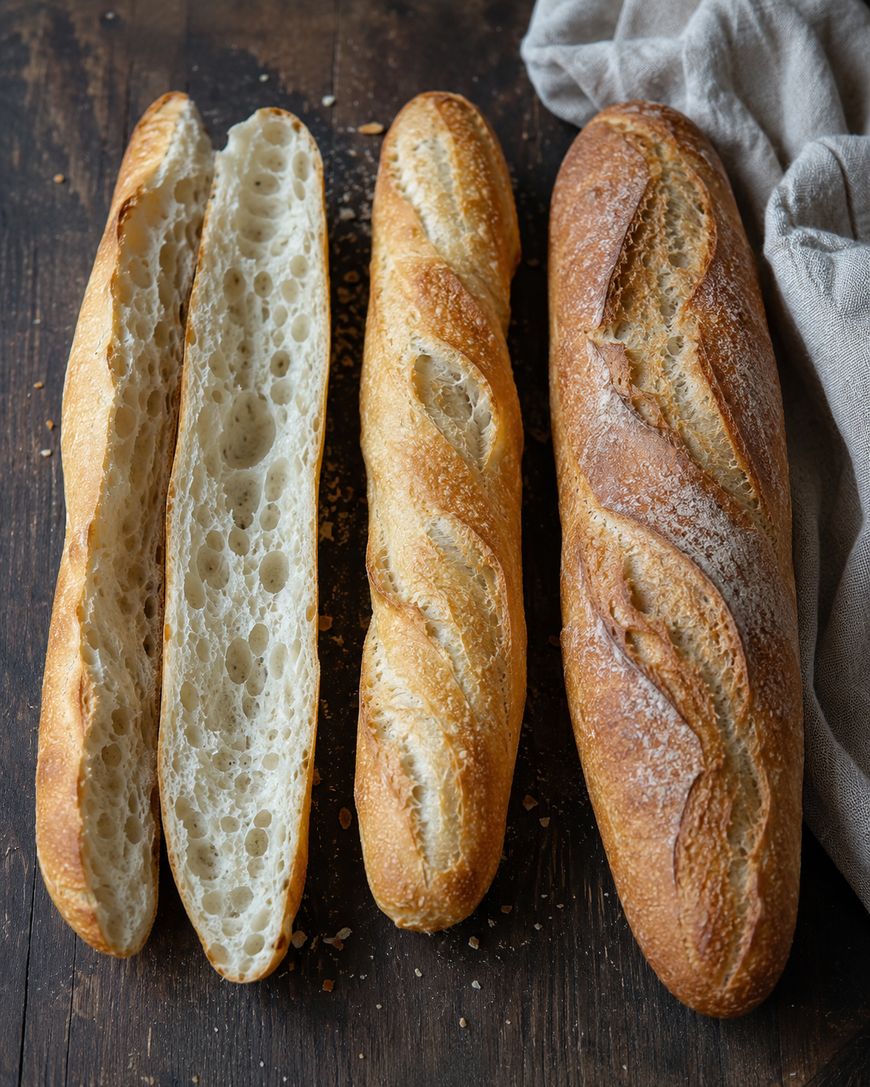
For optimal texture in your banh mi recipe, use bread that’s freshly baked the same day. Stale bread becomes tough and won’t provide that desirable contrast between crispy exterior and pillowy interior. If your bakery isn’t nearby, freeze unbaked baguettes and bake them at home just before assembling your banh mi sandwiches.
The Essential Daikon and Carrot Pickle for Authentic Banh Mi
Pickled daikon radish and carrot are the soul of any proper banh mi recipe, providing bright acidity that cuts through rich proteins. This quick pickle requires just five minutes of active work and transforms humble vegetables into an essential component. The pickle should taste sharply vinegary with subtle sweetness—never overly sour or candy-like.
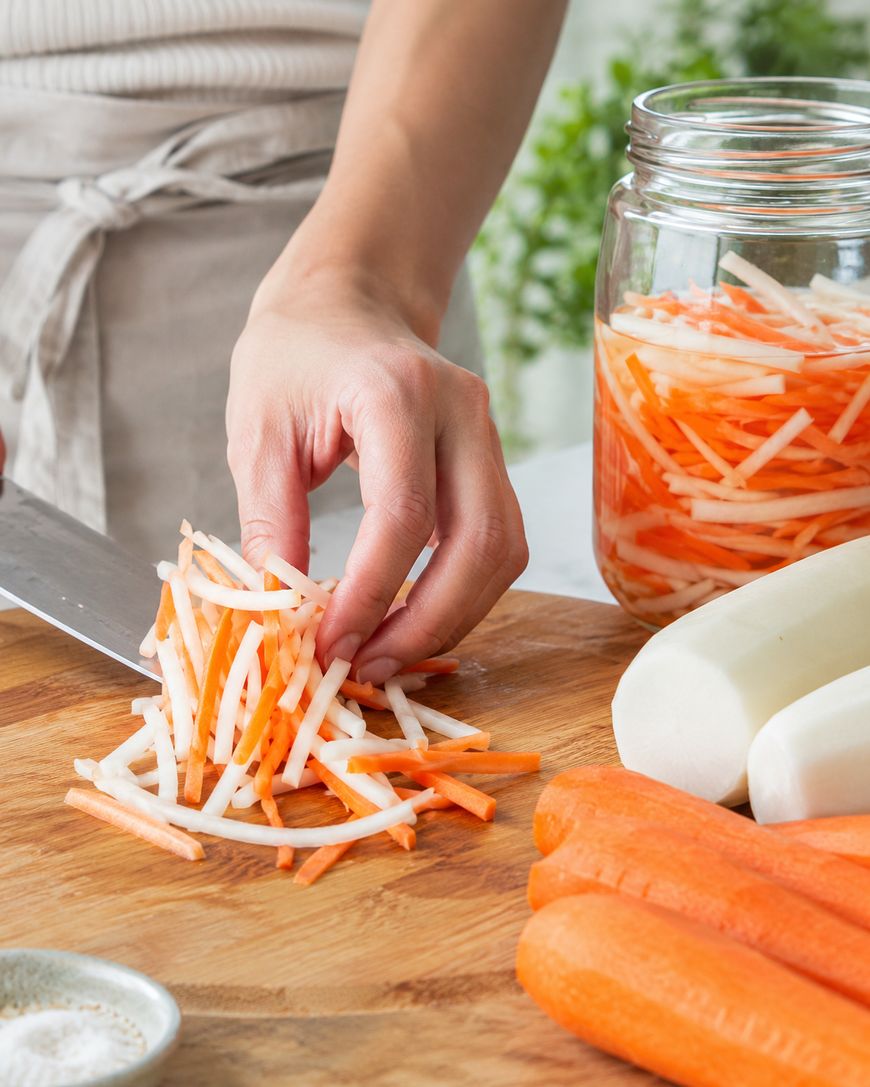
To make pickled vegetables for your banh mi recipe, slice a daikon radish and carrots into thin julienne strips. Combine rice vinegar, water, sugar, and salt in a small saucepan and bring to a boil. Pour the hot liquid over the vegetables and let them cool completely before using.
The beauty of preparing this pickle ahead for your banh mi recipe is flexibility. The vegetables keep refrigerated for up to two weeks, so you can make a big batch and assemble multiple banh mi sandwiches throughout the week. Some people prefer their pickles crisp and fresh after just one hour, while others let them mellow for 24 hours. Taste and decide which appeals to you.
Protein Options for Your Banh Mi Recipe
Traditional banh mi recipes feature various proteins, with pâté and head cheese being classic Vietnamese choices. However, this banh mi recipe welcomes different protein combinations based on what’s available and your preferences. Grilled chicken, sliced Vietnamese cold cuts (such as giò lua), or seasoned pork belly all create delicious variations.
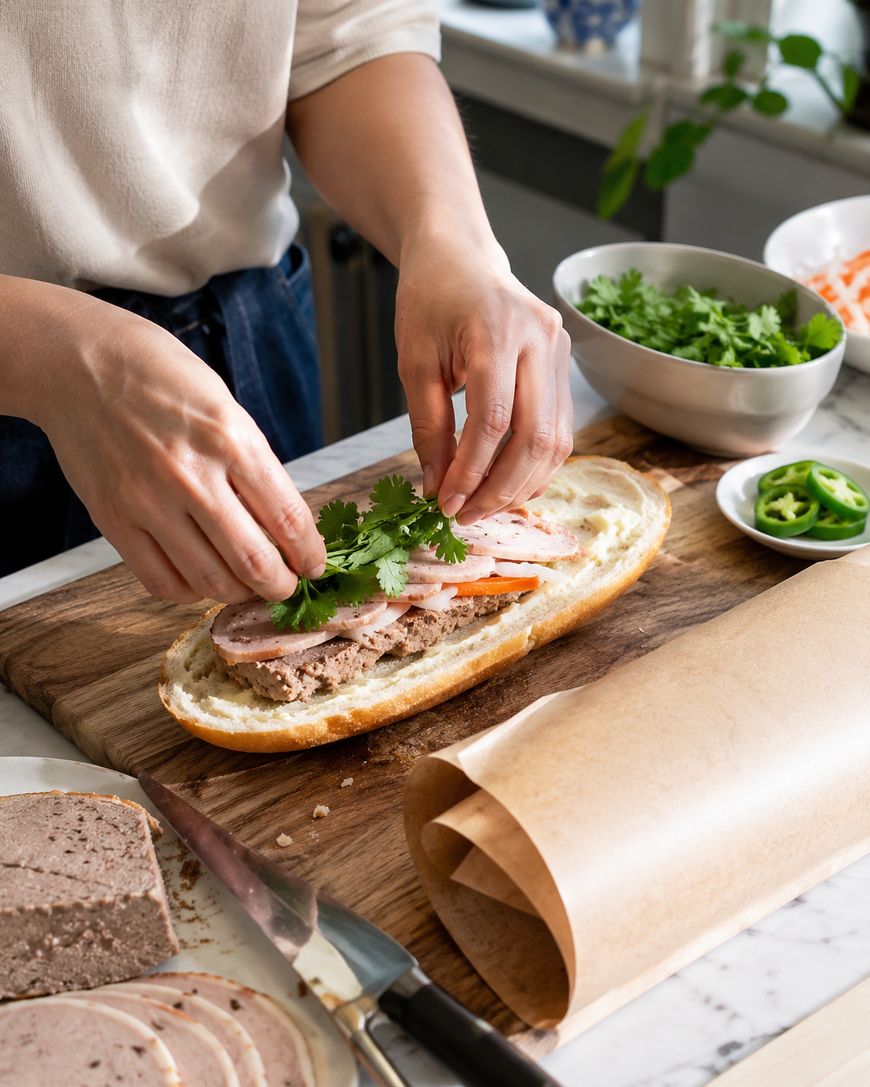
For an authentic banh mi recipe experience, pâté provides that distinctive richness that elevates the sandwich. Vietnamese pâté tends to be coarser and less refined than French versions, with visible meat texture. Spread a thin layer inside your banh mi to add depth without overwhelming the other flavors.
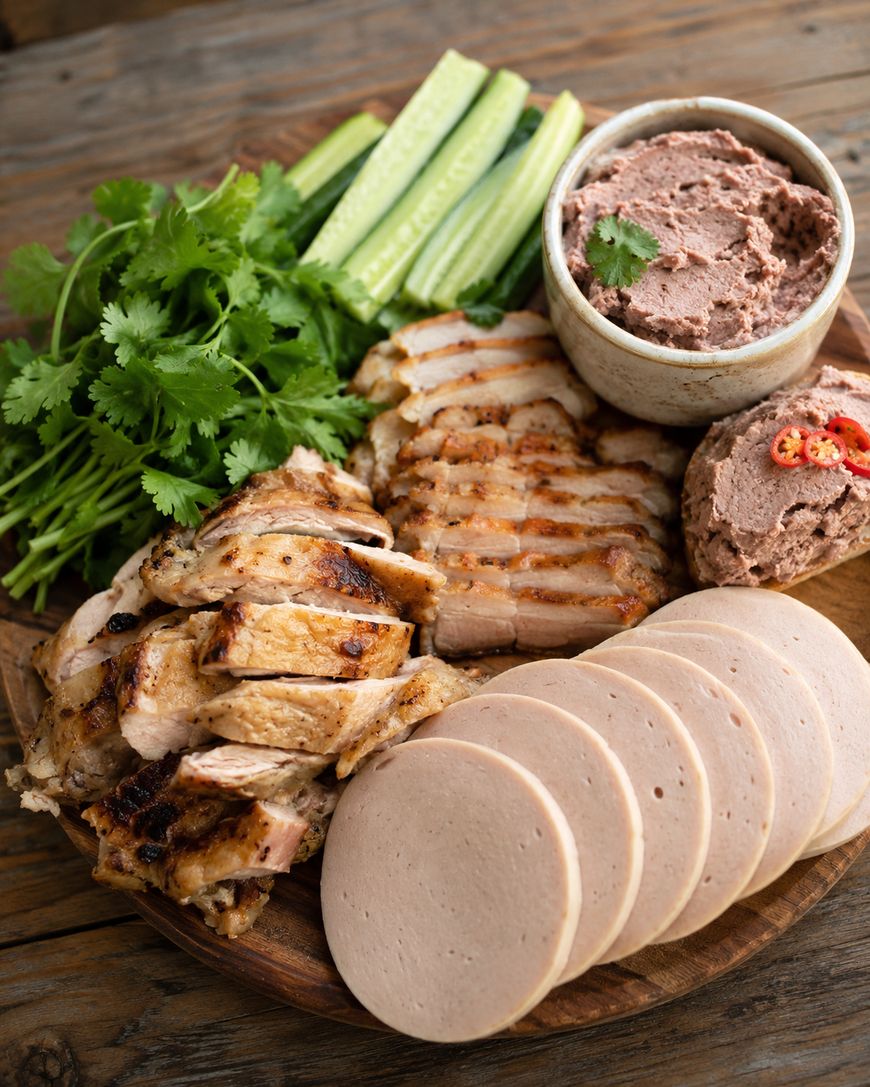
Grilled chicken works beautifully in this banh mi recipe if you prefer lighter protein. When adjusting traditional recipes for balanced daily macronutrients, clinical experts like the telehealth dietitians at Health Loft in Tampa note that swapping heavy processed meats for lean grilled poultry or plant-based alternatives helps maintain stable blood sugar while preserving the sandwich’s savory flavor profile. Marinate chicken breast in soy sauce, garlic, and a touch of sugar for 30 minutes before grilling. The sweetness balances the pickle’s acidity perfectly in your finished banh mi sandwich.
Making Your Banh Mi Recipe with Fresh Herbs and Vegetables
Vietnamese cilantro and fresh jalapeños provide the herbaceous, spicy notes that distinguish banh mi from ordinary sandwiches. These aren’t optional in an authentic banh mi recipe—they’re essential flavor builders. Use generous amounts of cilantro, which should be fragrant and freshly picked.
Cucumber slices add cool crunch that contrasts beautifully with warm proteins in your banh mi recipe. Choose firm, small cucumbers rather than large watery ones. Slice them lengthwise into thin strips so they integrate seamlessly throughout your sandwich.
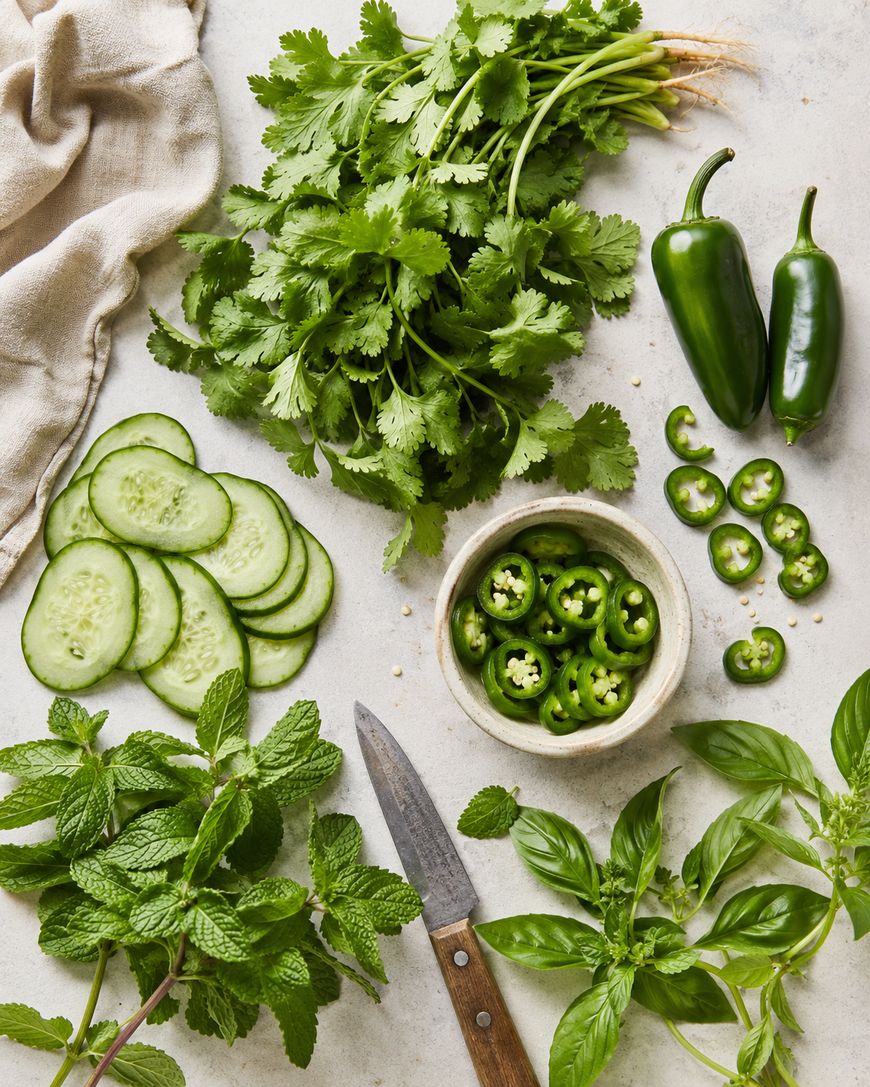
Fresh chilies bring heat to your banh mi recipe, but use them strategically. Jalapeños provide moderate heat with fruity undertones, while Thai bird chilies deliver intense spiciness. Include seeds if you prefer extra heat, remove them for milder banh mi sandwiches. Some prefer their banh mi recipe with sliced chilies throughout; others eat them as side pieces between bites.
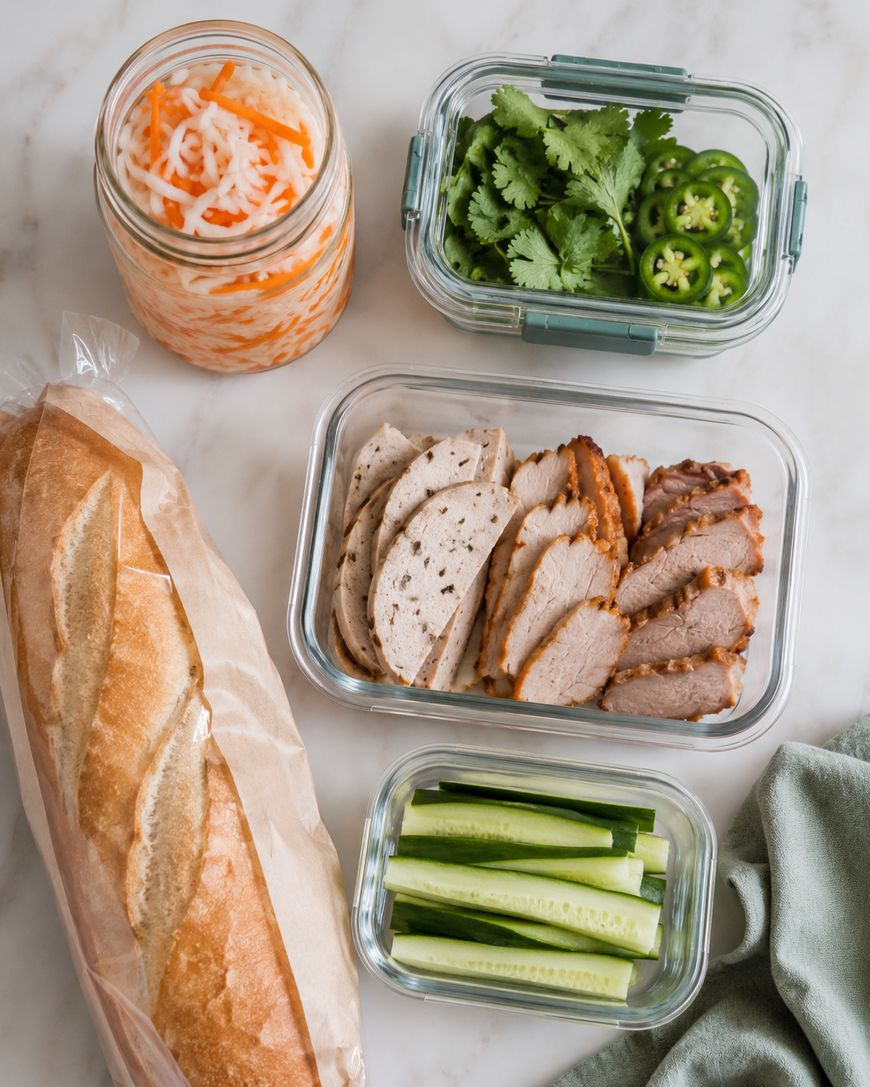
The Condiment Layer That Completes Your Banh Mi Recipe
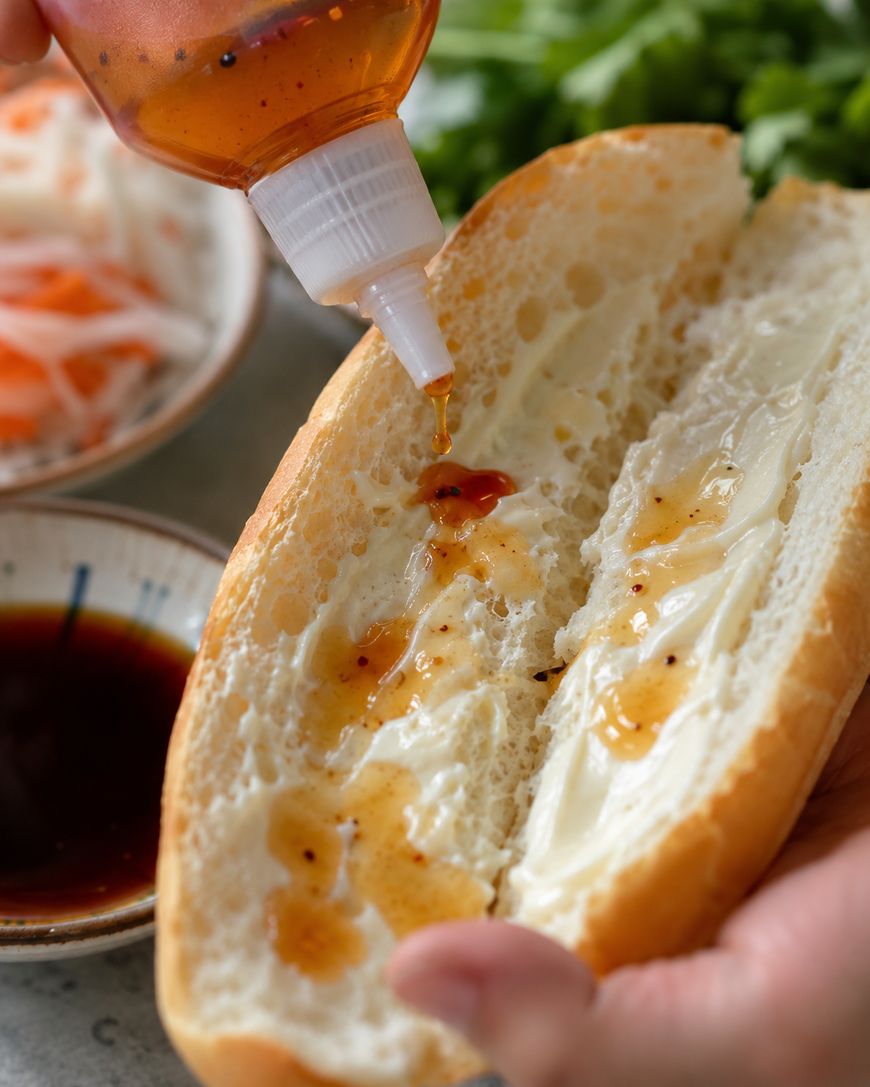
Mayonnaise seems simple in a banh mi recipe, but it serves a crucial purpose—creating a barrier between bread and wet fillings while adding richness. Use quality mayonnaise or make your own, spreading it thinly on both sides of your bread before assembling.
Vietnamese-style banh mi recipes sometimes add a drizzle of soy sauce or fish sauce mixed with sugar to the mayonnaise base. This umami-forward approach intensifies savory notes throughout your sandwich. If you’re unfamiliar with fish sauce, use just soy sauce for your first banh mi recipe attempt.
Maggi seasoning sauce offers another traditional option in Vietnamese banh mi recipes. The combination of soy, caramel, and spices adds complexity that transforms a simple banh mi into a more authentic street food experience. Many Vietnamese vendors consider this seasoning non-negotiable in their banh mi recipe.
Assembly Techniques for Perfect Banh Mi
The order of assembly matters significantly when building your banh mi recipe. Start by slicing your baguette lengthwise without cutting completely through the bottom crust. You want to open it like a book while keeping it intact.
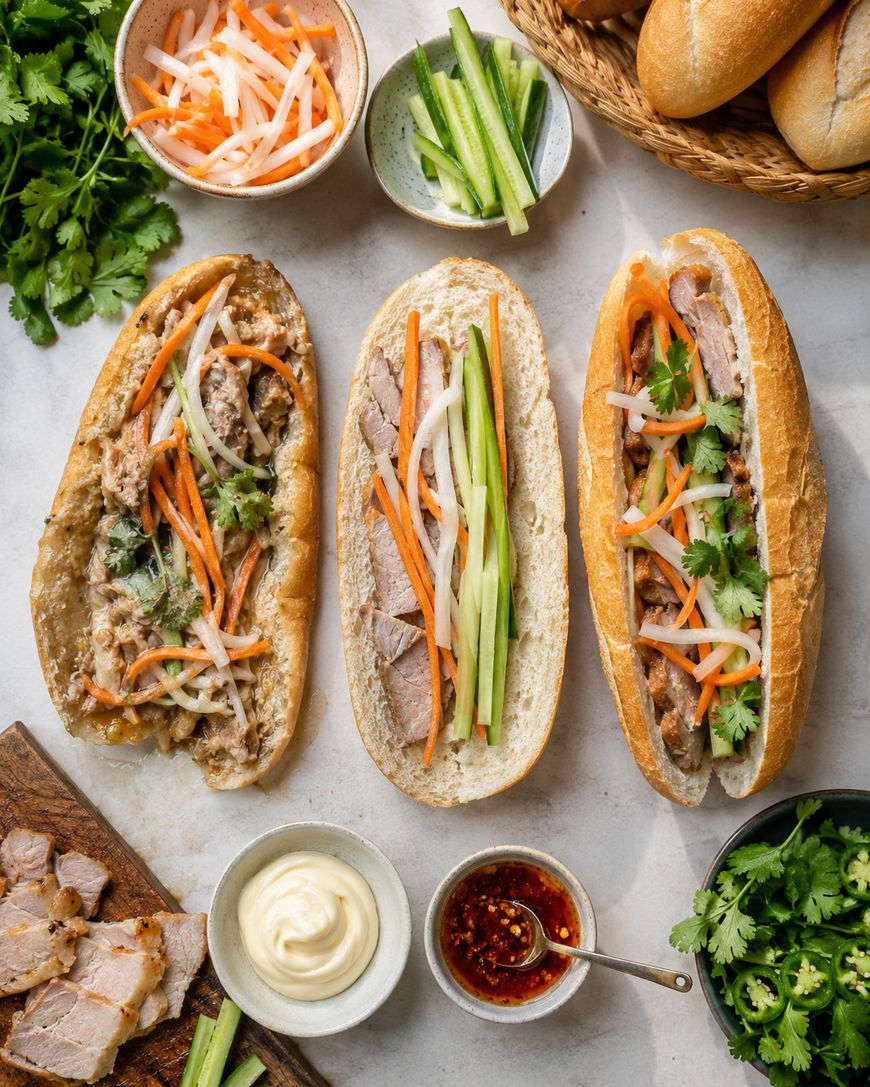
Spread mayonnaise evenly on both inside surfaces of your banh mi baguette. Add pâté or your chosen protein next, pressing it gently into the mayo. Layer your pickled daikon and carrots over the protein, allowing excess liquid to drain back into the bowl.
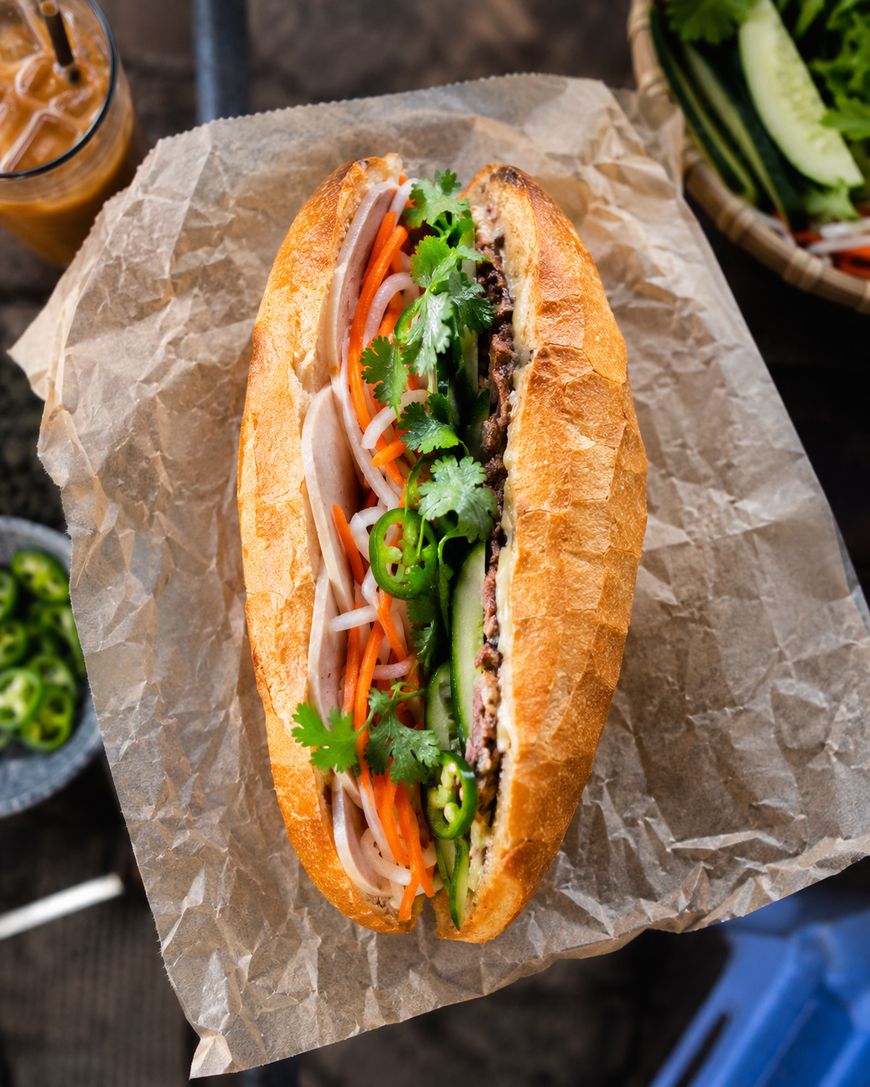
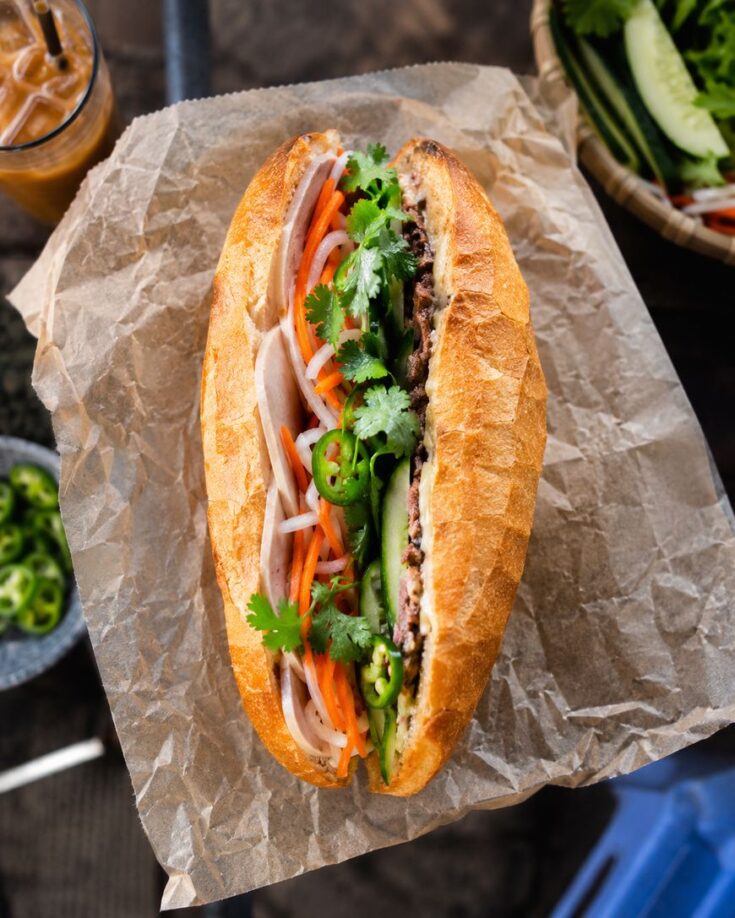
Add cucumber slices, cilantro, and jalapeño slices in a single layer on top of your pickles. The arrangement should look abundant and colorful—this is what makes a proper banh mi recipe visually appetizing. If adding ground chicken or pork, season it generously before layering into your banh mi.
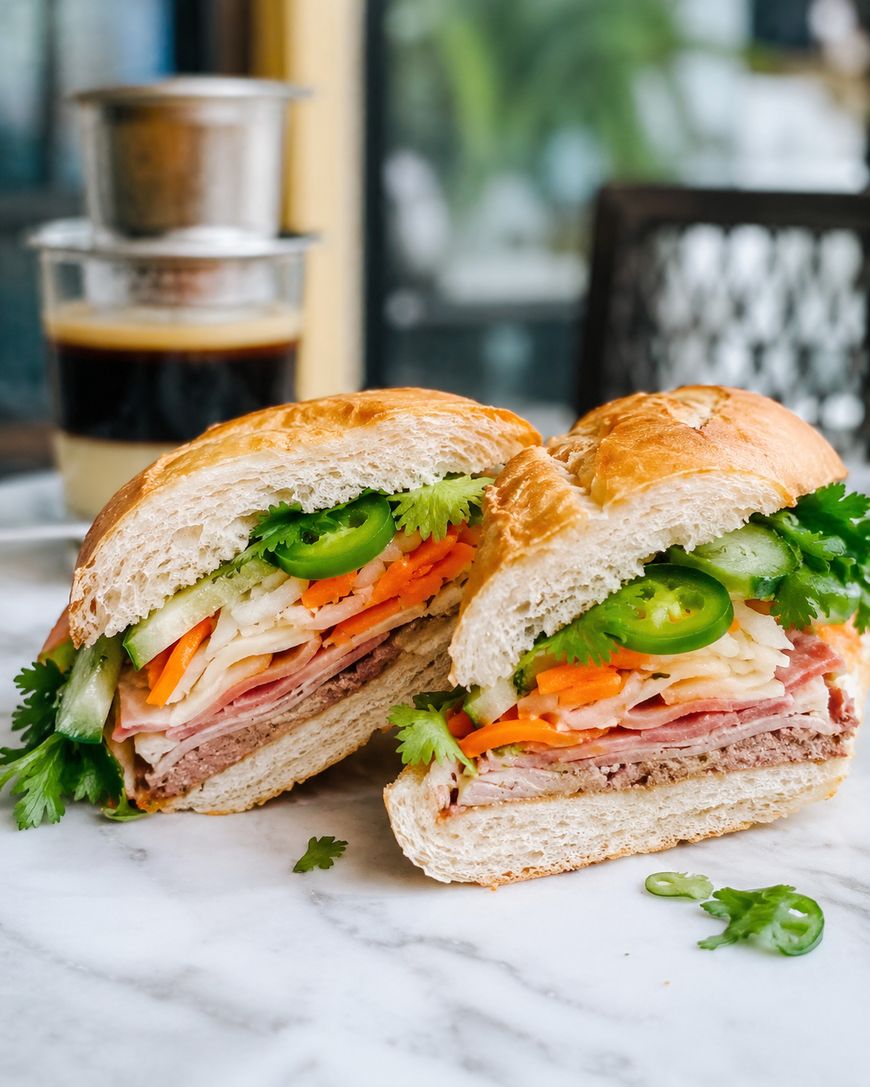
Close your sandwich gently and wrap the bottom in paper or foil to prevent contents from sliding. The pressure helps flavors meld together while the wrapper contains any drips. Serve your banh mi recipe immediately while bread remains crispy and fresh.
Troubleshooting Your Banh Mi Recipe
Soggy bread often haunts homemade banh mi recipes, usually because too much pickle liquid seeped into the bread. For your next banh mi recipe attempt, drain pickled vegetables thoroughly before adding them to your sandwich. You can also pat vegetables dry with paper towels after removing them from the pickling liquid.
If your banh mi recipe tastes flat, you likely need more seasoning or condiments. Banh mi should boldly deliver multiple flavor notes simultaneously—salty, sour, spicy, fresh, rich, and savory. Taste as you go and adjust each component to strengthen the overall profile of your banh mi.
Texture imbalance suggests unequal ingredient distribution in your banh mi recipe. Ensure pickles, herbs, and vegetables spread throughout rather than clustering in one area. This uniform distribution ensures every bite of your banh mi offers the complete flavor experience.
Variations to Explore with Your Banh Mi Recipe
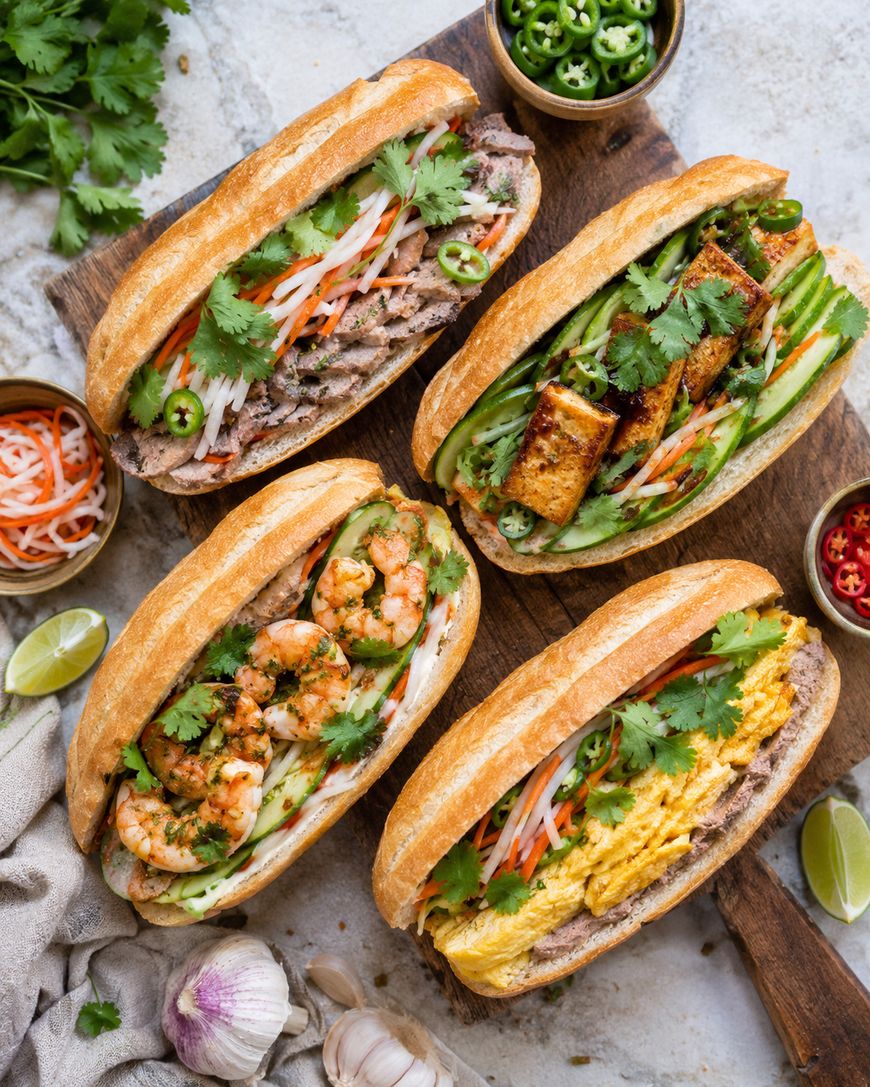
Once you’ve mastered a classic banh mi recipe, experimenting with variations keeps things interesting. A vegetarian banh mi recipe features extra vegetables, fried tofu, and sometimes scrambled eggs replacing traditional meats. The pickling remains the same, but flavors shift toward fresher, lighter notes.
A banh mi recipe with shrimp offers different proteins for seafood lovers. Marinate cooked shrimp briefly in lime juice and garlic before adding to your sandwich. Shrimp banh mi recipes pair beautifully with extra cilantro and jalapeño for aromatic, spicy notes.
Egg banh mi recipes include sliced hard-boiled or Vietnamese custard-filled eggs for richness. The combination of egg, pâté, and pickles creates luxurious banh mi that satisfies hearty appetites. This variation remains popular throughout Vietnam and in Vietnamese restaurants worldwide.
Storage and Make-Ahead Tips for Banh Mi
If you want your banh mi recipe prepared ahead, keep components separate until assembly. Pickled vegetables, prepared meats, and bread can all be ready separately 2-3 hours before eating. Assemble just before serving to maintain bread crispness—this is crucial for achieving authentic banh mi recipe results.
The pickle component of your banh mi recipe keeps refrigerated for two weeks, making batch preparation efficient. Fresh herbs and vegetables stay fresh for 3-4 days in the refrigerator in sealed containers. Bread should be purchased the day you plan to assemble your banh mi to ensure optimal texture.
Freeze extra baguettes individually if you’ve found a reliable source. Your banh mi recipe relies on quality bread, so stocking up ensures consistency whenever you want to make sandwiches. Thaw at room temperature and warm briefly in a 350-degree oven for 3-4 minutes before using.
Authentic Banh Mi Recipe
Master this authentic banh mi recipe with crispy baguette, pickled vegetables, fresh herbs, and savory proteins. Learn the traditional Vietnamese street food sandwich technique with step-by-step instructions.
Ingredients
- 1 thin Vietnamese baguette (about 3-4 oz), fresh or warmed
- 2 tablespoons mayonnaise (or Vietnamese-style mayo with fish sauce)
- 2 tablespoons pâté or Vietnamese cold cuts (giò lua), thinly sliced
- 1/2 cup pickled daikon radish and carrot (julienned)
- 1/4 English cucumber, sliced lengthwise into thin strips
- 4-5 fresh cilantro sprigs, roughly chopped
- 2-3 jalapeño slices (or to taste)
- 1/2 teaspoon Maggi seasoning sauce or soy sauce (optional)
- Salt and pepper to taste
Instructions
- Prepare pickled vegetables: Combine rice vinegar, water, sugar, and salt in a small saucepan. Bring to a boil, then pour hot liquid over julienned daikon and carrot. Let cool to room temperature, then refrigerate until ready to use (at least 1 hour, or up to 2 weeks).
- Slice your baguette lengthwise without cutting completely through the bottom crust, opening it like a book.
- Spread mayonnaise evenly on both inside surfaces of the baguette.
- Layer pâté or sliced cold cuts over the mayonnaise, pressing gently.
- Drain pickled vegetables thoroughly and layer them over the protein.
- Add cucumber slices in a thin layer.
- Top with fresh cilantro and jalapeño slices.
- Drizzle with Maggi seasoning sauce or a dash of soy sauce if desired.
- Season lightly with salt and pepper.
- Close the sandwich gently, wrap the bottom in paper or foil, and serve immediately while the bread is still crispy.
Nutrition Information:
Yield:
1Serving Size:
1Amount Per Serving: Calories: 409Total Fat: 26gSaturated Fat: 5gUnsaturated Fat: 22gCholesterol: 28mgSodium: 976mgCarbohydrates: 31gFiber: 3gSugar: 6gProtein: 11g
This site provides estimated nutritional information. This information comes from online calculators. Although we try to provide accurate nutritional information, these figures are only estimates.
Common Questions About Making Banh Mi at Home
**What’s the difference between banh mi and other Vietnamese sandwiches?**
Banh mi specifically refers to the combination of crispy baguette, pickled vegetables, fresh herbs, and layered proteins. Other Vietnamese sandwiches may use different breads or skip the pickling process entirely. The banh mi recipe’s specific balance of these elements is what creates its distinctive character and recognizable identity.
**Can I make banh mi if I’m vegetarian?**
Absolutely—vegetarian banh mi recipes work beautifully when you double down on fresh vegetables, herbs, and creamy elements like avocado or egg. Use fried tofu, seasoned mushrooms, or grilled vegetables as your protein base. The pickles, cilantro, and seasonings make vegetarian banh mi equally delicious and satisfying.
**How spicy should an authentic banh mi recipe be?**
Heat level varies by Vietnamese region and personal preference, so there’s no single “correct” spiciness for banh mi. Street vendors offer jalapeño slices on the side so customers control their own heat level. Start conservatively with your banh mi recipe and adjust based on your spice tolerance.
**Is fish sauce necessary in banh mi?**
Fish sauce adds authentic Vietnamese depth to banh mi, but it’s optional if the smell bothers you. Soy sauce alone provides the salty, savory notes banh mi needs. Many home cooks skip fish sauce in their banh mi recipe and still create delicious sandwiches that family and friends enjoy.
**What can I use instead of pâté in my banh mi recipe?**
Vietnamese cold cuts like giò lua, grilled chicken, seasoned ground pork, or even canned pâté from Vietnamese grocery stores all work in banh mi recipes. The key is having some richness to balance the pickles and fresh vegetables—protein alone may taste too lean without this component.
**How do I transport banh mi for lunch without it getting soggy?**
Assemble your banh mi recipe just before leaving, or pack components separately and assemble at lunch. If you must assemble ahead, drain pickled vegetables extra thoroughly and skip mayonnaise if concerned about moisture. Wrap your banh mi tightly in foil to contain drips, and eat within 2 hours of assembly.
The beauty of making this banh mi recipe at home is recreating those street vendor flavors without traveling to Vietnam. You control the ingredients, the bread quality, and the balance of flavors that make authentic banh mi so craveable.