Last updated: October 24, 2026
This biscoff cake gives you two soft, spiced layers, a fluffy cookie butter frosting, and a glossy drip finished with crunchy cookies. The recipe card is below, and the walkthrough here covers every stage so you can bake the whole cake from this page alone.
What Makes This Biscoff Cake Worth Baking
Biscoff cake is a layered spice cake flavored with Lotus Biscoff cookie spread, so every bite tastes like caramelized brown sugar and warm cinnamon. We bake two 9-inch layers, stack them with cookie butter buttercream, and finish the top with a drip and whole cookies.
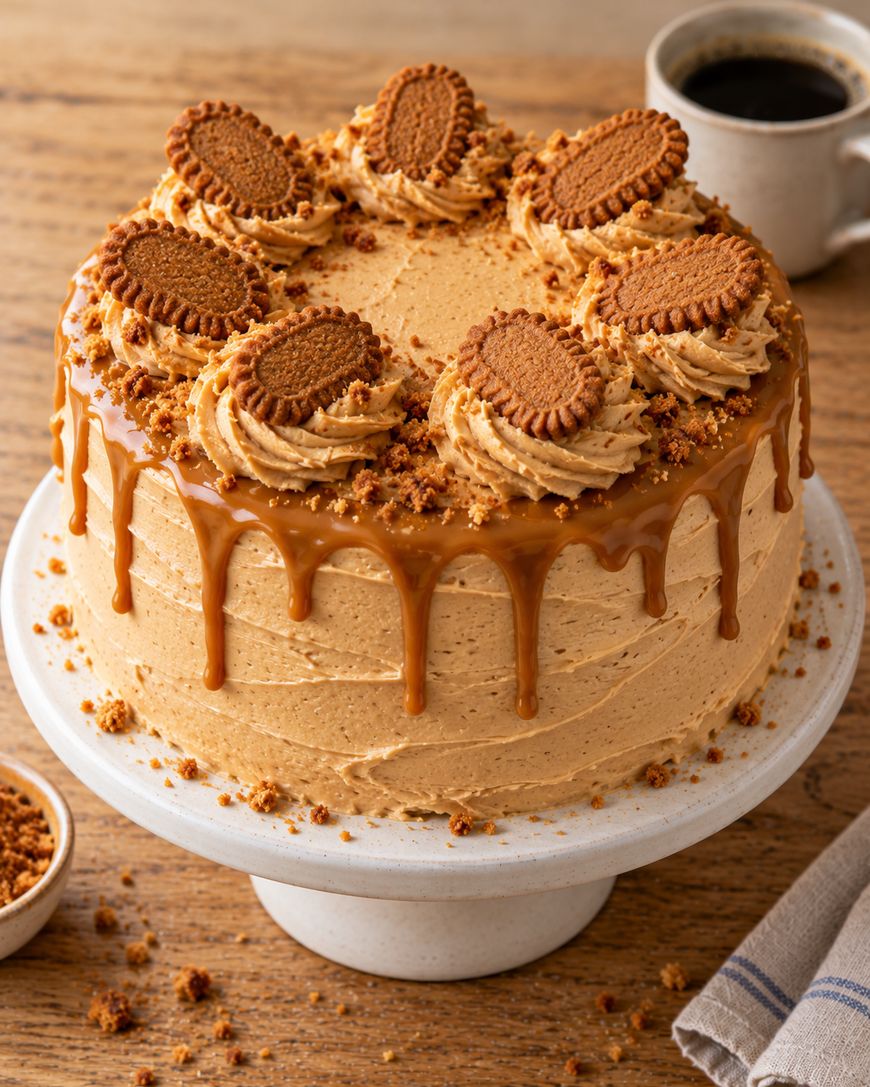
The crumb stays tender and moist because the batter combines butter, buttermilk, and a half cup of Biscoff spread. The cake looks like it came from a bakery, yet it needs only one mixer, two pans, and a jar of spread.
You can finish the whole cake in about 2 hours and 15 minutes, and most of that is hands-off cooling time. Active work is closer to 45 minutes, which makes this a realistic choice for a birthday, a holiday dessert table, or a Sunday project.
If you love cookie butter, this is the cake that lets it shine in every layer. The spices stay warm and gentle, so the Biscoff flavor stays front and center.
Ingredients for Biscoff Cake
The ingredient list is mostly pantry staples, plus one jar of smooth Biscoff spread and a package of Biscoff cookies. Gather everything first and let the butter, eggs, and buttermilk sit out until they reach room temperature.

Cake Layer Ingredients
The batter starts with 2 1/2 cups all-purpose flour, 2 1/2 teaspoons baking powder, 1/2 teaspoon baking soda, and 1/2 teaspoon salt. The spice blend is 2 teaspoons ground cinnamon, 1/2 teaspoon ground ginger, and 1/4 teaspoon ground nutmeg.
Richness comes from 1 cup softened unsalted butter, 1 cup packed light brown sugar, 3/4 cup granulated sugar, and 4 large eggs. You also need 1 tablespoon vanilla extract, 1 cup buttermilk, and 1/2 cup smooth Biscoff spread.
Frosting and Topping Ingredients
The buttercream uses 1 cup softened unsalted butter, 1 cup smooth Biscoff spread, 3 cups powdered sugar, 3 tablespoons heavy cream, 1 teaspoon vanilla extract, and 1/4 teaspoon salt. The drip needs just 1/2 cup smooth Biscoff spread and 2 tablespoons heavy cream.
For decoration you need 14 Biscoff cookies in total. Crush 6 of them into fine crumbs and keep the other 8 whole for the top of the cake.
Equipment You Need
Use two 9-inch round cake pans that are at least 2 inches deep, plus parchment paper for lining. A stand mixer or hand mixer, a wire cooling rack, an offset spatula, and a serving plate or cake stand round out the list.
How to Make Biscoff Cake Step by Step
Biscoff cake comes together in six stages: prepping the pans, mixing the batter, baking, whipping the frosting, assembling, and adding the drip. Each stage is short, and the order below keeps the layers from melting the frosting.
Prep the Pans and Dry Ingredients
Heat the oven to 350°F. Grease both 9-inch pans, line the bottoms with parchment circles, and set them aside.
In a medium bowl, whisk the flour, baking powder, baking soda, salt, cinnamon, ginger, and nutmeg. Whisking evenly distributes the spices, so no bite of cake tastes flat or overly spicy.

Mix the Batter
In a large bowl, beat the 1 cup butter, brown sugar, and granulated sugar on medium high speed for 3 minutes. The mixture should look pale and fluffy, because this step traps the air that lifts the cake.
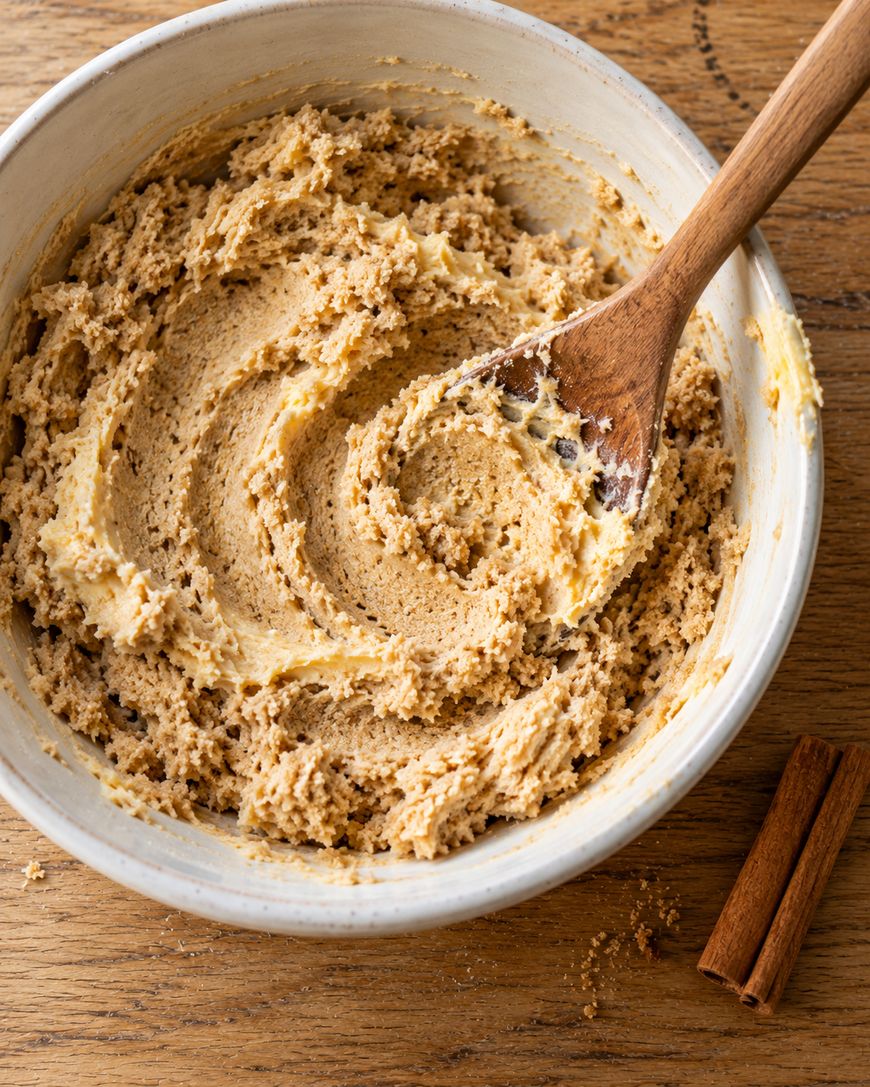
Add the eggs one at a time, beating well after each, then mix in the vanilla. Warm the 1/2 cup Biscoff spread in the microwave for about 15 seconds so it pours easily, then beat it into the batter until smooth.
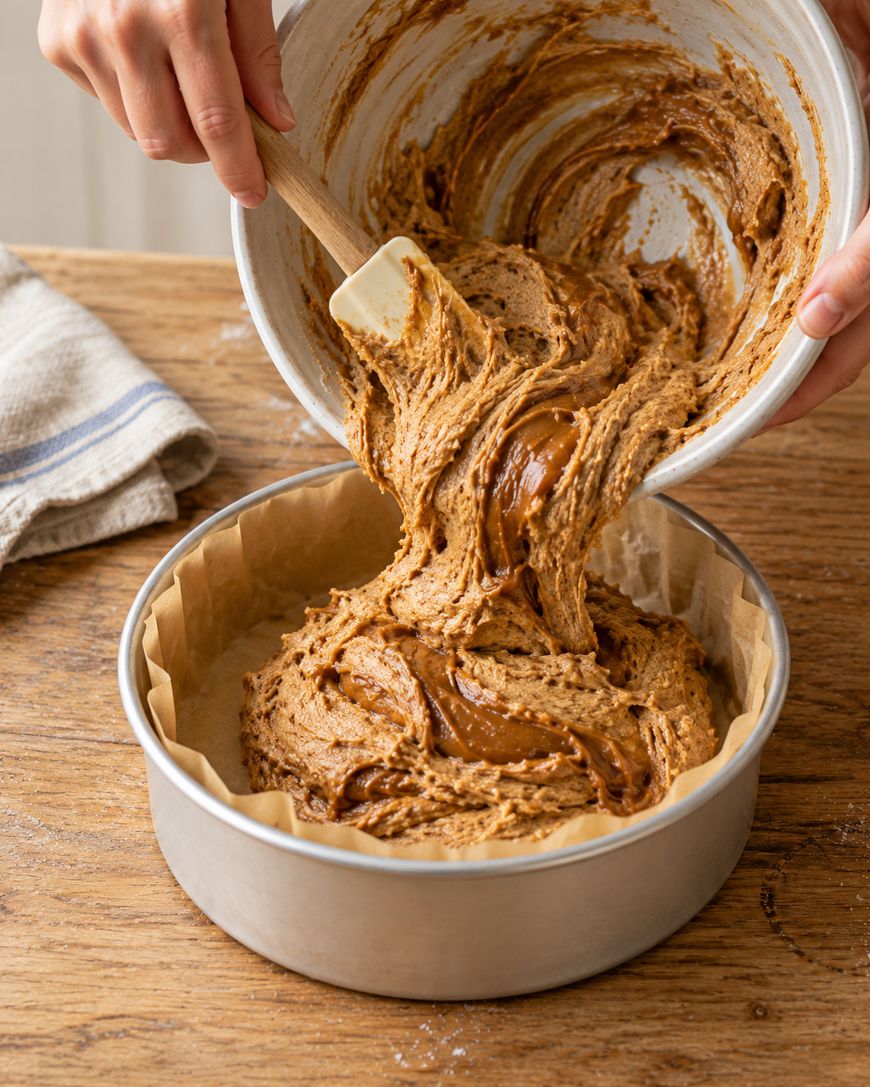
With the mixer on low, add the dry ingredients in three parts, alternating with the buttermilk in two parts. Begin and end with the dry ingredients, and stop mixing as soon as no streaks of flour remain.
Bake and Cool the Layers
Divide the batter evenly between the two pans and smooth the tops. Bake for 26 to 30 minutes, until the tops spring back lightly and a toothpick comes out with a few moist crumbs.
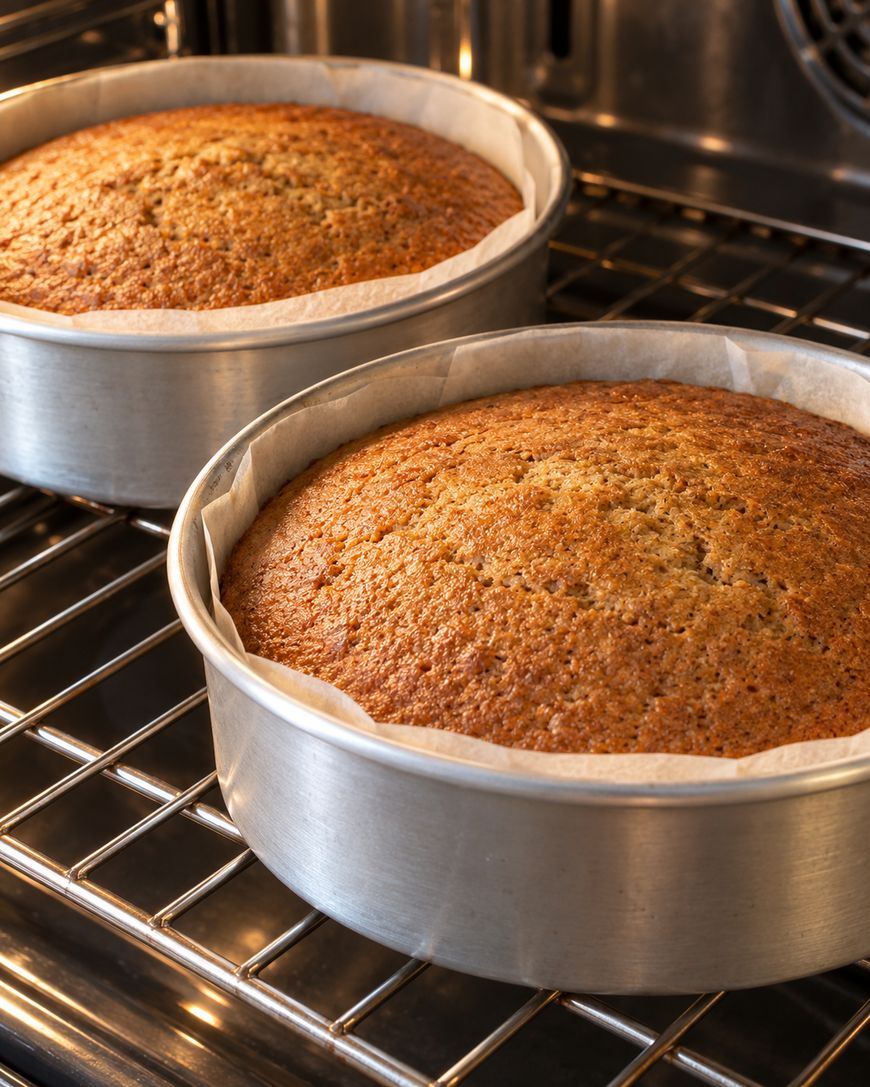
Cool the layers in their pans for 15 minutes, then turn them out onto a wire rack. Let them cool completely, about 1 hour, because frosting a warm cake makes the buttercream slide and melt.

Whip the Cookie Butter Buttercream
Beat the second cup of butter for 2 minutes until creamy, then add the 1 cup Biscoff spread and beat for 1 minute more. Add the powdered sugar 1 cup at a time on low speed so it does not puff into the air.

Beat in the heavy cream, vanilla, and salt, then whip for 2 minutes until the frosting looks light and spreadable. If it feels stiff, add another splash of cream, and if it feels soft, chill the bowl for 10 minutes.
Assemble the Cake
Trim any domed tops with a serrated knife so the layers stack flat. Place the first layer on your plate and spread about 1 1/4 cups of frosting over it.
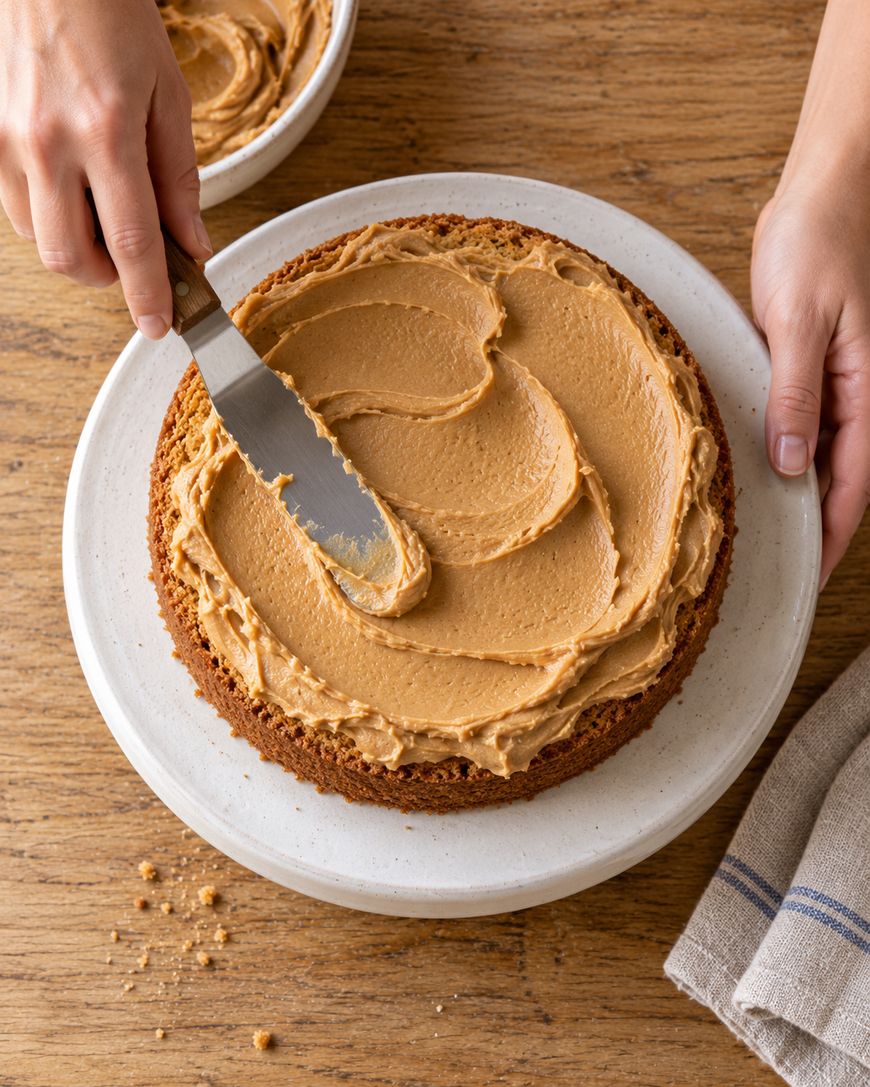
Add the second layer and cover the whole cake in a thin crumb coat. Chill for 15 minutes, then finish with the remaining frosting and press the crushed cookies around the bottom edge.

Add the Drip and Cookies
Microwave the 1/2 cup Biscoff spread with the 2 tablespoons heavy cream for 20 seconds, then stir until smooth. Let it cool for 2 minutes so it flows slowly instead of running straight to the plate.

Spoon the glaze around the top edge so it drips down the sides, then fill the center. Arrange the 8 whole cookies on top and let the drip set for 15 minutes before slicing.
Tips and Variations for Biscoff Cake
The best biscoff cake starts with room temperature ingredients, because cold eggs and buttermilk make the butter seize and leave the crumb dense. Measure the flour by spooning it into the cup and leveling it, since packed flour makes the layers dry.
Smooth or Crunchy Spread
The card uses smooth Biscoff spread in the batter, frosting, and drip because it blends without bumps. Crunchy spread is an optional swap in the frosting only, and it adds tiny cookie pieces to every bite.
Decorating Options
A simple finish is fine, but you can pipe small buttercream swirls around the top edge before adding the whole cookies. A pinch of flaky sea salt over the drip also balances the sweetness, so treat it as an optional extra the card leaves out.
Make It Your Own
Swap the whole cookies on top for crushed cookies if you want a lighter look. You can also serve each slice with vanilla ice cream or a mug of strong coffee, which cuts through the buttercream nicely.
Storing and Serving Biscoff Cake
Store the finished cake covered in the refrigerator for up to 5 days. Let slices sit at room temperature for 30 minutes before serving so the buttercream softens and the crumb tastes tender again.
For make-ahead baking, wrap the cooled, unfrosted layers tightly and refrigerate them overnight, or freeze them for up to 2 months. Thaw frozen layers overnight in the refrigerator before frosting.
A warm, clean knife makes the neatest slices. Wipe the blade between cuts so the drip and buttercream stay tidy, and you will get 12 generous slices from one cake.

Biscoff cake pairs well with hot coffee, black tea, or a cold glass of milk. For a party, set out the cake on a plain white stand so the caramel drip becomes the centerpiece.
Leftover slices keep their flavor well, and many bakers say the spices taste even deeper on day two. Keep the cake in a covered container so the frosting does not pick up fridge odors.
Where Biscoff Cake Comes From
Biscoff cookies are a type of speculoos, the spiced caramelized shortbread cookie traditional in Belgium and the Netherlands. Lotus Bakeries, founded in Belgium in 1932, built its famous biscuit around cinnamon and brown sugar notes that bakers had long loved.
The cookie butter spread arrived around 2007 and quickly spread across the world, turning up in cheesecakes, milkshakes, brownies, and cakes. A biscoff cake is a natural result, since the spread already tastes like a spice cake waiting to happen.
Bakers in the United States and the United Kingdom now bake it for birthdays and holiday tables. Its flavor feels familiar and cozy, which is why it fits fall and winter menus so well.
That history gives the cake a warm story to share at the table. Guests who grew up with the cookies on airplane trays and coffee saucers tend to recognize the flavor right away.
Ready for the full printable version? Use the recipe card below to scale the batch, print it, or save it for later.

Biscoff Cake
Two soft spiced layers with fluffy Biscoff buttercream, a glossy cookie butter drip, and crunchy Biscoff cookies on top.
Ingredients
- 2 1/2 cups all-purpose flour
- 2 1/2 teaspoons baking powder
- 1/2 teaspoon baking soda
- 1/2 teaspoon salt
- 2 teaspoons ground cinnamon
- 1/2 teaspoon ground ginger
- 1/4 teaspoon ground nutmeg
- 1 cup unsalted butter, softened
- 1 cup light brown sugar, packed
- 3/4 cup granulated sugar
- 4 large eggs, room temperature
- 1 tablespoon vanilla extract
- 1 cup buttermilk, room temperature
- 1/2 cup smooth Biscoff spread, warmed
- 1 cup unsalted butter, softened (for frosting)
- 1 cup smooth Biscoff spread (for frosting)
- 3 cups powdered sugar
- 3 tablespoons heavy cream (for frosting)
- 1 teaspoon vanilla extract (for frosting)
- 1/4 teaspoon salt (for frosting)
- 1/2 cup smooth Biscoff spread (for drip)
- 2 tablespoons heavy cream (for drip)
- 14 Biscoff cookies, divided (6 crushed, 8 whole)
Instructions
- Heat the oven to 350°F. Grease two 9-inch round cake pans and line the bottoms with parchment.
- Whisk the flour, baking powder, baking soda, salt, cinnamon, ginger, and nutmeg in a medium bowl.
- Beat 1 cup butter, the brown sugar, and the granulated sugar on medium high speed for 3 minutes until pale and fluffy.
- Beat in the eggs one at a time, then the vanilla. Warm 1/2 cup Biscoff spread in the microwave for 15 seconds and beat it in until smooth.
- With the mixer on low, add the dry ingredients in three parts, alternating with the buttermilk in two parts, beginning and ending with the dry ingredients. Mix just until no streaks of flour remain.
- Divide the batter evenly between the pans and smooth the tops. Bake for 26 to 30 minutes, until the tops spring back and a toothpick comes out with a few moist crumbs.
- Cool the layers in the pans for 15 minutes, then turn out onto a wire rack and cool completely, about 1 hour.
- For the frosting, beat the second cup of butter for 2 minutes until creamy. Add 1 cup Biscoff spread and beat for 1 minute.
- Add the powdered sugar 1 cup at a time on low speed, then beat in 3 tablespoons cream, 1 teaspoon vanilla, and 1/4 teaspoon salt. Whip for 2 minutes until light and spreadable.
- Trim any domed tops. Spread about 1 1/4 cups frosting over the first layer, top with the second layer, and cover the cake in a thin crumb coat. Chill for 15 minutes.
- Cover the cake with the remaining frosting and press the 6 crushed cookies around the bottom edge.
- Microwave 1/2 cup Biscoff spread with 2 tablespoons cream for 20 seconds, stir until smooth, and cool for 2 minutes. Spoon it around the top edge so it drips down the sides, then fill the center.
- Arrange the 8 whole cookies on top and let the drip set for 15 minutes before slicing.
Notes
Store the finished cake covered in the refrigerator for up to 5 days and let slices sit at room temperature for 30 minutes before serving. Cooled, unfrosted layers can be wrapped and refrigerated overnight or frozen for up to 2 months. Crunchy Biscoff spread can be used in the frosting only. A pinch of flaky sea salt on the drip is optional.
Nutrition Information:
Yield:
12Serving Size:
1 sliceAmount Per Serving: Calories: 650Total Fat: 36gSaturated Fat: 21gSodium: 380mgCarbohydrates: 76gFiber: 1gSugar: 55gProtein: 6g
Biscoff Cake Questions and Answers
Can You Make Biscoff Cake Ahead of Time?
Yes. Wrap the cooled, unfrosted layers and refrigerate them overnight, or freeze them for up to 2 months, then frost the cake on the day you plan to serve it.
Can You Use Crunchy Biscoff Spread?
You can use crunchy spread in the frosting if you like extra texture. Keep the batter and the drip made with smooth spread so they stay silky.
What Can You Use Instead of Buttermilk?
The card lists buttermilk, so treat this as an optional swap. Stir 1 tablespoon lemon juice into 1 cup milk and let it rest for 5 minutes before using it.
Why Is Your Biscoff Cake Dense?
Dense cake usually comes from cold ingredients or overmixing after the flour goes in. Cream the butter and sugar for the full 3 minutes and stop mixing once the streaks disappear.
How Do You Get a Clean Drip?
Let the warm glaze cool for 2 minutes, and chill the frosted cake for a few minutes first if the kitchen is warm. A thinner glaze runs too fast, so add the cream a little at a time if you adjust it.
Why This Biscoff Cake Recipe Works
Creaming the butter with both brown and granulated sugar for 3 minutes builds the air that lifts these layers. Brown sugar adds moisture and a caramel note that echoes the cookies, while the granulated sugar helps the crumb stay light.
Adding the dry ingredients in three parts alternating with buttermilk keeps the batter smooth without overworking the flour. That gentle mixing, plus the acid in the buttermilk and the balance of baking powder and baking soda, gives you a tender cake that stays moist.
Biscoff spread in both the batter and the buttercream makes the flavor run all the way through instead of sitting only on top. The salt in the frosting and the thin crumb coat keep the sweetness balanced and the finish clean.
Finally, the full hour of cooling gives the crumb time to firm up, so the layers hold the frosting without tearing. Trimming the domed tops then gives you flat, even layers that stack neatly.
Final Thoughts on Biscoff Cake
This biscoff cake delivers soft spiced layers, creamy cookie butter frosting, and a drip that looks impressive with very little effort. Bake it once and it will likely become your go-to cake for birthdays, holidays, and any day that deserves dessert.
The method is forgiving, the ingredients are easy to find, and the finished cake looks far fancier than the effort suggests. Share a slice with someone you love and watch how quickly the plate empties.
Grab a jar of Biscoff spread, scroll up to the recipe card, and start your batter today. If you make it, leave a rating and a comment so we know how it turned out.
If you want more cake ideas, the related recipes below pair nicely with this one on a dessert table.
The Soft Golden Butter Cake That Stays Tender for Days
The Brown Butter Cake With Nutty Toffee Flavor and a Soft, Tender Crumb