Last updated: October 4, 2026
This brown butter cake gives you a nutty, toffee flavored cake in a 9×13 inch pan with one saucepan and one whisk. The full recipe card is below, and the tips along the way help you brown the butter without burning it.

Brown Butter Cake Ingredients and What Each One Does
A great brown butter cake needs only pantry staples, and the butter does most of the heavy lifting. Knowing what each ingredient adds makes the cake easier to get right the first time.
The Brown Butter
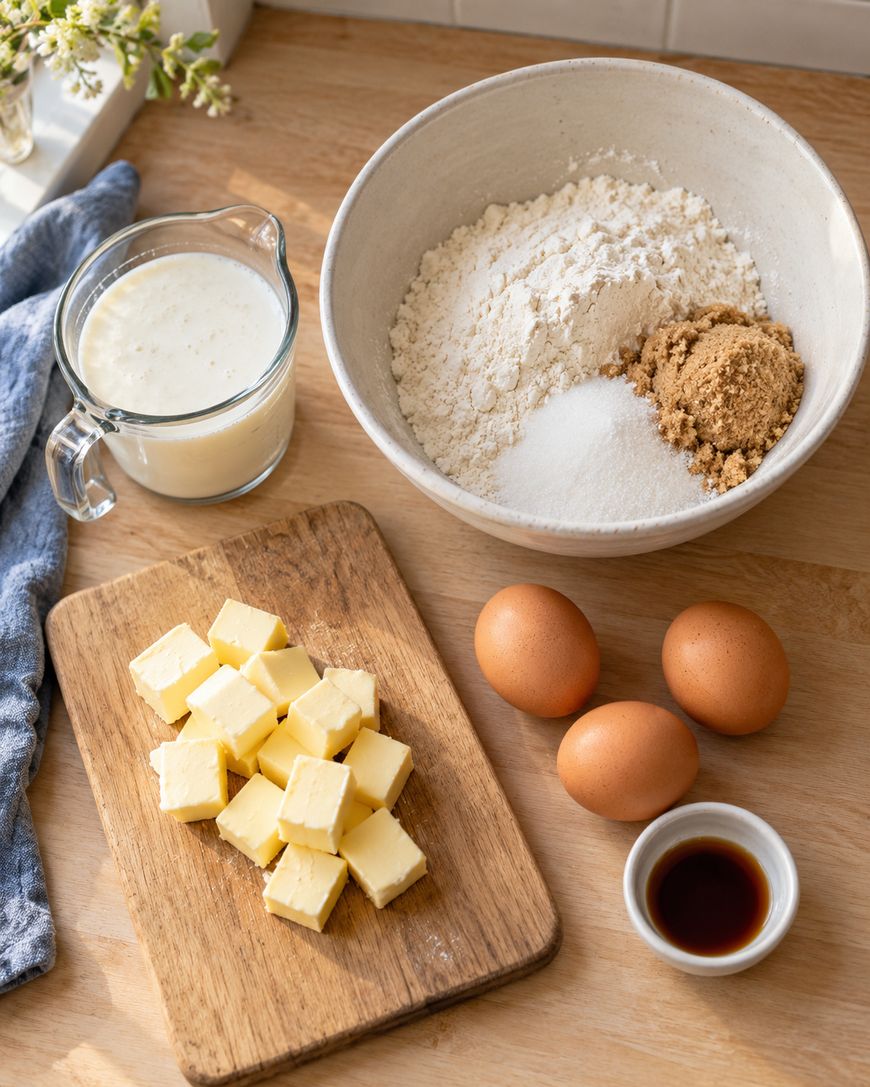
You start with 1 cup plus 2 tablespoons of unsalted butter, which is 255 grams or two sticks plus 2 tablespoons. Browning cooks off some of the water and toasts the milk solids, so the butter turns amber and smells like roasted hazelnuts.
Two tablespoons of that browned butter are set aside for the glaze, and the rest goes into the batter. Brands like Land O’Lakes and Kerrygold both brown well, and unsalted butter lets you control the salt.
The Sugars
The cake uses 3/4 cup of granulated sugar and 3/4 cup of packed light brown sugar. The brown sugar adds a caramel note that leans into the toasted butter, while the granulated sugar keeps the crumb tender and the top lightly golden.
Packed light brown sugar also holds moisture, which helps the cake stay soft on day two and day three. If you only have dark brown sugar, it works, but the flavor will taste more like molasses than toffee.
The Eggs, Vanilla, and Buttermilk
You need 3 large eggs, 1 tablespoon of pure vanilla extract, and 1 cup of buttermilk, all at room temperature. The eggs give the cake structure, the vanilla rounds out the nutty flavor, and the buttermilk adds a gentle tang that keeps the cake from tasting too sweet.
If you do not have buttermilk, stir 1 tablespoon of lemon juice or white vinegar into a liquid measuring cup, add whole milk up to the 1 cup line, and let it sit for 5 minutes. The card uses buttermilk, so treat this swap as optional.
The Flour and Leavening
The dry ingredients are 2 cups of all-purpose flour (250 grams), 1 1/2 teaspoons of baking powder, 1/2 teaspoon of baking soda, and 1/2 teaspoon of fine salt. The baking soda reacts with the acidic buttermilk, and the baking powder gives the cake steady lift in the oven.
Weigh the flour if you can, since scooping straight from the bag can add an extra 30 grams or more. If you use cups, spoon the flour into the measuring cup and level it with a knife.
How to Brown Butter for Cake Without Burning It
You brown butter by melting it over medium heat and cooking it for about 8 to 10 minutes until it turns amber and smells nutty. The whole process takes your full attention, because the butter goes from golden to burnt in under a minute.
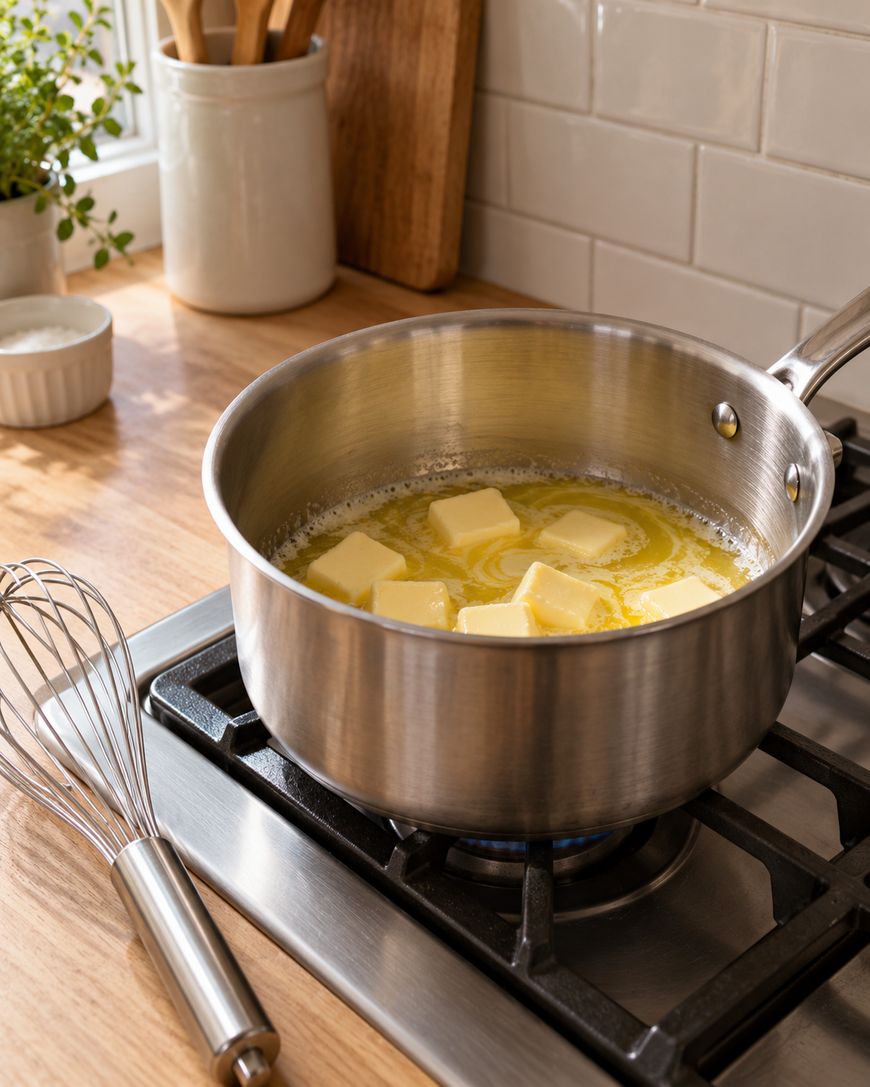
Use a Light Colored Pan
Choose a stainless steel or other light colored saucepan so you can see the color change. A dark nonstick pan hides the milk solids, and that makes it very easy to overshoot.
Cut the butter into tablespoon sized pieces so it melts evenly. Stir gently with a heatproof spatula as it melts.
Watch, Smell, and Listen
The butter will foam, crackle, and sputter as the water cooks off. When the sputtering quiets down, the foam thins, and you see golden brown flecks on the bottom of the pan, it is ready.

Pull the pan off the heat right away and scrape every toasted bit into a heatproof bowl. Those flecks are pure flavor, so do not leave them behind.
Measure the Glaze Butter
Spoon 2 tablespoons of the browned butter into a small bowl for the glaze and let it cool. The remaining butter goes straight into the sugars for the batter.
If the butter turned dark brown or smells acrid, start over. Burnt butter will make the whole cake taste bitter, and no amount of glaze can fix that.
How to Make Brown Butter Cake Step by Step
You make this brown butter cake by whisking the warm browned butter into the sugars, whisking in the eggs, and alternating the flour and buttermilk. Because the butter is melted, you do not need a mixer, and the batter comes together in about 10 minutes.
Prep the Oven and Pan
Heat the oven to 350 degrees F and grease a 9×13 inch baking pan. Line the pan with parchment paper, leaving an inch or two hanging over the long sides.
The parchment overhang works like handles, so you can lift the whole cake out for clean slices. Set the pan aside while you finish the batter.
Mix the Batter
Pour the browned butter over the granulated sugar and brown sugar in a large bowl and whisk until smooth. Let the mixture cool for 10 minutes so the warm butter does not scramble the eggs.
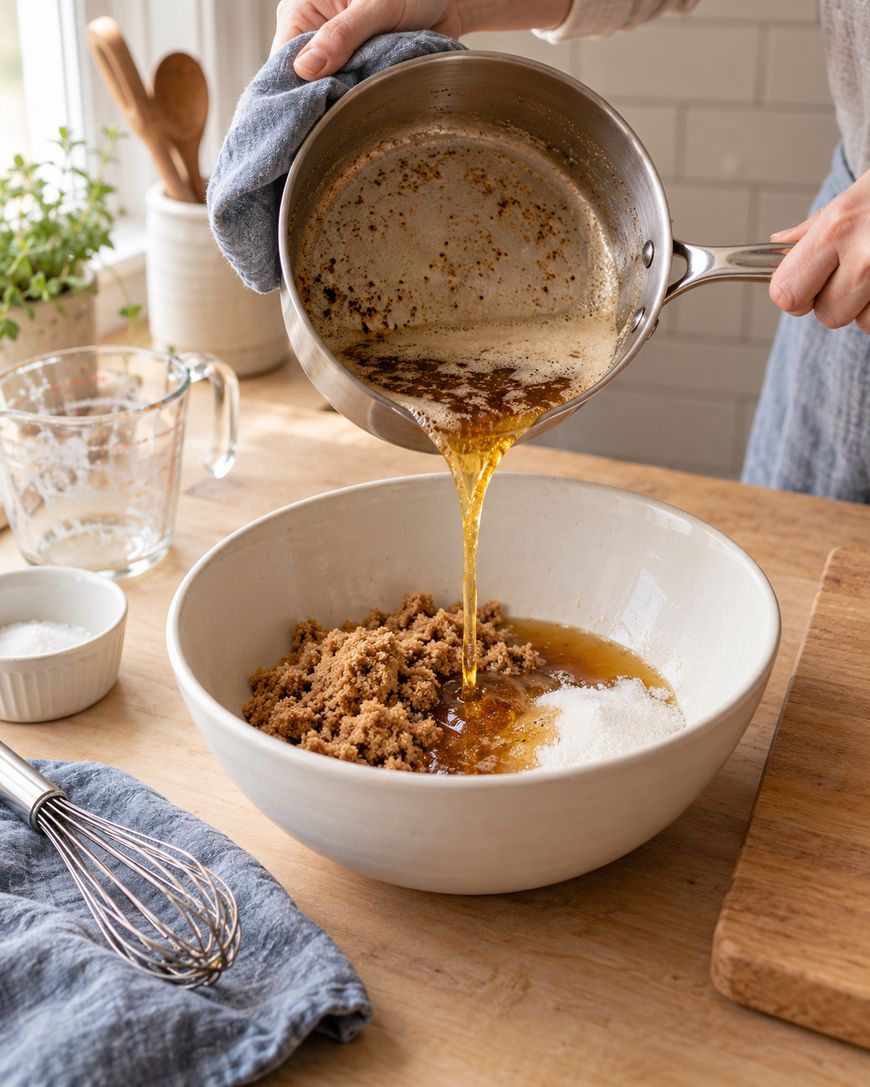
Whisk in the eggs one at a time, then whisk in the vanilla. Stir the flour, baking powder, baking soda, and salt together in a separate bowl.

Add the flour mixture in three additions and the buttermilk in two additions, starting and ending with the flour. Fold gently with a spatula just until no dry streaks remain, since overmixing makes the cake tough.
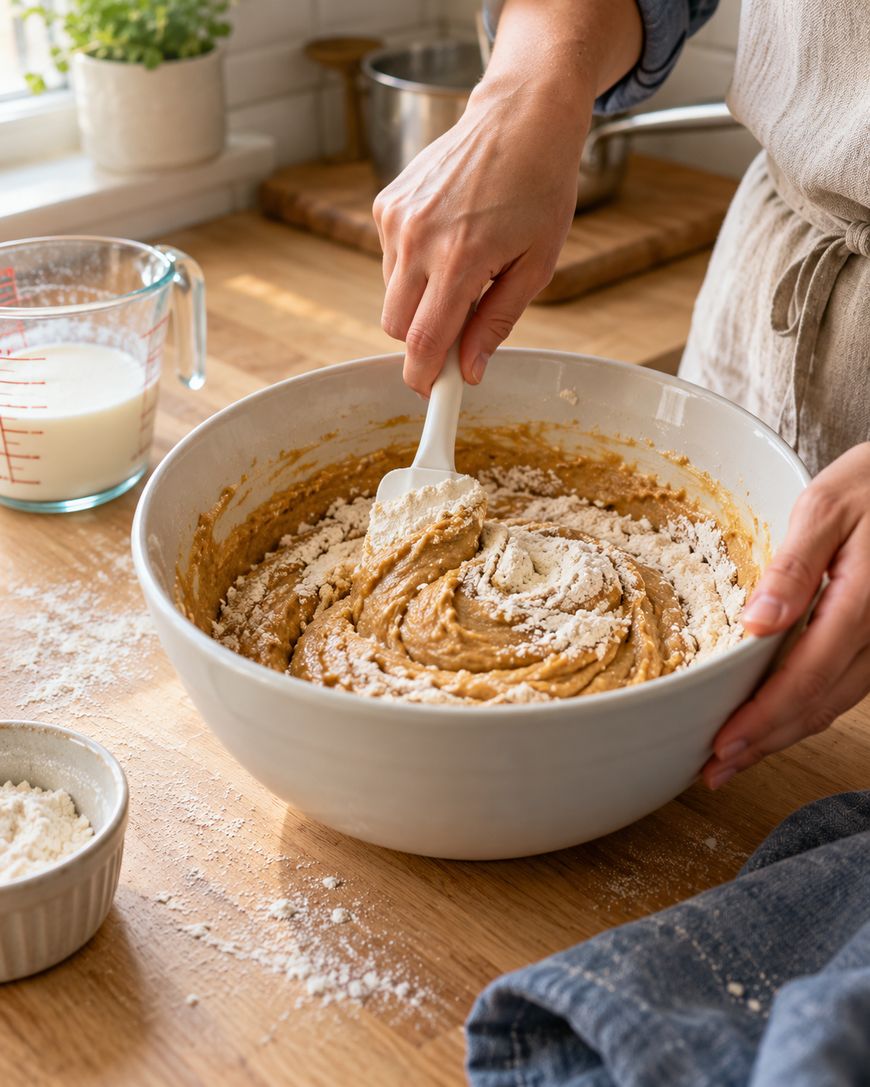
Bake and Cool
Scrape the batter into the pan and smooth the top. Bake for about 30 minutes, until the top is golden and a toothpick in the center comes out with a few moist crumbs.

Cool the cake in the pan on a wire rack for 30 minutes before you glaze it. Glazing a warm cake makes the icing slide right off.

Whisk Up the Brown Butter Glaze
Whisk 1 1/2 cups of powdered sugar (180 grams) with the reserved 2 tablespoons of browned butter, 2 to 3 tablespoons of milk, 1/2 teaspoon of vanilla, and a pinch of salt. Start with 2 tablespoons of milk and add more a teaspoon at a time until the glaze drips off the whisk in a thick ribbon.
Spread the glaze over the cooled cake, let it set for 10 minutes, then cut it into 16 squares. A pinch of flaky sea salt on top is a lovely finish, though the card leaves it out.

Tips for the Best Brown Butter Cake
The best brown butter cake comes from cooled butter, room temperature eggs, and a light hand with the flour. These small habits take almost no extra time and make a clear difference in the crumb.
Room Temperature Eggs and Buttermilk
Cold eggs and cold buttermilk can make the butter seize into little clumps. Set them on the counter while you brown the butter, or warm the eggs in a bowl of warm tap water for 10 minutes.
Do Not Skip the Cooling Step
Letting the butter and sugar mixture cool for 10 minutes protects the eggs and gives the batter a smoother texture. It also gives the sugars time to start dissolving, which helps the top bake up evenly.
Variations You Can Try
Fold in 1/2 cup of toasted chopped pecans or walnuts for crunch, or add 1 teaspoon of cinnamon to the dry ingredients for a cozy fall version. These extras are not on the card, so treat them as optional.
For a deeper toffee flavor, swap the vanilla extract for 2 teaspoons of vanilla bean paste. The little flecks look beautiful against the golden crumb.
Storing and Freezing
Cover the cake tightly and keep it at room temperature for up to 3 days. For longer storage, freeze unglazed squares wrapped individually for up to 2 months, then thaw at room temperature and add the glaze.

The Story Behind Brown Butter Cake
Brown butter has a long history in French cooking, where it is called beurre noisette, or hazelnut butter. Cooks have used it for centuries on fish and vegetables, and pastry chefs borrowed it for small cakes like financiers.
The nutty flavor comes from browning, a reaction between the milk proteins and sugars in butter as they heat. That same chemistry browns bread crust and roasted meat, which is why the smell is so appealing.
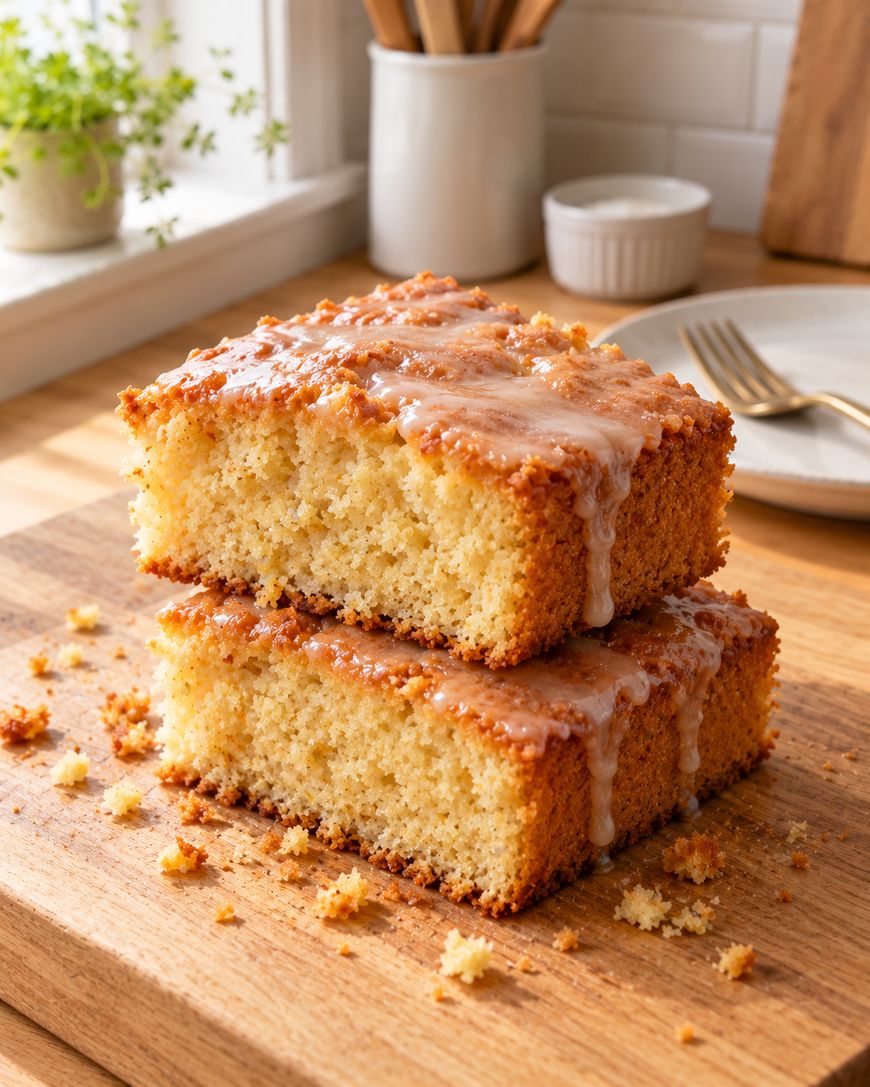
Home bakers now use brown butter in everything from cookies to blondies, and a simple one bowl cake is one of the best ways to taste it. You get all of the toffee flavor with none of the fuss of frosting layers or special pans.
Part of the appeal is how forgiving the cake is once the butter is done. The batter is thick enough to pour without splashing, and it bakes into an even, golden slab that cuts cleanly into squares.
It also travels well, which makes it a natural choice for potlucks, bake sales, and holiday dessert tables. The glaze sets into a thin, soft shell, so the squares stack without sticking.
Ready to bake? Use the recipe card below for the full ingredient list, steps, and nutrition information.
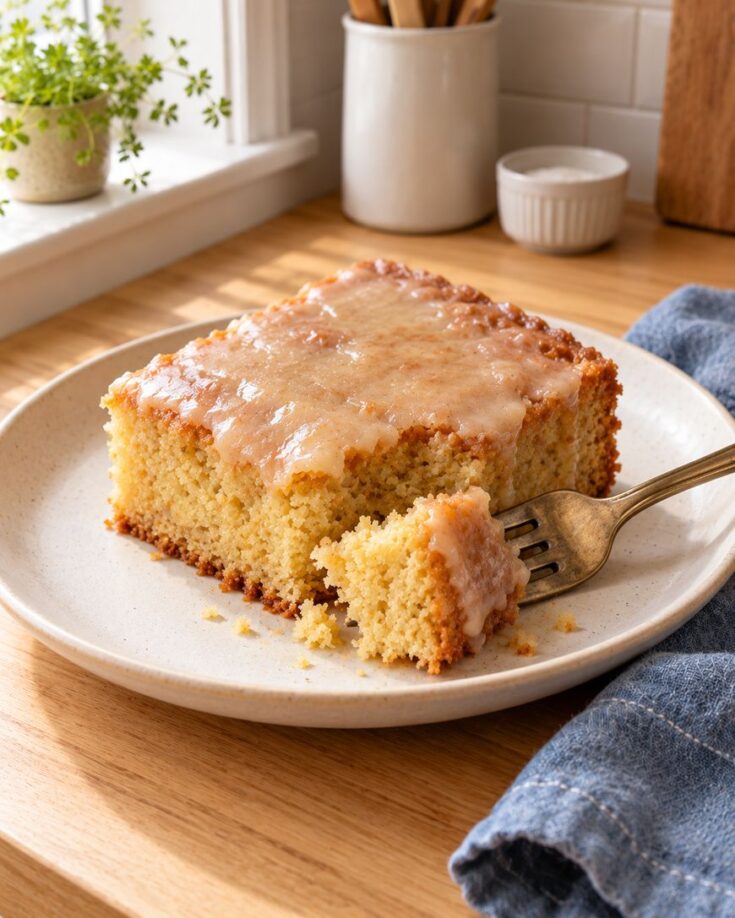
Brown Butter Cake
A soft, tender 9x13 inch cake made with nutty brown butter and brown sugar, finished with a simple brown butter glaze.
Ingredients
- 1 cup plus 2 tablespoons (255 g) unsalted butter
- 3/4 cup (150 g) granulated sugar
- 3/4 cup (165 g) packed light brown sugar
- 3 large eggs, at room temperature
- 1 tablespoon pure vanilla extract
- 2 cups (250 g) all-purpose flour
- 1 1/2 teaspoons baking powder
- 1/2 teaspoon baking soda
- 1/2 teaspoon fine salt
- 1 cup buttermilk, at room temperature
- 1 1/2 cups (180 g) powdered sugar
- 2 to 3 tablespoons milk
- 1/2 teaspoon pure vanilla extract
- 1 pinch fine salt
Instructions
- Heat the oven to 350 degrees F. Grease a 9x13 inch baking pan and line it with parchment paper, leaving an overhang on the long sides.
- Melt the butter in a light colored saucepan over medium heat. Cook for 8 to 10 minutes, stirring gently, until it foams, turns amber, and smells nutty with golden brown flecks on the bottom.
- Scrape the butter and all the browned bits into a heatproof bowl. Spoon 2 tablespoons into a small bowl for the glaze and set aside.
- Pour the remaining browned butter over the granulated sugar and brown sugar in a large bowl and whisk until smooth. Let the mixture cool for 10 minutes.
- Whisk in the eggs one at a time, then whisk in 1 tablespoon vanilla.
- In a separate bowl, whisk together the flour, baking powder, baking soda, and 1/2 teaspoon salt. Add the flour mixture in three additions and the buttermilk in two additions, starting and ending with the flour. Fold just until no dry streaks remain.
- Scrape the batter into the pan and smooth the top. Bake for about 30 minutes, until golden and a toothpick in the center comes out with a few moist crumbs.
- Cool in the pan on a wire rack for 30 minutes.
- Whisk the powdered sugar, reserved 2 tablespoons browned butter, 2 tablespoons milk, 1/2 teaspoon vanilla, and a pinch of salt, adding more milk a teaspoon at a time until thick and pourable. Spread over the cooled cake, let set for 10 minutes, then cut into 16 squares.
Notes
Store covered at room temperature for up to 3 days, or freeze unglazed squares individually wrapped for up to 2 months. The cooling time is not included in the total time. Optional extras not included in the card: flaky sea salt, toasted pecans, or 1 teaspoon cinnamon. No buttermilk? Stir 1 tablespoon lemon juice into a liquid measuring cup, add whole milk to the 1 cup line, and let it sit 5 minutes.
Nutrition Information:
Yield:
16Serving Size:
1 squareAmount Per Serving: Calories: 300Total Fat: 14gSaturated Fat: 9gSodium: 180mgCarbohydrates: 43gFiber: 1gSugar: 32gProtein: 3g
Brown Butter Cake Questions Answered
Why does my brown butter cake taste bitter?
Bitterness usually means the butter went past amber into dark brown or black. Pull the pan off the heat as soon as the sputtering quiets and you see golden flecks, and start over if it smells acrid.
Can you use salted butter?
Yes, but you should cut the fine salt in the cake from 1/2 teaspoon to 1/4 teaspoon. Salted butter varies by brand, so unsalted butter gives you more control.
Can you make this cake ahead of time?
You can bake the cake a day ahead and glaze it just before serving. Cover it tightly and keep it at room temperature for up to 3 days.
Can you bake brown butter cake in round pans?
You can, though the card is written for a 9×13 inch pan. For two 9 inch rounds, plan on a shorter bake time and check them early with a toothpick.
Can you freeze brown butter cake?
Yes, freeze unglazed squares wrapped individually for up to 2 months. Thaw them at room temperature and add the glaze before serving.
Why This Brown Butter Cake Recipe Works
This brown butter cake works because the butter is browned, cooled, and whisked straight into the sugars. That means you get deep toasted flavor and a mixing method that is hard to get wrong, with no creaming and no mixer needed.
The eggs go in one at a time, and the flour and buttermilk are added in alternating rounds. That keeps the batter smooth without overmixing, so the crumb stays soft and tender.
The leavening and the buttermilk also work together. The baking soda reacts with the acid in the buttermilk, and the baking powder gives lift, which is how a cake made with melted butter still bakes up light.
The brown sugar plays a role too, since its moisture and caramel notes echo the toasted milk solids in the butter. Together they give you a cake that tastes layered and complex while the ingredient list stays short.
Bake Your Brown Butter Cake Today
You now have everything you need to bake a brown butter cake with a toffee flavor, a tender crumb, and a glaze that sets in minutes. Brown the butter, keep your eye on the color, and bake it for your next gathering or an easy weeknight treat.
A brown butter cake is the kind of recipe worth keeping on hand, since it turns plain pantry staples into something that tastes bakery made. Once you have browned butter a few times, you will start spotting other places to use it.
Try the recipe, leave a comment with how it turned out, and save the card so it is ready the next time you want an easy homemade cake.
Brown Butter Rice Krispie Treats That Taste Like Toffee
The Snickerdoodle Bundt Cake That Tastes Like the Cookie, Only Softer