Last updated: September 11, 2026
This whipped ricotta recipe transforms a humble tub of ricotta into something silky, cloud-like, and deeply satisfying in under five minutes. Check the recipe card below for exact measurements and steps.
What Is Whipped Ricotta
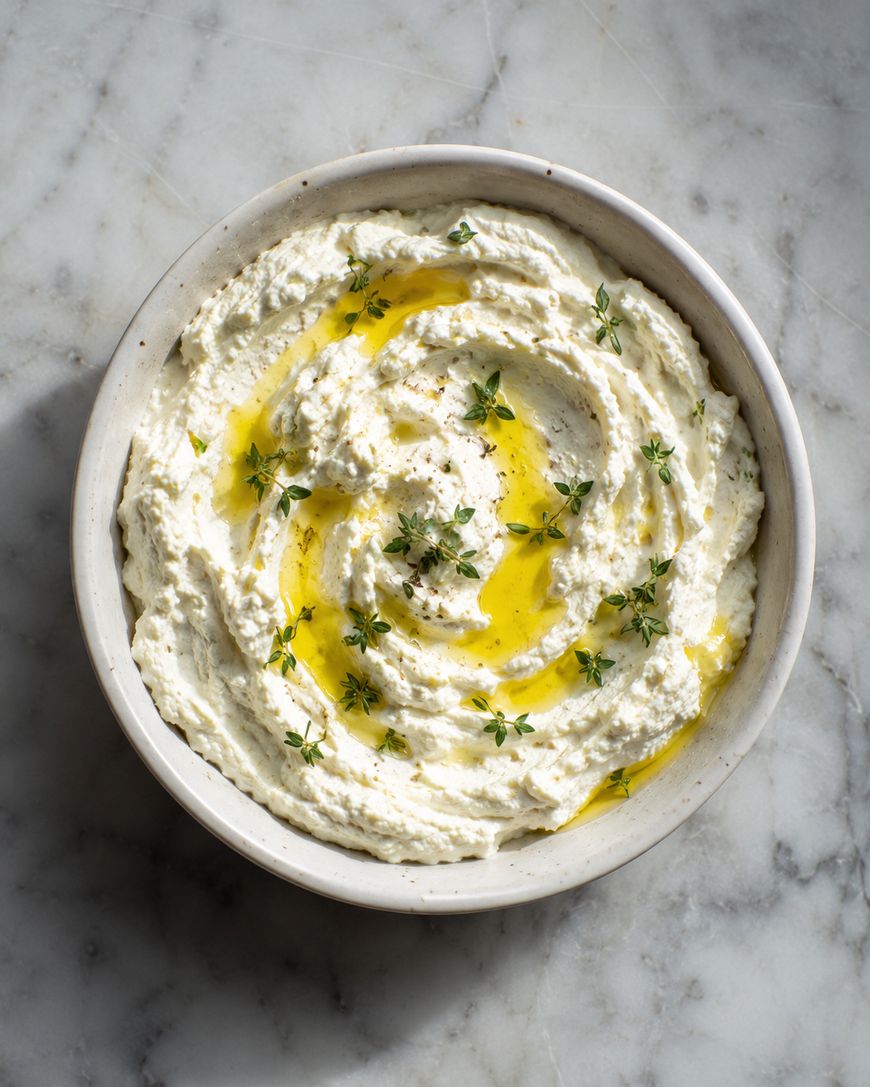
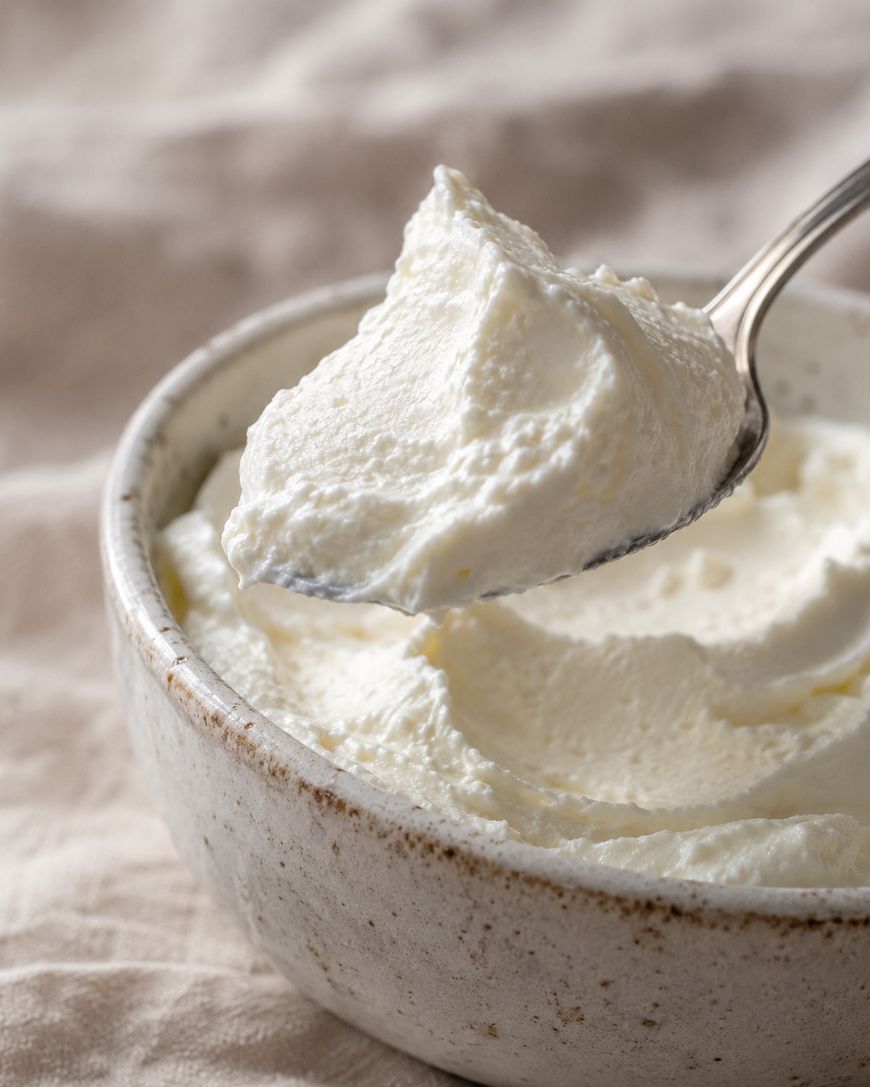
Whipped ricotta is whole-milk ricotta that has been blended or processed until it becomes ultra-smooth and airy. The texture shifts from slightly grainy to velvety, making it far more versatile as a spread, dip, or topping than straight-from-the-container ricotta.
Why Whole-Milk Ricotta Works Best
Whole-milk ricotta has a higher fat content than part-skim, which means it whips into a richer, creamier result. Brands like Galbani and Calabro are widely available at most grocery stores and hold up particularly well when blended.
Part-skim ricotta can be used in a pinch, but the result will be slightly less indulgent and may separate more quickly once plated.
Ingredients for Whipped Ricotta
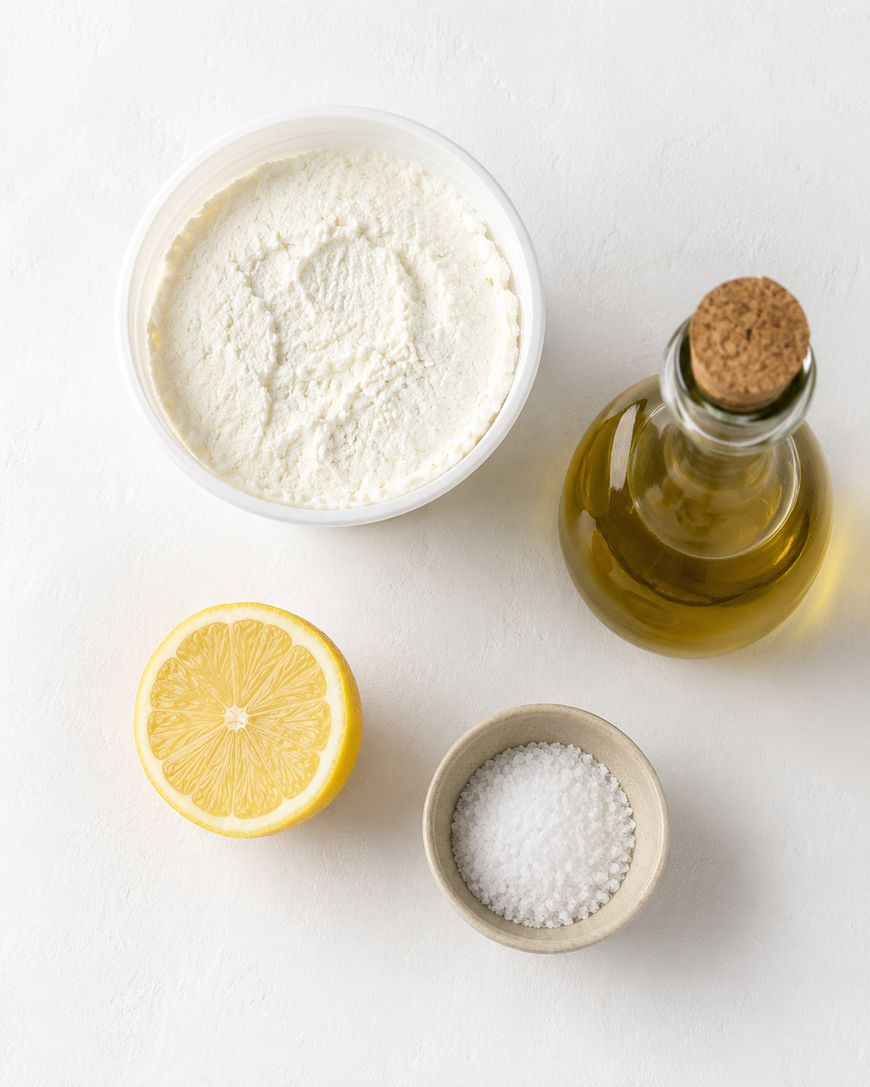
The base recipe calls for just four ingredients: whole-milk ricotta, extra-virgin olive oil, lemon juice, and a pinch of kosher salt. Each element plays a specific role in the final flavor.
The Role of Each Ingredient
Olive oil adds richness and helps the ricotta blend into a smoother consistency. Fresh lemon juice brightens the flavor and keeps the spread from tasting heavy or flat.
Kosher salt enhances every other ingredient without overpowering the delicate dairy flavor. A small amount of black pepper added at the end gives a gentle, welcome bite.
How to Make Whipped Ricotta
Add the ricotta, olive oil, lemon juice, and salt to a food processor. Process for 60 to 90 seconds, scraping down the sides halfway through, until the mixture is completely smooth and fluffy.
Using a Food Processor vs. a Hand Mixer
A food processor gives the smoothest result because it breaks down the curd structure more completely. A hand mixer or stand mixer fitted with the whisk attachment also works well and produces a slightly lighter, more mousse-like texture.
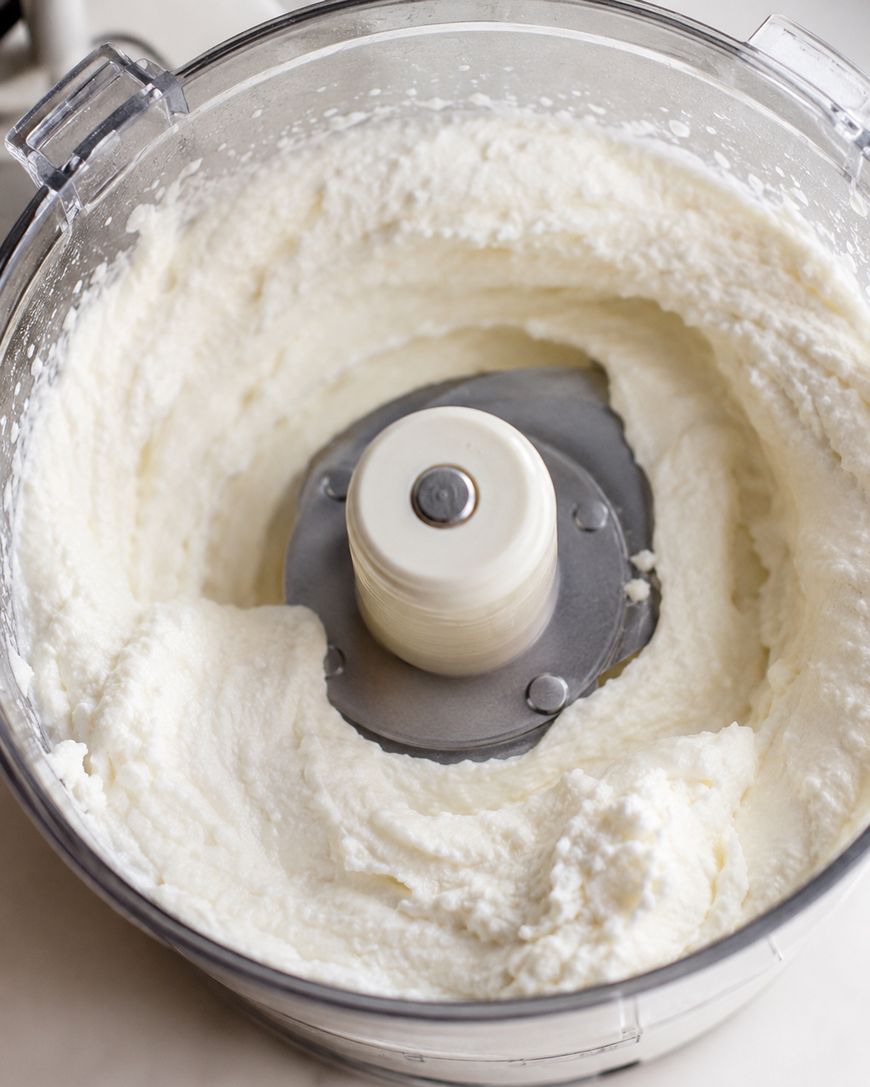
An immersion blender in a deep bowl is a good third option if neither appliance is available. Avoid stirring by hand, as this will not fully eliminate the graininess.
Timing and Texture
Sixty seconds of processing is often enough, but an additional 30 seconds makes a noticeable difference in airiness. Stop the machine, taste, and adjust salt or lemon before the final blend.
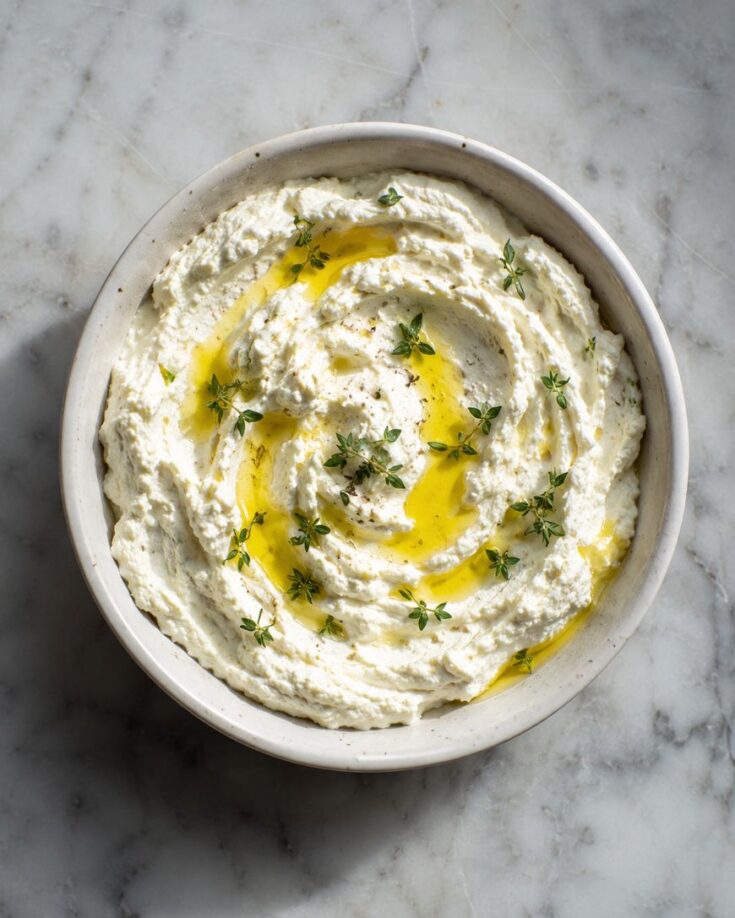
The finished ricotta should hold a soft peak when lifted with a spoon and spread easily without running. If it seems too thick, a teaspoon of whole milk or additional olive oil loosens it without diluting the flavor.
Variations and Customizations
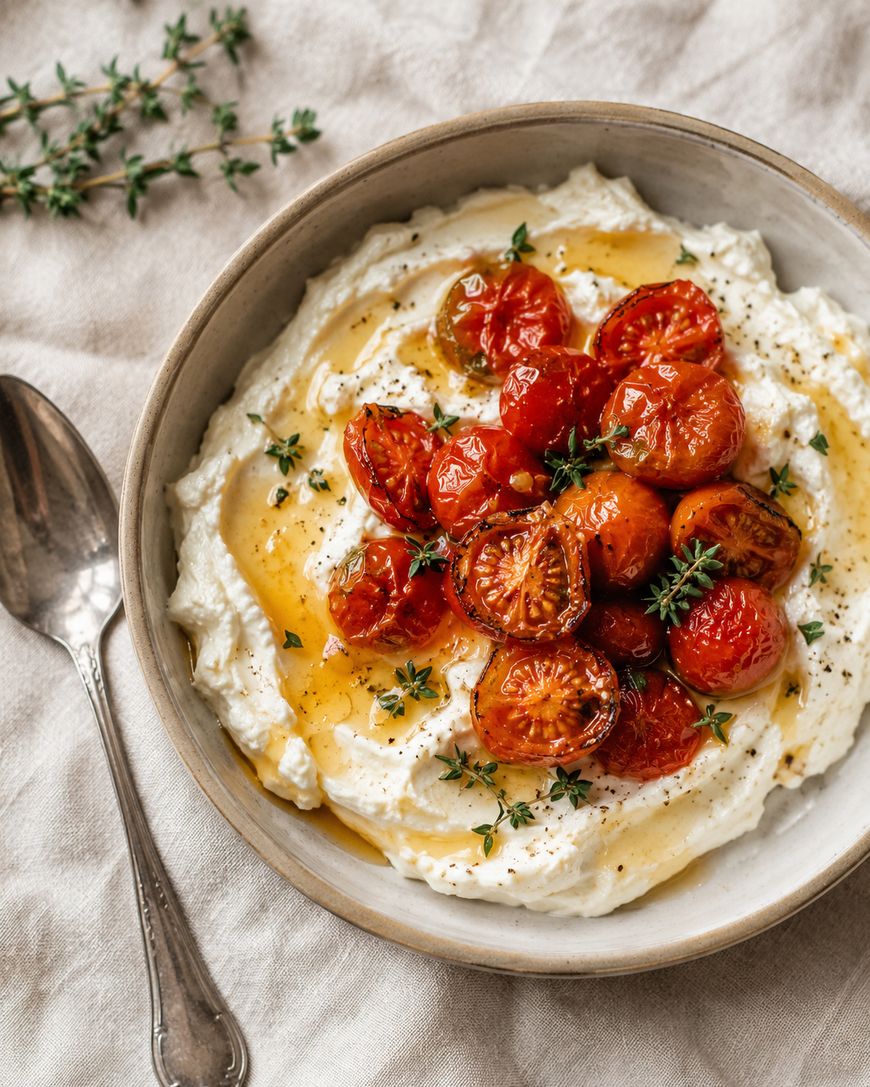
Whipped ricotta takes on different personalities depending on what is folded in or layered on top. Honey and fresh thyme create a sweet-savory version perfect for a cheese board.
Savory Toppings and Mix-Ins
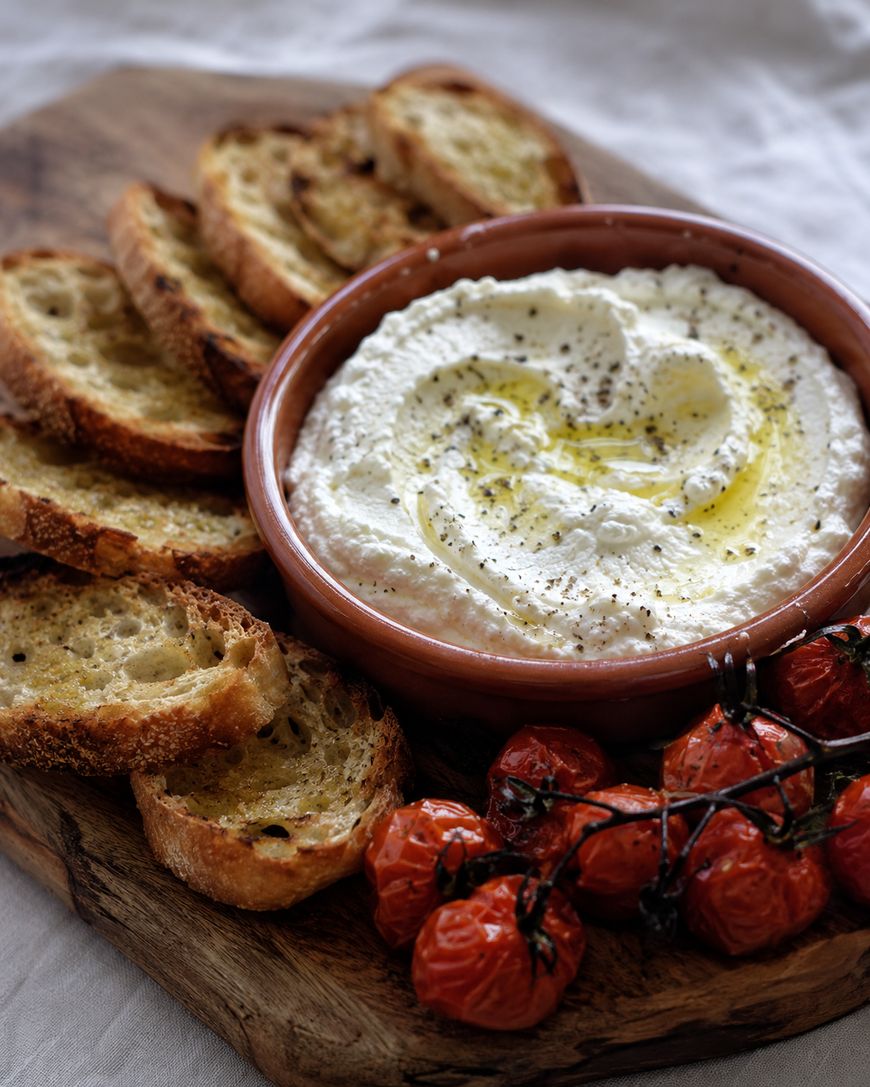
Roasted cherry tomatoes, a drizzle of chili oil, or a spoonful of pesto turn plain whipped ricotta into a stunning appetizer. Calabrian chili paste stirred directly into the base adds heat that builds gradually.
Garlic, either roasted whole until caramelized or grated raw for sharpness, is one of the most popular additions. Fresh herbs like basil, dill, or flat-leaf parsley can be folded in after blending for flecks of green throughout.
Sweet Versions
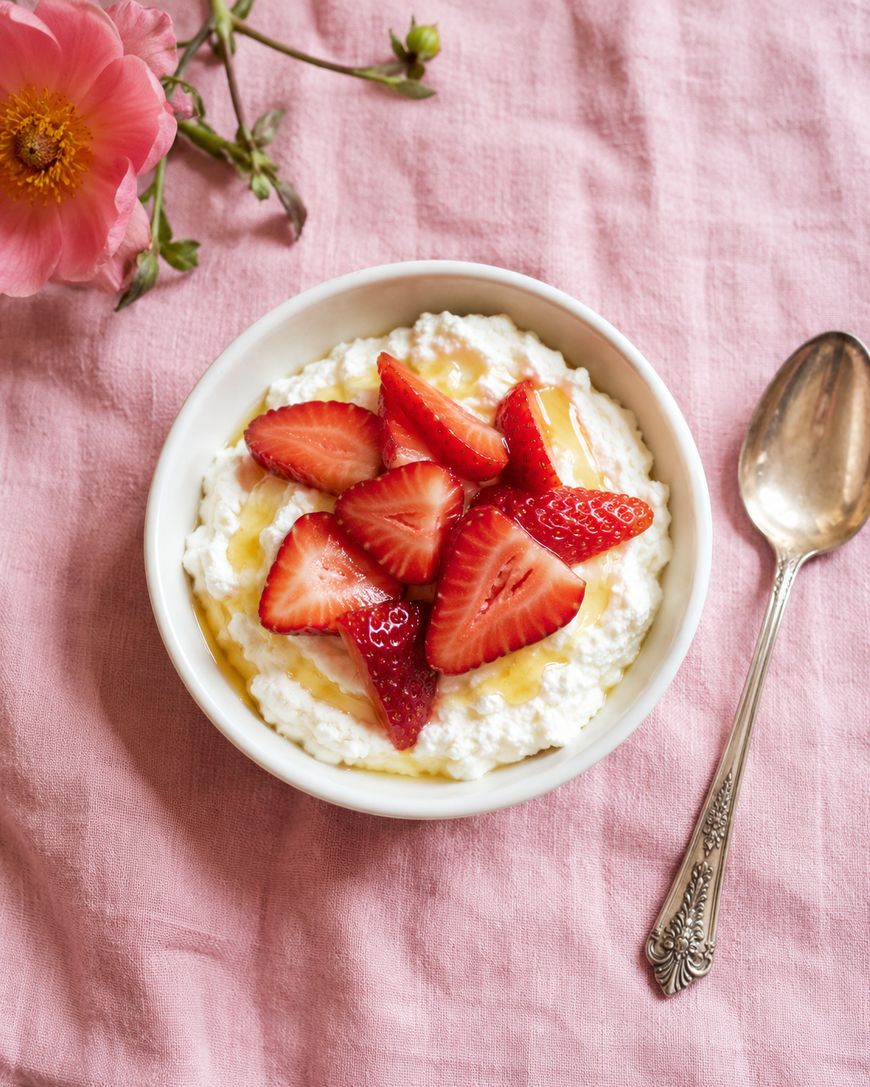
For a dessert-friendly version, add a tablespoon of powdered sugar and a splash of pure vanilla extract before blending. This sweet whipped ricotta pairs beautifully with fresh strawberries, grilled peaches, or a drizzle of wildflower honey.
Citrus zest, either lemon or orange, amplifies the brightness without adding liquid. A pinch of cinnamon works well in the fall alongside roasted figs or pears.
Substitutions
Cream cheese can replace up to half the ricotta for a tangier, denser spread. Greek yogurt stirred in after blending adds a probiotic tang and loosens the texture slightly.
Dairy-Free Options
Cashew-based ricotta, available at stores like Whole Foods and Trader Joe’s under brands such as Kite Hill, whips into a surprisingly similar result. Coconut cream blended with a squeeze of lemon and a tablespoon of nutritional yeast creates a dairy-free alternative with depth.
The processing time for cashew ricotta may need to increase by 30 seconds to achieve a fully smooth consistency.
How to Serve Whipped Ricotta
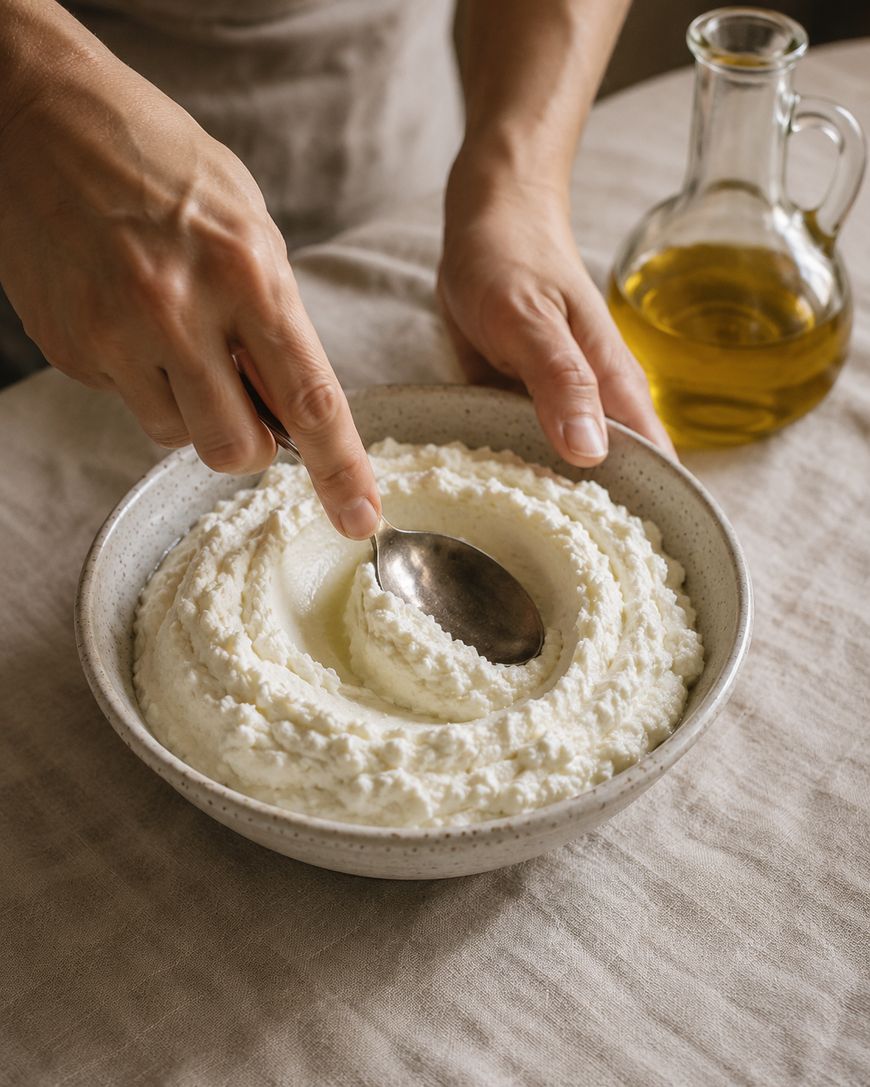
Spread whipped ricotta onto a shallow plate or bowl, then use the back of a spoon to create a swooping well in the center. This depression is where toppings pool, creating a visually dramatic presentation.
Bread and Dippers
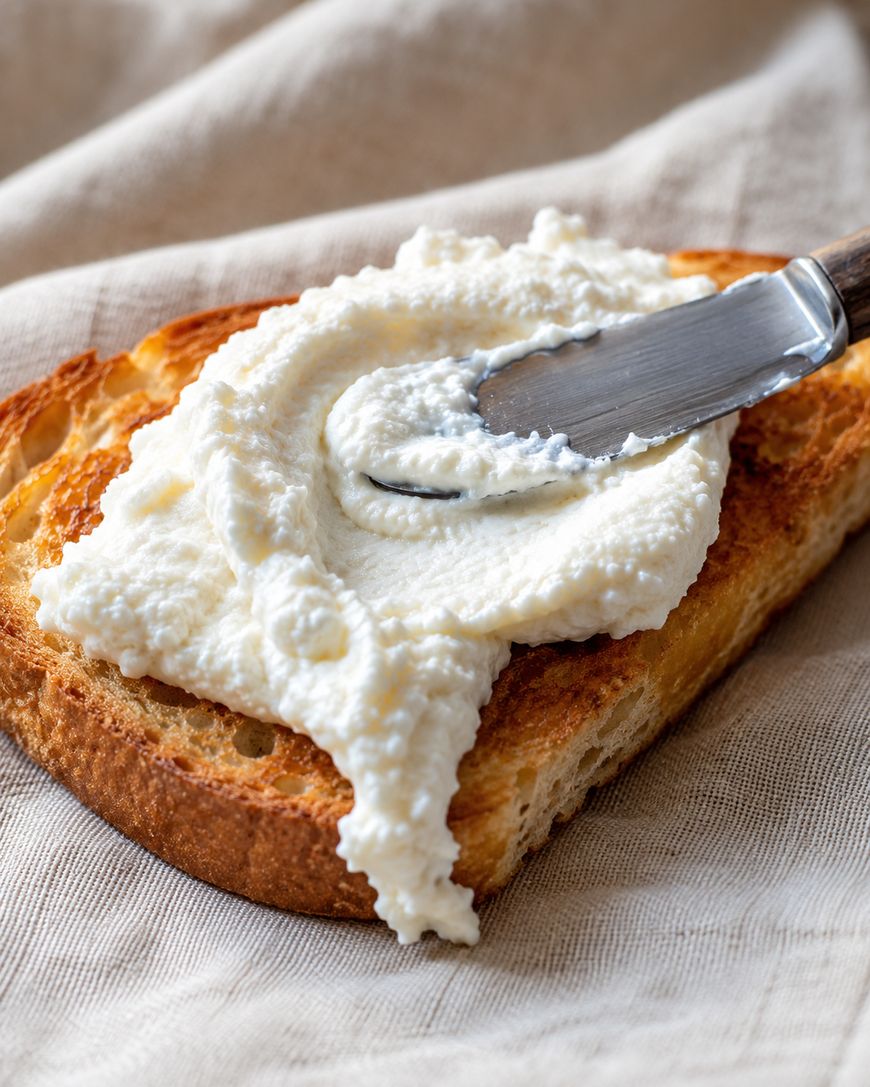
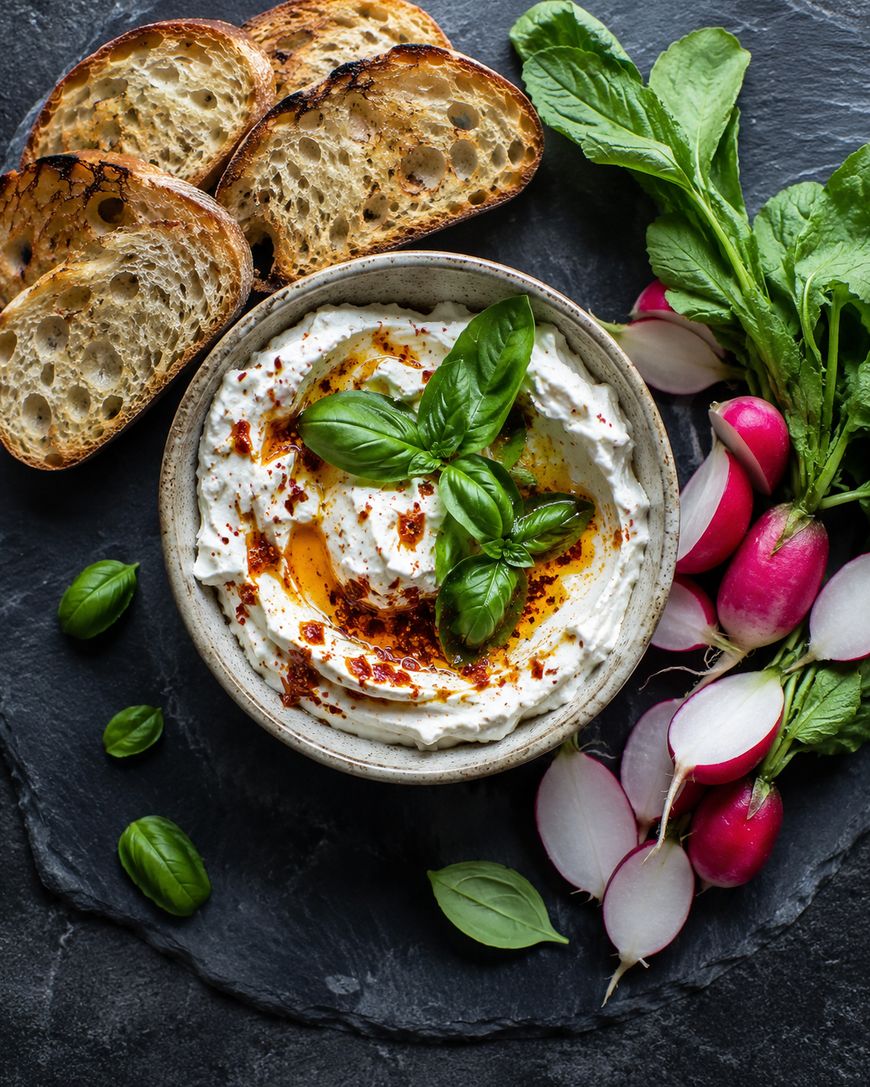
Toasted sourdough, crostini, pita chips, and seeded crackers are the most natural companions. Fresh vegetables like sliced radishes, cucumber rounds, and endive leaves offer a lighter option for dipping.
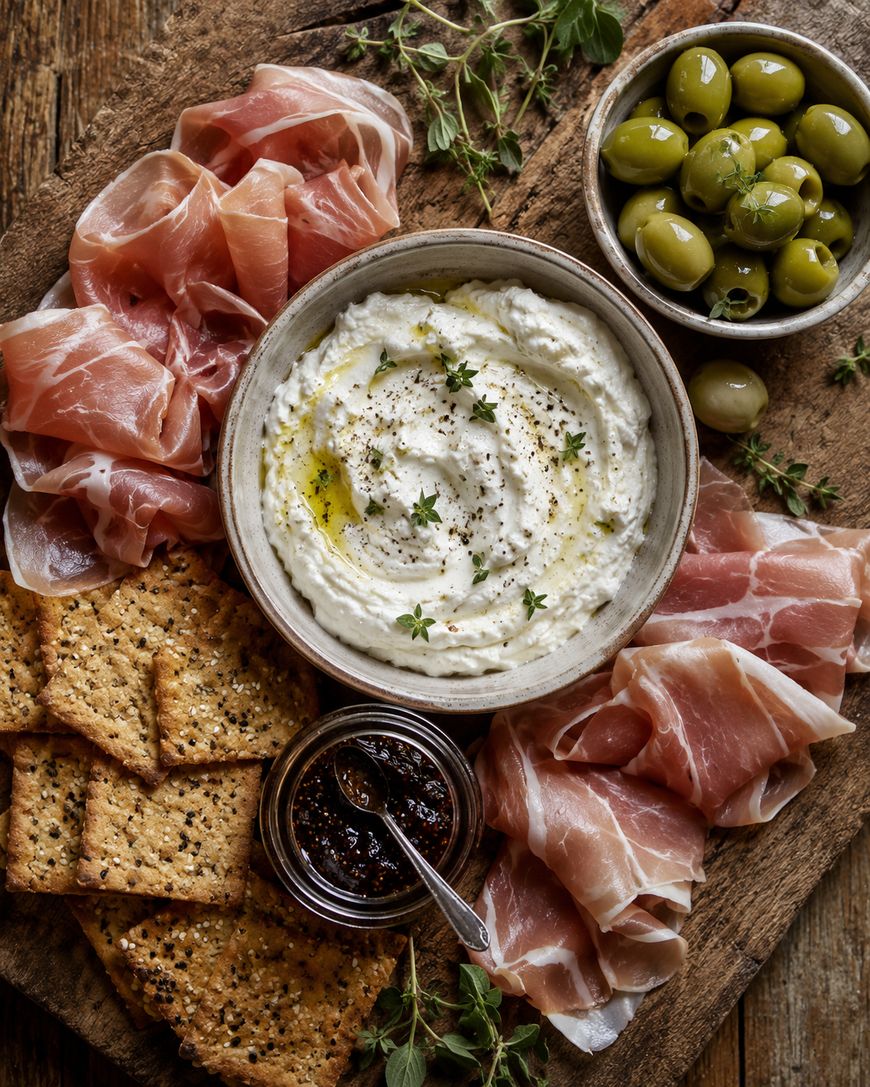
For entertaining, pair it with a charcuterie board alongside prosciutto, castelvetrano olives, and fig jam for a combination that feels complete without much effort.
As a Pasta Sauce
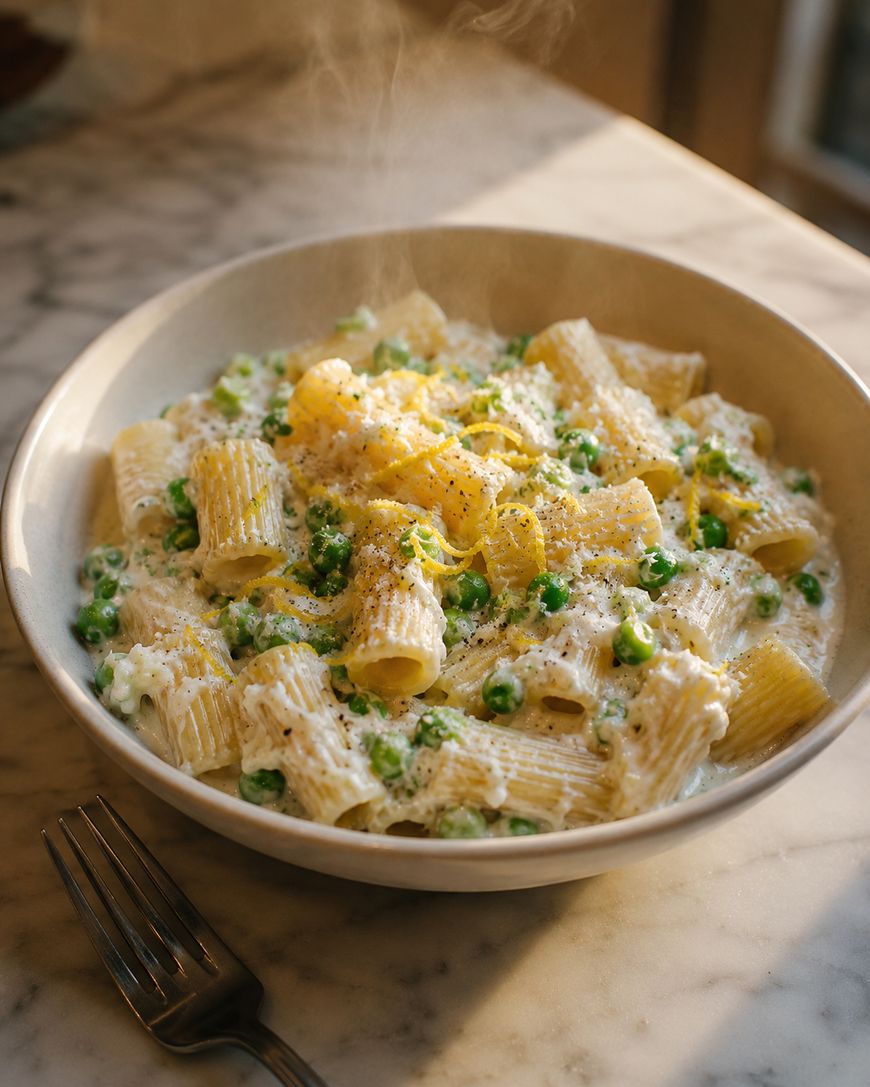
Thin the whipped ricotta with a splash of pasta water and toss with rigatoni, fresh peas, and lemon zest for a weeknight dinner that comes together in 20 minutes. The blended ricotta coats pasta more evenly than the unprocessed version.
Storage Instructions
Store whipped ricotta in an airtight container in the refrigerator for up to four days. Press a sheet of plastic wrap directly onto the surface before sealing to prevent a skin from forming.
How to Refresh Leftovers
Cold whipped ricotta firms up in the refrigerator. Let it sit at room temperature for 10 to 15 minutes, then give it a quick stir before serving.
It can also be briefly reblended with a splash of olive oil to restore the original creamy consistency. Whipped ricotta does not freeze well, as the texture becomes grainy and watery after thawing.
The Origins of Whipped Ricotta
Ricotta, whose name translates literally to “recooked” in Italian, has been produced in Italy since at least the Bronze Age. It is made from the whey left over after cheesemaking, a thrifty tradition that has sustained Italian cooking for centuries.
The technique of whipping ricotta to create a lighter, more refined spread is rooted in the cucina povera tradition of southern Italy, particularly in regions like Campania and Calabria. What was once a way to stretch humble ingredients has become a staple of modern appetizer menus from New York to Los Angeles.
American home cooks discovered this method largely through restaurant culture and food media in the early 2010s, when chefs like April Bloomfield at The Spotted Pig popularized bruschetta topped with a thick ribbon of blended ricotta. It has remained a fixture ever since.
The recipe card below has everything needed to make this at home from start to finish.
Whipped Ricotta Recipe
Creamy, silky whipped ricotta made in a food processor in just 5 minutes. Serve as a dip, spread, or topping with crostini, vegetables, or pasta.
Ingredients
- 2 cups (16 oz) whole-milk ricotta cheese
- 2 tablespoons extra-virgin olive oil, plus more for drizzling
- 1 tablespoon fresh lemon juice
- 1/2 teaspoon kosher salt
- 1/4 teaspoon freshly ground black pepper
- Optional toppings: honey, fresh thyme, chili oil, roasted tomatoes, or fresh herbs
Instructions
- Add the ricotta, olive oil, lemon juice, and salt to the bowl of a food processor.
- Process for 60 to 90 seconds, stopping to scrape down the sides halfway through, until the ricotta is completely smooth and fluffy.
- Taste and adjust salt and lemon juice as needed, then process for an additional 15 seconds to combine.
- Transfer to a shallow serving bowl and use the back of a spoon to create a well in the center.
- Drizzle with olive oil and add desired toppings. Serve immediately with toasted bread, crostini, or crackers.
Notes
Use whole-milk ricotta for the creamiest result. Part-skim ricotta can be used but will produce a less rich spread.
A stand mixer with a whisk attachment or a hand mixer can be used in place of a food processor.
Store leftovers in an airtight container in the refrigerator for up to 4 days. Press plastic wrap directly onto the surface to prevent a skin from forming.
Let refrigerated whipped ricotta sit at room temperature for 10 to 15 minutes and stir well before serving.
Nutrition Information:
Yield:
6Serving Size:
about 1/3 cupAmount Per Serving: Calories: 165Total Fat: 12gSaturated Fat: 6gTrans Fat: 0gUnsaturated Fat: 5gCholesterol: 38mgSodium: 210mgCarbohydrates: 5gFiber: 0gSugar: 1gProtein: 9g
This site provides estimated nutritional information. This information comes from online calculators. Although we try to provide accurate nutritional information, these figures are only estimates.
Frequently Asked Questions
What is the best ricotta brand for whipping?
Whole-milk ricotta from Galbani or Calabro produces the creamiest results because of their higher fat content and finer curd. Polly-O and BelGioioso are also reliable options found at most major grocery stores.
Store-brand ricotta can be used but may require a longer processing time and will yield a slightly less rich result. Draining store-brand ricotta in a fine-mesh strainer for 15 minutes before blending helps improve the final texture.
Can whipped ricotta be made ahead of time?
Yes, whipped ricotta can be prepared up to two days in advance and stored covered in the refrigerator. The flavor actually deepens slightly after a few hours as the lemon and salt meld with the dairy.
Remove it from the refrigerator about 15 minutes before serving and stir well to restore the creamy texture. Add toppings just before bringing it to the table so they stay fresh.
Is whipped ricotta the same as ricotta cream?
Whipped ricotta and ricotta cream are similar but not identical. Ricotta cream, used in Italian pastries like cannoli and cassata, often includes powdered sugar, vanilla, and sometimes chocolate chips or candied citrus.
Whipped ricotta in the savory sense is simply processed ricotta seasoned with oil, salt, and acid. The savory version has a shorter ingredient list and is meant to function as a spread or dip rather than a dessert filling.
What can be substituted for a food processor?
A stand mixer with a whisk attachment, a hand mixer, or an immersion blender all work as substitutes. Each produces a slightly different texture: the stand mixer creates the lightest, most aerated result, while the immersion blender is the quickest with the least cleanup.
Avoid using a regular blender, as the small amount of ricotta tends to cling to the sides and require constant scraping. A mini food processor is ideal for small batches.
How do you make whipped ricotta less thick?
Add olive oil or whole milk one teaspoon at a time and blend after each addition until the desired consistency is reached. Lemon juice also thins the ricotta while adding brightness.
Starting with room-temperature ricotta rather than cold ricotta from the refrigerator also helps achieve a smoother, slightly looser texture from the beginning.
Conclusion
This whipped ricotta recipe is one of the most adaptable dishes in a home cook’s repertoire, moving effortlessly from appetizer to pasta sauce to dessert component. With just a handful of ingredients and five minutes of active time, it delivers results that look and taste far more impressive than the effort required. Make this whipped ricotta recipe once and it will become a permanent fixture in regular rotation.