Last updated: September 11, 2026
This skillet cookie recipe turns a handful of pantry staples into one giant, gooey cookie with crisp, buttery edges, and you will love that the recipe card below has every measurement mapped out for you.
A cast iron skillet does something a baking sheet simply cannot.
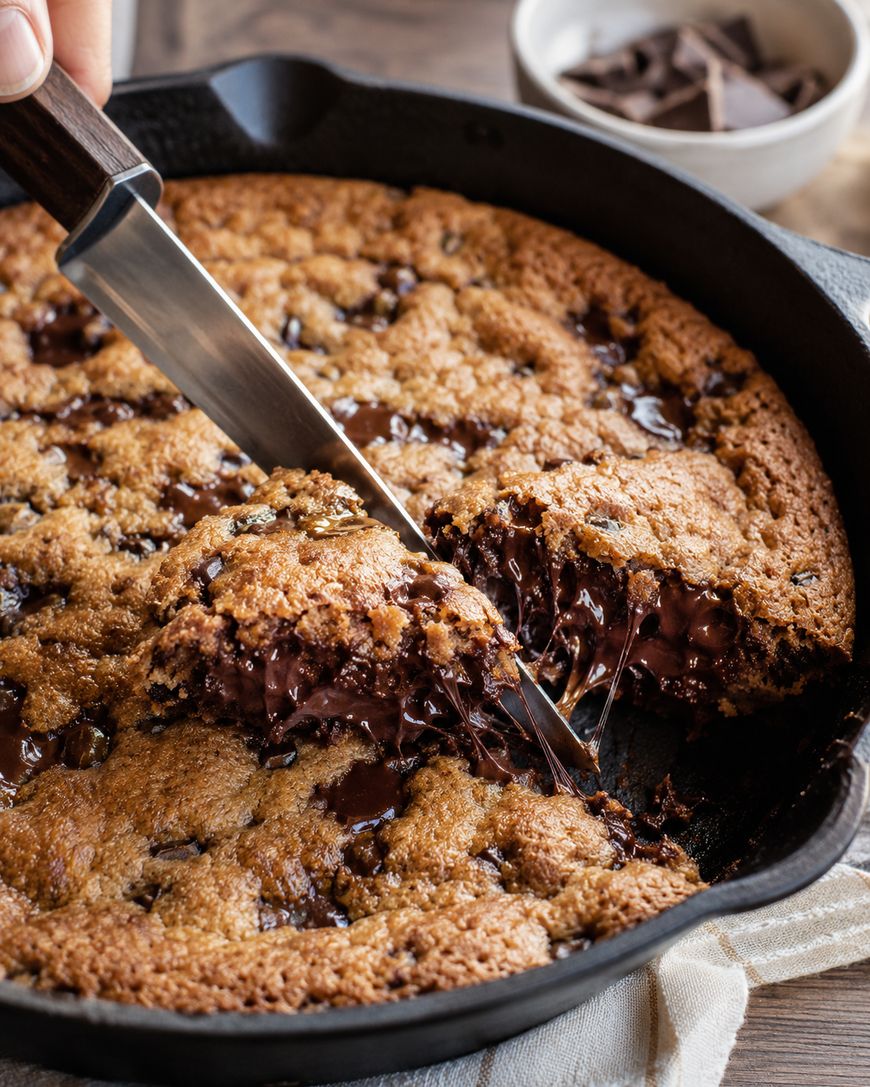
It holds heat evenly and keeps building warmth even after the oven door opens, which is exactly why the edges of this skillet cookie recipe turn deep golden brown while the center stays soft and almost molten.
Why a Skillet Changes the Texture
Cast iron conducts heat slowly and consistently, so the cookie dough spreads outward from the center as it bakes rather than setting all at once like it would in a standard oven tray.
Lodge and Le Creuset skillets both work well here, though a well-seasoned 10-inch Lodge is the most common choice for home bakers because it retains heat long after you pull it from the oven.
Choosing the Right Pan Size
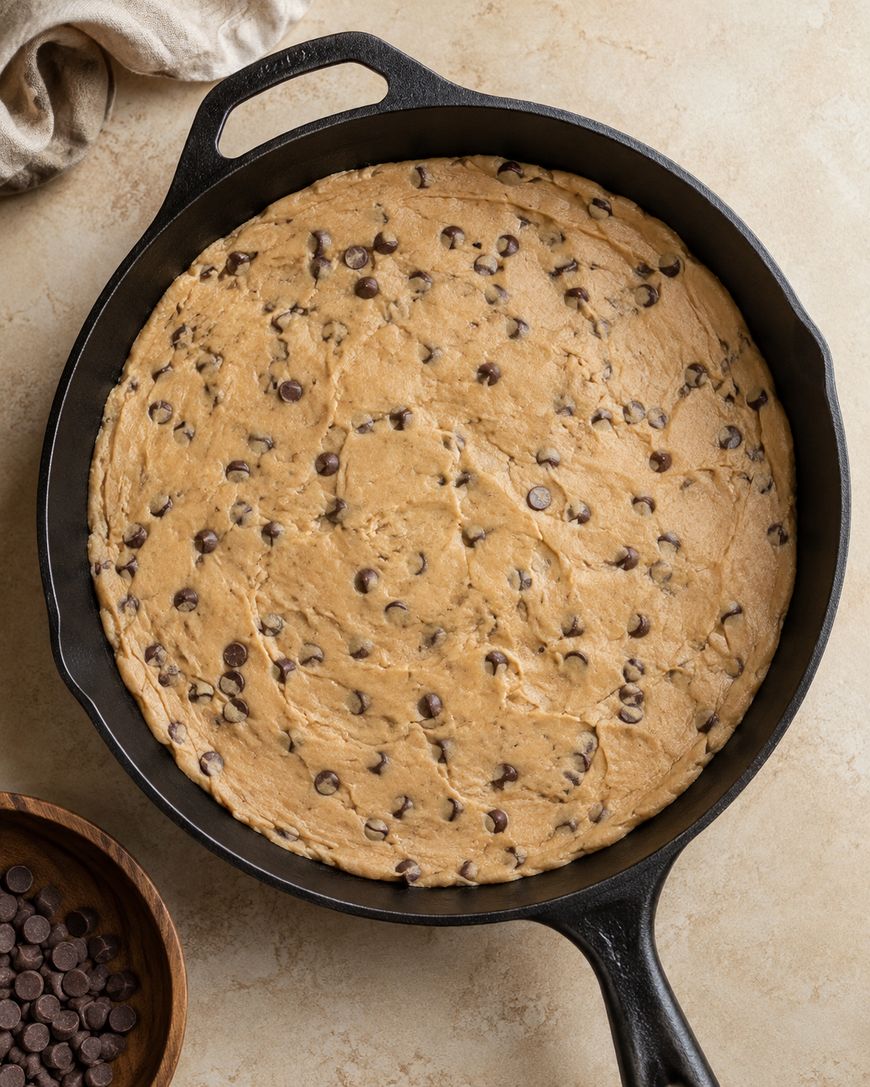
A 10-inch skillet is the sweet spot for this recipe, giving you a cookie that is roughly an inch and a half thick at the center with those signature crackled edges.
A smaller 8-inch pan will give you a taller, more brownie-like center, while a 12-inch pan spreads the dough thinner and increases the ratio of crispy edge to gooey middle.
Building the Dough
Brown butter is the ingredient that separates a forgettable skillet cookie from a memorable one, since cooking the butter until it smells nutty adds a toffee note you cannot get from melted butter alone.
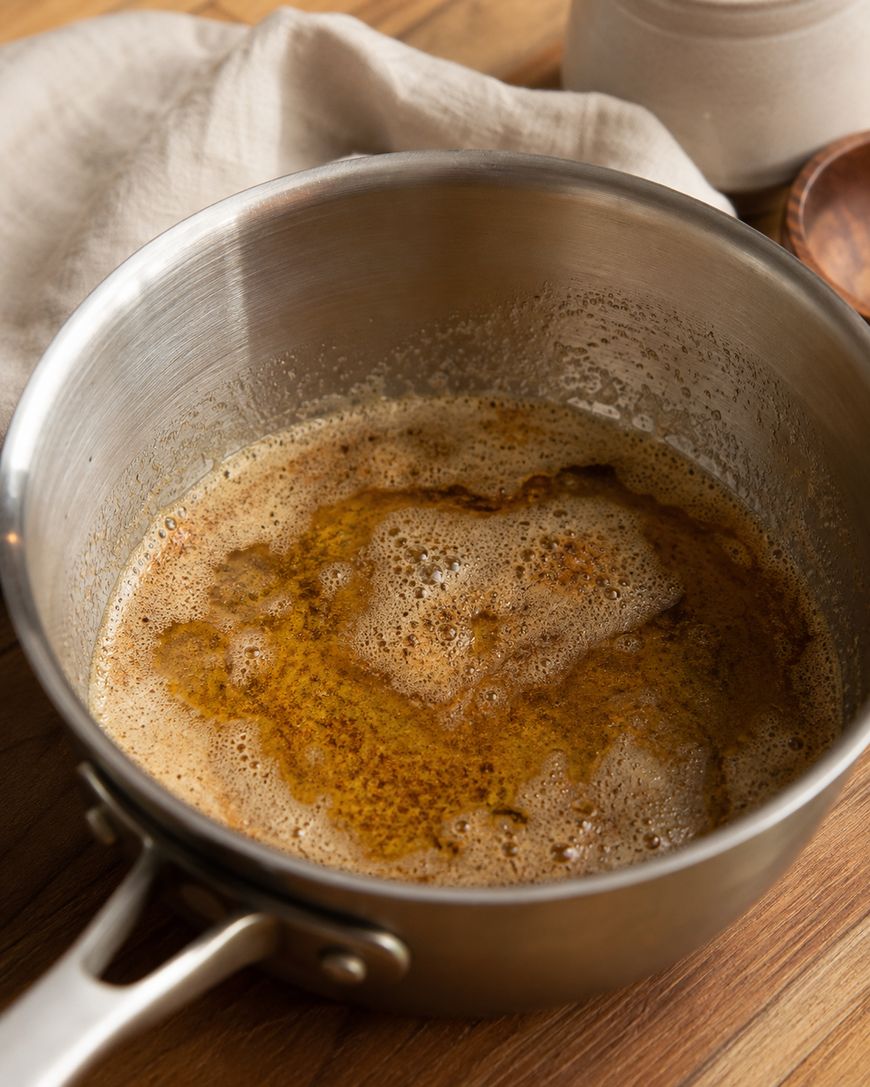
Let the browned butter cool for about ten minutes before mixing it into the sugars, because hot butter will scramble the eggs and thin out the dough too much.
Balancing Brown and White Sugar
A higher ratio of brown sugar to white sugar gives this skillet cookie recipe its deep caramel flavor and chewy texture, since brown sugar’s molasses content holds onto moisture during baking.
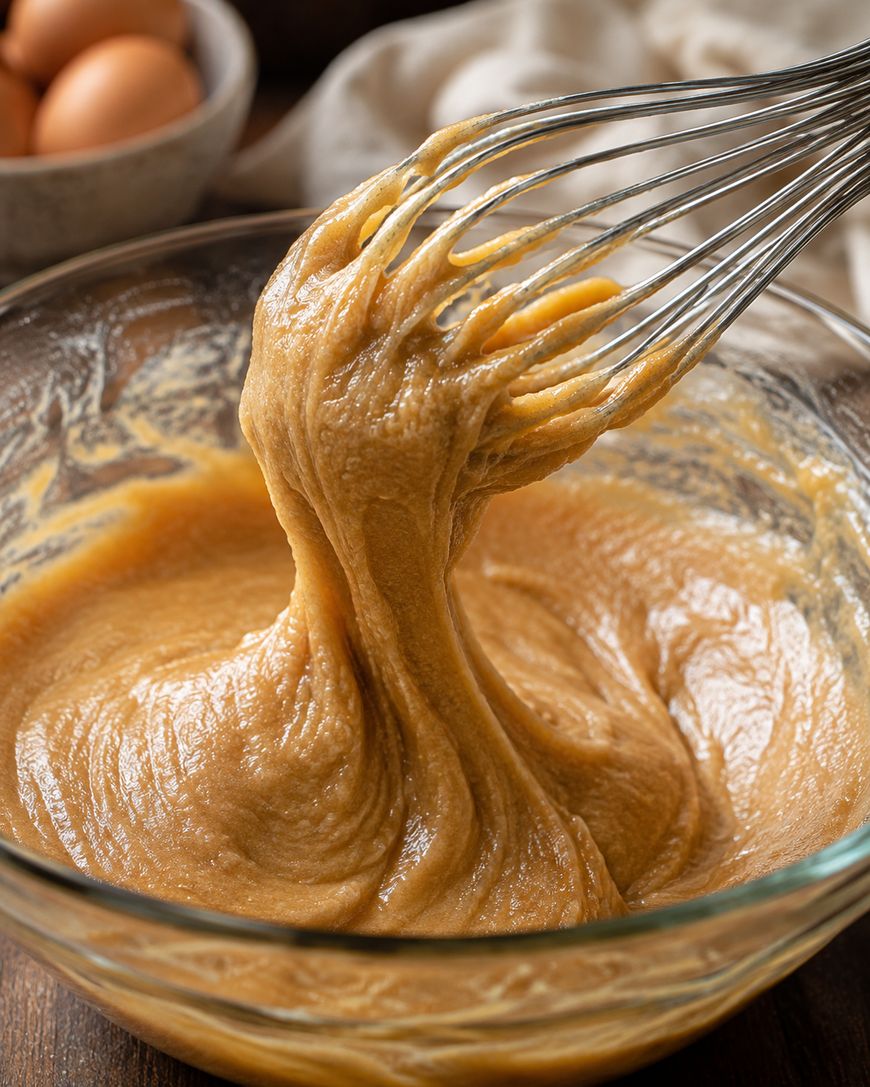
If you prefer a slightly crisper bite throughout, shift the ratio closer to equal parts brown and white sugar.
Mixing the Dry Ingredients
Whisk the flour, baking soda, and salt together before folding them into the wet mixture, since this keeps the leavening evenly distributed and prevents pockets of bitterness from unmixed baking soda.
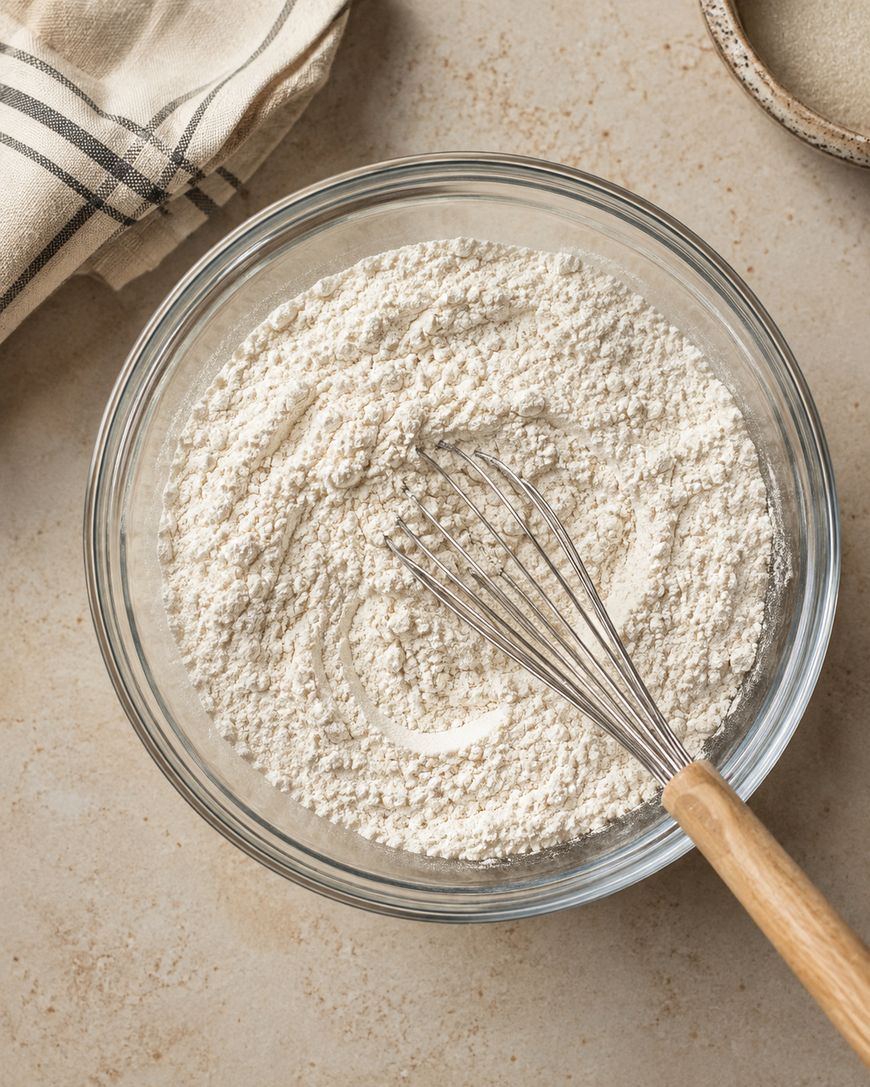
Overmixing at this stage develops gluten and makes the finished cookie tough, so stop folding as soon as the flour disappears into the dough.
Baking the Skillet Cookie
Press the dough evenly into your prepared skillet, leaving a slightly thinner layer at the very center since it will rise and fill in during baking.

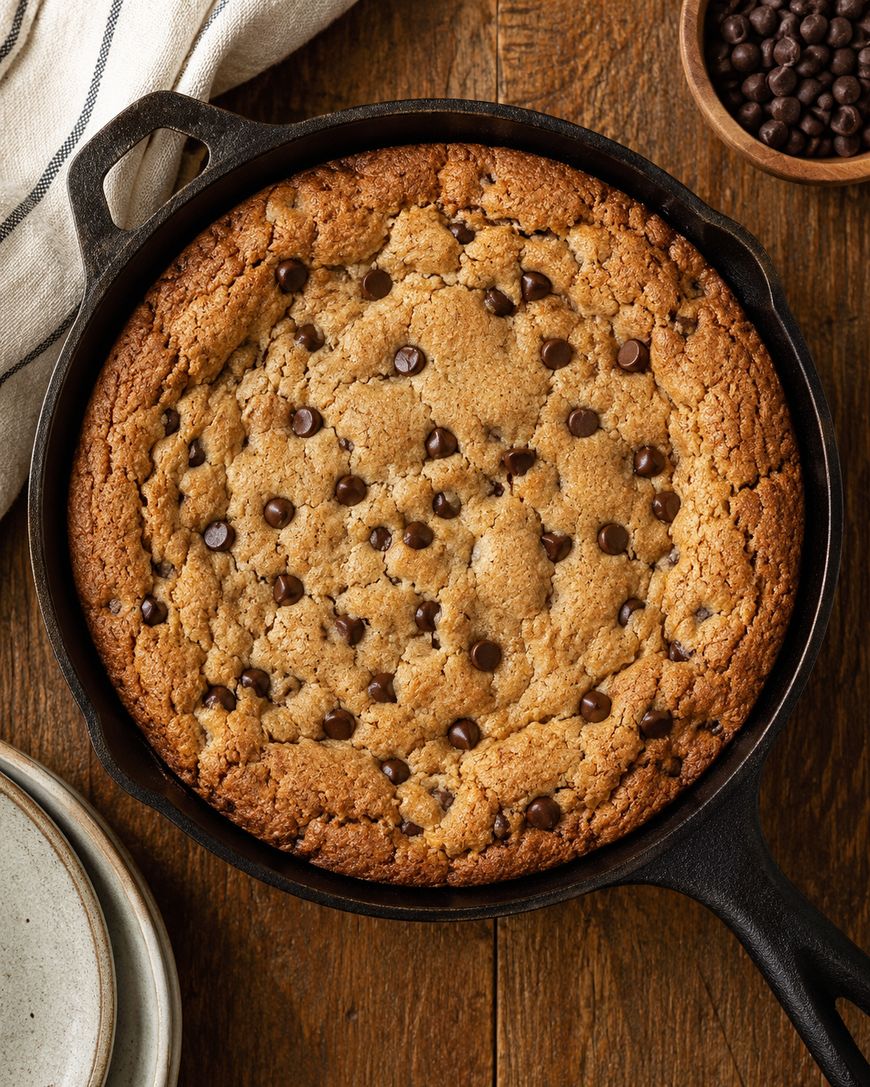
A 350°F oven is the standard temperature for this recipe, and the cookie is done when the edges are deeply golden and the center still looks slightly underbaked, since it continues cooking from the residual heat of the cast iron after you remove it.
Chocolate Chip Variations
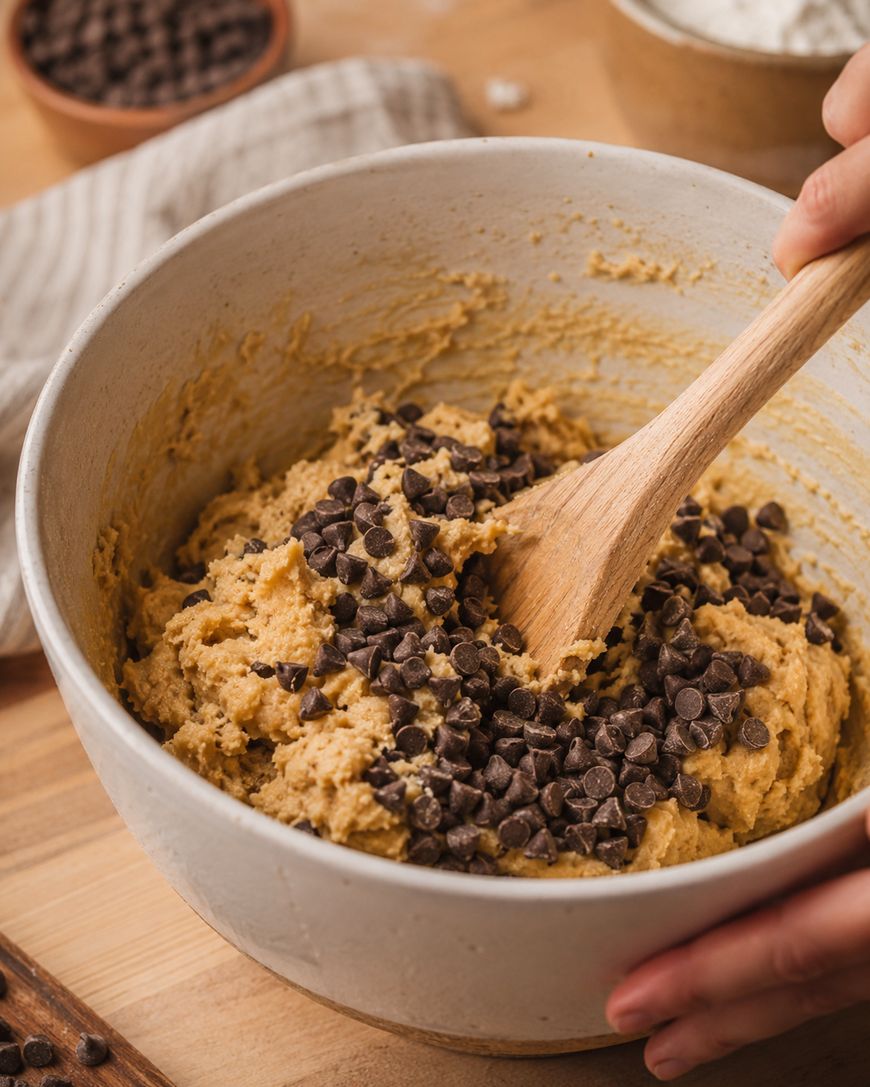
Semi-sweet chocolate chips are the classic choice, though a mix of chopped dark chocolate bars and chocolate chips creates pockets of melty chocolate alongside chips that hold their shape.
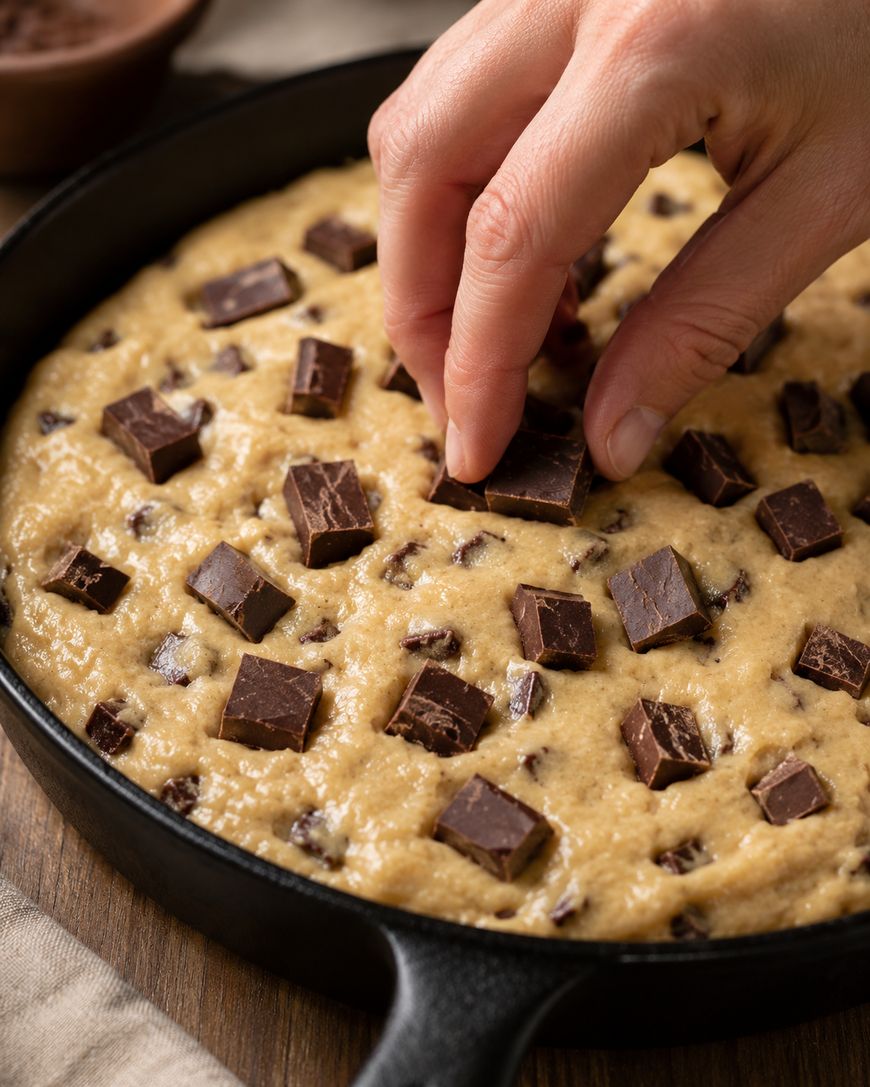
For a bakery-style finish, press a few extra chocolate chunks into the top of the dough right before it goes into the oven so they show up in the finished skillet cookie recipe photos.
Add-In Ideas Beyond Chocolate
Toasted pecans or walnuts add crunch and a toasty flavor that pairs especially well with the brown butter base.
Flaky sea salt sprinkled over the top right after baking cuts through the sweetness and gives every bite a little contrast.
Storage and Reheating
Leftover skillet cookie keeps well at room temperature for up to three days when covered tightly with plastic wrap or foil directly over the skillet.
To bring back that fresh-from-the-oven gooeyness, warm individual slices in the microwave for about 15 seconds, or reheat the whole skillet in a 300°F oven for 10 minutes.
Freezing the Dough
This dough freezes well if you want to prep ahead, so press it into a disc, wrap it tightly, and freeze it for up to three months before thawing overnight in the refrigerator.
Serving Suggestions
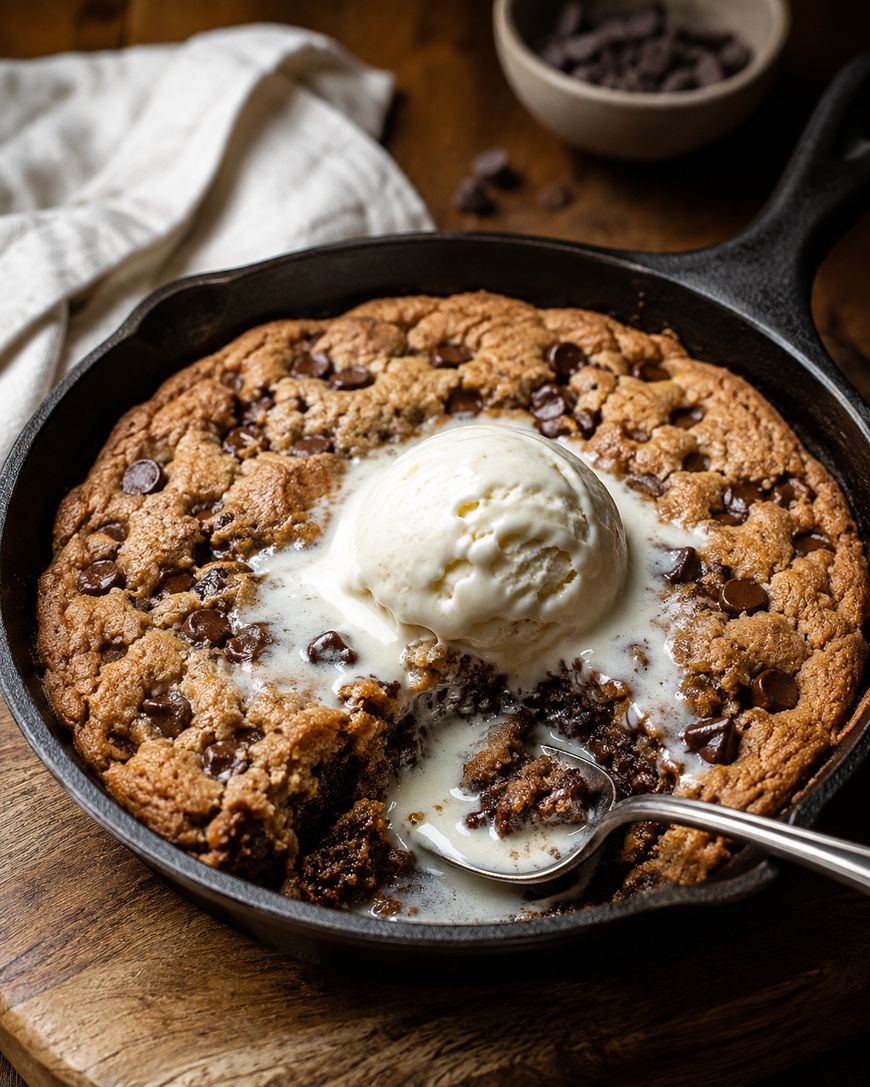
A warm skillet cookie recipe is best served straight from the pan with a scoop of vanilla ice cream melting into the center, and a few spoons make it an easy dessert to share.
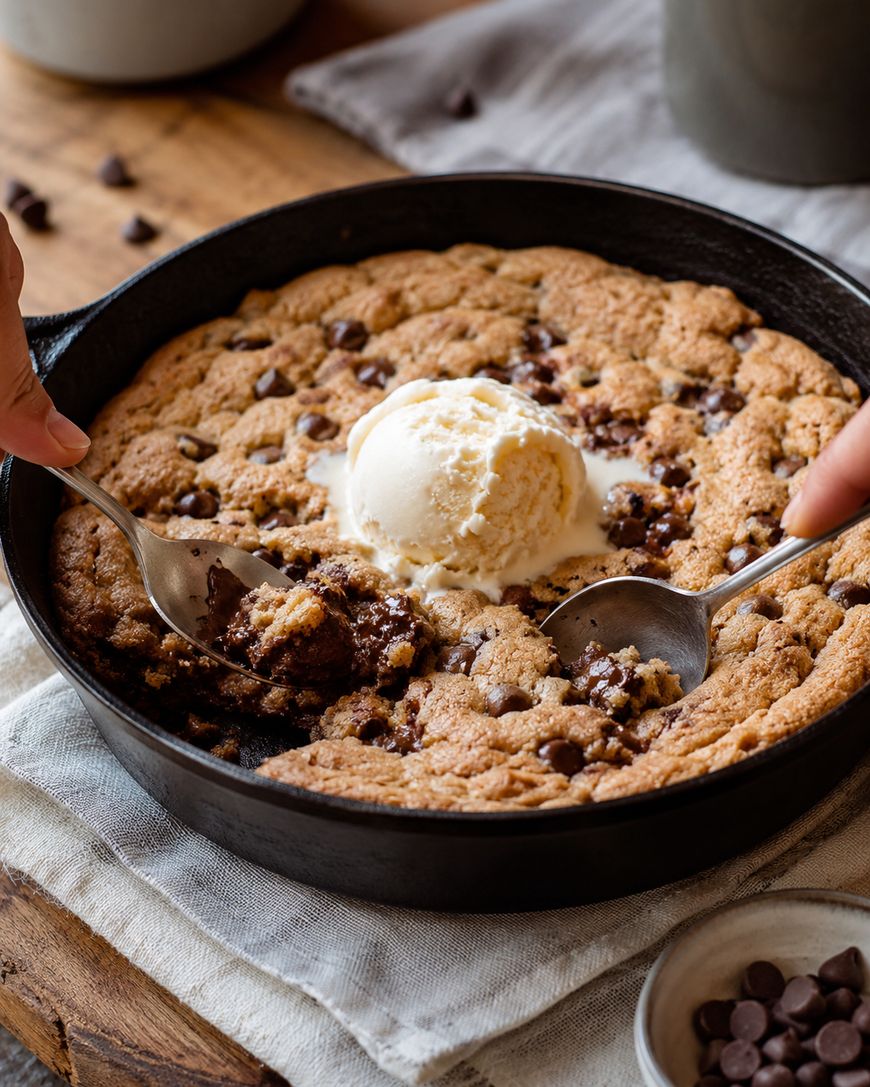
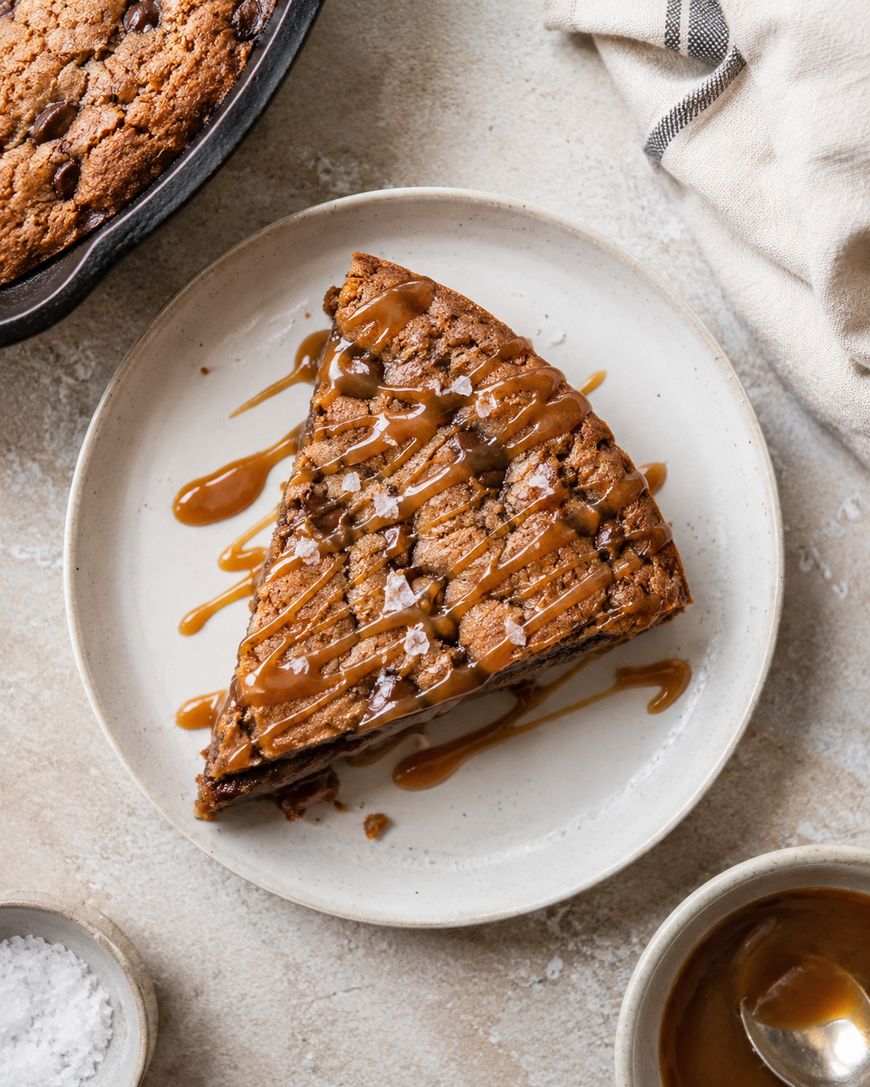
Drizzling warm caramel or a dusting of flaky salt right before serving turns this into a dessert that feels restaurant-worthy without any extra effort.
Where the Skillet Cookie Trend Came From
Skillet cookies grew out of the same cast iron dessert tradition that gave us skillet cornbread and deep-dish pizza, where bakers realized that thick, heavy pans could transform a familiar recipe into something with new texture and presentation.
The format took off in American diners and bakeries as a shareable dessert, often served warm with ice cream, and it has since become a favorite for home bakers because it requires no scooping, shaping, or batch baking.
Ready to bake your own? Use the recipe card below for exact measurements, times, and nutrition information.
Skillet Cookie Recipe
A giant, gooey chocolate chip cookie baked in a cast iron skillet with crisp golden edges and a soft, molten center.
Ingredients
- 1 cup unsalted butter, browned and cooled
- 1 cup packed brown sugar
- 1/2 cup granulated sugar
- 2 large eggs
- 2 teaspoons vanilla extract
- 2 1/2 cups all-purpose flour
- 1 teaspoon baking soda
- 1 teaspoon kosher salt
- 2 cups semi-sweet chocolate chips
- Flaky sea salt, for topping
Instructions
- Preheat the oven to 350°F and grease a 10-inch cast iron skillet.
- Brown the butter in a saucepan over medium heat until nutty and golden, then let it cool for 10 minutes.
- Whisk the browned butter, brown sugar, and granulated sugar together until smooth.
- Whisk in the eggs and vanilla extract until fully combined.
- In a separate bowl, whisk together the flour, baking soda, and salt.
- Fold the dry ingredients into the wet mixture until just combined.
- Fold in the chocolate chips, reserving a small handful for the top.
- Press the dough evenly into the prepared skillet and scatter the reserved chocolate chips over the top.
- Bake for 22 to 27 minutes, until the edges are deeply golden and the center is just set but still soft.
- Sprinkle with flaky sea salt and let cool for 10 minutes before slicing and serving.
Notes
For extra gooey centers, pull the skillet cookie a few minutes early since it continues cooking from residual heat.
Nutrition Information:
Yield:
8Serving Size:
1 wedgeAmount Per Serving: Calories: 470Total Fat: 24gSaturated Fat: 14gSodium: 320mgCarbohydrates: 60gFiber: 2gSugar: 40gProtein: 6g
This site provides estimated nutritional information. This information comes from online calculators. Although we try to provide accurate nutritional information, these figures are only estimates.
Skillet Cookie Recipe Questions
Do I need a cast iron skillet for this recipe?
Cast iron gives you the best texture contrast between crisp edges and a gooey center, but an oven-safe stainless steel skillet will also work.
Avoid nonstick skillets with plastic handles, since this recipe needs to go into a hot oven.
Can I make this skillet cookie recipe ahead of time?
Yes, you can press the dough into the skillet, cover it, and refrigerate it for up to 24 hours before baking.
Let it sit at room temperature for about 15 minutes before it goes into the oven so it bakes evenly.
Why is my skillet cookie undercooked in the middle?
A slightly gooey center is the goal, but if it is fully liquid, your oven may be running cool or the skillet may be too large for the amount of dough.
Check for doneness by looking at the edges rather than the very center, since they should be deeply golden before you pull the pan.
Can I double this recipe?
Doubling works well if you use two 10-inch skillets rather than one oversized pan, since a single skillet that is too large will spread the dough too thin and dry it out.
Bake both pans on the same oven rack for the most even results.
What is the best way to cut a skillet cookie?
Let the cookie cool for at least 10 minutes before slicing so the center has a chance to set slightly, then cut it into wedges like a pie.
A sharp knife dipped in warm water between cuts gives you the cleanest slices.
Can I use a different type of chocolate?
Milk chocolate, dark chocolate, or even white chocolate chips all work well in this skillet cookie recipe, so choose based on your preference for sweetness.
A mix of two types adds visual contrast and more complex flavor in every bite.
This skillet cookie recipe turns a short ingredient list into a dessert that feels special enough for company but easy enough for a weeknight, and the recipe card above has every detail you need to get it right the first time.