Last updated: October 22, 2026
Lemon meringue pie is the dessert you reach for when you want something bright, tangy, and just a little dramatic to look at.
You will find the full recipe card below with exact measurements, but the walkthrough here covers every stage so you can bake the whole pie from this post alone.
Why Lemon Meringue Pie Works So Well
Lemon meringue pie earns its spot on the classic dessert list because it balances three distinct textures in one slice.

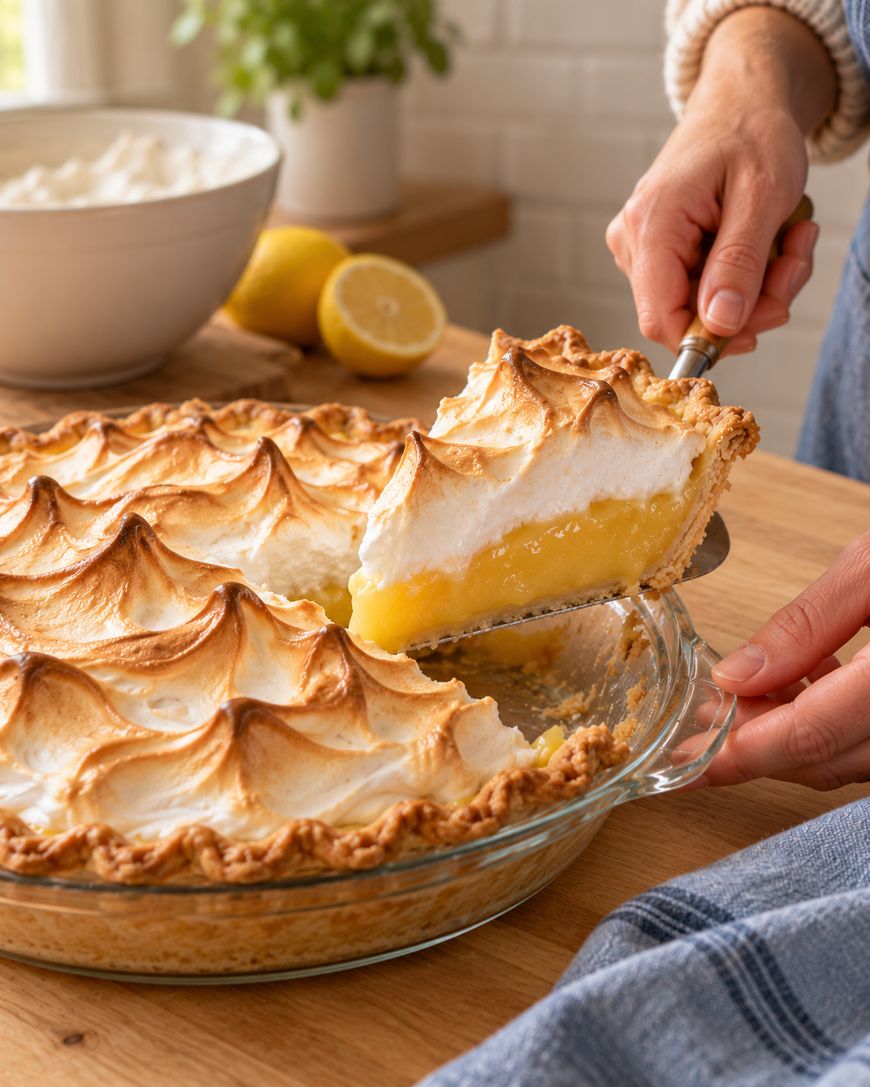
There is a crisp, blind-baked crust on the bottom, a thick and glossy lemon filling in the middle, and a soft, pillowy meringue on top that gets toasted until golden.
Each layer is built separately and then assembled, which is part of why this pie can look intimidating even though every individual step is simple.
Once you understand what each layer is doing, lemon meringue pie stops feeling like a special-occasion-only bake and becomes something you can make on a regular weekend.
The Crust
A single 9-inch pie crust, blind-baked until golden, is what gives this pie its structure.
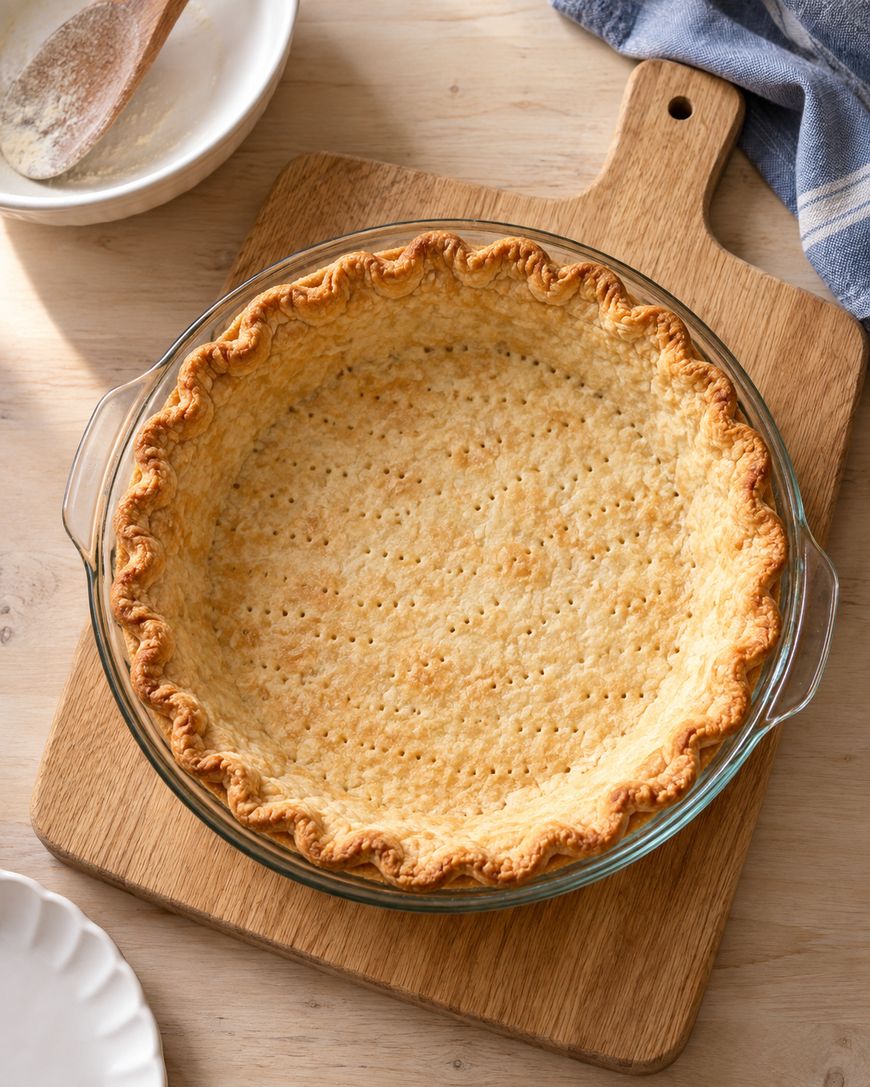
Blind baking means baking the crust on its own before you add any filling, usually with pie weights or dried beans to keep it from puffing up or sliding down the sides.
You want the crust fully baked and cooled before the warm lemon filling goes in, since a soft or underbaked crust will turn soggy once the filling sets.
A store-bought crust works fine here if you are short on time, and it will not change how the filling or meringue behave.
The Lemon Filling
The filling in this recipe is a cooked lemon curd made on the stovetop, thickened with cornstarch and egg yolks rather than eggs alone.

Cornstarch gives the filling a stable, sliceable set, while the egg yolks add richness and that classic pale yellow color.
You will whisk sugar, cornstarch, and salt together first, then slowly stream in hot water so the cornstarch has no chance to clump.

The mixture goes back on the stove and gets whisked constantly until it thickens into something close to pudding, at which point you temper in the egg yolks.
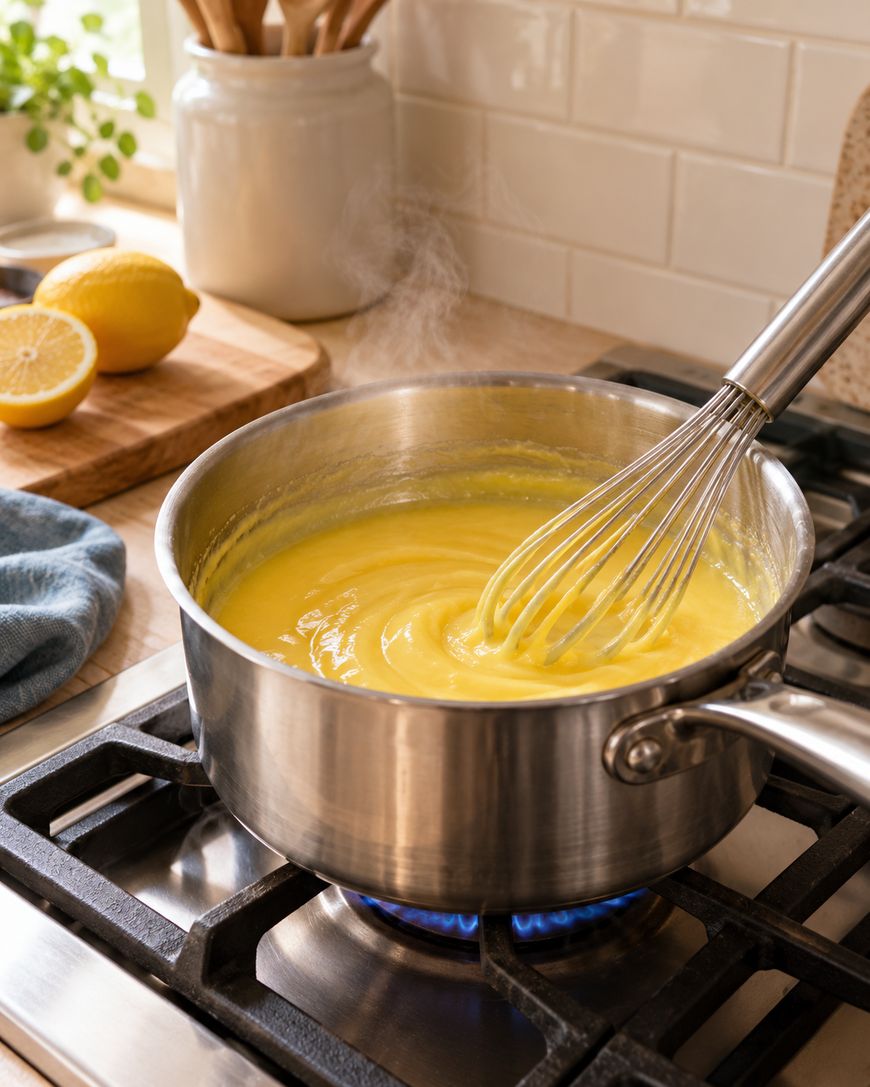
Tempering means adding a small amount of the hot mixture into the yolks first, whisking constantly, before combining everything back in the saucepan.
This step matters because pouring cold yolks straight into a hot mixture, or adding raw yolks into filling that is not yet hot enough, can leave you with a filling that never fully sets or that tastes eggy instead of bright.
Once the yolks are incorporated, the filling goes back on low heat just long enough to thicken further, then gets finished with fresh lemon juice, lemon zest, and a little butter for shine.
Pour the filling into the baked crust while it is still warm, since this helps it bond to the meringue you will add on top.

The Meringue
This meringue is a French meringue, meaning raw egg whites whipped with sugar directly rather than cooked over a bain-marie.
You will whip the egg whites with cream of tartar until they hold soft peaks, then add sugar gradually, a spoonful at a time, until the meringue turns glossy and holds a firm peak on the whisk.
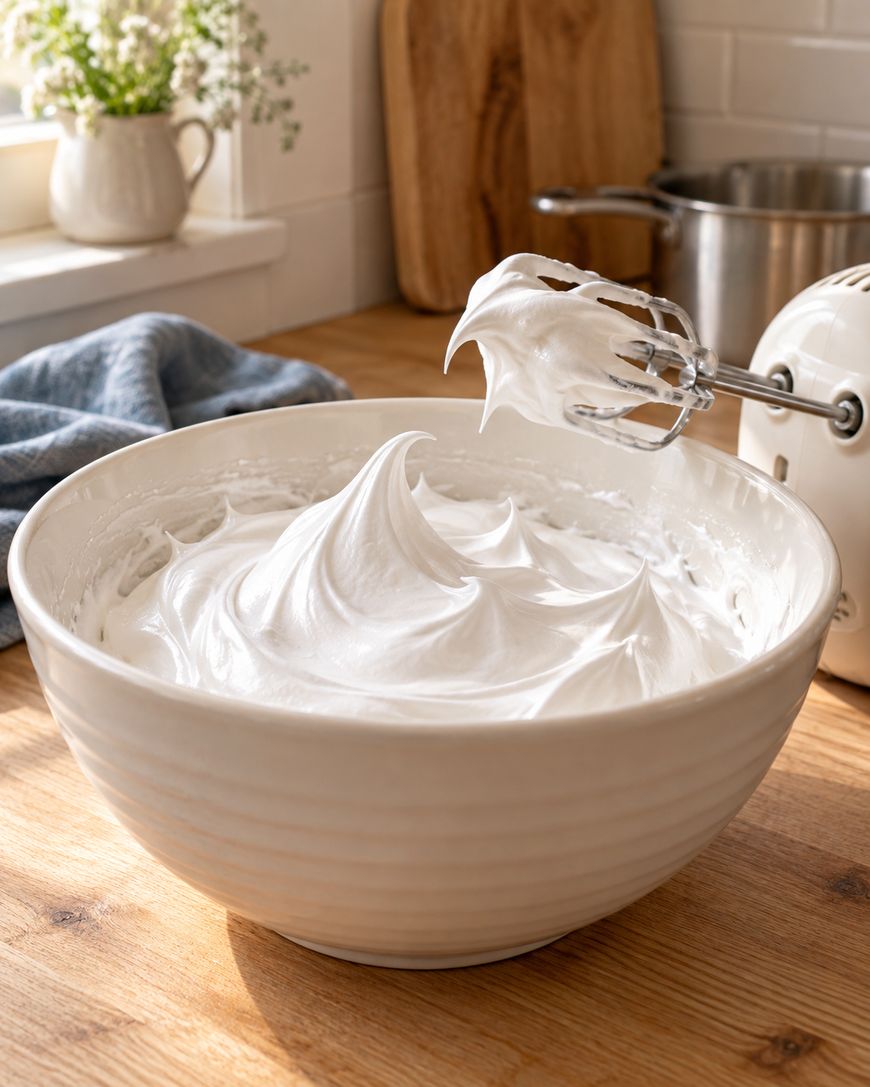
Adding the sugar slowly is what keeps the meringue from turning grainy, so resist the urge to dump it in all at once.
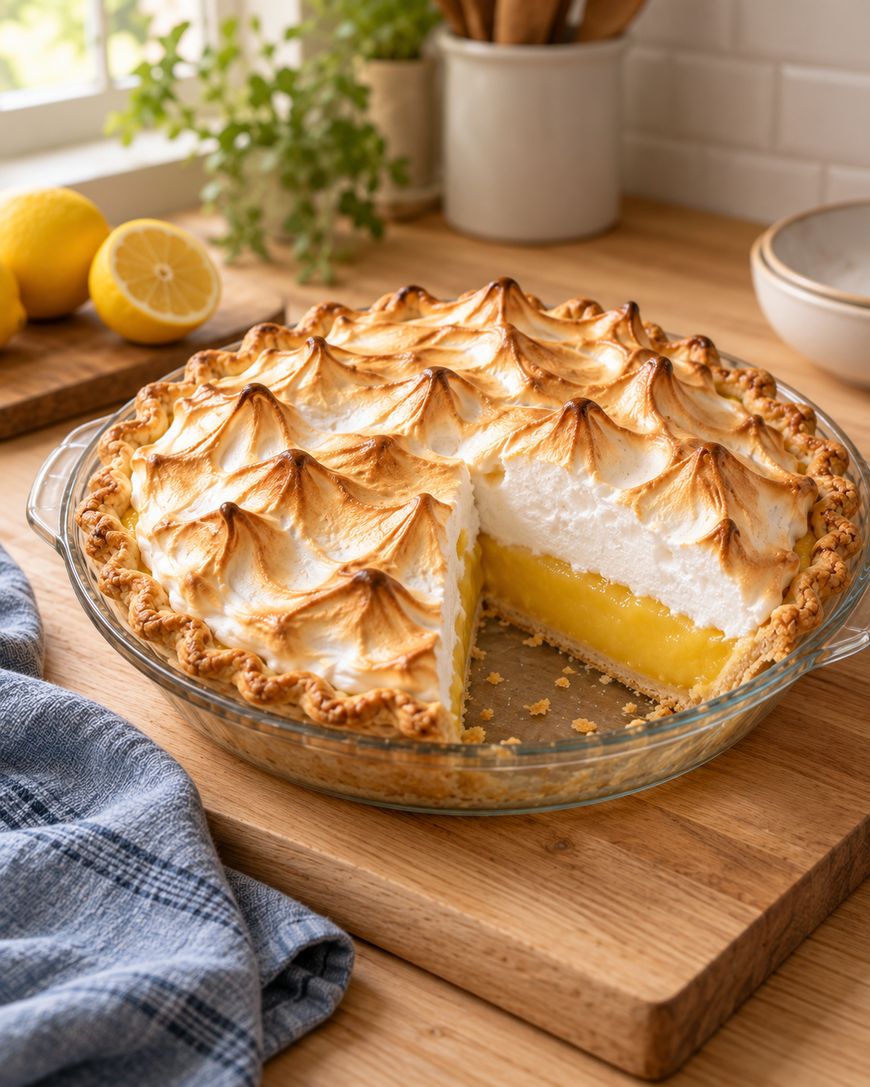
Spread or pipe the meringue directly onto the warm lemon filling, making sure it touches the crust edge all the way around, since this seal is what keeps the meringue from shrinking away from the sides as it bakes.

Bake the meringue at 350 degrees Fahrenheit for 12 to 15 minutes, just until the peaks turn golden brown, then let the whole pie cool at room temperature before chilling it fully in the refrigerator.

Ingredient Notes and Substitutions
Fresh lemon juice and zest make a real difference in this pie, so reach for actual lemons rather than bottled juice if you can.
You will need around 3 to 4 medium lemons to get both the juice and zest the filling calls for.
Salted or unsalted butter both work in the filling, though you may want to reduce the pinch of added salt slightly if you are using salted butter.
Cream of tartar helps stabilize the meringue, but if you do not have it on hand, a small squeeze of lemon juice or a few drops of white vinegar in the egg whites does a similar job.
Storage and Make-Ahead Tips
Lemon meringue pie is best eaten within 2 days of baking, since the meringue will slowly weep and lose its texture the longer it sits.

Store the finished pie loosely covered in the refrigerator, and avoid wrapping it tightly in plastic, which will flatten the meringue peaks.
You can bake the crust and make the lemon filling up to a day ahead, storing the filling covered in the refrigerator, but the meringue itself should be made and baked the same day you plan to serve the pie.
This pie does not freeze well because the meringue texture breaks down significantly once thawed, so plan to bake it close to when you will eat it.
Ready to see the full ingredient list and step-by-step method? The recipe card below has everything measured out exactly.

Lemon Meringue Pie
Ingredients
- 1 9-inch pie crust, blind-baked and cooled
- 1 1/2 cups granulated sugar
- 1/3 cup cornstarch
- 1/4 teaspoon salt
- 1 1/2 cups water
- 4 large egg yolks, lightly beaten
- 2 tablespoons unsalted butter
- 1/2 cup fresh lemon juice (about 3 to 4 lemons)
- 1 tablespoon lemon zest
- 4 large egg whites
- 1/4 teaspoon cream of tartar
- 1/2 cup granulated sugar (for meringue)
Instructions
- Preheat the oven to 350 degrees Fahrenheit.
- In a medium saucepan, whisk together 1 1/2 cups sugar, cornstarch, and salt.
- Slowly whisk in the water until fully combined with no lumps.
- Cook over medium heat, whisking constantly, until the mixture thickens and comes to a gentle boil, about 8 to 10 minutes.
- Remove from heat and whisk about 1/2 cup of the hot mixture into the beaten egg yolks to temper them.
- Whisk the tempered yolk mixture back into the saucepan.
- Return the saucepan to low heat and cook, whisking constantly, for 2 more minutes until thickened.
- Remove from heat and stir in the butter, lemon juice, and lemon zest until smooth.
- Pour the warm filling into the baked pie crust and spread evenly.
- In a clean bowl, whip the egg whites and cream of tartar with a mixer on medium speed until soft peaks form.
- Add the 1/2 cup sugar for the meringue one tablespoon at a time, whipping until glossy, stiff peaks form.
- Spread the meringue over the warm filling, making sure it touches the crust edge all the way around.
- Bake for 12 to 15 minutes, until the meringue peaks are golden brown.
- Cool the pie at room temperature for 1 hour, then refrigerate at least 2 hours before slicing.
Notes
Store loosely covered in the refrigerator and eat within 2 days for the best texture. The crust and filling can be made up to 1 day ahead, but the meringue should be made and baked the same day the pie is served. This pie does not freeze well.
Nutrition Information:
Yield:
8Serving Size:
1 sliceAmount Per Serving: Calories: 320Total Fat: 10gSaturated Fat: 4gUnsaturated Fat: 6gCholesterol: 101mgSodium: 190mgCarbohydrates: 54gFiber: 0gSugar: 40gProtein: 4g
Lemon Meringue Pie Questions Answered
Why is my lemon meringue pie filling runny?
A runny filling usually means the cornstarch mixture was not cooked long enough on the stove before the eggs were added. Keep whisking over medium heat until the mixture visibly thickens and coats the back of a spoon before moving on to the next step.
Why does my meringue weep or bead with liquid?
Weeping happens when the meringue is underbaked or when sugar is added too quickly while whipping. Bake until the peaks are fully golden and make sure every bit of sugar is dissolved into the egg whites before you stop mixing.
Can I make lemon meringue pie ahead of time?
You can bake the crust and prepare the lemon filling up to a day in advance and store the filling in the refrigerator. Wait to make and bake the meringue until the day you plan to serve the pie for the best texture.
Why did my meringue shrink away from the crust?
This happens when the meringue is spread only over the center of the filling instead of all the way to the crust edge. Always spread the meringue so it touches and slightly overlaps the crust on every side before baking.
Does lemon meringue pie need to be refrigerated?
Yes, because of the egg-based filling and meringue, this pie should be refrigerated any time it is not being served. Keep it loosely covered and eat it within 2 days for the best texture and flavor.
What is the difference between lemon meringue pie and key lime pie?
Lemon meringue pie uses a cooked lemon curd filling topped with baked meringue, while key lime pie typically uses a condensed milk filling and is often topped with whipped cream instead. The two share a citrus base but land very differently in texture and sweetness.
Why This Recipe Works
This lemon meringue pie relies on cornstarch and egg yolks working together in the filling, which gives you a filling that slices cleanly instead of oozing across the plate.
Cooking the cornstarch mixture fully before tempering in the yolks is the step that prevents both a runny filling and an eggy aftertaste, since both proteins and starch need enough heat to fully activate.
The meringue works the same way the filling does: gradual sugar addition and full baking are what turn raw egg whites into a stable, glossy topping that holds its shape as it cools.
Sealing the meringue directly to the crust edge, while the filling is still warm, is a small detail that solves the most common complaint people have with this pie, which is meringue that slides or shrinks after baking.
A Classic Lemon Meringue Pie Worth Making Again
Lemon meringue pie earns its place as a classic because the contrast between tangy filling, crisp crust, and toasted meringue never really goes out of style.
Once you have made it through the stovetop filling and the meringue once, the process becomes second nature, and this lemon meringue pie turns into the kind of dessert you can pull together for any occasion that calls for something a little special.
Try our lemon icebox pie for another cool, citrus-forward dessert.
Or bake our key lime pie for a change of citrus.
Or try our coconut cream pie for a silky, tropical change of pace.