Last updated: August 23, 2026
Lemon icebox pie is the kind of dessert that earns a permanent place in warm-weather rotation — bright with citrus, impossibly creamy, and ready with almost no effort. Find the full recipe card below to save and print.
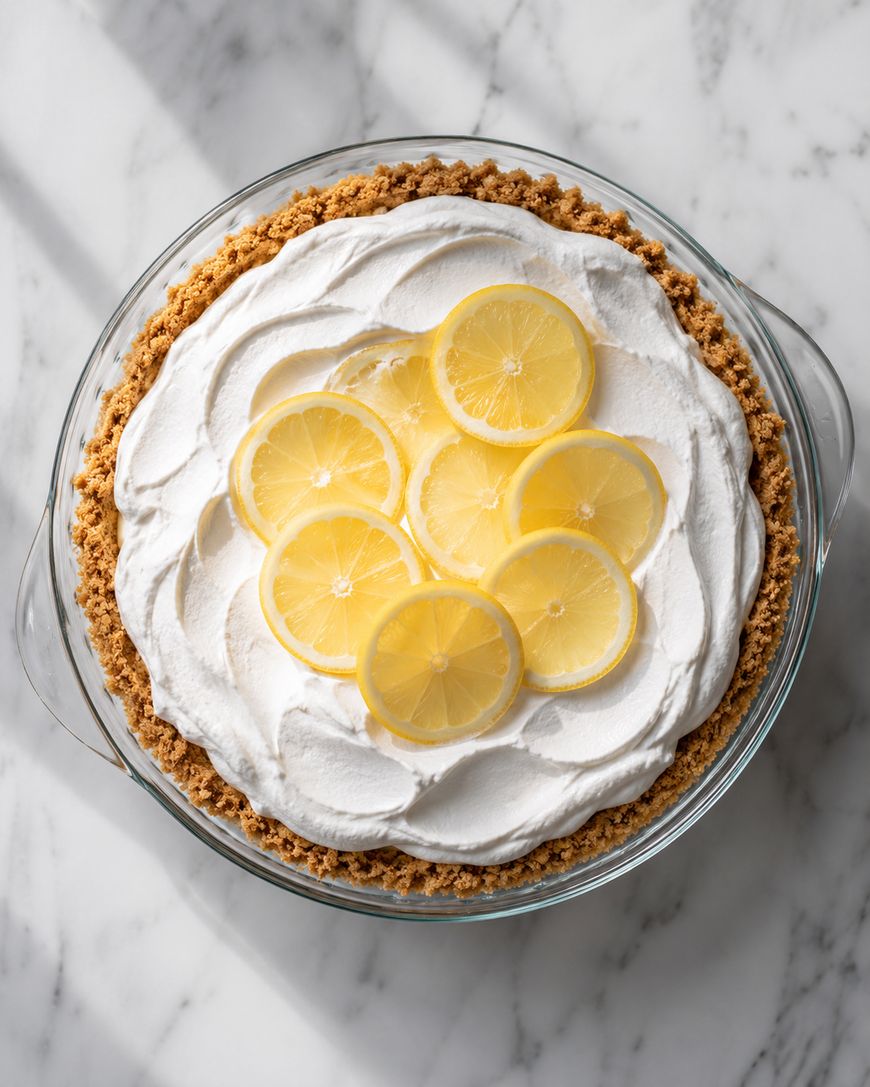
What Is Lemon Icebox Pie
Lemon icebox pie is a Southern American no-bake (or minimal-bake) dessert made from a handful of pantry staples: sweetened condensed milk, fresh lemon juice, egg yolks or cream cheese, and a pre-baked or press-in graham cracker crust.
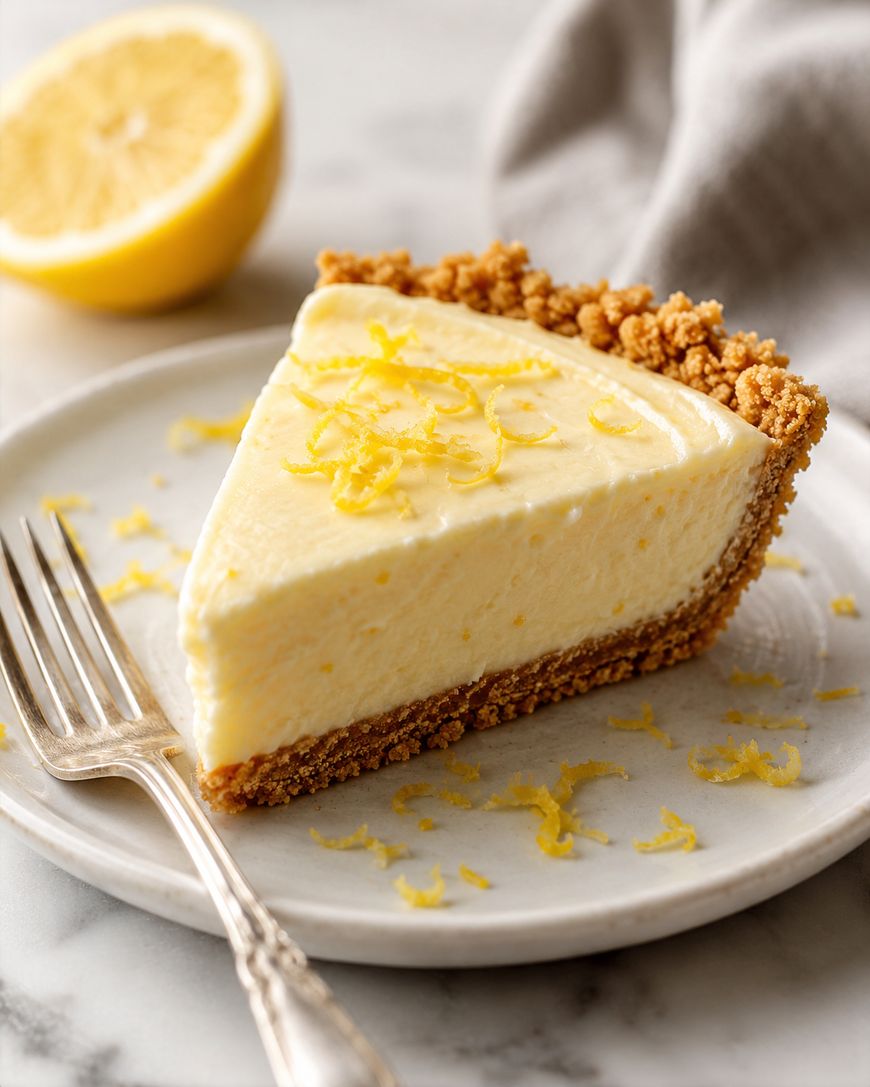
The name comes from the icebox — the pre-refrigerator term for the cooled storage unit used in American homes through the early twentieth century. The pie sets entirely from chilling rather than heat, making it one of the most forgiving desserts a home cook can tackle.
Ingredients You Need
The Crust
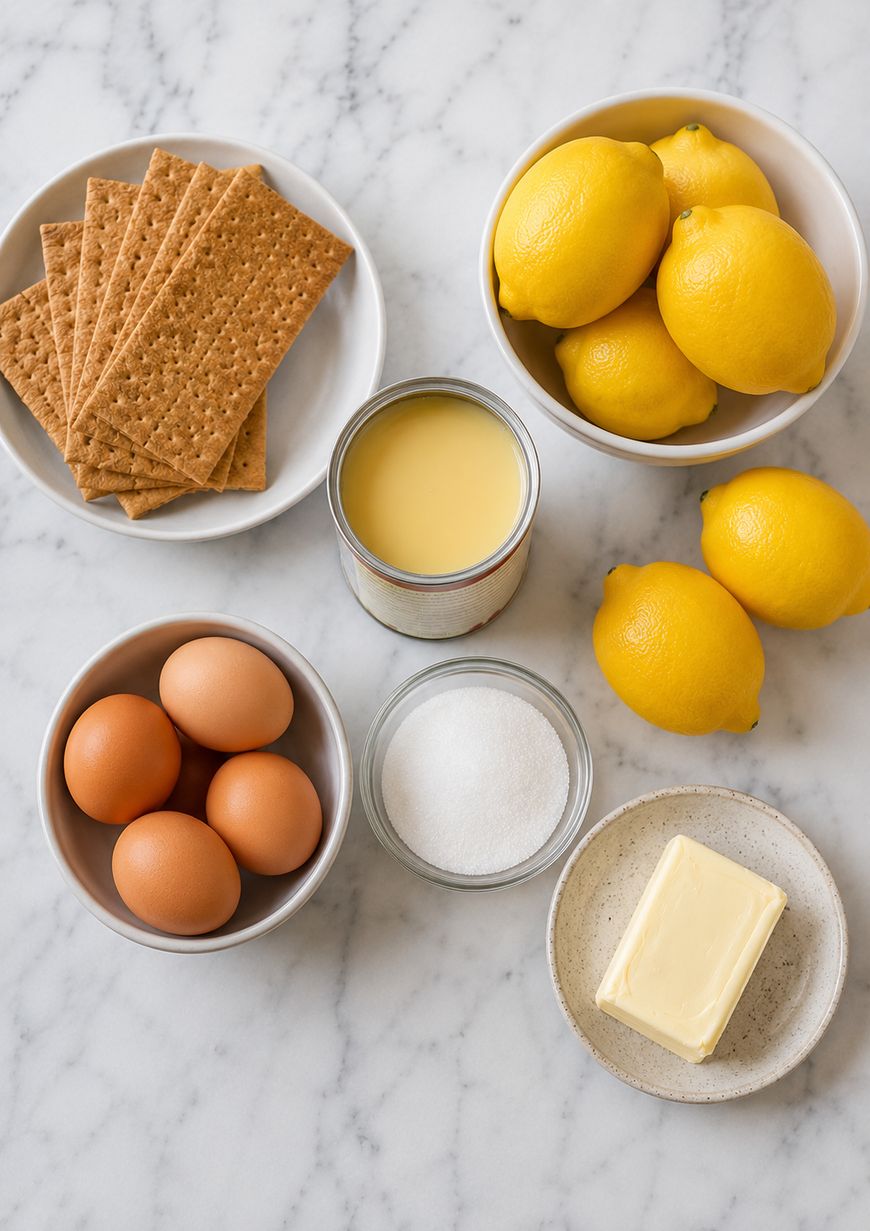
The foundation of any great lemon icebox pie is a sturdy, buttery graham cracker crust. Use 1 1/2 cups of finely crushed graham crackers (about 12 full sheets), combined with 1/3 cup of granulated sugar and 6 tablespoons of melted unsalted butter.
A firmly packed crust holds its shape when sliced and provides the gentle caramel note that balances the tartness of the filling. Some bakers swap graham crackers for Golden Oreo crumbs or digestive biscuits with excellent results. For a gluten-free version, certified gluten-free graham-style crackers from brands like Kinnikinnick work well.
The Filling
The classic lemon icebox pie filling calls for one 14-ounce can of full-fat sweetened condensed milk, 1/2 cup of freshly squeezed lemon juice (from 3 to 4 medium lemons), and 3 large egg yolks. The ratio of acid to condensed milk is important: too little lemon and the filling will not set firmly; too much and the texture becomes grainy.
Some recipes substitute cream cheese (8 ounces, softened) for the egg yolks, which produces a denser, cheesecake-adjacent texture. Both versions are delicious; the egg yolk version yields a silkier, more custard-like slice while the cream cheese version is thicker and sliceable straight from the freezer.
Fresh lemon juice is non-negotiable here. Bottled juice lacks the volatile aromatic compounds that give the pie its characteristic brightness. If Meyer lemons are in season, their lower acidity and floral sweetness make an exceptional variation.
How to Make Lemon Icebox Pie
Making the Crust
Preheat the oven to 350 degrees Fahrenheit. Combine the crushed graham crackers, sugar, and melted butter in a medium bowl and stir until the mixture resembles wet sand.
Transfer the mixture to a 9-inch pie plate and use the flat bottom of a measuring cup to press it firmly and evenly across the base and up the sides. Bake for 8 minutes until lightly golden. Remove from the oven and let it cool completely before adding the filling.
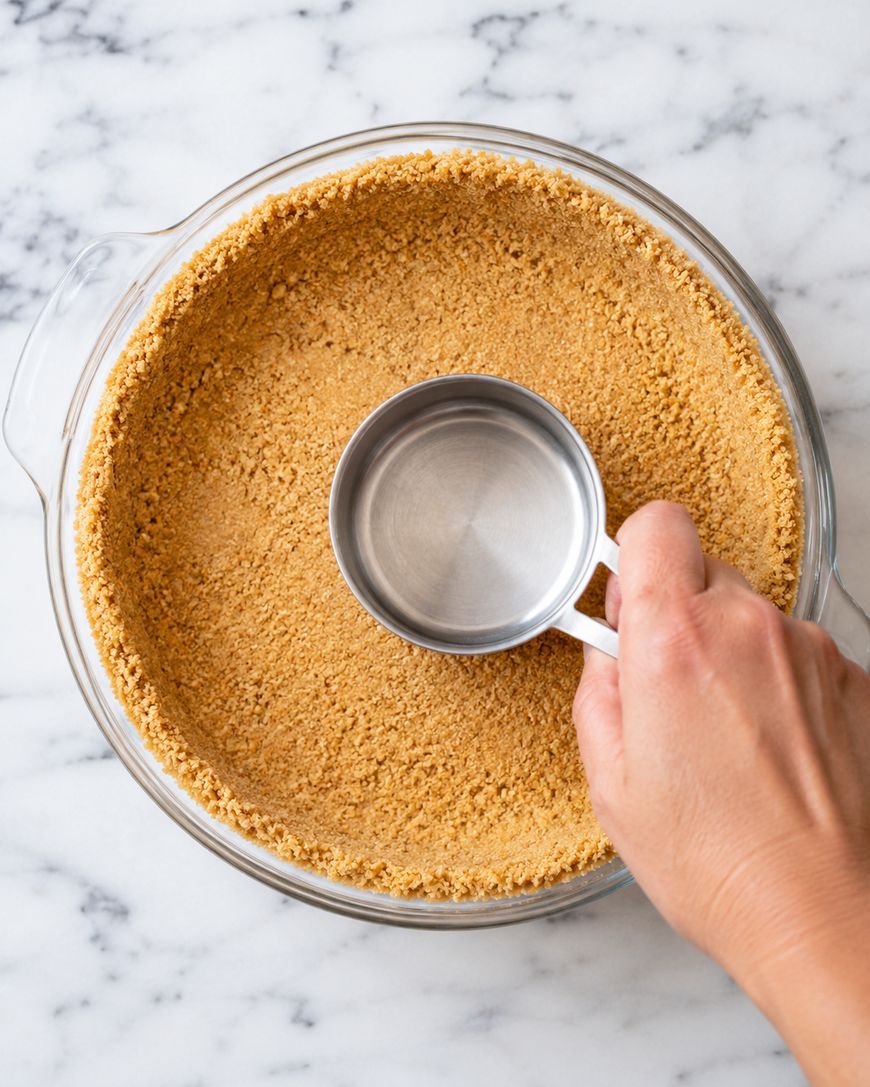
Cooling the crust fully is important. A warm crust will begin to set the filling unevenly and can cause cracking along the edges.
Making the Filling
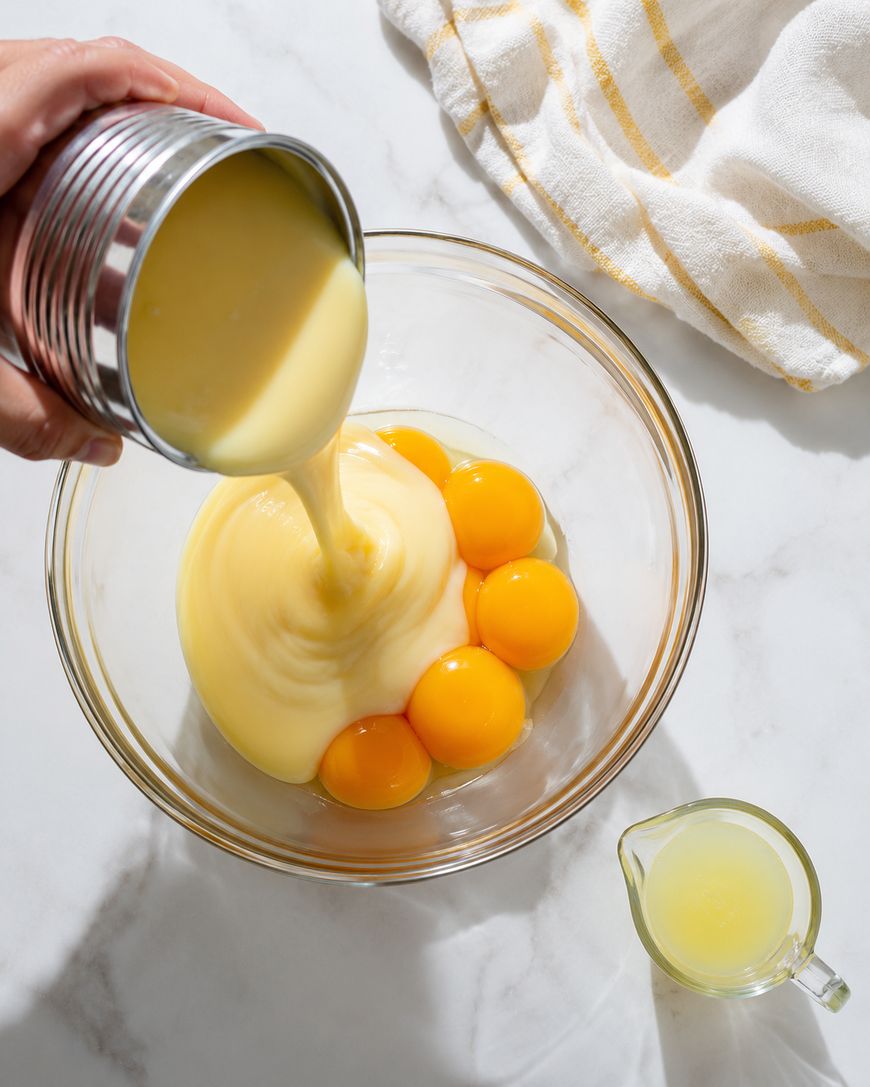
In a large mixing bowl, whisk the egg yolks for about 2 minutes until they deepen slightly in color. Add the sweetened condensed milk and whisk to combine.
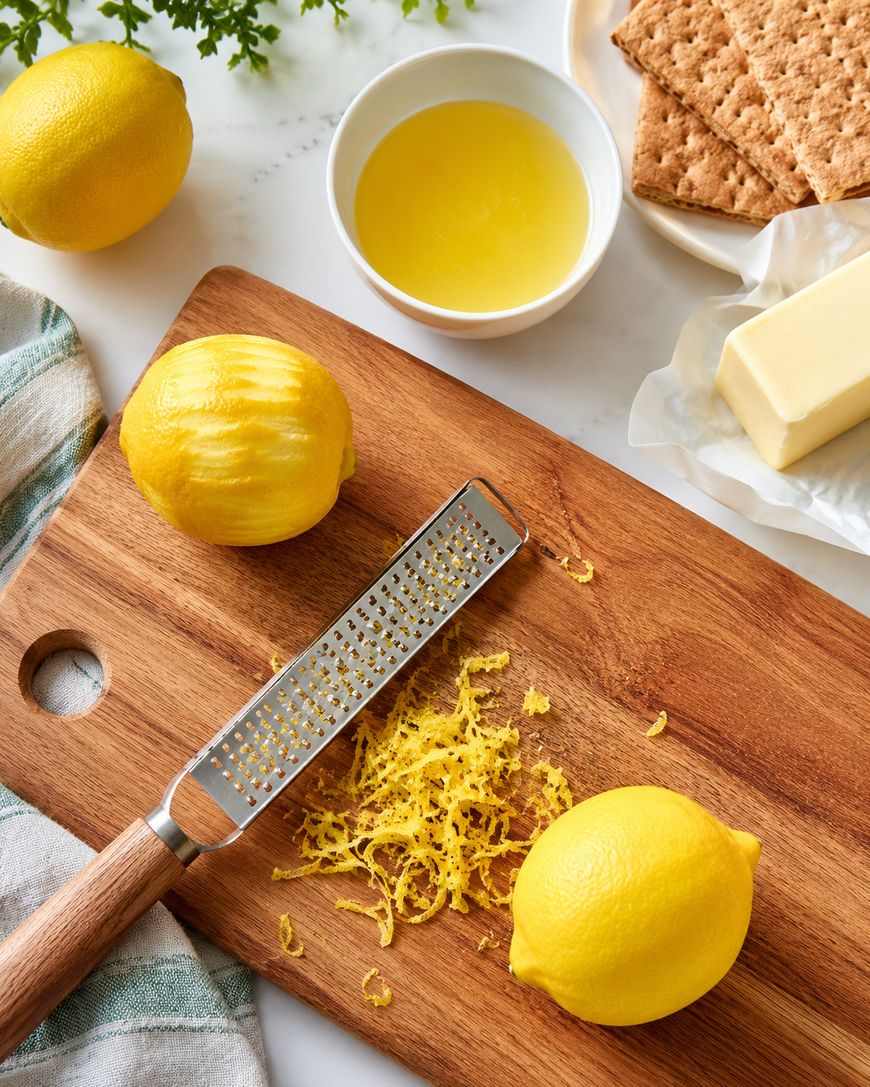
Pour in the fresh lemon juice and whisk until the mixture is smooth and just slightly thickened — the acid reacts with the condensed milk proteins to begin the setting process immediately. Add 2 teaspoons of freshly grated lemon zest for a more pronounced citrus flavor.
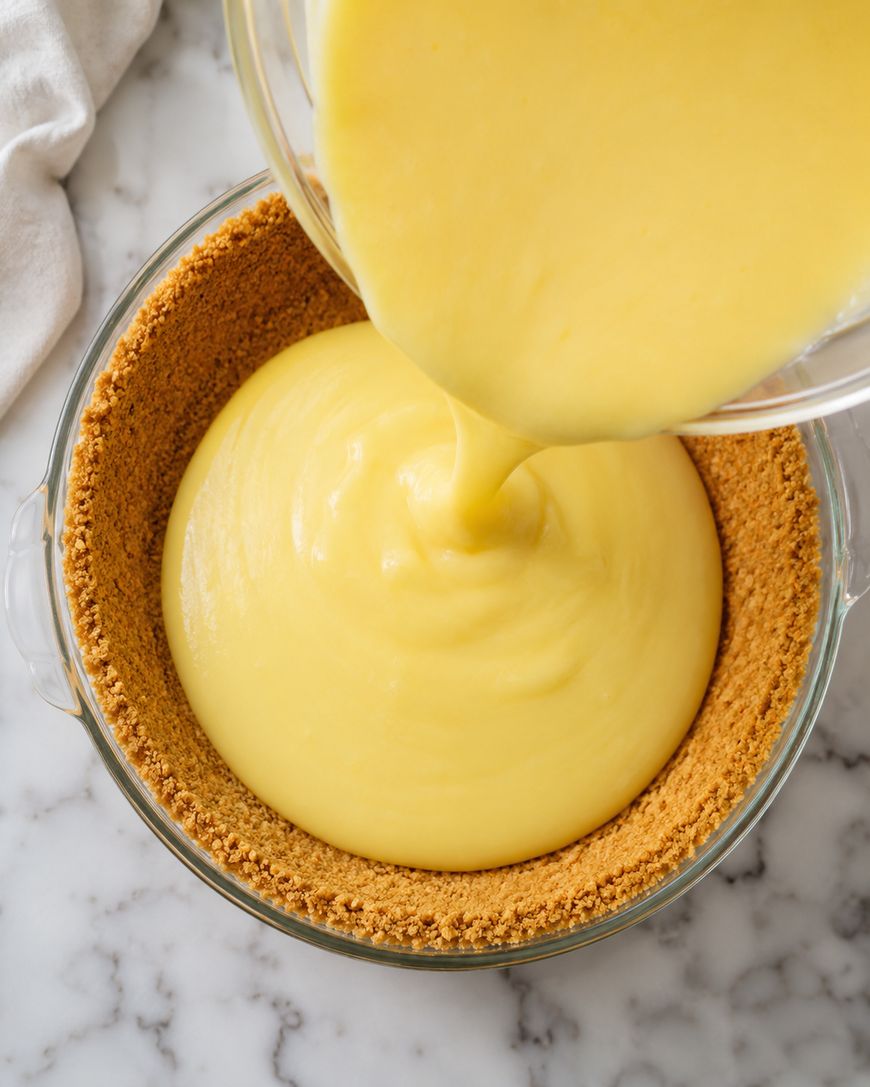
Pour the filling into the cooled crust and smooth the top with a spatula. Bake at 325 degrees Fahrenheit for 15 minutes until the edges are set but the center still has a slight jiggle. The internal temperature should reach 160 degrees Fahrenheit to ensure the egg yolks are fully cooked.
Chilling and Setting
Remove the pie from the oven and let it cool to room temperature on a wire rack, then cover with plastic wrap and refrigerate for a minimum of 4 hours, though overnight is better. The filling continues to firm up as it chills.
For a true icebox pie that sets in the freezer, skip the oven step for the filling entirely (use the cream cheese version if raw egg concerns apply) and freeze for at least 6 hours before slicing. Serve it frozen for a texture similar to lemon cheesecake ice cream in pie form.
Variations and Substitutions
Key Lime Variation
Swap the lemon juice for fresh Key lime juice using the same quantity and substitute lime zest for lemon zest. The result is essentially a Key lime pie, which follows the same foundational method.
Lemon Cream Cheese Version
Beat 8 ounces of softened full-fat cream cheese until completely smooth before adding the condensed milk. Proceed with the lemon juice and zest as written. This version does not require any oven time for the filling and sets beautifully in the freezer within 4 hours.
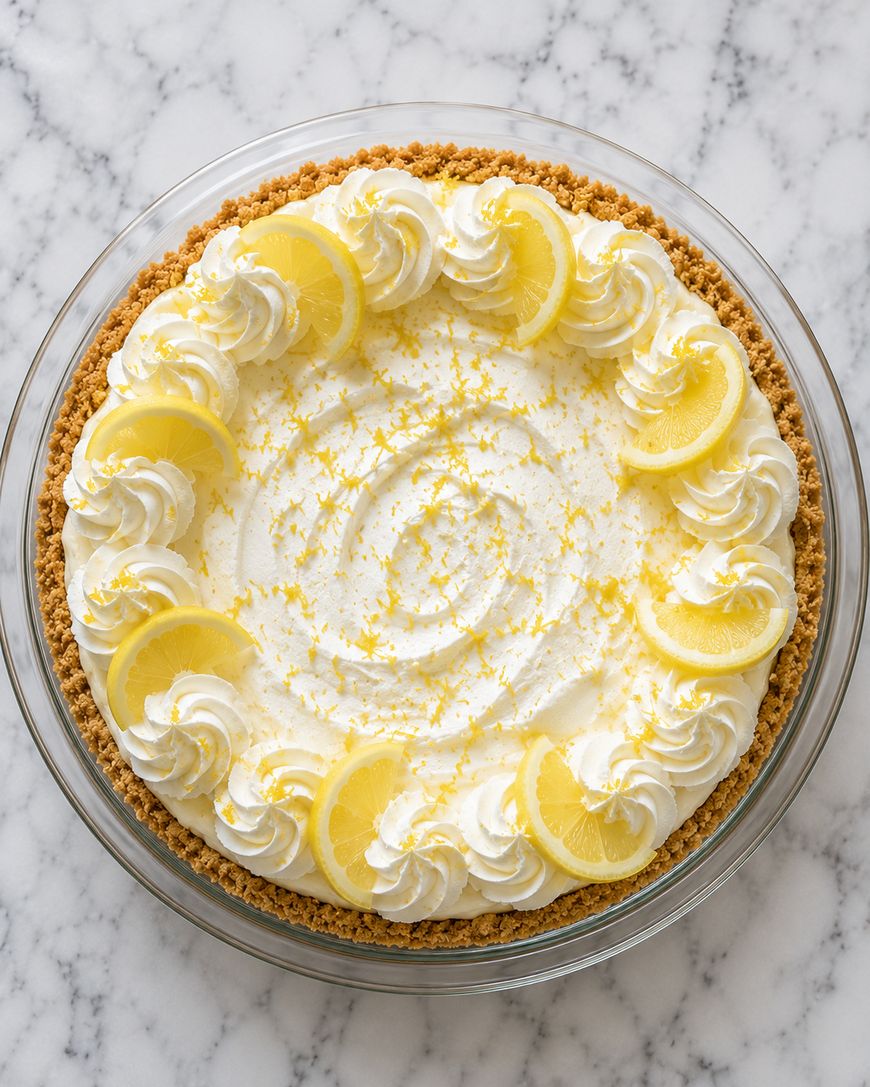
Lemon Icebox Pie with Whipped Cream Topping
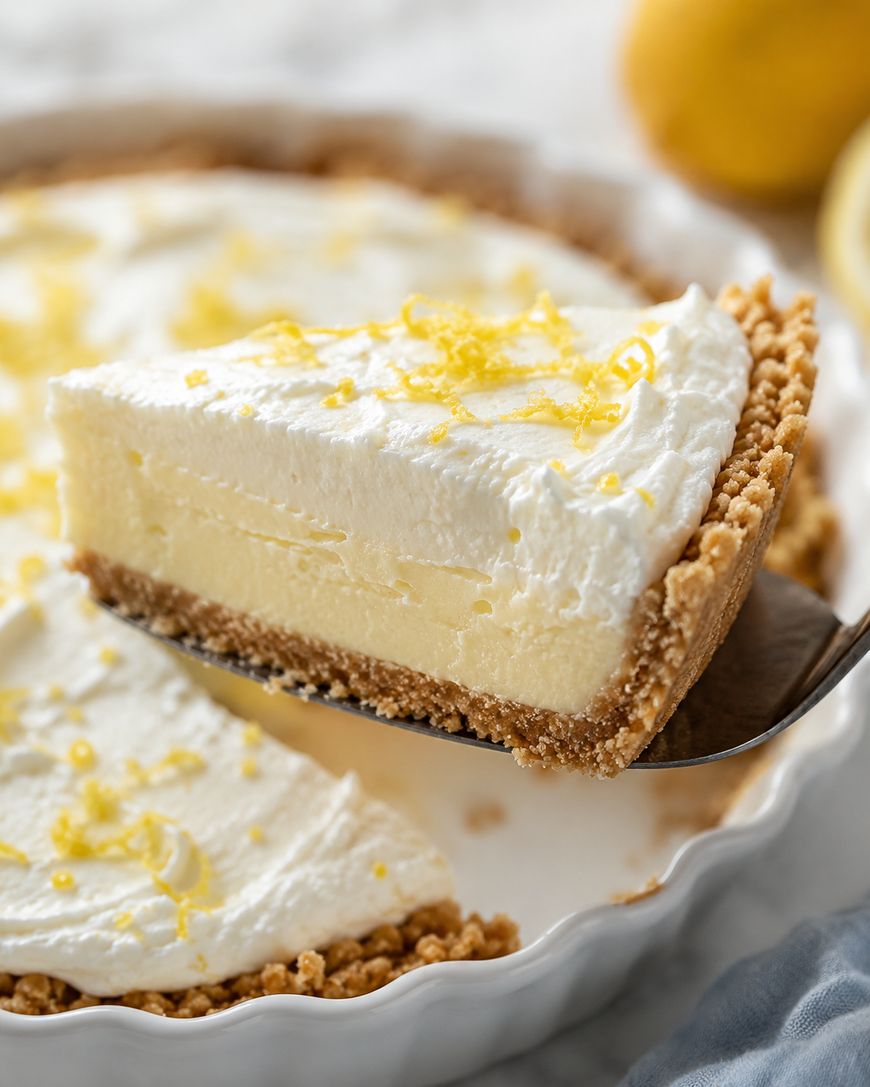
Top the chilled pie with freshly whipped heavy cream just before serving. Whip 1 cup of cold heavy cream with 2 tablespoons of powdered sugar and 1/2 teaspoon of vanilla extract to soft peaks. Pipe or dollop over the surface and garnish with thin lemon slices or a sprinkle of zest.
Storage and Serving
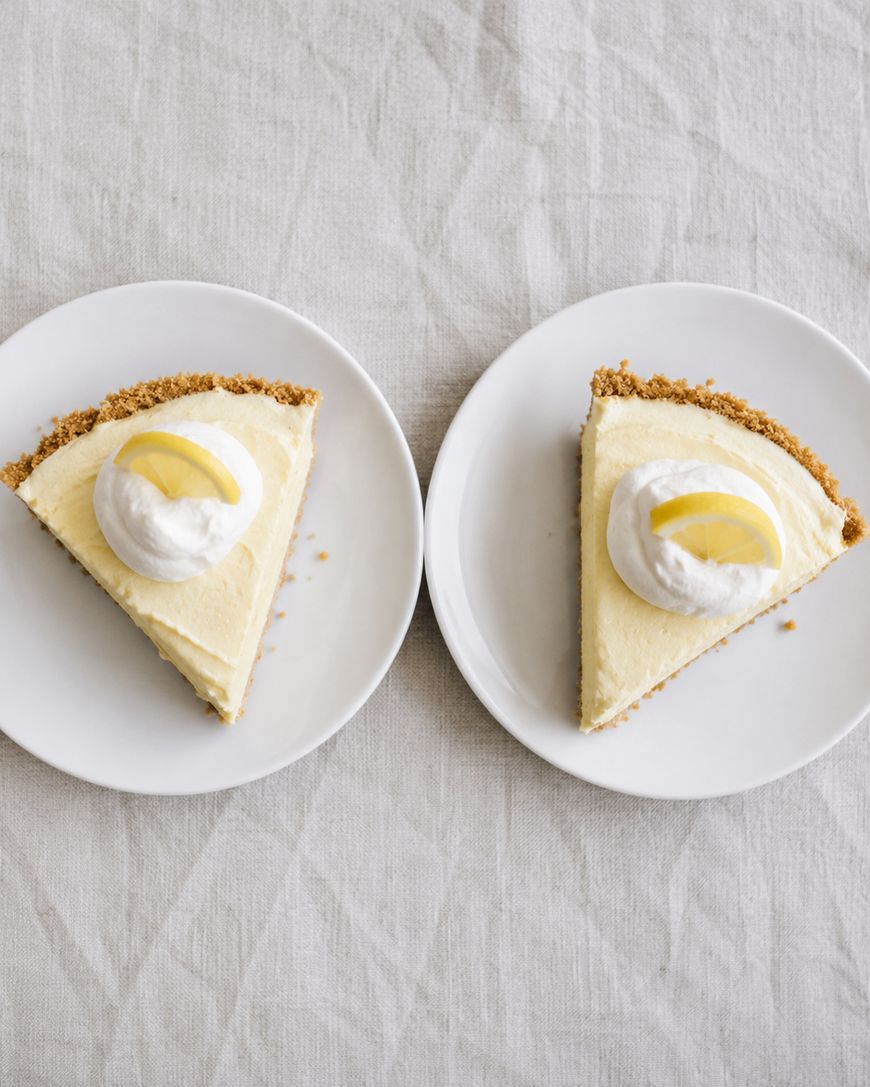
Lemon icebox pie keeps refrigerated for up to 4 days, covered tightly. It can be frozen whole or in individual slices for up to 2 months; wrap each slice in plastic wrap and store in a zip-top freezer bag.
Slice the pie with a thin, sharp knife dipped in warm water and wiped clean between cuts. This produces clean edges on each portion. Serve cold directly from the refrigerator, or let a frozen pie stand at room temperature for 10 minutes before slicing.
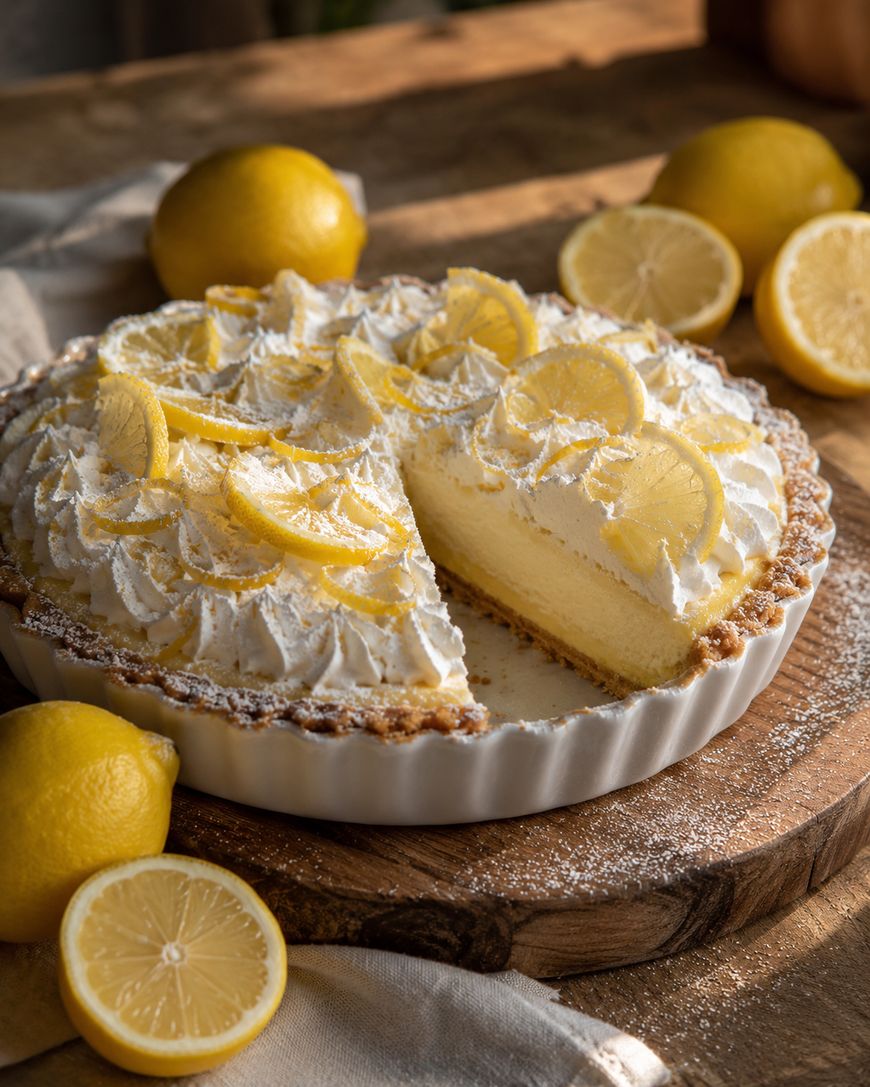
The pie pairs well with fresh berries — strawberries and blueberries in particular — which complement the lemon without competing with it. A light dusting of powdered sugar over the whipped cream topping adds visual polish.
The Southern Origins of Icebox Pie
Icebox pies have roots in the American South, where the combination of heat, humidity, and limited refrigeration historically made no-bake or minimal-bake desserts a practical necessity.
The genre includes Key lime pie from Florida, chocolate icebox pie popular across Tennessee and Georgia, and this lemon version which appears throughout community cookbooks from South Carolina to Texas. The Borden Company’s introduction of sweetened condensed milk in the nineteenth century made the condensed milk base version ubiquitous; home cooks recognized that the high sugar content and acid from citrus juice would set the filling without extended baking.
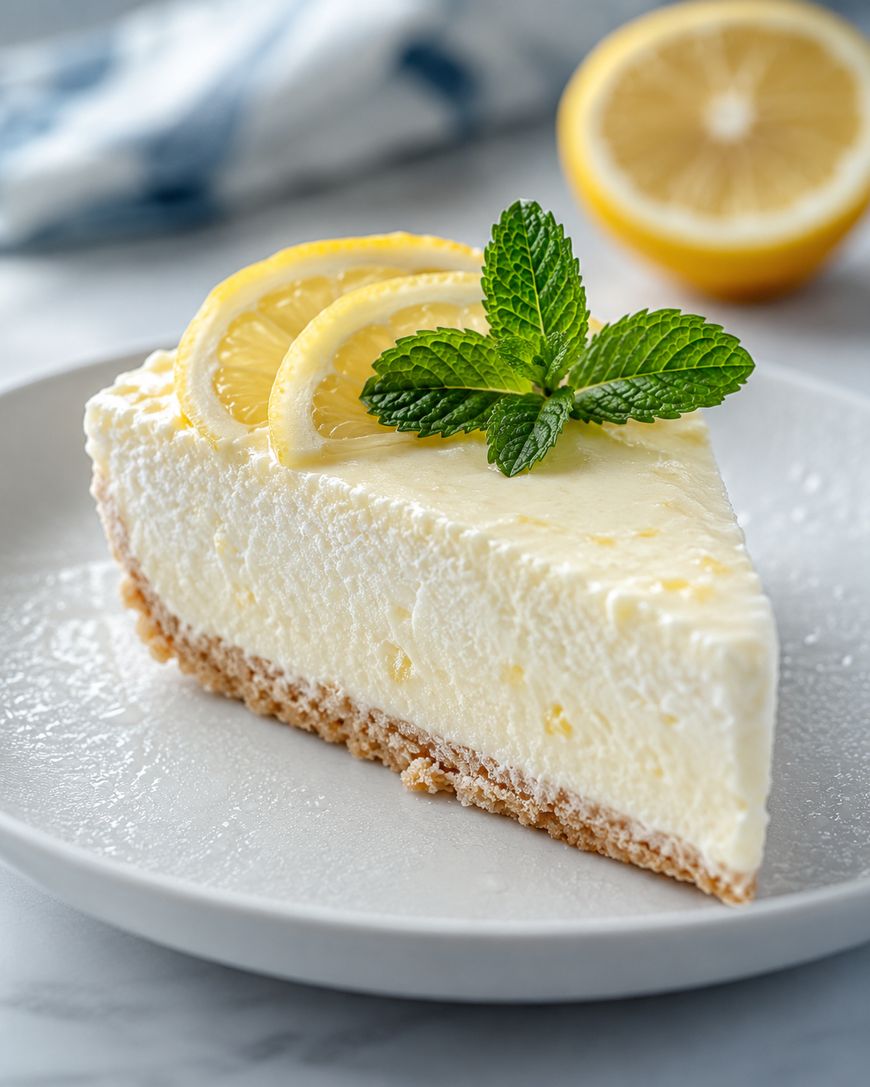
Food historian Robert Moss has documented how icebox pies became staples at church suppers and family reunions across the South from the 1930s onward. The ease of preparation and the ability to make them the day before serving made lemon icebox pie a reliable centerpiece for warm-weather gatherings that continues today.
Use the recipe card below to save, print, or scale the full recipe for your next occasion.
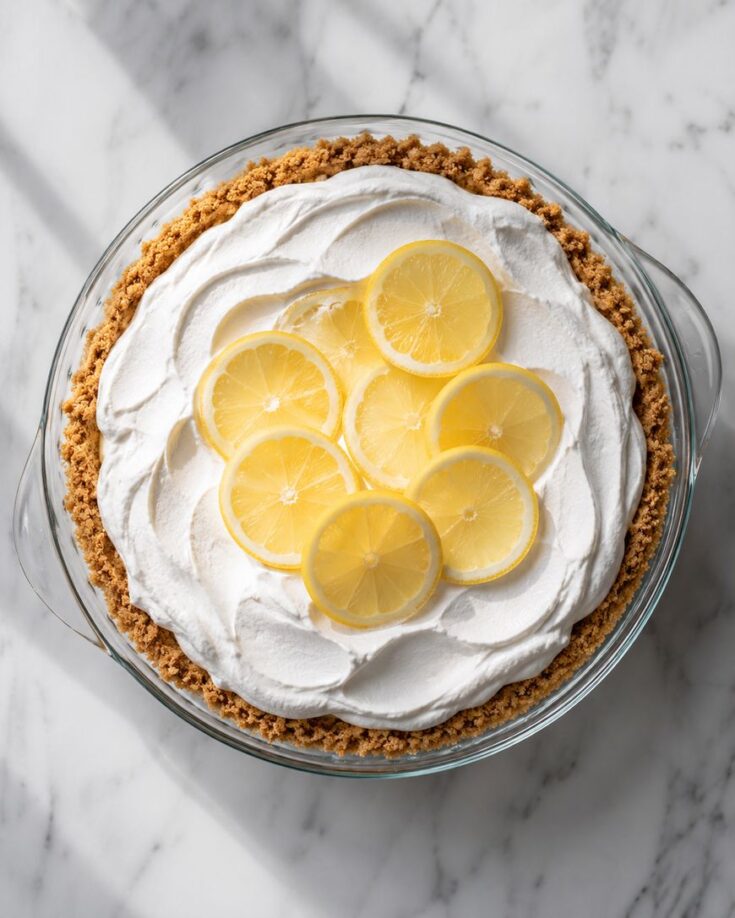
Lemon Icebox Pie
A creamy, tangy no-bake classic made with sweetened condensed milk, fresh lemon juice, and a buttery graham cracker crust. Simple to prepare and perfect for making ahead.
Ingredients
- Graham Cracker Crust
- 1 1/2 cups finely crushed graham crackers (about 12 full sheets)
- 1/3 cup granulated sugar
- 6 tablespoons unsalted butter, melted
- Lemon Filling
- 3 large egg yolks
- 14 ounces sweetened condensed milk (1 standard can)
- 1/2 cup fresh lemon juice (from 3 to 4 medium lemons)
- 2 teaspoons freshly grated lemon zest
- Optional Topping
- 1 cup cold heavy whipping cream
- 2 tablespoons powdered sugar
- 1/2 teaspoon vanilla extract
- Thin lemon slices or extra zest for garnish
Instructions
- Preheat the oven to 350 degrees Fahrenheit. Combine crushed graham crackers, granulated sugar, and melted butter in a medium bowl and stir until the mixture resembles wet sand.
- Press the mixture firmly and evenly into a 9-inch pie plate, covering the base and sides. Use the flat bottom of a measuring cup to compact it well.
- Bake the crust for 8 minutes until lightly golden. Remove from the oven and allow to cool completely.
- Reduce the oven temperature to 325 degrees Fahrenheit.
- In a large bowl, whisk the egg yolks for 2 minutes until they lighten slightly. Add the sweetened condensed milk and whisk to combine.
- Add the fresh lemon juice and lemon zest. Whisk until smooth and slightly thickened.
- Pour the filling into the cooled crust and smooth the top with a spatula.
- Bake for 15 minutes until the edges are set and the center still jiggles slightly. The internal temperature should reach 160 degrees Fahrenheit.
- Remove from the oven and cool to room temperature on a wire rack.
- Cover with plastic wrap and refrigerate for at least 4 hours or overnight until fully set.
- If using the whipped cream topping, beat cold heavy cream, powdered sugar, and vanilla to soft peaks. Spread or pipe over the chilled pie.
- Garnish with lemon slices or zest. Slice with a warm, clean knife and serve cold.
Notes
For a frozen version, serve directly from the freezer for an ice cream-like texture on hot days.
Use full-fat sweetened condensed milk for the best set and flavor -- reduced-fat versions may not firm up correctly.
Meyer lemons can be substituted for regular lemons for a sweeter, more floral flavor profile.
The crust can be made up to 2 days ahead and stored at room temperature, wrapped tightly.
Store leftovers covered in the refrigerator for up to 4 days, or freeze individual slices for up to 2 months.
Nutrition Information:
Yield:
8Serving Size:
1 sliceAmount Per Serving: Calories: 430Total Fat: 20gSaturated Fat: 11gSodium: 190mgCarbohydrates: 58gFiber: 0gSugar: 46gProtein: 7g
This site provides estimated nutritional information. This information comes from online calculators. Although we try to provide accurate nutritional information, these figures are only estimates.
Frequently Asked Questions
Can lemon icebox pie be made without eggs?
Yes. The cream cheese version of lemon icebox pie uses no eggs at all. Combine 8 ounces of softened full-fat cream cheese with one 14-ounce can of sweetened condensed milk, then add 1/2 cup of fresh lemon juice and 2 teaspoons of zest. Beat until completely smooth, pour into a baked and cooled crust, and freeze or refrigerate until firmly set. The texture is thicker and creamier than the egg yolk version.
Why did my lemon icebox pie not set?
The most common cause is insufficient lemon juice. The acid in fresh lemon juice reacts with the proteins in sweetened condensed milk to trigger setting; if the ratio is off, the filling stays loose. Bottled lemon juice is also less reliable due to added preservatives that can interfere with the chemical reaction. Use fresh-squeezed juice and measure carefully for a reliably firm result.
Can lemon icebox pie be frozen?
Lemon icebox pie freezes extremely well, which is part of what makes it such a practical make-ahead dessert. Wrap the whole pie tightly in two layers of plastic wrap followed by aluminum foil and freeze for up to 2 months. Thaw overnight in the refrigerator before serving, or serve it still frozen for a firmer, ice-cream-like texture on a hot day.
What is the difference between lemon icebox pie and lemon meringue pie?
Lemon icebox pie and lemon meringue pie are distinct desserts with different components and methods. Lemon meringue pie uses a cooked lemon curd filling made with lemon juice, sugar, cornstarch, butter, and whole eggs, topped with a baked Italian or Swiss meringue. Lemon icebox pie uses sweetened condensed milk and is minimally baked or not baked at all, with a much simpler and quicker preparation. The flavor of lemon icebox pie is sweeter and creamier; lemon meringue pie is sharper and more intensely tart.
How much lemon juice is in lemon icebox pie?
The standard recipe calls for 1/2 cup of fresh lemon juice, which is approximately 3 to 4 medium lemons depending on their size and juiciness. Rolling the lemons firmly on the countertop before cutting releases more juice. Zesting the lemons before juicing is easiest. For a more assertive lemon flavor, increase to 2/3 cup of juice and reduce the condensed milk very slightly to maintain the set.
Can the crust be made ahead of time?
The graham cracker crust can be baked, cooled, and stored wrapped at room temperature for up to 2 days before filling, or refrigerated for up to 5 days. Making it ahead reduces day-of effort significantly and ensures the crust is completely cool when the filling goes in, which produces a cleaner, more defined layer separation in each slice.
A Simple Dessert Worth Making
Lemon icebox pie rewards even the most novice baker with a result that looks and tastes far more impressive than the effort required. The combination of tangy lemon, silky filling, and buttery graham cracker crust makes it one of the most crowd-pleasing desserts in the no-bake repertoire. Whether served at a summer cookout, a holiday gathering, or a quiet Tuesday dinner, lemon icebox pie is a recipe that earns its place at the table every time.
How to make Rice Krispie treats