Last updated: September 15, 2026
This custard pie recipe turns just a handful of pantry staples into a silky, old-fashioned dessert that tastes like it came straight from a Southern farmhouse kitchen. You will love how the Mediavine Create recipe card below breaks the whole process into simple, foolproof steps.
Why You’ll Love This Custard Pie Recipe
A great custard pie recipe comes down to two things: a gently baked, jiggly-in-the-center filling and a flaky crust that does not turn soggy underneath it.
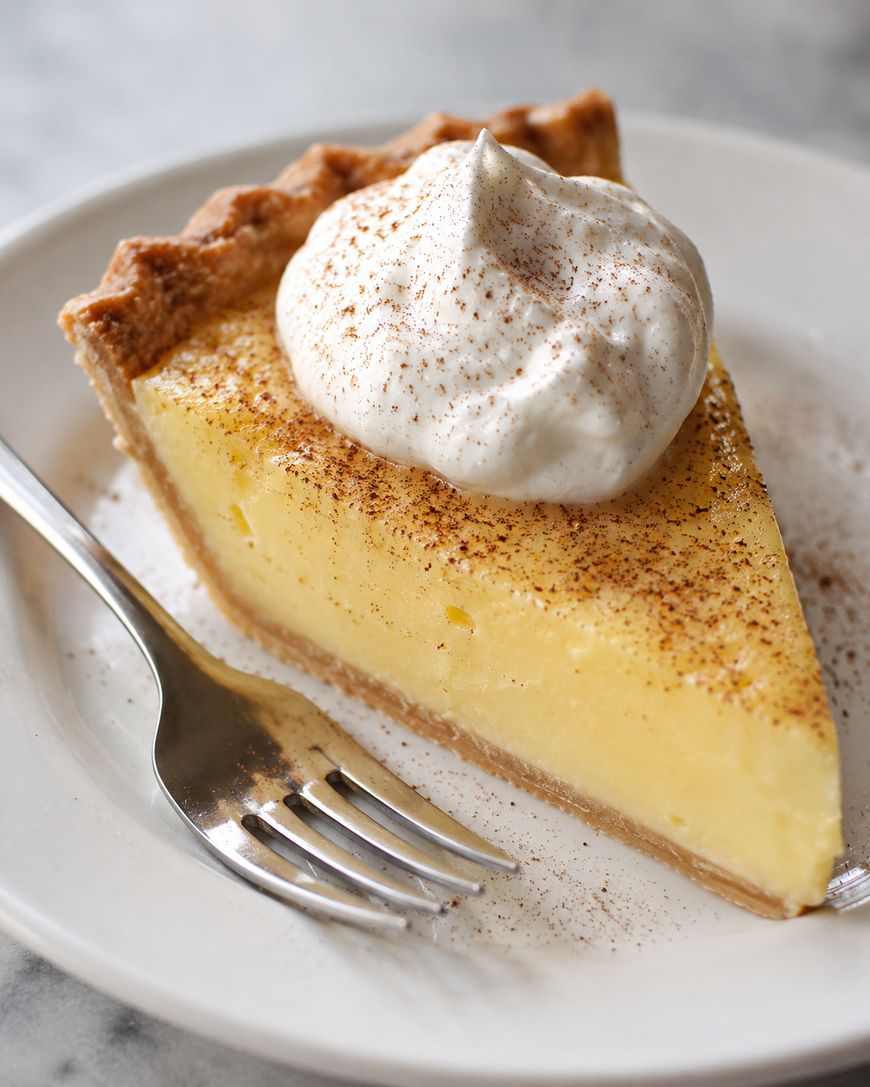
This version nails both by baking low and slow at 325°F and blind baking the crust just enough to set it before the custard goes in.
A Nostalgic Dessert With Southern Roots
Custard pie has deep roots in Southern and Pennsylvania Dutch baking traditions, where eggs, milk, and sugar were pantry staples long before refrigeration made cream pies practical.
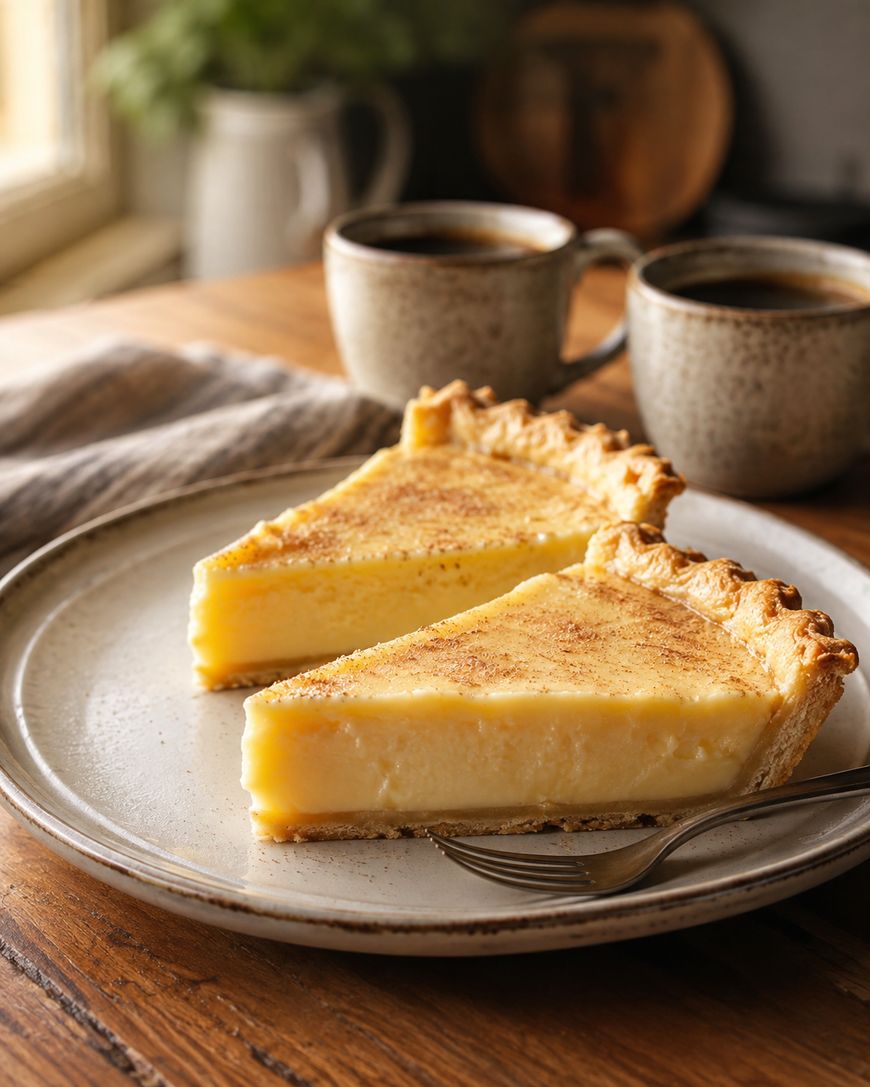
Cooks stretched simple dairy and eggs into something special by pouring them into a pie shell and baking until just barely set, a method that predates more elaborate custard-based desserts like crème brûlée or pots de crème.
You will notice the flavor profile leans warm and spiced, with freshly grated nutmeg doing most of the work alongside a whisper of vanilla.
Ingredients You’ll Need
The filling itself relies on whole milk or half-and-half for richness, large eggs for structure, granulated sugar for sweetness, and a full tablespoon of pure vanilla extract for depth.
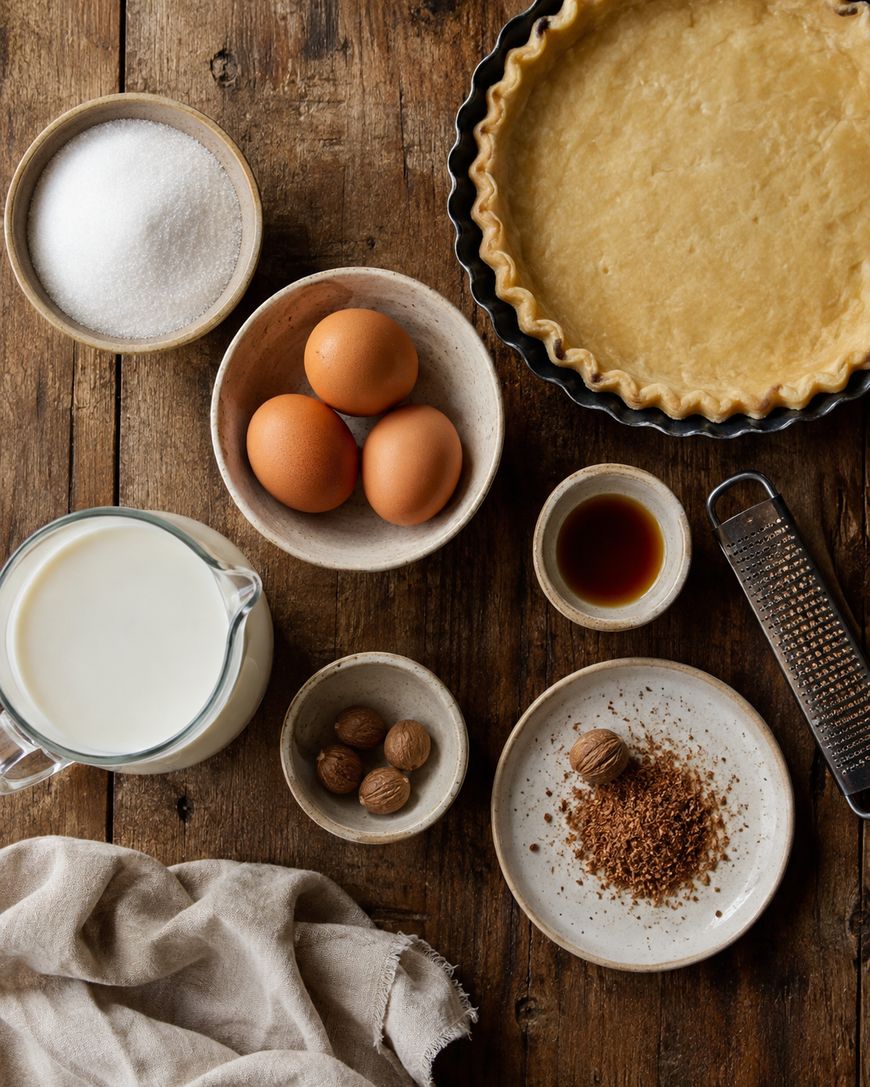
Freshly grated nutmeg matters more than you would think here since it brings a warm, slightly peppery aroma that pre-ground nutmeg simply cannot match.
A pinch of fine sea salt balances the sweetness, and a single unbaked 9-inch pie crust, either homemade or a good quality store-bought one, forms the base.
Choosing the Right Milk
Whole milk gives you a classic, lighter custard, while swapping in half-and-half or a mix of milk and heavy cream produces a noticeably richer, denser slice.
Evaporated milk is another traditional option that concentrates the dairy flavor and helps the custard set with a smoother texture.
Avoid skim or low-fat milk, since the custard needs that fat content to set properly instead of turning watery or grainy.
How to Blind Bake the Crust
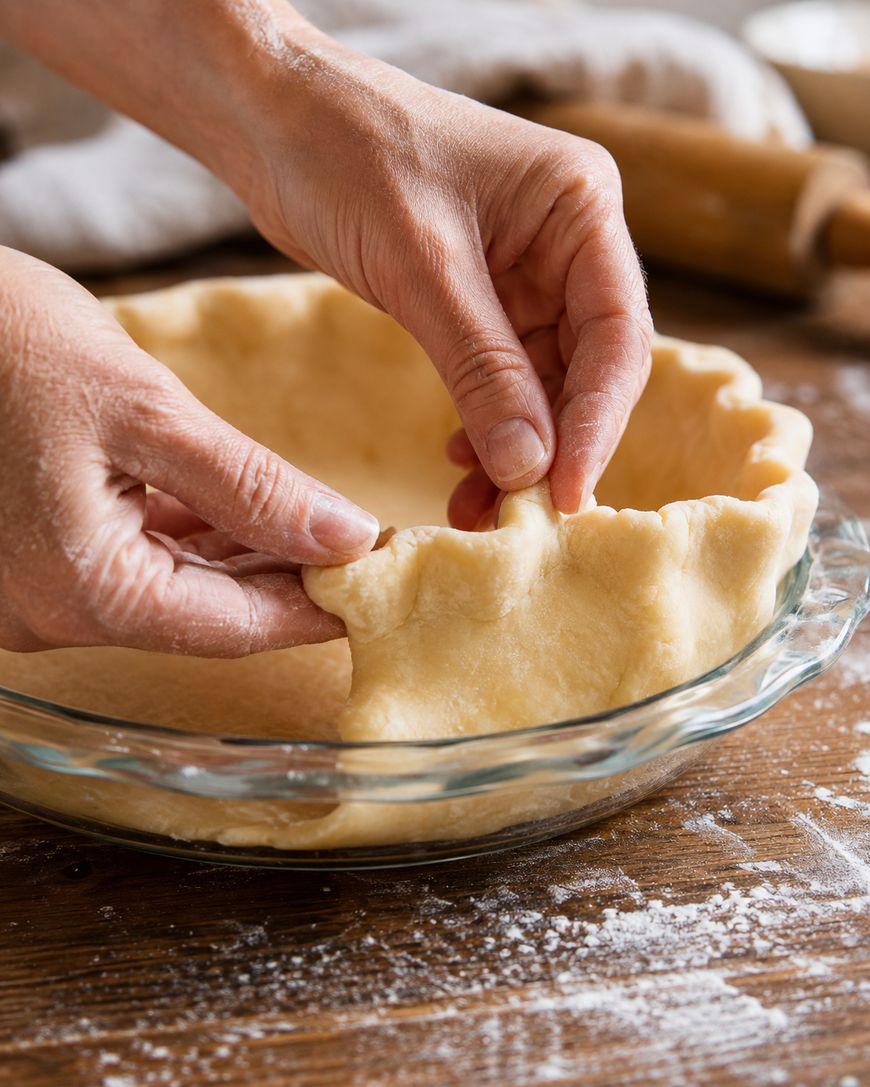
Start by fitting your pie dough into a 9-inch pie plate, crimping the edges, and chilling it in the freezer for 15 minutes so the butter firms back up.
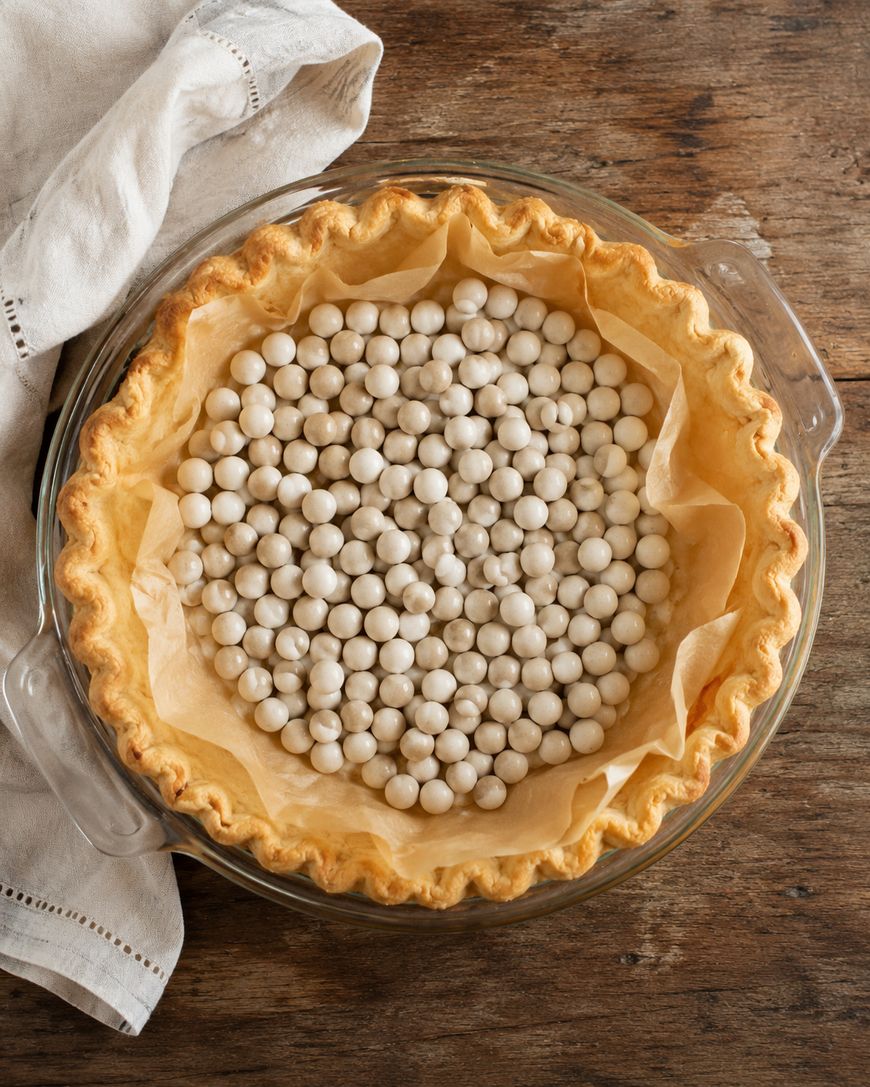
Line the chilled crust with parchment paper, fill it with pie weights or dried beans, and bake at 375°F for 12 minutes before removing the weights and baking another 5 minutes until the base looks dry but pale.
This partial blind bake is the step most people skip, and it is exactly why so many custard pies end up with a soggy bottom.
Sealing the Crust for Extra Insurance
Right after the crust comes out of the oven, brush the warm bottom and sides lightly with beaten egg white and return it to the oven for 2 minutes.
The heat sets the egg white into a thin, invisible barrier that keeps the custard from soaking into the pastry while it bakes.
Let the crust cool for about 10 minutes on a wire rack before you pour in the filling.
Mixing and Baking the Custard Filling
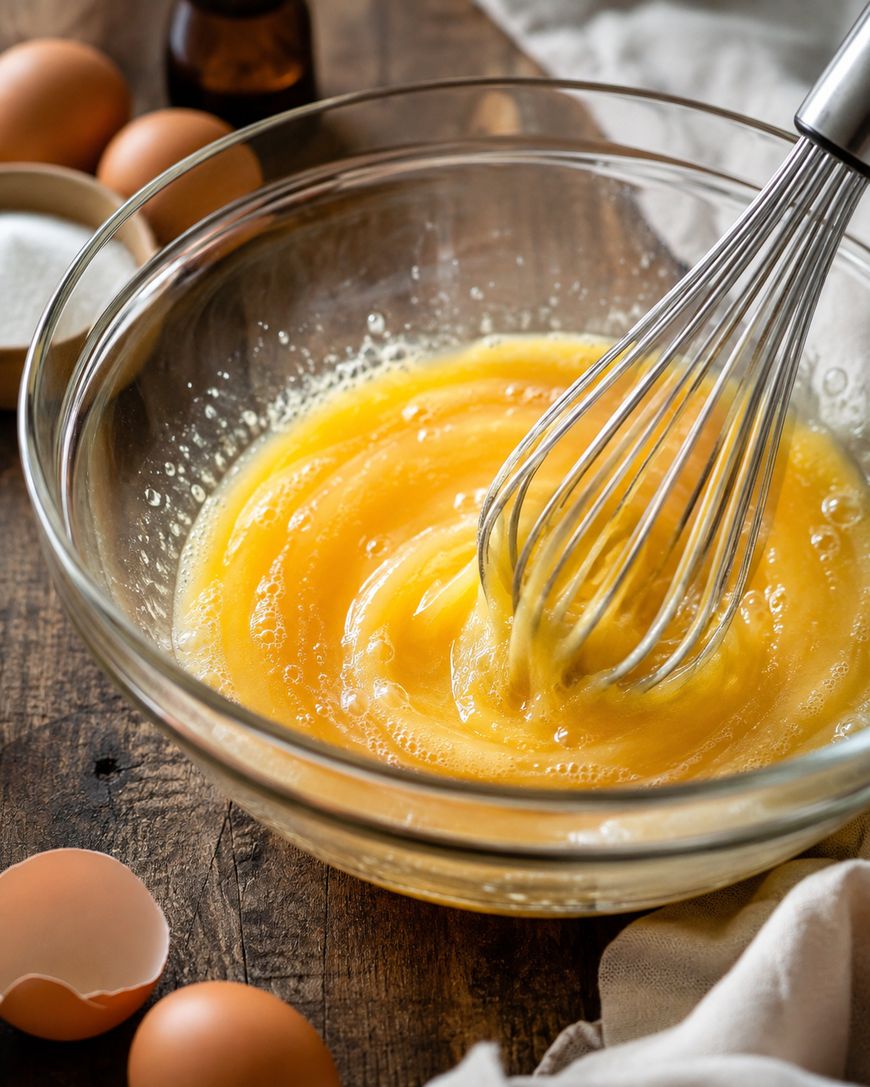
Whisk the eggs first until smooth, then add the sugar, salt, and vanilla, whisking just until combined rather than frothy.

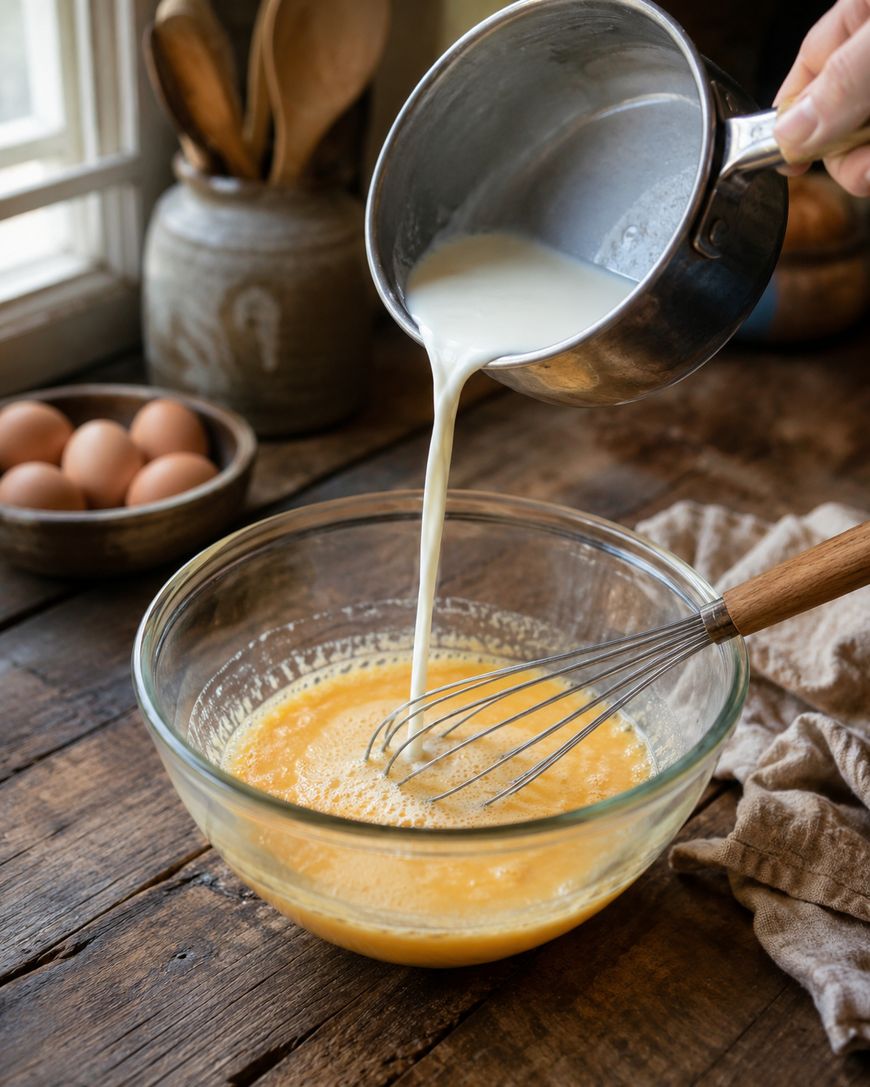
Warm the milk gently on the stove or in the microwave until it is steamy but not boiling, then slowly stream it into the egg mixture while whisking constantly to temper the eggs.
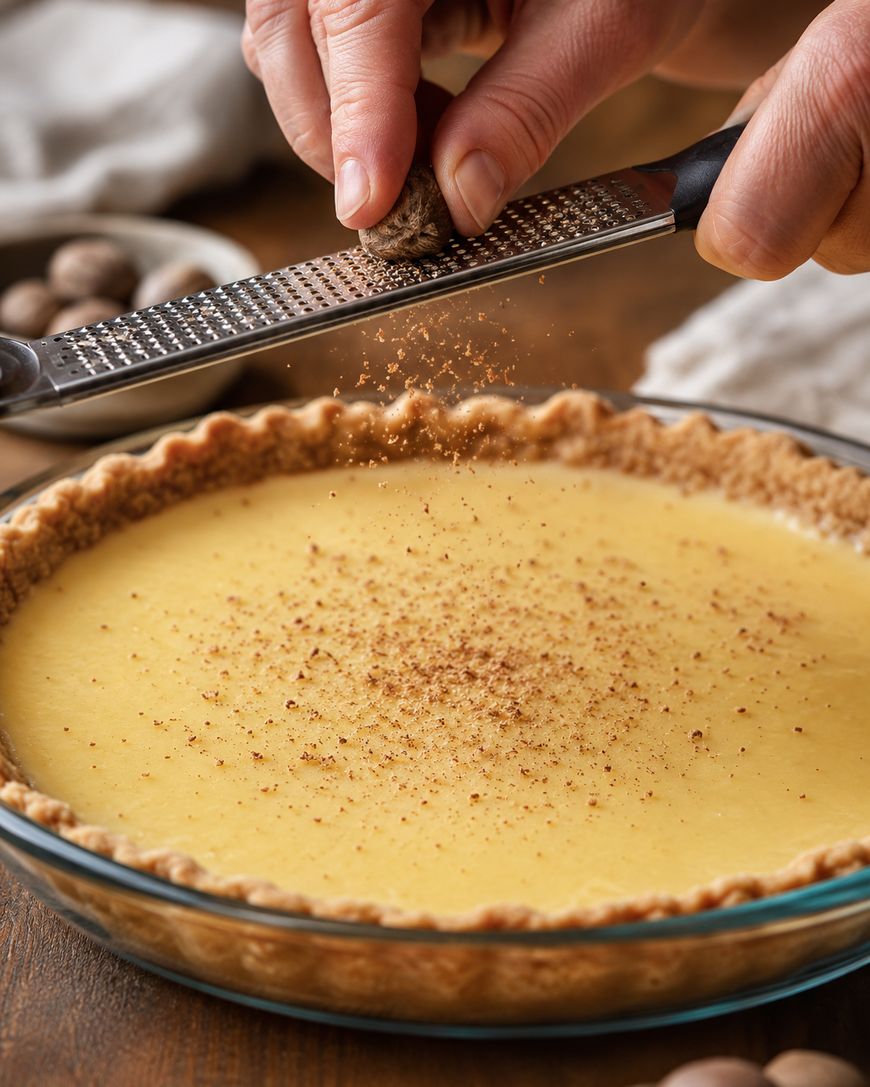
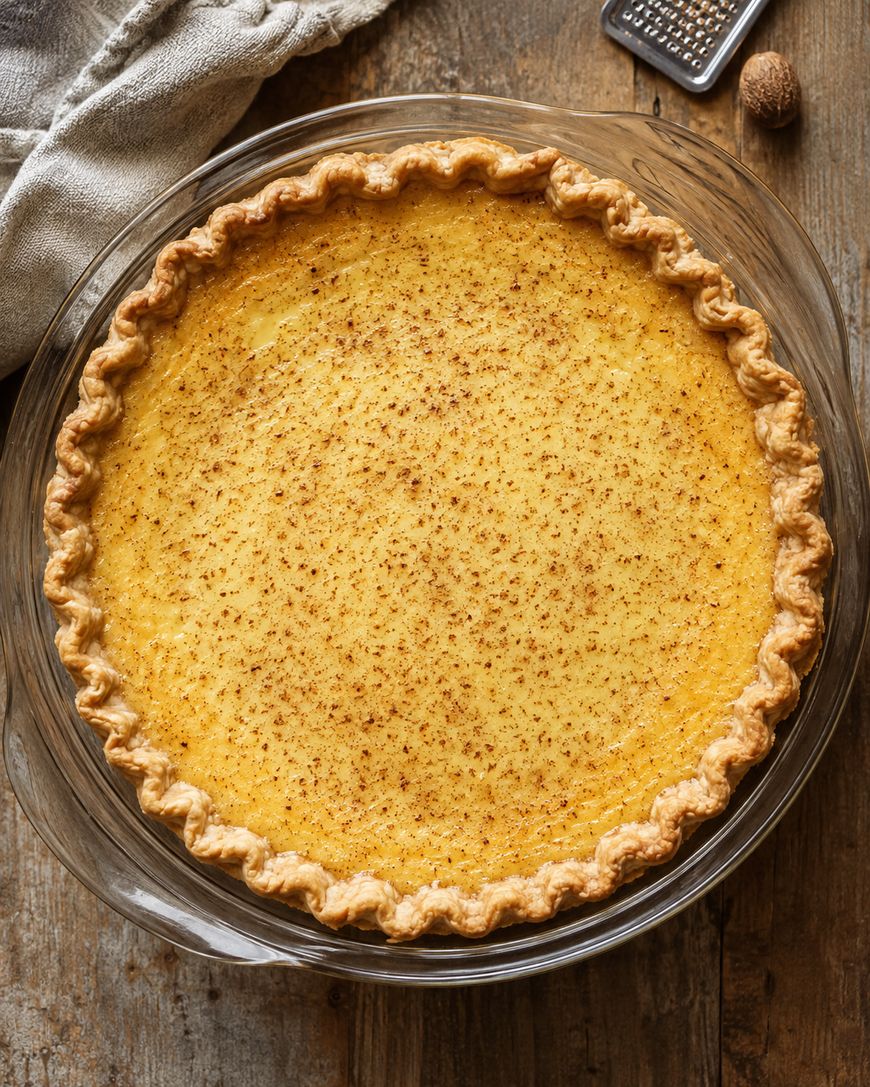
Pour the mixture through a fine mesh sieve directly into the warm crust to catch any bits of cooked egg, then grate fresh nutmeg generously over the top.
Bake at 325°F for 40 to 50 minutes, watching closely once you hit the 35-minute mark, since custard pie goes from perfectly set to overcooked in a short window.
How to Tell When It’s Done
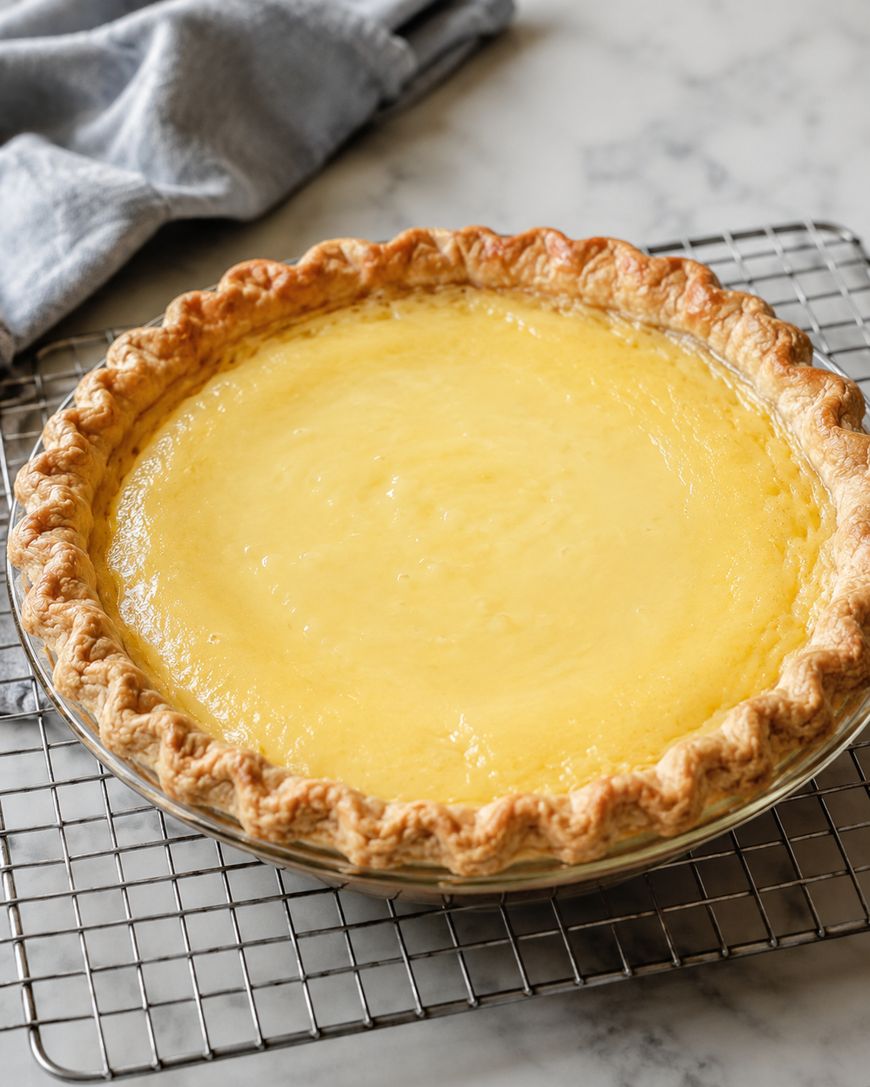
The pie is ready when the outer two inches look set and the very center still has a slight jiggle, similar to lightly set gelatin, since it will continue firming up as it cools.
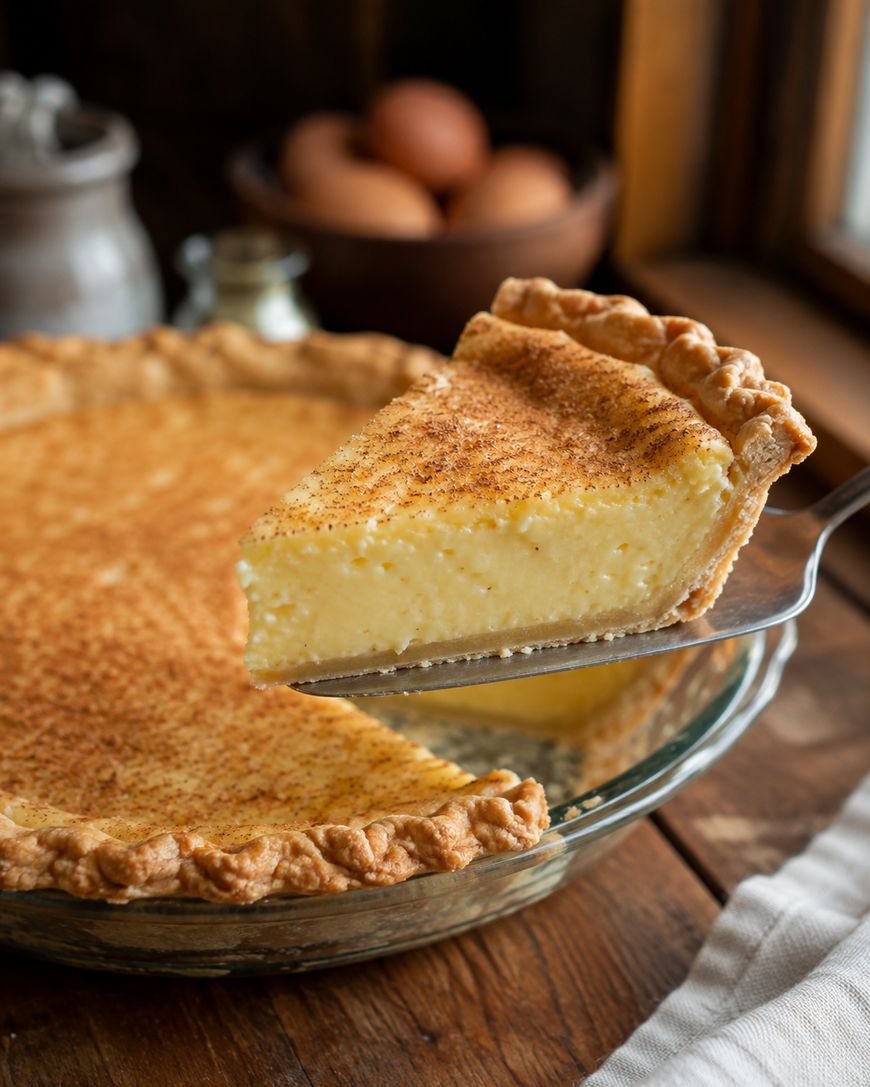
If you insert a knife an inch from the center and it comes out clean, the pie has likely gone slightly past ideal and will have a firmer, less silky texture.
Tent the edges of the crust with foil around the 25-minute mark if they are browning faster than the center is setting.
Variations and Substitutions
Swap regular milk for coconut milk and add a half teaspoon of almond extract for a subtly tropical version that still bakes up beautifully.
Brown sugar in place of granulated sugar gives the custard a deeper, caramel-like undertone that pairs especially well with the nutmeg.
For a coconut custard pie, stir a half cup of sweetened shredded coconut into the filling before pouring it into the crust.
Making It Dairy Free
Full-fat canned coconut milk or a high-quality oat milk barista blend both work as substitutes, though the texture will be slightly less silky than one made with dairy.
Reduce the baking time by about 5 minutes when using plant-based milk, since these tend to set a bit faster than dairy versions.
Storage and Make-Ahead Tips
Custard pie keeps well in the refrigerator, covered loosely with plastic wrap or foil, for up to 4 days.
Because of the egg and dairy content, it should never sit at room temperature for more than 2 hours, so refrigerate leftovers promptly.
This pie does not freeze well, since the custard separates and turns watery once thawed, so plan to bake it within a day or two of serving.
Serving Suggestions
Serve slices chilled or at room temperature with a light dusting of extra nutmeg or cinnamon on top.
A dollop of lightly sweetened whipped cream and a few fresh berries on the side round out the plate nicely for a spring or summer gathering.
Ready to bring this all together? Grab your ingredients and follow the recipe card below for exact measurements and step-by-step timing.
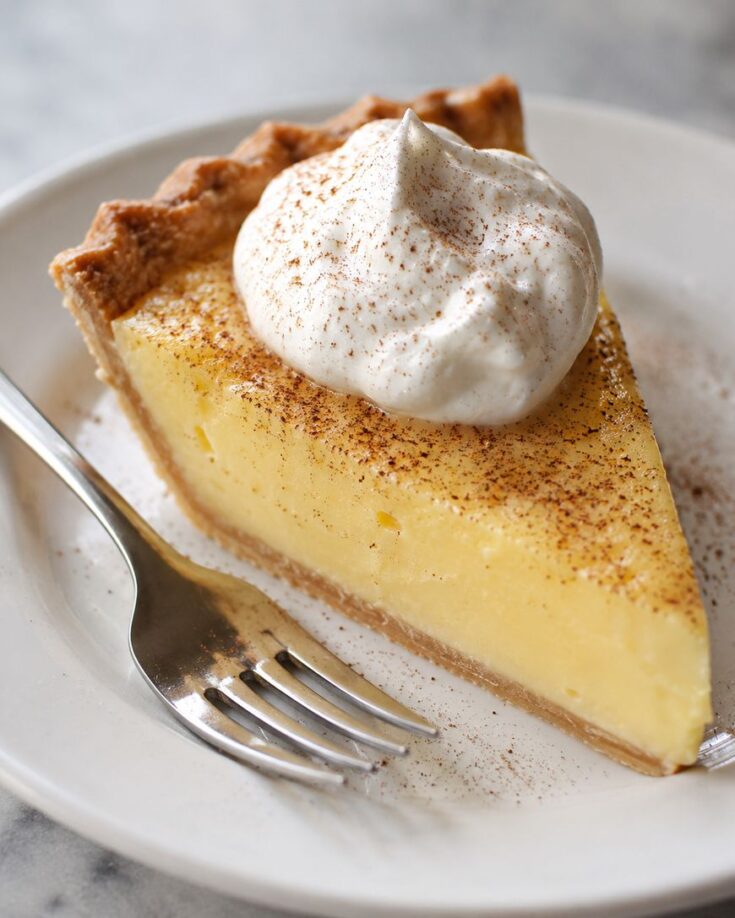
Classic Custard Pie
A silky, old-fashioned custard pie with a flaky crust and a warm nutmeg finish, baked low and slow until just set.
Ingredients
- 1 unbaked 9-inch pie crust
- 4 large eggs
- 3/4 cup granulated sugar
- 1/4 teaspoon fine sea salt
- 1 tablespoon pure vanilla extract
- 2 1/2 cups whole milk
- 1/2 teaspoon freshly grated nutmeg, plus more for topping
- 1 egg white, lightly beaten (for sealing crust)
Instructions
- Preheat the oven to 375°F and fit the pie dough into a 9-inch pie plate, crimping the edges.
- Chill the crust in the freezer for 15 minutes.
- Line the crust with parchment paper, fill with pie weights, and blind bake for 12 minutes.
- Remove the weights and parchment, then bake 5 more minutes until pale and dry.
- Brush the warm crust with beaten egg white and bake 2 more minutes to seal.
- Reduce oven temperature to 325°F.
- Whisk the eggs in a large bowl until smooth.
- Whisk in the sugar, salt, and vanilla extract until just combined.
- Warm the milk until steamy but not boiling.
- Slowly stream the warm milk into the egg mixture while whisking constantly.
- Strain the custard through a fine mesh sieve into the cooled crust.
- Grate fresh nutmeg generously over the top.
- Bake for 40 to 50 minutes, until the edges are set and the center jiggles slightly.
- Cool completely on a wire rack before slicing and serving.
Notes
For a firmer slice, chill the pie for 2 hours after it cools to room temperature before cutting. Use a sharp knife dipped in warm water for clean slices.
Nutrition Information:
Yield:
8Serving Size:
1 sliceAmount Per Serving: Calories: 220Total Fat: 9gSaturated Fat: 4gSodium: 190mgCarbohydrates: 27gFiber: 0gSugar: 18gProtein: 6g
This site provides estimated nutritional information. This information comes from online calculators. Although we try to provide accurate nutritional information, these figures are only estimates.
Custard Pie Recipe Q&A
Why is my custard pie watery or weepy?
Weeping usually happens when the pie is overbaked or held in the fridge too long, causing the egg proteins to squeeze out liquid.
Baking just until the center still jiggles slightly, then cooling completely before slicing, helps prevent this issue.
Can I make custard pie without blind baking the crust?
You technically can, but you will almost always end up with a pale, soggy bottom crust since the custard bakes faster than raw pastry can crisp.
Partially blind baking for about 15 minutes total gives the crust a head start so it finishes cooking through alongside the filling.
What’s the difference between custard pie and pumpkin pie?
Pumpkin pie is technically a custard pie with pumpkin puree and warm spices added to the egg and milk base.
A plain custard pie skips the pumpkin entirely and relies on nutmeg and vanilla for its flavor, giving it a lighter, more delicate character.
How do I know when custard pie is done baking?
Look for the outer edges to appear fully set while the center 2 to 3 inches still wobbles gently when you nudge the pan.
The custard will continue to set as it cools, so pulling it slightly early is safer than risking an overbaked, rubbery texture.
Can I use a different pie crust for this recipe?
A graham cracker crust works in a pinch, though it will not hold up to blind baking the same way pastry dough does, so add it unbaked right before the filling.
A classic all-butter pie crust remains the best choice since its flakiness contrasts nicely with the smooth custard.
Is custard pie the same as flan?
They share a similar egg and milk base, but flan is cooked in a water bath with caramelized sugar on the bottom and is unmolded before serving.
Custard pie is baked directly in a pastry shell and served straight from the pie plate, giving it a firmer, more structured slice.
Final Thoughts on This Custard Pie Recipe
This custard pie recipe proves that a handful of humble ingredients, treated carefully, can turn into one of the most comforting desserts in your baking rotation.
Once you get the timing and blind baking technique down, you will find yourself reaching for this recipe every holiday season and beyond.
Try our buttermilk pie recipe next