Last updated: October 15, 2026
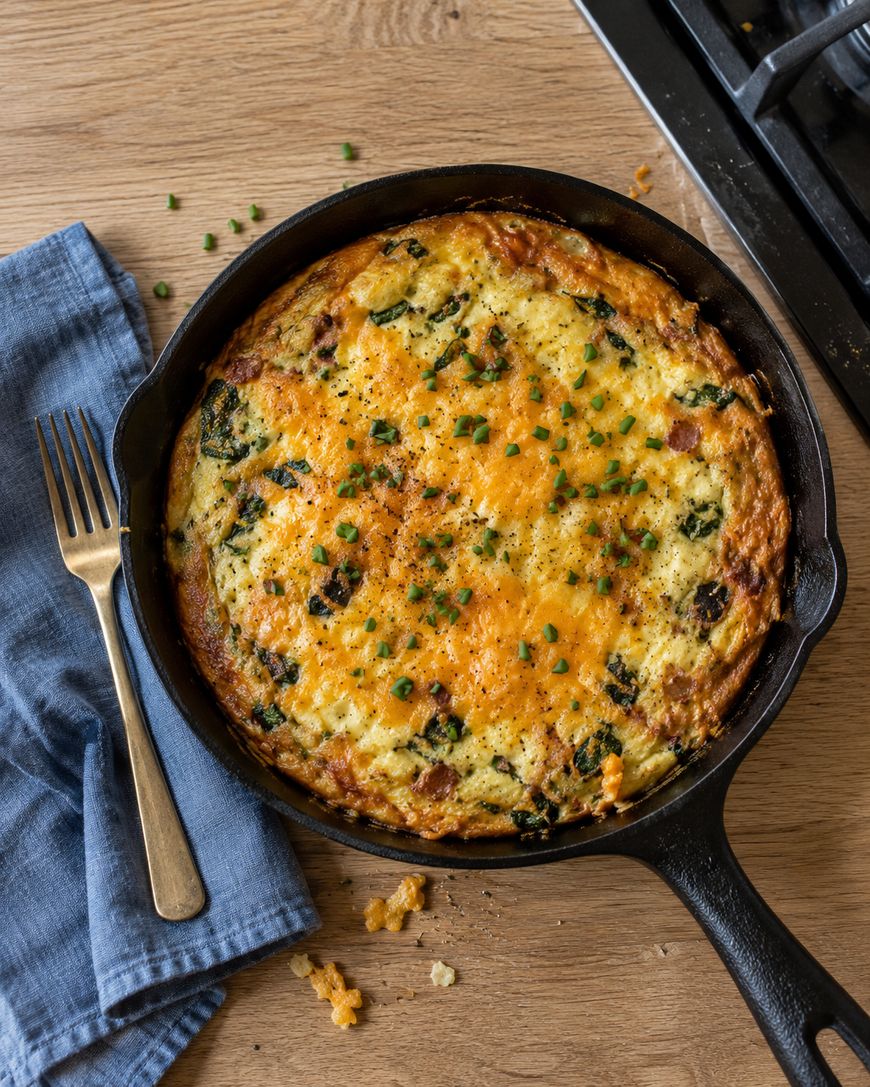
This breakfast frittata gives you a fluffy, cheesy egg bake with spinach and sweet red pepper, all made in one 10-inch skillet in about 45 minutes. The full recipe card is below, and the walkthrough that follows covers every step so you can cook it with confidence.
What You Need to Make a Breakfast Frittata
A great breakfast frittata starts with ten large eggs, a splash of whole milk, a few well-cooked vegetables, and sharp cheddar. That short list feeds six people and costs less than a single round of coffee shop breakfast sandwiches.
The Eggs and Milk
Ten large eggs fill a 10-inch skillet to the right depth, so the center cooks through before the edges turn rubbery. We whisk them with 1/2 cup of whole milk, which loosens the proteins just enough to keep the texture tender instead of tight.

Season the eggs with 3/4 teaspoon of kosher salt and 1/4 teaspoon of black pepper. Salt added before cooking also helps the eggs hold moisture, so do not wait until the end.
The Vegetables
We use 1/2 cup of diced yellow onion, 1 cup of diced red bell pepper, and 6 ounces of baby spinach. The onion brings savory depth, the red pepper adds a little sweetness, and the spinach wilts down to a soft green layer that spreads through every slice.
Dice the onion and pepper to about the size of a pea so each wedge has even bites. Cook them first in 1 tablespoon of olive oil and 1 tablespoon of unsalted butter, because raw vegetables release water into the eggs and make the frittata soggy.
The Cheese and Finishing Touches
Sharp cheddar gives the most flavor, and we use 1 1/2 cups (about 6 ounces) shredded from a block. Block cheddar melts more smoothly than the bagged kind, which carries anti-caking starch.
Stir 1 cup of the cheese into the eggs and save the remaining 1/2 cup for the top, where it browns into a golden crust. Finish with 3 tablespoons of chopped fresh chives for a mild onion bite and a pop of color.
The Right Skillet
A 10-inch oven-safe skillet is the best tool here, whether it is cast iron, stainless steel, or nonstick with a metal handle. Check that the handle can handle a 375°F oven before you start, since plastic or rubber grips will melt.
How to Make a Breakfast Frittata Step by Step
You make a breakfast frittata by cooking the vegetables on the stovetop, pouring in the eggs, setting the edges over heat, and finishing the center in a 375°F oven. The whole process takes about 15 minutes of active work and 30 minutes of cooking and resting.
Prep the Oven and the Eggs
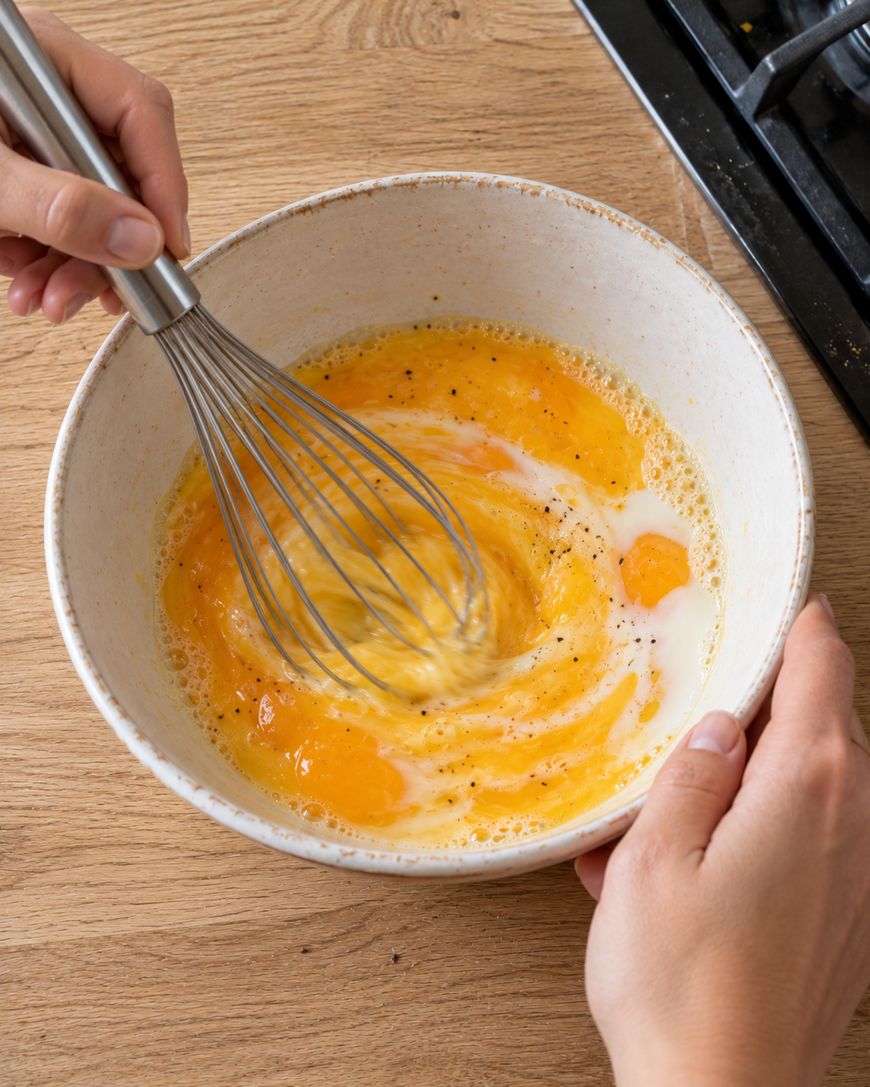
Heat the oven to 375°F and place a rack in the center position. Whisk the eggs, milk, salt, and pepper in a large bowl until no streaks of white remain.
Cook the Vegetables
Warm the olive oil and butter in the skillet over medium heat. Add the onion and bell pepper and cook for 5 minutes, stirring often, until the pieces are soft and the onion looks translucent.

Add the spinach in handfuls, stirring as each one wilts. Cook for 1 to 2 minutes, until the pan looks dry and no puddles of liquid remain.

Add the Eggs and Set the Edges
Spread the vegetables evenly across the pan. Stir 1 cup of the cheddar into the whisked eggs, pour the mixture over the vegetables, and stir gently once to distribute everything.

Cook on the stovetop for 2 to 3 minutes without stirring. You want to see the edges turn opaque and begin to pull away from the pan.
Bake and Rest
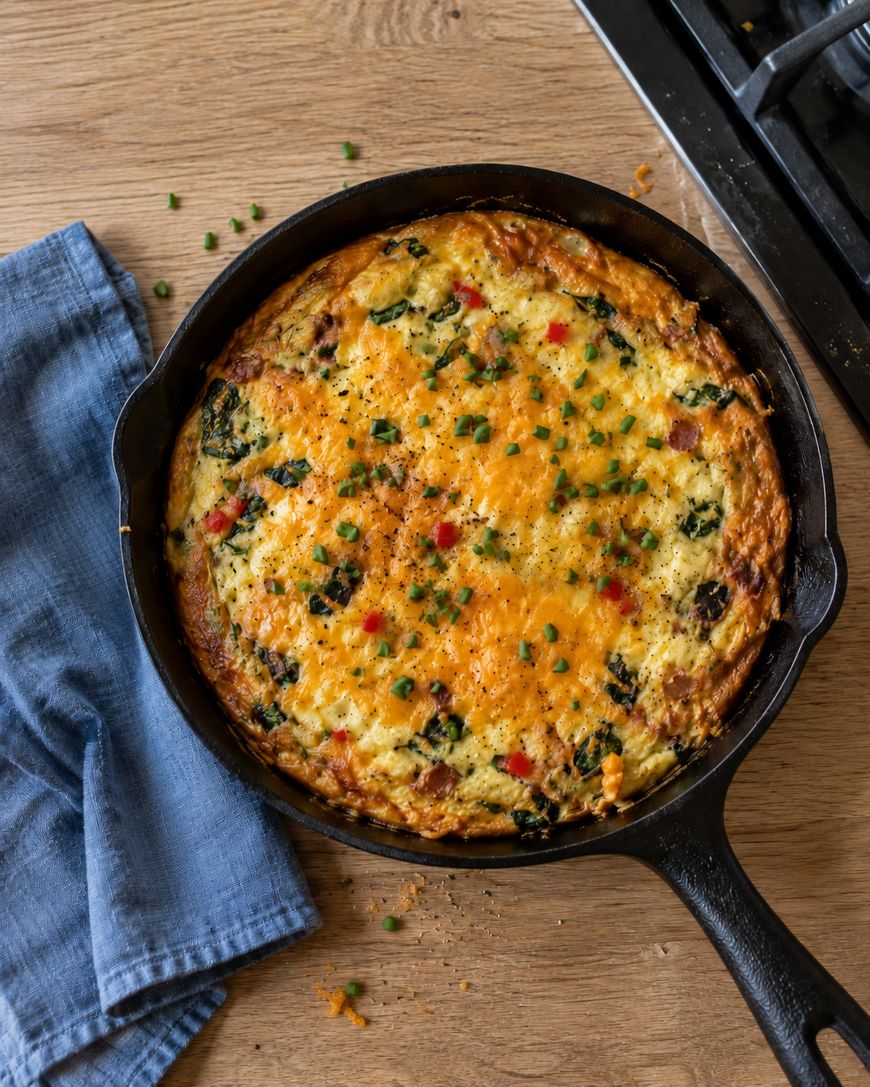
Sprinkle the remaining 1/2 cup of cheddar over the top and slide the skillet into the oven. Bake for 14 to 16 minutes, until the center is set and the frittata no longer jiggles when you nudge the pan.

Let the frittata rest in the skillet for 5 minutes, then sprinkle with the chives. Loosen the edges with a spatula and cut the frittata into 6 wedges.
Tips for a Fluffy Breakfast Frittata Every Time
The two things that decide whether a breakfast frittata turns out fluffy or rubbery are the doneness and the moisture. Get both right and the rest is easy.

Check Doneness With a Thermometer
According to USDA food safety guidance, egg dishes are safe once they reach an internal temperature of 160°F. Slide an instant-read thermometer into the center of the frittata at the 14 minute mark to check, and pull it from the oven as soon as it reads 160°F.
Carryover heat keeps cooking the eggs during the rest, so a frittata taken out at the right moment stays tender. Leave it in too long and the texture turns dense and the edges dry.
Keep Water Out of the Eggs
Spinach is mostly water, which is why we cook it until the pan looks dry before the eggs go in. If you use frozen spinach instead, thaw it and squeeze it hard in a clean towel first.
Mushrooms, tomatoes, and zucchini also release a lot of liquid. Sauté them until the pan is dry, or the frittata will weep a watery puddle onto the plate.
Use Medium Heat and a Gentle Stir
High heat sets the bottom of the frittata before the top has a chance to catch up. Medium heat on the stovetop gives the edges a gentle head start while the oven finishes the center evenly.
After pouring in the eggs, stir only once. Constant stirring turns the frittata into scrambled eggs.
Breakfast Frittata Variations and Substitutions
You can swap almost any cooked vegetable, cheese, or protein into this breakfast frittata as long as you keep the egg base the same. The card below leaves out the options in this section, so treat every idea here as optional.

Add Meat
Crumbled cooked breakfast sausage, diced ham, or crisp chopped bacon all work well. Cook the meat first and drain it well, then scatter it over the vegetables before the eggs go in.
Change the Cheese
Gruyere gives a nutty, bakery-style flavor, while feta and goat cheese add tang. Pepper jack brings a little heat, and a sprinkle of Parmesan on top adds a salty, crisp finish.
Try Different Vegetables
Sautéed mushrooms, roasted potatoes, asparagus tips, and sun-dried tomatoes are all excellent. Keep the total volume of vegetables close to what the card uses, so the pan does not overflow and the eggs still hold everything together.
Make It Dairy Free
Replace the milk with an unsweetened plain oat or almond milk and swap the cheddar for a dairy-free shredded cheese. The frittata will be a touch firmer, but it stays flavorful.
How to Store, Freeze, and Reheat Breakfast Frittata
A cooked breakfast frittata keeps in the refrigerator for up to 4 days when stored in an airtight container. USDA guidance for leftovers is to refrigerate within 2 hours of cooking and to use them within 3 to 4 days, so 4 days is the limit.
For longer storage, wrap individual wedges tightly in plastic wrap, place them in a freezer bag, and freeze for up to 2 months. Thaw the wedges overnight in the refrigerator before reheating.
Reheat slices in a 350°F oven for 10 to 15 minutes or in the microwave for 45 to 60 seconds. The USDA recommends reheating leftovers to 165°F, so check the center with a thermometer.
What to Serve With a Breakfast Frittata
A breakfast frittata is filling by itself, but a few simple sides turn it into a full brunch spread. Buttered sourdough toast, a bowl of fresh berries, and crispy roasted potatoes are all natural partners.
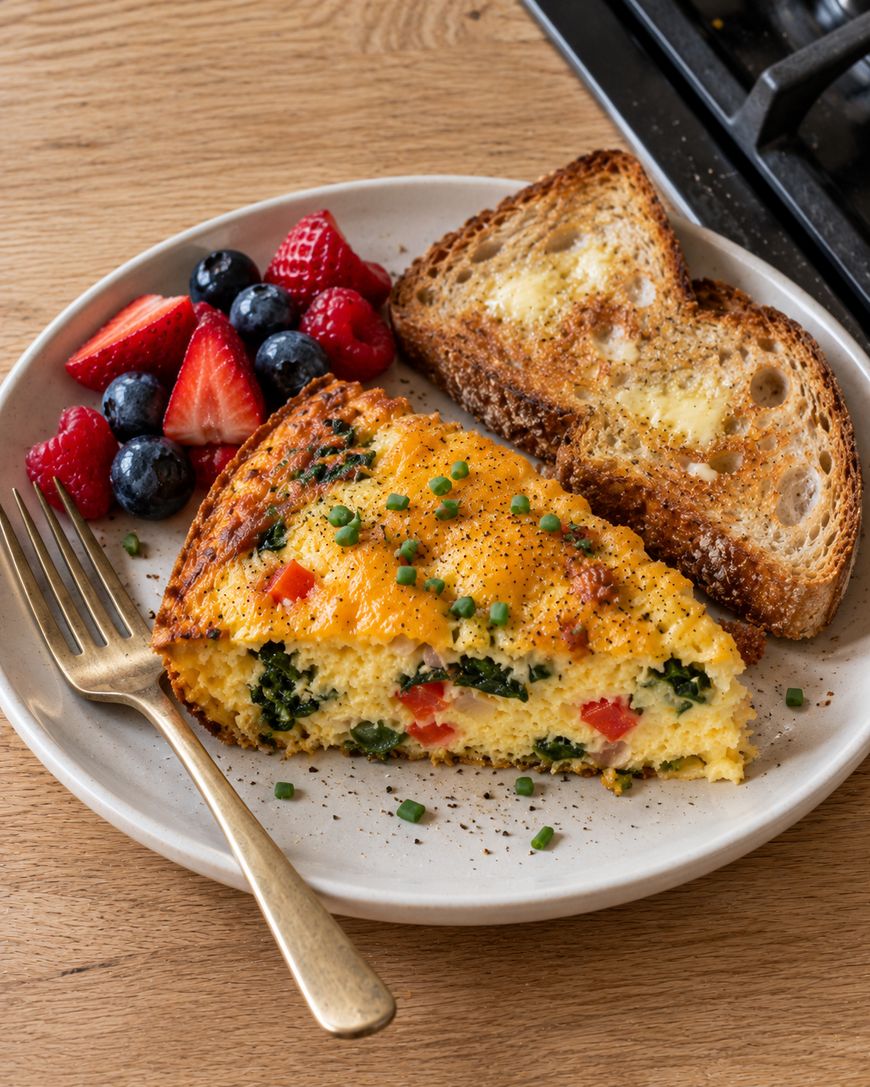
For a lighter plate, add a handful of arugula tossed with lemon juice and olive oil. The peppery greens cut through the richness of the cheddar.
If you are hosting, slice the frittata into small squares and serve it warm or at room temperature on a platter. It travels well to potlucks and baby showers.
The Story Behind the Frittata
The frittata is a classic Italian egg dish, and its name comes from the Italian word friggere, which means to fry. Italian home cooks have long used it to turn leftover vegetables, cheese, and bits of pasta into a quick meal.
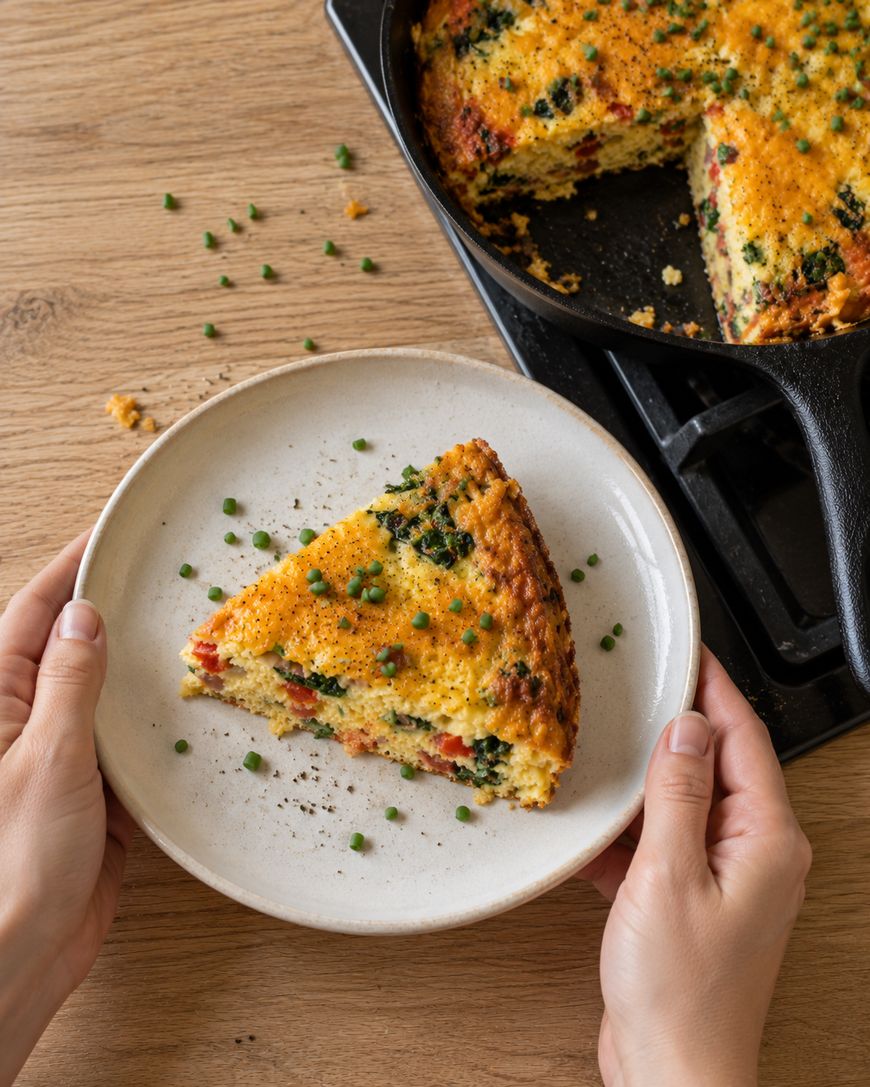
The Italian frittata is cooked slowly on the stovetop and often flipped, while the Spanish tortilla and French omelet use different techniques. Our version borrows the stove-to-oven method that American cooks love, because it needs no flipping and cooks the center evenly.
Use the recipe card below to print or save this breakfast frittata, and scroll past it for answers to common questions.
Easy Breakfast Frittata With Spinach and Cheddar
A fluffy, cheesy breakfast frittata with spinach, red bell pepper, and sharp cheddar, cooked on the stovetop and finished in the oven in one 10-inch skillet.
Ingredients
- 10 large eggs
- 1/2 cup whole milk
- 3/4 teaspoon kosher salt
- 1/4 teaspoon black pepper
- 1 tablespoon olive oil
- 1 tablespoon unsalted butter
- 1/2 cup diced yellow onion
- 1 cup diced red bell pepper
- 6 ounces baby spinach
- 1 1/2 cups shredded sharp cheddar cheese, divided
- 3 tablespoons chopped fresh chives
Instructions
- Heat the oven to 375°F and place a rack in the center position.
- Whisk the eggs, milk, salt, and pepper in a large bowl until no streaks of white remain.
- Heat the olive oil and butter in a 10-inch oven-safe skillet over medium heat. Add the onion and bell pepper and cook for 5 minutes, stirring often, until softened.
- Add the spinach in handfuls and cook for 1 to 2 minutes, stirring, until wilted and the pan looks dry.
- Spread the vegetables evenly across the pan. Stir 1 cup of the cheddar into the eggs, pour the mixture over the vegetables, and stir gently once.
- Cook on the stovetop for 2 to 3 minutes without stirring, until the edges begin to set.
- Sprinkle the remaining 1/2 cup cheddar over the top and transfer the skillet to the oven. Bake for 14 to 16 minutes, until the center is set and the frittata reaches 160°F.
- Let rest in the skillet for 5 minutes, sprinkle with the chives, loosen the edges with a spatula, and cut into 6 wedges.
Notes
Make sure your skillet handle is oven-safe. Cook watery vegetables until the pan is dry before adding the eggs. Refrigerate leftovers in an airtight container for up to 4 days, or freeze wrapped wedges for up to 2 months. Reheat leftovers to 165°F.
Nutrition Information:
Yield:
6Serving Size:
1 wedgeAmount Per Serving: Calories: 270Total Fat: 20gSaturated Fat: 9gSodium: 520mgCarbohydrates: 4gFiber: 1gSugar: 2gProtein: 18g
Frequently Asked Questions
How do you know when a breakfast frittata is done?
The center should be set and no longer jiggle, and the edges should be lightly golden. For certainty, an instant-read thermometer in the center should read 160°F, the USDA safe temperature for egg dishes.
Can you make a breakfast frittata without milk?
Yes, you can leave out the milk and use all eggs. The frittata will be a little denser and firmer, so we recommend keeping the 1/2 cup of milk for the softest texture.
Why is my frittata watery?
Watery frittatas almost always come from vegetables that were not cooked down enough. Sauté watery ingredients like spinach, mushrooms, and tomatoes until the pan is dry before adding the eggs.
Can you make a breakfast frittata ahead of time?
Yes, bake it the day before and refrigerate it in an airtight container for up to 4 days. Reheat slices until they reach 165°F in the center.
What size skillet do you need for a frittata?
A 10-inch oven-safe skillet is ideal for this recipe. A 12-inch skillet makes a thinner frittata that cooks faster, so start checking for doneness a few minutes early.
Why This Breakfast Frittata Recipe Works
The ratio of 10 eggs to 1/2 cup of whole milk gives you a custard that sets softly instead of turning bouncy. The milk dilutes the egg proteins just enough, so they cling to each other loosely as they cook.
Sautéing the onion, red pepper, and spinach before the eggs go in builds flavor and drives off moisture. That means every slice holds together cleanly instead of sliding apart in a puddle.
Starting the frittata on the stovetop sets the edges, and finishing it in a 375°F oven cooks the center without flipping. Stirring in 1 cup of cheddar and topping with 1/2 cup more gives you cheese in every bite plus a golden top.
A 5 minute rest lets the residual heat finish the center gently, so the frittata slices into neat wedges.
Make This Breakfast Frittata Your Go-To
This breakfast frittata is the easy, flexible recipe that earns a spot in your regular rotation, with fluffy eggs, melty cheddar, and tender vegetables in every bite. Heat the oven, grab your skillet, and make it this weekend, then pin the recipe so you can find it again.
Easy Biscuits and Gravy With Flaky Buttermilk Biscuits and Peppery Sausage Gravy