Last updated: October 9, 2026
This Dutch baby pancake recipe is the easiest way to turn a handful of pantry staples into something that looks truly spectacular. See the recipe card below for exact measurements and timing.

What Is a Dutch Baby Pancake
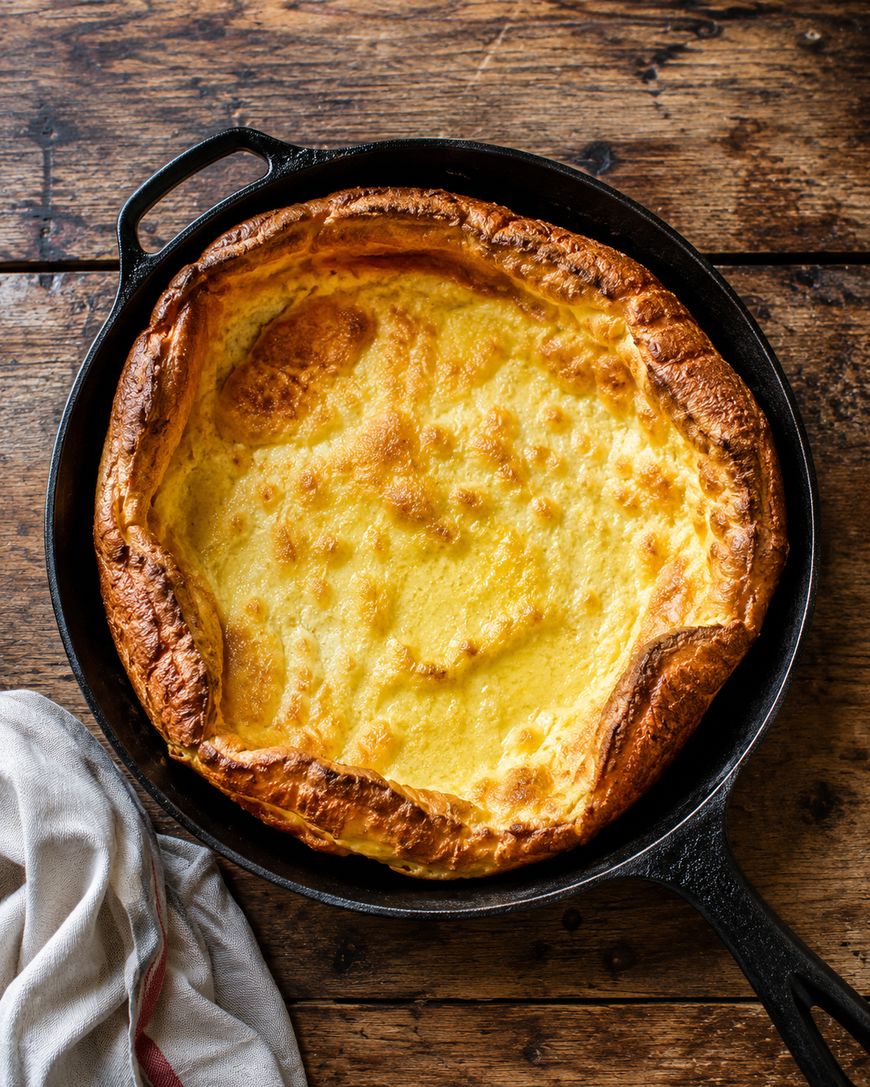
A Dutch baby pancake is a large, oven-baked pancake cooked in a cast iron skillet that puffs dramatically in the oven then collapses into a crisp-edged, custardy bowl. It lands somewhere between a crepe, a popover, and a Yorkshire pudding.
Despite its name, the Dutch baby has no connection to the Netherlands. It is widely credited to Manca’s Cafe in Seattle, Washington, where owner Victor Manca trademarked the name in the early 1900s.
The dish may have roots in the German Pfannkuchen, a similar oven pancake, which is likely how it earned its nickname. “Dutch” in this context is likely a corruption of “Deutsch,” meaning German.
Ingredients You Need
The Batter
The batter is built on eggs, whole milk, all-purpose flour, and a pinch of salt. Eggs are the engine here — they trap air and create steam, which drives the dramatic rise.
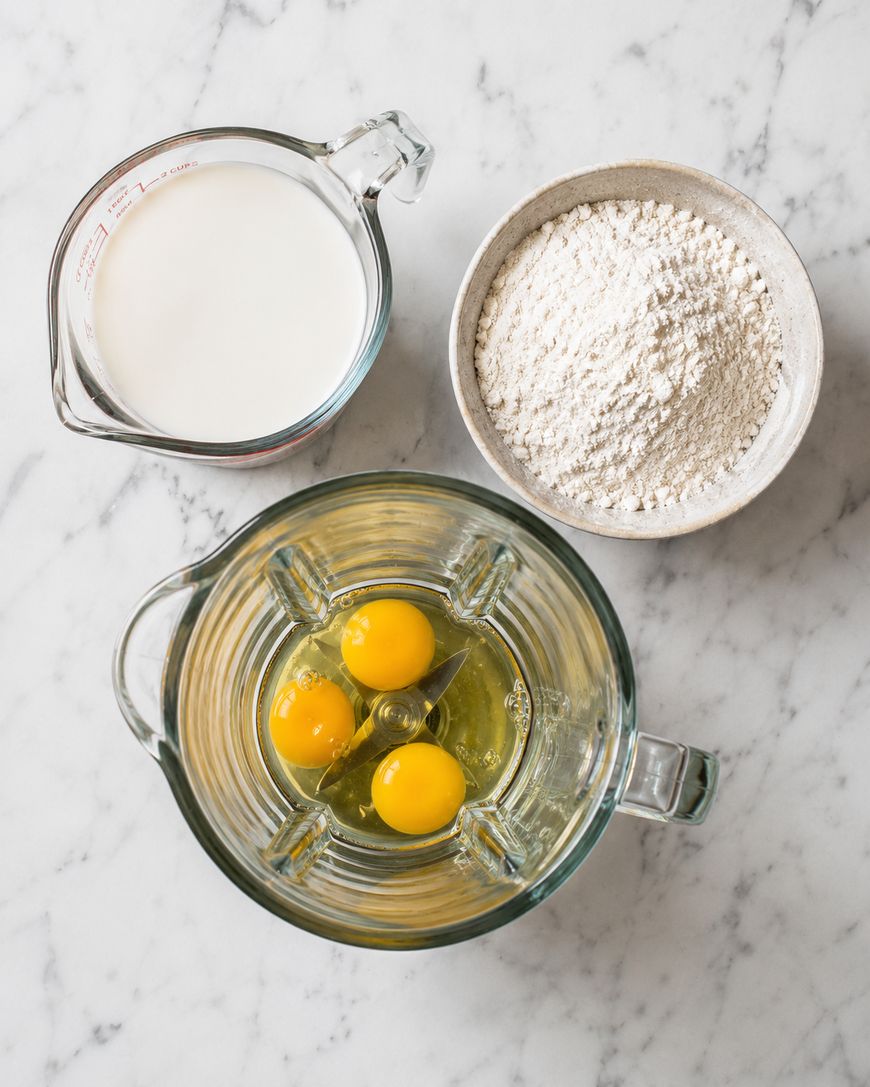
Whole milk gives the batter enough fat and body to set into that signature custardy center. Lowfat milk works in a pinch, but the texture will be slightly thinner.
All-purpose flour provides structure without making the pancake heavy. Bread flour will toughen it; cake flour will weaken it. Stick with all-purpose for the best result.
The Pan
A 10-inch cast iron skillet is ideal. The cast iron retains heat evenly and transfers it quickly to the batter, giving the edges their characteristic crisp rise.
An oven-safe stainless steel skillet or enameled cast iron will also work. Avoid non-stick pans — they do not heat as aggressively and the edges will not puff as dramatically.
The Fat
Unsalted butter is the standard. It goes into the skillet while the oven preheats, coating the surface and beginning to foam just before the batter is poured.
The butter must be hot but not browned when the batter hits it. Brown butter will still taste good, but the smoke point risk is not worth it.
How to Make a Dutch Baby Pancake
Step One: Preheat Everything
Set the oven to 425 degrees Fahrenheit and place the skillet inside while it heats. The pan must be genuinely hot before the butter and batter go in. Skipping this step is the most common reason Dutch babies fail to rise.

Allow at least 20 minutes of preheat time. Use an oven thermometer if you have one — many home ovens run 25 degrees cooler than the dial reads.
Step Two: Make the Batter
Combine 3 large eggs, three-quarters cup whole milk, three-quarters cup all-purpose flour, and one-quarter teaspoon fine sea salt in a blender. Blend on high for 30 seconds until the batter is completely smooth and slightly frothy.
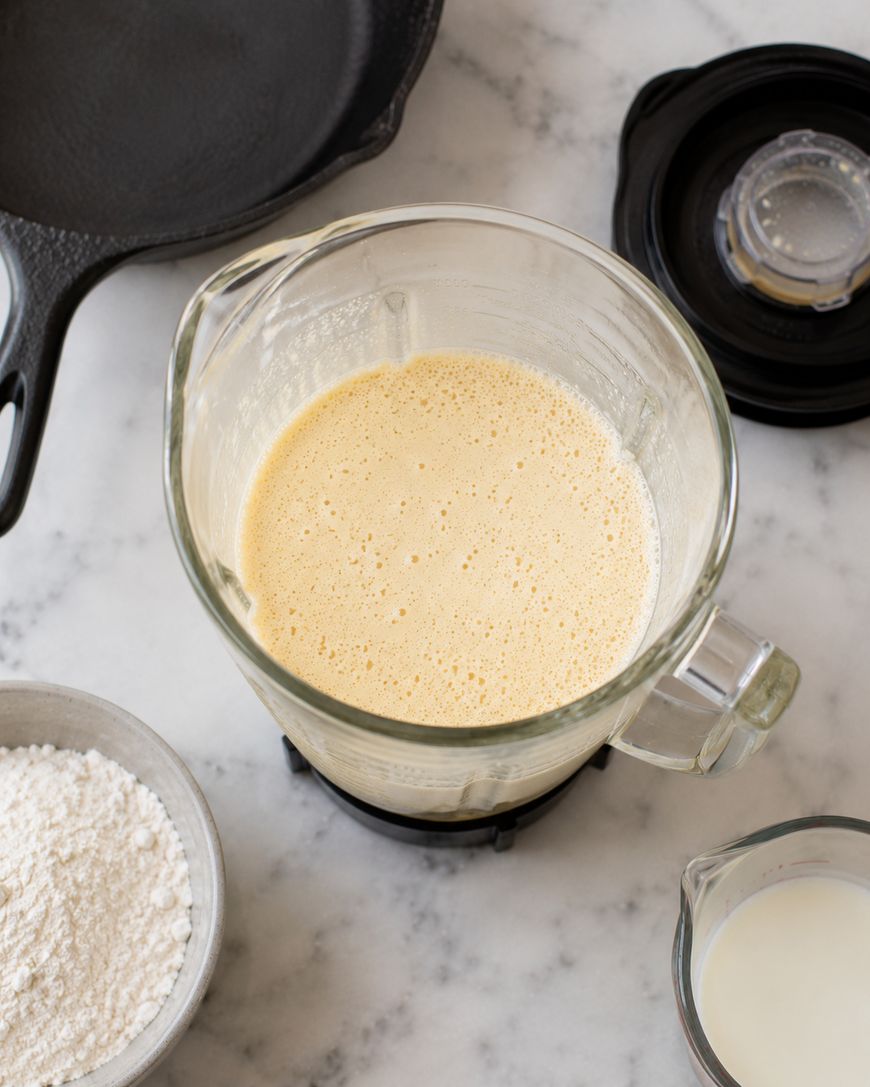
Room temperature eggs and milk blend more smoothly and produce a better rise than cold ingredients. Pull them from the refrigerator at least 15 minutes before you start. The batter can be made up to one day ahead and stored in the refrigerator — just blend it again briefly before using.
Step Three: Butter the Skillet
Remove the hot skillet from the oven using heavy oven mitts. Add 2 tablespoons of unsalted butter and swirl quickly to coat the entire surface, including the sides.

Work fast. The butter should foam immediately. If it sizzles and goes silent before you pour the batter, the pan is cooling down and you should return it to the oven for another minute.
Step Four: Bake
Pour the batter into the buttered skillet in one motion and return it to the oven immediately. Close the oven door and do not open it for at least 18 minutes.
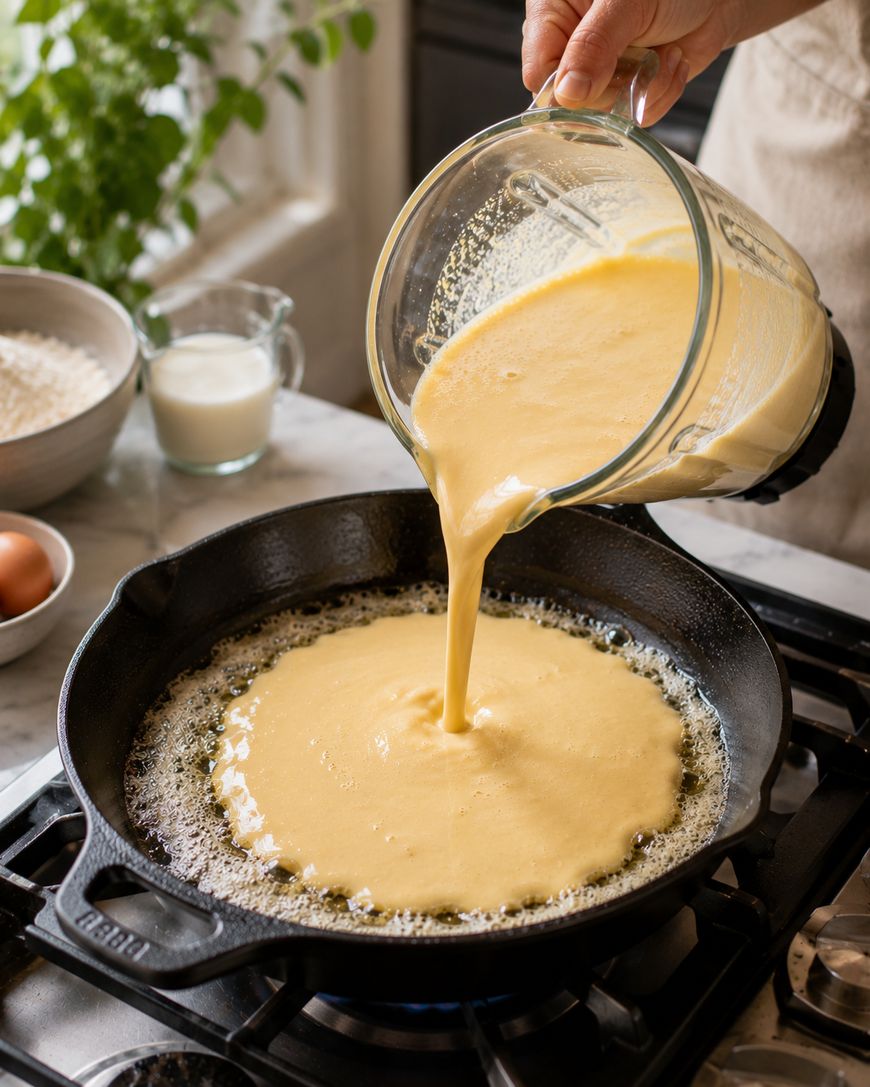
Opening the oven door during baking releases steam and causes the pancake to deflate prematurely. Set a timer and trust the process.
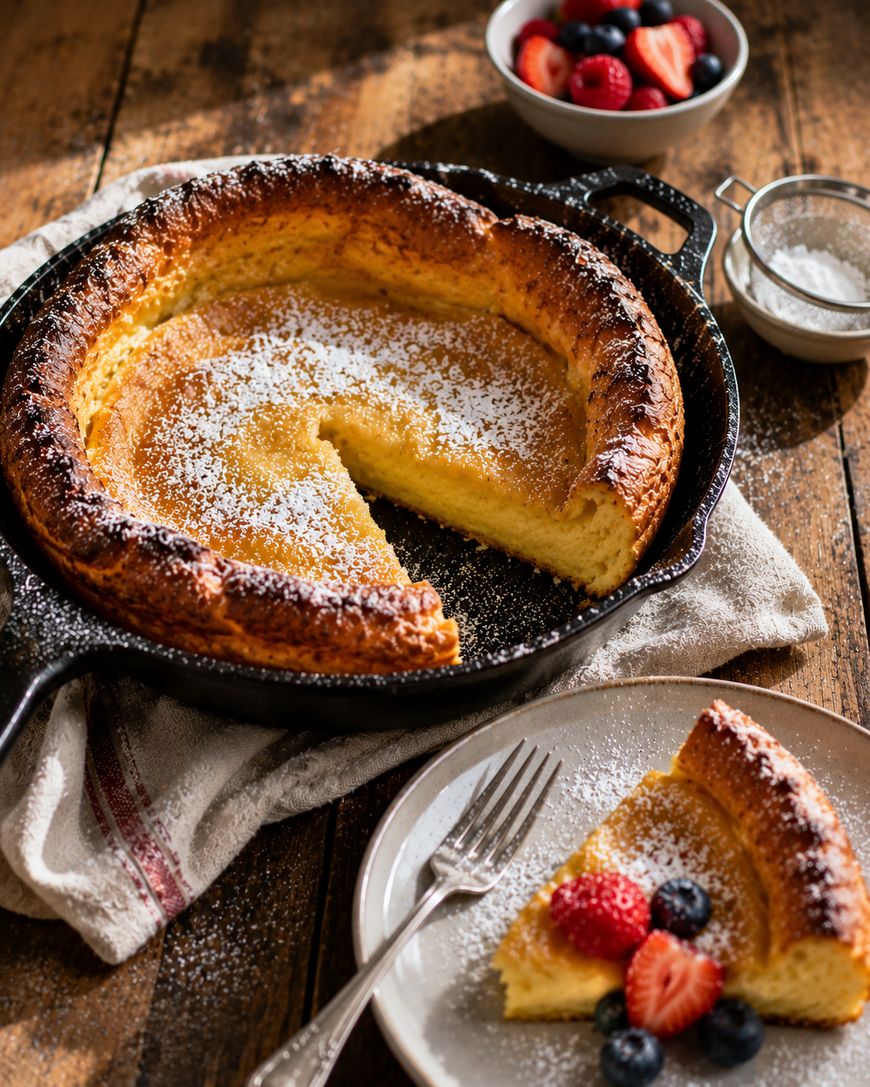
Bake for 20 to 22 minutes total, until the edges are deep golden brown and the center has puffed up dramatically. The center will still look slightly custardy — that is correct.

Step Five: Serve Immediately
A Dutch baby pancake is meant to be eaten right out of the oven. It will begin to deflate within two minutes of leaving the heat, which is entirely normal and expected.
Bring the skillet straight to the table and serve directly from the pan. The collapse is part of the experience — it creates those deep, cratered walls perfect for holding toppings.
Topping and Serving Suggestions
Classic Lemon and Powdered Sugar
The most traditional finish is a heavy dusting of powdered sugar and a squeeze of fresh lemon juice. The brightness of the lemon cuts through the richness of the eggs and butter beautifully.
Use Meyer lemons if they are in season. Their lower acidity and floral aroma suit the delicate batter particularly well.
Seasonal Fruit
Sliced strawberries, blueberries, or peaches work wonderfully. Saute stone fruits briefly in butter and brown sugar before adding them, which concentrates their flavor and creates a quick jammy sauce.
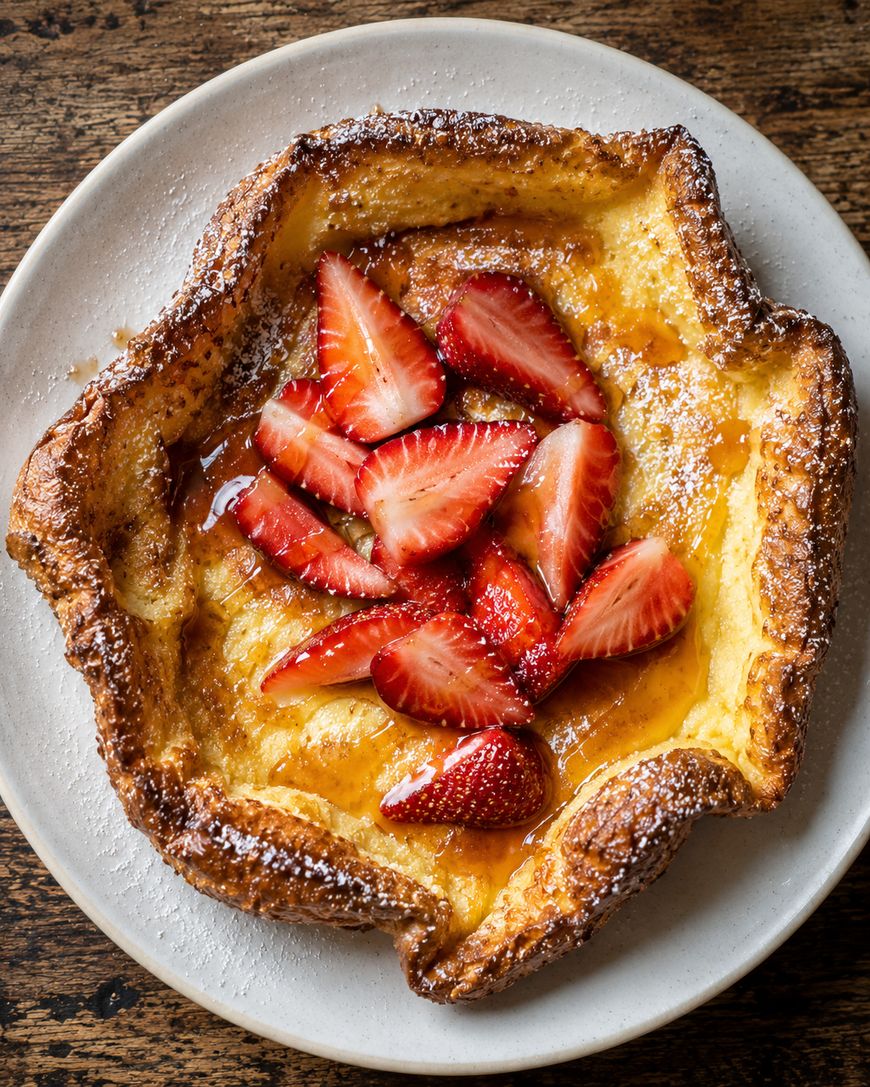
Banana slices caramelized in the same skillet make an especially fast weeknight topping. Add them while you wait for the oven to come to temperature.
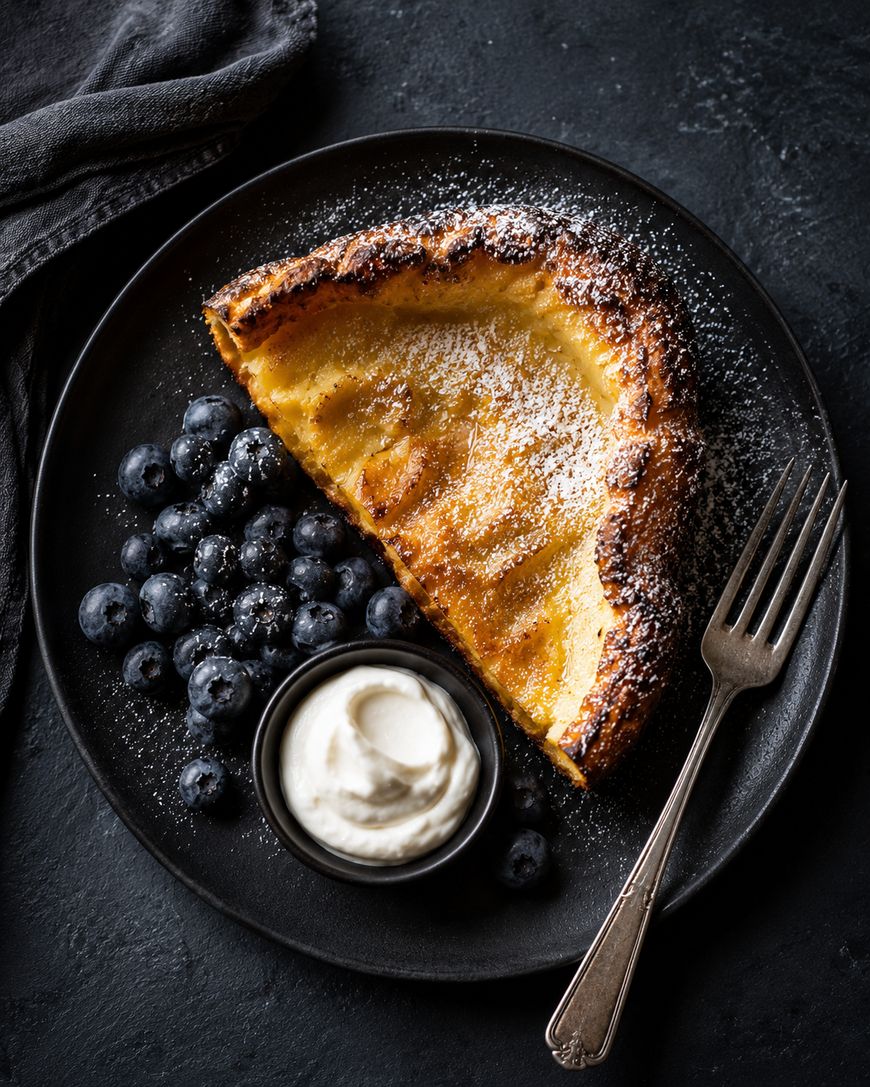
Savory Variations
A Dutch baby is a versatile vehicle for savory toppings. Omit the salt from the batter or keep it minimal, then top the finished pancake with smoked salmon and creme fraiche, crispy prosciutto and arugula, or a fried egg and hot sauce.
Gruyere and thyme stirred into the batter before baking creates a savory version that works as a side dish alongside roast chicken or a simple green salad.
Variations and Substitutions
Gluten-Free
Substitute the all-purpose flour with a 1:1 gluten-free flour blend such as Bob’s Red Mill 1-to-1 Baking Flour. The texture will be slightly more delicate, but the pancake will still rise and set.
Rice flour alone tends to produce a gummy center. A blend formulated with xanthan gum holds together better.
Dairy-Free
Replace whole milk with full-fat oat milk or unsweetened coconut milk from a can. The fat content in both alternatives is close enough to whole milk to preserve the custardy texture.
Use vegan butter or refined coconut oil in place of unsalted butter. Refined coconut oil has a neutral flavor; unrefined will add a distinct coconut note.
Mini Dutch Babies
Divide the batter among a well-buttered muffin tin and bake at the same temperature for 12 to 15 minutes. Each cup will puff and then collapse into an individual serving, which is a practical option for a brunch table.
Storage and Reheating
Dutch baby pancake is genuinely best eaten immediately. Leftovers can be stored in an airtight container in the refrigerator for up to two days, but they will be soft and flat rather than crisp.
Reheat slices in a 350-degree oven on a bare baking sheet for 5 to 7 minutes. A microwave will make the texture rubbery and is not recommended.
The batter, on the other hand, stores well. Make it the night before, refrigerate it covered, and blend briefly before baking in the morning.
The Origin of the Dutch Baby Pancake
The dish that Americans call a Dutch baby pancake has been traced to Manca’s Cafe in Seattle, a restaurant that operated in the Pike Place Market neighborhood for much of the twentieth century.
Victor Manca claimed to have invented and trademarked the name in 1942, though the underlying recipe — an egg-rich batter baked in a hot skillet — is a staple of German-American cooking under names including Pfannkuchen and Bismarck.
Food historians generally agree the name “Dutch” arrived via the Pennsylvania Dutch community, German-speaking immigrants whose dialect word “Deutsch” was anglicized over generations. The dish spread through Pacific Northwest diners and has since become a weekend brunch staple across the United States.
All the steps and quantities you need are in the recipe card. Jump down and pull it up on your phone before you start preheating the oven.
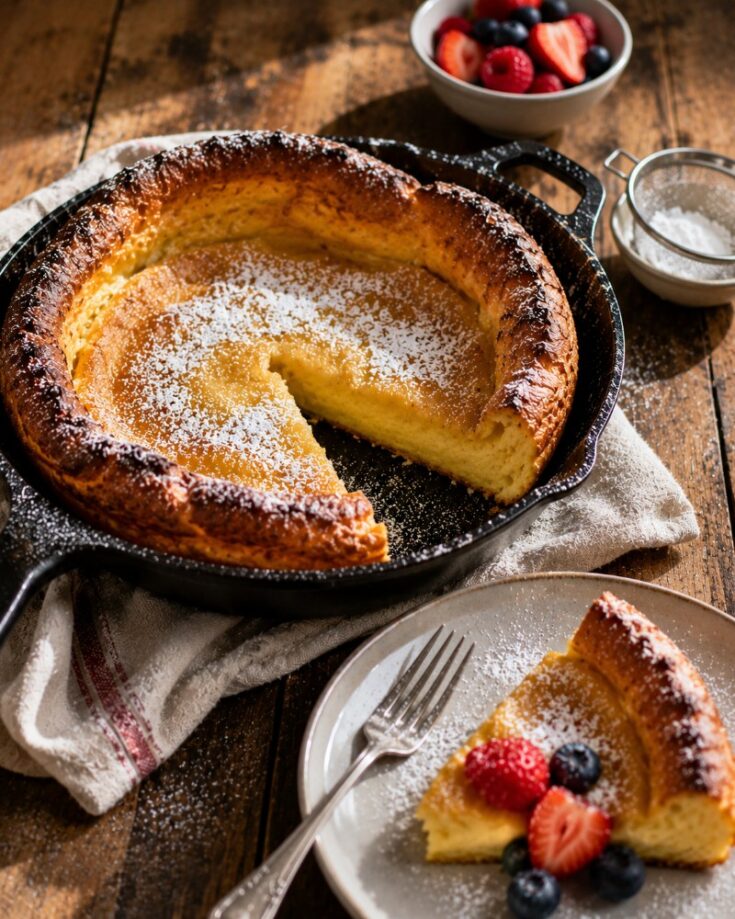
Dutch Baby Pancake Recipe
A golden, puffed oven pancake made in a cast iron skillet with eggs, milk, and flour. Ready in under 30 minutes and endlessly adaptable with sweet or savory toppings.
Ingredients
- 3 large eggs, room temperature
- 3/4 cup whole milk, room temperature
- 3/4 cup all-purpose flour
- 1/4 teaspoon fine sea salt
- 2 tablespoons unsalted butter
- Powdered sugar and fresh lemon juice for serving
Instructions
- Place a 10-inch cast iron skillet in the oven and preheat to 425 degrees Fahrenheit. Allow at least 20 minutes for the skillet to fully heat.
- Combine eggs, milk, flour, and salt in a blender. Blend on high for 30 seconds until smooth and slightly frothy.
- Carefully remove the hot skillet from the oven. Add butter and swirl quickly to coat the bottom and sides.
- Pour the batter immediately into the buttered skillet and return to the oven.
- Bake for 20 to 22 minutes without opening the oven door, until edges are deep golden brown and the center has puffed dramatically.
- Remove from oven, dust with powdered sugar, squeeze lemon juice over the top, and serve immediately from the skillet.
Notes
Room temperature eggs and milk produce a better rise. Pull them from the refrigerator 15 minutes before starting. Do not open the oven door during baking -- steam loss causes the pancake to deflate early. Batter can be made up to 24 hours ahead and refrigerated.
Nutrition Information:
Yield:
4Serving Size:
1 sliceAmount Per Serving: Calories: 218Total Fat: 10gSaturated Fat: 5gSodium: 210mgCarbohydrates: 22gFiber: 1gSugar: 2gProtein: 9g
This site provides estimated nutritional information. This information comes from online calculators. Although we try to provide accurate nutritional information, these figures are only estimates.
Frequently Asked Questions
Why did my Dutch baby pancake not puff up?
The most likely cause is a pan that was not hot enough before the batter went in. The skillet needs to be preheated in the oven for at least 20 minutes at 425 degrees Fahrenheit, and the butter should foam immediately on contact. A cold or lukewarm pan will produce a flat, dense result. An oven running below its stated temperature is the second most common culprit — an oven thermometer is a worthwhile investment if this happens repeatedly.
Can Dutch baby pancake batter be made ahead?
Yes, the batter can be blended and refrigerated in a covered container for up to 24 hours. Give it a quick 10-second blend or vigorous whisk before pouring it into the hot skillet. Cold batter poured directly from the refrigerator into a hot pan can still produce a good rise, though the edges may not climb quite as high as they would with room-temperature batter.
What size skillet is best for a Dutch baby pancake?
A 10-inch cast iron skillet is the standard for this recipe and produces the most reliable rise and texture. A 9-inch skillet will create a thicker, more custardy center with taller sides. A 12-inch skillet will produce a thinner, crepier result that cooks faster. The recipe scales proportionally if you are adjusting for pan size.
Is a Dutch baby pancake the same as a popover?
They are closely related but not identical. Both rely on egg proteins and steam to rise in a hot oven, and both use a similar egg-forward batter. The key differences are pan shape — popovers bake in tall, narrow cups while a Dutch baby uses a wide, flat skillet — and the resulting texture. Popovers are hollow and crisp; a Dutch baby has a custardy, crepe-like center.
Can a Dutch baby pancake be made in a regular oven-safe pan?
Yes. A 10-inch oven-safe stainless steel skillet or enameled cast iron will work well. The critical requirement is that the pan can withstand 425 degrees Fahrenheit for the full bake time and that it is preheated thoroughly before use. Lightweight pans may not retain heat as well as cast iron and can produce less dramatic puffing at the edges.
Conclusion
This Dutch baby pancake recipe delivers one of the most impressive returns on effort of any breakfast dish. A blender, a cast iron skillet, and 30 minutes are all that stand between a quiet Sunday morning and a golden, cloud-like pancake that makes everyone at the table reach for their phones. Start with the classic lemon and powdered sugar finish, then experiment with whatever fruit or savory toppings suit the season.
Crepe filling ideas worth trying