Last updated: October 21, 2026
This candied lemon peel is tender, chewy, and bright instead of bitter, and you can make it with four ingredients and a little patience. The recipe card sits below, and the walkthrough here covers every step so your first batch turns out glossy and translucent.
What You Need to Make Candied Lemon Peel
Candied lemon peel needs only lemons, granulated sugar, water, and a pinch of fine salt. A small saucepan, a slotted spoon, and a wire rack set over a rimmed baking sheet complete the setup.

Lemons
You need 4 large lemons, which is about 1 1/4 pounds. Choose lemons with thick, bright yellow skin and a firm feel, because a plump peel holds its shape through three rounds of boiling.
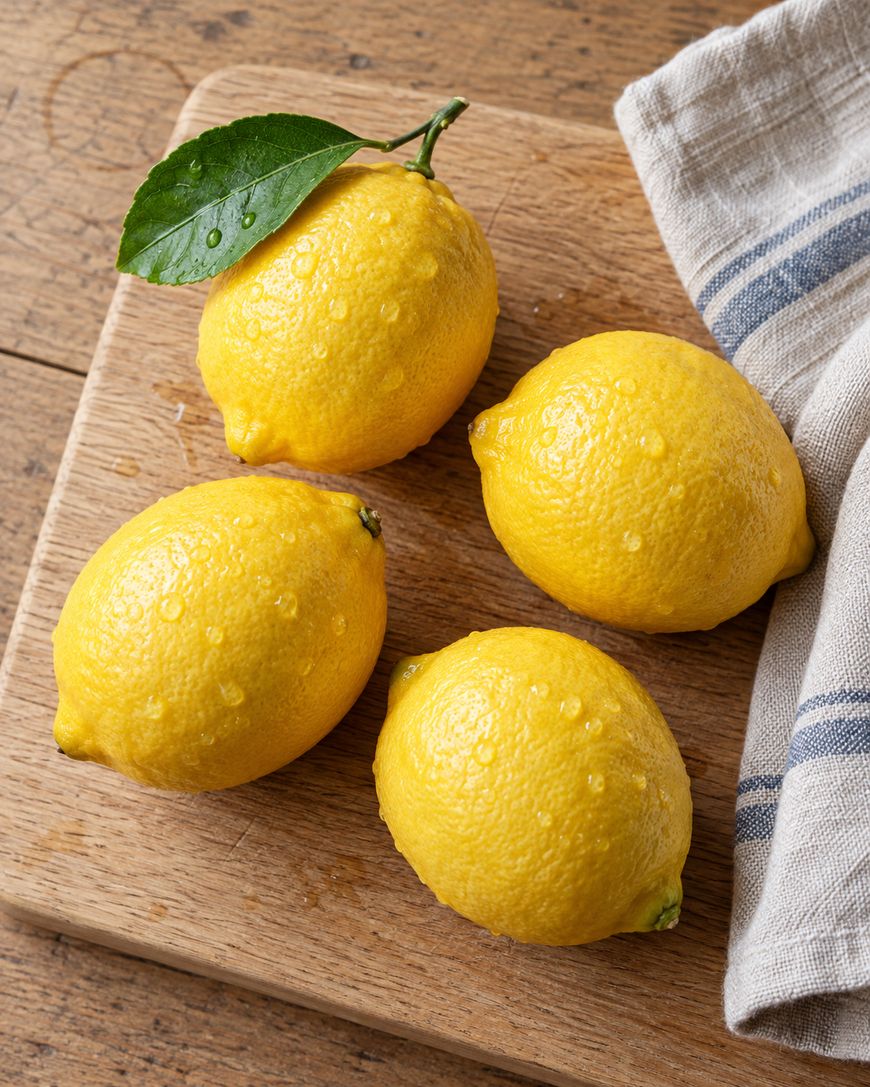
Scrub each lemon under hot running water with a vegetable brush to remove the wax coating that grocery store lemons often carry. Dry them well before you start cutting.
Sugar, Water, and Salt
The syrup uses 1 1/2 cups of granulated sugar and 1 1/2 cups of water, plus 1/8 teaspoon of fine salt. A final coating uses another 1/2 cup of granulated sugar.
Plain white sugar gives the clearest, most translucent peel. Brown sugar and honey cloud the syrup and add flavors that compete with the lemon.
Equipment
Use a 2-quart saucepan so the peel stays covered by syrup during the simmer. A wide pot spreads the syrup too thin and the strips scorch on the edges.
You also need a sharp paring knife, a cutting board, a slotted spoon, a wire cooling rack, and a rimmed baking sheet to catch drips.
How to Make Candied Lemon Peel Step by Step
The whole method comes down to four stages: peel and slice, blanch, simmer in syrup, then dry and coat. Plan on about 20 minutes of prep and 1 hour of cooking, followed by at least 12 hours of drying.
Peel and Slice the Lemons
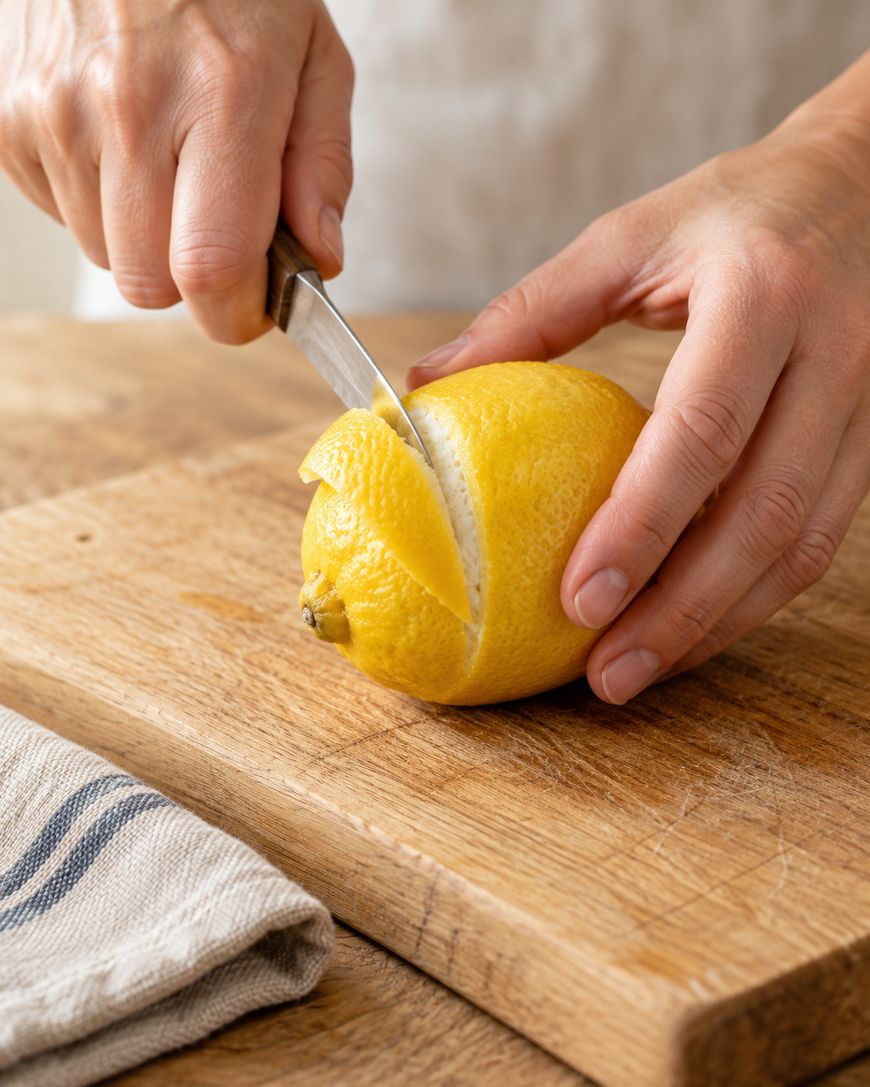
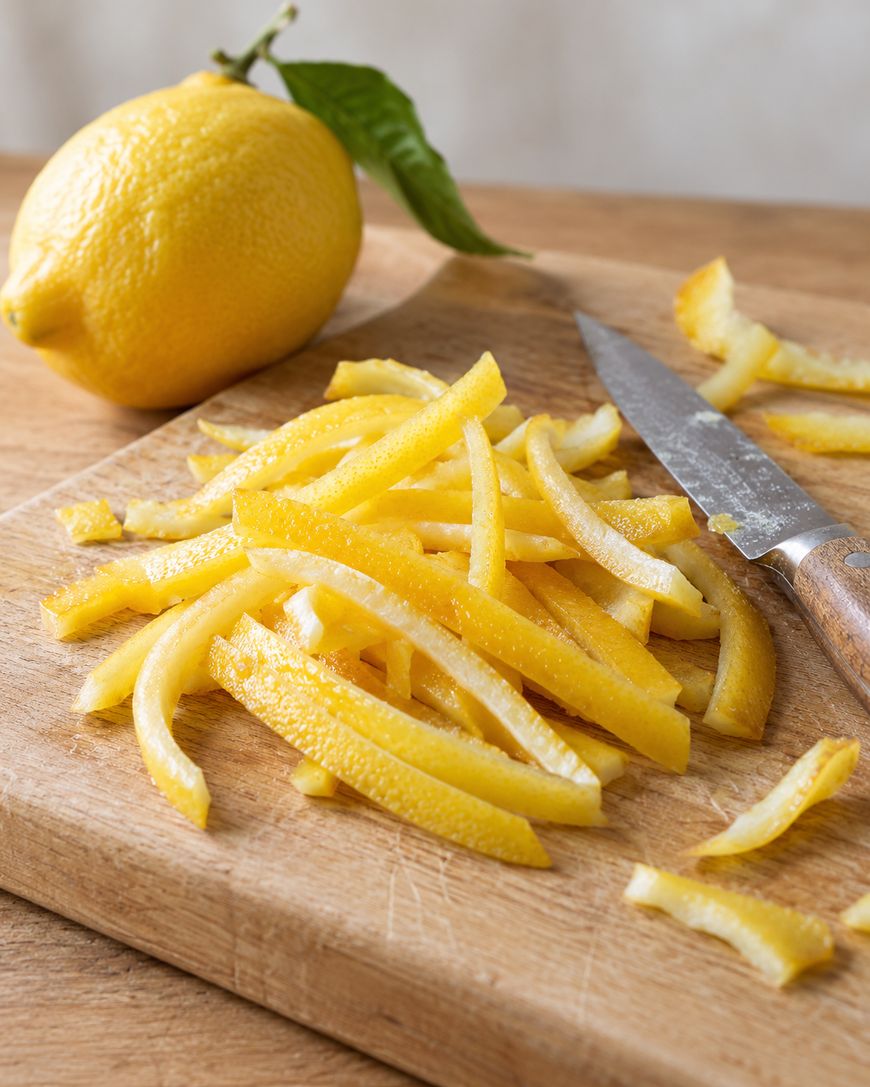
Cut off the top and bottom of each lemon, then score the skin from top to bottom into four sections. Pull each section away in one large piece, keeping as little of the juicy fruit attached as you can.
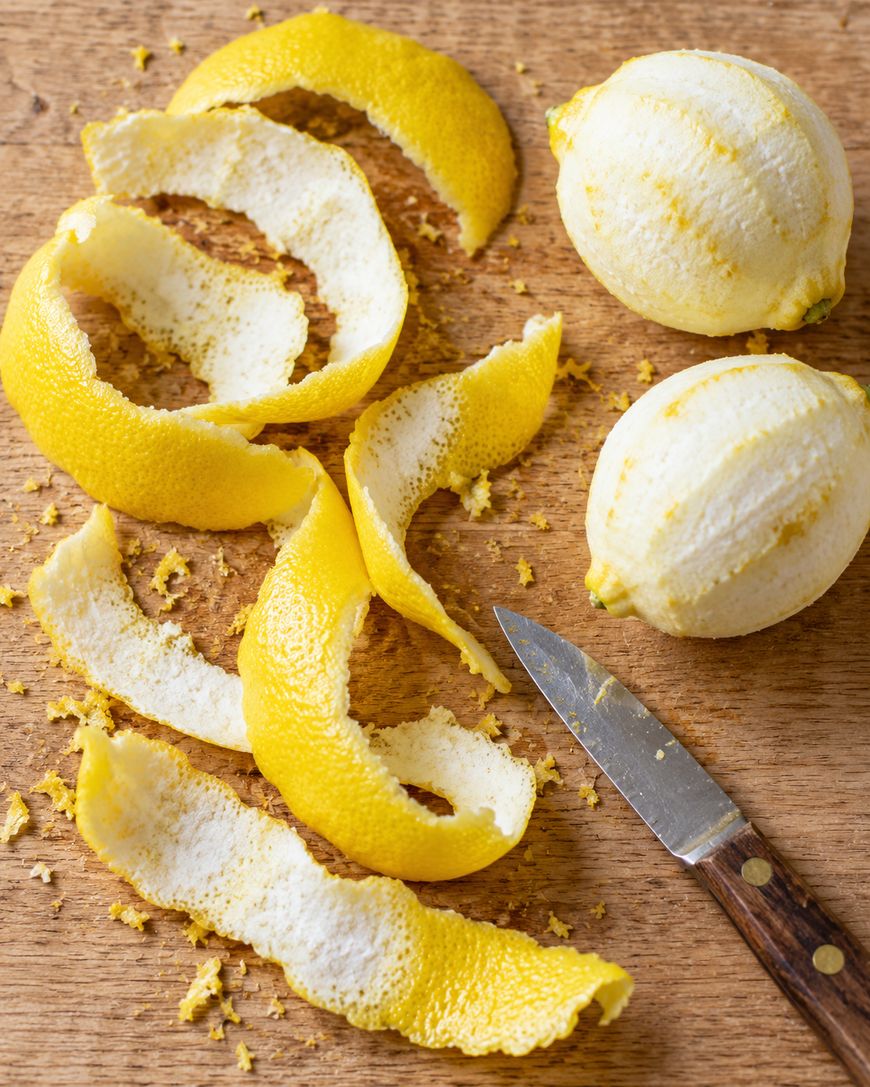
Trim any white pith that looks thicker than 1/4 inch, then slice the peel into strips about 1/4 inch wide. Save the peeled lemons for lemonade or a lemon glaze.
Blanch the Peel Three Times
Place the strips in your saucepan, cover them with cold water, and bring the pan to a boil. Boil for 5 minutes, drain, and repeat two more times with fresh cold water for three blanches in total.
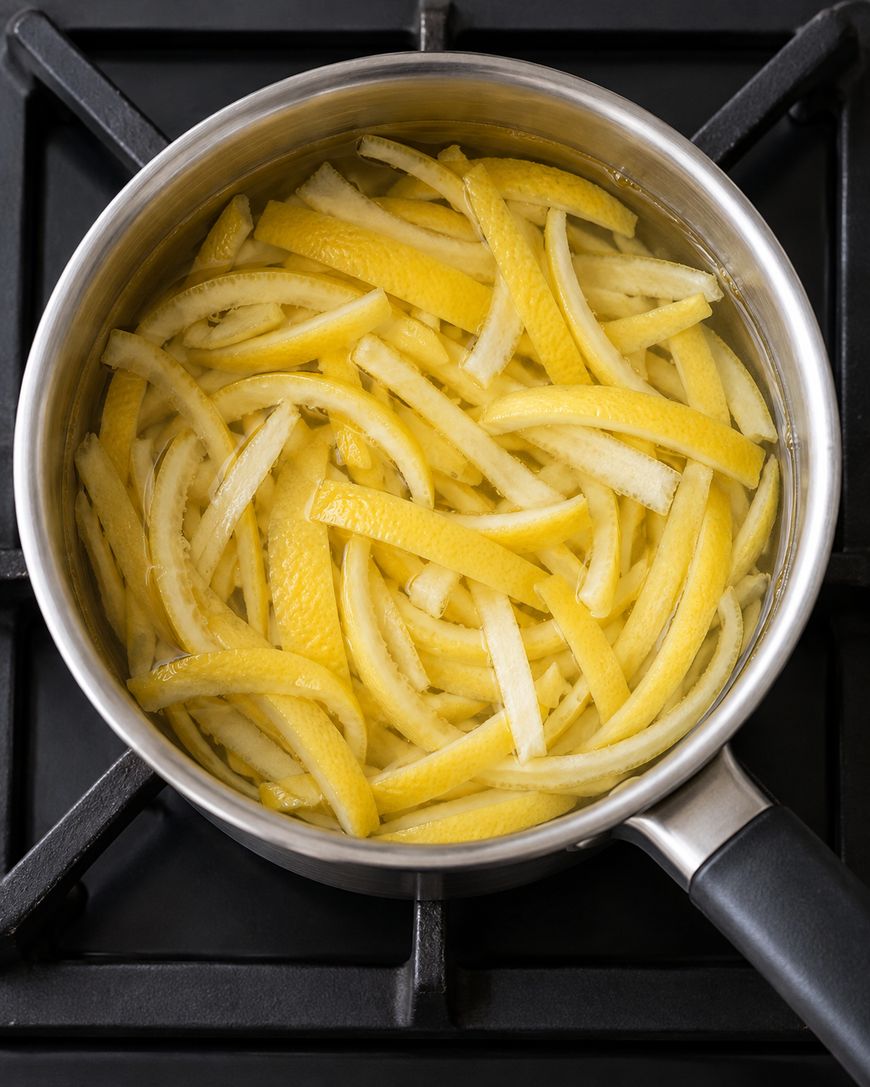
Each round draws out some of the bitter compounds in the white pith. Starting with cold water every time keeps the peel from toughening before it softens.
Simmer the Peel in Syrup
Return the empty saucepan to medium heat and stir in 1 1/2 cups of sugar, 1 1/2 cups of water, and the salt until the sugar dissolves. Add the blanched peel, lower the heat, and simmer gently for 45 minutes, stirring now and then.
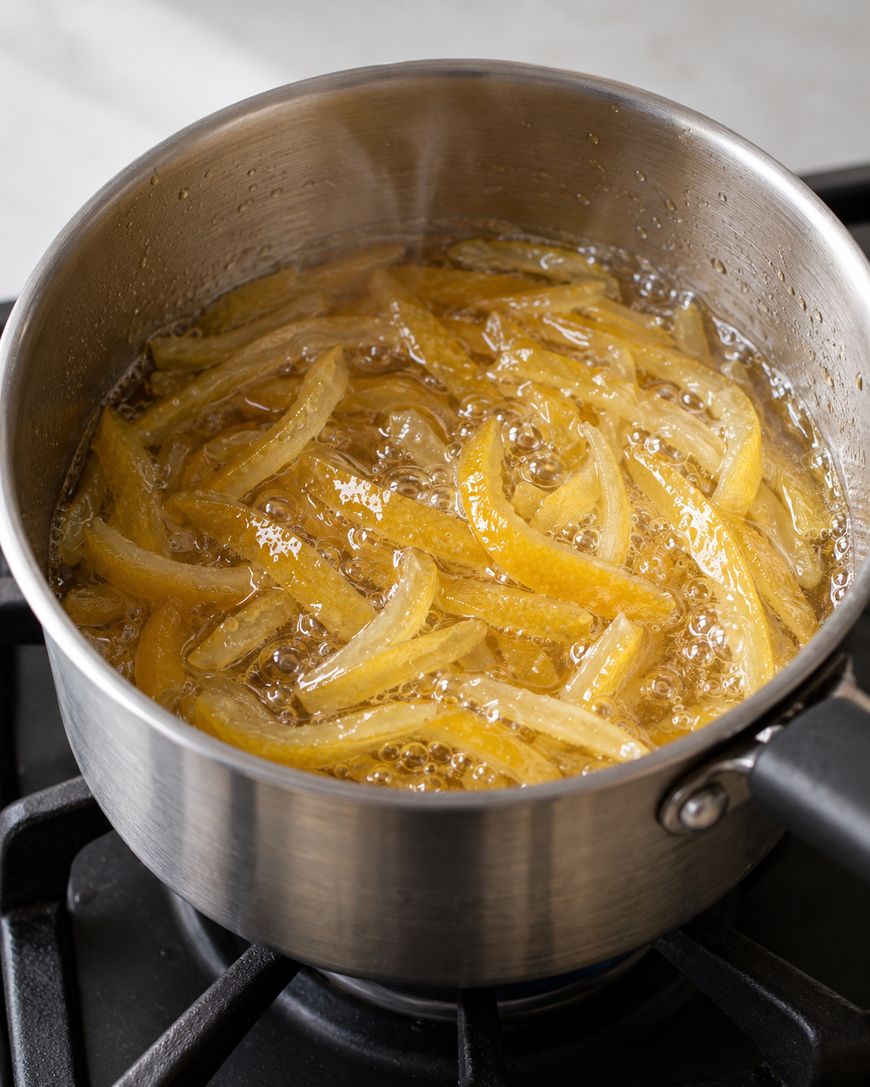
The peel is ready when it looks translucent and the syrup has thickened slightly. A lazy bubble here and there is perfect, while a hard boil makes the strips shrivel.
Dry and Coat the Peel
Lift the strips out with a slotted spoon onto a wire rack set over a rimmed baking sheet. Let them cool for about 15 minutes, until you can handle them but they still feel tacky.
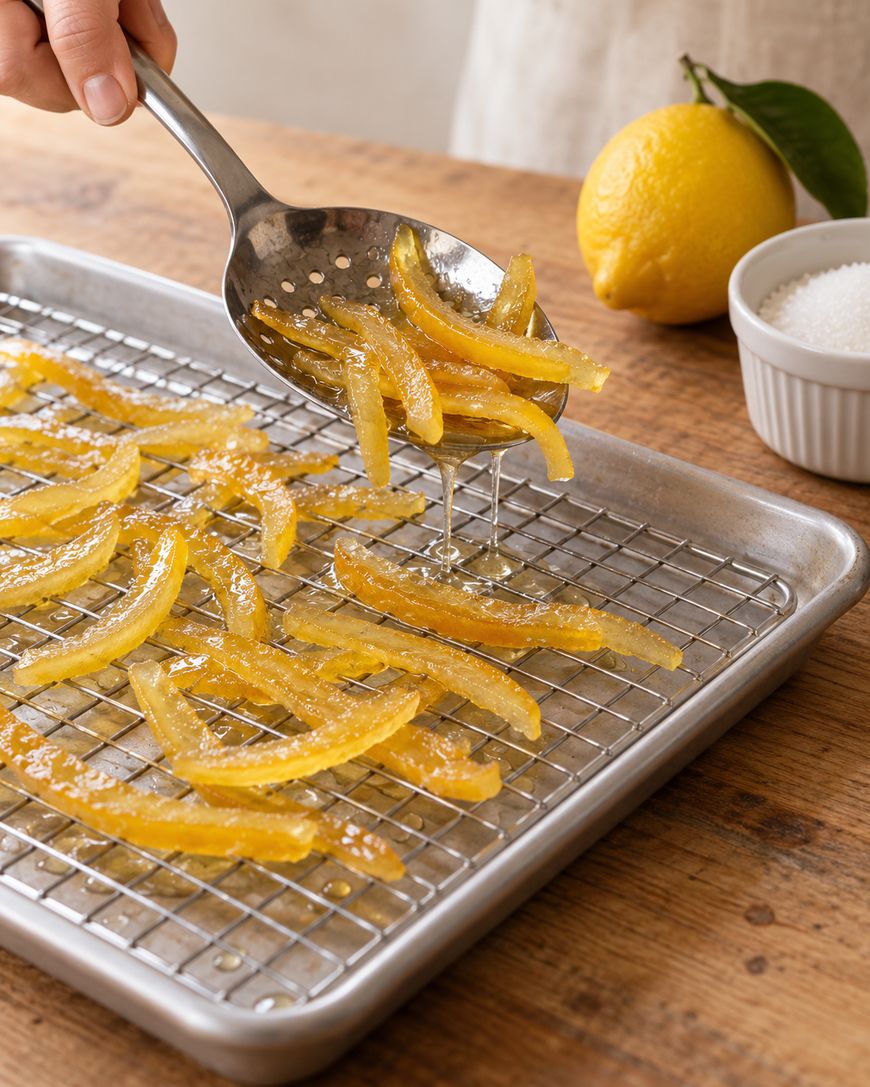
Toss the strips in the remaining 1/2 cup of sugar a few pieces at a time, then spread them in a single layer on the rack. Let them dry uncovered at room temperature for at least 12 hours, or overnight, until they are no longer sticky.
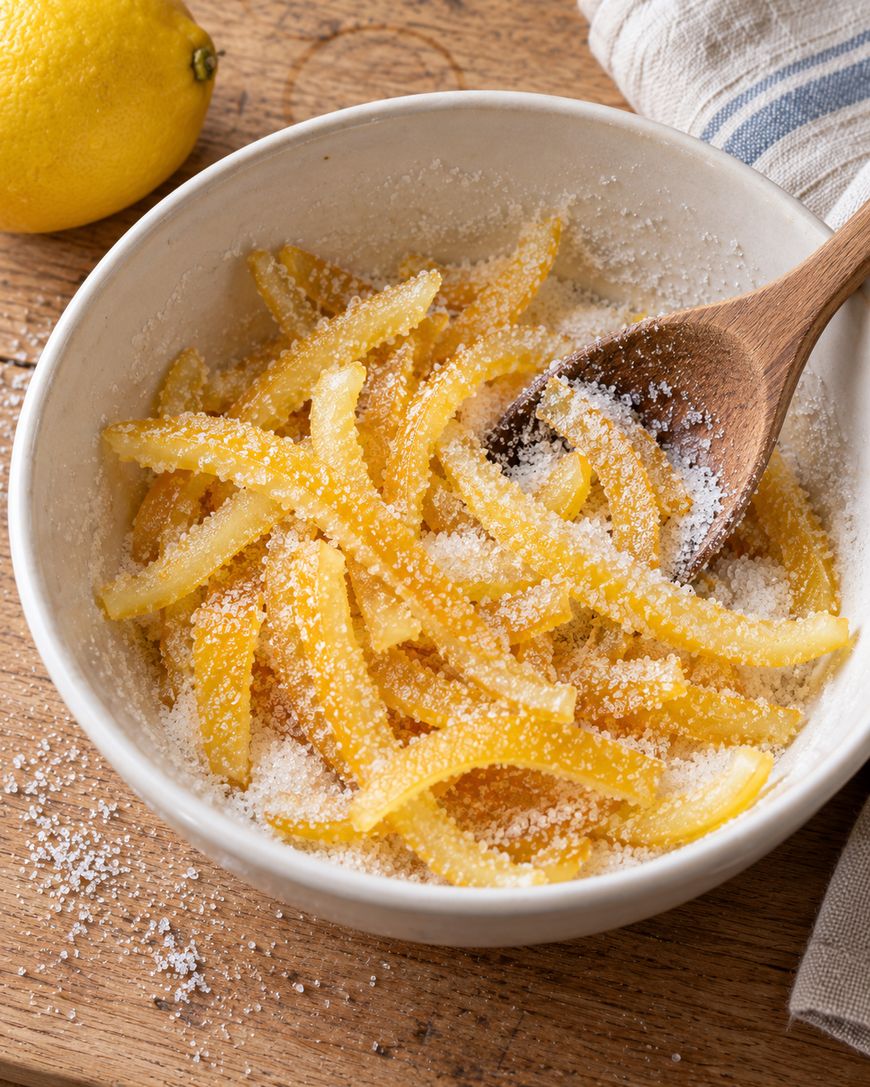
Tips for Candied Lemon Peel That Never Turns Bitter
The three blanches are the single most important step, so do not skip or shorten them. Bitterness lives in the white pith, and boiling in fresh water each time is what mellows it.
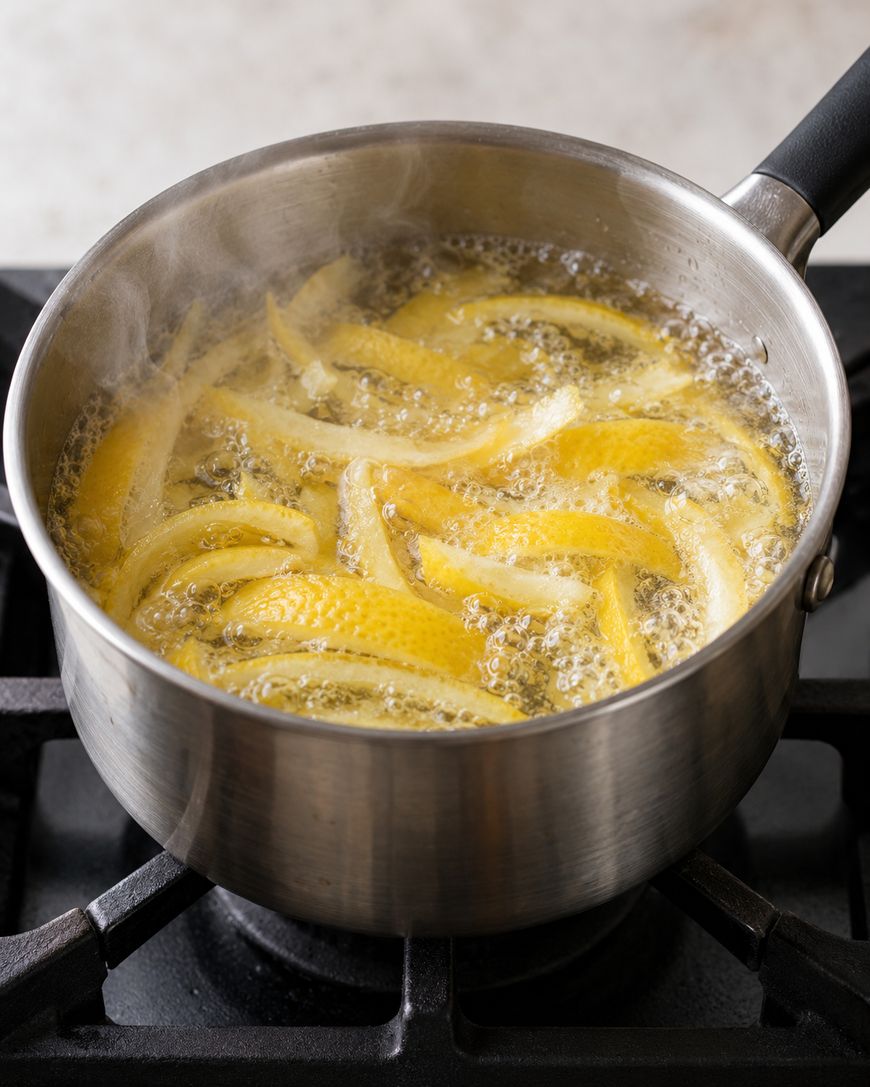
Keep the Simmer Gentle
A gentle simmer lets the syrup slowly replace the water inside the peel, which gives you a chewy, translucent strip. A rolling boil cooks off the water too fast and leaves the peel hard and dull.
Hot sugar syrup runs hotter than boiling water and sticks to skin, so keep children away from the stove and use the slotted spoon rather than your fingers.
Choose the Right Lemons
Thick-skinned Eureka and Lisbon lemons are the easiest to work with.
Meyer lemons have thinner, more floral peel, so start checking them around the 30 minute mark of the simmer. The card keeps the 45 minute time for standard lemons.
Dry in a Dry Room
Humidity is the quiet enemy of candied peel. On a rainy or steamy day, the sugar coating draws in moisture and the strips stay tacky, so choose a dry day and a spot away from the stove or dishwasher.

Ways to Use Candied Lemon Peel
You can eat candied lemon peel straight from the jar as a sweet and tangy snack, and it is just as good chopped into baked goods. Stir small pieces into scones, shortbread, banana bread, or a simple pound cake for pockets of bright citrus.
It also makes a pretty garnish. Drop a strip into a glass of sparkling wine, tuck a few pieces on a cheese board beside creamy brie, or lay a curl on top of a lemon tart or cheesecake.
For gifting, pack the strips into a small jar tied with ribbon. If you love a chocolate pairing, dip the cooled strips halfway into melted dark chocolate and let them set on parchment, although the card mentions chocolate only as an optional note, so treat it as an extra.
Finely chopped peel also folds nicely into whipped cream, yogurt, or oatmeal when you want a quick burst of lemon without any extra zest.
How to Store Candied Lemon Peel
Store the fully dried strips in an airtight container at room temperature, in a cool, dry spot away from sunlight. They stay tender and flavorful for up to 2 weeks.

For longer storage, refrigerate the container for up to 1 month. You can also freeze the strips in a freezer-safe container for up to 3 months and let them come to room temperature before using.
Place a sheet of parchment between layers if you stack them, because slightly tacky strips can fuse together. If the peel feels sticky after a few days, a quick toss in a spoonful of fresh sugar brings back the sparkle.
Keep the container away from the stove and dishwasher, since steam and warmth make the sugar coating weep.
Candied peel that has been frozen can sweat as it thaws, so leave the container closed until it reaches room temperature. Label the container with the date so you know how fresh the batch is.
The Story Behind Candied Citrus Peel
Candying fruit is one of the oldest ways to preserve it, because sugar draws out moisture and keeps spoilage at bay. Cooks around the Mediterranean, especially in Sicily and southern Italy, have long candied citron, orange, and lemon peel for pastries like cassata and cannoli.
Candied citrus also shows up in holiday baking across Europe, from Italian panettone to English fruitcake. Home cooks today use the same simple idea, a slow simmer in sugar syrup, to turn what would be kitchen scraps into a pantry treat.
Lemon peel is also the part of the fruit most people throw away, so this recipe gives the whole lemon a second life after you have squeezed the juice.
Once the peel is done, the leftover lemon syrup is worth saving too. Pour it into a clean jar, refrigerate it, and use it within 1 week to sweeten iced tea, cocktails, or sparkling water.
Here is the full recipe card to print or save.

Candied Lemon Peel
Tender, chewy candied lemon peel made with a triple blanch and a gentle sugar syrup simmer, then rolled in sparkling sugar. Sweet, tangy, and never bitter.
Ingredients
- 4 large lemons (about 1 1/4 pounds)
- 1 1/2 cups granulated sugar
- 1 1/2 cups water
- 1/8 teaspoon fine salt
- 1/2 cup granulated sugar, for coating
Instructions
- Scrub the lemons under hot water, dry them, and cut off the top and bottom of each. Score the skin into four sections and pull each away in one piece.
- Trim any white pith thicker than 1/4 inch, then slice the peel into strips about 1/4 inch wide.
- Place the strips in a 2-quart saucepan, cover with cold water, and bring to a boil. Boil for 5 minutes and drain.
- Repeat the blanching two more times with fresh cold water, for 3 blanches in total, then drain well.
- Return the saucepan to medium heat and add 1 1/2 cups sugar, 1 1/2 cups water, and the salt. Stir until the sugar dissolves.
- Add the blanched peel, lower the heat, and simmer gently for 45 minutes, stirring occasionally, until the peel is translucent and the syrup has thickened slightly.
- Lift the peel with a slotted spoon onto a wire rack set over a rimmed baking sheet and let cool for about 15 minutes, until cool enough to handle but still tacky.
- Toss the strips in the 1/2 cup coating sugar a few pieces at a time, then spread in a single layer on the rack.
- Let dry uncovered at room temperature for at least 12 hours or overnight, until no longer sticky.
Notes
Do not skip the three blanches, since they remove the bitterness. Keep the syrup at a gentle simmer, not a hard boil. Meyer lemons have thinner peel, so start checking at 30 minutes. Dry the peel in a low humidity spot. Store in an airtight container at room temperature for up to 2 weeks, in the refrigerator for up to 1 month, or in the freezer for up to 3 months. Save the leftover syrup in a clean jar in the refrigerator and use within 1 week. Optional: dip dried strips halfway in melted dark chocolate.
Nutrition Information:
Yield:
12Serving Size:
2 tablespoonsAmount Per Serving: Calories: 70Total Fat: 0gSaturated Fat: 0gSodium: 24mgCarbohydrates: 18gFiber: 1gSugar: 17gProtein: 0g
Candied Lemon Peel Questions and Answers
Why is my candied lemon peel bitter?
Bitterness comes from the white pith, and it usually means the peel was not blanched enough. Boil the strips three times in fresh cold water for 5 minutes each and trim any pith thicker than 1/4 inch.
Can you use less sugar in candied lemon peel?
We do not recommend it, because the sugar is what turns the peel translucent and keeps it from spoiling. Cutting the syrup leaves the strips leathery and shortens their shelf life.
How do you know when the peel is done simmering?
The strips should look translucent, almost glassy, and the syrup should coat the back of a spoon lightly. If they still look opaque and pale after 45 minutes, simmer a few minutes longer on low heat.
Why is my candied lemon peel still sticky?
Sticky peel is almost always underdried or exposed to humid air. Give the strips a full 12 hours or more on a wire rack in a dry room, and toss them in fresh sugar if they stay tacky.
How long does candied lemon peel last?
Airtight at room temperature, it stays good for up to 2 weeks. The refrigerator extends that to 1 month, and the freezer holds it for up to 3 months.
Can you make candied lemon peel with other citrus?
Yes, oranges, limes, and grapefruit all work with the same method. Grapefruit has a thicker pith, so give it the same three blanches and expect a slightly longer simmer.
Why This Candied Lemon Peel Recipe Works
The triple blanch removes most of the bitterness before the peel ever touches the syrup. By the time the strips go into the sugar, only the clean lemon flavor is left.
A 1 to 1 syrup of sugar and water is thick enough to preserve the peel but loose enough to soak in slowly during the 45 minute simmer. That slow exchange is what makes the strips chewy and translucent rather than hard.
The final toss in granulated sugar and the long, uncovered dry give the peel its sparkly outside and a firm, chewy bite. A tiny pinch of salt sharpens the lemon flavor without making the peel taste salty.
Together these choices mean the recipe is forgiving, because each stage has a clear visual cue that tells you when to move on.
Following those cues rather than the clock alone is what makes the results consistent from one batch to the next.
Make Your Own Candied Lemon Peel Today
Candied lemon peel is an easy weekend project that rewards you with a jar of sweet, tangy, sparkly strips. Start the peel in the afternoon, let it dry overnight, and wake up to a treat that beats anything from the store.
Candied lemon peel also makes a thoughtful homemade gift when you tie a jar with twine and tuck in a handwritten label.
Save the recipe card, grab four lemons, and give it a try. Then come back and tell us how you used your candied lemon peel.