Last updated: August 19, 2026
This candied orange peel recipe transforms something most people throw away into a jewel-bright confection that tastes like a European patisserie made it.
The full step-by-step recipe card is below — read through the method first for tips that make the difference between chewy-tender peels and bitter, grainy ones.
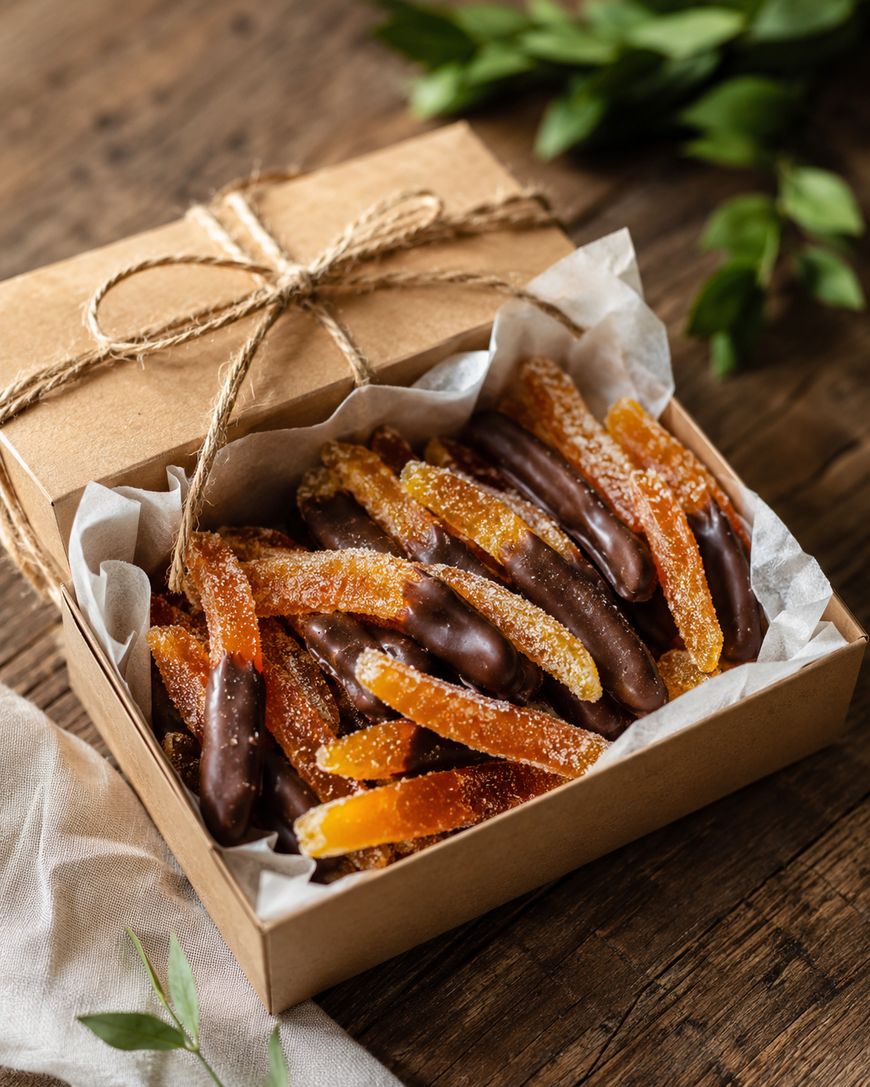
What You Need to Make Candied Orange Peel
Choosing Your Oranges
Navel oranges are the standard choice because their thick, pithy rind holds its shape through multiple blanches and a long sugar simmer.
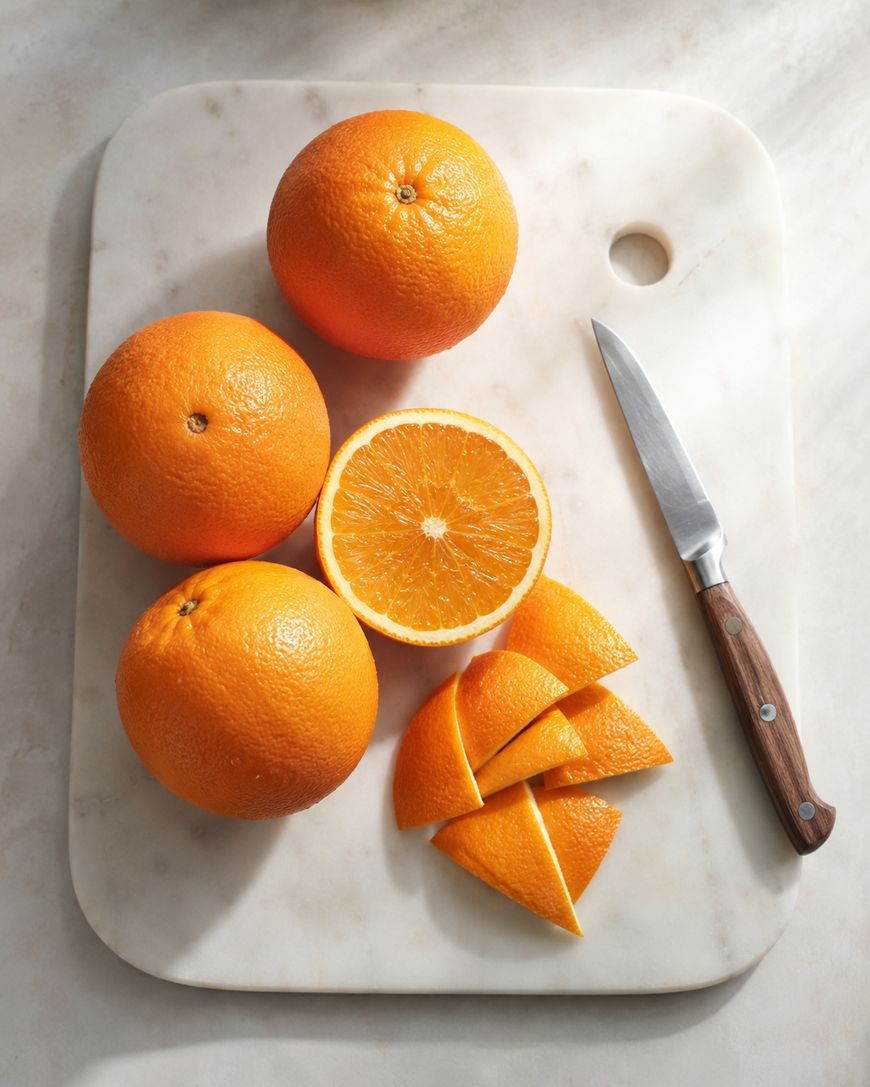
Valencia and blood oranges also work well and produce a slightly thinner strip with a more aromatic flavor.
Avoid thin-skinned varieties like clementines for your first batch — the peel becomes fragile and difficult to cut cleanly.
The Four Ingredients
The recipe uses only oranges, granulated white sugar, water, and an optional finishing coat of bittersweet or dark chocolate.
Organic oranges are worth buying here because the entire peel — wax, outer layer, and white pith — goes into the pot and then into your mouth.
Tools That Help
A sharp vegetable peeler or a small paring knife gives you more control than a box grater.
A candy thermometer is not strictly required, but it removes the guesswork from the final sugar coating stage, which should reach 230 to 235 degrees Fahrenheit (soft-ball stage).
How to Make Candied Orange Peel Step by Step
Step 1 — Score and Remove the Peel
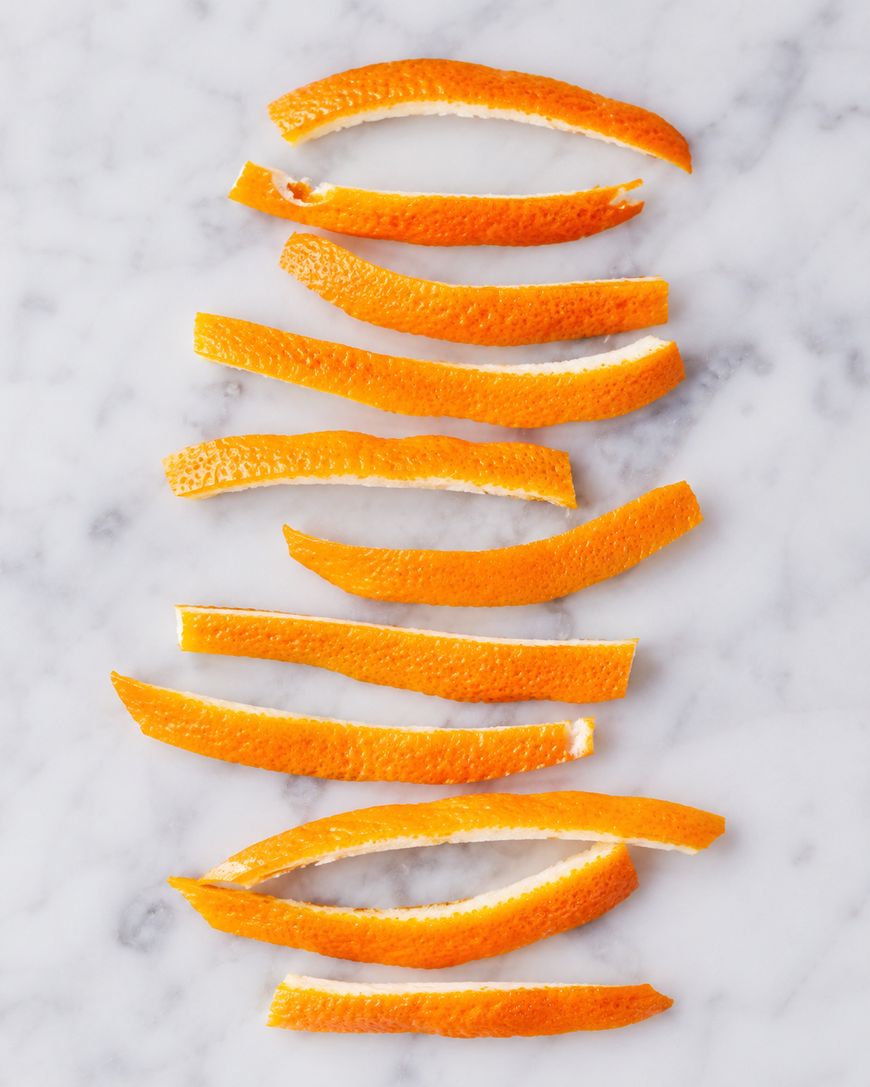
Score each orange into quarters from top to bottom, cutting just through the peel without piercing the fruit.
Peel away each segment, keeping the white pith attached — this is what gives candied peel its characteristic chew.
Step 2 — Blanch Three Times to Remove Bitterness
Place the peels in a medium saucepan, cover with cold water, and bring to a full boil.
Drain, refill with cold water, and repeat this process two more times — three blanches total.
This step is non-negotiable. Skipping even one blanch leaves a sharp bitterness that sugar cannot fully mask.
After the third blanch, cool the peels slightly and cut them into strips roughly a quarter-inch wide.
Step 3 — Simmer in Simple Syrup
Combine one cup of sugar with one cup of water in the same saucepan and stir over medium heat until the sugar fully dissolves.
Add the blanched strips and simmer gently, uncovered, for 45 to 60 minutes.
The peels are ready when they look translucent and the syrup has thickened to a thin glaze that coats the back of a spoon.
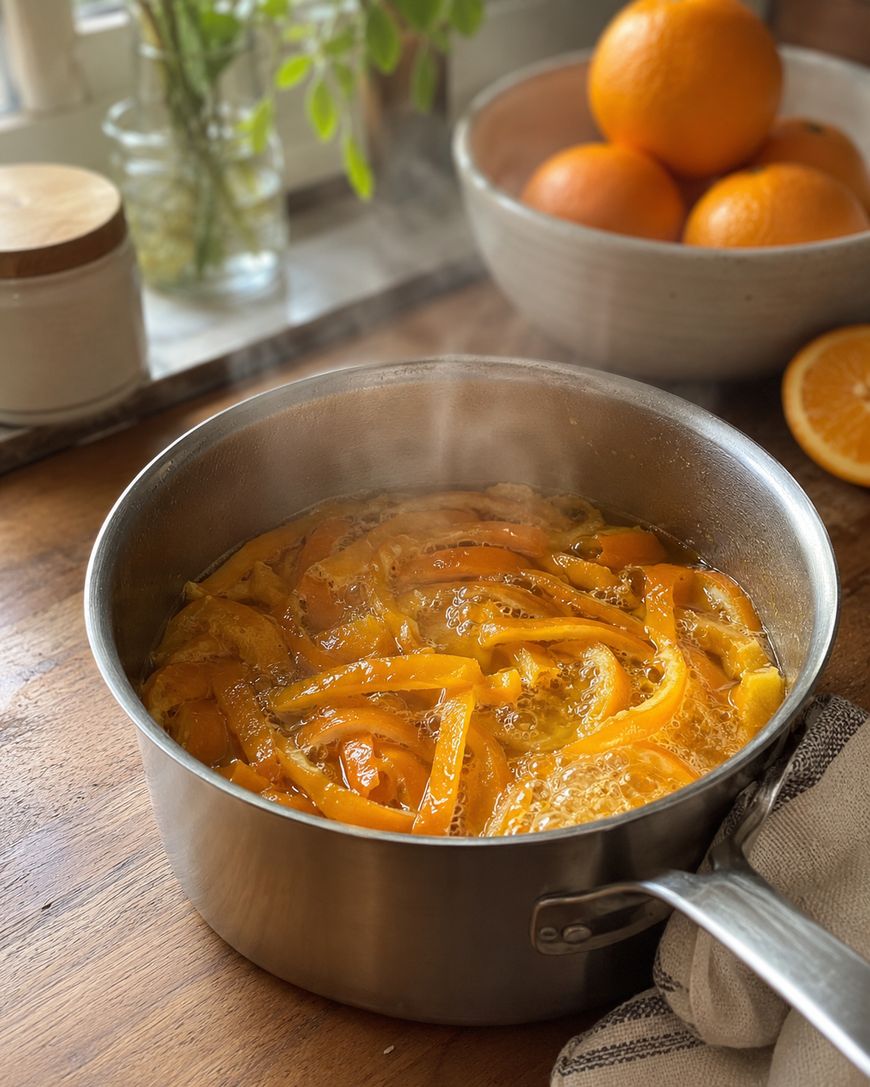
Do not rush this stage — a low, steady simmer develops the chewy texture that defines a good candied orange peel recipe.
Step 4 — Dry and Coat in Sugar
Lift each strip with a fork or slotted spoon and lay it on a wire cooling rack set over a parchment-lined baking sheet.
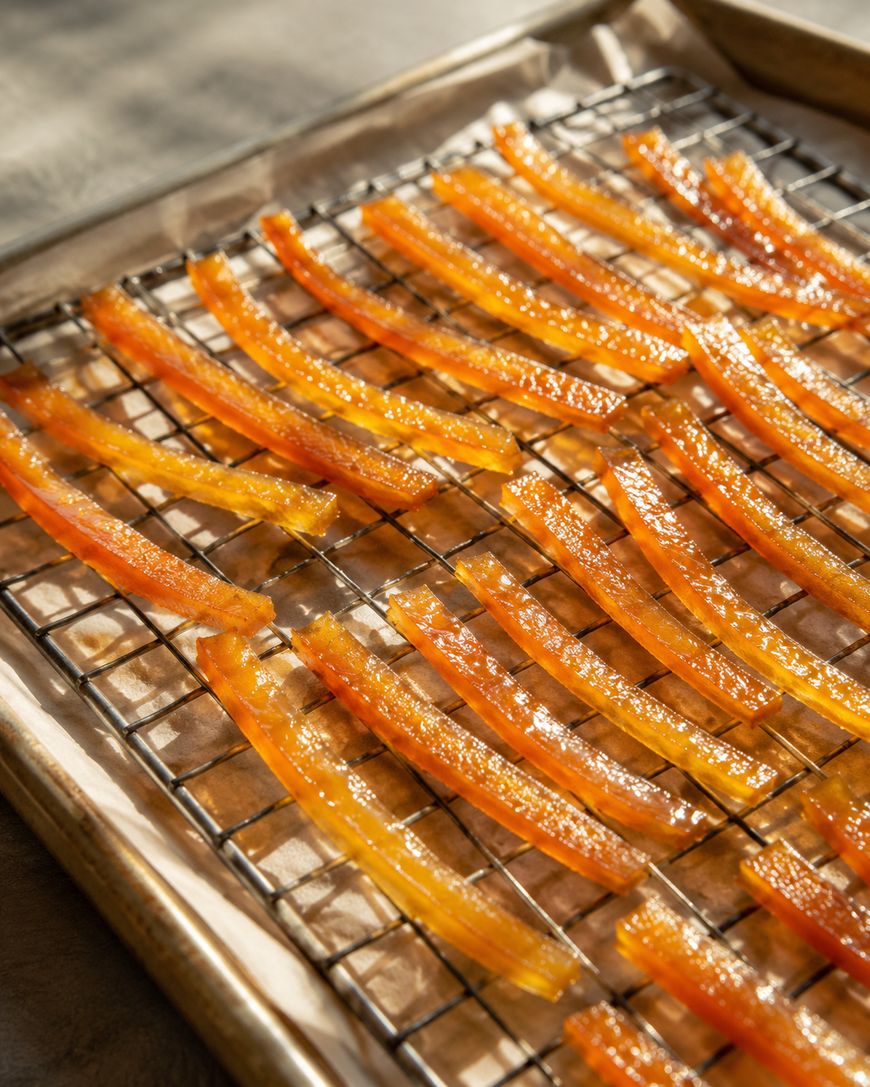
Let the peels dry uncovered at room temperature for at least two hours, preferably overnight.
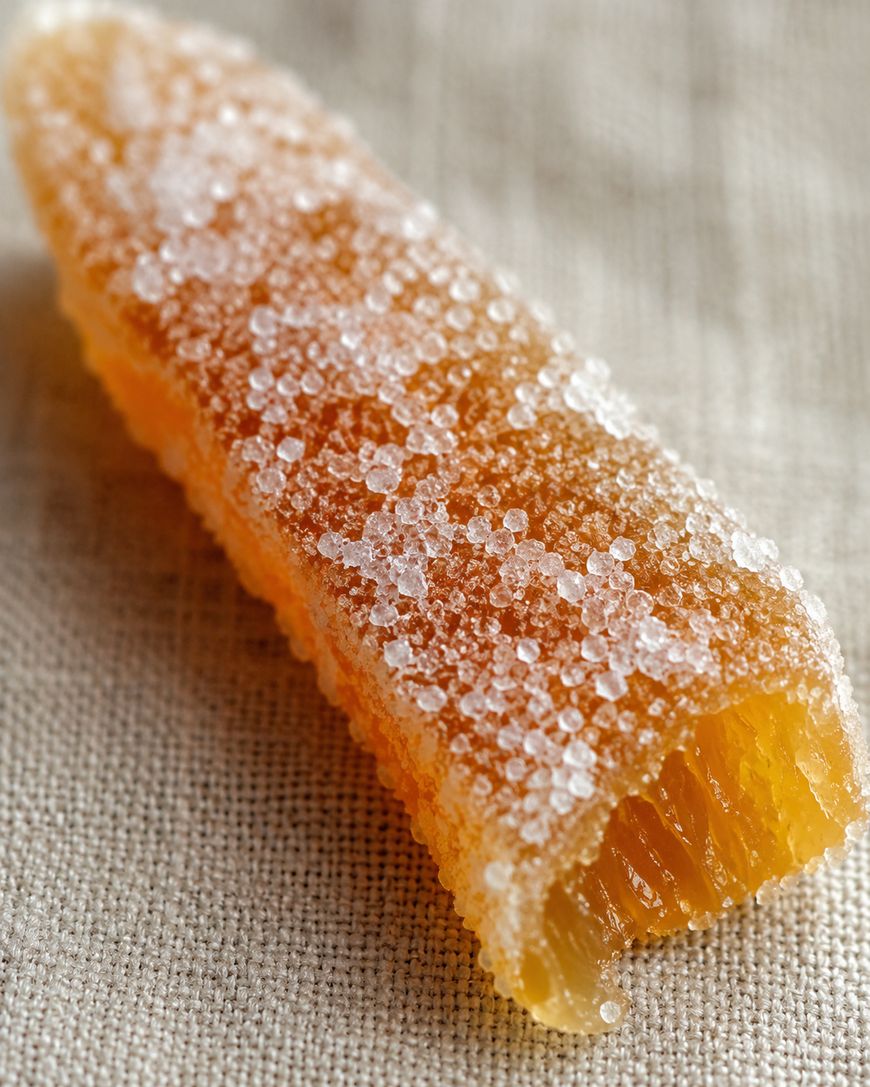
Once they feel tacky but not wet, toss them in granulated sugar until each piece is fully coated.
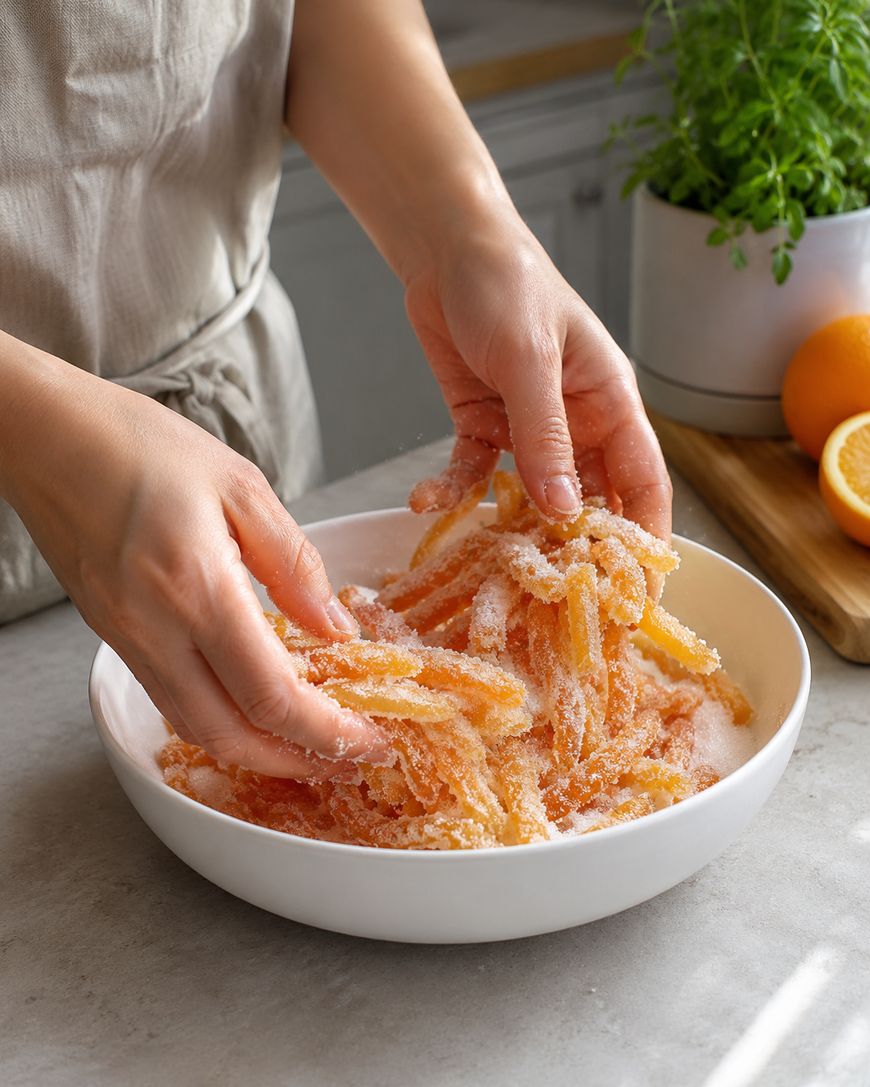
Step 5 — Optional Chocolate Dip
Melt bittersweet chocolate (60 to 70 percent cacao) in a double boiler or in 30-second microwave intervals, stirring between each.
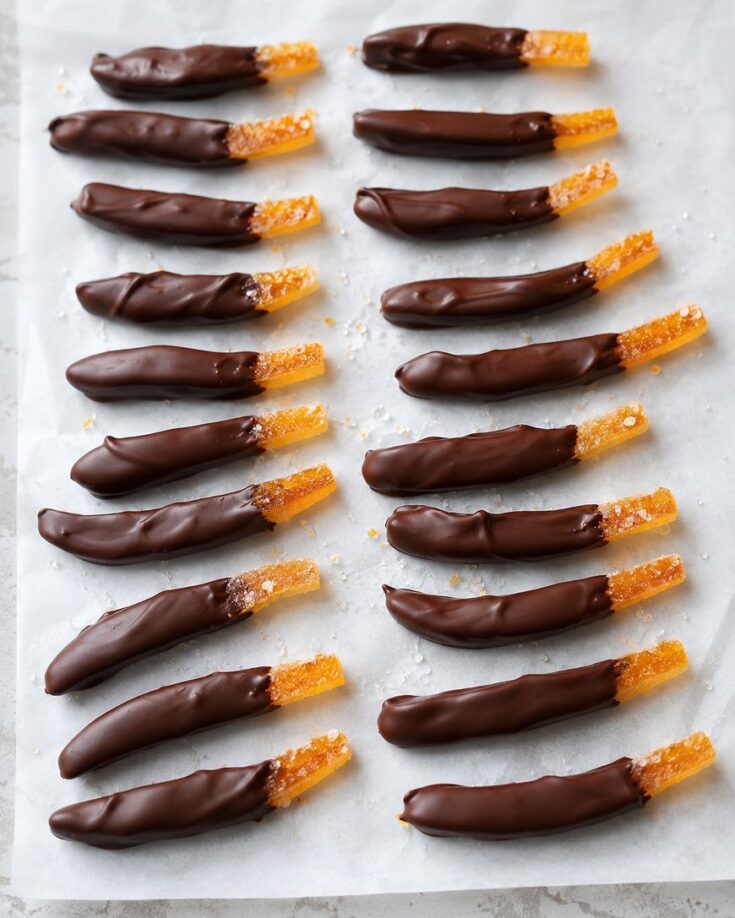
Dip each sugared peel halfway into the chocolate and return it to the wire rack.
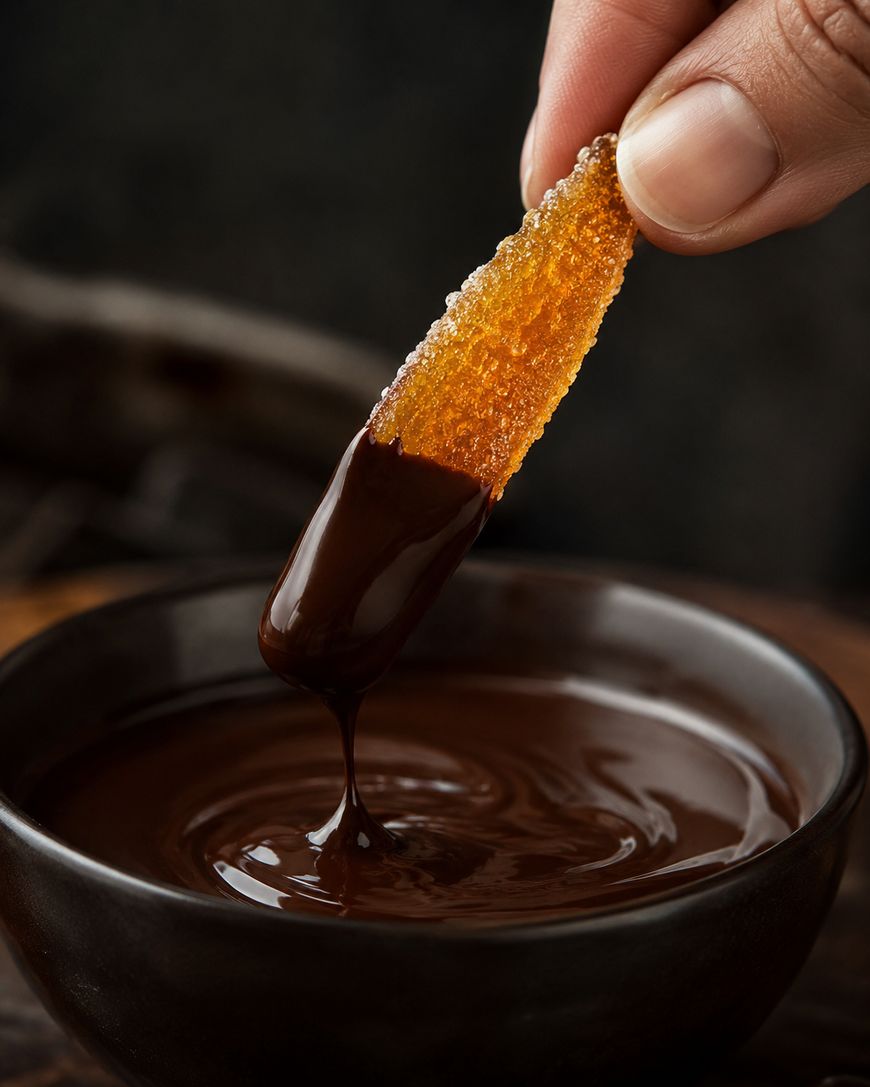
Valrhona Guanaja and Callebaut 70-30-38 are two professional-grade chocolates that pair exceptionally well with the bright citrus flavor.
Allow the chocolate to set fully at room temperature or in the refrigerator for 15 minutes before storing.
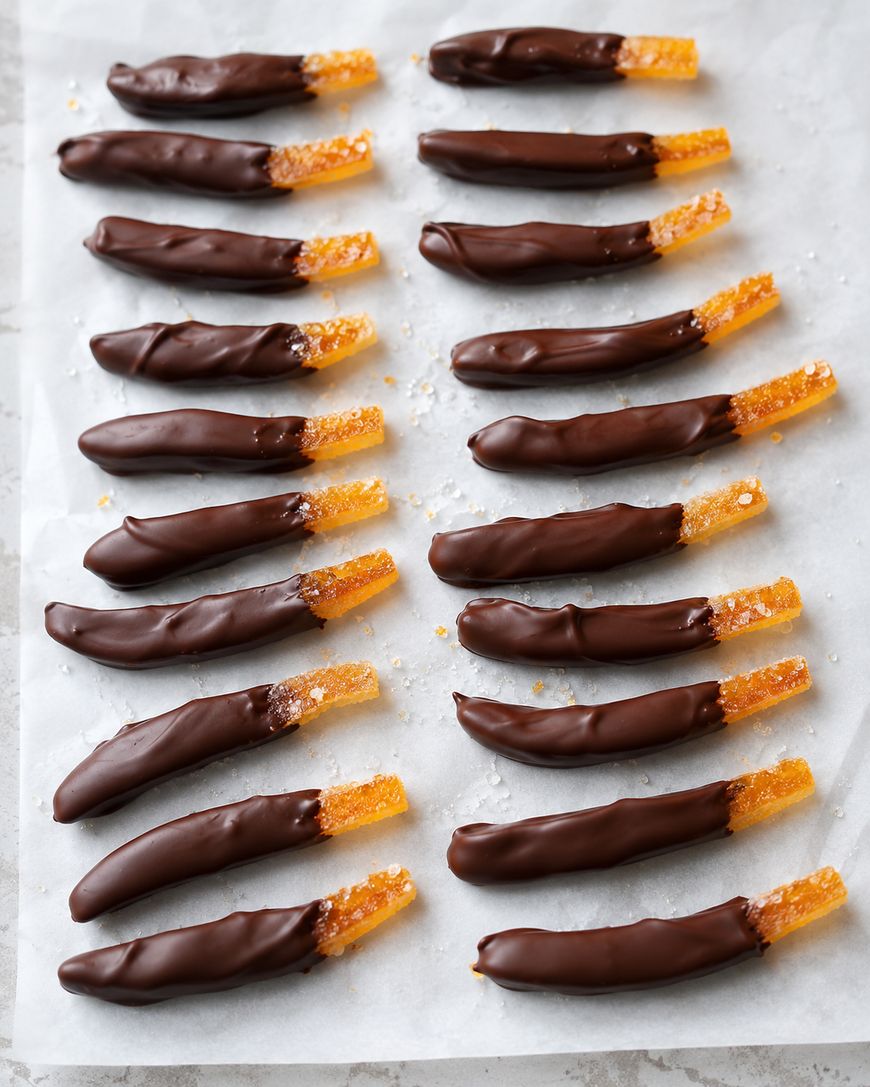
Variations and Substitutions
Other Citrus Options
Grapefruit peel follows the exact same method and produces a slightly more bitter, more complex result that many bakers prefer for cocktail garnishes.
Lemon peel works beautifully in smaller quantities — the strips are thinner and dry faster, so reduce the sugar simmer to about 30 minutes.
Meyer lemon peel requires only two blanches instead of three because the peel is naturally less bitter.
Flavored Syrups
Replace half the water with fresh orange juice for a more intense citrus flavor in the finished candy.
Add a split vanilla bean, two whole cloves, or a cinnamon stick to the syrup while the peels simmer for a warmly spiced variation suited to holiday gift boxes.
A tablespoon of Grand Marnier or Cointreau stirred into the syrup at the very end adds an adult depth that makes these peels an elegant after-dinner offering.
Sugar Coating Alternatives
Turbinado sugar gives the coating a crunchier, more golden finish.
Skipping the sugar roll and using only chocolate produces a sleeker, more confection-shop look that ships and stores more neatly.
Storage and Shelf Life
Room Temperature
Sugared peels stored in an airtight container or tin at room temperature keep well for two to three weeks in most home kitchens.
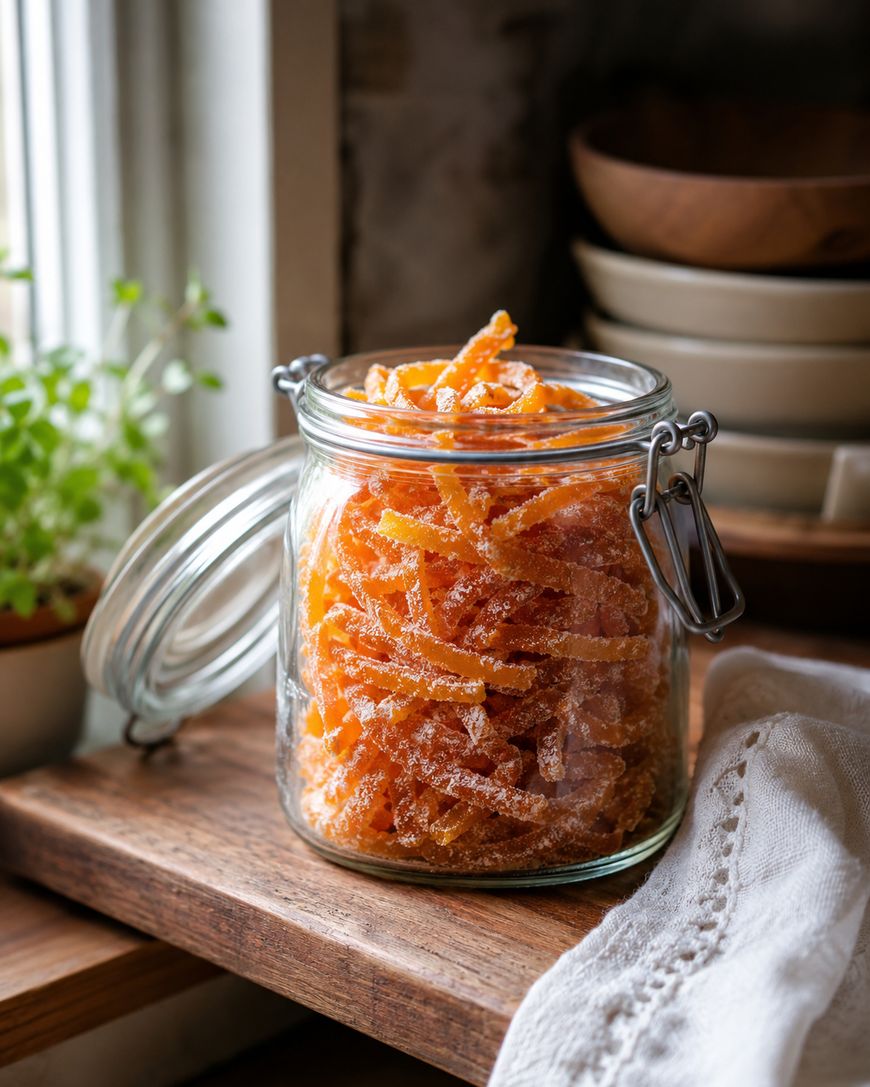
Lay parchment between layers to prevent sticking.
Refrigerator and Freezer
Chocolate-dipped peels keep for up to a month in the refrigerator in a lidded container.
For longer storage, freeze in a single layer on a parchment-lined tray, then transfer to a zip-lock bag — they keep for up to three months and thaw quickly at room temperature.
Serving Suggestions
Serve alongside a cheese board where the sweetness and acidity cut through aged cheddars and creamy blues.
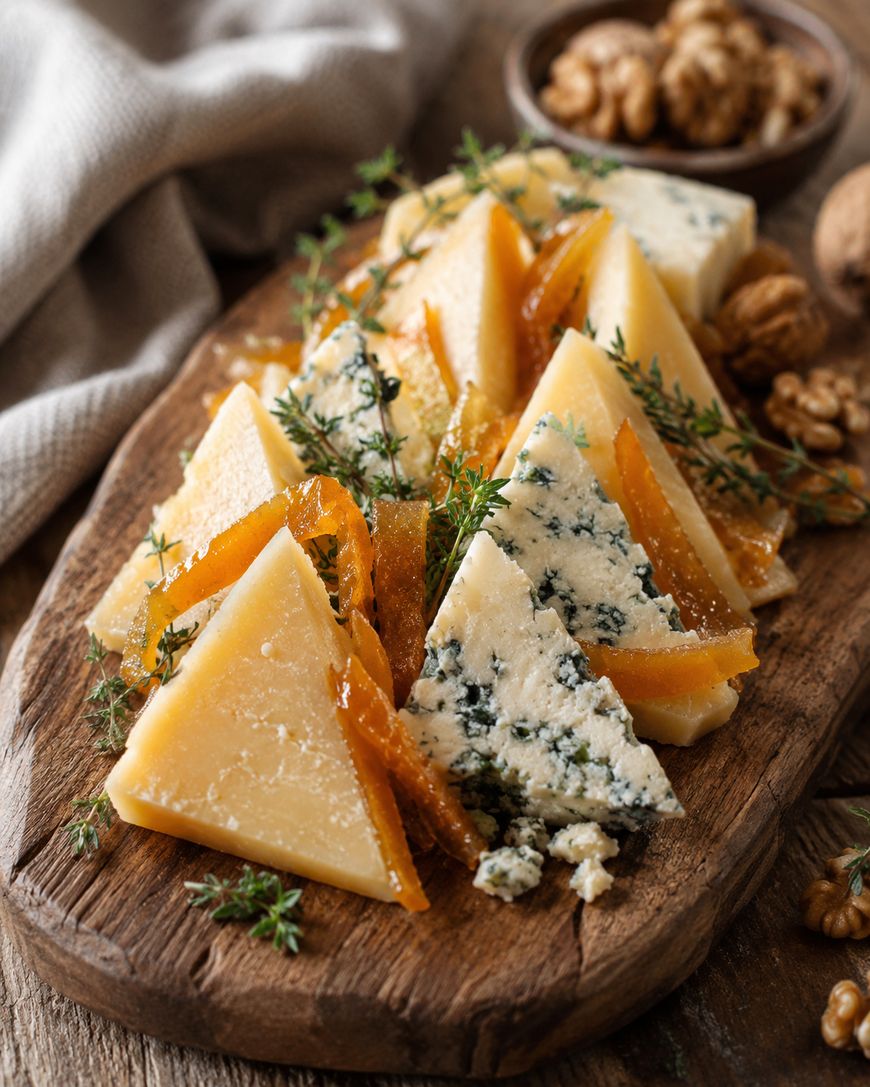
Chop and fold into biscotti, panettone, or fruitcake batter in place of commercial candied peel, which is rarely as flavorful.
Use whole strips to garnish cocktails, particularly an Old Fashioned or a Negroni, where the citrus oil in the peel perfumes the drink.
Press strips into the tops of dark chocolate brownies or financiers before baking for a bakery-style finish.
The History Behind Candied Orange Peel
Candying citrus peel is a technique that dates to at least the medieval Arab world, where sugar was used to preserve perishable foods and signal wealth at the table.
The method traveled to Europe through trade routes and became a cornerstone of French confiserie — the tradition of hand-crafting confections that the city of Lyon and the village of Apt in Provence still celebrate today.
In Spain, naranja confitada is tucked into turron and polvorones; in Italy, scorza d apostrophe arancia candita fills Sicilian cassata and Calabrian mostaccioli.
American recipes for candied orange peel appear in domestic manuals from the nineteenth century, where they were considered a practical way to use the whole fruit and produce an elegant homemade gift.
The modern resurgence of the recipe is partly driven by interest in zero-waste cooking and partly by the soaring quality of single-origin dark chocolate, which has made the chocolate-dipped version a staple of artisan chocolate shops from Brooklyn to Portland.
Follow the recipe card below for exact quantities and timing — every variable has been tested to produce consistently chewy, bright-flavored peels on the first try.
Candied Orange Peel Recipe
Chewy, jewel-bright candied orange peel simmered in simple syrup, coated in sugar, and optionally dipped in dark chocolate. A classic confection that uses the whole fruit.
Ingredients
- 3 large navel oranges (organic preferred)
- 3 cups granulated white sugar, divided (2 cups for syrup, 1 cup for coating)
- 1 cup water
- 6 ounces bittersweet chocolate, 60 to 70 percent cacao (optional, for dipping)
Instructions
- Score each orange from top to bottom into quarters, cutting just through the peel. Remove the peel in four sections, keeping the white pith attached.
- Place peels in a medium saucepan and cover with cold water. Bring to a boil over high heat, then drain completely. Repeat this process two more times for a total of three blanches. Set aside to cool slightly.
- Cut the blanched peels into strips about 1/4 inch wide.
- Combine 2 cups sugar and 1 cup water in the same saucepan over medium heat, stirring until the sugar dissolves. Add the peel strips and bring to a gentle simmer.
- Simmer uncovered for 45 to 60 minutes, stirring occasionally, until the peels look translucent and the syrup thickens to a light glaze. Do not boil vigorously.
- Remove peels with a fork or slotted spoon and arrange in a single layer on a wire rack set over parchment paper. Let dry uncovered for at least 2 hours or overnight.
- Toss the dried peels in the remaining 1 cup of granulated sugar until fully coated. Return to the rack.
- Optional chocolate dip: Melt bittersweet chocolate in a double boiler or microwave in 30-second intervals, stirring between each. Dip each sugared peel halfway into the chocolate and return to the rack. Allow to set fully before storing.
Notes
Nutrition Information:
Yield:
20Serving Size:
3 strips (about 20g)Amount Per Serving: Calories: 85Total Fat: 0gSaturated Fat: 0gTrans Fat: 0gUnsaturated Fat: 0gCholesterol: 0mgSodium: 1mgCarbohydrates: 22gFiber: 0.5gSugar: 21gProtein: 0.2g
This site provides estimated nutritional information. This information comes from online calculators. Although we try to provide accurate nutritional information, these figures are only estimates.
Frequently Asked Questions
Why do you blanch the orange peel three times?
Blanching removes naringin and other bitter compounds concentrated in the white pith of the peel.
Each blanch in fresh cold water draws out more bitterness — one blanch softens the peel slightly, two reduces bitterness noticeably, and three produces a peel that tastes bright and clean rather than medicinal.
Skipping blanches is the most common reason a first batch tastes unpleasantly bitter even after a long sugar simmer.
Can you use the leftover orange syrup?
The syrup that remains after simmering is essentially a spoonable orange simple syrup with a concentrated citrus flavor.
Use it to sweeten iced tea, drizzle over yogurt, or stir into cocktails and mocktails in place of plain simple syrup.
It keeps refrigerated for up to two weeks and can be frozen in ice cube trays for longer storage.
What is the best chocolate for dipping?
Bittersweet chocolate with 60 to 72 percent cacao gives the best balance of sweetness against the sugared peel.
Milk chocolate works but can make the finished candy very sweet — use it only if you know your audience prefers a milder flavor.
White chocolate is a beautiful visual contrast to the dark orange peel and pairs well with the citrus, though it sets softer and is more sensitive to temperature.
How do you know when the peels are done simmering?
The peels will shift from opaque white to a translucent, slightly amber-orange color as the sugar penetrates the pith.
A peel that is done will feel pliable and sticky when pressed between your fingers rather than firm or spongy.
The syrup should coat the back of a spoon and fall in slow drops rather than a thin stream — this indicates enough water has evaporated to concentrate the sugar properly.
Can this recipe be scaled up for gifting?
The recipe scales directly — double or triple all ingredients and use a wider, heavier-bottomed pot to ensure even heat distribution during the long simmer.
For large batches, work in multiple smaller pots rather than one very large one, as crowding the peels causes uneven cooking and increases the likelihood of sticking.
Why are my peels sticky after drying?
Stickiness usually means the peels did not dry long enough before the sugar coating was applied, or that humidity in your kitchen is high.
Extend the drying time to a full 24 hours, use a fan to circulate air over the rack, or dry them in an oven set to the lowest possible temperature (around 170 degrees Fahrenheit) with the door cracked for 30 to 45 minutes.
Tossing in sugar immediately after a longer dry almost always resolves the problem.
Make a Batch of This Candied Orange Peel Recipe This Weekend
This candied orange peel recipe rewards patience with a result that tastes far more expensive and laborious than it actually is.
Whether you serve the strips alongside coffee, fold them into holiday baking, or box them up as gifts tied with kitchen twine, they carry the kind of old-world charm that is genuinely hard to buy at any price.
Start with one batch of three oranges, master the blanching and simmering stages, and you will have a confection that becomes a signature recipe in your kitchen for years.